Installation view, Cheryl Donegan, Margiela Homeschool, at Three Star Books,
Some people made sourdough to get through the pandemic. Cheryl Donegan went through her closets and Margiela’d the hell out of what she found: 90s-era Dries van Notens, her grandmother’s doilies, her kids’ soccer kit. Six years into her one-of-one fashion upcycling project, Donegan has opened Margiela Homeschool, an exhibition at Three Star Books in Paris. It runs through April.
Screenshot
For those unable to rifle through the racks IRL, the collection is also documented piece by piece on the Margiela Homeschool instagram account. There are skirts made from dress shirts. dresses made from track pants. Lagerfeld tuxedo pants and an antique tablerunner turned into a loincloth. And the Ultimate shorts with accent scarf she made for her son, perhaps as penance for chopping up all his old t-shirts. Parents. Kids.
The Pirelli Hangar Bicocca in BF industrial Milan [but in a different BF industrial Milan from the Fondazione Prada, so plan accordingly] is about to open a show of Rirkrit Tiravanija’s architectural projects.
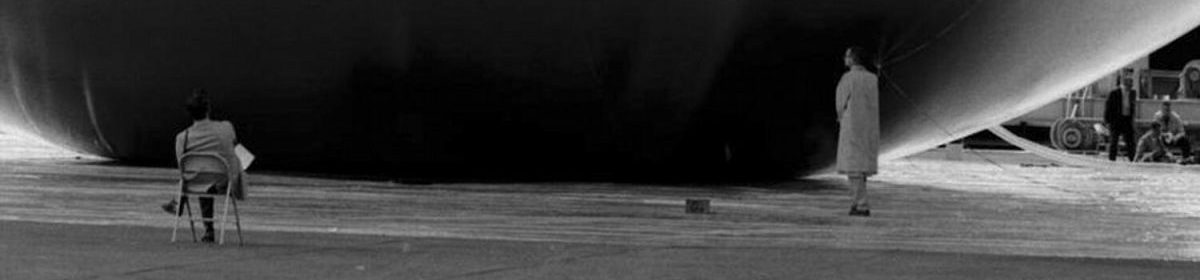
The pic above is from Untitled, 1995, which was a half-scale version of a modernist house by Sigurd Lewerentz which Tiravanija built at the Rooseum in Malmö. MoMA’s 1997 caption described the interior decorations as “by the children of the Storken day care center ages 5-7,” but that was clearly preceded by a trip to Ikea.
Collaborators: photo of Rirkrit’s 1995 Malmö installation from the brochure for his 1997 MoMA Project
But they’re OUR goose-stepping blackshirt: William Doriani, Flag Day, 1935, oil on canvas, 12 1/2 x 38 5/8 in., donated to MoMA in 1967
In the 1930s Sidney Janis was a garmento and an art collector who joined the junior committee of The Museum of Modern Art, which actually organized and sponsored shows, including one of his own collection, which the museum people did feel weird about, so he agreed to take his name off it. And there was a show of what Janis called Primitive Art, because, as the Modernist thinking of the time went, self-taught painters had access to individualist intuition and aesthetic purity untainted by History and the Academy and the pollution of ever having stepped foot into a museum. And Janis became known for scouring the countryside and the outer boroughs, running down tips on self-taught artists, whose work he either bought up en masse, or whose careers he quietly shepherded into the galleries of his friends.
Anyway Janis found William Doriani’s paintings on a handrail on MacDougal Street during an art street fair in the Village, then he set him up with a show, and started hyping him as one of his Primitivist finds. Others include Morris Hirshfield and Grandma Moses [who, tbf, was getting art world recognition before Janis began promoting her.]
According to the only thing I can find instantly, Janis’s 12-page chapter on him in the 1942 exhibition catalogue They Taught Themselves: American Primitive Painters of the 20th Century, Doriani had been an opera singer, and—oh hey, just like Jasper Johns—he had a dream to make a painting, and then he woke up and painted it. That was in 1931. Many of Doriani’s paintings depicted theater, performance, and spectacle.
But the reason he painted Flag Day in 1935 was because when he returned to the US after studying and singing in Europe for 13 years, the day he got home was Flag Day. And he just loves America and a parade and the flag and Flag Day . “And,” Janis concluded, “if the marchers resemble French school boys doing the German goose-step, it is immaterial, for the flags they carry are unmistakable.”
Janis went on to become an extremely influential dealer—the only dealer, I think, who was also a MoMA trustee—and he and his wife donated around a hundred works to the museum in 1967, including Flag Day.
This dealer/trustee/donor thing, I knew all about, but not the Janis’s prewar history. Or Doriani, who I saw for the first time in a tumblr post a couple of weeks ago. [ZOMG look at this one some Janis heirs just donated to the Folk Art Museum, it’s title is Two Flags, but one of them is somehow not the Ukrainian flag of Doriani’s birth.]
I just wanted to post one quick blurb about one interesting painting, and now the rickety shallowness of this entire historiographic process just really bugs me.
if it’s 1969, I believe this photo of the Twombly sofa is by Ugo Mulas
Like I said, every Ugo Mulas photo rewrites art history, if only by making us realize every other photographer of the Twombly rooms at via Monserrato decided to censor his sofa.
School Bus Yellow Corner Piece, 6′ x 6′, 1970, 24 x 24 cm, selling at Rago
I don’t think Fred Sandback drawings automatically serve as diagrams for a sculptural installation. But if the angry ghost of Fred Sandback haunts the buyer of this sketch for stretching a six-foot square of school bus yellow elastic cord across a corner, at least they get to meet the artist, right?
A 16mm print of Robert Smithson’s film, The Spiral Jetty that belonged to a retired art history professor is selling at Rago next week. The condition of the 50-year-old film seems fine, but who knows if it’s playable? How many film prints are there? Does it matter? Is this an artifact people want [to spend $6-8,000 on]? [update: Rago responded that the film has not been tested on a projector but that the acetate looks to be in good condition, with no physical impediments to playing. Also, by the morning of the sale, it had a bid of $4,500, so it’s an artifact somebody wants to spend money on! update: it sold for $11,520.]
Is it 20x better than just buying the DVD from EAI? Oh, wait, now you really have to be an educational institution to buy it? Are any retired art professors selling the DVDs, too?
James Benning, after Bess (solid brass round rod), 2020, digital photo print of a framed photo, framed, 17,3 cm x 20,3 cm, ed. 10 + 1AP, 1HC, eur 1500, somehow still available
We’re probably all off the hook for seeing it because the Fridericianvm’s Forrest Bess retrospective opened in February 2020. But we should all be very aware of the related edition made by James Benning.
Benning loves an extreme pursuit of solitude where he finds it. And in Kassel, he found it in Walter de Maria’s Vertical Earth Kilometer, which he turned into one of Bess’s mysterious, little cosmological pictures, complete with a handmade frame.
Any further similarities to Bess or connections to de Maria’s rod, I leave buried in the platz.
[breaking tumblr update] @voorwerk proposed it, and measurements confirm that Benning’s print is a life-size image of de Maria’s 2cm-wide rod. A Vertical Earth Kilometer Facsimile Object, if you will.]
Because Johnson’s rug is in what I can only assume to be Shiv Roy’s rebound loft, under the buck wild Rubens she inherited at some point after Season 4. The wide angle lens distortion of the painting’s dimensions is also unsettling, but the punch of ditching the frame and rawdawging an Old Master like that more than makes up for it.
This screenshot from months ago was mis-saved into my research folder for an article I’m tryna finish, no idea why. But the story Sally Mann told about this photo is less interesting than the photo itself, and much less interesting than the fact that Twombly had this junk store froggie in his Lexington studio and called it Froggie. It’s in her Twombly photos book.
I think the frog is only like 3.5 inches tall.
[update: nvm, Tacita Dean photographed it too, and it is three apples tall.]
Takashi Murakami, Claude Monet’s Woman with a Parasol – Madame Monet and Her Son A Spacetime of Awareness – SUPERFLAT, 2025 – 2026, acrylic on canvas, 100 x 81 cm, 📷: Kaikai Kiki via Perrotin
I heard two discussions of Takashi Murakami’s show in Los Angeles today, from people who could not be more different. And basically, it sounds and looks fascinating.
Murakami’s facility with Japanese art history has always been one of his secret superpowers. And it sounds like the current SUPERFLAT show at Perrotin slots into his overarching and innovative critique of western art history’s relationship to Japanese art and culture. It looks specifically at 18th and 19th century Japanese painting and ukiyo-e, and their connection to and co-optation by the Impressionists and the Japonisme movement.
Murakami has made intricate copies of ukiyo-e that traveled to 19th century France. And he’s made a full-scale copy of Monet’s 1875 painting, Woman with a Parasol — Madame Monet and her Son. Whether it’s a work like the Monet, painted in one quick, plein air session, or the dense woodblock prints, Murakami unifies them with his own technique, described as, “layer upon layer of silkscreened acrylic paint, applied with a special squeegee work application method.”
Which, what?? I am absolutely down for using exhaustive screenprinting for a monotype. But after seeing details on Perrotin’s website, this squeegee work application method is beyond my understanding. And I, for one, would like to see it.
[MORNING AFTER UPDATE] Oh, right, I can.
I googled at first, but only found that I’d joined the legion of content mills who republished Murakami’s press release text as-is. So I ended up at the sources.
Here are details of how Murakami translated Monet’s wet-on-wet brushstrokes into however many screens. Sometimes the scratchy structure of an emptied brush gets preserved, like the tan dots above the ‘M’. And sometimes it becomes a gradient of color, like the bottom of the ‘t’.
Murakami’s Monet signature made with Murakami’s “signature squeegee technique” Monet’s Monet signature made with Monet’s signature brush technique
Some colors get more intense in Murakami’s version, like that mustardy flame above the ‘n’, which is barely a thing in the Monet. But that same effect also makes the bare canvas/underlayer of Monet much more intricate. Like everything going on above the ‘et’ feels very different. Murakami’s resolution is higher, or seems higher, an oversharpening fallacy. But his colors look more liquid; they were laid down in the precise shape of a flow that never happened.
Rachel Harrison, Mustard and Ketchup (detail), 2008, published in Interview, 2019, photo: A. Mori for Greene Naftali
Because it was acquired by an esteemed American collector in 2010, right in between her shows at Greene Naftali, the first public view of Rachel Harrison’s 2008 work Mustard and Ketchup only came in October 2019, when Interview Magazine published a detail alongside Harrison’s conversation with actor, director, and visual artist Matt Dillon. It included a printout of a photo, taken December 6, 2007 at the Musée d’Orsay, of French president Nicolas Sarkozy making a gesture to German chancellor Angela Merkel as she looks at Gustave Courbet’s self-portrait, Le Désespéré (1843-45), painter’s taped to a sheet of pink insulation board.
The painting, then owned by a BNP Paribas art investment fund, was on loan to a Courbet retrospective that later traveled to the Met and Montpellier. The painting was last on public view at the Schirn Kunsthalle in Frankfurt in 2010-11.
The photo, by Maya Vidon for the European Pressphoto Agency, was published in the New York Times on December 7, 2007, to illustrate a news story about Merkel and Sarkozy pressuring Iran while the US pursued sanctions over the country’s nuclear program.
Harrison also appended the Vidon photo to a smallish, Rothko-esque painting which she showed in Vienna in 2008-09. It was perhaps the least leisurely of group of photos of world leaders at leisure, which appeared in works throughout the atypically thematically unified show. The photo and the show are mentioned in the catalogue for Harrison’s Whitney retrospective.
In October 2025, Le Désespéré went back on view at Musée d’Orsay for five years, and it was revealed that BNP Paribas had at some point sold the painting to Qatar Museums. Several days later Nicolas Sarkozy reported to la Santé prison in Montparnasse to serve a 5-year prison sentence for soliciting funds for his 2007 election campagin from Muammar Gaddafi. He was in solitary confinement for 20 days before being released pending appeal.
While in prison Sarkozy wrote Journal d’un prisonnier, a 216-page book, which was published in December: « En prison, il n’y a rien à voir, rien à faire. J’oublie le silence qui n’existe pas à la Santé où il y a beaucoup à entendre. Le bruit y est hélas constant. À l’image du désert, la vie intérieure se fortifie en prison. » [en]
Rachel Harrison, Mustard and Ketchup, 2008, 71 x 48 x 48 in. or so, selling at Sotheby’s
This month the entirety of Mustard and Ketchup was revealed to the public for the first time, at Sotheby’s, where it will be sold today, as I type this, in fact. It turns out to be a delicate thing. The condiment bottles that give the work its name also give it an alternate scale. The photo is at (standing) eye level atop a dowel mounted into a square pedestal, surrounded by drill shavings. In one moment it looks like a teleprompter or information sign. Or a self-portrait on a go-go dancing platform. Then the eye falls, and suddenly the Burger Toppings of Calais are shuffling on their own mini-plinth at the base of the largest truckstop billboard America has to offer.
As Rachel Harrison said to Matt Dillon, “How does anyone know? It’s a crap shoot. And with art, it’s about the long run.”
[DAY AFTER UPDATE] A kind reader sent a link to Le Consortium in Dijon, where Harrison’s 2008 exhibition Lay of the Land includes the same detail image as appeared nine years later in Interview. And though it does not appear in the museum’s installation shots, I’ve been assured Mustard and Ketchup was on view in Dijon. The world has now been neatly divided into those who saw Harrison’s show in Dijon, and those who did not. And the revelatory experience described in this post no longer holds for the former group. Hopefully amusement at the phrase, the Burger Toppings of Calais will be enough to keep us all together.
Rachel Harrison, Mustard and Ketchup [foreground] and American Idol, both 2008, installed in Lay of the Land at Le Consortium, Dijon, 2008, image via Greene Naftali
[MORNING AFTER UPDATE] The good people of Greene Naftali have shared a photo of Mustard and Ketchup installed at Le Consortium in Dijon. Thus through jpg technology we can begin to narrow the divide between those who saw the show and the rest of us who now at least know a bit what it looked like. And it looks great, especially with its spindly formal rhyming with the mic stand in American Idol in the background. [American Idol was published in Bomb alongside the great conversation between Harrison and Nayland Blake—about the difference between seeing something in person and seeing it online. which I wrote a bit about last fall during Blake’s shows at Matthew Marks. The title of that post echoes the title of this one: Artworks Unfolding Slowly Over Time, In Cyberspace.
More than many of Harrison’s shows, the prevalence of rectangular columnar forms in the Dijon show made me think of Anne Truitt, an artist I know Harrison had been interested in for a long time. And American Idol, combined with the literal [Courbet] self-portrait posted at head height in Mustard and Ketchup, left me seeing figural references in Harrison’s work.
And that led me to think back about similar references in Truitt’s sculptures, too. Which is ironic, since I was really kind of a bitch to Blake Gopnik when he anthropomorphized Truitt’s columns of color in his Washington Post review of her 2009 Hirshhorn retrospective. Art is about the long run, indeed, and maybe in the long run, I’ll get it right.
As I was quietly thanking Jacques Adnet for this sleek, spare, and elegant desk, it did occur to me that 1940 was a helluva year to be designing modernist steel furniture in Paris. Let’s unpack that a bit!
Andy Warhol Be a Somebody with a Body, 1985, screenprint on acrylic, 8 x 10 in., selling at Christie’s
On his pre-blizzard gallery run, greg.org hero and advance scout Jack got curious about why this small, unassuming Warhol at Christie’s was dedicated to Dr. Linda Li. Turns out she was the first to treat him when he started having gallbladder pain in January 1987.
Unfortunately for Warhol, Dr. Li was a chiropractor, and her massage only made Warhol’s pain worse. It took him three more weeks to see an actual specialist. He got promptly admitted to the hospital undercover, had surgery, and then died in recovery on February 22nd, 39 years ago last Sunday.
If only we didn’t have a healthcare system where even rich, famous somebodies with bodies had to barter paintings for unhelpful medical care, Warhol might still be with us. He’d be 98, and New York Magazine would be asking him what he thought of Heated Rivalry.
[later in the day update] After someone mentioned The Warhol Diaries, I looked, and Dr. Li is all over them; Warhol went to her all the time for vitamins, massage/alignment/chiro and crystals, and so did a bunch of other famous people. So I imagine this painting, dated 1985, is more likely to have been a gift at some point, not a straight-up attempt to get out of paying for treatment. Hilariously, Warhol was wary of doctors especially who wanted to take art for payment. One guy asked, and he said, “maybe a print,” and the dr. was like, “No, I mean a portrait for me, and one for my mother,” and Warhol was all, “He wants $50,000 worth of art? What do I do?”
gah, a EUR40m auction and Christie’s cannot photograph these to scale? One is around 59 x 35 inches, and one is 60 x 36, but it’s not the ones it looks like.
West Flanders furniture dealer Roger Vanthournout and his wife Josette collected art for over six decades. Did they see Michael Jenkins and Felix Gonzalez-Torres’ show at Xavier Hufkens in Brussels in 1991? Is that what got them interested in Jenkins’ work, leading them to buy two large works on paper at Galerie Hans Mayer in Dusseldorf in 1992? Roger died in 2005, and Josette died last year, so we can’t ask them.
But we can sure look at Jenkins’ work in unexpectedly fascinating relation to Gonzalez-Torres’s. These two works, Counting (L) and Thirteen Lights (R), are flashe and pencil on paper. They also appear to be collage, not trompe l’oeil; so the drawings on paper that look taped on are taped on. And the drawings are of thirteen light bulbs on a string.
Felix made a stack with Jenkins in 1990. His portrait of Jenkins was in 1991. Both artists made works with bondage gear, and Felix made the go-go dancing platform—with 13 lights along each edge—in 1991. Then 1992 was full of light strings, with either 24 or 42 bulbs. The motif cannot be a coincidence. Whether there was a conversation about or between these two artist-friends’ works, there was certainly a shared context. Unlike Felix’s work, though, Jenkins’ has almost never been seen or shown or discussed beyond the moment of its making, during the AIDS crisis and queer resistance.
The most extensive text on Jenkins’ practice, I think, is his Summer 1992 Bomb interview with Bill Arning. He doesn’t mention anything directly related to these works, except for yellow, a color used for its nautical references to quarantine and disease. [I just read a quote from Victor Klemperer, too, about the horror of being forced to wear the six-pointed star in Germany; he mentioned yellow’s historic association with the plague and fear of Jews.]
Felix and the Vanthournouts are gone, but maybe it’s time to ask Jenkins.
[next morning update] It’s a mixture of gratitude to Michael Seiwert for posting the Artforum review of Jenkins’ 1991 show at Jay Gorney, and sadness at my having not thought about Artforum when writing this post. On the bright side, Contemporary Art Library recently posted an archive of Gorney’s shows, including Jenkins. Incredible. Two things pertain to the drawings at hand: Jenkins was in portrait mode. All the drawings in 1991 were this 60×36 human/door/window scale. The counting is in NYC, too, in one drawing, but the counting is different, continuous, where the drawing above seems to record multiple counts. There’s the trace of human experience without an indication what’s being tallied or why.
Michael Jenkins, Tower with Crazee Windows, 1991, paint on wood, board, wire, 59 x 24 x 10 1/2 in., exhibited at Jay Gorney in 1991, archived at Contemporary Art Library
The yellow stripes appear in one drawing, and inside this sculpture, Tower with Crazee Windows, 1991. Beautiful photos everywhere, though the yellow does start to feel immediately overwhelming. Maybe Jenkins thought so, too. The two 1993 works he showed next were red and white.
Look at me not cropping the clunky credit caption via Gagosian via Christie’s
When I saw this giant eye staring out from the lot at Christie’s, with barely a five-figure estimate, I was sure it was some random photo, ancillary merch. But no, it is the entire video installation, one of the greatest works of the 21st century.
If the price of art meant anything at all, Douglas Gordon’s Play Dead; Real Time (Other Way), 2003, should be like $10 million, easy. That one of the edition of just seven is coming up for auction in the first place is wild. Look at that exhibition history. So many institutions, is there even another copy in private hands?
But with an estimate of just $20-30,000? That is completely bonkers. Is this really who we are as a culture/economy? Do the people with so much money really value this artwork so little?
Douglas Gordon’s Play Dead; Real Time (Other Way), 2003, installed where it was made, at Gagosian 24th st, in 2003, image: Studio lost but found via Gagosian via Christie’s.
Srsly, seeing Play Dead at Gagosian, in the gallery where it was made, remains one of the most amazing video art experiences I’ve ever had. It should be installed on life-size screens everywhere. [And, again, it has.]
What’s even more extraordinary than Houston dealer/curator/collector/trustee Janie C. Lee [RIP] owning this piece, is that she apparently bought it from someone else, in 2006. Who TF would unload it so quickly? Some bootlegger, I assume [if so, hmu]. Anyway, while serving on the board of the Menil, Lee was one of the forces behind the creation of the Menil Drawing Institute. And the proceeds of her Christie’s sale will benefit the MDI. So really, you all have no excuse for abiding by this low estimate. Screw anonymous phone bidding; we need to name and shame the underbidders.
[half a day of outrage later update]: OK, it might be the case that this is a single-channel, monitor-based edition of a larger work. The show at Gagosian was titled, Play Dead; Real Time. The press release mentions three works, but does not name them. The stills are captioned, Play Dead; Real Time (Other Way), and are described as a “DVD on monitor” in a “dimensions variable” edition of 7. The installation shot is not captioned. MoMA’s edition of the work, Play Dead; Real Time, does not mention an edition, but is described as a “three-channel” work with two projectors, two screens, and a monitor. Crucially, the videos are different: “19:11 min., 14:44 min. (on large screens), 21:58 min. (on monitor).” Which all differ from (Other Way), which is 23:44. When the work [sic] was installed at Tate in 2013, it was titled, Play Dead; Real Time (this way, that way, the other way), implying that each screen was different. And indeed they were: the two projections move clockwise or counterclockwise and fade to black in between elephant tricks; the monitor work transitions by zooming in and out from the elephant’s eye. The monitor video’s duration is 23:44. If this is indeed a domestically sized element/variation of a larger installation, it should still be priced at between $1 and 3.333333 million, at least.