Those 824 mortalities (deaths) represent 13% of the Florida manatee population, and many of them were caused by people – either directly or indirectly.
The Revelator released a video that goes into more detail about why so many manatees died last year. Click below to watch it, and be sure to visit this link for the original story.
Video by The Revelator about the dramatic rise in Florida manatee mortalities in 2018.
FDA warns of an invisible norovirus threat in raw oysters and clams shipped to nine states, urging immediate disposal to protect families from stomach-flu dangers.
Story Snapshot
FDA alerts on raw oysters from Drayton Harbor Oyster Company and Manila clams from Lummi Indian Business Council, harvested February 13 to March 3, 2026, in Washington state.
Clams distributed to Arizona, California, Florida, Georgia, Illinois, Nevada, New York, Oregon, Washington, and possibly more states; oysters limited to Washington consumers.
Norovirus contamination suspected, causing diarrhea, vomiting, nausea; high risk for immunocompromised; products look, smell, taste normal.
Washington Department of Health detected an outbreak link on March 4, prompting the FDA’s March 9 national advisory for no serving, selling, or eating.
Proactive recall prevents broader outbreaks, echoing recent shellfish incidents in Canada and Korea.
Alert Details and Timeline
The FDA issued a public health alert targeting specific raw oysters and Manila clams from Drayton Harbor, Washington.
The oysters, harvested by Drayton Harbor Oyster Company under tag WA-1723-SS, went to Washington consumers.
Manila clams, harvested by Lummi Indian Business Council under WA-0098-SS, reached restaurants and retailers in nine states, plus possibly others.
The Washington Department of Health notified the FDA on March 4 of norovirus-like illnesses linked to raw oyster consumption, prompting this federal action.
The very contagious virus causes vomiting, diarrhea and severe dehydration. https://t.co/mWTx724OtI
Norovirus, a highly contagious virus, contaminates shellfish through fecal matter in harvest waters from sewage or runoff.
Oysters and clams filter large volumes of water, concentrating the virus without altering taste, smell, or appearance.
Symptoms strike 12-48 hours post-exposure: diarrhea, vomiting, nausea, stomach pain, lasting 1-3 days. Immunocompromised individuals face severe dehydration risks. Live shellfish demand strict controls, yet norovirus persists, making raw consumption hazardous.
Stakeholders and Distribution Scope
The agency leads the alert and coordinates with states on compliance. The Washington Department of Health initiated the response after detecting the outbreak.
Lummi Indian Business Council, a tribal entity, harvested the clams; Drayton Harbor Oyster Company handled oysters.
Restaurants, retailers, and distributors in multiple states must dispose of products to avoid liability. Harvesters suffer economic hits but comply with public safety. FDA authority covers interstate commerce, overriding local sovereignty where needed.
Drayton Harbor’s seasonal rainfall boosts runoff, heightening contamination odds in this prone area. The alert stresses immediate disposal since products appear normal, preventing unwitting exposure at dinners or gatherings.
Clams, raw oysters recalled over possible norovirus contamination across 9 states: FDA https://t.co/n8FtMVPHod
Short-term effects include product disposal, business interruptions, and potential illnesses among consumers, especially vulnerable groups.
In the long term, Washington harvests face stricter scrutiny and possible area closures. Economic losses hit both tribal and commercial operators; public wariness toward raw shellfish grows.
This domestic case differs from the February 2026 Canadian oyster alert and the 2025 Korean recalls, yet underscores recurring risks. Improved water monitoring is emerging as key to industry resilience.
FDA and experts praise the proactive stance, averting outbreaks like prior California and Utah cases. No confirmed illness counts released, but consensus favors disposal as safest path under President Trump’s health-focused oversight.
FDA recall. the paper is clamped with a clerical clip. paper on wood background.
FDA URGENT ALERT
Lidl’s failure to label hazelnuts in its popular Favorina Chocolate Ladybugs puts American families at risk of life-threatening allergic reactions, exposing flaws in the oversight of foreign-sourced grocery products under lax regulations.
Story Snapshot
Lidl US recalls all lots of 3.52 oz Favorina Chocolate Ladybugs due to undeclared hazelnuts, a major tree nut allergen.
Product sold from January 28 to March 11, 2026, in Lidl stores across 10 East Coast states and D.C.
No illnesses reported, but FDA warns of serious or life-threatening risks for allergy sufferers.
Full refunds offered without receipts; recall highlights preventable labeling errors in private-label imports.
Recall Details and Affected Product
Lidl US initiated a voluntary recall of all lots of Favorina Chocolate Ladybugs – German-Style Nougat in 3.52 oz boxes with UPC 20304492. The product contains undeclared hazelnuts, violating the Food Allergen Labeling and Consumer Protection Act of 2004.
Distribution began January 28, 2026, to Lidl stores in Delaware, the District of Columbia, Georgia, Maryland, New Jersey, New York, North Carolina, Pennsylvania, South Carolina, and Virginia. Sales ended March 11, 2026. Customers should not consume the product and return it for a full refund, no receipt required.
Regulatory Response and Company Actions
The FDA issued a public alert on the undeclared hazelnut allergen, emphasizing the potential for serious or life-threatening allergic reactions. Lidl’s Quality Assurance Department discovered the labeling error after sales ended and promptly initiated the recall.
Lidl stated, “The health and safety of our customers is our top priority,” and regrets any inconvenience. Contact their hotline at 844-747-5435, available 8 a.m. to 8 p.m. ET Monday through Saturday, or email media@lidl.us for questions. All affected products have been pulled from shelves.
Background on Lidl and Allergen Risks
Lidl US, a German discount chain operating in the U.S. since 2017, sources its Favorina chocolate line from European suppliers to offer affordable confections.
The error stemmed from a nut-containing product placed in packaging without hazelnut disclosure, a common issue in European-style nougat due to cross-contamination risks.
Food allergies affect about 32 million Americans, making accurate labeling essential for family safety. This incident underscores the need for rigorous checks on imported private-label goods to protect consumers relying on budget options.
No prior Lidl or Favorina-specific recalls appear in the records. However, broader U.S. food recalls, such as those involving Aldi snacks and Costco meals, highlight ongoing industry challenges with allergens and contaminants. Lidl, based in Arlington, Virginia, coordinates with unnamed suppliers and the FDA to resolve such issues swiftly.
Chocolate candy sold at Lidl recalled over undeclared hazelnut allergen https://t.co/JnM8akg8pq
Hazelnut-allergic consumers in the 10 affected areas face immediate risks, with thousands potentially exposed during the sales period that overlaps with early 2026 candy purchases.
Short-term effects include refunds and inventory removal, with minor economic costs to Lidl. In the long term, the recall may prompt stronger labeling protocols for private-label imports.
It reinforces FDA vigilance on tree nut disclosures in confectionery, paralleling recent recalls for BBQ sauce and other nuts. No illnesses reported mitigates severity, but the preventable oversight erodes trust in discount chains.
Symptoms begin anywhere from a few days after consuming contaminated food or up to nine days later. Symptoms include severe stomach cramps, diarrhea, fever, nausea, and/or vomiting.
The severity or presence of certain symptoms may depend on the type of pathogenic E. coli causing the infection. Some infections can cause severe bloody diarrhea and lead to life-threatening conditions, such as a type of kidney failure called hemolytic uremic syndrome (HUS), or the development of high blood pressure, chronic kidney disease, and neurologic problems.
Status:
Ongoing; updates will be provided as they become available.
Recommendations:
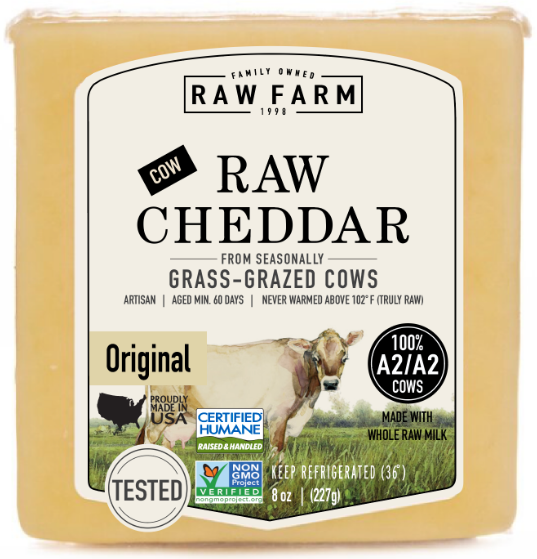
This is an ongoing outbreak of Shiga toxin-producing E. coli (also known as STEC) linked to RAW FARM-brand cheddar cheese based on epidemiological data. This type of E. coli can cause serious kidney problems (hemolytic uremic syndrome, also called HUS), which requires hospitalization and can lead to death. Sick people in this outbreak are young, with a median age of three years old. At this time, no deaths or HUS cases have been reported.
FDA is providing information to consumers and retailers so they are aware of this outbreak before deciding to eat RAW FARM-brand cheddar cheeses or serve it to children.
Consumers, restaurants, retailers, and foodservice customers who purchased or received RAW FARM-brand Raw Cheddar cheese, including wholesale products, may wish to carefully clean and sanitize any surfaces or containers that it touched. Follow FDA’s safe handling and cleaning advice to reduce the risk of cross-contamination.
Consult your health care provider immediately if you ate RAW FARM-brand cheddar cheese and have any symptoms that resemble an E. coli infection (see above).
Current Update
March 15, 2026
The FDA and CDC, in collaboration with state and local partners, are investigating a multistate outbreak of E. coli O157:H7 infections.
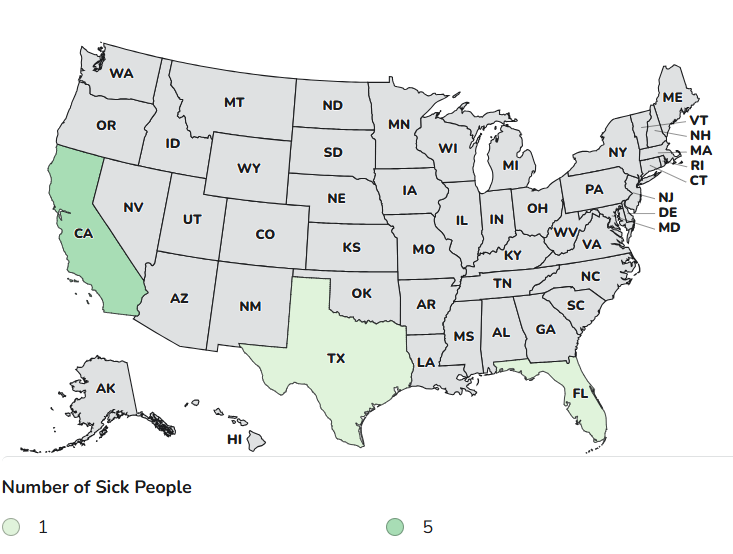
As of March 14, 2026, a total of 7 confirmed infections have been reported from three states, including CA (5), FL (1), and TX (1). Known illness onset dates range from September 1, 2025 to February 13, 2026. Whole genome sequencing analysis of E. coli isolates from ill people shows that they are all closely related genetically to each other. This means that people in this outbreak are likely to share a common source of infection. Additionally, 4 of 7 cases are 3 years old or younger. Two patients have been hospitalized. No deaths or HUS cases have been reported.
State and local public health officials have interviewed 3 ill people about food exposures of interest in this outbreak. All 3 people (100%) reported eating RAW FARM- brand raw cheddar cheese. State and local officials are working to gather additional data for the 4 other illnesses, including 2 illnesses that occurred in 2025. Epidemiologic evidence indicates that RAW FARM-brand raw cheddar cheese products made by RAW FARM, LLC are the likely source of this outbreak.
FDA has recommended that RAW FARM, LLC voluntarily remove their raw cheese products from the market, and the firm has declined.
The investigation is ongoing to determine the source of contamination and whether additional products are linked to illnesses. To date, to FDA’s awareness, no RAW FARM-brand cheddar cheese products from this time period have tested positive for E. coli. As part of this investigation, state partners initiated collection of product samples for testing and analysis, but results are not yet available. FDA will update this advisory should additional information become available.
Costco recalled Kirkland Signature meatloaf meals due to potential Salmonella contamination.
Affected meals have sell-by dates through March 16, 2026 and were sold in 28 regions.
Dispose of or return recalled meals to your local Costco for a full refund.
There’s an active recall on ready-to-eat meals sold at Costco locations in 28 states and regions, according to a company letter.1This is due to a potential Salmonella contamination.
The product recalled is the Kirkland Signature Meatloaf with Mashed Yukon Potatoes and Glaze. The affected meals contain a sell-by date from “03/05/2026” through “03/16/2026” and were sold on or before March 13, 2026. These meatloaf meals were sold at Costco locations in the following areas: Alabama, Arizona, California, Colorado, Delaware, Florida, Georgia, Hawaii, Illinois, Indiana, Iowa, Kentucky, Maryland, Michigan, Mississippi, Missouri, Nevada, New Mexico, North Carolina, Ohio, Pennsylvania, Puerto Rico, South Carolina, Tennessee, Utah, Virginia, Washington, D.C., and Wisconsin.
Check your refrigerator, and if you have the recalled dinner on hand, dispose of it or return it to your local Costco location for a refund. While there are no illnesses connected to this recall, symptoms of Salmonella infection (salmonellosis) can start six hours to six days after infection, and they may last up to seven days. Common symptoms of salmonellosis include diarrhea, stomach cramps, headache, nausea, vomiting and loss of appetite.
If you are showing signs of infection, contact a healthcare professional as soon as possible. For questions about this recall, contact your local Costco or visit the company’s customer service page.2
Target: Roger A. Young, CEO of the Florida Fish and Wildlife Conservation Commission
Goal: Ensure appropriate punishment for the alleged mistreatment of dolphins in marine facilities across Florida.
Numerous reports have emerged detailing distress and mistreatment of dolphins in various marine facilities throughout Florida. Allegations suggest that these intelligent creatures are subjected to inhumane living conditions, limited social interactions, and inadequate care, causing significant physical and psychological suffering. Witness accounts indicate that some dolphins exhibit signs of stress including repetitive behaviors and lethargy, raising serious concerns about their welfare in captivity.
Evidence seemingly points to facilities lacking proper veterinary care, providing substandard diets, and failing to meet the environmental needs of dolphins. Dolphins are allegedly confined to small tanks, limiting their ability to engage in natural behaviors. Reports indicate concerns about how these dolphins are handled during public demonstrations, where they may experience undue stress while performing for audiences. Such actions are not only questionable but also raise ethical concerns about the treatment of these marine mammals in captivity.
It is essential that the Florida Fish and Wildlife Conservation Commission takes the allegations seriously and implements stringent measures to ensure the welfare of dolphins in marine facilities. The community demands swift and appropriate action to address these issues and hold accountable those responsible for the alleged mistreatment of these intelligent beings. It’s time to prioritize the health and safety of dolphins and ensure their rights are upheld.
PETITION LETTER:
Dear CEO Young,
The well-being of dolphins in captivity is under scrutiny due to alarming reports indicating mistreatment within marine facilities in Florida. Allegations suggest that these dolphins are subjected to inadequate living conditions, insufficient care, and forced interactions during performances, leading to distress and physical symptoms of suffering. Such treatment not only compromises their welfare but also undermines the ethical standards expected in the care of marine mammals.
Reports indicate that they are held in small tanks, deprived of the space needed to engage in natural behaviors, and face poor social interactions. This raises serious ethical questions about the practices employed in these facilities, with implications for the safety and well-being of these animals. As advocates for marine wildlife, we cannot stand by while reports of alleged mistreatment go unaddressed.
Therefore, we urge you to investigate these allegations thoroughly and implement necessary measures to ensure that dolphins in marine facilities are treated humanely and receive adequate care. It is imperative that those responsible for the alleged mistreatment are held accountable to prevent further harm to these magnificent creatures.
Bailey Fink is a devout home cook and a news editor at Allrecipes, covering everything from exciting product releases to the newest TikTok trends and why food tastes better at certain restaurants. In her time at Allrecipes, she has researched and written hundreds of articles on a variety of topics, including how-to guides, food news and trends, and product reviews.
Published on March 13, 2026Credit:
Allrecipes / Lidl
The U.S. Food & Drug Administration (FDA) has announced a recall on candy sold at Lidl stores in nine states for a potential life-threatening allergen. Lidl’s Favorina Chocolate Ladybugs German-Style Nougat candy has been recalled for an undeclared hazelnut allergen. Here’s what you need to know.
How To Identify the Recalled Lidl Chocolates
The recalled Chocolate Ladybugs were sold at Lidl stores in Delaware, the District of Columbia, Georgia, Maryland, New Jersey, New York, North Carolina, Pennsylvania, South Carolina, and Virginia between Jan. 28 and March 11.
You can identify the recalled Lidl Favorina Chocolate Ladybugs by the UPC 20304492, which is listed on the 3.52-ounce box. The FDA also has photos of the recalled chocolate on its website to help consumers identify if they have the product.
What To Do if You Have the Recalled Lidl Chocolates
The recalled Favorina Chocolate Ladybugs German-Style Nougat candies contain hazelnuts, but the packaging does not contain the proper tree nut allergen warning, as required by the FDA. Therefore, if you have a tree nut allergy, consuming these chocolates could result in a serious or life-threatening allergic reaction.
If you have a tree nut allergy, you should discard the chocolates or return them to any Lidl store for a full refund. If you do not have a tree nut allergy, you do not need to respond to this recall. The chocolates were recalled due to a labeling error and not because the candy is inherently unsafe to consume.
For questions regarding this recall, you can contact Lidl’s Customer Care Hotline at (844) 747-5435.
Britain’s fruit and vegetable growers have warned soaring energy and transportation costs caused by the war in Iran could leave supermarket shelves bare.
Growers’ associations across the country have raised concerns they may be forced to end their season early, with some comparing the situation to Russia’s invasion of Ukraine in 2022.
Lee Stiles, secretary of the Lea Valley Growers Association (LVGA), said: “Growers are in the same position now as they were when Russia invaded Ukraine, because the wholesale gas prices are creeping up.”
The LGVA represents 70 glasshouse growers across the UK, and produces around 75 per cent of Britain’s cucumbers, sweet peppers & aubergines.
Stories
Videos
Your Say
Mr Stiles added: “With rising costs, many growers are thinking they might as well send the staff home, stop for the season and not produce anything.
“They’re going to have to make a decision in the next few weeks as to whether or not it’s going to be economic to continue for the rest of the year.”
The rising costs to heat glasshouses could lead to crops struggling to grow, subsequently reducing yields significantly.
“Back in 2022, when Russia invaded Ukraine, we ended up with empty shelves in the supermarkets,” Mr Stiles continued.
Britain’s fruit and vegetable growers have warned soaring energy and transportation costs caused by the war in Iran could leave supermarket shelves bare|
GETTY
“The supermarkets agreed a fixed price with growers last year. They can intervene now if they wish and agree to pay more for the produce because of the increased cost of production.
“But it looks as though they’re prepared to have empty shelves again and reduced availability.”
In 2022, shelves were left so depleted that major supermarkets were forced to limit the amount of cooking oil people could buy.
Meanwhile, Rachel Williams, from the West Sussex Growers Association, which represents a network of over 50 members based in and around Chichester, revealed that “everybody’s obviously worried”.
“They are worried about what will happen, how it will develop, and the uncertainty of it all,” she said.
The rise in transportation costs, input costs, supply chain disruption and cost of heating glasshouses are very concerning, Ms Williams explained.
“On the transport cost, red diesel has gone up by more than 50 per cent in just 10 days, that’s huge for open field growers using tractors too,” she said.
With oil prices levelling out at over $100 per barrel, and red diesel prices soaring from 79.44 pence per litre on March 1 to 131.26 pence per litre by March 12, according to BoilerJuice, the comparisons to 2022 have become very real.
The National Farmers’ Union (NFU) met with the Department for Environment, Food and Rural Affairs earlier this month to discuss urgent farming issues caused by the conflict in Iran.
NFU president Tom Bradshaw said: “We’ve already seen this situation play out with the Russian invasion of Ukraine which drove an ongoing cost-of-living crisis here. And, with the removal of farm support which added a layer of resilience for many farm businesses, farmers are more exposed than ever to global markets.
“While the impact on food production and food price inflation will depend on what happens over the coming weeks, it is yet another sobering reminder of the need to build resilience in UK farming.”
Over 40,000 bike helmets sold at Walmart pose a serious risk of injury or death, betraying families who trusted big-box retailers for basic safety gear amid ongoing supply chain failures from cheap imports.
Story Snapshot
CPSC recalls 40,245 Concord 360 Degree Rechargeable Light-Up Bike Helmets sold at Walmart from January to September 2025.
Helmets fail federal safety standards on retention system and positional stability, risking head injuries in crashes.
Features such as lithium-ion batteries pose fire hazards during disposal, complicating safe handling for consumers.
No injuries reported yet, but consumers must destroy helmets and contact Todson for refunds.
Recall Details Emerge
The Consumer Product Safety Commission announced the recall, targeting 40,245 units of Concord 360 Degree Rechargeable Light-Up Bike Helmets distributed by Todson, Inc.
Walmart sold these helmets in stores nationwide and online at Walmart.com for about $30 each between January and September 2025. Federal standards require helmets to meet strict criteria for impact protection, retention systems, and stability.
These units violate retention and positional stability rules, meaning they may shift or detach during a crash, exposing riders to severe head trauma.
The helmets do not meet safety standards and could result in serious head injury, according to the Consumer Product Safety Commission. https://t.co/yTbZs7Ubwu
CPSC classifies the defect as creating a serious risk of injury or death from head injuries. The helmets integrate rechargeable LED lights powered by lithium-ion batteries, marketed for better visibility.
However, these batteries introduce a fire risk if not disposed of properly. Todson warns consumers to avoid placing regular trash in the trash and to use household hazardous waste facilities.
This dual failure—core protection plus battery dangers—highlights rushed production prioritizing gadgets over American safety standards. No confirmed injuries have been reported as of the recall date.
Consumer Action Required
Owners must stop using the helmets immediately. To obtain a refund, cut off the helmet straps, take photos, and submit them to 360concordhelmet@todson.com or call 1-800-278-2565 and select option 2. Todson handles remediation as the distributor based in Foxboro, Massachusetts.
Walmart faces customer service burdens despite not manufacturing the product. This process inconveniences over 40,000 families, many of whom rely on cycling for affordable family exercise and transport.
More than 40,000 bicycle helmets sold at Walmart recalled over ‘serious risk of injury or death’ https://t.co/BBxrDAXNqd
This recall follows the February 5, 2026, CPSC action on 300 Semfri Children’s Helmets sold on Walmart.com, also failing mandatory bike helmet standards.
Both incidents point to persistent compliance issues in budget helmets sold through major retailers. CPSC enforces federal laws amid annual consumer product incidents costing over $1 trillion in deaths, injuries, and damages.
Greater scrutiny on distributors like Todson could prevent future risks to American families seeking reliable gear.
Under President Trump’s administration, renewed focus on American manufacturing and supply chain accountability promises to reduce reliance on unvetted foreign products that undercut safety.
Past lax oversight allowed these flawed imports to flood stores, eroding trust in everyday purchases. Families deserve products that protect, not endanger, reflecting core conservative values of personal responsibility and robust regulatory enforcement without government overreach.
Broader Market Ramifications
The recall may shift buyer caution toward light-up helmets and electronics-integrated gear, especially at discount prices. Todson risks legal exposure and damaged partnerships, while Walmart manages reputation hits. Industry-wide, expect tighter quality controls and CPSC oversight.
Consumers should verify product compliance before purchase, prioritizing certified American-made options to safeguard health and support domestic jobs in a post-Biden economy focused on self-reliance.
California has taken a historic step for animal protection by banning octopus farming. Now, the rest of the country must follow. The Oppose Cruelty to Octopuses (OCTO) Act prohibits the farming of octopuses for food and bans the sale of commercially farmed octopus in California. With this law, California joined Washington in recognizing that these remarkable animals should never be confined to industrial farming systems.
Sign the petition urging lawmakers across the United States to pass laws banning octopus farming.
Octopuses are among the most intelligent animals in the ocean. They can solve complex problems, remember solutions, use tools, recognize individual humans, and even display playful behavior. Scientists widely agree they experience fear, stress, and suffering.
Confining these solitary, highly intelligent animals in crowded industrial tanks would cause extreme psychological and physical harm.
Octopus farming also damages the environment. These carnivorous animals require large amounts of wild-caught fish for feed, placing even more pressure on already struggling marine ecosystems.
California acted before this cruel industry could take root, preventing a system built on suffering and environmental destruction before it began. Now other states must do the same.
Sign the petition calling on lawmakers across the United States to follow California’s lead and ban octopus farming before this industry spreads.
A lone bottlenose dolphin, whom humans have called Mimmo, is now living in the Venice lagoon in Italy. The enthusiastic animal often leaps out of the waters, showing off its enjoyment for life and for living in the Italian waters.
Mimmo is following a well-worn tradition of dolphins coming to live in the Venice lagoon. But the problem is that today’s humans are not particularly respectful of wildlife. Researchers and animal lovers alike are concerned for Mimmo’s safety.
They’re urging the Italian and Venetian governments to implement stronger rules to limit the speed of boats, and to ensure boats stay away from Mimmo. Sign the petition to elevate this call and keep Mimmo the dolphin protected!
As far as researchers can tell, they believe Mimmo to be healthy and to have adapted well to life in the lagoon. It seems to have found a healthy, reliable food source and hasn’t shown signs of leaving any time soon.
But the big threats to Mimmo’s safety are from boats – especially boat propellers and boat collisions – and from people potentially trying to get closer to the animal. It is imperative that humans practice respect and consideration towards wildlife by keeping our distance and moving with thoughtfulness through their environments.
As Giovanni Bearzi, a researcher who has spent 40 years studying dolphins, summarized: “We need to appreciate the opportunities to coexist with and enjoy wildlife.”
Humans don’t live in lagoons; dolphins do. When we’re in the water, we’re in their habitats. We must practice respect by passing stronger laws to regulate our behavior! Sign the petition to urge Italian and Venetian authorities to limit boating speeds and prevent interaction with Mimmo!
I have created this site to help people have fun in the kitchen. I write about enjoying life both in and out of my kitchen. Life is short! Make the most of it and enjoy!
There are two ways to be fooled. One is to believe what isn’t true; the other is to refuse to believe what is true. —Soren Kierkegaard. "...truth is true even if nobody believes it, and falsehood is false even if everybody believes it. That is why truth does not yield to opinion, fashion, numbers, office, or sincerity--it is simply true and that is the end of it" - Os Guinness, Time for Truth, pg.39. “He that takes truth for his guide, and duty for his end, may safely trust to God’s providence to lead him aright.” - Blaise Pascal. "There is but one straight course, and that is to seek truth and pursue it steadily" – George Washington letter to Edmund Randolph — 1795. We live in a “post-truth” world. According to the dictionary, “post-truth” means, “relating to or denoting circumstances in which objective facts are less influential in shaping public opinion than appeals to emotion and personal belief.” Simply put, we now live in a culture that seems to value experience and emotion more than truth. Truth will never go away no matter how hard one might wish. Going beyond the MSM idealogical opinion/bias and their low information tabloid reality show news with a distractional superficial focus on entertainment, sensationalism, emotionalism and activist reporting – this blogs goal is to, in some small way, put a plug in the broken dam of truth and save as many as possible from the consequences—temporal and eternal. "The further a society drifts from truth, the more it will hate those who speak it." – George Orwell “There are two ways to be fooled. One is to believe what isn’t true; the other is to refuse to believe what is true.” ― Soren Kierkegaard
Following in the spirit of Britain's Queen Boudica, Queen of the Iceni. A boudica.us site. I am an opinionator, do your own research, verification. Reposts, reblogs do not neccessarily reflect our views.




 "OUR WORLD"
