Miki Berenyi’s memoir Fingers Crossed is a rough read at times. It chronicles the dysfunctional childhood of an only child whose parents were more interested in their own happiness than that of their daughter. It features a Nazi-sympathising grandmother who sexually abused her granddaughter. It lays bare the chaos of Berenyi’s coping strategies and the defensive callousness she shows to people who care about her. It calls out the sexism of the indie music scene of the 1990s. For all that, it’s immensely readable.
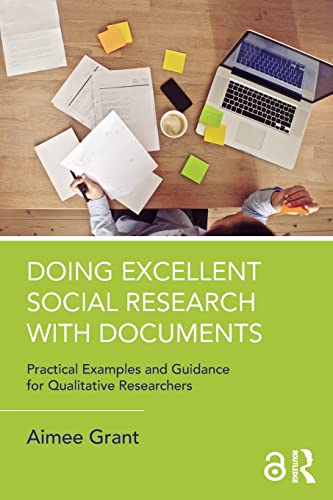
Continue readingDoing Excellent Social Research with Documents: Practical Examples and Guidance for Qualitative Researchers
Here’s an unusual Reading Wales Month contribution. I’m including it in celebration of the academic institutions in Wales and the contributions they have made to society. I’m an alumnus of Aberystwyth University. When I was there, Aber was a college of the federal University of Wales, along with Bangor, Cardiff, St David’s and Swansea. Aimee Grant is a post doctoral researcher at Swansea University and has written a brilliant guide to how to analyse information contained in documents. She comes at the subject from a social science angle, but what she describes is relevant to all of us in a world of overwhelming information.
The foreword to Doing Excellent Social Research with Documents makes the point that we are creating and consuming written content and images at an increasing rate, across a range of sources that have expanded to include digital sources like social media. The need for skills in critically reading these sources is becoming increasingly important so that we can all “read between the lines” and understand what lies behind these documents, which are considered by Grant “not simply as topics of study but for what they can tell us about the richness of the lives of individuals in a variety of social situations.”
As someone working with documents (I’m an archivist) with a background in Economic and Social History (my first degree that still informs my professional practice), this introduction had me excited for what was to follow. You might not feel as excited as I did, but hear me out.
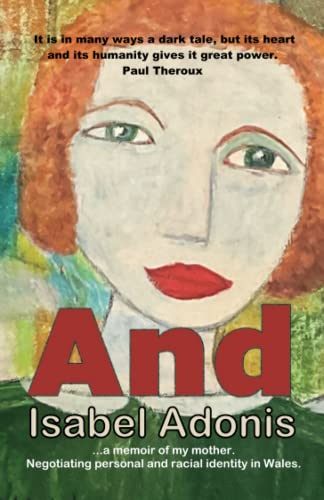
Continue readingAnd… A memoir of my mother
Isabel Adonis is an artist and writer based in North Wales. I first got to know her work as an artist when The Weavers Factory gallery held an exhibition of her show Scraps, Patches and Rags in 2021. The works in the show explored meanings of ‘home’, a theme that is also a strand in And… A memoir of my mother. Here, Isabel reflects on her childhood and her mother’s place in it, alongside an examination of what ‘home’ meant to her mother. It’s a book about fragmentation and division, about how society tries to constrain individuality, and how the search for the true self is almost impossible.
Continue readingSix Degrees of Separation, March 2026
And so to March’s seventh day and first Saturday. I make that Six Degrees of Separation O’Clock.
This month, our host Kate has chosen Wuthering Heights by Emily Brontë as our starting point. You can find out more about the meme at Books Are My Favourite and Best.
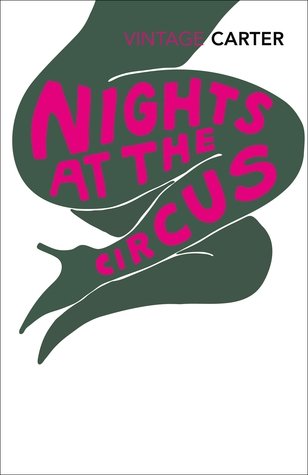
Continue readingNights at the Circus
Nights at the Circus opens with a bang, in the dressing room of Fevvers, an aerial Helen of Troy billed as “The Cockney Venus” who performs in a London circus show. She is loud, bold, sure of herself, and she is speaking to a young journalist about her legendary life. I liked her instantly for her raucous good humour and fondness for spinning a tale.
Nights at the Circus preceded Angela Carter’s last novel, Wise Children. I haven’t read it, but I have seen a theatrical adaptation of it by the theatre company that takes its name from the book. I got a similar feeling from Fevvers as that which emanated from the actors on the stage during Wise Children – the pure joy of being a performer.
Continue readingReading Wales Month 2026

Today is the first day of March and I’m pondering my first book for Reading Wales ’26. I have two books lined up – one from the reading list I put together for my Year of Reading Women and one from my wish list that links to one of the buddy reads chosen by this year’s challenge co-hosts. Which to choose first is the question.
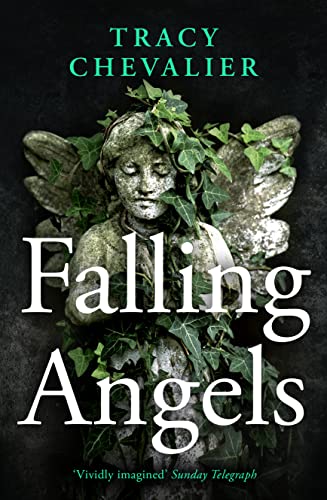
Continue readingFalling Angels
I wasn’t sure about Tracy Chevalier’s Falling Angels at first. Its episodic, first person narrative across multiple characters felt clumsy at the start. Some of the voices became stronger as the story progressed, though, and I ended up loving it and being heartbroken by it.
Continue readingThe Heart Goes Last
The Heart Goes Last is a novelisation of Margaret Atwood’s online Positron series, which appeared on the defunct Byliner website between 2012 and 2013. I dimly recall Atwood talking about the series on social media but never read it. It doesn’t matter. The novel stands alone perfectly well. Set in a near future where the aftermath of a financial crash has left the rich sequestered on the West Coast of America, the majority of society mostly jobless and homeless, and the lawless living an unfettered existence trading on a lucrative black market, the novel follows Charmaine and Stan as they try to survive the decimation of their previously average life.
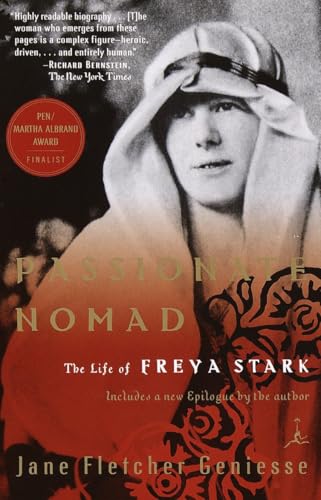
Continue readingPassionate Nomad: The Life of Freya Stark
Passionate Nomad recounts the life of Freya Stark, a British-Italian explorer who travelled extensively in the Middle East and Afghanistan (better described by people from the region as West Asia, which is what I’m going to call it) from 1927 until 1968. Her wanderlust took root during the First World War, when she served with a British Red Cross ambulance unit in Italy, but it was the restrictions of her sister’s life and the overbearing nature of her mother that encouraged her to make the most of her own life and take a boat from Italy to Beirut in November 1927. She wrote extensively about this and all the journeys around Lebanon, Syria, Iraq, Iran and Yemen that she made subsequently. Jane Fletcher Geniesse’s biography of this remarkable woman explores the adventure Stark’s life became.
Continue readingRandom Thoughts on AI scraping

Despite checking the ‘Prevent third-party sharing for this site’ and ‘Discourage search engines from indexing this site’ options in my blog settings, and adding obvious AI accounts to spam and blocked account lists, the AI scraping bots are back.
Continue reading