Feeds:
Posts
Comments

Archive for June, 2024

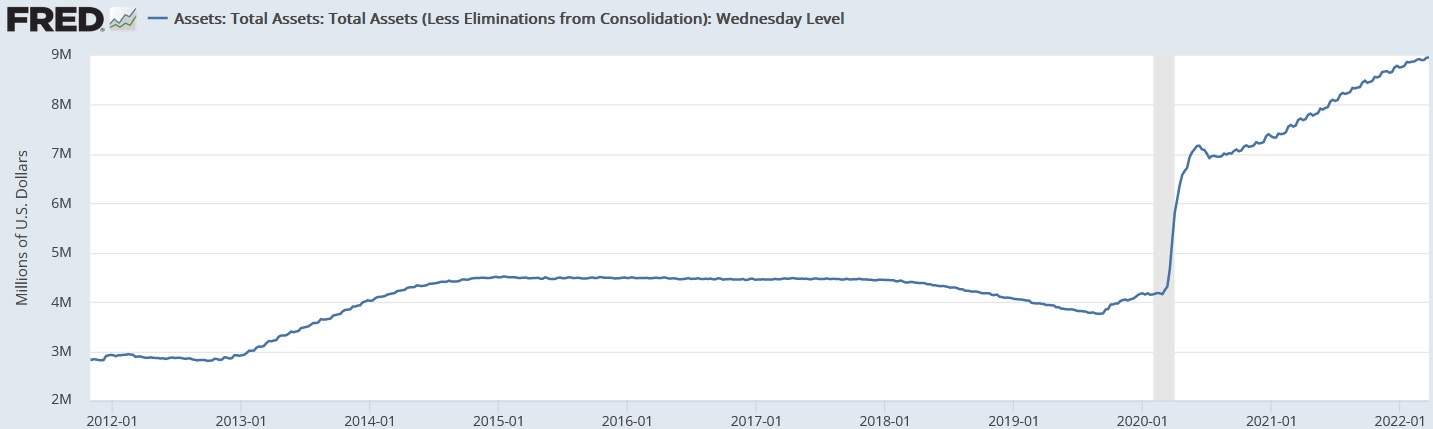
Over the past few years, I’ve repeatedly emphasized Milton Friedman’s insight that central banks deserve blame for inflation.

To illustrate, here are two charts.

The first chart shows the Federal Reserve’s balance sheet. If you focus on the past five years, you can see that there was a dramatic increase in money creation by the Fed starting in the second quarter of 2020.

Image

The second chart shows the annual inflation rate. Once again, focus on the past five years and you’ll see that prices began to rise in 2021, as the Fed’s excess money began circulating through the economy.

Image

Looking at the two charts, you can all see that the Fed began to unwind its mistake, starting in mid-2022.

Lo and behold, shrinking the Fed’s balance sheet (i.e., soaking up some of the excess money) has now translated into a falling inflation rate.

I’ve provided this background because there’s now a controversy involving some left-leaning economists who signed a letter asserting that Trump’s economic agenda would be inflationary. Here are excerpts from the letter.

We the undersigned are deeply concerned about the risks of a second Trump administration for the U.S. economy. …Many Americans are concerned about inflation, which has come down remarkably fast. There is rightly a worry that Donald Trump will reignite this inflation, with his fiscally irresponsible budgets. Nonpartisan researchers…predict that if Donald Trump successfully enacts his agenda, it will increase inflation.

Here’s how Axios summarized the letter.

Image

Are these economists correct?

Before I give my two cents, here are some excerpts from James Piereson’s article in the City Journal.

In 2021, 15 of these same economists…signed a similar public letter endorsing Biden’s Build Back Better agenda… Several pieces of a pared-back plan were eventually incorporated into the so-called Inflation Reduction Act of 2022… The prize-winning economists had this to say about Biden’s economic proposals: Image“Because this agenda invests in long-term economic capacity and will enhance the ability of more Americans to participate productively in the economy, it will ease longer-term inflationary pressures.” …How did it all work out? The expert economists were badly mistaken on inflation. They said that Biden’s spending packages would “ease inflationary pressures,” but everyone understands today that those same policies stoked inflation. …In sum, the Nobel laureates praising Biden’s policies today (and criticizing Trump) are the same ones who recommended policies that ignited inflation… Judging by their track record, when it comes to economic policymaking, these prize-winning economists have no idea what they are talking about.

I agree with almost everything that Piereson wrote.

The one exception is that it is wrong to have written that Biden’s “policies stoked inflation.” No, the Federal Reserve caused inflation.

Though, to be fair, the Fed may have pursued bad monetary policy because of “fiscal dominance.” To be more specific, the Fed expands the balance sheet by buying government bonds. Some speculate that the Fed’s motive for buying government bonds was to help Trump and then Biden to finance the spending orgy in Washington.

That being said, the Federal Reserve’s expansion of the balance sheet would still be the reason for inflation.

One final observation is that the leftist economists based their argument on Keynesian economic theory. From this warped perspective, inflation is not necessarily caused by excess money creation. Instead, it can be a consequence of excessive demand.

I think it’s possible we get inflation under Trump, but not for the reason they cite.
Read Full Post »

At the risk of understatement, I don’t admire very many politicians.

Among leaders who have passed away, I obviously was a fan of Thatcher and Reagan. Among those still alive, my obvious favorite is Javier Milei of Argentina.

ImageBecause of my support for tax competition, however, I may have to add Hans-Rudolf Merz to my list.

He’s certainly not famous. Especially now. But at one point, he was the Finance Minister of Switzerland.

My admiration for Merz is not simply because he is from a well-governed nation. Instead, I want to praise him for openly (and correctly) defending tax competition.

Though we’re going to have to dig into the archives. Here are some excerpts from a 2005 article that I recently discovered.

Finance Minister Hans-Rudolf Merz has defended the Swiss tax system after the European Commission questioned low corporate tax rates in some cantons. …“For Switzerland, tax competition is not only a theoretical concept. ImageIt represents one of the constitutive elements of our system of state and self-understanding,” Merz said on Friday. “Competition ensures diversity and quality of supply, innovative entrepreneurship, and low prices for consumers. “This forces the policies and administration of competing locations to offer an attractive combination of public services and a tax burden that is as low as possible.” …“The realpolitik alternative to tax competition is a tax cartel. Cartels, however, are seldom advantageous for the citizen.”

Very well stated. And several winners of the Nobel Prize in Economics would agree.

Unfortunately, Merz’s position has not prevailed over time.

Switzerland has been bullied into being part of the global corporate tax cartel that has been pushed by the OECD and the Biden Administration.

But thanks to people like Merz, Switzerland almost always is on the right side, even if it doesn’t always prevail.

P.S. Some British politicians also have defended tax competition (see here, here, and here).

P.P.S. Another former Swiss Finance Minster also deserves praise, in his case for being the father of his country’s very successful spending cap.

Read Full Post »

I’ve repeatedly explained that government red tape generally fails a cost-benefit test.

Today, we’re going to look at a practical example.

Four economists (Anna Claire Flowers, Vincent J. Geloso, Clara E. Piano, and Lyman R. Stone) have a working paper that looks at the impact of state childcare regulations on fertility rates.

Here’s their map showing which states have the most red tape (policies involving things such as staff ratios, training requirements, and education mandates). Lighter-colored states have more regulation and darker-colored states have more freedom.

Image

So what’s the impact of regulation?

For those who know the track record of red tape, you won’t be surprised to learn that states with more red tape have higher costs. And that leads to fewer children.

…many developed countries are considering childcare subsidies as a way to curb declining birth rates. …Given that 71.7 percent of mothers with children are employed in the labor force (compared to more than 92 percent for fathers), it is unsurprising that the relationship between fertility and the market for childcare remains an important question. ImageIn this paper, we ask whether one form of government intervention in the childcare market – the regulation of childcare – is associated with larger fertility gaps, here referring to the stylized fact that in high-income countries women tend to have fewer children than they report they would have liked to have. … Our approach varies from the family policies typical of the literature…in that childcare regulations are not usually explicitly presented as pro-, or anti-natal policies at all… Yet, we show that these regulations have large and possibly unintended effects on women’s likelihood of satiating preferences for childbearing. We measure childcare regulation intensity across the U.S. states… Both sets of results confirm that more relaxed regulatory environments are associated with narrower fertility gaps…more women achieve their fertility goals in states with less childcare regulation.

I can’t resist broadening the discussion.

I’ve written many times that there’s a desperate need for entitlement reform, in part because of falling birthrates (to be more specific, there will be too many older beneficiaries in the future and not enough younger workers to pay for them).

Maybe my friends on the left should support deregulation of child care so that there are more future taxpayers? After all, Ponzi schemes can be propped up if there is an ever-growing number of new entrants.

Read Full Post »

I wrote earlier this year about Kenya’s fiscal policy and I made two points.

  1. ImageKenya is in trouble because the burden of government spending has exploded over the past twenty-plus years.
  2. Tax increases in Kenya are backfiring because people are changing their behavior in response to government greed.

Unfortunately, that hasn’t stopped the Kenyan government from pushing for further tax increases. Following the horrible advice of the International Monetary Fund, the Kenyan government has been raising just about every tax imaginable.

And they’ve reached the breaking point. But I’m not referring to the Laffer Curve (though that’s an issue).

The suffering taxpayers of Kenya are revolting against their greedy government. In response, the government is killing them. Here are some of the tragic details from a report in the Washington Post by Rael Ombuor.

At least five people were killed during street protests over a new tax proposal Tuesday in Kenya’s capital as police fired on protesters… The protests targeted Kenya’s president, William Ruto, who, despite being lauded in Washington during a recent state dinner hosted by President Biden, has become deeply unpopular at home over tax hikes that have enraged the middle class.Image His ruling party pushed through a new tax bill Tuesday as the protests mounted. …The legislation, dubbed Finance Bill 2024, was introduced in Kenya’s Parliament for debate in May. It calls for increases in taxable incomes, excise duties and value-added taxes, and introduces new income tax categories to the country’s finance laws. …Among the clauses in the tax legislation are a proposal to increase tax income earned from digital platforms, a tax on food products such as bread and oil, and taxes on contributions to social security funds. The bill also initially proposed to introduce a motor vehicle tax at the rate of 2.5 percent of the value of the vehicle owned, and an environment tax on imported manufactured goods such as menstrual pads, diapers and phones.

A good report, but it’s missing two things.

First, there’s no mention of the pernicious role of the IMF. Which is a bit of an oversight since all it would take is a look at the Kenya section of the IMF’s website to see how the bureaucracy has been hassling the government to raise taxes.

Second, there’s no fiscal analysis in the article. So I’ll make up for that sin of omission. I went to the IMF’s big database to look at Kenya’s fiscal and economic data.

Lo and behold, I found that government spending has grown nearly twice as fast as inflation over the past two years.

Image

In other words, Kenya has an over-spending problem, not an under-taxing problem.

How big is the over-spending problem?

Here’s another chart showing how the burden of government spending has skyrocketed over the past 25 years.

Image

Measured as a share of the economy, the spending burden has jumped by more than 50 percent, from less than 14 percent of GDP to more than 22 percent of GDP.

By the way, the tax burden has climbed by about 5 percentage points of GDP, confirming once again that Kenya has a spending problem rather than a revenue problem.

Just like my country. Except we have riots about election results, not taxes, so Kenya has an advantage.

Read Full Post »

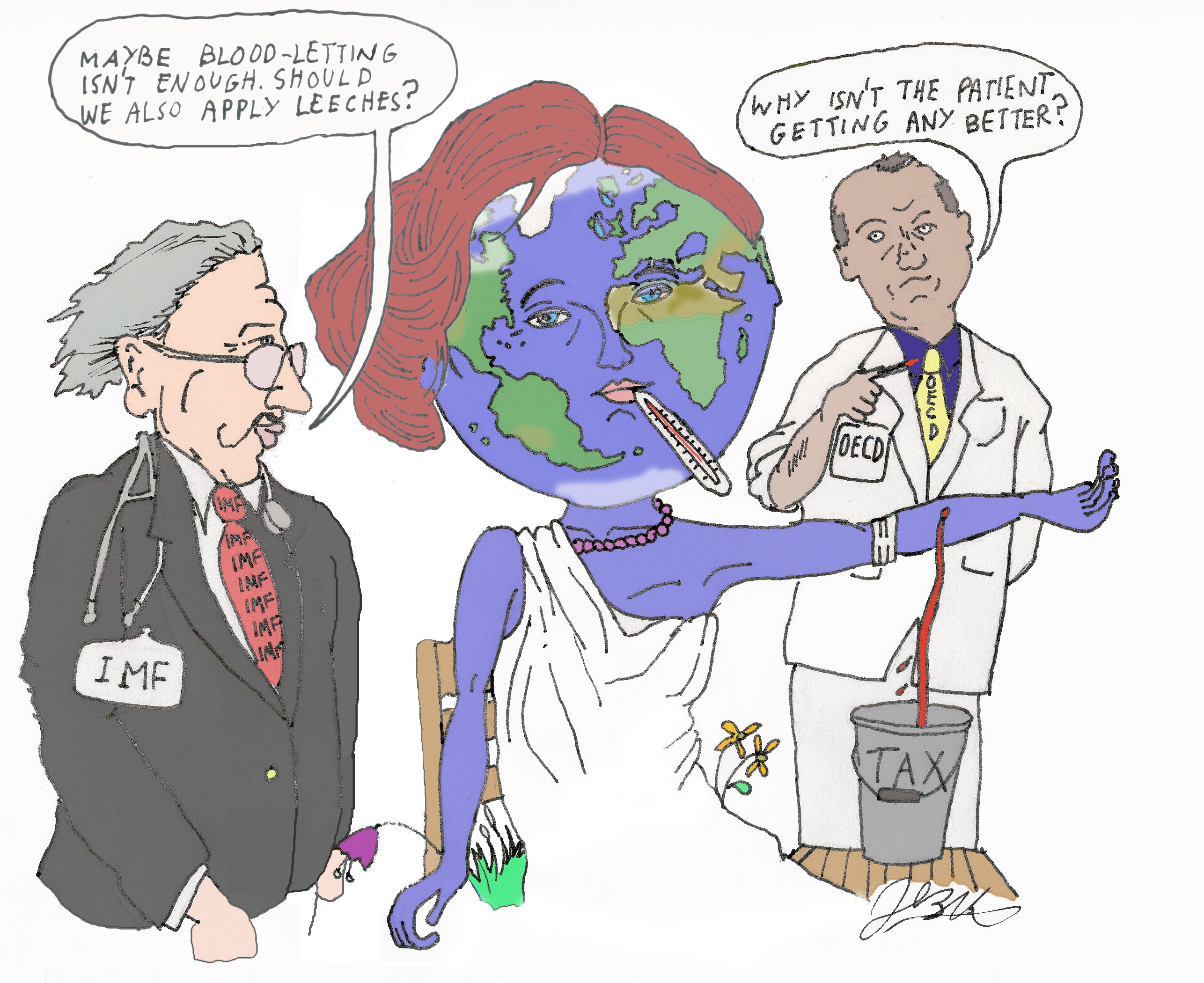
The Organization for Economic Cooperation and Development is a Paris-based international bureaucracy that originally was created to engage in benign activities such as gathering statistics about member nations. Image

It still does some of that, but it also has become an advocacy organization, pushing an agenda that reflects the statist orientation of the Western European nations that dominate the OECD’s membership.

The bureaucracy is especially notorious for its anti-tax competition efforts, such as the global corporate tax cartel.

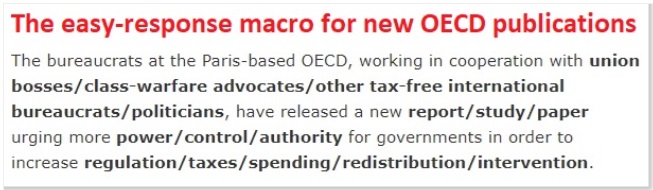
But it also pushes for bad policy in member nations. Heck, it pushes for bad policy in non-member nations. Basically, OECD bureaucrats think “higher taxes” is the answer for almost any question. Image

I even created a sarcastic fill-in-the-blanks macro back in 2015 that can be used for any of their publications.

The bureaucrats even target the United States, which seems kind of foolish since American taxpayers finance the biggest share of the OECD’s budget.

For example, they just released their Economic Survey of the United States and recommended massive tax increases. Everything from higher corporate tax rates to increased double taxation of dividends and capital gains. As well as higher individual tax rates, busting the wage-base cap, and expanding the death tax.

Most of those tax increases target upper-income taxpayers, which OECD economists recognize is a recipe for less prosperity, but OECD tax bureaucrats don’t care.

Moreover, they didn’t forget about the rest of us. The bureaucrats also want a carbon tax and an increase in the payroll tax rate.

I’m not joking. Here’s their list, directly copied from page 135.

Image

To be fair, the OECD Survey also includes a few changes on the spending side of the budget.

But the bureaucrats failed to identify a single department to eliminate (there are many juicy targets). Not did they call for structural entitlement reform.

They merely suggested tinkering with program formulas – an approach that repeatedly has failed to produce meaningful savings.

Oh, and they also regurgitate their recommendation for a new parental leave entitlement.

P.S. You may be wondering why the OECD pushes bad policy. The answer is simple. That is the message that politicians prefer, and the bureaucrats at the OECD need to please those politicians in order to continue enjoying their lavish budgets and exceedingly generous tax-free salaries.

P.P.S. You may also be wondering why Republicans continue to send tens of millions of dollars to Paris to subsidize the OECD. That’s a very good question. I assume the answer is a mix of stupidity and masochism.

Read Full Post »

Communism is a terrible and evil system with a deadly track record.

The bad news is that communism still exists, with the basket case of North Korea being an example of a country that has retained traditional Marxist socialism.

The good news is that many nations escaped communism when the Soviet Union collapsed (thank you, President Reagan).

To varying degrees, these countries have shifted away from socialism and adopted free markets. The Baltic nations are probably the best example.

There’s also good news in that some nations are still officially communist, but have taken some steps to liberalize their economies.

I’ve written many times, for instance, about China’s partial economic reform (followed by a bit of backsliding).

Today’s column will be about Vietnam, another nation that is officially communist but has nonetheless reduced government control over the economy.

Let’s start with this chart, based on Maddison data, comparing per-capita GDP in Vietnam, Cuba, and North Korea.

Image

Vietnam was very poor in the 1970s and 1980s, trailing way behind even backward Cuba.

But when the Soviet Union joined the “ash heap of history” and no longer could subsidize Cuba, that caused per-capita GDP to plunge almost to the level of Vietnam and North Korea (data only available staring in 1990).

Notice, however, what happened to North Vietnam starting in the late 1980s. It’s per-capita GDP began to climb. Why? Presumably in part because its economic freedom score improved.

There’s no EFW data for the 1900s, but it’s worth noting that Vietnam’s score improved from 5.34 in 2000 (on a 0-10 scale) to 6.26 in the most recent edition of Economic Freedom of the World.

No wonder Vietnam has now passed Cuba when looking at per-capita GDP.

Rainer Zitelmann wrote a book entitled, How Nations Escape Poverty: Vietnam, Poland, and the Origins of Prosperity. He summarized some of his analysis about Vietnam in a column for Reason.

He starts with a discussion of the horrible policy that the country used to have.

People often had to wait hours, sometimes all day, to get a little food, and those who wanted a better chance of leaving with food came at night. They were already queuing up before the food was even delivered, in the hope that it would arrive at some point.Image …The amount of food you got depended on your family’s status. State employees received more, factory workers less. …Today the Vietnamese call this era Thoi Bao Cap—”the subsidy period.” It was the time of a socialist planned economy, before the free market reforms of the late 1980s. …Vietnam relied on food aid from the United Nations and financial assistance from the Soviet Union and other Eastern Bloc countries. As late as 1993, 79.7 percent of the Vietnamese population was living in poverty.

He then summarizes some of the good things that have happened in more-recent decades.

Vietnam is now one of the most dynamic countries in the world, with a vibrant economy that creates great opportunities for hardworking people and entrepreneurs. Once a country unable to produce enough rice to feed its own population, it has become one of the world’s largest rice exporters, and a major electronics exporter too. …There was no great tidal wave of privatizations, as in some Eastern European countries. Instead, state-owned enterprises simply declined in significance in relation to the private economy. Their subsidies were reduced, forcing them to work more efficiently and compete in the marketplace. Many unviable enterprises had to file for bankruptcy, and the overall number of employees in state-owned enterprises fell by about 30 percent (more than 800,000 workers) from 1989 to 1992. …Vietnam’s gross domestic product grew by 7.9 percent a year from 1990 to 1996, faster than any other Asian country but China. Poverty fell sharply. By the World Bank’s standard for extreme poverty—living on less than $1.90 a day—52.3 percent of the Vietnamese population was living in extreme poverty in 1993. By 2008, the figure had fallen to 14.1 percent. By 2020, it was only 1 percent.

Jon Miltimore also wrote about Vietnam in a column for the American Institute for Economic Research.

Here are some excerpts, starting with the bad news.

Though President Ho Chi Minh had promised in 1969 that defeating the Americans would allow socialists “to rebuild our land ten times more beautiful,” the postwar period was marked by economic decline. Vietnam was primarily an agricultural economy, and collectivization of farming had achieved results that were little different from previous collectivization attempts by the likes of Stalin and Mao.Image …by 1980, Vietnam, once an exporter of rice, was producing just 14 million tons of rice annually, even though it required 16 million tons to feed its own population. …Planners also instituted aggressive policies to nationalize industries in Vietnam. …Price controls — particularly rent control policies, which are notoriously destructive — also played a key role in Vietnam’s economic decline. …Throughout the 1980s and even into the 1990s, hunger was omnipresent for many Vietnamese people. As late as 1993, 80 percent of Vietnam’s population lived in poverty.

Now for the good news.

…in one of the most remarkable stories in modern history, poverty in Vietnam stands at roughly 4 percent, according to the Asian Development Bank. …aid to Vietnam was drying up in the 1980s and early 1990s. Because the Soviet Union was suffering its own economic collapse, billions of dollars in aid that would have gone to Vietnam were not sent. …the Vietnamese began spontaneously to create their own market economy to survive. State officials increasingly turned a blind eye to price control-violations… In response to this burgeoning economy, socialist leaders did something else quite extraordinary: they embraced the market economy and admitted their own “mistakes.” …In 1987, a new investment law was passed that showed Vietnam was open for business. The law promised that the state would not expropriate or nationalize foreign property or capital. …Today, Vietnam is one of America’s top-ten trading partners. The nation’s primary exports, which were once coffee and coconuts, are computers, mobile phones, and other electronics. It was one of the most miraculous economic transformations in history, and it achieved amazing results. From 1990 to 2022, per capita GDP in Vietnam increased more than fivefold.

I’ll close by looking at some data from the latest edition of the Index of Economic Freedom, which does include estimates for economic liberty for pre-2000 Vietnam, as well as for Cuba and North Korea.

You’ll notice that economic liberty in Cuba and North Korea declined between 1995-2024. But in Vietnam, economic freedom jumped from 41.7 to 62.8.

Image

No wonder Vietnam is out-performing the other two communist nations.

To be sure, Vietnam’s economic policy is still bad. But bad is better than terrible. And terrible is better than utterly atrocious.

Vietnam has take the first steps in what hopefully will be a long journey.

Giving the private sector some breathing room is a good idea. Giving the private sector a lot of breathing room is even better…at least if the goal is to avoid the middle-income trap and become a rich nation.

Read Full Post »

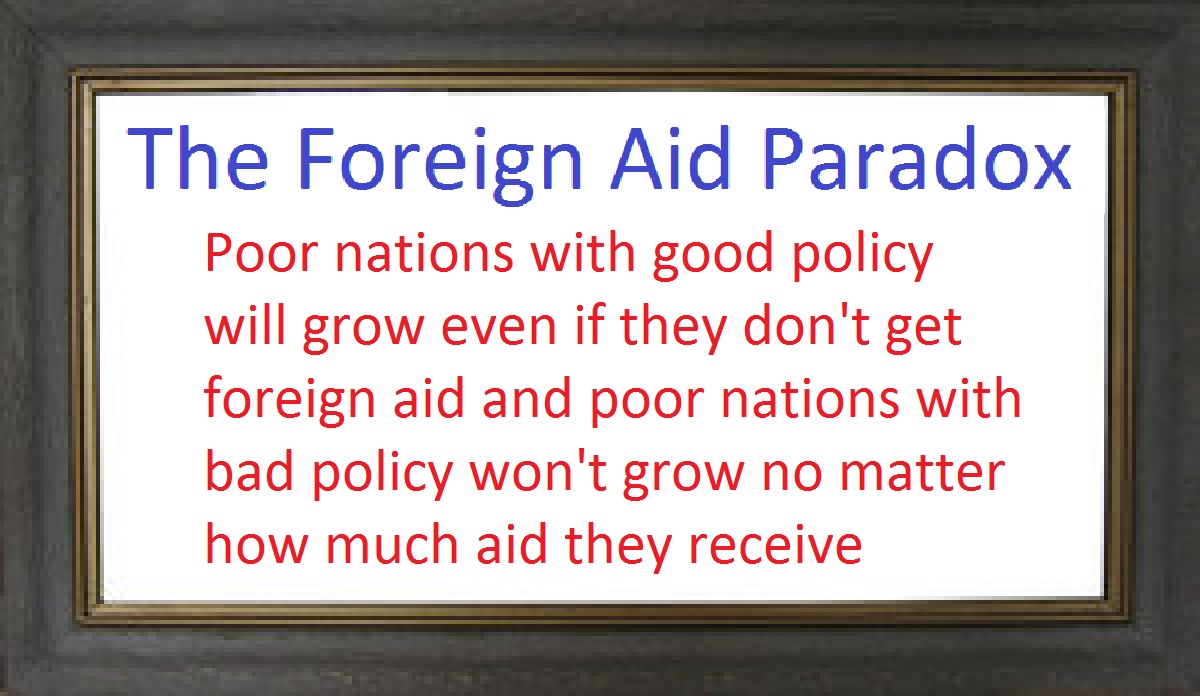
Because of my libertarian instincts and sympathy for taxpayers, I’m not a fan of foreign aid.

But there’s also the very practical argument that foreign aid simply does not work. More aid doesn’t produce more growth. Indeed, handouts may hinder economic development by propping up bad governments and bad policy.

Let’s use Moldova as an example. I’m currently in that country for a speech that will focus of rule of law and the quality of the judicial system.

As part of my research, here are the World Bank Governance Indicators for Moldova in 1996 (shortly after it achieved independence from the Soviet Union) and 2022 (the most-recent data). As you can see, modest improvements in two areas is offset by modest declines it three other areas.

Image

Incidentally, I didn’t even include the “Political Stability” category, which dropped significantly. I’m guessing that Russia’s invasion of Ukraine (which borders Moldova) has played a role in that decline, and it would not be fair to blame the current Moldovan government for having a conflict next door.

The bottom line is that Moldova has not taken advantage of independence, at least when measuring quality of governance.

Why should this matter to American readers? Or to readers from just about any place other than Moldova.

Well, it should matter to Americans (and Europeans and Japanese) because we’re helping to finance Moldova’s government.

With regards to American aid, here are some excerpts from a recent Associated Press report by Matthew Lee and Vadim Ghirda. 

U.S. Secretary of State Antony Blinken…pledged $135 million in aid to Moldova for energy security and to counter Russian disinformation as the Western-leaning nation struggles to blunt Moscow’s push for influence that has been buoyed by recent successes in its war in neighboring Ukraine. ImageBlinken opened a short visit to Eastern Europe with a stop in Chisinau, Moldova’s capital, where he announced the assistance at a news conference with President Maia Sandu. America’s top diplomat said $85 million would go to bolster energy infrastructure and $50 million was aimed at overhauling the energy and farming industries and deterring disinformation. …the U.S. had provided Moldova with $774 million in financial aid since the Ukraine war began in February 2022. Some $300 million of that was earmarked for energy security. …Sandu thanked the U.S. for its financial support, …“Thanks to the financial American assistance of $80 million, in the past winter we managed to compensate the energy bills of our citizens.”

So, among other things, U.S. aid is being used to subsidize energy consumption in Moldova.

I don’t think that the U.S. government should subsidize anyone’s energy bills, either at home or abroad.

For what it’s worth, my philosophical objections to foreign aid don’t apply to money that is used to buy friends. ImageIf someone can convince me that handouts to a foreign government will keep that country from siding with Russia (or some other unfriendly country), that might be worth it.

But I’m very skeptical that the U.S. handouts to Moldova are achieving that goal. Heck, foreign aid might even backfire (as it probably did in pre-war Ukraine…and probably will in post-war Ukraine).

The bottom line is that foreign aid has a terrible track record.

But if politicians insist on sending taxpayer money to other nations (either to make themselves feel good or to buy friends), the funds should be tied to something concrete, such as better scores on the World Bank’s Governance Indicators.

Or, even better, make aid conditional on getting better scores from Economic Freedom of the World (and conditional on ignoring bad advice from the IMF and OECD).

Read Full Post »

More than 13 years ago, when many European nations were rocked by fiscal crisis, I speculated about which nation would be the next to suffer a Greek-style meltdown.

I focused my analysis on Japan, Italy, Greece, Belgium, Spain, and Portugal. And I included the United States in my analysis because of the Bush-Obama spending binge.

The good news is that there has not been a repeat of Greece’s fiscal collapse.

The bad news is that it may just be a matter of time.

Why? Because scholarly research shows that the best and strongest predictor of a fiscal crisis is excessive budgetary expansion. And that’s happening in too many nations.

And more spending leads to more red ink. Here’s a chart, based on OECD data, showing government debt levels in 2000 and 2022. Six of the seven nations have moved in the wrong direction.

Image

In the case of Japan, Greece, Spain, and the United States, the deterioration has been dramatic, with Portugal also moving significantly in the wrong direction.

For those who want to see all OECD nations, here another chart.

Image

Kudos to Estonia for keeping government under control. And the other Baltic nations also score well.

And Switzerland’s strong position is another reason to celebrate that nation’s spending cap.

I’m somewhat surprised, though, to see Denmark is such good shape.

But it’s not a shock to see that France is one of the worst of the worst.

Speaking of France, Desmond Lachman of the American Enterprise Institute includes that country in his very pessimistic assessment.

…instability raises risks of a French debt crisis. Other countries in Europe, most notably Italy, are also flashing warning signals at a particularly bad time for the global economy. Debt is putting an economic strain on Europe. Italy, the third-largest euro zone member country, finds itself on an unsustainable public debt path. To have France, the second-largest, also on such a path looks plainly dangerous for the euro’s future. …Until recently, Italy was generally regarded as the euro’s weak link. Not only was its public debt to GDP ratio well above its level at the time of the 2010 euro zone debt crisis, there was also little prospect that it could get its debt ratio on a declining path.Image In addition to having an economy that grows at a snail’s pace, last year Italy ran a budget deficit of over 7% of GDP. That combination of low growth and a relatively high budget deficit must be expected to keep Italy’s public debt at a dangerously high level indefinitely. …Greece’s debt problems shook world financial markets. We have to wonder how much more markets would be shaken if debt problems were to surface in Italy, which has an economy some ten times the size of Greece. This…is now also focusing the market’s attention on France’s precarious public finances. …Even in a benign political setting, experience with budget belt-tightening during the 2010 euro zone debt crisis suggests that France and Italy will have difficulty in restoring public debt sustainability.. All of this casts a dark cloud over the world economic recovery in the year ahead.

Richard Rahn has the best analysis for the simple reason that he points to a solution that would reverse the fiscal mess plaguing nations. Here’s some of what he recently wrote for the Washington Times.

As of May 1, each U.S. citizen’s federal government per capita debt was $102,984. This debt is rising rapidly, increasing 7.66% in the last year and an astounding increase of 2.38% in the last month. These figures do not include the unfunded liabilities of Social Security, Medicare, etc., which run into many added trillions of dollars.Image Last month, I participated in conferences in several European cities dealing with the global debt crisis (most major economies have debt-to-gross domestic product ratios exceeding 100% and growing — which is not sustainable). Among knowledgeable people, the fact that we are at the edge of the debt cliff is widely accepted — which means there will be a large drop in living standards or, at best, very little improvement (shades of Argentina and Greece). The correct policy solution is to cut government spending so that the debt-to-GDP ratio is falling at a meaningful rate.

Amen. The United States needs a spending cap. Europe needs a spending cap. Developing nations need a spending cap.

Remember, spending is the problem and debt is a symptom of the problem.

P.S. Any country can fix its problem with spending restraint. Which is why I want to applaud Italy and Greece for small steps in the right direction.

P.P.S. Debt-financed spending is bad. But tax-financed spending is equally bad. And spending financed by money-printing may be the worst of all options.

Read Full Post »

Back in February, I debunked a Washington Post story that tried to portray Biden’s economy as being successful merely because the U.S. was out-performing Europe.

ImageThat’s true, but hardly a big achievement.

More important, that type of analysis won’t be persuasive to voters who are unhappy about sluggish wages and stagnant incomes.

Today’s column is going to review a story in the New York Times that also tries to put a positive spin on the Biden economy by comparing America to other nations.

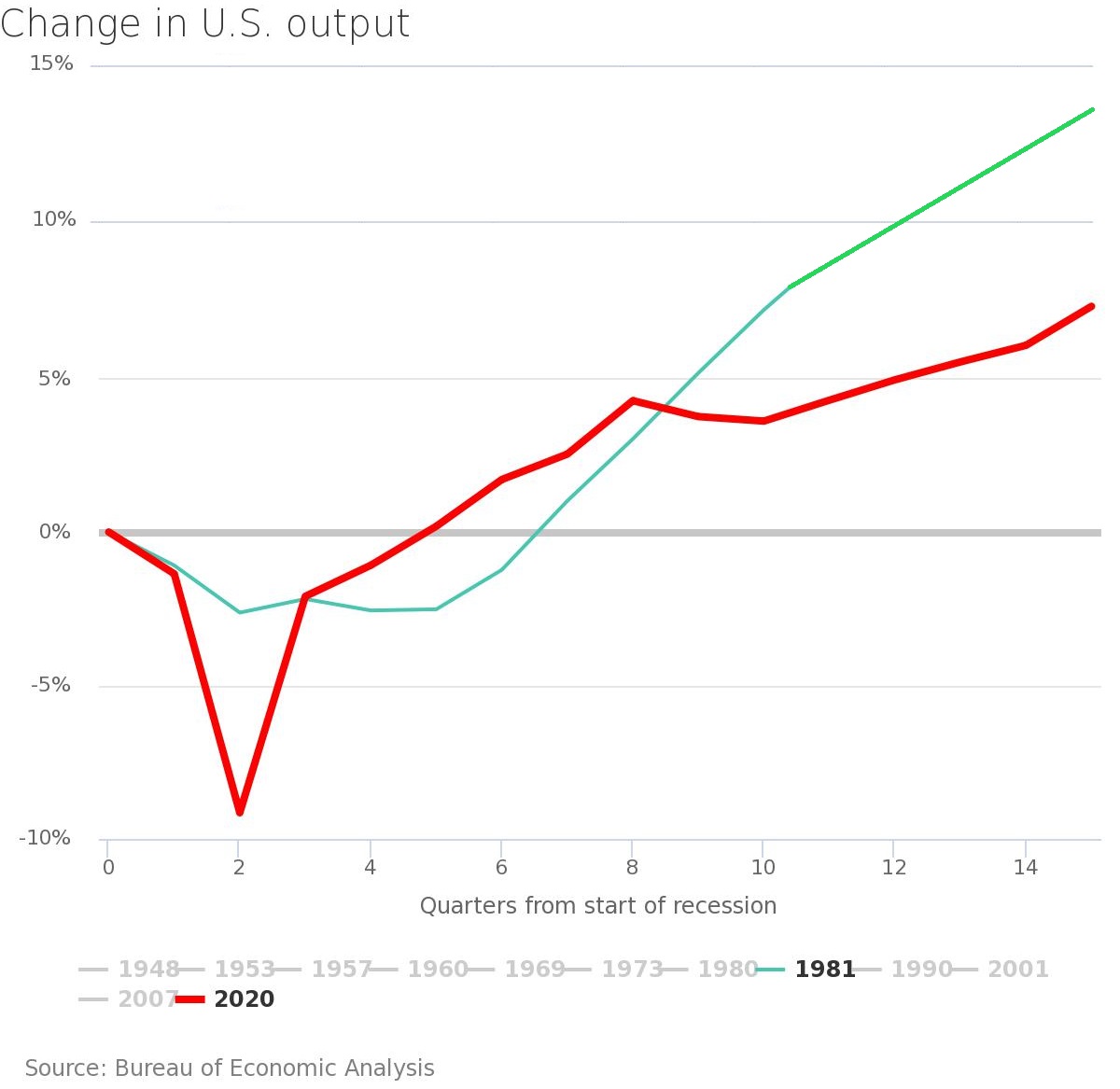
The authors, Jim Tankersley and , are puzzled that Biden isn’t getting more credit for a an economy that was “juiced” by his so-called stimulus.

Here are some excerpts.

Polls show that Americans continue to favor Mr. Biden’s opponent, former President Donald J. Trump, on economic issues. Often, they indicate that only relatively small slices of the electorate believe Mr. Biden’s policies have helped them or their family financially.Image …Economists say the relief package…has helped accelerate America’s recovery from the pandemic recession. The United States has grown and added jobs in a way that no other wealthy nation has experienced after the pandemic. Supporters of Mr. Biden, and the law, say that enhanced growth has helped the president remain better positioned electorally than his counterparts across Europe. …America’s rapid economic growth and low unemployment rate, bolstered by the stimulus, could help explain that divergence. …America’s recovery remains the envy of the wealthy world, far outpacing Europe, Japan, Canada and other allies.

At the risk of repeating myself, bragging that the United States is out-performing nations with even-worse economy policy is not exactly persuasive.

ImageSort of like saying a 10-year old can throw a baseball farther than a 5-year old.

But what is most absurd about the NYT story is the assertion that the United States is enjoying “rapid economic growth.”

In reality, the current expansion is relatively weak. Especially compared to the rapid growth the U.S. enjoyed under Reaganomics.

Given the political orientation of the establishment media, I’m not too surprised that journalists are trying to make Biden’s economy seem successful.

But putting lipstick on a pig is not likely to yield much success.

P.S. If you want an accurate assessment of the pig’s attractiveness, I have an eight-part series on Bidenomics that looks at poverty, subsidies, inflation, protectionism, household income, fiscal policy, red tape, and employment.

Read Full Post »

Earlier this week, the Congressional Budget Office issued a new 10-year fiscal forecast showing spending, revenues, and red ink between 2025 and 2034.

As these examples show, almost all of the resulting headlines focused on deficits and debt.

These titles are all accurate. But they also miss the point.

It would like writing a headline on June 7, 1944 entitled “Thousands die on French beaches” without mentioning the D-Day invasion to liberate Europe.

The accurate takeaway from the CBO report is that the United States faces a serious problem of out-of-control federal spending.

How do I know that? Because I went to the spreadsheet that accompanied the CBO report and looked at lines 84-91 of Table 3-1. Lo and behold, the increase in red ink is entirely the result of more spending.

Image

Fortunately, one media outlet focused on the real takeaway from the CBO report.

Here are some excerpts from a Wall Street Journal editorial.

Spending is the real problem, and it’s getting worse. …Notably, CBO’s revenue projections are little changed. Revenue is expected to total 17.2% of GDP this year—roughly the 50-year average before the pandemic…Image But CBO significantly revised up projections for federal spending. Outlays are now expected to hit 24.2% of GDP this year and average 24% over the next decade. Wow. …Entitlement spending—which now includes student loans—is growing at a pace that is fiscally unsustainable. Financing these programs has also become more expensive… CBO’s budget forecasts are getting progressively uglier, but it’s not because Americans aren’t paying their fair share in taxes.

Amen.

Our problem in Washington is too much spending. And that problem would exist even if $2 trillion floated down from Heaven and this year’s deficit disappeared.

P.S. I can’t resist sharing two additional sentences from the WSJ editorial.

Neither Mr. Biden nor Donald Trump talks about the national debt, perhaps because they might then have to do something about it. …Failing to take on that challenge means either a monumental tax increase or a debt panic down the road.

Sadly, this is correct. Both Trump and Biden want to condemn America to giant tax increases on lower-income and middle-class households (keep in mind that there are not nearly enough rich people to finance European-sized government).

Read Full Post »

After two columns of politician humor in 2023 (here and here) and two more in 2022 (here and here), it’s time for our first collection for 2024.

We’ll start with a discussion of fables.

Image

Next, we see a politician working on a piece of legislation.

Image

Our third item will resonate for people who care about animal rights.

Given the way Democrats waste money and Republicans waste money, this next item hits home.

Image

Last but not least, my favorite item in today’s collection shows two types of crooks engaging in stealing.

Image

Truly a “wretched hive of scum and villainy.”

Read Full Post »

I don’t like bad monetary policy by central bankers.

I especially don’t like bad monetary policy when central bankers refuse to accept responsibility for their mistakes.Image

I’ve already written about blame-shifting by the Bank of England.

An even worse example comes from the European Central Bank. And I’m not referring to the vapid statement by the political hack in charge of the ECB.

What’s far worse is that the supposedly professional economists at the ECB produced a study about the recent bout of inflation in the eurozone and pretended that it wasn’t a result of their own bad monetary policy.

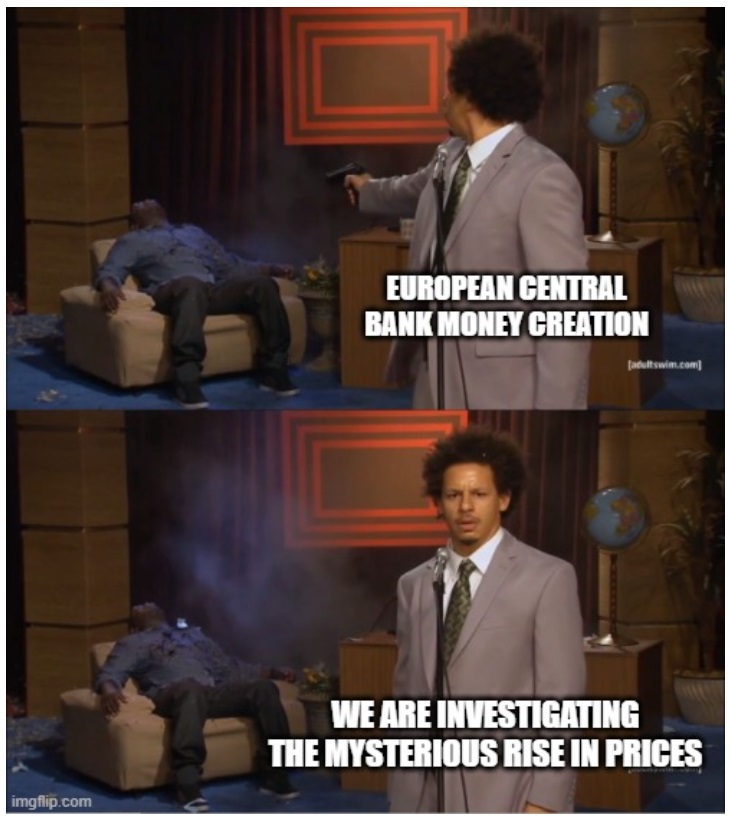
That example was so egregious that I even created a meme to mock their lame effort to deflect blame.

Today, I want to do something similar. I’m motivated by a New York Times column by Bret Stephens.

Here are some excerpts.

Why the broad dissatisfaction with an economic system that is supposed to offer unsurpassed prosperity? Ruchir Sharma, the chairman of Rockefeller International and a Financial Times columnist, has an answer that boils down to two words: easy money. Image…“When the price of borrowing money is zero,” Sharma told me this week, “the price of everything else goes bonkers.” …In theory, easy money should have broad benefits for regular people, from employees with 401(k)s to consumers taking out cheap mortgages. In practice, it has destroyed much of what used to make capitalism an engine of middle-class prosperity… First, there was inflation in real and financial assets, followed by inflation in consumer prices, followed by higher financing costs as interest rates have risen to fight inflation… For wealthier Americans who own assets or had locked in low-interest mortgages, this hasn’t been a bad thing. But for Americans who rely heavily on credit, it’s been devastating.

But it’s not just overall asset inflation and price inflation.

Easy money also distorts relative prices in the economy.

Sharma noted more subtle damages. Since investors “can’t make anything on government bonds when those yields are near zero,” he said, “they take bigger risks, buying assets that promise higher returns, from fine art to high-yield debt of zombie firms, which earn too little to make even interest payments and survive by taking on new debt.” A recent Associated Press analysis found 2,000 of those zombies (once thought to be mainly a Japanese phenomenon) in the United States. …The hit to the overall economy comes in other forms, too: inefficient markets that no longer deploy money carefully to their most productive uses, large corporations swallowing smaller competitors and deploying lobbyists to bend government rules in their favor, the collapse of prudential economic practices. …the worst hit is to capitalism itself: a pervasive and well-founded sense that the system is broken and rigged, particularly against the poor and the young. “A generation ago, it took the typical young family three years to save up to the down payment on a home,” Sharma observes in the book. “By 2019, thanks to no return on savings, it was taking 19 years.”

There’s lots of good information and analysis in the column, but I’m galled at the implication that capitalism deserves the blame.

The column’s title is particularly irksome. How on earth can someone conclude that capitalism went “off the rails” when the topic is how the government’s bad monetary policy has caused damage?

To be fair to the author, editors are usually the ones who decide titles.

But there are parts of the column that rub me the wrong way, such as “dissatisfaction with an economic system that is supposed to offer unsurpassed prosperity” and “the worst hit is to capitalism itself: a pervasive and well-founded sense that the system is broken and rigged.”

Some readers may interpret those passages to mean that free markets somehow have failed.

In reality, our “dissatisfaction” should be the Federal Reserve. And the Federal Reserve is the reason for the “well-founded sense that they system is broken and rigged.”

All of which goaded me to create a new meme.

Image

I’ll close by stating that today’s column isn’t about America’s central bank shifting blame. But it would be very interesting to see what would happen if Jerome Powell (Chairman of the Federal Reserve) was asked what caused America’s recent bout of inflation.

There are three possible options.

  1. Admitting the Fed screwed up.
  2. Denying the Fed screwed up.
  3. Not understanding monetary policy.

I’m guessing we’d get a combination of #2 and #3, but I hope that’s wrong.

The bottom line is the Federal Reserve recently has been a net negative for America.

P.S. Sometimes the blame-shifting is by the politician who appoints the central bankers, as we saw earlier this year in Canada.

Read Full Post »

Six years ago, I wrote a column explaining why America’s growth in the 1800s was not because of punitive trade taxes.

Let’s look at that issue again, starting with this video from Johan Norberg.

I’m motivated to revisit the topic because Trump recently said he would like to get rid of the income tax and replace it with tariffs.

Given my disdain for the income tax, I want to applaud this plan.Image

However, given the fact that Trump doesn’t have a specific proposal, it’s probably best characterized as an off-the-cuff statement rather than a plan.

Regardless, let’s start our analysis by looking at some historical data.

Trump is right that the United States used to impose high taxes on imports. The chart from Pew Research shows that America imposed very heavy trade barriers at different points, especially in the last half of the 1800s.

Trump also is right that revenues from trade taxes used to the main way of financing the federal government.

Here’s a chart showing how Washington has generated revenue over the past two hundred-plus years.

Image

The yellow-ish area is excise taxes as well as trade taxes, but the main takeaway is that there were no income taxes for much of America’s history. Or payroll taxes.

Everyone agrees on these numbers.

Even the New York Times, as shown by these excerpts from a 2018 story.

…at certain points in history, tariffs did provide for a vast majority of government funding. Before the War of 1812, tariffs generated about 90 percent of the federal government’s revenue, according to congressional records.Image …But that is mostly because the size of the federal government was a fraction of what it would become in later years… At that time in early United States history, the nascent government didn’t need much more than that. …expenditures ballooned during the Civil War… In the decades after the war, tariffs generated less than half of government revenue

So far, it seems like Trump may have stumbled across a good idea.

And, in theory, he has. The tariffs America had in the 1800s almost surely would be far less damaging than the current tax system, with its high rates, double taxation, and distorting loopholes.

But there’s one itsy-bitsy problem.

Actually, it’s not a small problem. It’s a $6 trillion-plus problem.

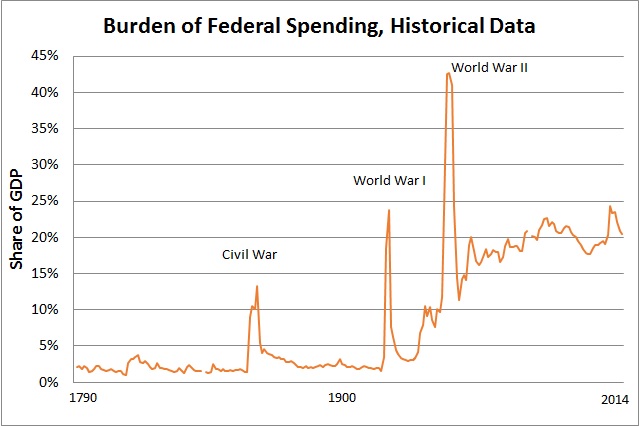
The only way to go back to the tax system of the 1800s would be if we also went back to the spending policy of the 1800s. Here’s a chart I first shared in 2015. As you can see, the burden of peacetime federal spending in the 1800s used to be trivially small, averaging about 3 percent of economic output.

Image

When government was that small, there was no welfare state. No Social Security. No Medicare. No Medicaid. No Obamacare. No food stamps.

No Department of Transportation. No Department of Education. No Department of Energy. No Department of Housing and Urban Development.

The list could continue for a long time.

The bottom line is that we can go back to the tax system of the 1800s, but that implies that Javier Milei is America’s next president, not Donald Trump or Joe Biden.

Read Full Post »

What’s happened on school choice this decade is remarkable. There are now statewide plans all across the nation.

And if you peruse the map, you’ll see that several more states may soon join the club.

Why has there been a revolution for school choice?

There are three possible answers.

  1. The evidence is now overwhelming that dumping more money into monopoly government schools doesn’t produce better results. More funding for government schools simply leads to more bureaucracy. It’s a classic case of “throwing good money after bad.”
  2. Families want the freedom to choose the best education for their kids and they have been rejecting politicians who side with the education establishment. Since getting reelected is the main goal of 99.9 percent of politicians, that is encouraging otherwise reluctant state lawmakers to support choice.
  3. Last but not least, private schools (as well as homeschooling) generate better educational outcomes. Children achieve better test scores and other social indicators also improve. And since some state politicians may actually want to do the right thing for the right reason, that is helping to build support for choice.

For today’s column, let’s expand upon the third reason that school choice is booming.

Here are some of the highlights of a new report from Children’s Scholarship Fund Philadelphia.

Children’s Scholarship Fund Philadelphia (CSFP) students’ test scores were compared to students attending School District of Philadelphia (SDP). Fourth and Seventh grade scholarship recipients’ standardized test scores in Math and Reading/ELA were compared to all children attending a public school and those eligible for the Federal Free and Reduced Lunch program…Image CSFP students fare much better at a private school compared to students attending a school in the School District of Philadelphia (SDP). For example, 47% of CSFP 4th grade students score at or above proficiency in Math compared to 23% of SDP students and 17% of low-income SDP students. The same is true for 7th graders, where 54% of 7th grade CSFP students score at or above proficiency in Math, while only 19% of all SDP and 14% lower-income SDP students score at or above proficiency. …CSFP partner schools outperform SDP district schools in both years, both subjects and at both grade levels. Over 58% of 7th graders at a CSFP school score at or above proficiency in Reading compared to 38% of 7th graders attending a traditional public school in the district. … Over half (52%) of 4th graders at a CSFP partner school score at or above proficiency in Math, while only 47% of all students and 31% of lower income students score at or above proficiency attending a school within a 10-minute drive.

Another way to tell that private schools are better is to see which option parents prefer when they actually have a choice.

The evidence from Florida tells you everything you need to know.

P.S. For those who prefer an international perspective, there are very successful school choice systems in Canada, Sweden, Chile, and the Netherlands.

Read Full Post »

Some online quizzes and tests about policy and philosophy produce very accurate results.

Some tests, however, produce illogical results.

Today, I’m going to share some more results that are not very logical. The Wall Street Journal posted a quiz a few days ago to ask “What Kind of Voter Are You?”

To may dismay, they decided that I’m a traditional conservative rather than a libertarian.

Image

Here’s a breakdown of my results.

As far as I can tell, I’m as pro-free market as possible. Which makes sense since another quiz labelled me a “minarchist.”

But if you look at the second category, the quiz thinks I’m a social conservative.

Image

Since I’m largely abstemious in my personal life (the boring kind of libertarian), I would not object if someone concluded I’m a social conservative as a person.

But I firmly believe I’m a libertarian with regards to policy and philosophy.

So why did the WSJ decide I was a social conservative?

I would argue that some of their questions are poorly worded.

For instance, they apparently think the libertarian view is that any and all abortions should be legal. I’m sure some libertarian have that point of view, but there are also lots of pro-life libertarians.

I based my answer on the fact that I would not favor unlimited and unrestricted abortions way past the point of viability. Call me crazy, but I don’t think that makes me non-libertarian.

Image

Here’s another question that struck me as strange and may have led the WSJ to label me as conservative rather than libertarian.

I answered “too much” on this question because of my concern that government schools push factually flawed narratives such as the 1619 project rather than the color-blind vision of Martin Luther King.

Image

Last but not least, I don’t lose any sleep if a man wants to present as a woman, or vice-versa.

All adults should have full rights to live as they choose, so long as they are not infringing on the rights of others.

But if you’re asking me whether I agree that men can be woman simply because of how they self-identify, that seems like Orwellian thought control.

Image

Though I guess my view would change if the definition of gender evolves so that it primarily means how people present and/or identify themselves.

Speaking of self-identification, I will not relinquish my libertarian bona fides, regardless of the WSJ‘s quiz.

Read Full Post »

Economic freedom has been declining in the United States in recent decades. But it’s also been declining in Western Europe over the same period.

ImageIt’s almost as if politicians on both sides of the Atlantic are having a race to see who can do the most damage to prosperity.

Perhaps because they started with more statism, it appears that European politicians are winning. Which means that the European people are losing.

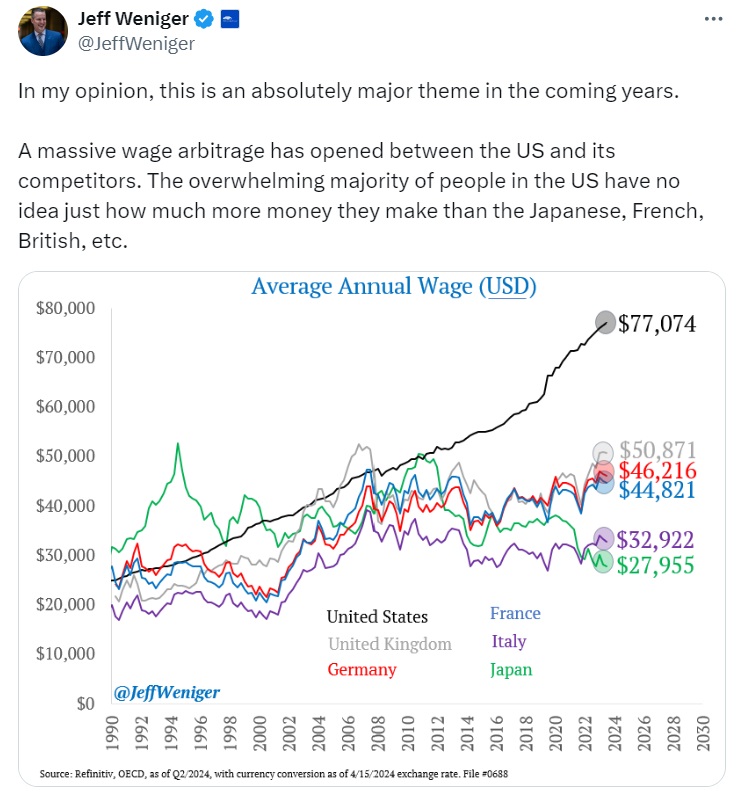
Two months ago, I wrote about the widening gulf between the United States and Europe and shared a chart about a growing wage gap between the U.S. and other major nations.

And that builds upon the two columns I wrote in 2023 (here and here) and the three columns I wrote in 2022 (here, here, and here), all of which show America out-performing Europe.

Today, let’s revisit the issue.

Here are some excerpts from a Washington Post column by Fareed Zakaria. Here’s his comparison of the U.S. and Europe.

In Europe, the talk is all about how Europe has been unable to keep up with the U.S. powerhouse. …In 2008, the United States and the euro-zone economies were roughly the same size. Today, the American economy is nearly twice the size of the euro zone. And it’s not just one measure. ImageAverage European income is now 27 percent lower than in the United States, and average wages are 37 percent lower. …The U.S. economy towers above Europe’s these days. The United States’ technology companies dominate the continent. U.S. banks are far more profitable than European ones. U.S. energy production has created a boom in manufacturing which is luring many European companies to the United States. As one German CEO said to me. “America is an easier place to do business, has fewer regulations, and now has much lower energy costs. How do I rationally invest in Europe?” ……every year 300 billion euros is diverted to overseas markets to find superior investments, most of them in the United States.

I think it’s a gross overstatement for him to call the United States a powerhouse. After all, inflation-adjusted wages and household income numbers in America have been quite dismal.

But Zakaria is correct to say that Europe is in much worse shape.

Where he goes astray is in his proposed solution. He thinks more centralized power in Brussels (the headquarters of the European Union) is the key to faster growth.

The solution to Europe’s woes can be summarized in one line — a deeper, more united, more strategic Europe. But that solution means, inevitably, more power to the European Union.

This is completely backwards. Europe needs more federalism and jurisdictional competition, not more centralization and harmonization.

To be fair, there are plenty of good things about the European Union, particularly the goal of free trade among the member nations.

But the E.U. also is a major source of bad policy, such as carbon protectionism and tax harmonization.

The bottom line is that more power for Brussels means expanding the cost of supranational government in Europe while doing nothing to fix the primary problem of bad policy by national governments.

Read Full Post »

Less than two months ago, I shared a chart looking at tax burdens on saving and investment in the industrialized world.

The nation with the lowest tax burden on capital was Lithuania (unsurprisingly, all of the Baltic countries scored well).Image

The country with the worst tax treatment of capital, by contrast, was Canada.

As you can see, the average tax burden on saving and investment is 50 percent. That’s even worse than Denmark and France.

Assuming the goal is to boost prosperity and competitiveness, the logical response to this depressing data is for Canada to lower taxes on capital.

The International Monetary Fund, however, is not logical. That bureaucracy recently assessed the Canadian economy.

Not only did the bureaucrats recommend tax increases (the IMF’s reflexive answer to any question) and a bigger burden of spending, they actually endorsed higher taxes on capital.

I’m not joking, Here are some excerpts.

…further consolidation will put Canada in a stronger position to address…structural spending needs related to climate, defense, healthcare, and other critical areas.Image Thus, while the spending initiatives in the federal budget are appropriate, they should have been offset through greater revenue mobilization. The increase in the capital gains inclusion rate improves the tax system… Consideration could be given to other changes—such as an increase in the GST rate.

This is awful advice.

Canada’s fiscal situation is troubling for one simple reason. The current Prime Minister, Justin Trudeau, has been spending too much money (something I warned about shortly after he took office).

Indeed, according to the IMF’s own data, Trudeau has increased spending twice as fast as inflation since taking office. Reversing that mistake is the advice Canada needs (and it’s an approach that Liberal Party politicians have actually implemented in the past).

But don’t hold your breath waiting for fiscal prudence from Trudeau.

P.S. This is a bit of inside baseball, but the IMF generally tailors its recommendations to match the preferences of the politicians who control a country. This is not that surprising since IMF bureaucrats have very comfy jobs (with tax-free salaries!), so they have an incentive to curry favor with the national governments that have ultimate power over their lavish paychecks. So the IMF and Trudeau deserve joint blame for the latest IMF report.

P.P.S. Another flaw with the IMF report is that it praises Canada for reducing inflation but fails to point out that it was the Canadian government’s bad monetary policy that caused the inflation in the first place. Notwithstanding the vapid comments from one central banker, inflation doesn’t magically materialize out of thin air.

Read Full Post »

Proponents of drug legalization are dealing with good news and bad news.

ImageThe good news is that there’s been a steady shift in favor of marijuana legalization. The weed is now legal in many states (albeit often overtaxed).

The bad news is that there is now a backlash against legalization of harder drugs.

For instance, I wrote in March about voters and politicians in Oregon being unhappy about the consequences of decriminalization.

And I wrote last summer about voters and politicians in Portugal also having second thoughts about decriminalization.

Today, we’re going to expand that list by looking to Canada to see how voters and politicians are reconsidering decriminalization in British Columbia.

Here are some excerpts from a story by Amanda Coletta in the Washington Post.

The experiment, backed by Canada’s police chiefs, was to decriminalize the possession of small amounts of some drugs — including methamphetamine, cocaine, fentanyl and heroin — for personal use. The approach, officials said, would reduce the stigma that can discourage users from seeking treatment and the criminal records that can prevent them from rebuilding their lives.Image …But now, with complaints about public drug use rising and a provincial election looming, they’ve abruptly reversed course. The center-left New Democratic Party government, which championed the policy, last month received approval from Ottawa to recriminalize drug possession in most public spaces. …Advocates for decriminalization say election-year politics and misinformation have cut short a promising approach before its impact can be properly assessed. Rolling it back now, they say, will only do harm. …British Columbia suffered at least 2,511 overdose deaths in 2023, a record. More than 750 people died of an overdose in the first four months of this year.

None of this is a surprise.

I’ve always acknowledged that legalization leads to social harm.

That being said, the societal harm of prohibition is much greater than the societal harm of legalization.

And, as I wrote in 2018, “I adhere to the libertarian principle that people should be free to do what they want (even stupid things) with their own bodies.” But it appears that voters and politicians in most communities don’t share my laissez-faire preferences.

Read Full Post »

My view on rich people is very simple.

I applaud them if they earn their money honestly (through voluntary exchange in a free market economy). And I want more people to become rich in the same way.

ImageEspecially since the rest of us get richer when they get richer.

But if they get rich by looting the public (via interventionist policies such as bailouts, subsidies, protectionism, or industrial policy), then they deserve disdain.

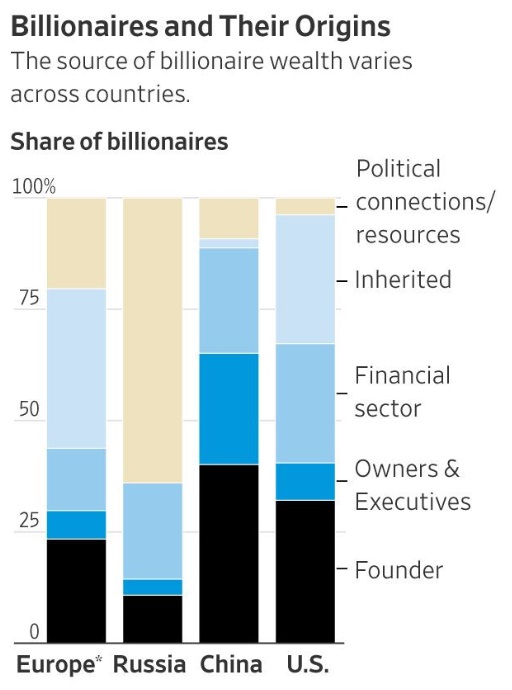
The good news is that most super-rich people in the United States are in the first category.

But that’s not true everywhere. In nations with dirigiste policies, such as Russia, you’re more likely to find rich people from the second category.

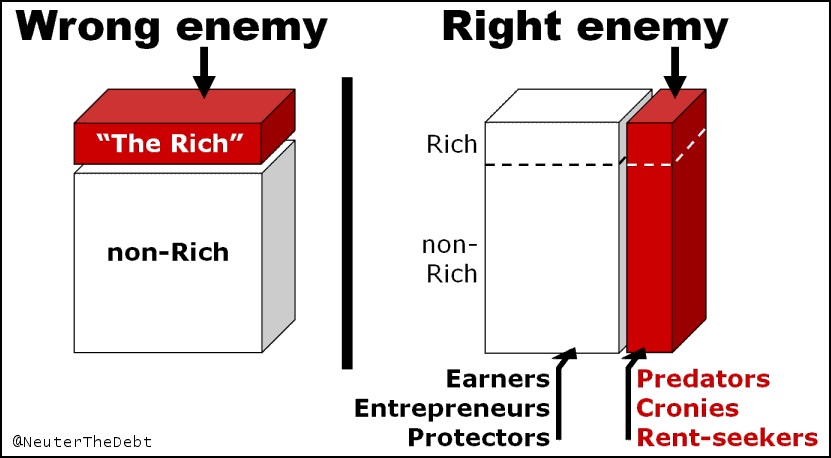
Some of our friends on the left, however, fail to distinguish between good rich people and bad rich people. For some of them, all rich people are the enemy.

Today’s column will provide a different perspective.

Michael Strain of the American Enterprise Institute recently wrote that billionaires should be celebrated.

…we should want more billionaires, not fewer. Billionaire innovators create enormous value for society. In a 2004 paper, the Nobel laureate economist William D. Nordhaus found “that only a minuscule fraction” – about 2.2% – “of the social returns from technological advances” accrued to innovators themselves. The rest of the benefits (which is to say, almost all of them) went to consumers. …Amazon founder Jeff Bezos is worth $170 billion. ImageExtrapolating from Nordhaus’s findings, one could conclude that Bezos has created over $8 trillion – more than one-third of the United States’ annual GDP – in value for society. For example, Amazon has reduced the price of many consumer goods and freed up an enormous amount of time for millions of Americans… Bezos, meanwhile, has received only a tiny slice of those social benefits. …the same logic can be applied to billionaires from any professional background. For example, Wall Street titans create value by efficiently allocating capital throughout the economy. Over time, this lowers costs and spurs productivity and innovation, all of which benefit millions of households and businesses. …Take a look at the top ten billionaires… They are largely self-made innovators who have changed the way we live… None of them are “policy failures.” Rather than wishing they did not exist, we should be thrilled that they do. The value they have created for millions of people around the world dwarfs their net worth.

On the other side of the Atlantic Ocean, James Quarmby expressed similar sentiments in a column for the Telegraph.

Here are some excerpts.

In most of the world wealth is celebrated; people aspire to be wealthy and admire those who accumulate it. …This notion, and the concomitant aspiration for wealth, has built the most successful and dynamic economy the modern world has ever seen.Image …but here in the UK and the rest of Europe, …we are witnessing increased suspicion and hostility towards the wealthy. …The super-rich are often portrayed in the media as responsible for all manner of social evils… Overall, the top 1pc of taxpayers pay nearly 29pc of all income tax, and the top 10pc pay a full 60pc – that’s funding a lot of doctors, nurses and other front-line services and, without them, the rest of us would pay even more. So perhaps it’s time for phrases such as the “filthy rich” to disappear. Instead of vilifying the wealthy, we should celebrate them.

So why do folks on the left have such hostility to successful people?

ImageIn part, the answer is naked envy. They resent that others have been so successful and want to tear them down.

In part, the answer is economic illiteracy, especially the zero-sum belief that rich people mean less income for everyone else.

The bottom line is that a society that rewards entrepreneurship and success will be much better off than a society that penalizes those traits.

Read Full Post »

Since it should be okay to laugh at evil, let’s build on February’s column by enjoying five new examples of anti-communism satire.

Image

To help understand our second item, socialism is the economic system imposed by communist dictatorships (socialism also can be imposed democratically, with similarly bad results).

Next is a look at how the illusion of communism turned into the reality of communism.

Image

Our fourth item is for people who have never learned about communism’s track record.

Image

Last but not least, my favorite item today could apply to almost all of my left-leaning friends, even the more moderate-minded ones.

But whoever put together this clever meme decided it applied best to communists.

Image

For what it’s worth, the leftists I deal with tend to be more mild.

Their usual response, when losing an argument, is some variation of “you only care about the rich” or “you don’t care about the poor.”

I then tell them to watch this video explaining that free enterprise is the only system that has ever produced mass prosperity.

And if that doesn’t convince them, I ask them my never-answered question.

Read Full Post »

As I wrote yesterday, trend lines are important for fiscal policy.

If a government complies with Golden Rule over a multi-year period, that’s almost always a recipe for good fiscal outcomes.

But if politicians allows the burden of spending to climb faster than the productive sector of the economy, that usually creates conditions for budgetary troubles.

As you might expect, Washington is filled with the wrong kind of politicians. But I’m not referring to the spendaholics in Congress and the White House.

Today, we’re going to look at the fiscal pyromaniacs in charge of the District of Columbia’s budget.

Here’s some data from the 2018 and 2023 State Expenditure Reports published by the National Association of State Budget Officers.

Image

If you do the math, you’ll find that government spending in D.C. increased by about 50 percent between 2016 and 2022.

Yet if you look at the federal government’s inflation calculator, prices rose by 23 percent over the same time period.

In other words, the burden of spending grew more than two times faster than inflation.

This has produced two very predictable outcomes. First, there is now a fiscal mess in D.C. Second, city politicians want to raise taxes rather than impose long-overdue spending restraint.

This is so irresponsible that even the left-leaning Washington Post is objecting. Here are some excerpts from a new editorial.

D.C. faces a cash crunch. …The District’s leaders have tough choices to make in their 2025 budget to close a $700 million hole. …Taxes are going up… Ms. Bowser (D) would raise the paid family leave tax that businesses pay, add an 80-cent per night fee on hotel rooms and increase the sales tax (gradually, from 6 percent now to 7 percent by fiscal 2027). In total, revenue would rise $447 million next year under the mayor’s proposal.Image The council would raise more — $550 million in new revenue next year — via both a higher paid family leave tax and higher property taxes on homes worth $2.5 million or above. In fact, the council’s budget closes the vast majority of the budget shortfall via higher taxes. That’s unwise. Raising so many taxes, in lieu of spending cuts, signals to businesses and residents…a warning sign of more taxes and fees to come if budget holes persist. As business leaders consider whether to keep their business in the city or relocate to Maryland or Virginia, they will factor in the city’s…finances. …there has to be a reality check on taxes and spending. Scaling back is hard. But making tough choices now is better than losing business to Virginia and Maryland.

Kudos to the Washington Post for recognizing (again!) that tax increases are the wrong approach.

Too bad they don’t apply the same logic when looking at the federal government’s finances. But I guess a journey of a thousand miles begins with a first step.

Read Full Post »

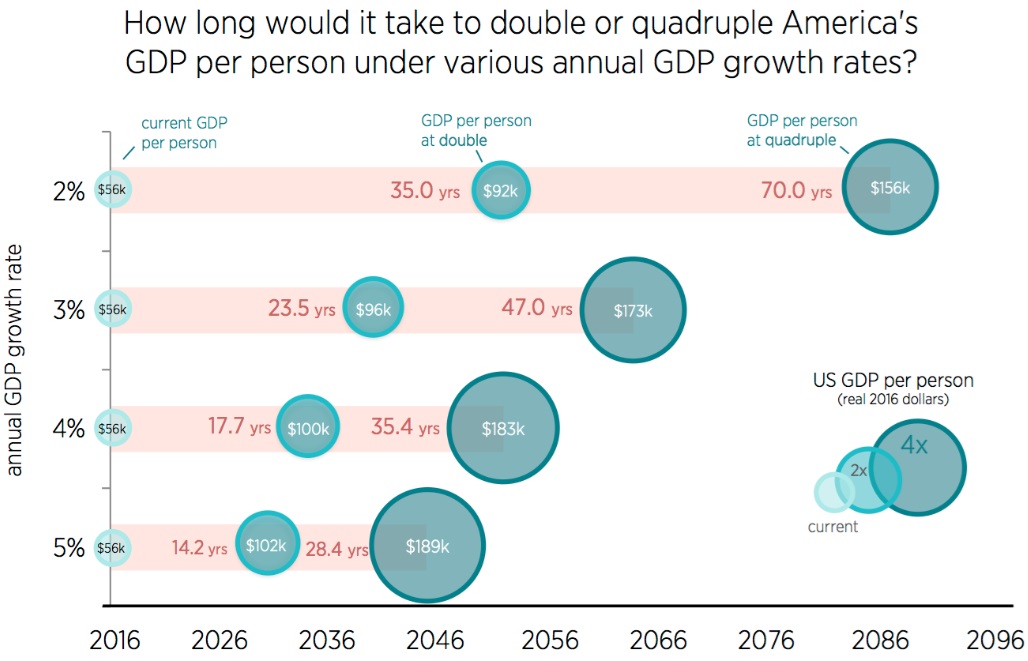
Just as trend lines are important for fiscal policy, they are perhaps even more important when looking at economic performance.

ImageEven small difference in annual growth rates, for instance, can lead to big changes in prosperity within a couple of decades. And enormous changes over longer periods of time.

All of which explains why I’m such a passionate supporter of free markets. No other system has ever produced so much wealth for so many people.

Unfortunately, not everyone appreciates growth. Indeed, there are some folks on the left who explicitly assert that we need “degrowth.”

I’m not joking. Here are some excerpts from a column in yesterday’s New York Times by .

A rising tide and a bigger pie: Economic growth has long been considered such an obvious boon that it’s pursued by governments across the world as a matter of course. …Now a much more radical proposition has emerged, looming like a wrecking ball: Is economic growth desirable at all? Image…a burgeoning “post-growth” and “degrowth” movement…remained on the fringes of the fringe for decades, until increasing awareness about global warming percolated into public debates in the early aughts. …Maybe relentless economic growth was more poison than panacea. …Hickel, an anthropologist who teaches in London and Barcelona and is one of the movement’s most spirited exponents…points to the connection between growing G.D.P. and energy use, identifying an ideology of “growthism” that he equates with “a kind of madness.”

And here are some passages from an article last year in the U.K.-based Economist.

At a three-day “Beyond Growth” conference held at the European Parliament in Brussels this week (and organised by 20 mainly left-leaning MEPs), an audience of youngsters whooped and cheered as speakers proclaimed that, this time, the limits of growth really have been reached.Image Driven by ecological concerns and riled by social injustice, to them the question is no longer how to mitigate the effects of human activity… Rather, some form of “de-growth”…is necessary today to avoid societal collapse. …says Philippe Lamberts, co-head of the Green group in the parliament…“when your economy is mature, well, it doesn’t need to grow any longer.” …the “post-growth” advocates…think people can be just as happy with economies going…down. …Instead of trying to grow the pie, the idea is to take what there now is and share it more equally. …their aim is to shrink the pie deliberately. Growth damages the planet.

Interestingly, the article points out that some parts of Europe already are no-growth zones.

…what is Europe, if not a post-growth continent already? Parts of it, like Italy, are scarcely bigger than they were 20 years ago. …How will Europe’s welfare state be financed as society ages?

Is Italy the right country to copy? Most people would say no, especially because an aging population is going to cause so much fiscal pressure.

In an article for the Foundation for Economic Education, Saul Zimet is very critical of the degrowth crowd. He starts by citing what they say.

Ben Burgis, Jacobin columnist and adjunct professor of philosophy at Morehouse College, argues …“you probably are going to have slower economic growth… But I’m not sure that’s an unambiguously bad thing, especially when you start to think about the ecological effects of constant growth for the sake of growth.” ImageSocialist political commentator Ian Kochinski…has said that, “One of the unfortunate truths of being a socialist is you have to accept that your nation will not get to enjoy the skyrocket GDP growth that capitalist nations get to enjoy. There is going to be a sacrifice of some economic efficiency.” …Naomi Klein calls economic growth “reckless and dirty” and advocates a policy of “radical and immediate degrowth” in order to reduce global carbon emissions…

He then explains what is wrong with that agenda.

Economic degrowth is terrible for almost everyone, but it endangers the poor most of all. Therefore, it is remarkable that the problems with degrowth are appreciated least by those who claim to be most focused on the interests of the lower classes. …widespread growth has been unfolding ever since it began around the time of the industrial revolution, which is why over 90 percent of the human population lived in extreme poverty throughout all of human history before 1800, and why less than 10 percent live in extreme poverty today. It was economic growth, not redistribution programs, that has brought the masses out of extreme poverty like never before in human history. …The critics of growth are wrong about its environmental dangers, but they’re also wrong to downplay its role in the fight against poverty.

I obviously agree with Mr. Zimet, but I’m going to close this column with a different point.

It may seem strange, I want to applaud these leftists for being honest.Image Unlike most American leftists, they are not pretending that bigger government magically will produce more prosperity.

In the spirit of Arthur Okun, they are open about their willingness to sacrifice growth in favor of other objectives (in this case, environmentalism).

But keep in mind that their agenda is awful even if they deserve praise for honesty. Call me crazy, but I want the recipe that has produced mass prosperity.

Read Full Post »

In 2019, the Center for Freedom and Prosperity released this video documenting the benefits of free trade.

The case for free trade between nations is the same as the case for free trade between states. Or between cities. Or between households.

ImageEconomists from the right and left agree that we all become richer when there’s more competition and more specialization.

Sadly, this common-sense understanding of trade is not very popular in Washington. Both Biden and Trump are protectionists, either because they don’t understand economics or because they want to get votes and money from special interests.

To understand the cost of Biden-Trump protectionism, let’s look at a recent study by the Peterson Institute for International Economics.

The authors, Gary Clyde Hufbauer and Megan Hogan, calculated what global trade has meant for American prosperity. Here are just a few of the highlights.

This Policy Brief updates previous estimates of the payoff from globalization to the American economy… The bottom line, argued here, Imageis that post-World War II engagement with the world economy by the United States generated cumulative gains over several decades that, in the year 2022, lifted annual US GDP by 10 percent in that year, about $2.6 trillion… The $2.6 trillion in gains in 2022 work out, on average, to about $7,800 per person and $19,500 per household.18 Average gains in 2022 would have been considerably larger but for political headwinds that have slowed trade expansion.

For wonky readers, here’s Table 1 from the report.

As you can see, every bit of economic analysis concludes that free trade leads to a bigger economic pie, while protectionism produces the opposite result.

Image

Sadly, there are big headwinds against pro-growth global trade today.

It’s not just Biden and Trump. The European Union wants to use global warming as an excuse to impose huge trade taxes.

Backsliding on trade is bad news for rich people and rich countries. Even worse, it’s bad news for poor people and poor countries. Simply stated, copying Herbert Hoover (or copying North Korea!) is not a good idea.

P.S. Makes me miss Reagan even more than usual.

P.P.S. I sometimes disagree with the Peterson Institute.

Read Full Post »

Economists say inflation is the result of bad monetary policy. The Biden White House, however, says inflation is caused by greedy companies.

I debunk that nonsensical claim in this excerpt from a recent discussion on Let People Prosper.

At the risk of stating the obvious, everything you need to know about inflation is captured in this chart.

Simply stated, the Federal Reserve dramatically increased liquidity in 2020 and 2021.

That meant a lot more money sloshing around the economy, Imageabove and beyond what would have been necessary to keep pace with economic activity.

So of course prices spiked.

Biden could have deflected political blame by pointing out the bad monetary policy started when Trump was in the White House.

But since the bad policy continued after he took office, that’s not a persuasive strategy.

Which is why the White House has decided to engage in victim-blaming.

In an article for the New York Times, Nicholas Nehamas, Jim Tankersley and report on the White House’s blame-shifting strategy.

As high prices at grocery stores, gas pumps and pharmacies have soured many voters on his first term, President Biden has developed a populist riposte: Blame big corporations for inflation, not me. …progressives are urging Mr. Biden to…make “greedflation,” as they call it, a driving theme of his re-election bid. …Inflation soared under Mr. Biden in 2021 and 2022…Image What Republicans call “Bidenflation” has become one of the president’s biggest political liabilities in his rematch with Mr. Trump. …Mr. Biden has…attacked corporations for pricing practices in certain sectors such as meatpacking, snack foods, concert tickets and gasoline. …Some economists close to his White House disagree that corporations’ raising prices to juice profits is a major driver of inflation. …There are signs that Mr. Biden plans to emphasize this issue more in the coming weeks. …a campaign spokeswoman…said Mr. Biden had “repeatedly taken on corporate greed” and would be “telling that story every day in every possible way on the campaign trail, from ads to door knocking and more.”

I’m not the only one to mock Biden’s strategy.

In her column for the Wall Street Journal, Allysia Finley says Biden and his allies are “inflation deniers” for trying to blame the private sector.

Behold the political left’s version of “stop the steal,” a device that blames corporate greed and malfeasance for inflation. …Democrats from President Biden on down promote this conspiracy theory to dupe voters. …Retailers are getting squeezed by higher costs for products, labor, energy, rent and insurance. ImageSince the start of the pandemic, food prices at stores have increased by 25%, less than the bump in average grocery worker wages (33%) and farm product prices (32%). …Democrats have even introduced the Price Gouging Prevention Act, which would empower the FTC to impose de facto price controls on food, gasoline and other products. The result? Widespread shortages. Mr. Biden has joined his party of inflation deniers. In March he convened a “Strike Force” to “root out and end illegal corporate behavior that raises prices for Americans…” A San Francisco Federal Reserve study last month refuted that inflation has been caused by price-gouging. …What’s fueling inflation? Excessive fiscal and monetary stimulus.

Well said, though I would quibble on two things.

First, I try to avoid using “stimulus” to describe Keynesian fiscal policy or Keynesian monetary policy unless I include “faux” or some other word to express my fundamental disagreement.

Second, bad fiscal policy doesn’t cause inflation.

But I’m digressing. The bottom line for today is that Joe Biden and his allies are wrong to blame businesses. The entire private sector (households and businesses) are the victims of inflation.

P.S. To understand inflation, click here and here. Or, if you want to dive into the issue, click here.

P.P.S. The media doesn’t understand inflation (or pretends not to).

P.P.P.S. Some central bankers don’t understand inflation (or pretend not to).

Read Full Post »

What’s the biggest problem with California?

If this was a quiz, I’d include an “all of the above” option. That would be the most accurate answer because the mess in California is due to all of the items listed. And more.

Sadly, even though businesses and households are fleeing the state, politicians such as Gavin Newsom can’t resist adding more and more straws to the camel’s back.

The latest example of terrible public policy is the $20-per-hour minimum wage. The Wall Street Journal has a new editorial about this job-killing initiative. Here are some excerpts.

California’s $20 an hour fast-food minimum wage took effect two months ago, and the casualties are mounting. Rubio’s Coastal Grill, famous for its fish tacos, closed 48 restaurants in the state on Friday. …Gov. Gavin Newsom responded by blaming Rubio’s. …Rubio’s didn’t specifically mention California’s new $20 minimum wage, which is a 25% increase over its already burdensome $16 an hour minimum. California’s soaring energy and insurance costs also contribute to the hostile business climate. …Workers will be the victims. Restaurants are cutting hours and automating tasks where possible to reduce labor costs. …The average weekly earnings for California leisure and hospitality workers has declined by 2.6% owing to a large drop in hours worked. Politicians think they can dictate wages and impose regulations without consequence. California is proving they can’t.

Keep in mind that local governments in California often impose additional wage mandates that cause additional job losses.

P.S. The failure of California governance is captured by the fact that politicians are choking the state’s marijuana sector with high taxes, but rather than lower taxes they are giving out subsidies.

P.P.S. This video is a succinct explanation of why minimum-wage mandates are a bad idea.

Read Full Post »

Like so many politicians from both parties, Joe Biden and his family have figured out how to personally profit from big government (one of the many reasons why Washington is a “wretched hive of scum and villainy“).

ImageThough I’ll be the first to admit that influence-peddling usually is immoral rather than illegal, so I like to focus on the real problem – which is a big government.

If the public sector didn’t have so much power, people would have much less incentive to give buckets of money to people like Hunter Biden.

Speaking of the President’s son, he’s currently on trial. Given my disdain for him and his family, you might think I’m cheering for a conviction.

But that’s not the case. Jacob Sullum’s column in Reason summarizes my skepticism.

A federal jury in Delaware today began hearing the gun case against Hunter Biden, which alleges that he committed three crimes when he bought a revolver in October 2018. …As a matter of statutory law, the case against Biden is straightforward. He has publicly admitted that he was regularly smoking crack cocaine around the time he bought the gun… A conviction seems almost certain. Image…The law assumes that every illegal drug user who possesses a gun is ipso facto a public menace, regardless of how he actually behaves. That assumption, several federal courts have ruled in cases involving marijuana users, is inconsistent with the Second Amendment. …Judging from survey data on drug use and gun ownership, something like 20 million Americans are committing that felony right now. The Justice Department prosecutes only a minuscule percentage of those potential defendants. That is partly because such cases are not a high priority, which tells you something about the logic of treating this offense as a felony that is currently punishable by up to 15 years in prison (thanks to legislation that Biden’s father signed in 2022). …The haphazard, wildly uneven enforcement of this widely flouted statute, which criminalizes conduct that violates no one’s rights, would be troubling even if it did not arbitrarily strip people of their Second Amendment rights.

That last sentence is key.

Hunter Biden may not be a good person, but he wasn’t impinging on anyone else’s liberty by owning a gun or doing drugs.

To emphasize that point, here’s the subtitle of Sullum’s column, with the relevant four words highlighted.

Image

By the way, I’m not being partisan for Democrats.

The same principle applies to the New York case in which Trump was accused of getting a loan by overstating the value of his collateral.

If that’s a crime, then millions of other Americans also are guilty.

But, more important, the lender surely did its own assessment and due diligence. Moreover, Trump paid back the loan. There were no victims. Nobody’s rights were violated.

Which is why I’ll conclude with a plug for libertarianism. It doesn’t matter that Hunter Biden and Donald Trump are flawed human beings. What matters is whether they do things that violate the rights of others.

If and when that happens, that’s when law enforcement should get involved. Until that time, the government should leave them alone.

Read Full Post »

The main argument for smaller government – from an economic perspective – is that more resources are left in the productive sector of the economy and this leads to faster growth and higher living standards.

This is a reason why the United States, with a medium-sized welfare state, out-performs Europe, which is saddled with large-sized welfare states.*

And it is why lower-income households in the United States have living standards akin to middle-class households in Europe.

Lower-income and middle-class household in America also benefit because they enjoy lower tax burdens.

Here’s a chart from the Tax Foundation showing the tax wedge (the difference between pre-tax income and post-tax consumption) in various OECD member nations. As you can see, the tax burden on average households is lower in the United States (highlighted in red) than in any European nation other than Switzerland.

Image

Since I mentioned that Switzerland is the only European nation with a smaller tax wedge than the United States, I’ll also share a map comparing taxes in Europe.

As you can see Switzerland (in yellow) stands out in a very positive way. Some nations (Belgium, Austria, Germany, and France) have tax burdens on middle-class households that are 100 percent higher than in Switzerland.

Image

The bottom line is that spending restraint and modest-sized government is paying big dividends for Switzerland.

Lower-income and middle-class households are benefiting directly (lower tax burdens) and indirectly (faster growth and higher living standards).

A definite role model.

P.S. This column has focused on tax burdens for average households. You can peruse the original OECD data to see that this analysis is equally true for lower-income households.

*This is also the reason places with small-sized welfare states, such as Singapore, out-perform the United States.

Read Full Post »

I wrote last November that Germany is in a period of fiscal decay.

Over the past eight-plus years, the burden of government spending has grown far too fast,Image violating the Golden Rule of fiscal policy.

As a result, the share of the economy being consumed by the public sector has jumped from 44 percent to nearly 49 percent.

That’s worse than Denmark!

So what should Germany do? A rational person, especially if that person had any knowledge of economics, would urge spending restraint.

But let’s instead look at what the Keystone Cops at the International Monetary Fund are recommending. They want Germany to weaken its fiscal rule to enable even more spending.

An aging population will also adversely affect public finances as tax revenue growth slows and spending on pensions and healthcare rises. …To accommodate rising spending needs, the authorities should consider moderately eImageasing the debt brake. …Germany’s debt brake is set at a relatively tight level, such that the annual limit on net borrowing could be eased by about 1 percentage point of GDP while still keeping the debt-to-GDP ratio on a downward path. Such an easing would allow more room for much-needed public investment and other key priorities.

And, keeping with tradition, the bureaucrats at the IMF also want higher taxes in Germany.

Options that could be explored include eliminating environmentally harmful…tax expenditures, …raising taxes on real estate and on goods and services (as Germany’s revenue from such sources is below the advanced-economy average), and/or closing loopholes in inheritance taxes.

Adding more spending to Germany’s fiscal burden is bad news, but adding more taxes is equally offensive.

That part of the report merits two observations.

  1. If the IMF cared about growth, it would recommend lower tax rates in the many areas where Germany is above the advanced-economy average, not pushing for higher taxes in the few areas where the German government has demonstrated a bit of restraint.
  2. It is utterly hypocritical for IMF bureaucrats to push for higher taxes (in Germany or elsewhere) since their generous salaries are exempt from tax. Maybe if they had to pay taxes and live by the same rules as everyone else, they wouldn’t be so quick to urge bad policies.

P.S. I can’t resist citing one final bit of economic illiteracy from the IMF.

High energy prices following the shut-off of Russian gas contributed to surging inflation during 2022-23.

This is nonsense. Higher energy prices cause a shift in relative prices. Bad monetary policy (as we recently experienced in Europe, the United States, Canada, and the United Kingdom) is the reason for the increase in overall prices.

P.P.S. Given this statement by the previous head of the IMF (and current head of the ECB), you’ll understand why there’s a problem with economic literacy at that international bureaucracy.

Read Full Post »

From a big-picture perspective, the  Canadian government does the most damage to the nation’s economy with bad tax policy, bad spending policy, bad health policy, bad monetary policy, and other expensive mistakes.

But sometimes it is small decisions that capture the absurdity of government. And Canada’s politicians and bureaucrats have made many such blunders.

  • Handcuffing a woman for not holding an escalator handrail.
  • ImageStripping a dental hygienist of his license for having sex with his wife.
  • Levying a $465 fine on a motorist with a slight tear in his driver’s license.
  • Grudgingly allowing two girls to operate a lemonade stand.
  • Awarding extra money to a healthcare worker because alcoholism is a disability.
  • Ruling that it is illegal for two kids to sell worms without a license.
  • Fining a mother for giving her kids non-state-approved lunches.
  • Suspending a student for rescuing a classmate from a bully.
  • Telling an Italian restaurant that Italian words are against the law.

Today, let’s add to the list by looking at the government’s decision to needlessly squander $12 million.

Here are some excerpts from a story in the National Post by Bryan Passifiume.

According to figures unearthed by the Canadian Taxpayers Federation via an access-to-information act, Parks Canada has earmarked $12 million to fund a multi-phase “Fur to Forest” program, which employs non-Canadian helicopter-mounted sharpshootersImage to eradicate an invasive herd of European fallow deer from Sidney Island — a nine-square-kilometre tract of land off the coast of Vancouver Island. That’s nearly double the $6 million the program was initially forecast to cost. “It’s appalling for Parks Canada to be blowing $12 million on a project that local hunters have been doing for a decade for free,” the federation’s Carson Binda told reporters in Victoria recently. ..Locals told reporters last year those efforts resulted in the removal of nearly 2,000 deer, and at no cost to taxpayers.

Since I’m a fiscal wonk, what galls me are some of the ways that the $12 million is being wasted.

According to cost breakdowns provided in the documents, deer eradication amounted to a little more than $4 million of the $12 million total, including $137,407 to facilitate “firearms registration for international workers,” as the hunters brought in to cull the deer were from the United States and New Zealand — plus $35,000 for their work permits. …A total of $800,000 was set aside to facilitate Indigenous participation in the program, which includes payments to three area First Nations, as well as $108,800 for meat harvesting, and $15,250 each for cultural and spiritual workers to train crews. Other costs include $2.3 million for salaries for Parks Canada staff, $1.4 million for analysis and studies and $3.3 million in miscellaneous costs.

I don’t know what’s more absurd, the $137K for firearms registration or the $15K for cultural and spiritual training.

The least surprising part was the $3.3 million for “miscellaneous costs,” which is nothing but a payoff to the bureaucracy. Public Choice in action!

P.S. In fairness to America’s northern neighbor, there are (or were) some good Canadian policy choices, including on issues such as school choicewelfare reformcorporate tax reform, bank bailoutsregulatory budgetingspending restraint, the tax treatment of saving, and privatization of air traffic control.

P.P.S. There’s also a libertarian quandary in Canada.

Read Full Post »

When I think of the world’s most mistreated taxpayers, a few options come to mind.

  • Cam Newton, the quarterback who faced a marginal tax rate of nearly 200 percent on his Super Bowl bonus.
  • The 8,000 French households who had to surrender more than 100 percent of their income in 2012.
  • The unfortunate Spanish laborer who faced a tax rate of almost 70 percent even though he only earned about €1,000 per month.

For today’s column, I want to shift the focus from individuals to countries because the Tax Foundation just released a new report on top tax rates in the European Union.

If you don’t have time to read the entire column, the main takeaway is that investors, entrepreneurs, business owners, and other successful taxpayers should avoid Belgium.

Heck, they should also avoid Slovenia, Portugal Finland, and every other European nation. Other than Bulgaria.

Image

The Tax Foundation report points out that successful taxpayers do take steps to avoid the nations with the greediest governments.

Here are some excerpts from the report.

The issue of the mobility and sensitivity of top earners has been extensively studied in the literature. For example, Akcigit et al. (2016) analyze the effect of top income taxes on the international migration of inventors. The authors use a panel of international inventor data from U.S. and European patent offices and track their international location patterns since the 1970s all the way up to the mid-2010s.Image The authors find a negative correlation between higher tax rates and the proportion of high-quality foreign investors located in a country as well as the proportion of high-quality domestic inventors who remain in their country. …Mathilde Muñoz addresses how income taxes affect the migration decisions of rich taxpayers in Europe. …Muñoz’s results reveal that the location decisions of high-income taxpayers are indeed significantly influenced by income tax rates. …if the net tax rate increases by 1 percent, the evidence in this study suggests that 0.1 to 0.3 percent of high earners will react by relocating or adjusting their taxable income, and in the case of foreign taxpayers, the figure rises to 1 percent.

And for wonky readers, here is a brief explanation of the methodology.

To estimate the tax burden of upper-income taxpayers, income tax rates will be combined with Social Security contributions as well as consumption taxes. This approach is slightly different from the papers cited in our literature review, but we consider it to be an important step toward providing an overview of the full tax burden borne by higher-income individuals.

In other words, the Tax Foundation correctly is looking at the wedge that all taxes create between pre-tax income and post-tax consumption.

Which is the data that is needed to understand the degree to which the overall tax system is discouraging productive behavior (and encouraging other behaviors, such as migration, tax avoidance, and tax evasion).

P.S. The three previous columns in this series can be found here, here, and here.

P.P.S. In 2016, I gave one of the reasons why Belgium has a terrible tax system (though there is an important exception).

Read Full Post »