(1) R.I.P. FACEBOOK’S METAVERSE. In “My Prodigal Brainchild” Neal Stephenson reflects “on the latest and greatest Death of the Metaverse.”
It feels incumbent upon me to write something about last week’s big news in which the company formerly known as Facebook decided to shut down its Metaverse project on which it has, according to various reports, spent eighty billion dollars.
I spelled that figure out because it’s more zeroes and commas than I can type in before blowing through my attention span and losing track.
This event has unleashed yet another spate of Internet cartoons depicting tombstones with the word METAVERSE chiseled into them, a genre that comes and goes every few years….
…I am, thank God, curiously detached from all this. Four and a half years ago I was minding my own business, cutting metal in my machine shop, when I received a text message from John Gaeta, a former colleague at Magic Leap, reading simply “Sorry for your loss.” At first I thought that he’d sent it to me mistakenly, but after a bit of Googling I became aware that Facebook had changed its name and announced that it was now going to build the Metaverse.
In retrospect, John’s message was prescient, since it marked the moment when the Metaverse really did break free and become my alienated, prodigal brainchild.
In the following weeks I had to make a few Tweets trying to convince incredulous strangers that I had no connection with what Meta was up to; that they hadn’t communicated with me in any way; that they hadn’t paid me off; and that, no, I wasn’t going to sue them. All of these things remain true.
So there wouldn’t have been any upside for me if Meta’s Metaverse had succeeded. What remains to be seen is whether there’s a downside for me now that it has failed. I think I’m standing clear of the blast radius, but seeing the front page of the New York Times’s business page dominated by the inevitable Metaverse tombstone image does give one pause.
Since this is now water under the bridge, here is some free advice to future companies who might become interested in this topic when the tombstone cartoons fade once again from memory and the concept becomes hot again.
The basic idea is obvious. Consider picking a different name
Once you have computers that can show graphics, and an Internet, the notion of creating a virtual online space where users go around in audiovisual bodies (avatars) is sort of obvious. Such a thing existed at least once before I wrote Snow Crash, in the form of Habitat, and would have been independently invented over and over again had the book never existed. All I did was make up a name for it, and put it in a novel that got read by a lot of techies. And the novel had a plot – a topic I will return to at the end of this post.
People don’t like wearing things on their faces and don’t trust those who do
When I was working at Magic Leap, and people asked me why I thought that was a good idea, I would ask the rhetorical question: “do you really think that twenty years from now everyone is still going to be going around all day staring at little rectangles in their hands?” At the time it seemed obvious to me that the answer was no.
Reader, I have changed my mind. Twenty years from now, everyone is still going to be staring at handheld rectangles. Or at least that is the case if the only alternative is wearing things on their faces. Maybe this should have been obvious to me given the amount of time, effort, and money people put into making their faces look as good as possible.
A possible workaround is to keep refining and miniaturizing the devices to the point where they just look like eyeglasses. This, however, turns out to have the unintended side effect of making these things seem sinister. It happened with Google Glass, which instantaneously spawned the term “glasshole,” and it has happened again with Meta’s product that looks like normal, albeit heavy-framed glasses.
When someone around you is staring at a rectangle in their hand, it might be incredibly annoying, but at least you can tell they’re doing it. When someone’s wearing a head-mounted display, on the other hand, you don’t know whether they are looking at you or not.
Likewise, when someone holds up their phone and aims it at you, it’s obvious that you are on camera. That’s not true in the case of glasses or goggles. So it’s creepy….
(2) 2026 HUGO NOMINATONS DEADLINE. The LAcon V committee shared a graph with Facebook readers today showing that Hugo voting is spiking as the March 28 deadline approaches.
With just days to go the pace of Hugo nominations is picking up! If you’re one of the more than 7700 people eligible to nominate this year, you can help make the process run smoothly by nominating sooner rather than later.

(3) ON DAVE HOOK’S NOMINATING BALLOT. A Deep Look by Dave Hook tells us about the virtues of “The Martian Trilogy (John P. Moore, Amazing Stories, Black Science Fiction, and The Illustrated Features Section), 2025 Amazing Stories”. Here’s his short summary – the full-length take is at the link.
The short: I recently read The Martian Trilogy (John P. Moore, Amazing Stories, Black Science Fiction, and The Illustrated Features Section), including three related 1930 short stories by John P. Moore, with very substantial non-fiction essay content by Lisa Yaszek, Chris M. Barkley, Maurice Broaddus, Bill Campbell, Minister Faust, Brooks E. Hefner, Sheree Renée Thomas, Steve Davidson, John Jennings, and many others, 2025 Amazing Stories. These three stories are probably the first planetary romances by an African American author. While I rated one of these stories as “Very good” and two as “Good”, the essay content is phenomenal. Recommended, and I nominated The Martian Trilogy for the Hugo Award Best Related Work category….
(4) IN THE BEFORE TIMES. [Item by Andrew Porter.] Article by David Streitfeld starts off mentioning Larry Niven, then goes into Michael Dirda’s time at the Washington Post.“’Lonesome Dove,’ ‘Brokeback Mountain’ and the Power of the Book Review in the Age Before Algorithms” – in the New York Times (link bypasses the paywall.)
Jeff Bezos did not create the world’s biggest bookstore out of a deep love of literature. I interviewed him in his Seattle office back when he was the crown prince of the dot-com crowd and recall seeing only one book in it: “Destiny’s Road,” by the science fiction writer Larry Niven, about a planet colonization attempt gone awry.
If books were not a passion for Bezos, it seems that owning a newspaper does not rank high either. Last month he fired more than a third of the journalists at The Washington Post, the paper he bought in 2013. That included the entire staff of the book review. Bezos said the purge was merely a question of numbers. “The data tells us what is valuable and where to focus,” he explained.
This is the high art of Silicon Valley: If a subject clicks with readers, they will quickly be served more of the same. But readers don’t want the same thing all over again. The pleasures of a good book review are less in being a leader than a follower — to have smarter minds tell you things you didn’t know about things you weren’t necessarily thinking about.
People read The Washington Post’s Book World for entertainment, education and serendipity. As Henry James, a pretty fair critic himself, famously said, “We work in the dark — we do what we can — we give what we have.”
Here is a tale, in the dark for 30 years, about how book reviews are an engine that helps keep the culture running. It is about what can happen when you’re not ruled by data.
Our prologue takes place in the mid-1970s. Larry McMurtry is the respected author of a half-dozen novels, including one that became the hit movie “Hud,” and a recent Oscar nominee as the co-writer of the script for “The Last Picture Show,” based on his novel. McMurtry is also a weekly book reviewer for The Post. His reviews are good: terse, wide-ranging, effective. He likes his job.
One day in 1978 a new editor at Book World named Michael Dirda calls McMurtry and, acting on orders from management, fires him. Reviewing has always been a tough trade. An annoyed McMurtry, who never liked Washington much, begins spending more time in his native Texas.
It is so boring in his small town that it proves a good place to write. One day he sees a church bus with a distinctive name, which he appropriates for a stalled manuscript about a 19th-century cattle drive. Almost no one thinks this novel sounds promising. Texas fiction is traditionally concerned with sex-crazed oil tycoons or the assassination of President Kennedy, and this tale has neither. Before McMurtry’s story is finally published in 1985, every major studio in Hollywood passes on it….
… For at least a few decades, McMurtry remained bitter about being fired by The Post. He never acknowledged that his dismissal got him out of Washington and thrust him toward that neglected cattle-drive novel, which won a Pulitzer and then became a much-loved mini-series. According to Amazon’s sales data, “Lonesome Dove” — 41 years after publication and five years after McMurtry’s death — is routinely one of the best-selling books on the platform. Not best-selling novels. Books….
(5) WAS ‘WOKENESS’ THE ISSUE? “William Shatner weighs in as ‘Star Trek: Starfleet Academy’ canceled” at USA Today.
William Shatner wishes the latest “Star Trek” show had been given the chance to live long and prosper.
The “Star Trek” actor, 95, took to X on March 23 to bemoan news that the sci-fi franchise’s newest series, “Star Trek: Starfleet Academy,” will end after its upcoming second season.
“It’s with sorrow that I hear about the cancellation of the new ‘Star Trek’ series,” he wrote.
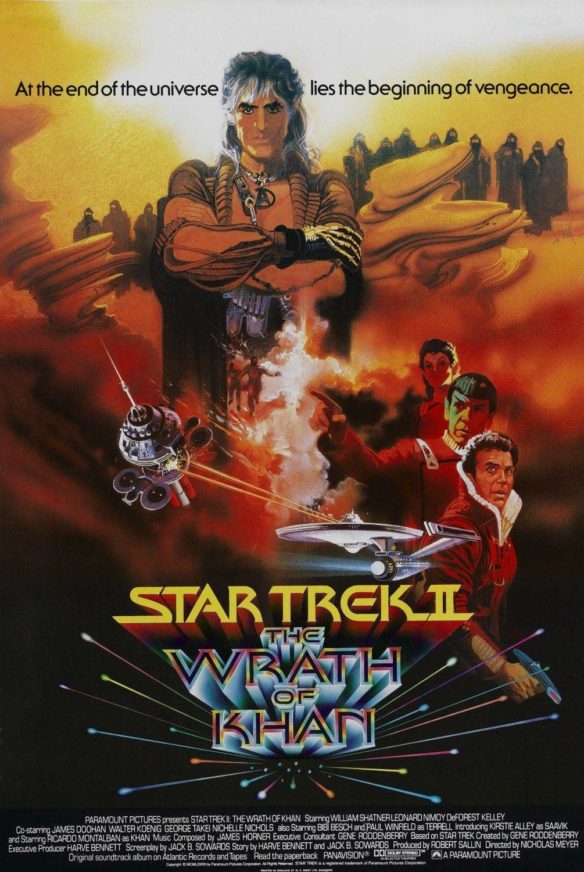
In a follow-up post, Shatner mocked critics who celebrated the show’s cancellation because they claimed it was “woke.” He argued that the original “Star Trek,” which famously featured an interracial kiss between Shatner’s character, Captain Kirk, and Nichelle Nichols’ Uhura in a 1968 episode, would be considered “woke” today….
(6) BRIN GETTING CLARKE MEMORIAL AWARD. The National Space Society announced today: “Noted Sci-Fi Author Dr. David Brin to Receive the NSS Arthur C. Clarke Memorial Award at ISDC”.
Famed science fiction author Dr. David Brin will be a keynote speaker at the National Space Society’s International Space Development Conference® (ISDC®), which runs from June 4-7 in McLean, Virginia. The general public is invited to attend and more information can be found at the event website, isdc.nss.org.
Brin will also receive the coveted NSS Arthur C. Clarke Memorial Award for his pivotal writing in sci-fi and futurism. Initiated in 2025, the Clarke award seeks to recognize individuals who, like Arthur C. Clarke, have used creative, scientifically grounded storytelling or media to foster curiosity and enthusiasm about space exploration and contributing to public understanding and support for space development, and Brin is an exemplar of this….
(7) THE DEADLY GENDER GAP IN CAR SAFETY. [Item by Andrew Porter.] Audio. Strongly recommended for any woman who has ever ridden in a car! “The Deadly Gender Gap in Car Safety” in the New York Times – link bypasses the paywall.
In November 2024, the filmmaker Eve Van Dyke was headed to Thanksgiving dinner with her family. Then her car crashed.
She noticed the women in the car ended up with more injuries than the men. Turns out, that wasn’t just a coincidence. In the United States, women are 73 percent more likely to be severely injured in vehicle crashes than men, and 17 percent more likely to die.
To understand why, Ms. Van Dyke dug through the half-century history of auto safety in the United States. In the Opinion Video above, she reveals her disturbing discovery.
(8) IS LE GUIN’S THE LEFT HAND OF DARKNESS (1969) OVER-RATED? [Item by SF Concatenation’s Jonathan Cowie.] Over at the Grammaticus Books YouTube Channel there is no fear of controversy, however this is not click-bait: Grammaticus recognises that this book deserves both its Hugo and Nebula wins. There is a lot to appreciate here: the ideas, world-building and writing. And the thing that puts it on the map is the exploration of gender fluidity, especially remembering that this was back in 1969. However, there are – Grammaticus says – three fundamental flaws… It is opined that these flaws came about because of LeGuin’s laser focus on themes, concept and world-building. This means that for some readers the novel is a difficult one to digest. (Actually, I have some sympathy with this but had never said for obvious reasons.) This video is only 11-minutes long. There are comments over at the channel and I dare say that some may make some here at File 770 jump in.
(9) TODAY’S BIRTHDAY.
[Written by Cat Eldridge.]
March 24, 1946 – Andrew Porter, 80.
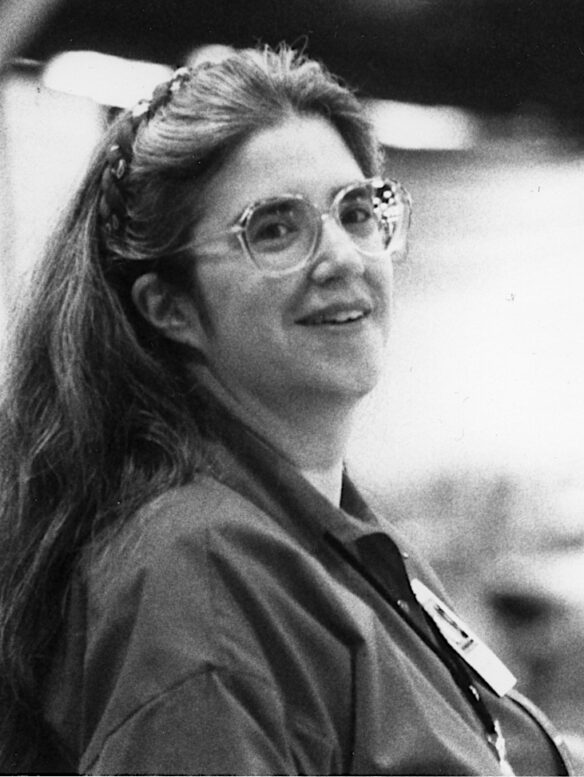
File 770’s indispensable Scroll contributor Andrew Porter got into sf fandom in the Sixties. He published a major genzine, Algol/Starship (1963–84), which received five Hugo nominations and won in 1974. And he has been a leading sf news writer for even longer — his first news-related column on upcoming paperbacks appeared in James V. Taurasi’s Science Fiction Times in 1960. Later in the decade he started his own newzine, S.F. Weekly (1966–68), and returned in the Eighties with Science Fiction Chronicle (1979–2002), a 21-time Hugo nominee that won in 1993 and 1994.
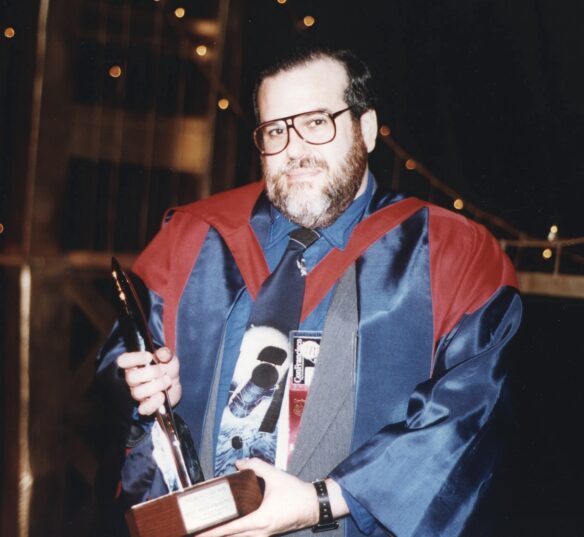
Porter was assistant editor on The Magazine of Fantasy & Science Fiction from 1966–74, and associate editor at Lancer Books in the late 1960s. Outside the sf field he also worked as a trade magazine editor and advertising production manager on such titles as Rudder, Quick Frozen Foods (under editor Sam Moskowitz), QFF International, Construction Equipment, and Electro-Procurement.
He has independently published nonfiction collections such as The Book of Ellison, Dreams Must Explain Themselves by Ursula K. Le Guin, Exploring Cordwainer Smith, and Experiment Perilous: The Art and Science of Anguish in Science Fiction and The Fiction of James Tiptree, Jr. by Gardner Dozois. He was honored with a Special British Fantasy Award in 1992.
He was Fan Guest of Honour at ConFiction, the 1990 World Science Fiction Convention held in The Hague, Netherlands. The audio of his speech is available at Fanac.org.
He also was recognized by Chicon V (1991) with a Special Committee Award for Distinguished Semiprozine Work. And he was honored with the Big Heart Award in 2009.
His photos have appeared in The Guardian, the NY Times, Publishers Weekly and numerous convention program books. In recent years he’s been a frequent commenter in the NY Times and locally in such outlets as The Brooklyn Heights Blog, where he’s contributed numerous local photos and scans of architectural features. “And,” he proudly adds, “I always comment under my own name, not a screen name.”
(10) MEMORY LANE.
[Written by Cat Eldridge.]
Pavane by Keith Roberts (1968)

Sixty years ago the ending of Pavane was first published.
The ending of this novel, yes the ending, a novellette, “Pavane: The Signaller”, came out in Impulse: The New Science Fantasy in their March 1966 issue. The complete stories that are Pavane would first be printed by Hart-Davis in 1968. Why the ending first? I’ve no idea, but perhaps one of you knows why.
So I’ll just say that Pavane is a brilliant telling of an alternative England that mercifully never happened. So without further commentary, here’s the perfect Beginning that the author gave it…
PROLOGUE
On a warm July evening of the year 1588, in the royal palace of Greenwich, London, a woman lay dying, an assassin’s bullets lodged in abdomen and chest. Her face was lined, her teeth blackened, and death lent her no dignity; but her last breath started echoes that ran out to shake a hemisphere. For the Faery Queen, Elizabeth the First, paramount ruler of England, was no more …
The rage of the English knew no bounds. A word, a whisper was enough; a half-wit youth, torn by the mob, calling on the blessing of the Pope. … The English Catholics, bled white by fines, still mourning the Queen of Scots, still remembering the gory Rising of the North, were faced with fresh pogroms. Unwillingly, in self-defence, they took up arms against their countrymen as the flame lit by the Walsingham massacres ran across the land, mingling with the light of warning beacons the sullen glare of the auto-da-fé.
The news spread; To Paris, to Rome, to the strange fastness of the Escorial, where Philip II still brooded on his Enterprise of England. The word of a land torn and divided against itself reached the great ships of the Armada, threshing up past the Lizard to link with Parma’s army of invasion on the Flemish coast. For a day while Medina-Sidonia paced the decks of the San Martin, the fate of half the world hung in balance. Then his decision was made; and one by one the galleons and carracks, the galleys and the lumbering urcas turned north toward the land. Toward Hastings and the ancient battleground of Santlache, where history had been made once centuries before. The turmoil that ensued saw Philip ensconced as ruler of England; in France the followers of Guise, heartened by the victories across the Channel, finally deposed the weakened House of Valois. The War of the Three Henrys ended with the Holy League triumphant, and the Church restored once more to her ancient power.
To the victor, the spoils. With the authority of the Catholic Church assured, the rising nation of Great Britain deployed her forces in the service of the Popes, smashing the Protestants of the Netherlands, destroying the power of the German city-states in the long-drawn-out Lutheran Wars. The Newworlders of the North American continent remained under the rule of Spain; Cook planted in Australasia the cobalt flag of the Throne of Peter.
In England herself, across a land half ancient and half modern, split as in primitive times by barriers of language, class, and race, the castles of mediaevalism still glowered; mile on mile of unfelled woodland harboured creatures of another age. To some the years that passed were years of fulfillment, of the final flowering of God’s Design; to others they were a new Dark Age, haunted by things dead and others best forgotten; bears and catamounts, dire wolves and Fairies.
Over all, the long arm of the Popes reached out to punish and reward; the Church Militant remained supreme. But by the middle of the twentieth century widespread mutterings were making themselves heard. Rebellion was once more in the air…
(11) COMICS SECTION.
- Bound and Gagged has part of a favorite book.
- Brewster Rockit complains about kids’ books.
- Ink Pen says it’s relative.
- Speed Bump brings the mat to the lab.
- Wondermark traces the changes in knowledge saving til it’s too much!
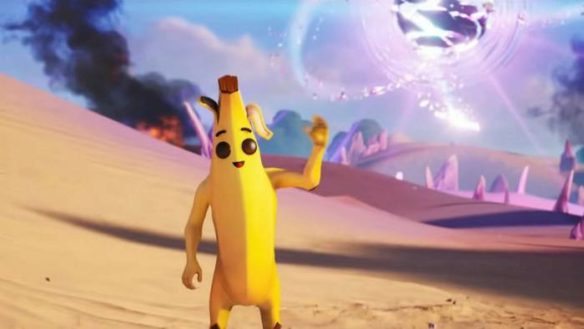
(12) GAME’S DECLINE COSTS JOBS. “Epic Games Lays Off Over 1,000 Employees, Citing Fortnite Slump” – the New York Times has the story. (Behind a paywall.)
The video game company Epic Games is laying off more than 1,000 employees, it said on Tuesday, citing a drop in the amount of time people are spending playing Fortnite.
“The downturn in Fortnite engagement that started in 2025 means we’re spending significantly more than we’re making, and we have to make major cuts to keep the company funded,” Tim Sweeney, the company’s chief executive, wrote in a blog post. “This layoff, together with over $500 million of identified cost savings in contracting, marketing and closing some open roles puts us in a more stable place.”
The cut represents about 20 percent of the work force at Epic Games, a company spokeswoman said.
It was the second time in recent years that the company, which is based in North Carolina, had announced major job cuts. In 2023, Epic Games laid off 830 employees, or about 16 percent of its work force, citing lower profit margins for Fortnite. “I’m sorry we’re here again,” Mr. Sweeney wrote in his blog post….
(13) GO THE DISTANCE. “’For All Mankind’ to End at Apple TV With Season 6 Renewal” reports Variety.
Hi, Bob! In advance of its long-awaited Season 5 return, Apple TV‘s “For All Mankind” has been renewed for a sixth and final season. The news also comes in advance of the premiere of spinoff series “Star City,” which takes a look at the alternate space race story line from the Soviet perspective and premieres on May 29.
News means “For All Mankind” will be able to complete its expansive storyline as originally envisioned by creators Ronald D. Moore, Matt Wolpert and Ben Nedivi — a rarity in the often quick-cancel culture of TV. “For All Mankind” launched on Nov. 1, 2019, the same day as Apple TV’s “The Morning Show,” making both series the streamer’s longest-running series….
… “For All Mankind” has earned rave reviews and awards recognition for its unique storytelling, unfurling an alt-history of the U.S., the space race and even the globe as it ponders how life might be different had the Soviet Union made it to the moon first. Perhaps the Cold War would have forced the U.S. to double down, spending more money and resources to then build a moon base first. Along the way, the Soviets and the Americans would try to outdo each other, leading to earlier advances in technology and perhaps quicker social change, like the passage of the Equal Rights Amendment….
(14) ANTI-ROAD-TRIP. [Item by Steven French.] Well, they did it – moved all 92 (count ‘em!) antiprotons without incident: “BASE experiment at CERN succeeds in transporting antimatter”.
Today, in a world first, a team of scientists from the BASE experiment at CERN successfully transported a trap filled with antiprotons in a truck across the Laboratory’s main site. The team managed to accumulate a cloud of 92 antiprotons in an innovative portable cryogenic Penning trap, then disconnect it from the experimental facility, load it onto a truck and continue experiment operation after transport. This is a remarkable achievement, given that antimatter is very difficult to preserve, as it annihilates upon contact with matter. This world premiere is a test, the ultimate aim being to transport antiprotons to other European laboratories, such as Heinrich Heine University Düsseldorf (HHU), where very-high-precision measurements of the antiproton properties could be performed…
(15) 2026’S 8 BIGGEST SCI-FI MOVIES THAT WILL CRUSH THE BOX OFFICE OR FLOP HARD. [Item by SF Concatenation’s Jonathan Cowie.] Over at the KageMovies YouTube channel there are listed its SF films for 2026 that they think will either fly at the box office or sink. This vid has already attracted getting on for half-a-million views. For those not liking click bait, the films are: Greenland 2; Migration; World Breaker; Good Luck, Have Fun, Don’t Die; Project Hail Mary; The Dog Stars; Disclosure Day; The Hunger Games: Sunrise on the Reaping; Dune: Part Three.
I have to say as a personal aside I have been a tad disappointed that Good Luck, Have Fun, Don’t Die has not done better at the box office. It does not look like it will begin to break even despite its comparatively modest budget. Indeed, I am very surprised that it did not do better worldwide given that the European market seems to be more tolerant, if not welcoming, to films with a more independent studio vibe, but then what do I know… Comments, rather your suggestions, as to films not on this list would be most welcome…. (I’m always on the lookout for solid, SFnal offerings.) You can see the video here or below.
[Thanks to Mark Roth-Whitworth, Kathy Sullivan, Steven French, Andrew (not Werdna), Mike Kennedy, Andrew Porter, John King Tarpinian, Cat Eldridge, and SF Concatenation’s Jonathan Cowie for some of these stories. Title credit belongs to File 770 contributing editor of the day Daniel Dern.]