Pixel Scroll 3/25/26 The Scroll Is A Harsh Pixel

(1) META & GOOGLE LOSE SOCIAL MEDIA ADDICTION LAWSUIT. This morning Deadline reported “Meta & Google Found Negligent In Social Media Addiction Trial In L.A.”. The headline was written before the punitive damages were determined by the jury, which were announced later today.

After more than a week of deliberations, a Los Angeles jury Wednesday delivered a potential game-changing verdict of negligence against social media giants Meta and Google for creating addictive products and platforms that harm minors….

… At the core of both the California and New Mexico trials is the premise that social media and its algorithms and sticky attraction have harsh consequences that include inducing thoughts of suicide, depression, sleep disruption, eating disorders, body dysmorphia and anxiety.

Today’s non-unanimous verdict in L.A. and the one out of Santa Fe on March 24 are a long way from settled.

While the data harvesting that propels tech companies was left relatively unexplored in the trials, it is undeniable that both verdicts put the business models of social media platforms on shaky ground. At this point, whether this ends up like the tobacco cases of the 1990s, increased guardrails of use and alterations in algorithms and other designs are near certain to be imposed in one way or another. Once the appeals are launched, regulatory spotlights are likely to be ramped up with big-bucks settlements paid out to keep the courts and lawmakers out of the matters….

But after the punitive damages were announced here is how Deadline saw it — “Meta & Google Get Less Than A Financial Slap On The Wrist As L.A. Social Media Trial Jury Orders Tech Giants To Pay Out Just $6M In Total Damages”.

…Pinpointing the social media companies as predators and providers of addictive algorithm assault against minors, the breakdown on the punitive damages essentially equaled the compensatory damages, with $2.1 million for Meta and $900,000 for YouTube.

The implications of this verdict and the $375 million one out of New Mexico on Tuesday will be debated in and out of the courts for ages, as will the moral, business and technological blast radiuses. Meta has already made it clear it plans to appeal both cases.

To that, as lawyers, plaintiff K.G.M., parents and more awaited the punitive damages number from the L.A. jury this afternoon, Meta offered an updated statement on the outcome of the trial.

“We respectfully disagree with the verdict and will appeal,” spokesperson Andy Stone said. “Teen mental health is profoundly complex and cannot be linked to a single app. We will continue to defend ourselves vigorously as every case is different, and we remain confident in our record of protecting teens online.”

For a larger financial perspective, think on this when you ponder both that $6 million in L.A. and $375 million in Santa Fe: Meta raked in $201 billion in profits last year….

(2) COLBERT LOTR MOVIE UNVEILED. “New ‘Lord of the Rings’ Movie From Stephen Colbert in Development” reports Variety.

Warner Bros. has revealed that Stephen Colbert and his son are developing a brand new “Lord of the Rings” movie. The announcement came Tuesday night via the studio’s various social media accounts.

The video announcement opened with “Lord of the Rings” director Peter Jackson giving a quick update about the next film in the fantasy franchise: Andy Serkis’ “The Hunt for Gollum.” Jackson said of the project, which is set for release in 2027: “Andy is doing a terrific job. It’s looking amazing. The script is coming together really well and I think it’s going to be a really good film.”

Jackson then teased his “very special partner” who will help develop the next film after “The Hunt for Gollum,” titled “The Lord of the Rings: Shadows of the Past.” That partner is none other than “The Late Show” host Colbert, who Jackson patched in through a video call. Colbert, a vocal Tolkien fanatic, then explained that the plot of his movie will come from chapters of “The Fellowship of the Ring” that didn’t make it into Jackson’s 2001 adaptation.

“You know what the books mean to me, and what your films mean to me,” Colbert told Jackson. “But the thing I found myself reading over and over again were the six chapters early on in [‘The Fellowship of the Ring’] that y’all never developed into the first movie back in the day. It’s basically the chapter ‘Three Is Company’ [Chapter III] through ‘Fog on the Barrow-Downs’ [Chapter VIII]. And I thought, ‘Oh, wait, maybe that could be its own story that could fit into the larger story. Could we make something that was completely faithful to the books while also being completely faithful to the movies that you guys had already made?’”

The late-night host said that after coming up with this idea, he discussed it with his son, screenwriter Peter McGee, and worked out a “framing device” for the film. After the groundwork was laid, Colbert called Jackson, and over the last two years, they’ve worked with screenwriter Philippa Boyens to develop a script.

The film’s official logline reads, “Fourteen years after the passing of Frodo — Sam, Merry and Pippin set out to retrace the first steps of their adventure. Meanwhile, Sam’s daughter, Elanor, has discovered a long-buried secret and is determined to uncover why the War of the Ring was very nearly lost before it even began.”

(3) BRITISH SCHOOL BANS BOOKS. [Item by James Bacon.] A very unexpected situation has occurred, in England, at an unidentified school in the Greater Manchester area. Index on Censorship have conducted extensive work on appalling treatment of a Librarian, and the banning of many books and graphic novels from the school library. 

Katie Dancey-Downs broke the story on the 20th of March, for the Index on Censorship and the article is extensive and an important read. “School book banning escalates in the UK as Greater Manchester secondary school censors scores of books.

While fans are used to hearing about schools in the US banning books, this is surprising news in England, and concerning. What is more extraordinary is that some of the works are ones that will be recognised as stories read when filers themselves were teenagers. 

The idea that the 1984 Graphic Novel, a beautiful work by Matyáš Namai & George Orwell, is now a work that teenagers need safeguarding from, is a concept that fans will find ironic. 

Works that the school removed included:  Dark Winter by Andy McNab, Twilight by Stephenie Meyer,  Heartstopper vol 4 & 5 by Alice Oseman, a selection of books by George RR Martin, Freddie Mercury: The Definitive Biography by Lesley-Ann Jones,  Madly, Deeply by Alan Rickman, Interview With a Vampire by Anne Rice, some eleven volumes of Death Note by Tsugumi Ohba & Takeshi Obata

The book Men Who Hate Women: the extremism no-one is talking about by Laura Bates appears to have been the catalyst for the purge, and the Librarian concerned facing harsh disciplinary action, resigned. A tragic outcome for a person dedicated to helping young people find understanding through books. 

James Bacon has written a longer analysis for Downthetubes: “1984, Batman, Twilight Banned: Comics Censorship Concerns after huge British school library book ban”.

(4) KGB. Fantastic Fiction at KGB reading series hosts Ellen Datlow and Matthew Kressel present: Michael Swanwick and Mike Allen on Wednesday, April 8, 2026 at 7:00 p.m. Eastern. Location: KGB Bar, 85 East 4th Street, New York, NY 10003 (Just off 2nd Ave, upstairs).

Michael Swanwick

Image

Michael Swanwick has been writing fantasy and science fiction at every length from flash fiction to novel trilogy for over forty years, during which time he has received the Nebula, Theodore Sturgeon, and World Fantasy Awards, as well as five Hugo Awards. As a hobby, he writes critical non-fiction and the occasional interview.

Mike Allen

Image

Mike Allen’s most recent novel is Trail of Shadows, published in 2025. Two of his collections of horror tales, Unseaming and Aftermath of an Industrial Accident, were finalists for the Shirley Jackson Award, and as an editor, he’s a two-time World Fantasy Award nominee. His short fiction has appeared in Apex Magazine, Beneath Ceaseless Skies, Cosmic Horror Monthly, Interzone, Weird Tales, and Storyteller: A Tanith Lee Tribute Anthology. With his wife and creative partner, Anita, he runs Mythic Delirium Books in Roanoke, Virginia.

(5) TODAY’S BIRTHDAY.

[Written by Cora Buhlert.]

March 25, 1939D.C. Fontana. (Died 2019.)

By Cora Buhlert: Dorothy Catherine Fontana, better known as D.C. Fontana, was born on March 25, 1939 in New Jersey. At age eleven she decided that she wanted to become a novelist. But while she would become a writer, her main body of work would be in television rather than novels.

Image
D. C. Fontana

Employment opportunities for women were limited in the late 1950s and early 1960s, so Dorothy Fontana went to work as a secretary after college. This was her entrance into the TV industry, because she found employment first at Screen Gems and then at Revue Studios, where she worked as a secretary for Samuel A. Peeples on the largely forgotten western series Overland Trail and The Tall Man. But Dorothy Fontana wanted more than just to type other people’s scripts. She wanted to write her own and in 1960, aged twenty-one, she managed to sell her first script for the episode “A Bounty for Billy” of The Tall Man. More sales followed.

In 1963, Dorothy Fontana went to work on a military themed TV show called The Lieutenant. The show only lasted for one season, but nonetheless it would change D.C. Fontana’s, as she was calling herself by now, life, because she wound up working as the secretary of Gene Roddenberry, creator of The Lieutenant. Roddenberry encouraged Fontana’s writing, leading to the publication of her first novel, a western called Brazos River.

When The Lieutenant was cancelled, Gene Roddenberry started working on a new show called Star Trek. D.C. Fontana accompanied him. Before working on Star Trek, D.C. Fontana had had no interest in science fiction, but this quickly changed as work on the new show progressed. D.C. Fontana wrote the teleplay for “Charlie X”, the second episode of Star Trek. By the end of season 1, she was the story editor of Star Trek and also wrote the scripts of such memorable episodes as “Tomorrow is Yesterday”, “Journey to Babel”, “This Side of Paradise” and “Friday’s Child”.

D.C. Fontana left as story editor before the third season of Star Trek, but continued to contribute to the series as a freelance writer. Her collaboration with Gene Roddenberry continued on The Questor Tapes and Star Trek: The Animated Series. By the 1970s, D.C. Fontana, who had never read a science fiction story before Star Trek, had become one of the go-to writers for science fiction television and worked on Buck Rogers in the 25th CenturyLogan’s RunThe Six Million Dollar ManFantastic Journey and Battlestar Galactica, an experience she disliked so much that she disavowed her screenplay. She also continued to work on non-genre shows such as The WaltonsThe Streets of San Francisco, Bonanza, Kung Fu and Dallas.  

D.C. Fontana returned to Star Trek as story editor and associate producer on Star Trek: The Next Generation, for which she co-wrote the pilot “Encounter at Farpoint”. However, she left during the first season, following a fallout with Gene Roddenberry. Though D.C. Fontana was not completely done with Star Trek yet. She wrote Star Trek novels and contributed a script to Star Trek: Deep Space Nine. She also wrote several screenplays for Deep Space Nine’s great rival Babylon Five.  

I don’t know what my first contact with D.C. Fontana’s work was. I know it wasn’t Star Trek, because she wrote none of the Star Trek episodes I saw as a young kid during a rerun on German TV in the late 1970s. And while I watched all of the science fiction series on which she worked, I didn’t see most of them until much later, when the floodgates of private television opened and many of these shows aired in Germany for the first time.

Indeed, it’s quite likely that my first contact with D.C. Fontana’s writing was a non-genre show, quite possibly The Waltons, which aired on Sunday afternoons and which my parents watched religiously. The Streets of San Francisco or Dallas are also possibilities, though I only got to see those shows sporadically during the holidays, since they aired in evening slots after my bedtime.

However, one story penned by D.C. Fontana that I definitely encountered early on is her sole contribution to the Filmation He-Man and the Masters of the Universe cartoon, the second season episode “Battlecat”, which tells the origin of Prince Adam’s “fearless friend” Cringer and his alter-ego Battlecat. The episode is basically one long flashback, recounting how a young Prince Adam rescues a tiger cub from a sabrecat stalking the little one. Adam takes the injured cub to the royal palace and nurses him back to health and the two are soon inseparable. However, Adam is mortified that is pet is terrified of everything, up to and including his own shadow, which also gains him the name Cringer, courtesy of Teela teasing Adam about his pet.

As for why Cringer is always so afraid, this episode never shows us what happened before Adam found Cringer, though we can guess from fact that Cringer is all alone in the jungle and being stalked by a predator that it was nothing good. In 2012 finally, a comic did tell what happened just before, namely that Cringer’s entire family and tribe were wiped out by a sabrecat attack. Baby Cringer was the only survivor and was hunted for days, until Adam drove off the predators and rescued him. So the reason Cringer is always terrified is because he is deeply traumatized.

When Adam gains the Power of Grayskull and becomes into He-Man, he makes sure never to transform in front of Cringer, until one day when Cringer follows Adam and chances to witness the transformation. Cringer is understandably terrified and when He-Man tries to reassure him that there’s no reason to be afraid and that he’s still Adam inside, he accidentally points the Sword of Power at Cringer and Battlecat is born. And not a moment too soon, because an eldritch horror has escaped from its tomb and needs to be stopped…

“Battlecat” is a highly memorable episode, especially since the Filmation He-Man cartoon rarely ever gave us origin stories for the various characters. We never even got to see how Adam first became He-Man, so it’s a treat to see how Cringer first became Battlecat and how Adam and Cringer met in the first place. The fact that Baby Cringer is one of the cutest creatures ever seen on screen doesn’t hurt either.

In many ways, this episode also illustrates D.C. Fontana’s strengths as a writer. Her episodes were inevitably memorable and often expanded the world of the story and gave backstory to characters who did not have a lot before, whether it’s introducing Spock’s parents in “Journey to Babel”, delving into the previous hosts of the Dax symbiont in “Dax” or recounting the origins of Cringer in “Battlecat”.

(6) COMICS SECTION.

(7) DISSENTING OPINION. Wesley Chu told Facebook readers that he ran one of his books through AI detecting software and got this unlikely result.  

Image

(8) ANOTHER AUTHOR’S AI DETECTOR TRIAL. Andrea Bartz told New York Times readers she experimented with an AI detector and got a ridiculous result, too: “A Horror Novel Got Canceled. What’s Coming Next Is a Bigger Nightmare.” (Behind a paywall.)

…Shortly after ChatGPT was publicly released, I entered the prompt “write a short story in the style of author Andrea Bartz.” The output was an uncanny facsimile of my prose — the actual scenes it generated made little sense, but the rhythm and sentences themselves mimicked some of the deliberate stylistic choices I make in my books.

A.I. detectors exist, but they’re far from perfect. OpenAI has called them unreliable. I don’t pretend to know how these checkers work under the hood. But if large language models were trained on my work (which was the case in at least one instance), then it’s easy to see how my own writing may come across to some as A.I.-generated.

In other words, I don’t write like A.I.; A.I. writes like me.

I pasted a few paragraphs of my own prose (a quick satire piece I’d shared on my Substack newsletter) into a free online detection tool. It deemed the passage “very likely A.I.-generated,” with 82 percent of the text exhibiting the hallmarks of A.I. This app appeared to be cruder and less reliable than other detectors I tried, perhaps because it was pushing a feature to “humanize” my passage with the click of a button. Lord help us all….

(9) “THAT’S ALL, FOLKS!” [Item by Steve Green.] The online retail outlet WB Shop UK, which ceased selling physical media last year, is currently running a merchandise sale ahead of its closure on 31 March. The customer services department will operate until 15 May.

Image

(10) I’M NOT SURE WE SPECIFIED OUR DESTINATION CORRECTLY. [Item by Bill Higgins.] So we’re downstate visiting family, and we go out to see a science fiction movie. I am driving.  My wife asks her phone to guide us to the theater. She searches for “Hail Mary Peoria.”

Here’s the result.

Image

(11) DILEMMA SOLVED. Well now…

(12) IT’S ALL SO SIMPLE WHEN YOU THINK ABOUT IT. “Chandra resolves why black holes hit the brakes on growth” at Phys.org.

Astronomers have an answer for a long-running mystery in astrophysics: why is the growth of supermassive black holes so much lower today than in the past? A study using NASA’s Chandra X-ray Observatory and other X-ray telescopes found that supermassive black holes are unable to consume material as rapidly as they did in the distant past. The results appeared in the December 2025 issue of The Astrophysical Journal.

Ten billion years ago, there was a period that astronomers call “cosmic noon,” when the growth of supermassive black holes (those with millions to billions of times the mass of the sun) was at its peak across the entire history of the universe. Between cosmic noon and now, however, astronomers have seen a major slowdown in how rapidly black holes are growing….

… By analyzing observations of about 1.3 million galaxies and 8,000 growing supermassive black holes from Chandra, ESA’s XMM-Newton and eROSITA (the extended ROentgen Survey with an Imaging Telescope Array, a German and Russian mission), the team was able to isolate the “why” behind this black hole slowdown.

“It appears that black holes’ consumption of material has greatly slowed down as the universe has aged,” said co-author Niel Brandt, also of Penn State University. “This is probably because the amount of cold gas available for them to ingest has decreased since cosmic noon.”…

[Thanks to Kathy Sullivan, Steven French, Mike Kennedy, Steve Green, Juli Marr, Bill Higgins, Andrew Porter, John King Tarpinian, Cat Eldridge, SF Concatenation’s Jonathan Cowie, and Mark Roth-Whitworth for some of these stories. Title credit belongs to File 770 contributing editor of the day Jon Meltzer.]
Pixel Scroll 1/18/26 Alle The Pixels And This Scroll Will Return For Avengers: Godstalk

(1) AI AND ‘REVERSE CENTAURS’. Cory Doctorow tells readers of the Guardian: “AI companies will fail. We can salvage something from the wreckage”.

…In automation theory, a “centaur” is a person who is assisted by a machine. Driving a car makes you a centaur, and so does using autocomplete.

reverse centaur is a machine head on a human body, a person who is serving as a squishy meat appendage for an uncaring machine.

For example, an Amazon delivery driver, who sits in a cabin surrounded by AI cameras that monitor the driver’s eyes and take points off if the driver looks in a proscribed direction, and monitors the driver’s mouth because singing is not allowed on the job, and rats the driver out to the boss if they do not make quota.

The driver is in that van because the van cannot drive itself and cannot get a parcel from the curb to your porch. The driver is a peripheral for a van, and the van drives the driver, at superhuman speed, demanding superhuman endurance.

Obviously, it’s nice to be a centaur, and it’s horrible to be a reverse centaur. There are lots of AI tools that are potentially very centaurlike, but my thesis is that these tools are created and funded for the express purpose of creating reverse centaurs, which none of us want to be.

But like I said, the job of a science-fiction writer is to do more than think about what the gadget does, and drill down on who the gadget does it for and who the gadget does it to. Tech bosses want us to believe that there is only one way a technology can be used. Mark Zuckerberg wants you to think that it is technologically impossible to have a conversation with a friend without him listening in. Tim Cook wants you to think that it is impossible for you to have a reliable computing experience unless he gets a veto over which software you install and without him taking 30 cents out of every dollar you spend. Sundar Pichai wants you to think that it is for you to find a webpage unless he gets to spy on you from asshole to appetite…

…Take radiology: there is some evidence that AI can sometimes identify solid-mass tumors that some radiologists miss. Look, I’ve got cancer. Thankfully, it’s very treatable, but I’ve got an interest in radiology being as reliable and accurate as possible.

Let’s say my hospital bought some AI radiology tools and told its radiologists: “Hey folks, here’s the deal. Today, you’re processing about 100 X-rays per day. From now on, we’re going to get an instantaneous second opinion from the AI, and if the AI thinks you’ve missed a tumor, we want you to go back and have another look, even if that means you’re only processing 98 X-rays per day. That’s fine, we just care about finding all those tumors.”

If that’s what they said, I’d be delighted. But no one is investing hundreds of billions in AI companies because they think AI will make radiology more expensive, not even if that also makes radiology more accurate. The market’s bet on AI is that an AI salesman will visit the CEO of Kaiser and make this pitch: “Look, you fire nine out of 10 of your radiologists, saving $20m a year. You give us $10m a year, and you net $10m a year, and the remaining radiologists’ job will be to oversee the diagnoses the AI makes at superhuman speed – and somehow remain vigilant as they do so, despite the fact that the AI is usually right, except when it’s catastrophically wrong.

“And if the AI misses a tumor, this will be the human radiologist’s fault, because they are the ‘human in the loop’. It’s their signature on the diagnosis.”

This is a reverse centaur, and it is a specific kind of reverse centaur: it is what Dan Davies calls an “accountability sink”. The radiologist’s job is not really to oversee the AI’s work, it is to take the blame for the AI’s mistakes.

This is another key to understanding – and thus deflating – the AI bubble. The AI can’t do your job, but an AI salesman can convince your boss to fire you and replace you with an AI that can’t do your job. This is key because it helps us build the kinds of coalitions that will be successful in the fight against the AI bubble.

If you are someone who is worried about cancer, and you are being told that the price of making radiology too cheap to meter, is that we are going to have to rehouse America’s 32,000 radiologists, with the trade-off that no one will ever be denied radiology services again, you might say: “Well, OK, I’m sorry for those radiologists, and I fully support getting them job training or UBI or whatever. But the point of radiology is to fight cancer, not to pay radiologists, so I know what side I’m on.”

AI hucksters and their customers in the C-suites want the public on their side. They want to forge a class alliance between AI deployers and the people who enjoy the fruits of the reverse centaurs’ labor. They want us to think of ourselves as enemies to the workers.

Now, some people will be on the workers’ side because of politics or aesthetics. But if you want to win over all the people who benefit from your labor, you need to understand and stress how the products of the AI will be substandard. That they are going to get charged more for worse things. That they have a shared material interest with you….

(2) THE RESISTANCE. Jon DeCles was inspired by Paul Weimer’s review of This Is How You Lose the Time War to write this flash story in comments.

It was with some consternation that Mike faced the end of his beloved online fanzine, File Numbers, as the use of Alienated Imbecility taxed the ecosystem beyond its limits.

Atlanta had fallen first, as the mighty machines chugged away answering questions about baseball scores in 1923 and the water supply ran out. Desperate Atlanteans fled the ruins of the city for the possible salvation of a simpler life in the country and a return to pre-digital technology. Los Angeles was next to go when the entertainment industry was forced to return to live theater and lemonade made with in the theater, along with corn popped over fires made from burning cyberpads.

Finally, in a move of great desperation, Mike decided to beat them by joining them. He didn’t have a mimeograph, and they had not made sulfide paper in many years. But there was a booming industry in making paper from bamboo, which could grow sixty feet in only two weeks. And the Dictatorship had not succeeded in totally destroying the Post Office.

Mike thought back to the beauty of cursive writing, which he had learned in his early youth, when the schools still taught such things instead of Consumer Obedience: and found a small, local shop that still offered such antique devices.

He bought a pen, and some ink. Perhaps one still could change history…

(3) ALABAMA TOWN STANDS UP. “Red State Library Faces Funding Cut Over ‘Handmaid’s Tale’” reports The Daily Beast.

An Alabama public library has lost state funding after refusing to move several books, including The Handmaid’s Tale, out of its teen section. The Republican-run Alabama Public Library Service Board voted to withhold roughly $22,000 in state funding from the Fairhope Public Library, citing the library’s failure to comply with the board’s rules requiring books deemed “sexually explicit” be relocated to the adult section. Titles flagged by the board include The Hate U Give by Angie Thomas, The Perks of Being a Wallflower by Stephen Chbosky, and Beyond Magenta by Susan Kuklin. Fairhope Library Board Chair Randal Wright argued that parents—not the state—should decide what their children read, saying it is “not your job to make that decision.” Board member Jay Snider added that it is unrealistic to suggest teenagers have not already been exposed to the language in question. Since the dispute began in late 2024, the library has raised more than $100,000 in community donations. The Handmaid’s Tale has been a particular focus of anger from supporters of President Donald Trump, partly because the Hulu adaptation.

(4) BIO OF RANDOM HOUSE CO-FOUNDER. Gayle Feldman’s biography of publisher Bennett Cerf has been reviewed in the New York Times: “He Put Dr. Seuss, Ayn Rand and ‘Ulysses’ on Your Bookshelves” (Behind a paywall.)

Swing open the saloon doors: There’s a new “Power Broker” in town. For surely the story of the publishing behemoth Random House, told through its charismatic co-founder Bennett Cerf, is as worthy of crossing the thousand-page mark as the story of how Robert Moses bulldozed New York. Books are just as much part of the city’s infrastructure as highways and housing developments.

And this one, “Nothing Random,” by the veteran Publishers Weekly reporter Gayle Feldman, is as delightful as it is hefty. You don’t want to stick the chronicles of the pipe-twiddling, Cheshire cat-grinning Cerf and his circle on a shelf for clout during Zoom calls, but plonk them on plates for dinner at eight.

Bonus: Doubles as booster cushion!

Cerf, an inveterate prankster and consummate promoter, would probably be tickled by the idea of this big, beautiful biography — long enough in the making that its distinguished acquiring editor died of old age — under guests’ rumps.

Yes, Random House pushed the first authorized U.S. edition of “Ulysses” through court; nabbed Ralph Ellison’s “Invisible Man,” which won the National Book Award; oversaw Gertrude Stein’s uproarious American lecture tour and William Faulkner’s shaky trip to the Nobel Prize. It was built on the classic backlist of the Modern Library, bankrolled by the best sellers of James Michener and Ayn Rand and burnished by some of the 20th century’s greatest playwrights and poets.

Cerf chafed at losing “Lolita” (a prudish deputy had threatened to quit); charmed authors (escorting Eugene O’Neill to a Yankees game right after the birth of his own second son); and took principled stands on the bonkers politics of Rand and Ezra Pound.

But he was famous himself for appearing as one of the evening-clothed panelists, “Sunday night royalty,” on the popular CBS game show “What’s My Line?,” a household name back when a man’s home was his castle and Nielsen and Gallup the imperial cavalry….

…Sometimes scratching this itch yielded an ugly rash, as when Jessica Mitford exposed one of his shadier concerns, the Famous Writers School mail-order course, in The Atlantic in 1970.

Cerf died a year later, at 73, and his star faded quickly as Random House’s habitual mergers and acquisitions — including of the higher-browed rival, Knopf — swelled to its current state of mega-conglomeration….

…Feldman thus had a biographer’s dream task: to reconstruct the life of someone who was both very important and largely forgotten, a prolific correspondent who kept copious action-oriented diaries and scrapbooks. Was Cerf a lightweight — “a dentist,” as Norman Mailer once spat — or so kinetic he could not be fixed? Was he a fool or wiser than us all at the project of living?…

(5) REALLY HELPFUL GOOGLE SEARCH TRICK. [Item by Andrew Porter.] If you type -ai at the end of a Google search it won’t show ai results.

— Learned from the New York Times article “A.I. Has Arrived in Gmail. Here’s What to Know” . (Behind a paywall.)

About two years ago, Google practically force-fed artificial intelligence to the masses when it began showing A.I.-generated responses to people’s questions at the top of search results. Now the company is taking a similar tack by adding A.I. into another ubiquitously used service, Google Mail.

Google this month began rolling out a suite of new tools relying on generative A.I., the technology driving chatbots, to help users manage their bloated inboxes and speed up the process of writing email. Some of the features are free, while others require paying a subscription.

Gmail users can now look up emails by typing a question, such as “What’s the name of the job recruiter I met last month?” Google is also testing a new type of inbox, set for release later this year, that automatically pulls together a to-do list based on tasks discussed inside emails. In addition, Google unveiled tools to streamline writing, including an automatic proofreader and response generator…

…All of this, of course, has implications for privacy. To make the new features work, Gemini, Google’s A.I. assistant, needs access to a user’s entire inbox. The company insists that while Gemini systems analyze our emails, there are protections in place so that its employees do not read them….

(6) ROALD DAHL BIO PODCAST BEGINS. “‘The Secret World Of Roald Dahl’ From iHeartPodcasts & Imagine Entertainment Will Explore Author’s Life As A British Spy” reports Deadline.

If you know your Willy Wonkas from your BFGs, iHeartPodcasts and Imagine Entertainment have the podcast documentary for you.

The pair have created The Secret World of Roald Dahl, a doc podcast series that peels back the secret spy life of the beloved children’s author, revealing “a life far stranger than fiction.”

The first episode is dropping on Monday (January 19). Created and hosted by Aaron Tracy, the story will explore how the author of ‘Charlie and the Chocolate Factory’, ‘The BFG’, ‘Matilda’ and many other classic children’s books spent a period of his life as a spy for MI6, along with his personal relationships, creative failures and other experiences that shaped him….

…“Roald Dahl played a huge role in our childhoods, but most people have no idea he lived one of the noisiest lives of his century,” said Tracy. “He was a fighter pilot, a British spy for MI6, a struggling screenwriter, the husband of an Oscar winner, a writer for The New Yorker, and an amateur neuroscientist who saved thousands of lives before he finally found his voice as a children’s author at 45. iHeart and Imagine have been dream collaborators to help reveal these hidden chapters of Dahl’s life and explore the complicated, controversial person behind the stories.”….

(7) FROM PHILOSOPHY TO FISHWRAP. “Mort Walker, Beetle Bailey, and the decline and fall of newspaper comics” in The Comics Journal.

…Newspaper comics’ decline began with size reduction during the second World War. Newsprint was rationed and recycling was encouraged. With few exceptions, former full-page Sunday strips went to half or third pages. Some newspapers, like the St. Louis, Missouri Post-Dispatch, reduced their Sunday comic-strips to fourth, fifth and sixth pages; they chopped and stacked panels and crammed as many features as one page could hold.

Daily comics, once published in five or six-column widths, halved that luxurious size as their hold on the public waned. In the first half of the 20th century, comics were a selling point of newspapers. All age groups and social classes read and enjoyed them. The acquisition of Blondie or Dick Tracy in your local paper was ballyhooed. Hefty Sunday papers were wrapped in their color comics section; its arrival made a grand thud on doorsteps. Comics made a difference. Adults read them with glee; kids laid wall-eyed on their living-room floors, pages spread open as they took in the color and imagery.

They were also disposable, like the rest of the daily paper; only oddballs saved them. Many of those people, like Walker, became professional cartoonists. Their work, influenced by the material they absorbed in their youth, kept the flame alive and added something new to the mix.

It took Peanuts a few years to win a wide audience. I find the first several years of the strip fascinating. Its bleak, sarcastic vibe must have felt shocking and unsettling in the first half of the ‘50s. Walker’s work always aimed to please the mass audience. Peanuts gave the reader pause; Beetle Bailey induced the ideal boffo laff, like Ernie Bushmiller’s Nancy….

(8) ROGER ALLERS (1949-2026). Disney animation filmmaker Roger Allers died this weekend. Deadline paid tribute:

Roger Allers, the Disney Animation filmmaker known for The Lion KingAladdinThe Little Mermaid and more, has died. He was 76.

Bossert noted that Allers got his start at Disney as part of the storyboard team on Tron (1982), also working on … The Little Mermaid (1989) before becoming head of story on Beauty and the Beast (1991)….

…Allers relocated to Los Angeles to work on the 1980 animated feature Animalympics with director Steven Lisberger, before working on Tron. He also spent time in Tokyo while working on Little Nemo: Adventures in Slumberland (1989).

Upon his 1985 return to LA, Allers got his start with Disney as a storyboard artist on films like Oliver & CompanyThe Little MermaidThe Rescuers Down Under and The Prince and The Pauper, before serving as a co-director with Rob Minkoff on The Lion King (1994), earning them the Golden Globe for Best Motion Picture — Musical or Comedy. Allers also wrote The Lion King‘s 1998 Tony-winning Broadway adaptation.

Also during his Disney tenure, Allers worked on The Emperor’s New GrooveLilo & Stitch and The Little Matchgirl….

(9) TODAY’S DAY.

Image
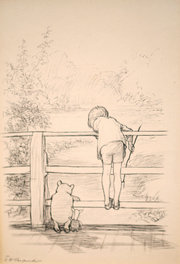
Poohsticks

Days of the Year says it’s “National Winnie the Pooh Day (January 18th)”.

One of the cuddliest holidays around has to be National Winnie the Pooh Day, celebrated on the birthday of author A. A. Milne who was born in 1882.

It’s one special anniversary fans just can’t bear to miss! Every year, the occasion is marked with events such as teddy bear picnics, featuring plenty of honey on the menu….

Learn Fun Facts About Winnie the Pooh

Brush up on some trivia in honor of National Winnie the Pooh Day! Check out and share a few of these fun facts for starters:

  • The name Winnie came from Milne’s own teddy bear, Winnie
  • The “Pooh” part was from the nickname of a swan Milne had met on holiday
  • The story and adventures of Winnie the Pooh are set in the ancient Ashdown Forest of East Sussex, which was near Milne’s home
  • Some of the original plush toys are on display at the New York Public Library…

(10) TODAY’S BIRTHDAY.

[Written by Paul Weimer.]

January 18, 1953Pamela Dean, 73.

By Paul Weimer: One of the legends of Minneapolis fantasy writing, Pamela Dean’s work first came to my attention in the same flush of attention that brought novels such as War for the Oaks to my attention. From my perch in New York, work by people like Bull and Dean and Brust (among others) enlightened me to the fact that the Twin Cities were a hotbed of fantasy and science fiction writing. 

I started reading her with her classic Tam Lin, which I picked up not long after the aforementioned Bull novel. (I was on a kick to read novels set in Minnesota at that point, you seem, especially by this community).  It’s an excellent adaptation and exploration of the Scottish-English story. You know the one. Young man taken by a Queen or noble of Faerie, and the titular Tam Lin must thus be rescued by the love of his life, Janet. You can see the appeal, it is an empowering fantasy that puts a woman in a forward, protagonist position. Since the original reels and songs, it’s been adapted many times by many authors. Dean’s version has the story take place, predictably, of course, in Minnesota, setting it at Blackrock College. 

But it is the Secret Country trilogy that I think of as her best work, or at any rate my favorite. It’s a conceit that was not new to her, as far as I am aware, it dates back to Joel Rosenberg’s Guardians of the Flame series. The idea that a group of people, playing a game with and imagining a fantasy world, find themselves transported into the realm of the very game that they thought was fiction. The idea is the same, but the Secret country is on the brink of war, there’s a dragon afoot, and so there is far more urgency and threat to the realm than wandering about as in Rosenberg’s series. It is one of the classic portal fantasies into a realm you think you already know. 

I’ve gotten to meet Pamela Dean many times at local cons. She might even be able to pick me out of a line up. Happy birthday, Pamela!

Image
Pamela Dean

(11) COMICS SECTION.

(12) LET’S FACE IT. [Item by Steven French.] From this week’s “The Week in Geek” in the Guardian: “The arrival of Two-Face in the new Batman sequel bodes well for a doom-laden moral epic”.

The arrival in Gotham City of Harvey Dent, AKA Two-Face, is rarely without consequence in Batman sagas. Tommy Lee Jones’ shrieking, neon-splashed Batman Forever iteration turned the character into a dissociative identity slot machine, endlessly pulling its own lever, while Billy Dee Williams’ take in 1989’s Batman was a promise of future ruin. In Christopher Nolan’s The Dark Knight, the downfall of Aaron Eckhart’s crusading district attorney signalled the dangers of placing too much faith in the moral resilience of a single individual, especially in a city where the very idea of justice is already under existential strain.

With the news this week cautiously announced in the Hollywood Reporter that Sebastian Stan will be playing Dent in Matt Reeves’ highly anticipated forthcoming sequel to The Batman, it’s quite possible the new episode will be less interested in the masked theatrics of the 20th-century big screen caped crusader, and more in the idea that the very concept of justice is about to slowly disintegrate….

(13) THE BALLAD OF RODGER YOUNG. [Item by Dann.] I came across this from The Heinlein Society and thought it might be of interest.  “On January 17, 1944, (82 years ago today)…”

On January 17, 1944,(82 years ago today) Pvt. Rodger Young was posthumously awarded the Medal of Honor for his actions on July 31, 1943, New Georgia in the Solomon Islands….

Johnny Rico serves aboard the Rodger Young in Heinlein’s Starship Troopers.  The call for troopers and sailors to board the ship is “The Ballad of Rodger Young”.  The call for deployed troopers to leave the combat zone was the same song.

There are a few versions on YouTube.  The full ballad is long, so most of the sung versions are at least a little abridged. Jim Reeves – The Ballad Of Roger Young.

The most prominent photo of Rodger Young has him wearing Sergeant’s stripes.  A week before the combat action for which he would be posthumously be awarded the Congressional Medal of Honor, Sgt. Young realized that his hearing had gotten so bad that he couldn’t really hear.  Rather than lead a squad in that condition, he requested demotion and that he stay with his squad.

A week after that, he found himself wounded and in a position to approach and assault a Japanese pillbox that held a machine gun team that had his unit pinned down.  He crawled forward and tossed a series of grenades into the pillbox.  His action allowed his unit to retreat and reform.  It also cost him his life.

(14) PLANETARY COLLISION. [Item by SF Concatenation’s Jonathan Cowie.] Reported in Nature, a paper that appeared  in Science before Christmas.

Astronomers have seen the aftermath of two planetary pile-ups in the same turbulent star system — providing potential insights into how planets form.

Observations from the early 2000s indicated that Fomalhaut, a star 7.7 parsecs (25 light years) from Earth, was orbited by an object that looked like a dusty planet. But subsequent observations revealed that the bright spot was fading, suggesting that it was a dispersing dust cloud.

Paul Kalas at the University of California, Berkeley, and his colleagues have used the Hubble Space Telescope to make further observations of the Fomalhaut system. They found that the original object had almost disappeared — and that a second cloud of reflective dust had formed elsewhere.

The most likely explanation, say the authors, is that both the original and most-recent observations show the fallout of collisions between rocky bodies called planetesimals, which are often thought of as the building blocks of planets. This is the first time these impacts have been observed directly in another solar system. Studying other planetesimal smashes could help researchers to understand the dynamics of planet formation.

Image

(15) ARTEMIS 2 MOVES AND GROOVES. If you have 10 hours you can watch complete coverage of the “NASA Artemis 2 Rollout LIVE!”. But if you’re pressed for time, then WESH-TV has the solution: “TIME-LAPSE: Artemis II rolls out to launch pad”.

(16) VIDEO OF THE DAY. “Heated Wizardry” from Saturday Night Live. By substituting quidditch for hockey, “A trailer introduces a Harry Potter television series with a heated twist.”

[Thanks to Kathy Sullivan, Steven French, Mike Kennedy, Dann, Andrew Porter, John King Tarpinian, Cat Eldridge, SF Concatenation’s Jonathan Cowie, and Mark Roth-Whitworth for some of these stories. Title credit belongs to File 770 contributing editor of the day Peer.]

Pixel Scroll 12/27/25 Never Give Up Pixeling, Never Stop Scrolling

(1) TREK COLLECTIBLES ON THE BLOCK IN 2025. TrekMovie.com reviews“The Year In Auctions: Top 12 Star Trek Memorabilia Items Sold In 2025”.

For many fans, collecting is one of the primary ways to engage with the world of Star Trek. Faithful reproductions can be exciting, but collectors of a certain kind seek the real deal: screen-used and production-made props, costumes, and other memorabilia. As Captain Picard sagely says in Star Trek: First Contact, “touch can connect you to an object in a very personal way, make it seem more real.” They may just be tools of the trade to those behind the scenes, but these unique pieces of Star Trek history can take on an almost sacred significance.

Every year, the major auction houses curate an incredible array of production-related props and memorabilia, accessible to fans all across the globe. There can be some amazing finds online, even on eBay. For the highest bid, anyone can own a little (or big) genuine piece of Star Trek. Each item has its own story to tell, unique in the insight it reveals of the production process. A few auction lots caught our eye, either by nabbing an astonishing price or simply for being interesting. So, in no particular order, here is a roundup of our picks for the most fascinating pieces of Star Trek to hit the auction block this year.

Going for the highest price was this iconic instrument from the first Hugo-winning episode of Star Trek: The Next Generation.

Image

Picard’s Ressikan flute

Price: $403,200

Sold: September 4, 2025 through Propstore

What better note to end it on than one of the most beloved props from one of the most beloved episodes in the entire franchise, the Ressikan flute? Featured in the classic Star Trek: The Next Generation episode “The Inner Light,” the flute represents Captain Picard’s transformation from starship captain to family man as he ages a lifetime over the course of a lunch break. The episode is widely considered one of the greatest in all of Star Trek, which is why this prop sells for such astronomical sums each time it goes to auction. Until last year’s Julien’s auction, the flute was the second most expensive Star Trek prop ever sold. This year it sold again, combined with the screen-matched box featured at the end of the episode and a continuity script used on set, to a very well-funded collector….

(2) STAR TREK ANSWER ON GAME SHOW. [Item by Steven French.] The BBC presents an early evening game show called House of Games (hosted by Richard Osman, a best-selling mystery writer) in which each round involves a different kind of game. However, the last round is always “Answer Smash” in which contestants have to “smash” the answer to the question on top into the name of the object in the photo below. Here’s one of the answers in tonight’s episode:

Image

(3) IT’S A WONDERFUL COPYRIGHT. [Item by Dann.] Amazon Prime Video has recently been subjected to criticism for offering an abridged version of the Christmas classic movie, It’s A Wonderful Life. The abridged version removes 22 minutes from the original 130-minute film.  Most of the excisions are the scenes in Bedford Falls where George Bailey is learning what the alternative reality where he had never been born is like.

While the copyright of the movie was allowed to lapse, those of the original short story “The Greatest Gift” by Philip Van Doren Stern and the musical score by Dimitri Timokin had not.  The legal theory for the abridged version is that it largely omits material subject to copyright and therefore can be freely aired/streamed. 

Amazon critics point out that both versions are available on the service, but note that the difference between the two is not transparent.  Abridged versions have been available prior to the advent of streaming.

Image

(4) HOW DID THE MUPPET SHOW BEGIN? [Item by SF Concatenation’s Jonathan Cowie.] BBC Radio 4 has just aired a half hour programme on the show that took the world by storm and launched the superstar Miss Piggy.  The rest, as they say, is history. You can access the programme here though it may be that if you are outside of Brit Cit you need a subscription. [Update: It appears this content may have been pulled altogether, rather than just being inaccessible due to a subscription requirement.]

The Muppet Show almost never happened! The pitch for the show had been turned down by a number of broadcasters.  However, the British TV mogul Lew Grade (the man who also backed Gerry Anderson so enabling Supercar, Fireball XL5, Stingray, Thunderbirds and UFO) liked the idea of the Muppets and when Lew liked something, he gave it his whole-hearted support.

Before it became a global sensation, The Muppet Show was a British gamble. In this lively and affectionate documentary, Louise Gold – who played Annie Sue Pig – celebrates the show’s anarchic birth in Britain in the mid-1970s. Rejected by American networks, Jim Henson’s puppet troupe found a champion in ATV boss Lew Grade, who backed the series and gave it a home at Elstree Studios.

Broadcast on ITV Sunday nights, The Muppet Show was an overnight hit. Its surreal humour and chaotic brilliance won over British audiences instantly. Louise Gold, the show’s first British female puppeteer, guides us through its early days, sharing how she landed her job, how the famous opening sequence was put together, and revisiting the creative process behind some of the show’s most famous sketches – from the Swedish Chef and Veterinary Hospital to Pigs in Space.

Image

(5) MYTHOPOEIC PAPERS. From Robin Anne Reid, who co-chaired the conference, we learn The Mythopoeic Society is now offering for sale the Proceedings of the Online Mythopoeic Seminar #4, 2025. Available in paperback ($10) and e-book ($8).

This collection of papers presented at the Mythopoeic Society’s 2025 online conference focuses on intersectional feminist approaches to women and gender in fantasy, science fiction, speculative fiction, and other mythopoeic work. The conference honored the first anthology on women and Tolkien, Perilous and Fair: Women in the Works and Life of J.R.R. Tolkien (2015), edited by Janet Brennan Croft and Leslie A. Donovan.

Image

(6) GMAIL NEWS. “Google will let users swap out Gmail addresses without losing data” says the Los Angeles Times. (Article is behind a paywall.)

Google has finally answered users’ cries, allowing Gmail users to swap out embarrassing teenage email addresses.

Gmail account holders can now change their existing @gmail.com address while retaining their data and services.

Once changed, old email addresses will remain active, and users will continue to receive emails sent to both the old and new addresses….

… The ability to change Google Account email addresses is gradually rolling out to all users, and is not immediately available to everyone, Google noted on its support page.

Gmail users who want to switch to more anonymous email addresses or felt burdened by the email addresses they chose as kids celebrated the update on social media.

“Feature needed: 2005. Feature arriving: 2025. Gap: two decades of suffering,” one user posted on X.

“So all those years of ‘cool’ usernames and cringe emails can be erased… shame it can’t delete the memories associated with them,” another X user posted.

“Nah I’m keeping StonerBeast42069 forever!!” one Reddit user quipped.

Members of the transgender community and others who have changed their names were also happy as the new options let them distance themselves from their former names….

(7) MEMORY LANE.

[Written by Paul Weimer.]

Blade Runner (1982)

By Paul Weimer: Blade Runner is one of the most iconic movies in science fiction, yet it took me years to see it.  This is not surprising, since, if you have followed the through line of my science fiction watching, the movie came out in 1982, before I was seeing movies in a theater, on my own or otherwise. And it was a box office disappointment, it didn’t linger in first run theaters like other movies I would see starting the next year would (e.g. Return of the Jedi).

So I missed the initial boat. I had heard of the film in magazines like Starlog, the movie really did have a cult afterlife in its initial  run.  

I did finally see it for the first time when it came on WPIX, Channel 11 in New York City. I remember the bumpers for the film even more vividly than the movie itself, with the Channel 11 interstitials proudly saying “We now return you to BLADE RUNNER”, with a strong resonant intonation of the name. One could even believe the announcer was as excited for the film as the viewers. 

And so I watched it for the first time. This was a TV cut of the Theatrical cut, with the voiceover, and with the happy ending. Even as butchered as it was (frankly, Brazil was worse, but that’s a different story), I was enthralled. Look, it’s Indiana Jones/Han Solo hunting androids in a weirdly rainy Los Angeles.  I didn’t quite know what noir was as a genre at that point, but I had seen noir films on WPIX and other channels, and I could see immediately that this movie was drawing on that tradition, for all of its science fiction trappings. This was the first time I had really encountered this particular genre blend before. 

And what a blend. What made Blade Runner, even in this form work for me? Those visuals, perhaps. I wasn’t a photographer, then, and thought photography was stupid…and yet the visuals of the movie were arresting (okay, it took me a long time to get that I liked photography and wanted to do it for myself). The iconic characters and the pathos? Certainly that was a factor, too.  “Like tears in rain”, indeed.  The small character and large character moments, alike, throughout the film.  

The music? Remember I am not, thanks to my brain a big music person, but the Vangelis score is memorable all the same. Finding that out led my brother and I to pick up an album called “Jon and Vangelis”.  We were already fans of Jon Anderson’s group YES, so that introduced me to the song “The Friends of Mr. Cairo”.  And that song is an homage to old movies, some of that DNA, in the noir portion, that went into Blade Runner.

And of course, watching Blade Runner was a gateway for me to try the stories and novels of Philip K Dick, which I found were very different than the movie, but in their own unique and awesome way.  Even Do Androids Dream of Electric Sheep, the novel the movie was based on, is very tonally different. I was confused, but intrigued all the same. 

Thus, the seed of watching this movie helped bloom a whole host of descendant likes and discoveries on my part.  I watched it for years whenever it would show on WPIX. I eventually got a video tape, and a DVD of the theatrical cut so that I could watch it at will. 

But when the first major box set came out, with the original versions, without the narration and with everything complete, it was like watching the movie with fresh eyes. It felt different and looked different to my eyes to see the theatrical, the international and finally the final cut versions. I am still mixed on whether the full unicorn dream in the final cut is necessary, but I definitely think that the canonical Blade Runner cut in my head has at least some of it.  

And as much as a voiceover might tie the movie back to noir, the movie doesn’t need it.  And that reminds me of the movie Dark City, whose original cut has a voiceover in the beginning…but the final director’s cut tosses that and allows the audience to figure things out. Dark City, among a myriad of other movies, clearly learned from Blade Runner, children of a classic movie of science fiction. 

As far as Blade Runner 2049, its sequel, decades later, well that is a different story entirely…

Image

(8) COMICS SECTION.

(9) TRIVIAL TRIVIA. [Item by John King Tarpinian.] John Williams was nominated for an Oscar for the musical score for Close Encounters of the Third Kind.  He lost to John Williams for the musical score to Star Wars.

(10) RE CURSIVE. Atlas Stationers is asking $200 for Ferris Wheel Press’ “Lord of The Rings Fountain Pen Set – Sauron”. Admittedly, even your two eyes may find it challenging to see Sauron’s single eye in this design.

Featuring a dark fiery red body and a grip with the gates of Mordor™ bracketed by Sauron’s face and Eye. Sauron’s grip is etched with the Black Gates of Mordor. Prominent on the grip is the silhouette of his helmet, as depicted in the Prelude to the Fellowship of the Ring, as well as a render of the top of his tower, Barad-Dûr, complete with the Eye’s fiery manifestation.

(11) A CHARLIE BROWN CHRISTMAS — HOW IT GOT HERE. [Item by Dann.] From the folks at The Everyman Commentary comes a piece by Sr. Editor J. Antonio Juarez about the making of the animated Christmas special A Charlie Brown Christmas.  The article recounts some of the challenges encountered to fund and make the special. 

  • We learn that it was originally sponsored by Coca-Cola with brief advertisements included in the animation at the beginning and end.
  • We learn that Snoopy’s dog house was originally blue.
  • We also learn about the non-negotiable content that Charles “Sparky” Schulz required to be included.
  • The TV executives thought the final product was going to perform poorly.  They assumed that the special would air one time and then be quickly forgotten.  It turns out that they were wrong.

Dann’s supplemental: The Everyman Commentary is a diverse collection of authors who appear to largely cover religious and conservative themes.  One of them has had stories published in Cirsova magazine, so there is a bit of a genre tie-in. 

(12) STILL IN THE CAN. Deadline poses an existential question: “18 Big Unreleased Movies: Will They See The Light Of Day?” Batgirl is an obvious entry. Here are two more of the several films of genre interest on the list.

Big Bug Man

This unreleased American animated TV film starred Brendan Fraser and Marlon Brando, marking the latter’s last film role. It followed a candy company worker who gains special abilities after being bitten by insects. The hand-drawn film is reported to have cost as much as $20 million. Pic was written by Bob Bendetson, who also wrote episodes of The Simpsons, and was directed Bendetson and Peter Shin. Brando was originally asked to voice a male character, but Brando thought it would be fun to voice the old lady Mrs. Sour instead. Brando reportedly wore a blonde wig, a dress, white gloves, and full makeup while recording the voice. An unwell Brando died shortly after recording his part in the film. It was originally scheduled for release between 2006 and 2008, but never got a release….

The Magic 7

The Magic 7 is an animated TV film written and directed by Roger Holzberg. The film centers on the adventures of two children and a dragon as they fight the arch-enemies of Earth. The stellar voice cast included John Candy, Michael J Fox, Ted Danson, Ice-T, Jeremy Irons, Demi Moore and James Earl Jones. It was slated to air on Earth Day, April 22, 1997, but was postponed. After later plans for a 2005 release, the film was again suspended….

(13) UK SFF/H CREATORS WE LOST IN 2025. [Item by SF Concatenation’s Jonathan Cowie.] The New Year is a time of celebration of a fresh revolution of the Earth about our star. Yet, sadly, the past year saw us lose a good few.  Indeed, Filers of a certain age find that their Christmas card address lists get a little shorter each year. Of those lost, there are the professional associated with science fiction.  BBC Radio 4 Extra ran a programme on those genre-related folk that left us in 2025.

Toby Hadoke pays tribute to some of those who made indelible contributions to UK horror, science-fiction and fantasy who sadly died in 2025.

You can access episode 1 (of 2 episodes) the programme here if you are in the British Isles or have a subscription to the BBC.

Image

[Thanks to Mike Kennedy, Andrew Porter, John King Tarpinian, Dann, Robin Anne Reid, Cat Eldridge, SF Concatenation’s Jonathan Cowie, Mark Roth-Whitworth, Kathy Sullivan, and Steven French for some of these stories. Title credit belongs to File 770 contributing editor of the day Paul Weimer.]

Pixel Scroll 11/5/25 Oh, Sweet Mercury, We Have A Notification On Vellum

(1) BIG DOLLARS BID ON TV COLLECTIBLES. Heritage Auction has announced the top sales from “The Stewart Berkowitz Television Treasures Auction” held in October.

Image

Headlining the auction were the original 1960s Batman series costumes worn by Adam West and Burt Ward, which together realized $575,000. The Caped Crusader’s legacy dominated the event, with seven of the top twelve lots tied to the show. Highlights included Cesar Romero’s Joker costume ($212,500), Yvonne Craig’s Batgirl outfit ($87,500), Julie Newmar’s Catwoman suit ($68,750), and the Batscanner console from the Batcave, which brought $150,000.

Image

Beyond Gotham, other TV legends found eager buyers. Lynda Carter’s complete Wonder Woman costume, including her signature golden Lasso of Truth, fetched $225,000. From Happy Daystwo of Henry Winkler’s Fonzie leather jackets sold for $87,500 and $75,000. And Star Trek fans boldly bid on William Shatner’s Captain Kirk ensembles, realizing $62,500 and $52,500.

(2) HERE THERE BE COPYRIGHTED DRAGONS. [Item by Mike Kennedy.] There is something inherently comical about a paywalled article that describes efforts by copyright holders to block illegal access to pay-to-read material. Mashable reports (behind a paywall): “Google reportedly blocks 749 million Anna’s Archive URLs”.

Have you ever heard of Anna’s Archive? No? Well, then, that’s good news for copyright holders. They don’t want you to know about Anna’s Archive, and they’re making sure Google helps keep it that way.

Google has taken down a whopping 749 million links to Anna’s Archive from its search engine, according to the company’s own transparency report, and as first reported by copyright and digital rights outlet TorrentFreak….

… What is Anna’s Archive?

Anna’s Archive is an open-source search engine for “shadow libraries,” or online libraries made up of usually paid or paywalled content that’s been pirated and uploaded for free. It’s basically a Pirate Bay, but for books and other literary material.

The takedown requests are mostly from copyright holders, like book publisher Penguin Random House. However, more than 1,000 different publishers and even authors themselves have submitted takedown requests to Google for Anna’s Archive links.

The Anna’s Archive platform itself is just a search engine. It does not host any of the pirated material. It simply helps users find material elsewhere on the internet….

(3) I STILL HAVEN’T FOUND WHAT I’M LOOKING FOR. Radio Times ranks “Doctor Who’s 5 most sought-after missing episodes – and how they could be found”.

It’s almost hard to imagine how something as culturally significant as an episode of Doctor Who could go missing.

How could anybody hold a piece of television history in their hands and throw it in a skip? Well, it isn’t quite as straightforward as that – even though this dramatic “junking” may have been the fate of many episodes; in fact, there are 97 episodes still missing from both William Hartnell and Patrick Troughton’s years as the Doctor.

How did this happen? To find out we have to understand a little about how the show was made and distributed. In the early years Doctor Who was recorded on 2-inch quadruplex videotape in-studio (on location it was recorded in 16mm film and model shots were sometimes recorded in 35mm film – these would then be recorded, or telecined, onto the 2-inch videotape).

The BBC often looked to sell Doctor Who overseas, and as such it had to make a few copies to ship out to countries such as Australia, New Zealand, Singapore and Sierra Leone. But the countries and the number of copies made varied from story to story.

The copies were created via a process called telerecording. Essentially, the videotape would be played back through a (CRT) monitor and a film camera would record the playback onto 16mm film. These copies would then be shipped around the world with a label attached showing the copyright expiry date, instructing them when the film should be destroyed, or returned to the BBC.

Meanwhile, the 2-inch videotape itself would be stored for a short period of time before finally being wiped to be used again. The BBC changed its archiving policy in 1978, but before this, there was a lack of clarity between departments when it came to cataloguing programmes….

…Although the footage of most of the 97 episodes remains lost, there are other ways that they have been preserved. Some very dedicated fans made reel-to-reel tape recordings at the time of broadcast, meaning that every single episode of Doctor Who survives via audio. Unfortunately, it wasn’t common practice for home viewers to make their own video recordings in the 1960s….

Radio Times says these are the five Doctor Who stories featuring some of the most wanted missing episodes. The article has a synopsis of each story plus a rundown on efforts to recover the episodes.

5. The Celestial Toymaker by Brian Hayles (1966)

4. The Evil of the Daleks by David Whitaker (1967)

3. The Web of Fear by Mervyn Haisman and Henry Lincoln (1968)

2. The Tenth Planet by Kit Pedler and Gerry Davis (1966)

1. The Power of the Daleks by David Whitaker and Dennis Spooner (1966)

(4) DID CHANGING OF THE GUARD KILL PW’S INTEREST IN SFF? Has Publishers Weekly stopped running sff news? Andrew Porter thinks so.

Didn’t even run the World Fantasy Awards.

They have not used any of the numerous articles I have sent them the links to since the departure of John Maher, who went to the New York Times.

Here’s the list of all the recent awards and prizes reported by Publishers Weekly.

(5) A CENTURY AS SEEN HALF A CENTURY AGO. A Deep Look by Dave Hook praises “Damon Knight’s Survey of SF #1, ‘A Century of Science Fiction’, 1962 Simon & Schuster”.

The Short: I recently read Damon Knight’s first anthology, A Century of Science Fiction, 1962 Simon & Schuster. It includes 26 short stories, novelettes, and several novel excerpts, and a great introduction and story introductions. Functionally, it’s Knight’s first anthology of three from the 1960s surveying the history and development of science fiction. My favorites are the Odd John excerpt by Olaf Stapledon, 1935 Methuen, the excerpt from The Time Machine by H. G. Wells, 1895 William Heinemann/Henry Holt, “What’s It Like Out There?“, a novelette by Edmond Hamilton, Thrilling Wonder Stories December 1952 (his best short fiction work IMHO), and “Call Me Joe“, a novelette by Poul Anderson, Astounding April 1957. My overall average rating is 3.87/5, or “Great”. Strongly recommended….

That’s followed by “Damon Knight’s Survey of SF #2, ‘A Century of Great Short Science Fiction Novels’, 1964 Delacorte”.

It includes six novels, novellas, and novelettes, along with insightful story introductions. Functionally, it’s Knight’s second anthology of the 1960s surveying the history and development of science fiction, and a supplement to his first anthology, A Century of Science Fiction, 1962 Simon & Schuster. My favorite was the classic novelette, “E for Effort“, Astounding May 1947, by T. L. Sherred. While I do question Damon Knight’s inclusion of two works of fiction, it’s still a great anthology. My overall average rating was an impressive 3.98/5, or “Great”, and just below “Superlative”. Strongly recommended….

(6) AURORA AWARDS OPENS ELIGIBILITY LISTS FOR 2025 WORKS. The Canadian Science Fiction and Fantasy Association is accepting submissions to the eligibility lists for next year’s Aurora Awards.

As of November 2025, our annual eligibility list submission period is underway. You can see our current list of confirmed eligible works on our public list page here. This page can be shared widely, everyone has access to it. This public page contains links to external URLs for each work, which you will find to the right of the entry marked as [info]. For works that are available to read in full online (eg. short stories in online magazines), the [info] link should direct you to that work so you can read it. For other works, the info link provides publication details, synopses, and purchase options.

CSFFA members are encouraged to add works they are familiar with or published in 2025. In order to add works before the end of December, you must have a 2025 membership (ie. paid the membership fee in the first half of this year). Starting in January, you will need to purchase your 2026 membership in order to access the member-only eligible work submission forms.

If you are a publisher or a creator without a membership and would like assistance adding works to the lists, please contact us. If you only published a few works, we are more than happy to put them in for you. You must send us full details of the work and a URL where members can get more information about the work or access it in full (if such is available online).

The eligibility lists are for works done in 2025 by Canadian citizens and permanent residents.  For full details on eligibility rules, see here. and on the Aurora Award categories, here. Reminder that no work can be nominated unless it has been added to the eligibility lists before the nominating period begins. Nominations are made directly from the confirmed eligibility lists on our website, so this is a necessary first step in each year’s awards process.

(7) RALPH SENENSKY (1923-2025). TV director Ralph Senensky died November 1. The Hollywood Reporter profiled his career: “Ralph Senensky Dead: ‘Star Trek,’ ‘Waltons’ Director Was 102”.

…Among Star Trek fans, Senensky is synonymous with some of the best episodes of the Paramount/NBC series. Season one’s “This Side of Paradise” is regarded as one of the early standout Spock installments, and season’s two “Metamorphosis,” another installment that premiered in 1967, was his personal favorite.

For the third season, he embarked on 1968’s “The Tholian Web,” which saw Kirk (William Shatner), Spock (Leonard Nimoy), McCoy (DeForest Kelley) and Chekov (Walter Koenig) don shiny silver spacesuits as they investigate a crippled sister ship.

There was trouble ahead, however. Those zipper-less suits meant the actors had to be sewn into their costumes, then unsewn when they needed a bathroom break. By the third day of shooting, Senensky was four scenes behind schedule when he was called into producer Fred Freiberger’s office and fired.

On the pages of The Hollywood Reporter, Paramount executive Douglas S. Cramer announced that Herb Wallerstein would finish things up. Senensky got zero credit for his work.

“The article pointed out the studio’s intent to curtail the problem of films not being completed as scheduled,” Senensky reflected on his website. He said he received a phone call from Star Trek creator Gene Roddenberry, who was “outraged, apologetic and sympathetic.”…

…Despite directing nearly 200 TV episodes over 25 years, Senensky realized he primarily will be remembered for those 6 1/2 Star Trek shows. (He also helmed “Obsession,” “Return to Tomorrow,” “Bread and Circuses” and “Is There in Truth No Beauty?”) Shortly after wrapping “This Side of Paradise” — he earned $3,000 for his first Star Trek gig, he said — he received a letter from Nimoy. “It was not only a special Spock experience, but it was special for me as well in that I felt safely in the hands of a capable and sensitive director,” Nimoy wrote. “Unfortunately, a rare experience in TV…

(8) BRUCE FRENCH (1945-2025). Actor Bruce French died February 7 at the age of 79.

He was noted for having portrayed a number of different characters across the Star Trek universe, including the empath adjutant to Jean Simmons in “The Drumhead“, cited as one of the best episodes in the franchise. He is also one of the few actors to appear in both Star Trek and Star Wars, having contributed his voice to Star Wars: The Original Radio Drama in 1981.

File 770 just became aware of his passing, and since he wasn’t on the Seattle Worldcon’s in memoriam list the news may not be generally known.

(9) MEMORY LANE.

[Written by Cat Eldridge.]

Star Trek’s “The Corbomite Maneuver” (1966)

Fifty-nine years ago, “The Corbomite Maneuver” aired for the first time. If you rewatch it again, do be aware that it is the first episode to feature Kirk’s “Space: The Final Frontier” monologue in the opening credits.

Image

It was the tenth episode of the first season, and it was written by Jerry Sohl who had previously written for Alfred Hitchcock PresentsThe Outer LimitsThe Invaders, and The Twilight Zone. (His other Trek scripts were “Whom Gods Destroy” and “This Side of Paradise”.)

It was the first episode filmed in which Kelley played Dr. Leonard McCoy, Nichols played Lt. Uhura and Whitney played Yeoman Rand, though we first saw them on the air in “The Man Trap”.  

Clint Howard, brother of Ron Howard, played the alien Balok but he didn’t voice him — Walker Edmiston provided that. Ted Cassidy, who was the Gorn in “Arena” and the android Ruk in “What Are Little Girls Made Of?” voiced the Balok puppet. 

The Balok puppet itself was designed by Wah Chang, who, among other things, shared an academy award for The Time Machine prop in Pal’s movie of the same name. Cool fact: Chang is responsible for the Pillsbury dough boy. Any resemblance to Balok is probably accidental. 

So did critics like it at the time? No idea as I can’t find any contemporary reviews of it anywhere even on Rotten Tomatoes though media critics now love it as most put it in their top twenty of all of the Trek series episodes. 

It was nominated for a Hugo at NyCon 3, the year that “The Menagerie” won. “The Naked Time” was also nominated that year. 

It is, of course, streaming on Paramount+. 

(10) COMICS SECTION.

(11) FORTNITE ENGAGES SIMPSONS.  “The Simpsons is Fortnite now, sorry” apologizes AV Club. “The Simpsons/Fortnite crossover includes new animated shorts, a Springfield-based map, and the ability to shoot John Cena while dressed as ‘Stupid, Sexy Flanders.’”

…As part of the collaboration, Gracie Films has produced a series of Simpsons shorts that will air both in Fortnite and on Disney+, which, if the first one is anything to go off of, feature a cheaper version of the show’s animation, paired with some of the least enthusiastic line readings we’ve ever heard from its talented cast. (If that’s Dan Castellaneta voicing Kodos and Homer, he sounds like he’s on the wrong end of a grueling graveyard shift in the voice actor mines.) Oh, and there are all the little irritations inherent to having Springfield shoved into a universe designed and aimed directly at 12-year-olds, including the fact that the version of Moe’s Tavern on “Springfield Island” serves sugar-y energy drinks and not beautiful, life-restoring Duff Beer. (Also, it looks like the Stupid Sexy Flanders skin skimps on the juicy backmeat, and, like, what are we even doing here?!)…

(12) ENCOUNTER THE WORK OF JOHN P. MOORE. Amazing Selects has released A The Martian Trilogy, reprinting three stories by John P. Moore that originally were published within the “Amazing Stories” section of the Illustrated Feature Section, (published by William Ziff of Ziff-Davis, eventual owners of Amazing Stories), a syndicated publication distributed to Black newspapers in the 1930s, long forgotten and erased.  These historically significant stories are the first space opera tales written by a Black author.  Available once again after nearly ninety years.

Moore’s tales follow the exploits of a well-to-do Black journalist who is swept up in the first expedition to Mars, where he encounters warring nations, advanced civilizations and unrequited love.

Image

Accompanying these stories and the original illustrations published with them (restored and enhanced by Jennings) are essays, commentary and critique by leading contemporary Black authors and others.  Contributors to this volume are: Dr. Lisa Yaszen, Brooks E. Hefner, Sheree Renée Thomas, Chris M. Barkley, Maurice Broaddus, L. Marie Wood, Bill Campbell, K. Ceres Wright, Minister Faust, Dedren Snead, Edward Austin Hall, Steve Davidson, Val Barnhart, Tanvi Bhatia, Mitali Ghande, MaxAnthony Mateer, Devi “Diya” Patel, Killian Vetter, Kermit Woodall and Lloyd Penny.

The cover image is by John Jennings, Hugo Award winner and NY Times Bestseller — a homage to Harlem Renaissance art.

The Martian Trilogy:  John P. Moore, Amazing Stories, Black Science Fiction and the Illustrated Feature Section is now available in print, eBook and audio formats from Amazing Selects.

(13) GODZILLA MINUTE ZERO. MovieWeb says it’s on the way: “’Godzilla Minus One’ Sequel Teaser Unleashes Chilling New Details About the Monster Movie”.

Following the monstrous success of 2023’s Godzilla Minus One, the first teaser for the upcoming sequel has now emerged from the depths. Directed by Takashi Yamazaki, Godzilla Minus One proved to be not just one of the greatest Godzilla movies ever made, but one of the greatest monster movies, period, with the sequel expected to build on the almost unbelievably solid foundations laid down by its predecessor.

The new teaser, which you can check out below, reveals that the Godzilla Minus One sequel will be titled Godzilla -0.0, aka Godzilla Minus Zero, with the footage being unveiled by the official Toho X/Twitter account. The teaser also confirms that Godzilla Minus Zero will once again be written, directed, and supervised for VFX by Takashi Yamazaki with VFX work by Shirogumi, thus reuniting the creative team that won the Oscar for Best Visual Effects at the 96th Academy Awards….

(14) COLBERT STRUTTING HIS TOLKIEN GEEK CREDS. [Item by Daniel Dern.] Well, not strutting, simply demonstrating his serious knowledge.

In talking with Robert Plant in this YouTube excerpt from his Tuesday, November 4 show, “Robert Plant’s Led Zeppelin Bandmates Had No Idea He Was Referencing Tolkien In The Band’s Lyrics”, Colbert, among other things:

  • Notes the publication years for The Hobbit and The Lord of the Rings
  • As Plant and he meander to Tolkien, including JRRT’s recording his (JRRT’s) Tom Bombadil songs/poems, Colbert clearly without having to think recites four lines of “Fair Lady Goldberry”

The latter happens around the 2:40 mark. (Warning: you’ll see that the instant auto-transcription/captioning isn’t keeping up with the recitation, nor getting it even close to correct.)

[Thanks to Chris Barkley, Cat Eldridge, SF Concatenation’s Jonathan Cowie, Steve Davidson, Francis Hamit, Leigh Strother-Vien, Mark Roth-Whitworth, Steven French, Kathy Sullivan, Mike Kennedy, Andrew Porter, and John King Tarpinian for some of these stories. Title credit belongs to File 770 contributing editor of the day Cat Eldridge.]

Pixel Scroll 5/21/25 “I Don’t Want To Teach This Particular World To Sing,” Said Tom Dyspeptically

(1) STURGEON AWARD NEWS. The 2025 finalists for the Theodore Sturgeon Memorial Award for the best short science fiction story have been selected. File 770 has the list here: “Theodore A. Sturgeon Memorial Award 2025 Finalists”.

(2) LUCAS MUSEUM, DUE TO OPEN IN 2026, CUTS STAFF. “Lucas Museum lays off staff in Los Angeles one year before opening” reports the San Francisco Chronicle.

The Lucas Museum of Narrative Art in Los Angeles — the $1 billion institution founded by “Star Wars” filmmaker George Lucas and his wife, Mellody Hobson — has laid off 14% of its full-time staff, a year ahead of its scheduled opening in 2026. 

Fifteen full-time employees — many from the education and public programming departments — were let go last week, along with seven part-time, on-call workers. 

The museum said the cuts were part of a “necessary shift of the institution’s focus” to ensure its timely debut in Exposition Park.

“It is a tremendously difficult decision to reorganize roles and to eliminate staff, but the restructure will allow the museum’s teams to work more efficiently to bring the museum to life for the public,” the institution confirmed in a statement to the Chronicle. “ The museum will also continue hiring new roles in strategic operational areas in anticipation of the 2026 opening.”

Among those laid off was Bernardo Rondeau, curator of film programs, who was notified while attending the Cannes Film Festival. 

The move follows the February departure of director and CEO Sandra Jackson-Dumont, whose role was divided between Lucas, now overseeing content, and Jim Gianopulos, the former chairman of 20th Century Fox and Paramount Pictures, serving as interim CEO….

Image
Artist’s rendering of Lucas Museum of Narrative Art

(3) GRRM WILL PRODUCE NEW WALDROP ADAPTATION. George R. R. Martin has signed on with Lion Forge Entertainment to adapt Howard Waldrop’s A Dozen Tough Jobs into an adult animated feature film, The Hollywood Reporter can exclusively reveal.

The renowned author will produce the project, a reimagining of the Greek classic story of the 12 labors of Hercules. A Dozen Tough Jobs transports the mythic tale to 1920s Mississippi, where Hercules is re-envisioned as a former sharecropper fighting to regain his freedom…

… Joe R. Lansdale (Bubba Ho-Tep, Hap & Leonard) is writing the screenplay. French animation studio Blue Spirit, the Emmy-winning studio behind Netflix’s Blue Eye Samurai, will provide animation services for the film under Lion Forge Animation….

(4) JIM BUTCHER Q&A. “14 Million Books Later, Jim Butcher Thinks His Wizard Detective Needs a Hug” says the New York Times. (Interview is behind a paywall.)

… Depression, which he had struggled with for much of his life, was deadening his days. His marriage was fraying. The charming raconteur, telling jokes to hundreds of fans on the science fiction and fantasy convention circuit, belied a man in crisis. So, he made a decision to end things.

As the deadline for his next book loomed, Butcher took two bottles of pills that he’d been using to treat chronic migraines and braced for the worst. He recalled feeling terribly sick for 36 hours. But he survived.

“I am really lucky to be here,” Butcher said quietly, as his 7-year-old pit bull, Brutus — named for an earth spirit in one of his books — dozed next to him on the couch.

Afterward, he thought about what his death might have done to his two sons, James (a novelist himself) and Dylan. He felt he needed to “own up to the consequences of my choice, and what could have happened if I hadn’t just been very fortunate.”

The result was the next installment in the series, “Ghost Story.” The book followed Harry Dresden’s ghost as he tried to solve his own murder, observing the ripple effects of his death “It’s a Wonderful Life”-style. It was the first in the series that Butcher didn’t plan out chapter by chapter ahead of time.

Butcher hasn’t opened up publicly about his mental health difficulties until recently, and he’s still reluctant to discuss them. He has been divorced twice, separations that have taken a toll (though he is newly engaged). Sowards said that there was a period where she wasn’t sure when she was going to get another book from him.

“We were able to be patient, and we supported him,” she said.

For lunch, Butcher sears me a steak on the stovetop, not unlike the typical meal that McAnally, the taciturn bartender from his books, would serve up. As Butcher carefully glazes the meat with a heart-healthy balsamic, I suggest that talking to a reporter is probably not great for his blood pressure.

“I mean, I debated whether or not to do this interview,” Butcher said, after adding garlic powder.

Stepping outside into the brisk, pine-scented air, he tells me that talking about his mental health was motivated, in part, by an interaction he had with a fan. At a book signing, he met a young man carrying a printout of writing advice Butcher had published on his LiveJournal. He autographed it and offered the fan encouragement about his own writing.

Butcher thought little of it at the time. But afterward, he said, the fan got in touch to tell Butcher that he had been prepared to kill himself, and that the writer’s words of support helped him decide to keep going. Since then, the two have struck up a friendship.

“I’ve talked to other young men who’ve had the same issues,” Butcher said. “I say, ‘You’re feeling overwhelmed. You need to make your world a bit smaller for a while. Set out some reasonable goals for yourself, get up in the morning, get the bed made, get the kitchen cleaned up, make sure your house looks nice.’”…

(5) IMAGINARY PAPERS. Arizona State University’s Center for Science and the Imagination has published the latest issue of Imaginary Papers, their quarterly newsletter on science fiction worldbuilding, futures thinking, and imagination.

 In this issue, Anna Maria Grzybowska writes about Endling: Extinction is Forever, a 2022 video game exploring environmental crisis and nonhuman agency; Fitz Madrid explores psychedelic tendencies in speculative fiction, with particular attention to Philip K. Dick’s 1969 novel Ubik; and Ari Brin reports on an anthology of rediscovered stories by nineteenth-century science fiction pioneer Robert Duncan Milne.

Image

 (6) TODAY’S DAY.

Image

(7) DISCWORLD REREAD. Christopher Lockett continues his series with “Discworld Reread #2: Equal Rites”.

…In Equal Rites (1987), we meet the character who is, to my mind, Sir Terry’s greatest achievement. I suppose everybody has their favourites, and there are definitely a good number of characters crowding the top tier. But for me, Esmerelda “Granny” Weatherwax is the apex.

Much like The Colour of Magic and The Light FantasticEqual Rites is set in a Discworld that is still under construction—the shape of it identifiable in the unformed clay, which will eventually take more precise form with each sculpting session. One such refinement we already see at work is the way in which this novel’s satire is more substantive: not just taking the piss of fantasy’s tired and formulaic conventions, but pointing to the ways in which some of those conventions are reflective of broader social considerations.

Not to put too fine a point on it, but Equal Rites is very much a feminist novel. As the title’s pun might suggest … and as the opening paragraphs make clear, in case you weren’t paying attention:

“This is a story about magic and where it goes and perhaps more importantly where it comes from and why, although it doesn’t pretend to answer all or any of these questions.

“It may, however, help to explain why Gandalf never got married and why Merlin was a man. Because this is also a story about sex, although probably not in the athletic, tumbling, count-the-legs-and-divide-by-two sense unless the characters get totally beyond the author’s control. They might.

“However, it is primarily a story about a world. Here it comes now. Watch closely, the special effects are quite expensive.” (11)

A novel about magic. And sex, though probably not in the rumpy-bumpy sense of the term—which means sex in the sense of gender, which further means that, should it come under the scrutiny of the current U.S. regime, it might find itself disappeared, because D.E.I….

(8) MAKING A COUNT. “WHAT THE HELL ARE PEOPLE DOING?” asks Max Comperatore, a software developer/prompt engineer based in Argentina. His site delivers “live-ish” estimates of what the human race is doing right now, from sleeping to warfare, restroom use, and intimacy. (It doesn’t deal with really small numbers, like how many are reading File 770…)

The Changelog includes – “Fixed ‘Intimacy’ count to always be an even number.”

(9) LIPSYNCH BY AI. “What if Making Cartoons Becomes 90% Cheaper?” asks the New York Times (behind a paywall).

“Fear not! For I shall lead ye to riches beyond your wildest dreams!”

Inside a tiny recording booth in downtown Los Angeles, John Peck waited for a verdict from the voice-over engineer: Did the line sound pirate-y enough?

Try again, the engineer suggested, perhaps with more throaty emphasis on “wildest.” It might make the animated character Mr. Peck was voicing — a buccaneer with a peg leg — a tiny bit funnier.

Mr. Peck, 33, cleared his throat and gave it a whirl, prompting chuckles from the production team. A couple of clicks on a laptop later, and an artificial intelligence tool synced Mr. Peck’s voice with a cartoon pirate’s mouth movements. The character was destined for an episode of “StEvEn & Parker,” a YouTube series about rapscallion brothers that attracts 30 million unique viewers weekly.

Just a few years ago, lip-syncing a minute of animation could take up to four hours. An animator would listen to an audio track and laboriously adjust character mouths frame by frame. But Mr. Peck’s one-minute scene took 15 minutes for the A.I. tool to sync, including time spent by an artist to refine a few spots by hand.

Toonstar, the start-up behind “StEvEn & Parker,” uses A.I. throughout the production process — from honing story lines to generating imagery to dubbing dialogue for overseas audiences. “By leaning into the technology, we can make full episodes 80 percent faster and 90 percent cheaper than industry norms,” said John Attanasio, a Toonstar founder.

This is how you build the next generation of hot intellectual property,” Mr. Attanasio added excitedly…

(10) COMICS SECTION.

(11) TURING PAPERS TO AUCTION. [Item by Steven French.] The Guardian reports“Alan Turing papers saved from shredder could fetch £150,000”. However, although the thesis is signed, the other papers are just off prints and if Filers would rather not pay £40-60,000, Turing’s foundational paper “On Computable Numbers” can be downloaded here (for free).

Widely considered the father of theoretical computer science, Alan Turing’s influence on modern life continues to be felt in the age of artificial intelligence. But despite this legacy, a cache of his most important papers was nearly shredded – only to be saved at the last minute when their significance was recognised at a family event.

At auction next month, the papers are expected to sell for as much as £150,000 in 13 separate lots.

Among the collection is the wartime codebreaker’s personal signed copy of his 1938 PhD dissertation, Systems of Logic Based on Ordinals, valued at between £40,000 to £60,000.

Also featured is his paper On Computable Numbers, also known as Turing’s proof, which introduced the world to the idea of a universal computing machine in 1936. It has been described as the first programming manual of the computer age and also has a guide price of £40,000 to £60,000….

(12) DONE WITH NO PUBLIC ANNOUNCEMENT. “Google Decided Against Offering Publishers Options in AI Search” reports Livemint.

While using web site data to build a Google Search topped with artificial intelligence-generated answers, an Alphabet Inc. executive acknowledged in an internal document that there was an alternative way to do things: They could ask web publishers for permission, or let them directly opt out of being included.

But giving publishers a choice would make training AI models in search too complicated, the company concludes in the document, which was unearthed in the company’s search antitrust trial. It said Google had a “hard red line” and would require all publishers who wanted their content to show up in the search page to also be used to feed AI features. Instead of giving options, Google decided to “silently update,” with “no public announcement” about how they were using publishers’ data, according to the document, written by Chetna Bindra, a product management executive at Google Search. “Do what we say, say what we do, but carefully.”

Site owners that rely on traffic can’t afford to skip listing on Google, which still holds more than 90% of the search market, making it a gateway to the modern web. Many have reluctantly let Google use their content to power search AI features, like AI Overviews, which provides AI-generated responses for some queries — despite the fact that the feature often eats into their traffic. By answering questions directly, AI Overviews obviates the need for users to click on links, depriving sites of opportunities to make money by showing ads and selling products….

(13) CRITIQUE OF THE AI INDUSTRY. [Item by Steven French.] Karen Hao, author of a new book in the development of AI is sceptical about a possible AI apocalypse but nevertheless argues that it could undermine democracy and has already distorted the research landscape: “’Every person that clashed with him has left’: the rise, fall and spectacular comeback of Sam Altman” in the Guardian.

The apocalyptic visions of a superintelligent AI turning against humanity have been a distraction, she thinks. “Ultimately, what’s going to cause catastrophe is people, not rogue AI, and we need to watch what the people are doing.” However, she has met people who genuinely believe AI will destroy humanity. “I spoke to people whose voices were literally quivering in fear, that is the degree to which they believe, and if you truly believe that, that’s terrifying.” Then there are those who use the idea of how AI could become so powerful as “a rhetorical tool to continue saying: ‘That’s why we good people need to continue controlling the technology and not have it be in the hands of bad people.’” But as far as Hao can see, “we’ve not gotten more democratic technologies, but more authoritarian ones.”

Neither does Hao have much sympathy for the argument that the development of AI requires huge investment. “I don’t think it needs the level of investment these companies say it needs,” she says. “They have already spent hundreds of billions of dollars on developing a technology that has yet to achieve what they said it’s going to achieve,” says Hao. “And now you expect us to spend trillions? At what point do we decide that actually they’ve just failed?

“When I was covering AI pre-ChatGPT and the wide range of research that was happening, there were such exciting ideas … ChatGPT erased people’s imaginations for what else could be possible.” Generative AI has taken over – not just OpenAI, but at other tech companies including Google’s DeepMind – and this, says Hao, “has distorted the landscape of research, because talent goes where the money goes.”

(14) SUPERMAN II AND SUPERMAN TOO. Youtuber Russkafin analyzes two directors’ input to the Superman sequel. Watch it at the link: “CUT CUT: Superman II – Lester vs Donner”.

Did you know there are two very different versions of Superman II? You’ve probably heard of “The Donner Cut” and “The Lester Cut,” but maybe you didn’t know what that meant or what the difference was. In this video we go into great detail about how and why there are two different cuts, what the differences are, and weigh in on which version ultimately holds up better.

(15) TRAILER PARK. “Disney’s ‘Zootopia 2’ Lets the Fur Fly in New Teaser”Animation Magazine sets the frame:

…Judy and Nick find themselves on the twisting trail of a great mystery when Gary De’Snake arrives in Zootopia and turns the animal metropolis upside down. To crack the case, they must go undercover to unexpected new parts of town, where their growing partnership is tested like never before….

[Thanks to Andrew Porter, John King Tarpinian, Chris Barkley, Galen Charlton, Joey Eschrich, Cat Eldridge, SF Concatenation’s Jonathan Cowie, Mark Roth-Whitworth, Steven French, Kathy Sullivan, Teddy Harvia, and Mike Kennedy for some of these stories. Title credit belongs to File 770 contributing editor of the day Daniel Dern.]

Pixel Scroll 5/17/25 A Handbook For Pixels

(1) AI HALLUCINATES ABOUT JG BALLARD. The Bookseller exposes that “Coca-Cola advert featuring JG Ballard novel ‘errors’ was ‘AI-leveraged’” (article is paywalled).

A Coca-Cola advert released as part of its “Classic” campaign, which features well-known authors referencing its products in their novels, appears to include an inaccurate representation of work by the English novelist JG Ballard.

The Empire of the Sun and Crash author is one of three writers included in an advertisement released by Coca-Cola in mid-April 2025. The advert shows an old-fashioned typewriter writing out excerpts from novels, such as Stephen King’s The Shining, as if the onlooker is watching the author type directly onto the page. References to Coca-Cola are accompanied by the appearance of the brand’s red logo and a burst of sound evoking that which might accompany the opening of a fizzy-drink bottle. As well extracts of work by King and VS Naipaul the advert presents us with Extreme Metaphors by JG Ballard, dated 1967. It features a misspelling of the Chinese city of Shanghai.

JG Ballard, who was published by HarperCollins in the UK, did not write a novel published in 1967 called Extreme Metaphors. There is, however, a book titled Extreme Metaphors: Selected Interviews with JG Ballard, edited by Dan O’Hara and Simon Sellars (4th Estate) and published in 2012, three years after Ballard’s death. O’Hara told 404Media: “The sequence of words being typed out by the imagined JG Ballard in the ad was never written by him, only spoken, and the only person ever to type that exact sequence out in English is me.”…

(2) HORROR UNIVERSITY OPEN FOR ENROLLMENT. StokerCon has announced the 2025 Horror University workshop schedule. From June 12-15 they will present nine live, in-person workshops at StokerCon 2025 in Stamford, CT. See course descriptions at the link.

Image

HORROR UNIVERSITY is designed for horror writers interested in refining their writing, learning new skills and techniques, exploring new writing formats, or better understanding the genre. These workshops are taught by some of the most experienced voices in horror. 

​Registration per workshop is $55 per workshop for all attendees. General registration for StokerCon does not include Horror University programming; additional registration is required so that the Con is able to compensate each instructor for their workshop and support the cost of the program.​

More details are available on Eventbrite and will be posted to StokerCon.com soon! Horror Universty workshops are separately ticketed sessions. Registrations may be purchased through the Registration portal.

(3) TUNED IN. A new episode – “Doctor Who: The Interstellar Song Contest” reviewed by Camestros Felapton. This is an ambiguous excerpt, but I want to avoid spoiling the review, the same way Camestros avoids spoiling the episode.

…Undoubtedly this is going to be a divisive episode. Some Doctor Who places I visit are showing a lot of love for it but I think a more general consensus is one of disappointment.

My main takeaway is that this episode is the best example of the recurring problem with this season….

(4) NIVEN Q&A. “Larry Niven interview: Ringworld legend discusses his classic novel and all things sci-fi” – a fun dialog that Niven fans will enjoy.

EHW: Is there anything you would do differently if you wrote Ringworld today?

LN: I’ve been telling people that I would start over with a universe in which you can’t go faster than light [and] nobody’s got psychic powers. The point is, if you build a Ringworld, it has to be because you can’t reach other stars…

EHW: What is the one piece of advice you would offer someone trying to write science fiction today?

LN: Shorten your name, like I did….

(5) BRADBURY’S BEST. James Wallace Harris only wants to read the best Bradbury – so how can he make sure he doesn’t miss any? Harris tries to solve that problem in “How Many Ray Bradbury Short Stories Do You Want to Read?” at Classics of Science Fiction.

…However, over the last five years, I’ve been gorging on science fiction short stories, and I’ve been surprised by how often his stories show up in anthologies. Then, a few weeks ago, I read The Bradbury Chronicles, a biography of Ray Bradbury by Sam Weller. Bradbury’s life was riveting, inspiring me to read more of his work. According to the Library of Congress, Bradbury published over 600 short stories. According to the Weller biography, by the late 1940s, Bradbury was writing and publishing a short story a week.

Piet Nel sent me a spreadsheet with 375 stories from all of Bradbury’s major collection. Piet also said, “Ray Bradbury: The Life of Fiction, by Eller & Touponce (2004), has a comprehensive story list, compiled with academic rigor, up to 2002. It runs to about 400 stories.” So, it’s hard to reconcile the 600 number from the Library of Congress. Piet also sent me the link to Phil Nichols’ site and his Short Story Finder….

…I just don’t want to read that many Ray Bradbury stories. I just want to read his best stories, but I’m unsure which ones are the best. I’m partial to his science fiction stories, but I’m willing to read any type as long as they are among his best….

(6) GOLD STANDARD. “US Mint releases Space Shuttle $1 gold coin” and Popular Science tells how to get one.

You can now own a $1 gold coin celebrating one of America’s most revolutionary achievements: the NASA Space Shuttle program. The latest variant in the ongoing American Innovation $1 Coin series is available to order through the United States Mint. Selected to represent the state of Florida, the noncirculating legal tender is the third coin released this year and the 28th coin in the 15-year project first announced in 2018.

While the coin’s front displays the series’ Statue of Liberty image, the back shows the shuttle launching above plumes of exhaust. United States Mint Medallic Artist Eric David Custer sculpted the image while Artistic Infusion Program (AIP) Designer Ron Sanders designed it….

(7) MURDERBOT PRAISE. A highly favorable review – with a headline that makes an interesting claim: “’Murderbot’ review: This sci-fi show is the best new comedy of 2025” at NPR.

…I laughed a lot, watching Murderbot, and admired how much the show gets right from the jump. SecUnit offers a running commentary on the action, so the show is awash in voiceover. But that voiceover is used, never relied upon. It’s always employed in ways that individualize and particularize SecUnit’s character, which often manifests in jokes that undercut the events we’re watching through its eyes.

About those space-hippies. There are a lot of jokes at their expense, but they’re not the kind of lazy, lay-up, make-fun-of-the-wokes jokes. They’re specific, and so firmly rooted in character that they allow each member of the team to distinguish themselves from each other, to be weird in their own particular way….

…So, yeah. Murderbot is the best comedy series I’ve seen this year and I’m gonna be shouting that from the rooftops. Check out the episodes that drop Friday on Apple TV+. If you like them, do me a favor, because we need to get the word out about this show:

Meet me on the roof.

(8) LAW OF SUPPLY AND DEMAND. Seems the demand wasn’t that great in 1946. “Harvard Law Paid $27 for a Copy of Magna Carta. Surprise! It’s an Original.” The New York Times tells about the discovery. (Article is behind a paywall.)

Bought for $27.50 after World War II, the faint, water stained manuscript in the library of Harvard Law School had attracted relatively little attention since it arrived there in 1946.

That is about to change.

Two British academics, one of whom happened on the manuscript by chance, have discovered that it is an original 1300 version — not a copy, as long thought — of Magna Carta, the medieval document that helped establish some of the world’s most cherished liberties.

It is one of just seven such documents from that date still in existence.

“I never in all my life expected to discover a Magna Carta,” said David Carpenter, a professor of medieval history at King’s College London, describing the moment in December 2023 when he made the startling find.

The manuscript’s value is hard to estimate, although it is fair to say that its price tag of under $30 (about $500 today) must make it one of the bargains of the last century. A 710-year-old version of Magna Carta was sold in 2007 for $21.3 million.

Nicholas Vincent, a professor of medieval history at the University of East Anglia, in eastern England, helped authenticate the text. He noted that the document, which bound the nation’s rulers to acting within the law, had resurfaced at a time when Harvard has come under extraordinary pressure from the Trump administration….

(9) JIM WALKER OBITUARY. [Item by SF Concatenation’s Jonathan Cowie.] Sadly, the British SF fan Jim Walker has passed. Jim was a friend of, and a contributor to, the SF² Concatenation. His first offerings were a couple of book reviews back in the mid-1990s. From the early 2000s to 2017, he was one of our regular convention reporters, especially of Eurocons. He also took part in the Anglo-Romanian Fan Fund activities of the 1990s to early 2000s attending events, both here in Britain when there were visiting Eastern European fans, and also in Timisoara, Romania, with our two International Weeks of Science and SF in 1999 and 2003.

In addition to Eurocons, he was a regular at Britain’s (there are others) Festival of Fantastic Films and the British Eastercon. A civil engineer by training and profession, in retirement he made short films with local friends including a couple of SF offerings which, naturally, were screened at the Festival of Fantastic Films. Sadly, Jim was not at the 2023 Festival of Fantastic Films which I attended for the first time in a few years. We last physically met up in the summer of 2019 when he came down to London. We met to take in the view by Greenwich Observatory of the Thames and the new financial district to the north. We then walked across Blackheath’s Black Death plague pit (hence Blackheath’s name), to have lunch at a real ale hostelry… The thing about ‘last times’ is that when they occur you never know then that they are a ‘last time’. Farewell old pal.

Image
The Dead Dog party participants following a gala dinner for the 1st International Week of Science & SF in 1999. Jim is far left (Jonathan next to him, yellow tie).

(10) MEMORY LANE.

[Written by Paul Weimer.]

The Empire Strikes Back (1980)

By Paul Weimer: The Empire Strikes Back. The Greatest of the Star Wars films?

Possibly. 

Like Star Wars, I didn’t get to see this one in the theater. I didn’t get any playsets for this one, no Cloud City playset, unfortunately. I had a sketchy idea of the events of the movie from seeing Return of the Jedi, and the Atari 2600 videogame. Oh, and the vector laser arcade game. So I knew only a sketch of the movie and its events.

It would be when it aired on TV in the mid-80’s (along with Star Wars itself, and after I had seen ROTJ) that I would finally see the movie. 

Best script of the entire nine movies? Possibly. For freshness and reinvention, the original Star Wars has Empire beat, but Star Wars can be slow going in places, where Empire is much leaner, meaner and more controlled in its blaster fire. We see how Lucas clearly had changed his mind about Luke and Leia and started the run toward Leia and Han. We meet Yoda, in his best incarnation. Force Ghost Obi-Wan.  And just the casual way Vader deflects the laser fire from Han Solo was just so good. It answered the question of “Why don’t you just shoot him?” that I had wondered since his lightsaber fight in Star Wars

And of course “Luke, I am your Father”. One of the greatest twists in modern cinema, without none. Was Vader lying? Why did Obi-Wan lie if he wasn’t? It brings Luke and the Rebellion to a low point not long after, Han captured, the rebellion scattered to the wind. In the Hero’s Journey, this is about as low as things can get in the trilogy. The middle of trilogies is hard, often flabby or repetitive. Empire is none of these. It’s the exception that proves the rule.

Image

(11) COMICS SECTION.

(12) BUSTED. “How Broken is Google?” Camestros Felapton would like to tell you.

I’ve been writing short spoiler-free reviews of the current seasons of Doctor Who each (for me) Sunday morning, having watched the show Saturday (evening). Last week, I had a bit of blank on the title of the episode: was it the Story Engine…no…not quite. Rather than tie myself in knots I just googled it. “doctor who recent episode”.

Google came back with an answer: Castrovalva: Part One, Doctor Who Season 117, episode 1. It had a little picture of Peter Davison next to it. Observant readers will spot that Peter Davison is not Ncuti Gatwa, Castrovalva was broadcast 43 years ago and that, while long running, Doctor Who has not had 117 seasons….

And that’s not all!

(13) WHERE IT BEGAN. BBC reports about “The ‘space archaeologists’ hoping to save our cosmic history”.  (And yet not a mention of River Song!)

Space is being commercialised on a scale unseen before. Faced by powerful commercial and political forces and with scant legal protections, artefacts that tell the story of our species’ journey into space are in danger of being lost – both in orbit and down here on Earth. 

Like Stonehenge, these are irreplaceable artefacts and sites that have a timeless significance to humanity because they represent an essential stage in the evolution of our species. They are often also expressions of national pride because of the industrial and scientific effort needed to achieve them. Sometimes they are also memorials to those who died in the course of ambitious space programmes.

They also have another use. Studying these artefacts and sites helps researchers better understand how astronauts interact with new technology, adapt to new environments and develop new cultural practices. The conclusions of researchers can influence the design of future spacecraft and help future space missions succeed.

Can a new generation of pioneering space archaeologists like Alice Gorman and Justin Walsh help save our space heritage for coming generations, and how might their work change space exploration in the future? …

(14) IT HAS A PULSE. [Item by Steven French.] Not saying it’s aliens but not *not* saying it’s aliens either! “Not saying it’s aliens: SETI survey reveals unexplained pulses from distant stars” at Phys.org.

More than 60 years ago, the Search for Extraterrestrial Intelligence (SETI) officially began with Project Ozma at the Greenbank Observatory in West Bank, Virginia. Led by famed astronomer Frank Drake (who coined the Drake Equation), this survey used the observatory’s 25-meter (82-foot) dish to monitor Epsilon Eridani and Tau Ceti—two nearby sun-like stars—between April and July of 1960. Since then, multiple surveys have been conducted at different wavelengths to search for indications of technological activity (aka “technosignatures”) around other stars.

While no conclusive evidence has been found that indicates the presence of an advanced civilization, there have been many cases where scientists could not rule out the possibility. In a recent paper, veteran NASA scientist Richard H. Stanton describes the results of his multi-year survey of more than 1,300 sun-like stars for optical SETI signals. As he indicates, this survey revealed two fast identical pulses from a sun-like star about 100 light-years from Earth that match similar pulses from a different star observed four years ago…

(15) VIDEO OF THE DAY. DUST has posted “Sci-Fi Short Film ‘Imminent Arrival’”.

Richard James, AKA “Reaper Rick,” is a simple Red-blooded, paranoid, country man. His long history of Military Service has taught him to never trust the government, pushing him to live out his days in the country, off of the grid. Other than his religious viewership of his favorite cable news network, his only other connection to the outside world is through his good buddy, “Squinty Joe,” who he only keeps in contact through HAM Radio. The two of them engage daily about the latest wild conspiracy theories, further exacerbating and shaping their views on the world. The two are constantly trying to one-up each other, bragging about who has the latest gear or best doomsday prep. In their minds, the apocalypse is right around the corner so it only makes sense to have a solid plan. In this Sci-fi Dramedy short film, we follow a day in the life of Rick as his intense paranoia becomes a reality during one of the strangest days of his life!

[Thanks to Steven French, Kathy Sullivan, Teddy Harvia, Mike Kennedy, Andrew Porter, John King Tarpinian, Chris Barkley, Cat Eldridge, SF Concatenation’s Jonathan Cowie, and Mark Roth-Whitworth for some of these stories. Title credit belongs to File 770 contributing editor of the day Jack Lint.]

Pixel Scroll 10/31/24 The Scrollden Girls

(1) WHERE HALLOWEEN COSTUMERS GET BUSTED. I never thought of Halloween being celebrated in China. And if Shanghai cops have their way, it won’t be this year: “China’s Latest Security Target: Halloween Partygoers” in the New York Times (behind a paywall). “Last year, the Shanghai government said Halloween celebrations were a sign of ‘cultural tolerance.’ This year, the police rounded up people in costume.”

The police escorted the Buddha down the street, one officer steering him with both hands. They hurried a giant poop emoji out of a cheering dance circle in a public park. They also pounced on Donald J. Trump with a bandaged ear, and pushed a Kim Kardashian look-alike, in a tight black dress and pearls, into a police van, while she turned and waved to a crowd of onlookers.

The authorities in Shanghai were on high alert this past weekend, against a pressing threat: Halloween.

Officials there clamped down on Halloween celebrations this year, after many young people turned last year’s festivities into a rare public outlet for political or social criticism. People had poured into the streets dressed up as Covid testing workers, to mock the three years of lockdowns they had just endured; they plastered themselves in job advertisements, amid a weak employment market; they cross-dressed, seizing the opportunity to express L.G.B.T.Q. identities without being stigmatized.

At the time, many on Chinese social media celebrated the revelries as a joyous form of collective therapy. The Shanghai government even issued a news release saying the celebrations were proof of the city’s “cultural tolerance” and the “wisdom of its urban managers.”

“There is an absence of festivals in China solely dedicated to the simple pleasures of having fun,” it said. “Halloween has filled the void.”

But the authorities have grown increasingly restrictive toward personal expression in recent years, including seemingly apolitical expression. They are also wary of impromptu crowds, especially after the anti-lockdown protests in 2022. And so, for all their praise last year, this year they seemed determined to prevent a repeat.

Around Julu Road, a popular area where most people had congregated last year, guardrails had been erected, blocking off the sidewalks. Flanks of police lined the street and subway entrances. When they saw someone in costume, according to videos and photos on social media verified by The New York Times, they hustled them out of view.

(2) BAD NEWS ON THE DOORSTEP. “Extra Extra!The End Times, Onscreen” — the New York Times shares numerous video clips from horror films that use front page news mockups to set the stage. Link bypasses the NYT paywall.

Alien invasions, viruses, zombies, meteors, natural or human-caused catastrophes. When the end is nigh in apocalyptic, dystopian, disaster or horror films and television shows, there is often a distinct moment that offers audiences a glimpse of what was known in those last days before civilization was forever changed: the front pages of newspapers.

Sometimes the camera lingers on the page, allowing us to read headlines that telegraph the scramble to make sense of unprecedented events. Other times, blink and you’ll miss it.

In some instances, these front pages are the last ones printed in the before-times; in others, humanity endures in the end, though it is certainly transformed.

… In John Krasinski’s alien horror film “A Quiet Place,” which begins a few months after extraterrestrial creatures that hunt by sound have killed most people on Earth, a family is silently scavenging for medication in what once was a pharmacy. As they tiptoe out, a broken newspaper rack reveals the last New York Post headline: “It’s Sound!”…

(3) CULTURAL BOYCOTT OPPOSITION. Reported here the other day was an open letter in which “Authors Call for a Boycott of Israeli Cultural Institutions” (New York Times; paywalled).

A second group, under the umbrella of the Creative Community for Peace, have signed a statement opposing cultural boycotts: “1000+ Authors, Writers, Journalists, Publishers, and Entertainment Leaders Stand United Against Cultural Boycotts”.

… On Wednesday, the group released a statement condemning the boycott as an attempt “to persecute, exclude, boycott and intimidate.” Their letter was signed by more than 1,000 authors and members of the entertainment industry.

“We believe that writers, authors, and books — along with the festivals that showcase them — bring people together, transcend boundaries, broaden awareness, open dialogue, and can affect positive change,” the letter states. “Regardless of one’s views on the current conflict, boycotts of creatives and creative institutions simply create more divisiveness and foment further hatred.”

Authors who signed the statement include Lee Child, Howard Jacobson, Lionel Shriver, Simon Schama, Adam Gopnik, Herta Müller, David Mamet and Ayaan Hirsi Ali.

Although a number of famous thriller and mystery authors are here, the only well-known sff names that jumped out at me when I scanned the signers of this open letter were Guy Kay (apparently Guy Gavriel Kay), and perhaps actress Mayim Bialik of Big Bang Theory.

(4) FUTURE TENSE. October 2024’s new story from Future Tense Fiction is “Patrons,” by Cassidy McFadzean, about alien visitors, economies of art and creativity, and the inscrutable politics of taste.

When the Patrons first appeared, we were not thinking about our jollies, or wealth and material benefits, or technological advancements they might share with our kind, so awed we were by their presence. Those first weeks felt like a dream, like the doctored images of aliens in the Weekly World News my mother used to leaf through at the kitchen table. Gradually, videos spread online, and not just footage from grainy dash cams. Drone footage captured the Patrons in HD, putting all conspiracy theories to rest. They were real, as beautiful as they were terrifying. And as much as you hoped the Patrons would select you, the lucky ones were always taken off guard, not thinking of recording the astonishing event on their phones….

There’s also a response essay by human geography scholar Oli Mould. “What Would It Look Like to Truly Support Creative Work?”

Artists have never had it so good, right? Access to technology is abundant (even a humble smartphone can shoot award-winning photos and films), we’re able to digitally peruse the entire human zeitgeist for inspiration, and there are a multitude of platforms for showcasing creative products. Gone are the days when artists had to rely on the whims of wealthy aristocrats to fund their creations. In the twenty-first century, breaking free from the drudgery of a 9-to-5 job to pursue the dream of becoming a self-made artist seems, on the surface, more attainable than ever.  

But the story isn’t so simple….

(5) BIGGER THAN A BAZILLION. Gizmodo reports “Russian Court Wants Google to Cough Up $20,000,000,000,000,000,000,000,000,000,000,000”.

A Russian court has ordered Google to fork over a calculator-breaking sum of money to more than a dozen TV channels whose programming the tech company blocked from appearing on YouTube.

The fine has been accruing since 2020, when Russian outlets Tsargrad TV and RIA FAN sued Google for blocking their content, according to Novaya Gazeta. Since then, the penalty has continued to grow as 15 other channels, including Kremlin-backed networks, won court cases against Google. “As of Tuesday, the fine totaled 2 undecillion rubles (that’s 2 followed by 36 zeros), which is equivalent to about $20 decillion (2 followed by 34 zeros) U.S. dollars….

(6) FAREWELL SCOTT CONNORS. Independent scholar Scott Connors has passed away Jason V. Brock reported on Facebook. He specialized in the life and work of Clark Ashton Smith, H. P. Lovecraft, Robert E. Howard, and other writers of weird fiction. Connors was twice nominated for the International Horror Guild Award, and he received the Founders Award at the 2015 H.P. Lovecraft Film Festival.

His publications included In the Realm of Mystery and Wonder, a collection of Clark Ashton Smith’s artwork and prose poems, and a five-volume edition of Smith’s Collected Fantasies.  His work has been published in Skelos, Lovecraft Annual, Weird Tales, Weird Fiction Review, All Hallows, Studies in Weird Fiction, Publishers Weekly, The Explicator, and academic books published by Rowman and Littlefield and Greenwood Press.

(7) LARRY S. TODD (1948-2024). Underground comix artist and sf creator Larry Todd, 76, died September 28 at 4:20 a.m. According to The Comics Journal

…The significance of the time of day would not be lost on his fans. Todd was perhaps best know for his character Dr. Atomic, a mad scientist who enthusiastically championed the consumption of marijuana. The series appeared in small press newspapers before Last Gasp began publishing it as a comic book in 1972. Dr. Atomic combined slapstick humor and fantastical scientific creations in stories that often involved the smoking of marijuana. Though not as well known as Gilbert Shelton’s Fabulous Freak Brothers, Dr. Atomic was immensely popular among many fans in the counterculture during the early 1970s….

Todd broke into sf magazines while still a teenager.

… He began submitting stories and drawings to science fiction publications while he was in high school, with early work appearing in Galaxy Magazine.

“While in my junior year in high school I sold a story to Galaxy,” he told Rosenkranz in 1972. “I had their illustrator do the illustration simply because I wanted to see what he could do. I was appalled. In my senior year, I sold another story, either to Galaxy or If. That one I chose to illustrate myself….

He also created prozine covers, as well as the cover for something called Harlan Ellison’s Chocolate Alphabet.

Image

(8) TODAY’S BIRTHDAY.

[Written by Paul Weimer.]

Born October 31, 1959Neal Stephenson, 65.

By Paul Weimer: One of the true giants of our field today, and that’s not just because he writes doorstoppers that can be used as weapons. Neal Stephenson’s works have, ever since I picked up The Diamond Age (I would go back and read Snow Crash later) and saw his power as a cyberpunk writer who, in the middle of this novel, explained the fundamental basis for computer systems almost as a lengthy aside. Stephenson’s rich detail and backgrounding of stuff helped me get through the truly large historical Baroque novels which were often quite funny. 

I’ve learned that trying to listen to Stephenson in audio is a commitment I just can’t make, unless I intend a multiweek road trip to plow through one. He remains a physical copy (for defense against zombies) and ebook only author for me. His Seveneyes, for example, my current favorite oif his works, is 31 hours in audio.  I do have a copy…for perhaps when I am trapped and cannot read and need something to distract me.  The sheer scale and breath of Seveneves is perhaps his biggest in terms of time frame in the novel, and is thus for me, the definitive Stephenson experience. One day I will reread it…but that day is not going to be today…nor will it be in just a day. 

I haven’t yet picked up his new historical series starting with Polostan, but I must indeed find time with it. Given his painstaking detail in the Baroque cycle and elsewhere, I have high hopes for his take on the years running up to the first atomic blast.

Image
Neal Stephenson

(9) COMICS SECTION.

(10) KEEPING TRACK OF HARRY POTTER. “Glenfinnan Viaduct: Repairing Scotland’s ‘Harry Potter’ bridge”. The BBC News video can be viewed at the link.

The Glenfinnan Viaduct is one of the best known landmarks in Scotland but at 123 years old, it’s in need of restoration work.

Rope access teams have been working day and night in recent months to strengthen the bridge’s concrete arches and trackside areas.

Made famous by the Harry Potter film series, hundreds of visitors gather at the viaduct each day to watch the “Hogwarts Express” train cross its 21 arches.

(11) A ROCKY PINNACLE. A Rocky Horror costumer tells Gothamist fan activity levels are “’Unprecedented’ — NYC ‘Rocky Horror Picture Show’ screenings are on the rise”.

They wanna go, oh-oh-oh-oh, to this late-night, single-feature picture show — which, on the eve of its 50th anniversary, is more popular than ever.

“The Rocky Horror Picture Show” has long been beloved as an off-the-wall musical, but in recent years its popularity has freshly reached a fever pitch.

This October alone, New York had well over 40 showings of the cult classic — a remarkable amount, according to Aaron Tidwell, who maintains a comprehensive spreadsheet of local screenings.

“I have never seen this many groups actively performing in New York,” said Tidwell, who has been with New York City’s longest running “Rocky Horror” shadowcast (a troupe of costumed actors who perform alongside the film) since 2005…

… As for the reason behind its current resurgence, Tidwell chalks it up to a few factors: Functionally, pandemic closures opened up “more spaces for ‘Rocky’ groups to get into” beyond just theaters. His spreadsheet of this month’s shows includes events at bars, burger joints and nightclubs. He posits the pandemic created a newfound drive for interactive experiences.

“I think that the 50th anniversary coming up is just massive,” he added. “So, kind of a perfect storm this year. We’ll see the peak of it next year.”…

(12) MARKS AND ANGLES. NPR reports on “’Witches marks’ and curses found at historic Gainsborough manor” in the UK.

A set of markings known as “witches marks” have been discovered carved into the walls of a historic medieval manor in England.

The “witches” or apotropaic marks — believed to protect against witches or evil spirits — and other ritual carvings were found at Gainsborough Old Hall in Lincolnshire in eastern England. They were discovered during two years of research by Rick Berry, a volunteer for English Heritage, the organization that oversees Gainsborough, along with more than 400 other historic sites, monuments and buildings.

Berry found and catalogued roughly 20 carvings in “a wide range of designs,” mainly in the servants’ wing, at the property, which dates back to the late 15th century, English Heritage said in a press release Tuesday.

They include a pentangle meant to ward off evil; overlapping V’s — also called Marian marks — which some believe to be a call to Virgin Mary for protection; and hexafoil designs believed to trap demons, the organization said.

Notably, rare “curse” inscriptions were found, which English Heritage said it had not previously seen at any of its sites. One such inscription was of the name of one of the property owners, businessman William Hickman, written upside down. Defacing a person’s name was thought to curse that person, according to English Heritage.

There were also 100 burn marks, which the organization said was to protect against fire.

Kevin Booth, head of collections at English Heritage, said the reason for the many markings at the site is unclear….

(13) PITCH MEETING. Ryan George takes us inside “The Shining Pitch Meeting”.

[Thanks to Steven French, Kathy Sullivan, Teddy Harvia, Mike Kennedy, Andrew Porter, John King Tarpinian, Chris Barkley, Cat Eldridge, and SF Concatenation’s Jonathan Cowie for some of these stories. Title credit belongs to File 770 contributing editor of the day Jayn.]

Pixel Scroll 10/15/24 Like Scrolls Thru The Hourglass, So Are The Pixels Of Our Lives

(1) SEATTLE 2025 CONSIDERING ARTISTS TO DESIGN HUGO BASE. The 2024 Worldcon committee announced on Facebook:

Seattle Worldcon 2025 is currently accepting information from artists interested in designing the 2025 Hugo Base. Have an idea that builds yesterday’s future for everyone?

If, after reading the information listed at the link below, you are interested, please fill out the form. Our Hugo Base Subcommittee will be reviewing submissions until November 15, 2024. After that point, we will contact you to either move forward with further discussions or with a heartfelt thanks for sharing your interest.

There’s a Google Doc link in the post that takes readers to the complete guidelines. They say in part:

Our Hugo Base sub-committee will be reviewing submissions based on the following criteria:

  1. Ability to produce an initial order of 45 bases;
  2. Ability to possibly produce more bases upon request in the 3 months after our convention;
  3. Concept that fits with the theme of our Worldcon (https://seattlein2025.org/about/our-theme/); and,
  4. Ability to have the initial order delivered to us by July 24, 2025;

(2) ALSO KNOWN AS. Dave Hook discusses “My Favorite Speculative Fiction Pen Names” at A Deep Look by Dave Hook.

….Historically, it was not that hard for an author in pulp or genre fiction to publish under a name different than their legal name. Many works of fiction were submitted to editors in the mail, perhaps with a cover letter and address or post office box. Correspondence and payment could go back to that address, with someone ultimately cashing the check. Especially before the internet, it was not hard to do this. I assume the editors often knew there was a pen name, or even requested one be used.

With today’s copyright laws and the internet, it is my suspicion that using a pseudonym without anyone other than your agent, editor or publisher knowing it is you is a good deal harder than it might have been in the past….

Cordwainer Bird was used by Harlan Ellison for “material he was partially disclaiming”, to quote SFE. This was substantially scripts for TV, including “The Price of Doom” (1964) episode of Voyage to the Bottom of the Sea, “You Can’t Get There from Here” (1968) episode of The Flying Nun; and “Voyage of Discovery” (1973) episode of The Starlost. Harlan Ellison’s first published story was “Glow Worm“, a short story, Infinity Science Fiction, February 1956. He wrote under many pseudonyms especially early in his career. For those not familiar with his broad work in speculative fiction including SF, fantasy, and horror and combinations thereof, you would not go wrong with the recent collection Greatest Hits, J. Michael Straczynski editor, 2024 Union Square & Co. (see my review).

Cordwainer Bird was also used as a pseudonym by Philip José Farmer with permission of Harlan Ellison for the “The Impotency of Bad Karma“, a short story, Popular Culture June 1977. His first published work was “The Lovers“, a novella, Startling Stories August 1952. 1952, rather revolutionary and still important. Farmer went through what he called his “fictional author phase” from 1974 to 1978, when he used pseudonyms that were often the names of fictional writers in works by others or by him. My own favorite in terms of pseudonym used by Farmer is “Venus on the Half-Shell“, a novella, F&SF December 1974, as by Kilgore Trout, who first appeared in Kurt Vonnegut’s God Bless You, Mr. Rosewater, 1965 Holt, Rinehart and Winston….

My fave did not make his list – “Tak Hallus”, a Steven Robinett pseud that supposedly is Persian for “pen name”.

(3) SFWA UPDATE. SFWA’s Interim President Anthony W. Eichenlaub today sent a message to members that said in part:

…Recent resignations prove to us how much we’ve come to depend on our staff while also highlighting flaws in the structure of our organization. SFWA must change as it rebuilds. To help guide us in this, we are bringing in Russell Davis in a transitional leadership position. He knows SFWA well, understands corporate structure, and is already getting up to speed.

At last week’s Board meeting we discussed new formats for the Nebula Conference that will allow us to serve both members and non-members without burning out volunteers or staff. Our yearly event has taken many forms throughout the years, and we want to focus this year on a celebration of everything SFWA has accomplished over these past sixty years. None of the details are nailed down yet, but it will likely be a significant change from the Nebulas of recent years. We’re focusing on the Midwest and we’ll have more to share as soon as possible.

We also now have a finalized confidentiality policy. It’s back from the lawyer, and the next step is to vote both this and the corresponding OPPM changes in so that we can start rolling it out. My hope is that we can make this the start of a cultural shift toward transparency for the organization. Change is easier when it happens in the light of day….

(4) SIFTING AND SIEVING. Uncanny Magazine coeditor Michael Damian Thomas today expanded on his previous comments about an AI-inspired surge in submissions.

(5) LIVE FROM BROOKLYN. The Brooklyn SciFi Film Festival is now live through October 20.

We kick off the 5th annual Brooklyn SciFi Film Festival by making over 200 films available to stream online and upvote for recognition.

Image

(6) A NICE PAYCHECK, TOO. Variety hears the actor say — “Harrison Ford: Rejecting Marvel Roles Is ‘Silly’ When Audiences Love It” – and you can quote him.

Harrison Ford is no stranger to blockbuster Hollywood franchises, having played Han Solo and Indiana Jones across decades. And now, the 82-year-old actor is joining the Marvel Cinematic Universe as Thaddeus “Thunderbolt” Ross / Red Hulk in next year’s “Captain America: Brave New World.” Speaking to GQ magazine, Ford said it would be “silly” to avoid Marvel when it’s something moviegoers have clearly responded to for years now.

“I mean, this is the Marvel universe and I’m just there on a weekend pass. I’m a sailor new to this town,” Ford said about his MCU debut. “I understand the appeal of other kinds of films besides the kind we made in the ’80s and ’90s. I don’t have anything general to say about it. It’s the condition our condition is in, and things change and morph and go on. We’re silly if we sit around regretting the change and don’t participate. I’m participating in a new part of the business that, for me at least, I think is really producing some good experiences for an audience. I enjoy that.”…

(7) WARD CHRISTENSEN (1945-2024). Ars Technica pays tribute to “Ward Christensen, BBS inventor and architect of our online age” who died October 11:

Ward Christensen, co-inventor of the computer bulletin board system (BBS), has died at age 78 in Rolling Meadows, Illinois. He was found deceased at his home on Friday after friends requested a wellness check. Christensen, along with Randy Suess, created the first BBS in Chicago in 1978, leading to an important cultural era of digital community-building that presaged much of our online world today.

In the 1980s and 1990s, BBSes introduced many home computer users to multiplayer online gaming, message boards, and online community building in an era before the Internet became widely available to people outside of science and academia. It also gave rise to the shareware gaming scene that led to companies like Epic Games today….

…Christensen and Suess came up with the idea for the first computer bulletin board system during the Great Blizzard of 1978 when they wanted to keep up with their computer club, the Chicago Area Computer Hobbyists’ Exchange (CACHE), when physical travel was difficult. Beginning in January of that year, Suess assembled the hardware, and Christensen wrote the software, called CBBS.

“They finished the bulletin board in two weeks but they called it four because they didn’t want people to feel that it was rushed and that it was made up,” Scott told Ars. They canonically “finished” the project on February 16, 1978, and later wrote about their achievement in a November 1978 issue of Byte magazine.

Their new system allowed personal computer owners with modems to dial up a dedicated machine and leave messages that others would see later….

Tom Becker also notes, “There is some indication that he was active in Chicago fandom. He has a mention on Fancyclopedia as one of the founders of the Build-A-Blinkie organization.” — “Ward Christensen”.

… Dale Sulak, Dwayne Forsyth and Ward Christensen created the Build-a-Blinkie organization. Build-a-Blinkie is a 501(c)3 dedicated to the teaching of STEM. They run learn-to-solder events in the Great Lakes area. Build-a-Blinkie has the world’s largest mobile soldering stations and participates at numerous Maker Faires, libraries, universities, Maker Spaces, and Chicago-area sf conventions…. 

(8) TODAY’S BIRTHDAY?

Born October 15 [allegedly], 1953 Walter Jon Williams, 71. [The Science Fiction Encyclopedia says he was born October 2, 1953. The Internet Science Fiction Database says his birthday is October 15, and so does IMDb. His blog (“Geezer Test”) celebrates October 28 as does the Wikipedia. We’re celebrating the ISFDB’s choice this year.]

By Paul Weimer: I mentioned Walter Jon Williams before in my remembrance of the work of John Ford. And I stand by what I said there: he is one of the most widely writing people in SFF today. The sheer breath of the type of work he writes, from the post singularity(?) Metropolitan, to the sword and singularity of Implied Spaces, the Drake Majestal future space opera crime capers, and so much more. The impossibility to pin him and his work down, I think is part of the reason why his work isn’t better known–he doesn’t stick to a line long enough to get complete traction in it so that he attracts a critical mass of readers. 

And that is a shame. 

His work is clever, erudite, witty, and bears up to multiple readings. The intensity and subtlety of the Dread Empire’s Fall series, one of the best space opera series out there, is criminally underappreciated. Or his Quillifer series, which feels like early Renaissance with magic and Gods sort of world, as Quillifer is the “Most Interesting Man” made flesh–but that doesn’t help him get out of his latest schemes and problems. He has to work hard with cleverness, boldness and ingenuity to continue his rise. (Quillifer is a favorite of mine, and it feels resonant with the work of K J Parker).

And he’s also written a solid Star Wars novel, The New Jedi Order: Destiny’s Way.

He’s also written outside of genre, from historicals to near future thrillers to a straight up disaster novel (The Rift— really good!)  He always seems ready to invent and try something new. .

Williams also runs the Taos Toolbox workshop in New Mexico every year.

I got to meet him in Helsinki, where he was GOH for the 2017 Worldcon, but he doesn’t remember me. Alas!

Image
Walter Jon Williams

(9) COMICS SECTION.

(10) ATWOOD ON THE RADIO. [Item by SF Concatenation’s Jonathan Cowie.] This week’s BBC Radio 4’s The Verb programme had as one of its two guests the SF grandmaster Margaret Atwood, firmly in poetry mode of course.

Ian McMillan talks to Margaret Atwood and Alice Oswald about how we write poetry, and their own process, the natural world, time, and the possibilities of myth…

You can download the 42-minute programme here.

Image

(11) ROCKY HORROR. Buzzfeed shares a collection of “Rocky Horror Picture Show Behind The Scenes Facts”. Lucky thirteen is —

13. Rocky is wearing a prosthetic plug to cover his belly button. Because Frank-N-Furter created him, he wouldn’t have had an umbilical cord.

(12) KEVIN SMITH NEWS. [Item by Danny Sichel.] Kevin Smith has finally regained the rights to his 1999 religious fantasy DOGMA, which were being controlled by Harvey Weinstein. Yes, that  Harvey Weinstein.

Smith is planning to rerelease the movie on home video format as well as streaming; he’s also mentioned the possibility of sequels and associated TV material, now that Weinstein will no longer be getting any of the profit. “Kevin Smith Regains Control of Dogma, Coming to Streaming” at Consequence Film.

Kevin Smith’s celebrated 1999 comedy, Dogma, will soon be re-released in theaters and made available on streaming for the first time, now that the director has finally secured the rights to the film after its one-time owner, Harvey Weinstein, held it “hostage” for years.

Smith confirmed the acquisition during a recent interview on The Hashtag Show, explaining that the rights had been bought off Weinstein recently, which allowed him to finally regain them. “The movie had been bought away from the guy that had it for years,” he said. “The company that bought it, we met with them a couple months ago. They were like, ‘Would you be interested in re-releasing it and touring it like you do with your movies?’ I said, ‘100 percent, are you kidding me? Touring a movie that I know people like, and it’s sentimental and nostalgic? We’ll clean up.’”

(13) RED PLANET AGRICULTURE. In Nature, “Rebeca Gonçalves explains how plant food could be grown on the red planet”: “Planning for life on Mars”.

The day this photo was taken, in November 2021, I got the best of presents. One hundred kilograms of material designed to simulate Mars regolith, the dense, soil-like deposits present on the planet’s surface, arrived from Austin, Texas, at the Wageningen University laboratory in the Netherlands, where I was then working. Mars has no nutrients or organic matter, so there’s no real soil in its regolith. The simulant I received had been developed by NASA researchers on the basis of data retrieved and analysed by rovers that have visited the red planet.

Over the next few months, my colleagues and I started to explore what we could grow in the material. We found that tomatoes, peas and carrots all took to the soil and grew well. But could these plants realistically survive on Mars?

The planet does have water, but most of it is frozen at its poles or buried deep underground. So for plants to live, water would need to be pumped up to the surface. Mars has almost no atmosphere and no magnetic field, so plants would have to be housed in colonies, with greenhouse-like structures to protect them. In these, an internal ecosystem with a controlled atmosphere could help the plants to retrieve oxygen through hydrolysis.

In modern agriculture, those techniques are already used to protect crops. And research to understand how to help food grow in harsh conditions won’t be wasted if it doesn’t get to Mars. That’s because restoring infertile, degraded soil that’s been damaged by climate change, or events such as flash flooding and droughts, will become more and more important in the future.

I’d love to visit Mars, but preferably when some kind of life-support system is in place. Our research might represent a step in that direction….

(14) CASH OFFENDS NO ONE. The Hollywood Reporter says the litigation is over: “Microsoft Settles Antitrust Suit Seeking Divestiture From Activision”.

Microsoft has settled an antitrust lawsuit brought by gamers challenging the tech giant’s $69 billion acquisition of Activision Blizzard.

The two sides on Monday notified the court of a deal to dismiss the lawsuit “with prejudice,” meaning it can’t be refiled. Terms of the agreement weren’t disclosed. “Each party shall bear their own costs and fees,” agreed the lawyers in a court filing.

The lawsuit, filed in California federal court in 2022 by gamers across multiple states, stressed that the merger will create among the largest video game companies in the world, with the ability to raise prices, limit output and reduce consumer choice. One example cited in the complaint was the possibility that Microsoft makes certain titles exclusive to Xbox. It was filed less than two weeks after the Federal Trade Commission sued to block the deal….

(15) IN TIMES TO COME. [Item by Mike Kennedy.] Should someone check to make sure these are not plutonium-producing breeder reactors? “Google inks nuclear deal for next-generation reactors” reports The Verge.

Google plans to buy electricity from next-generation nuclear reactors. It announced the deal yesterday, which it says is the world’s first corporate agreement to purchase electricity from advanced small modular reactors (SMRs) that are still under development.

Google inked the deal with engineering company Kairos Power, which plans to get its first SMR up and running by 2030. Google agreed to purchase electricity from “multiple” reactors that would be built through 2035.

Google needs a lot more clean energy to meet its climate goals while pursuing its AI ambitions. New nuclear technologies are still unproven at scale, but the hope is that they can provide carbon pollution-free electricity while solving some of the problems that come with traditional nuclear power plants…

(16) PRIMARY APPEAL. “Rainbow Brite: New TV Show and Theatrical Movie in the Works”Variety covers the spectrum.

Rainbow Brite is getting a remix from Crayola Studios and Hallmark, which are teaming to develop a new TV series and feature film inspired by the 1980s children’s franchise.

The theatrical movie is in the works from “Fast & Furious” and “Sonic the Hedgehog” producers Neal H. Moritz and Toby Ascher, while Cake Entertainment is developing a series with “contemporary appeal” based on the themes of “friendship, teamwork and the power of color and optimism to overcome darkness and negativity.”

Per the series logline, “Rainbow Brite, a friend, hero, role model and creative inspiration who brings all the colors of the rainbow to the universe, is transported to a dark and gloomy place with a mission to bring color, light and happiness to the world.”…

(17) IMITATION IS THE SINCEREST FORM OF BEING RIPPED OFF. [Item by N.] “Elon Musk, Tesla Mocked for Copying ‘I, Robot’ Designs”The Hollywood Reporter tells why.

At Tesla‘s big Cybercab Robotaxi presentation last week at the Warner Bros. lot in Burbank, the company also showed off the latest iteration of the Tesla Bot, dubbed Optimus, as well as a Robovan. The initial reveal of the trio of robot products caused great excitement on social media, but, very quickly, praise turned to mockery as the designs were scrutinized with a host of people accusing Elon Musk‘s company of ripping off the designs found in the 2004 sci-fi film I, Robot starring Will Smith.

Tesla had dubbed the event “We, Robot,” which plays into the title of Isaac Asimov’s 1950 short-story collection on which the film is based, so there was some recognition of the cross-pollination of ideas. However, many on social media called out the uncanny resemblance that all three of Tesla’s planned robot offerings have to similar products in Alex Proyas‘ film, which is set in 2035 Chicago….

Optimus, a general-purpose robotic humanoid Tesla is currently developing that takes its name from the Transformers character, does bear similarities to the NS5 robots found in I, Robot. But it was the fact that the Robovan (a self-driving people mover that looks like the robot delivery vehicle in the film) and Robotaxi (a self-driving taxi that looks like the Audi RSQ in the film) also aped similar vehicles found in I, Robot that really inspired the relentless mockery on social media and even a response from Proyas.

Alex Proyas also directed the 1998 film Dark City.

[Thanks to Teddy Harvia, Mike Kennedy, Andrew Porter, Paul Weimer, N., Tom Becker, Danny Sichel, John King Tarpinian, Chris Barkley, Cat Eldridge, SF Concatenation’s Jonathan Cowie, Steven French, and Kathy Sullivan for some of these stories. Title credit belongs to File 770 contributing editor of the day Thomas the Red.]

Pixel Scroll 8/5/24 In A New York Nanite

(1) KEN MACLEOD Q&A.  The latest Clark Award newsletter, “Carbon-Based Bipeds: Aug 5th”, includes an interview with Worldcon Guest of Honour Ken MacLeod discussing the publication of his first short story collection in 18 years, A Jura for Julia published by NewCon Press, which will be launched at the Con.

HAL: My memory circuits recall my first Worldcon as a glorious blur. Do you have any recommendations for first time attendees to make the most of their experience at an SF con?

KEN: A glorious blur is a good way to remember a Worldcon! If a Worldcon is your first SF convention, it’s a blast! To make the most of it, look at the programme beforehand and pick what items you’d like to go to. If you don’t know anyone who is going, a quick way to meet new people is to volunteer. Cons always need volunteers, for however long or short a time you have to offer. Don’t be shy. Use the party or conference conversation trick: one person might want to be alone, two might be having a personal conversation, three or more talking and you can wander up and wait for someone to speak to you (or wander off if no one does). It works! …

(2) FOUND IN TRANSLATION. Martin Wisse’s question isn’t really petty at all: “What gets translated and what doesn’t — Martin’s increasingly petty rules about translation” at Wis[s]e Words.

Why does senpai gets to be used untranslated, but kouhai gets translated to junior? You could make the case that it’s just that much less known than senpai that it still needs to, but for a series like this I’d expect the audience to already know it. This isn’t Pokemon after all, but a very dialogue heavy mystery show, one that’s not shy about using proper honorifics or the correct, Japanese name order either. A strange choice either way when you’d normally expect both terms to be translated or kept intact as a pair.

It raises the question of what you translate and what not, what the expectations are for things that English doesn’t really have an equivalent for, like the whole idea of senpai/kouhai, or the use of honorifics to refer to people. I was reminded of what writer/translator Zack Davisson said on the subject of food names two years ago:

“One of my Translation Rules: Thou Shall not Translate Food Names. Food names, as a general language rule in the modern era, are kept in their native language. We collectively learned to say pho. We learned to say pasta primavera. We can say onigiri. Time to retire ‘rice balls.’”

(3) PLAYING MONOPOLY. “Google loses major antitrust case over search monopoly” – the LA Times has the story.

In a major blow to Google, a federal judge on Monday ruled that the tech giant violated antitrust laws by illegally maintaining a monopoly on web searches.

The much-anticipated decision marks a significant victory for federal regulators trying to rein in the power of Big Tech and could send shock waves through the tech world. Other firms, including Apple, Meta and Amazon, also face federal antitrust lawsuits.

“After having carefully considered and weighed the witness testimony and evidence, the court reaches the following conclusion: Google is a monopolist, and it has acted as one to maintain its monopoly,” U.S. District Judge Amit Mehta wrote in his opinion.

The ruling did not include a remedy for Google’s conduct.

Kent Walker, president of Google Global Affairs, said in a statement that the company plans to appeal.

“This decision recognizes that Google offers the best search engine, but concludes that we shouldn’t be allowed to make it easily available,” he said. “As this process continues, we will remain focused on making products that people find helpful and easy to use.”

Regulators alleged that Google maintained a monopoly on web searches by reaching agreements with browser developers, phone manufacturers and wireless carriers to pre-load their products with the Google search engine as the default….

(4) MAKING A HOUSE A HOME FOR DRAGONS. The New York Times learns “How ‘House of the Dragon’ Turns Fiery Fantasy Into TV Reality”. Link bypasses NYT paywall.

For Ryan Condal, the co-creator and showrunner of HBO’s “House of the Dragon,” the creatures are key to the show’s magic, literally and figuratively.

“They are the one fantasy element that we’ve allowed ourselves,” he said. “In our world, in this period, the magic is these dragons.”

But they are also death incarnate. “It’s all metaphor, all allegory for nuclear conflict,” Condal said. “You take the city with an army if you want it to be standing afterward. You can’t do anything surgical with a dragon.”

The ongoing second season of the “Game of Thrones” prequel has included more of these beautiful, terrible beasts than any other in the franchise, including spectacular air battles in the fourth episode, “The Red Dragon and the Gold.” Sunday’s installment, “The Red Sowing,” in which aspiring dragon riders claim new mounts — or die trying — was more grounded, but it presented the most complicated challenge yet.

… “In a big way, Season 1 was proof of concept for the series to come,” Condal said. “We designed Season 1 to tell this hopefully compelling Shakespearean family drama that would build to this final act where we would see the first dragon fight.”

In the resulting skirmish in the Season 1 finale, the young Prince Lucerys Velaryon and his small dragon, Arrax, are killed by Vhagar, the enormous, centuries-old beast ridden by the one-eyed warrior Prince Aemond Targaryen.

“Vhagar fighting Arrax is like a rhino versus a house cat,” Condal said. “But it had the elements: It was a chase, it had two dragons, you had two actors riding on saddles and everything else was digital. It was an entirely virtual sequence, essentially….

(5) DEADPOOL CAMEO SPOILERS. If they haven’t already been spoiled for you, Variety would like to perform that service: “Shawn Levy Explains ‘Deadpool & Wolverine’ Spoilers and Cameos”. And I guess I can’t pull an excerpt of this one….

(6) GENRE ADJACENT POSSIBILITY FOR FUTURE PRISONER SWAP. [Item by Patrick McGuire.]  I read the below-linked Reuters piece about remaining possibly-swapable prisoners after the recent spy swap between Russia and the West (CNN).

One of the names was Boris Kagarlitsky, a onetime politician, later a sociologist and dissident. I knew something about him, but I had lost track and had not known he had been arrested.   As far as I know, he has no sfnal connection himself — but his father was Yulii (or Julius) Kagarlitsky, a once-prominent Soviet/Russian sf scholar who knew English. 

I thought Julius was fairly well known in American scholarly sf circles in his day, although today I found little about him online in English.  I met Boris, for all of a “hello, goodbye,” as a kid of 13 or 14 the one time I visited the family apartment to interview his father, in probably 1975, when I spent academic 1974-75 in the USSR doing dissertation research. 

Reuters: “Who are the prisoners who could feature in a future East-West swap?”

…RUSSIAN OR BELARUSIAN DISSIDENTS:

BORIS KAGARLITSKY:

A left-wing academic and Soviet-era dissident, Kagarlitsky was in 2023 charged with “justifying terrorism”, related to his opposition to the war in Ukraine. In February, the 65-year-old was sentenced to five years in prison….

On his father Yulii, who went by Julius in his English publications. Unfortunately, the only Wikipedia citation that I could find for him is in Russian (unless you prefer Ukrainian or Hungarian): “Кагарлицкий, Юлий Иосифович”  

But here is a mention in Science Fiction Studies from March 1984:

Professor Kagarlitsky “Disciplined”

On November 2, 1983, the Moscow correspondent of the London Times reported that Professor Julius Kagarlitsky had been arraigned before a disciplinary panel at the Lunacharsky Theatrical Institute and removed from his post. Sources said the move was linked to dissident activities on the part of Professor Kagarlitsky’s son, Boris, who took part in a “new left” discussion group criticizing Soviet society from a Marxist standpoint.                

Kagarlitsky, who is the recipient of the Pilgrim Award for 1972 and an Honorary Vice-President of the H.G. Wells Society, needs no introduction to SFS readers. His friends have been aware of the threat to his position for some time—even though his son, who had been held by the KGB for several months, was released without trial in the spring of 1983.               

Experience has shown that the Soviet authorities are swayed by international criticism of their actions. It is hoped that SFS readers will make known their feelings about this case, which deals a devastating blow to Soviet scholarship and criticism in our field. We must hope that the victimization of Professor Kagarlitsky will be lifted, and that he will be promptly reinstated in his post. —Patrick Parrinder

Here he is in the Internet Science Fiction DatabaseЮлий Кагарлицкий (Julius Kagarlitsky) — which, however, lacks mention of his book What Is Science Fiction? (in Russian only), one of his two major books on sf, the other being the biography of H.G. Wells cited in ISFDB, which has an English translation.

(7) JOE ENGLE (1932-2024). Test pilot and astronaut Joe Engle died July 10 at the age of 91. The New York Times obituary says, “He was the first to touch the edge of space and later to go beyond it in two different aircraft, an X-15 and a shuttle. But the moon, to his disappointment, proved out of reach.”

…Mr. Engle was an Air Force captain in 1962 when he was accepted into the Aerospace Research Pilot School, an advanced training ground for astronauts. It was run by Chuck Yeager, the renowned test pilot who had broken the sound barrier in a Bell Aircraft X-1 in 1947.

But Mr. Engle’s application to join a group of astronaut recruits was pulled by an Air Force officer, who told him that he was being selected for another role; he had to wait until school ended in 1963 to learn that he had been assigned to the X-15 program.

The reassignment “thrilled me to death,” he said in a 2004 NASA oral history interview, “because it was a chance to get into place, to fly into space and to do it with a winged airplane, with a stick and rudder.” And he was still young enough to reapply to NASA in the future.

Three experimental X-15 aircraft were flown 199 times by a dozen pilots from 1959 to 1968, each designed to reach the boundary of space, more than 50 miles above sea level, traveling at speeds of up to 4,520 miles per hour. They collected critical data on the effects of hypersonic aerodynamics on men and machines.

Mr. Engle was the last surviving X-15 pilot….

…He earned his astronaut wings on June 29, 1965, when he took the X-15 to an altitude of 280,600 feet, or 53 miles, at 3,431 m.p.h….

…He was part of the support crew for Apollo 10 in May 1969, two months before the first moon landing by Apollo 11. He went on to train as the backup lunar module pilot for Apollo 14 in 1971 and was assigned to to the crew of Apollo 17 in December 1972.

Mr. Engle had expected to walk on the moon with Eugene Cernan in Apollo 17. But he was replaced by Harrison Schmitt, a geologist-astronaut (and future U.S. senator from New Mexico), so that NASA could take a scientist into space. Mr. Schmitt had been scheduled to fly on Apollo 18, but that mission was canceled because of budget cuts.

“It’s a lot like when you lose someone very dear to you to something like cancer,” Mr. Engle said in a news conference in August 1971, about being replaced. He added, “It’s a pretty empty feeling.”…

(8) TODAY’S BIRTHDAY.

[Written by Cat Eldridge.]

August 5, 1966 James Gunn, 58. Director James Gunn, who you surely know if only for the Guardians of the Galaxy films, has a very interesting career which we’ll look at tonight.

His first film, decidedly not genre, was Tromeo and Julietwhich I’m sure you can figure what its source material was. It definitely would’ve made Shakespeare pale it as quite extreme levels of sex and violence characteristic of almost every Troma film, not to overlook Gunn revised the ending. Anyone here seen it? It has a rather decent 61% rating among audience reviewers over at Rotten Tomatoes. 

Image
James Gunn, director.

Far sillier and not at all likely to offend lovers of classic literature, he scripted next Scooby –Doo and slightly later Scooby-Doo 2: Monsters Unleashed. Really he did. Rotten Tomatoes gives them, well, let’s just say stink, stank, stunk ratings, but sandwiched in between these, and definitely not silly, he penned Dawn of the Dead. Versatile writer, eh?

His first directing gig (which he scripted as well) was Slither in which the plot such as it is has a meteorite bringing an intelligent alien parasite to Earth. Naturally I looked it up on Rotten Tomatoes — it has a strong sixty percent rating among critics and audience reviewers with Allison Shoemaker of Fox 10 Phoenix saying, “Slither is a visceral experience from the first, but as the creature grows, so does the film’s daring.”

So what next? His final work before the film you him know for was Super, described as a black comedy superhero film, again was written and directed by him. A short order cook becomes a superhero without actually any superpowers. Huh. Let me repeat. Huh. It gets a decent 50% at the usual place. 

Ok now Disney hires him to write (the first with Nicole Perlman who picked this film because her loved of science fiction, the next two by himself) and direct the Guardians of the Galaxy films. He entered negotiations just two years prior to the film premiering with the possible directors including future MCU directors Peyton Reed and the duo Anna Boden and Ryan Fleck.

Need I say all three films were extraordinarily successful films? At Rotten Tomatoes right now, they carry audiences review ratings of 92%, 87% and 82%. Yes, they did fall off slightly with each film, but an average of 87% is damn good.   

Two years ago, Warner Bros. Discovery hired Gunn and Peter Safran to become co-chairmen and co-CEOs of DC Studios. That means they’re overseeing yet another reboot of the DC Expanded Universe. (I’ve lost track of how often this has occurred.) This starts with Superman out next year which, no surprise, he’s writing and directing.

Oh, remember that Warner Bros. Coyote v. Acme film still being a Schrödinger’s Roadrunner? (Try to catch that one!) He along with Jeremy Slater and Samy Burch wrote the story for it. Not the script as Burch did that. 

What else should I mention? Well, he was one of the Executive Producers on Avengers: Infinity War and Avengers: Endgame; he’s the motion capture for Baby Groot in the first two of the Guardians films; and finally he was Doctor Flem Hocking in The Toxic Avenger IV. Yes, Troma Films produced The Toxic Avenger films.

So why am bringing this film to your attention? Because it is where we connect Gunn to Marvel. The narrator of this film was none other than Stan Lee himself so we can assume that two of them met and spent some time together while filming this, a reasonable assumption indeed. 

(9) COMICS SECTION.

(10) BAD EXAMPLES. CBR.com contends they can point you at “10 Real World Inspirations Behind Batman’s Villains”.

… With the group of foes slowly conceptualized over the years, each had a wider variety of sources that were pulled from— from classic literature to mascots— to build the foundations of these now-iconic characters…

10. Ra’s al Ghul Was Inspired By Two Iconic Dracula Actors

According to Neal Adams, the artist and co-creator of Ra’s al Ghul, the visual design of the head of the League of Assassins was heavily influenced by the iconic actors Jack Palance and Christopher Lee. Both actors are renowned for their portrayals of Count Dracula— for different reasons that both appear in Ra’s.

Palance brought an intense presence to the dark count, while Lee performed with a commanding and aristocratic demeanor. Adams drew inspiration from both of these performances to craft Ra’s al Ghul’s distinct appearance, with the character’s sharp features, piercing eyes, and aura of sophisticated menace echoing the attributes that Palance and Lee brought to their Dracula roles. This inspiration helped to imbue Ra’s al Ghul with a sense of timelessness and an imposing presence, fitting for a character who is not only a master tactician and warrior but also an immortal adversary of Batman.

(11) WILL AI MAKE THEIR JOBS DOA? “Movie Editors and Animators Fear A.I. Will Kill Jobs” – so they tell the New York Time. Link bypasses NYT paywall.

For most of his four-plus decades in Hollywood, Thomas R. Moore has worked as a picture editor on network television shows.

During a typical year, his work followed a pattern: He would spend about a week and a half distilling hours of footage into the first cut of an episode, then two to three weeks incorporating feedback from the director, producers and the network. When the episode was done, he would receive another episode’s worth of footage, and so on, until he and two other editors worked through the TV season.

This model, which typically pays picture editors $125,000 to $200,000 a year, has mostly survived the shorter seasons of the streaming era, because editors can work on more than one show in a year. But with the advent of artificial intelligence, Mr. Moore fears that the job will soon be hollowed out.

“If A.I. could put together a credible version of the show for a first cut, it could eliminate one-third of our workdays,” he said, citing technology like the video-making software Sora as evidence that the shift is imminent. “We’ll become electronic gig workers.”…

(13) CLEVER COMPOSITE. Today’s Astronomy Picture of the Day is “Milky Way Over Tunisia” by Makrem Larnaout, and it definitely will be recognized by Star Wars fans. Photo at the link.

Explanation: That’s no moon. On the ground, that’s the Lars Homestead in Tunisia. And that’s not just any galaxy. That’s the central band of our own Milky Way galaxy. Last, that’s not just any meteor. It is a bright fireball likely from last year’s Perseids meteor shower. The featured image composite combines consecutive exposures taken by the same camera from the same location. This year’s Perseids peak during the coming weekend is expected to show the most meteors after the first quarter moon sets, near midnight. To best experience a meteor shower, you should have clear and dark skies, a comfortable seat, and patience.

(14) DERRY TEASER. “First Trailer for Welcome to Derry Teases Chilling Prequel to It” at the Express-Tribune.

The highly anticipated prequel to Stephen King’s It, titled Welcome to Derry, has dropped its first trailer, offering a glimpse into the horror that awaits fans. The teaser presents fleeting scenes of the eerie town of Derry, Maine, known for its sinister reputation in King’s universe.

(15) HBO SMORGASBORD. “The Last of Us Season 2 Teaser Features Pedro Pascal in New Footage”: Comicbook.com sets the frame.

“I can’t walk on the path of the right because I’m wrong,” a guitar-strumming Ellie sings in The Last of Us Part II video game. But in HBO’s The Last of Us season 2 — which just dropped its first footage (below) in a trailer for what’s still to come on the Max streaming service in 2024 and 2025 — it’s Joel (Pedro Pascal) who has done wrong. “Did you hurt her?” Catherine O’Hara’s unnamed character can be heard asking in the teaser, referring to Ellie (Bella Ramsey). “No,” a tearful Joel answers. “I saved her.”

The footage, which is featured alongside new looks at HBO Original Series The PenguinThe White LotusThe Gilded Age, Dune: ProphecyIt: Welcome to Derry, and the Game of Thrones spinoff A Knight of the Seven Kingdoms, also offers a glimpse at season 2 cast members Gabriel Luna, Isabela Merced, and Jeffrey Wright, who reprises his role from the game as Isaac Dixon….

[Thanks to Andrew Porter, John King Tarpinian, Chris Barkley, Patrick McGuire, Lise Andreasen, Cat Eldridge, SF Concatenation’s Jonathan Cowie, Steven French, Kathy Sullivan, Teddy Harvia, and Mike Kennedy for some of these stories. Title credit belongs to File 770 contributing editor of the day Daniel Dern.]

Pixel Scroll 8/4/24 Portmanteau’s Complaint

(1) HWA’S USE OF NDA’S EXPLAINED. Horror Writers Association President John Edward Lawson explains why their organization requires elected officers and trustees, paid employees, and certain committee chairs or volunteers (but not all volunteers) to sign Non-Disclosure Agreements. Ten-part thread starts here.

(2) THE STATE OF HORROR. Ellen Datlow, Brian Keene, Lisa Wood, Lisa Kröger, Maxwell I. Gold, moderated by Angela Yuriko Smith, recently discussed “The State of Horror 2024”, part of the HWA “Halloween in July” program set up to help fund scholarships and educational programs year-round.  

(3) SUCCESS! Good news. Chris Barkley reports the GoFundMe to “Help Oghenechovwe Ekpeki Attend the 2024 Glasgow WorldCon” has fully funded.

(4) EKPEKI PROGRAM. And he’s got a visa. Here’s his Glasgow 2024 schedule. Click for larger images.

(5) NOMMOS. He’ll be one of the hosts of the “Nommo Awards Winners Event” explained by JAYLit, the Journal of African Youth Literature.

An exceptional evening awaits guests of the forthcoming Glasgow 2024 Worldcon in a special evening dedicated to the 2024 winners of the Nommo Awards for the best in African Speculative Fiction

The event will feature presentations by renowned African writers Tendai Huchu, Wole Talabi, Oghenechovwe Donald Ekpeki, and Nnedi Okorafor, with sponsorship from Tom Ilube.

The Nommo Awards, in their 7th edition, honour excellence in four categories: The Ilube Award for Best Speculative Fiction Novel, and the Nommo Awards for Novella, Short Story, and Graphic Novel. Finalists from Nigeria, South Africa, Ghana, Senegal, Tanzania, and Sierra Leone highlight the diverse talent in African speculative fiction.

Organised by The African Speculative Fiction Society (ASFS), the awards celebrate works in genres like science fiction, fantasy, horror, and more. The event receives support from Dublin 2019 – An Irish Worldcon, Glasgow 2024, and the British Science Fiction Association (BSFA).

Join in celebrating the creativity and innovation of African writers at the Nommo Awards 2024 on Saturday, August 10, 2024, at 17:30, at the Lomond Auditorium. The ceremony will last for 60 minutes.

(6) RUH-ROH. “Warner Bros. Discovery Unplugging Boomerang Streaming Service” reports Deadline.

Warner Bros. Discovery is shutting down the Boomerang streaming service and moving some of its programming, which includes many classic cartoon series, onto Max.

The kids-and-family move is set for September 30, according to an email to subscribers.

It comes in the same year as a similar strategic shift by Paramount Global, which shuttered Noggin and moved its content onto flagship Paramount+.

Boomerang, which began as a cable network in 2000 featuring a range of animated classics like Scooby DooTom & Jerry and Loony Tunes, became a streaming service in 2017. In more recent years, it expanded into original programming….

(7) SOME ARE MORE FANTASTIC THAN OTHERS. What did theme park blog AllEars hear? “’They Designed an Entire Land Around the Worst Movie I’ve Seen in My Life’ – Fans React to Latest Epic Universe News”.

Universal just revealed the first in-depth look at The Wizarding World of Harry Potter – Ministry of Magic, one of the five new lands coming to the new park. While many Universal and Harry Potter fans have been extremely excited to hear more about this new land, it appears that the announcement hasn’t exactly landed the way Universal wanted it to with some fans…

It is true that the second and third Fantastic Beasts films did not do too well, especially compared to the first. The first film, Fantastic Beasts and Where to Find Them, has a 7.2/10 rating on IMDB, while the second film, Fantastic Beasts: The Crimes of Grindelwald, has a 6.5/10 rating. The last film, Fantastic Beasts: The Secrets of Dumbledore, has the lowest rating of 6.2/10….

(8) TODAY’S BIRTHDAY.

[Written by Cat Eldridge.]

August 4, 1964 Jaroslav Olša Jr, 60. That we doing the Birthday of Czech fan Jaroslav Olša Jr. is entirely the credit of Our Gracious Host as he will explain later on with a charming tale of their encounter.

Today’s the sixtieth birthday of Jaroslav who currently is the Czech Consul General in Los Angeles. (OK I’m foreshadowing why Mike will be telling a tale.) He’s also done diplomatic service in Zimbabwe, South Korea and the Philippines — very impressive. 

In our corner of things. Jaroslav’s a SF editor, translator and bibliographer. That in itself is also quite impressive, isn’t it? 

Image
Jaroslav Olša Jr. Portrait by Svenkaj.

Let’s start off with his amateur work. Jaroslav started the major Ikarie XB fanzine back in the Eighties which turned into their sf monthly magazine Ikarie which had a twenty-year run before becoming the still published XB-1. He was assistant editor there for a time.

In the period after the Velvet Revolution of 1989. with Alexandre Hlinka he also started the AFSF press which was active until the late 1990s, publishing some seventy titles including such as selections of the best stories by SF writers and also novels by Robert A. Heinlein, Robert Silverberg and Kim Stanley Robinson to name a few. 

If you were at Conspiracy ’87 in Brighton, you might have him as he was there. And he attended many other international conventions. 

Finally, before I let Mike have the last words here, I should note that he was responsible for twenty years for the Czech Encyklopedie literatury science fiction (“Encyclopedia of Science Fiction Literature”, 1995) co-editing it with Ondřej Neff. He also has edited about a dozen sf anthologies; has compiled bibliographies of Czech and Slovak fanzines; and often contributed to Locus.

Mike: In 2019 Jaroslav Olša, jr. invited me to a nice lunch in Westwood – making sure we had the restaurant’s front window seat. That was nice. We discussed science fiction and what he could do in that line when he became Consul General of the Czech Republic in LA. And first thing, he gifted me with copies of several sff publications he’d helped produce, including a copy of XB-1, the longest-running monthly publication in the Czech Republic, which began life as Olša’s fanzine Ikarie XB (1986-1989). He also gave me a copy of a Czech SF anthology (English translation). Since then, he’s hosted a lot of cultural events in LA, including one in conjunction with an in-person LASFS meeting.  A very fannish fellow!

(9) COMICS SECTION.

(10) CLOSE ENOUGH FOR GOVERNMENT WORK. You may have seen it elsewhere, however, a Bluesky user recently posted a copy of the travel voucher Buzz Aldrin filed on his return from the Moon in 1969. Only $33.31, and the itinerary is a bit tongue-in-cheek.

(11) FAN MAIL FROM SOME FLOUNDER. Attention dads — having AI write your letter to your daughter isn’t cool. “Google pulls Gemini AI ad from Olympics after backlash”The Verge has the story.

Google is not winning any gold medals for its Olympics ads this year. After days of backlash, the company has decided to pull its controversial “Dear Sydney” ad from Olympic coverage.

In the 60-second ad, a father seeks to write a fan letter on behalf of his daughter to her Olympic idol, US track star Sydney McLaughlin-Levrone. The premise is the sort of treacly ad you’d expect to see at the Olympics, but things take a twist when instead of helping his daughter write a letter, he just has Gemini do it for them. “This has to be just right,” he says, before prompting Gemini to tell Sydney how inspiring she is, that his daughter plans to break her record one day, and to add a “sorry, not sorry” joke at the end.

(12) VIDEO OF THE DAY. [Item by SF Concatenation’s Jonathan Cowie.] Cool Worlds asks whether Dyson Spheres are possible…?  I recall when Niven’s Ringworld and some bright wags from MIT (I think — though my memory may be dodgy) pointed out that it’d be unstable. So if true for a ringworld then must be too for a Dyson sphere….

The idea of a Dyson sphere was a radical proposal by the physicist Freeman Dyson, an enormous shell of material enveloping a star. Dyson’s idea may be over half a century old, but interest in looking for such objects has only grown in the decades since. But how would such structures work? Are they physically even possible? And what might someone use them for? Today, we dive into the physics of Dyson spheres.

[Thanks to Mike Kennedy, Andrew Porter, John King Tarpinian, Lise Andreasen, Chris Barkley, Cat Eldridge, SF Concatenation’s Jonathan Cowie, Steven French, Kathy Sullivan, and Teddy Harvia for some of these stories. Title credit belongs to File 770 contributing editor of the day Daniel “SJ Perlman” Dern .]