Pixel Scroll 3/23/26 You Keep On Saying Those Words

(1) WHO SHOULD WIN THE BRITISH FANTASY AWARDS? The suggestions list for this year’s British Fantasy Awards is now open. Anyone can add their favorite SFF titles first published in 2025. “British Fantasy Awards 2026 Suggestions”.

(2) EARLY GRADUATION. “’Star Trek: Starfleet Academy’ to End With Season 2” reports Variety.

“Star Trek: Starfleet Academy” will end with its upcoming second season, Variety has learned exclusively.

The show was originally picked up at Paramount+ in 2023, with the streamer renewing the show for a second season before the first had aired. The first season debuted in January and aired its season finale on March 12, while the second season recently wrapped production….

… The first season of “Starfleet Academy” reached an 87% critical approval rating on Rotten Tomatoes, with Variety‘s Aramide Tinubu describing it as a “delightful entry point” into the franchise. But the show failed to find a significant audience. Across its 10-episode first season, it has failed to rank on the Nielsen Top 10 streaming viewership charts….

(3) SNAPE ACTOR GETS THREATS. “’Harry Potter’ star details racist ‘abuse’ after joining upcoming TV show”Entertainment Weekly has the story.

Paapa Essiedu is speaking out on “abuse” he’s endured since being cast as Severus Snape in HBO’s upcoming Harry Potter series.

“I’ve been told, ‘Quit, or I’ll murder you,'” the actor told The Times in career-spanning interview published Saturday.

Essiedu is English of Ghanian descent. Though he’s played famous figures like George Boleyn (Channel 5’s Anne Boleyn) and beloved characters from the literary canon (he played Romeo in a 2015 production of Romeo and Juliet) alike, he shared that the Harry Potter casting has brought out the most vicious racist backlash.

“The reality is that if I look at Instagram I will see somebody saying, ‘I’m going to come to your house and kill you,'” he said. “While I hope I’ll be okay, nobody should have to encounter this for doing their job.”

(4) OKORAFOR AWARD ARRIVES. Nnedi Okorafor has posted a video on Facebook of her NAACP Image Award trophy. She won it for her novel Death of the Author.

(5) SF 101. Episode 63 of Phil Nichols and Colin Kuskie’s Science Fiction 101 podcast takes listeners “Back to the Futures”.

Image

 This time on Science Fiction 101, we take some trips down memory lane to revisit classic time travel movies. We mostly focus on the Back to the Future series, but also a couple of wildcards: Primer (2004, Colin’s pick) and Peggy Sue Got Married (1986, Phil’s pick).

(6) SFF INTERVIEWS COLLECTED.  The latest book from Space Cowboy is James Machell’s Human Voices, Alien Conversations.

Human Voices, Alien Conversations is a tour through the modern world of speculative fiction, featuring a variety of perspectives. Authors, critics, editors, and artists, legends and new talents, reflect on their passage through words. Interviewees include a TV star turned novelist, the first transgender woman to win a Hugo Award, and the editor of The Best Science Fiction of the Year (2016 – ). 

The book takes the form of a literal journey, opening with James Machell stepping off a plane to explore SF. Along the way, he learns the secrets of non-fiction writing from the co-editor and biggest contributor to The Encyclopedia of Science Fiction. The intricacies of world building are explained by a bestselling author of epic fantasy. He discovers the background to some of the most iconic images in SF from their artists as well as the literature that inspired them. “Would artificially created animals be kosher to eat?” is just one of the conundrums traversed. 

Featuring candid discussions about creative doubt, the pressures of making art under late capitalism, and how AI threatens a new generation of creatives, Human Voices, Alien Conversations snapshots SF before its predictions come true.

Interviews with: Ken Liu, Bogi Takács, Paolo Bacigalupi, John Picacio, John Clute, Samuel R. Delany, Samantha Mills, Jeff Noon, Steven Youll, P. Djèlí Clark, Chris Moore, Ai Jiang, Cheryl Morgan, Neil Clarke, Pat Cadigan, & Matthew Holness.

Currently available for pre-order and releases on June 1.

Image

(7) SAM KIETH (1963-2026).  “Sam Kieth, Comic Artist, Creator of The Maxx and Co-Creator of Sandman, Passes Away at 63”. The CBR.com profile contains many examples of Kieth’s fascinating art.

Sam Kieth, the beloved comic book artist who co-created The Sandman with Neil Gaiman and Mike Dringenberg in 1988, became one of the most popular Wolverine artists in the business in the early 1990s, and created the hit comic book series (which later became an iconic cartoon on MTV), The Maxx, has passed away at the age of 63.

Rich Johnston has confirmed that the acclaimed artist has passed away from Lewy Body Dementia. He is survived by his wife of 43 years, Kathy Kieth.

Kieth made his comic book debut in 1983 while he was just 20 years old in Comico Primer #5 (the same anthology series where Matt Wagner debuted Grendel in 1982), with a short story about a killer hare named Max…

(8) VALERIE PERRINE (1943-2026). “Valerie Perrine Dead: ‘Superman’, ‘Lenny’, ‘Slaughterhouse-Five’ Actor Was 82”Deadline profiles her career.

Valerie Perrine, whose memorable film roles included a porn actress abducted by aliens in Slaughterhouse-Five, Lex Luthor’s secretary in two Superman films and an Oscar-nominated performance as the wife of Lenny Bruce in Lenny, died Monday at her home in Beverly Hills following a 15-year battle with Parkinson’s disease. She was 82.

… In 1973, Perrine was cast in the PBS presentation of Bruce Jay Friedman’s acclaimed hit Off Broadway play Steambath, a performance that’s often credited for including the first appearance of naked female breasts in network TV history….

If Perrine’s performances to that point had been as infamous as famous, she proved any naysayers wrong in 1974 when she gave an Oscar-nominated (and Cannes-winning) performance in Bob Fosse’s Lenny, playing Lenny Bruce’s stripper wife Honey Bruce opposite Dustin Hoffman’s title character. She followed up that role by appearing two years later in Arthur Hiller’s well-received W.C. Fields biopic W.C. and Me; she played the classic comic’s mistress Carlotta Monti opposite Rod Steiger.

In what would become a signature role, Perrine took on the role of Miss Eve Teschmacher, girlfriend of villain Lex Luthor (Gene Hackman), in the wildly popular Superman (1978) and its sequel Superman II, both starring Christopher Reeve in the title role.

Perrine’s winning streak hit a wall in 1980 when she appeared in the notorious Village People flop Can’t Stop the Music, a performance that earned her a Razzie Award nomination. “It ruined my career,” she later said. “I moved to Europe after, I was so embarrassed.”

If Can’t Stop the Music stalled Perrine’s appearances in top-line projects — as it did with most others associated with it — she nonetheless continued working….

(9) CARRIE ANNE FLEMING (1974-2026). “Canadian actress Carrie Anne Fleming dead at 51” reports The Province.

She died on Feb. 26 in Sidney, B.C., according to Variety.

Her Supernatural co-star Jim Beaver confirmed to the outlet that Fleming died of breast cancer complications.

“My friend, my lover, my bright light, my beautiful costar Carrie Anne Fleming, who played Bobby Singer’s wife Karen on Supernatural died on Thursday, February 26, after confronting cancer for a long time. My heart is broken,” Beaver wrote in a post on the social-media platform Bluesky….

… In 2005, she was cast by director Dario Argento in his show Masters of Horror, playing a disfigured woman with cannibalistic leanings in her Jennifer episode.

She also appeared in various horror shows, including The Tooth Fairy and Bloodsuckers.

Fleming had a recurring role on the popular CW drama show Supernatural, playing Karen Singer, the wife of main character Bobby Singer….

…Fleming’s recurring role on CW’s iZombie had her playing Candy Baker for five seasons….

(10) TODAY’S BIRTHDAY.

[Written by Cora Buhlert.]

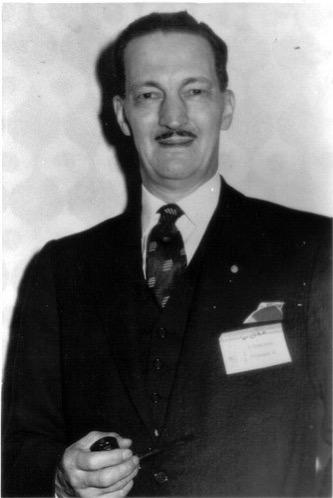
March 23, 1904 — H. Beam Piper. (Died 1964.)

By Cora Buhlert:  

Content warning: Discussion of suicide.

Considering how well regarded he was and still is as an author, we know surprisingly little about him. For example, we don’t know whether the H stands for Henry, Horace or Herbert. And while we know how he died, we don’t know exactly when or why.
Image
H. Beam Piper

There’s a lot of evidence that the H stood for “Henry” (it’s on census records, his WW2 draft card, and his gravestone), but there is evidence for Horace and Herbert as well.

H. Beam Piper never received a formal higher education, because he considered the college experience unpleasant, but instead educated himself in science, engineering and history. He worked as a laborer and later as a night watchman at the railroad yard in his hometown.

At some point, Piper began to write and in 1947 at age 43 he sold his first story “Time and Time Again” to John W. Campbell at Astounding Science Fiction. More stories followed, both for Astounding and other magazines. In 1961, finally, Piper published his first novel, the juvenile Four-Day-Planet. On the planet Fenris, a year is only four days long, but each of those days lasts four thousand hours with extreme temperatures. Giant whale-like creatures roam the seas of Fenris and are hunted for their valuable tallow wax, which makes for excellent radiation shielding. Protagonist Walt Boyd is a seventeen-year-old boy reporter, who gets entangled in a conflict between the whalers guild and the corrupt mayor of Fenris and some equally corrupt business people. Basically, this is Tintin and the Space Whalers with a bonus message about the importance of formal education, which is ironic considering Piper’s own life. I have read Four-Day-Planet and enjoyed it quite a bit as a fun science fiction adventure.

However, my introduction to Piper’s work was not Four-Day-Planet, but what is probably his best-known work, the 1962 novel Little Fuzzy. I discovered the book as a teenager at Storm, the one bookshop in town with an extensive foreign language section. Most of that foreign language section actually consisted of dictionaries. There was also a table where one could peruse the huge Books-in-Print catalogues as well as a special order desk, where you could order any book listed in those giant catalogues. That special order desk was always busy with university students ordering otherwise unavailable textbooks and literature. Annoyingly, those students also kept staring at me, especially the male ones, and I was sure that they were judging my reading choices. Yes, I was quite dense.

The foreign language section at Storm also has two spinner racks with mass market paperbacks. The paperbacks in those spinner racks were almost entirely genre fiction. Romance, crime and mystery and of course science fiction, fantasy and horror. Whenever I was in the city center, I would stop at Storm (which still exists, though much diminished), head up to the foreign language section on the first floor and check out the spinner racks for anything that caught my eye, all the while dodging annoying male students staring at me. I discovered a lot of great authors and books in those spinner racks. And one day, I discovered Little Fuzzy, the 1980s Ace Books edition with the Michael Whelan cover of protagonist Jack Holloway surrounded by Fuzzies. The books caught my eye at once, because the Fuzzies were not only cute, but they looked just like the Ewoks from Return of the Jedi. Indeed, Little Fuzzy is widely considered to be the inspiration for the Ewoks and the parallels are quite obvious. The cover intrigued me enough that I plopped down my hard earned pocket money to buy the book. And English language mass market paperbacks were expensive in the 1980s due to the bad exchange rate and high import duties.

On the planet Zarathustra, prospector Jack Holloway discovers a furry alien creature he names Little Fuzzy. Little Fuzzy takes Jack to meet the rest of his tribe and Jack realizes that the Fuzzies are intelligent. This causes a problem for the mining company that has set up shop on Zarathustra to exploit the planet’s natural resources, because if the Fuzzies are declared an intelligent species, they and their habitat will be protected by law and the company will lose their mining rights. Being an unscrupulous company in a science fiction novel, they will of course do everything to prevent this, up to and including murder.

My teen self enjoyed Little Fuzzy a whole lot and it’s easy to see why. The plight of the furry aliens and their human protector against the big bad mining company is highly compelling. Though I never read any of the sequels, neither Piper’s own nor those by other authors, mostly because I didn’t know they existed.

One H. Beam Piper novel I did read, though several years later, was Space Viking, which was serialized in Analog from November 1962 to February 1963 and then appeared as a paperback in 1963. Once again, it was the cover – a glorious Michael Whelan cover with the titular space Vikings in front of a bright purple background – which attracted me along with, “Oh, it’s by H. Beam Piper. Cool. I liked Little Fuzzy.”

The protagonist of Space Viking is Lucas Trask, an aristocrat from the planet Gram. Trask is about to marry Lady Elaine, when a spurned former suitor of Elaine’s crashes the wedding and proceeds to gun down the wedding party (shades of the Red Wedding from A Song of Ice and Fire and the Moldavian wedding massacre from Dynasty, though Space Viking predates them both). Elaine is killed but Trask survives and vows revenge. He joins the Space Vikings, a group of space-faring raiders, to go after the killer, who has escaped aboard a stolen spaceship. In the process, Trask winds up establishing a little galactic empire of his own and also finds a new love. And yes, he gets his man, too, in the end. 

I enjoyed Space Viking, though not nearly as much as Little Fuzzy. Part of the reason may simply be that I was older when I read Space Viking and more critical. The novel offered plenty of adventure and thrills, but also some irritating politics, including a very American view of emigration and colonization that is common, but also plain wrong. In fact, I remember wondering at the time, “Was Piper always like this and I just didn’t notice?”

Little FuzzyFour-Day-Planet and Space Viking are all part of a future history series called the Terro-Human Future History along with the 1963 novel The Cosmic Computer and several pieces of short fiction. The Terro-Human Future History chronicles the rise and fall and rebirth of a galactic civilization and was clearly influenced by the Foundation series by Isaac Asimov. 

Piper also wrote the Paratime series, which chronicles the adventures of the Paratime Police who can move between timelines and alternate histories. The Paratime series consists of several pieces of short fiction and one novel, Lord Kalvan of Otherwhen, which was published in 1965 and would be Piper’s final novel. 

This brings us to the sad part of this birthday note, namely Piper’s untimely death. It is widely known that Piper committed suicide, but both the reason and the exact date of his death are not known. 

What is known is that Piper dated the last entry in his diary November 5, 1964. On November 8, his body was found. Piper had apparently shut off the power and water to his apartment, covered the walls and floors with tarp and shot himself with a handgun from his extensive collection. He left behind a note saying “I don’t like to leave messes when I go away, but if I could have cleaned up any of this mess, I wouldn’t be going away.”

What mess precisely Piper was referring to is not known. The most common explanation is that Piper had financial problems. He had just gone through a painful and costly divorce and his agent was not replying to his letters and calls – due to having died – so Piper assumed his writing career was over. Another explanation is that Piper wanted to prevent his ex-wife from collecting his life insurance payment, so he took his own life to make sure that the insurance company would not pay. Most likely, the reason for his death was a combination of these factors.

More than sixty years after Piper’s death, the legacy that remains is a remarkable body of work, much of which is not only still in print, but is still receiving sequels and prequels written by other authors to this day.

(11) COMICS SECTION.

(12) TYPO FUN CONTINUES. [Item by John Hertz.] (From Vanamonde 1656.) On my office wall at one of those law reviews [out-of-United-States readers, in our law schools the periodicals we call law reviews are edited by students, an academic honor] I had this “Ode to the Typographical Error”, anonymous so far as I know even yet.

The typographical error
Is a slippery thing and sly.
You can hunt until you’re dizzy,
But somehow it will get by.
Till the forms are off the presses
It is strange how still it keeps,
It shrinks down into a corner
And never stirs or peeps,
That typographical error
Too small for human eyes
Till the ink is on the paper
When it grows to mountain-size.
The editor stares in horror,
Then he grabs his hair and groans;
The copy reader drops his head
Upon his hands and moans.
The remainder of the issues
May be clean as clean can be,
But that typographical error
Is the only thing you see.

(13) WONDER AGAIN. “’Wonder Man’ Renewed for Season 2 at Disney+” reports Variety.

…The news comes around two months after the series launched, with eight episodes of the first season debuting on the streamer on Jan. 27. Yahya Abdul Mateen II and Ben Kingsley starred in the series as Simon Williams and Trevor Slattery, respectively. Both will return for Season 2….

… The news comes around two months after the series launched, with eight episodes of the first season debuting on the streamer on Jan. 27. Yahya Abdul Mateen II and Ben Kingsley starred in the series as Simon Williams and Trevor Slattery, respectively. Both will return for Season 2.… 

(14) BREAKER, BREAKER. “NASA’s Hubble unexpectedly catches comet breaking up”Phys.org has the story.

In a happy twist of fate, NASA’s Hubble Space Telescope witnessed a comet in the act of breaking apart. The chance of that happening while Hubble watched is extraordinarily minuscule. The findings are published in the journal Icarus.

The comet K1, whose full name is C/2025 K1 (ATLAS)—not to be confused with interstellar comet 3I/ATLAS—was not the original target of the Hubble study.

“Sometimes the best science happens by accident,” said co-investigator John Noonan, a research professor in the Department of Physics at Auburn University in Alabama. “This comet got observed because our original comet was not viewable due to some new technical constraints after we won our proposal. We had to find a new target—and right when we observed it, it happened to break apart, which is the slimmest of slim chances.”

Noonan didn’t know K1 was fragmenting until he viewed the images the day after Hubble took them. “While I was taking an initial look at the data, I saw that there were four comets in those images when we only proposed to look at one,” said Noonan. “So we knew this was something really, really special.”…

(15) SCIENTISTS REVIVE ACTIVITY IN FROZEN MOUSE BRAINS FOR THE FIRST TIME. [Item by SF Concatenations Jonathan Cowie.]

‘Cryosleep’ remains the preserve of science fiction, but researchers are getting closer to restoring brain function after deep freezing.

I remember the reproductive biologist and SF fan Jack Cohen telling us that cryogenic suspended animation was impossible.  This was back in the day, in the 1980s/1990s when UK Eastercon programming was diverse (talks, games, interviews, films etc) and not largely wall-to-wall filler panels. Jack was one of a number of semi-regular Eastercon speakers. His talks were a bit of a romp and always great fun. He told us on time that the SF trope of cryogenic suspended animation was impossible because you could not get a large brain to flash-freeze fast enough to prevent ice crystals growing and rupturing cells from within.  Of course, Jack said, he could do it with small sperm because they were stored in long and very thin cylinders that could be flash-frozen at the necessary speed and so sperm storage this way was possible….

But, back in the day, suspended animation was an SFnal trope – still is – as a way to get to the stars as was used, for example, in the British/US film Alien (1979).  All well and good, and now we come up to date.

news item in Nature reports on new research recently published in which a whole mouse brain was flash frozen for days and then thawed out.  Cutting the brain into slices they could test individual neuron response to electrical stimuli and the neurons’ responses to electrical stimuli were near normal.

The method necessitates the brain being saturated with cryopreservation chemicals before being rapidly cooled using liquid nitrogen at −196 ºC. They were then kept in a freezer at −150 ºC.  However because the researchers sliced and diced to test neurons, rather than assemblages of them, they were unable to determine whether the animals’ memories had survived cryopreservation.  But that could come.

While there is a very, very long way to go before cryogenic suspended animation is achieved, (if it ever is?) the techniques could lead the way to better tissue and organ preservation for biomedical use.

See Thompson, T. (2026)  “Scientists revive activity in frozen mouse brains for the first time”. Nature. vol. 651, p563-4.

Image

[Thanks to SF Concatenation’s Jonathan Cowie, Mark Roth-Whitworth, Kathy Sullivan, John Hertz, Danny Sichel, Steven French, Mike Kennedy, Andrew Porter, John King Tarpinian, and Cat Eldridge for some of these stories. Title credit belongs to File 770 contributing editor of the day Steve Davidson.]

Pixel Scroll 2/9/26 Oh, Hey Pixel, You’re Pubbing Your Ish. I’m Scrolling Your Contents Page Daily

(1) ON THE FRONT. Alex Shvartsman has given readers The Best of All Possible Planets cover reveal!

This book is a space opera take on Candide written as a series of Futurama episodes. Coming July 28, 2026 in hardcover, trade paperback, mass market paperback, and audiobook formats!

Image

(2) ELIZABETH BEAR RECOMMENDS SFF. The Friends of the Ashland Public Library (MA) are sponsoring a February 11 Zoom event: “Virtual: SciFi Book Recommendations with Author Elizabeth Bear”. Register directly on Zoom HERE.

Love SciFi but not sure what to read next? Join bestselling author, Elizabeth Bear, quarterly for 30 minutes of pure book recommendations – the best of Science Fiction books out there (out there – see what we did there? :)! We’re sure you’ll find something to like from Bear’s many enthusiastic reviews.

You can sign up for one session or for all!

Elizabeth Bear was born on the same day as Frodo and Bilbo Baggins, but in a different year.

She is the Hugo, Sturgeon, Locus, and Astounding Award winning author of dozens of novels; over a hundred short stories; and a number of essays, nonfiction, and opinion pieces for markets as diverse as Popular Mechanics and The Washington Post.

She lives in the Happy Valley of Massachusetts with her spouse, writer Scott Lynch….

(3) BETTER THAN EXPECTED. “Federal Funding for Libraries Prevails” reports American Libraries Magazine.

After the threats to federal library funding in the past year, the fiscal year (FY) 2026 appropriations bills signed by President Trump on February 3 included an increase in federal funding for libraries.

Less than a year ago, an executive order threatened to dismantle the Institute of Museum and Library Services (IMLS), the only source of federal funding dedicated to libraries. Then, the White House proposed just enough funding in FY2026 to shut down the agency for good.

Thanks to advocates, IMLS still exists today. Library grants are intact. And, rejecting the administration’s call to eliminate IMLS, Congress just passed a $1.4 million increase for library programs run by IMLS through the Library Services and Technology Act (LSTA), bringing LSTA funding to $212.5 million for FY2026. Congress also provided level funding of $30 million for the school library–focused Innovative Approaches to Literacy (IAL) program.

These library wins are not the result of good luck. In the worst climate in recent memory, libraries succeeded because advocates showed up. In response to ALA’s calls to action, advocates sent emails, made phone calls, and invited elected officials to visit their libraries. And that advocacy produced results that are more than line items on a spreadsheet: They include young people learning to read, research, and write; job seekers finding work; workers filing taxes online; veterans accessing benefits; seniors attending telehealth appointments; and communities thriving…

(4) LIBBY BOOK AWARDS. [Item by Ersatz Culture.] OverDrive has announced the nominees for the 2026 Libby Book Awards, which are crowdsourced from librarians and library staff.  The winners will be announced on March 3. There are 21 categories – the complete list is at the link. Here are the finalists in the categories devoted to works of genre interest.

Best Fantasy  

  • Alchemised by SenLinYu 
  • Bury Our Bones in the Midnight Soil by V.E. Schwab 
  • Katabasis by R.F. Kuang 
  • The Strength of the Few by James Islington 
  • Water Moon by Samantha by Sotto Yambao 

Best Romantasy   

  • Onyx Storm by Rebecca Yarros 
  • Shield of Sparrows by Devney Perry 
  • Son of the Morning by Akwaeke Emezi 
  • The Isle in the Silver Sea by Tasha Suri 
  • The Knight and The Moth by Rachel Gillig 

Best Science Fiction   

  • All That We See or Seem by Ken Liu  
  • Death of the Author by Nnedi Okorafor 
  • Saltcrop by Yume Kitasei 
  • Slow Gods by Claire North 
  • What We Can Know by Ian McEwan 

Best Horror   

  • Bat Eater and Other Names for Cora Zeng by Kylie Lee Baker 
  • The Bewitching by Silvia Moreno-Garcia 
  • The Buffalo Hunter Hunter by Stephen Graham Jones 
  • When the Wolf Comes Home by Nat Cassidy 
  • You Weren’t Meant to Be Human by Andrew Joseph White 

Best Comic/Graphic Novel   

  • Absolute Wonder Woman: Volume 1 by Kelly Thompson, Hayden Sherman, Mattia De Iulis 
  • Black Arms to Hold You Up by Ben Passmore 
  • Cannon by Lee Lai 
  • Spent by Alison Bechdel 
  • The Once and Future Riot by Joe Sacco 

If you’re curious, here is the list of last year’s winners, where Kaliane Bradley’s The Ministry of Time topped the Best Science Fiction and Best Debut categories.

(5) FREE READ. Congratulations to Filer Rob Thornton whose short story “Dark Was the Night, Cold Was the Ground” has been published at Antipodean SF.

The blind musician waited in the heat and listened to the automatic fan turn gently in the brand-new Houston hotel room. His penknife was held loosely against the fretboard, and he could feel that his guitar was perfectly positioned next to the microphone.

The label man stepped behind him, then turned off the fan. As soon as the label man tapped him gently on the shoulder, he would begin…

(6) 19TH CENTURY SF CONFERENCE CFP. The Incredible Nineteenth Century: Science Fiction, Fantasy, and Fairy Tale journal will be hosting its fourth annual conference via Zoom on May 1-2. This conference is completely free. James Hamby, Editor, says:

We will be accepting proposals for presentations through April 4th. To submit a proposal or to register to attend, please fill out the form found here: 
here.

We accept presentations covering any aspect of science fiction, fantasy, or fairy tale in the Long Nineteenth Century (spanning from the late eighteenth century through World War I) from any part of the world as well as reinterpretations of the nineteenth century in contemporary literature and media.

Our keynote speaker will be Renee Fox from the University of California, Santa Cruz. She is the Jordan-Stern Presidential Chair for Dickens and Nineteenth-Century Studies, Co-director of the Dickens Project, and Co-direct of of the Center for Monster Studies. Her Recent monograph, The Necromantics: Reanimation, the Historical Imagination, and Victorian British and Irish Literature looks at the ways monster stories/poems by writers like Mary Shelley, Robert Browning, and Bram Stoker reflect changing ideas about the form and function of history across the nineteenth century.

If you’d like to find out more about the journal, you can read Vol. 3 No. 2 (2025) of The Incredible Nineteenth Century journal at the link.

(7) CAT DOES NOT SLEEP IN THIS SFF. “Dungeon Crawler Carl review: Why the delightfully odd books have sold millions” explains Laura Miller in Slate.

If you’ve asked for a book recommendation lately, chances are you’ve been buttonholed by some goggle-eyed person babbling about boxer shorts, dungeon levels, and a tiara-wearing Persian show cat named Princess Donut. These are the Dungeon Crawler Carl fans, devotees of a series of seven novels written by Matt Dinniman (with the eighth to publish in May), and their ranks appear to be growing exponentially. The series has been optioned for a TV adaptation by NBCUniversal and sold more than 6 million copies, and the New York Times has marveled over the “gonzo” enthusiasm of fans who show up to Dinniman’s public appearances dressed as everything from a well-armed Jesus to a fanged, severed sex-doll head. But what exactly, you may still be wondering, are these books really like?…

Image
Matt Dinniman at the 2025 AuthorCon in Williamsburg, Virginia, holding a plush of Princess Donut.

(8) YEAR OF THE HORSE’S…UHH. People tells us “Why Draco Malfoy Is a 2026 Chinese New Year Good Luck Symbol”.

Image

Draco Malfoy’s reputation has officially entered its redemption era — and this time, it’s happening halfway around the world.

As the Chinese New Year 2026 approaches on Feb. 17, the Harry Potter character has emerged as an unlikely seasonal mascot across parts of China. 

On social media platforms, users have been sharing photos of red, square-shaped New Year decorations featuring Draco’s unmistakable blond hair and smirk — displayed proudly on front doors, refrigerators and walls….

… The decorations mirror traditional Chinese New Year imagery, which often features bold red backgrounds and symbols meant to invite luck and prosperity into the home. In this case, however, the familiar motifs are paired with the face of the former Slytherin troublemaker from the wizarding franchise….

…So how did Draco Malfoy become a symbol of good fortune?

According to a report by Rolling Stone Philippines, the answer lies in language. Draco Malfoy’s Chinese name is written as “马尔福” (mǎ ěr fú). The final character, “福” (fú), translates to “fortune” or “blessing” — a word deeply associated with Chinese New Year traditions.

Even more fitting, the first character, “马” (mǎ), means “horse.” Together, the characters echo the phrase “马来福” (mǎ lái fú), a common New Year expression welcoming prosperity — particularly relevant as celebrations approach the Year of the Horse….

(9) TODAY’S BIRTHDAY.

[Written by Cat Eldridge.]

February 9, 1928 — Frank Frazetta. (Died 2010.)

Artist whose illustrations showed up damn near everywhere from album covers to book covers and posters. Among the covers he painted were Tarzan and the Lost EmpireConan the Adventurer (L. Sprague de Camp stories in that setting) and Tarzan at the Earth’s Core. He did overly muscular barbarians very well! Oh, and he also helped Harvey Kurtzman and Will Elder on three stories of the bawdy parody strip Little Annie Fanny in Playboy. Just saying.

In the early 1980s, Frazetta worked with Bakshi on the feature Fire and Ice. He provided the poster for it as he did for Mad Monster Party? and The Fearless Vampire Killers, or Pardon Me, But Your Teeth Are in My Neck, two other genre films.

He was inducted into both Will Eisner Comic Book Hall of Fame and the Jack Kirby Hall of Fame.

Image

(10) COMICS SECTION.

  • Bizarro remembers Snow White’s first seven roommates. 
  • Bliss lost control of the remote. 
  • Junk Drawer learns there’s been a shift in the market. 
  • Savage Chickens knows the horrifying update. 
  • Tom Gauld knows someone’s about to have a rocky ride.

My latest cartoon for @theguardian.com books

Tom Gauld (@tomgauld.bsky.social) 2026-02-09T14:53:58.411Z

(11) I’M MORE INTERESTED IN THE RING OF AGES THAN THE AGE OF RINGS[1], OR, HOW OLD IS THAT T-REX IN THE WINDOW? [Item by Daniel Dern.] [1] Via (Inherit the Wind) (in the first 10 seconds)

NPR tells about a scientist who is “Searching for dinosaur secrets in crocodile bones”.

Until now, estimating how old a dinosaur was when it died has been a fairly simple process — just count up the growth rings in its fossilized bones.

“We always thought that those rings were formed annually,” says Anusuya Chinsamy-Turan, a paleobiologist at the University of Cape Town in South Africa. In other words, much like tree rings, the idea was that roughly one ring was laid down each year.

“And then you can plot that and you can work out the growth rate of the dinosaur,” explains Chinsamy-Turan. “And that’s what all of us were doing — me included.” For example, this technique suggested that it took 20-some years for a T. rex hatchling to grow into a fully grown adult, she says.

But this approach may overestimate dinosaur ages. In a study published in the journal Scientific Reports, Chinsamy-Turan and her colleague, biologist Maria Eugenia Pereyra, looked at the growth rings in several young Nile crocodiles — a modern relative of dinosaurs. In some of the bones, the two researchers found more growth rings than they were expecting….

(12) GEE, WHAT BIG TEETH YOU… (CHOMP!) “Netflix Drops Trailer for ‘The Dinosaurs’ Documentary Series” and Animation World Network sets the frame.

Netflix is taking us way, way back in time in its all-new four-part documentary series, The Dinosaurs, which premieres March 6, 2026. They just dropped a trailer and great image set.

The show examines dinosaur evolution and extinction across hundreds of millions of years, using large-scale CG environments and creature animation informed by the latest expert paleontological research. The project reunites executive producer Steven Spielberg with the creative team behind Life on Our Planet.

The series is narrated by Morgan Freeman and showrun by Dan Tapster, Keith Scholey, and Alastair Fothergill, with Nick Shoolingin-Jordan serving as series director. Executive producers also include Scholey, Darryl Frank, and Justin Falvey. It’s produced by Silverback Films in association with Amblin Documentaries.

Industrial Light & Magic (ILM) provides the visual effects and animation for the show, continuing its collaboration with Silverback Films and Amblin; the studio combines digital creature animation, environmental reconstruction, and atmospheric effects to visualize long-extinct species and ecosystems that no longer exist….

(13) TREK INCLUDED IN NBC 100TH PROMO. “Watch: NBC Remembers ‘Star Trek’ As Part Of Their 100th Anniversary Celebration Campaign” reports TrekMovie.com.

…NBC’s centennial festivities have already begun and will run from now to December, looking back on the “myriad of moments in our history that transformed culture.” This includes the first two “A Century Together” promos which first appeared on NBC and Peacock yesterday for the 2026 Winter Olympics Opening Ceremony….

…The promos include elements of Star Trek. The campaign will also be part of the Super Bowl on Sunday, which is being broadcast by NBC (and streaming on Peacock)….

(14) MORE TRAILER PARK. And still catching up with genre trailers shown during the Super Bowl…

Hollywood has a monster problem. Minions & Monsters is only in theaters July 1.

And this isn’t a trailer, it just cannibalizes the movie in an amusing way.

[Thanks to SF Concatenation’s Jonathan Cowie, Mark Roth-Whitworth, Kathy Sullivan, Ersatz Culture, Rob Thornton, Alex Shvartsman, Andrew (not Werdna), Steven French, Mike Kennedy, Andrew Porter, John King Tarpinian, and Cat Eldridge for some of these stories. Title credit belongs to File 770 contributing editor of the day Patrick McGuire.]

Pixel Scroll 1/26/26 Pixel Roads, Take Me Scroll, To The File Where I Belong

(1) KETTER PHOTO BECOMES ICON OF ICE PROTESTS. The photo of bookstore owner Greg Ketter being gassed while protesting in Minneapolis is today’s Publishers Weekly’s “Picture of the Day”.

Picture of the Day

Greg Ketter, owner of DreamHaven Books in Minneapolis, walks through a cloud of tear gas during protests that rocked the city on January 24 in the wake of the shooting of Alex Pretti by ICE agents. A video of the bookseller has since gone viral. 

Photo: Theia Chatelle

(2) THE NEXT CHAPTER BEGINS. Bill Nye announced today he will give up his post as The Planetary Society’s CEO on February 17, but will continue to represent the Society.

After 15 years as The Planetary Society’s chief executive officer, I’m stepping down — or aside. I will transition out of my role as CEO — but I won’t be stepping away from The Planetary Society. I’ll continue serving on the board of directors as Vice Chair and will take on a new role as our first Chief Ambassador. In this position, I’ll represent our organization publicly, keep in close communication with our members, and continue to champion space exploration in the halls of Congress at our annual Day of Action and beyond.

Our remarkable chief operating officer, Jennifer Vaughn, will take over as CEO on February 17. Throughout my time at The Planetary Society, Jenn has been my closest partner in leading the organization. Jenn helped craft our mission, and she is a natural leader with a clear vision for the future. We could not be in better hands….

Image
Bill Nye and Jennifer Vaughn

(3) MET OPERA’S KAVALIER & CLAY. As a reminder, Fathom Entertainment presents “The Metropolitan Opera: The Amazing Adventures of Kavalier & Clay” in theaters on January 28.

Matthew B. Tepper reminded Facebook readers

One of the things I’ve been talking about lately is The Amazing Adventures of Kavalier & Clay, both the original novel by Michael Chabon and the opera by Mason Bates. And what struggle is at the center of the plot? You got it — the struggle against fascism. A neat part of the opera (and I’m looking forward to seeing how it goes in the novel) is the radio-play-within-the-opera, particularly where The Escapist (the superhero created by the title protagonists) beats up a Gestapo thug, seals him into a coffin, and then disposes of said container into a river — all while the Foley guys onstage create the THUDs and SPLATs and OOFs for the radio audience. Very satisfying, even if only fiction within fiction.

Don’t just take my word for it — looky here:

(4) UNCANNY READER POLL IS OPEN. You have until February 12 to vote in the Uncanny Magazine 2025 Favorite Fiction Reader Poll.

We’ve set up a poll for Uncanny readers to vote for their top three favorite original short stories from 2025. (You can find links to all of the stories here.)

The poll will be open from January 22 to February 12, after which we’ll announce the results.

(5) UNINTENDED ROAD MAP FOR CHATBOTS. Ars Technica mourns, “Wikipedia volunteers spent years cataloging AI tells. Now there’s a plugin to avoid them”.

On Saturday, tech entrepreneur Siqi Chen released an open source plugin for Anthropic’s Claude Code AI assistant that instructs the AI model to stop writing like an AI model. Called “Humanizer,” the simple prompt plugin feeds Claude a list of 24 language and formatting patterns that Wikipedia editors have listed as chatbot giveaways. Chen published the plugin on GitHub, where it has picked up over 1,600 stars as of Monday.

“It’s really handy that Wikipedia went and collated a detailed list of ‘signs of AI writing,’” Chen wrote on X. “So much so that you can just tell your LLM to… not do that.”

The source material is a guide from WikiProject AI Cleanup, a group of Wikipedia editors who have been hunting AI-generated articles since late 2023. French Wikipedia editor Ilyas Lebleu founded the project. The volunteers have tagged over 500 articles for review and, in August 2025, published a formal list of the patterns they kept seeing…

…But as with all AI prompts, language models don’t always perfectly follow skill files, so does the Humanizer actually work? In our limited testing, Chen’s skill file made the AI agent’s output sound less precise and more casual, but it could have some drawbacks: it won’t improve factuality and might harm coding ability.

In particular, some of Humanizer’s instructions might lead you astray, depending on the task. For example, the Humanizer skill includes the line: “Have opinions. Don’t just report facts – react to them. ‘I genuinely don’t know how to feel about this’ is more human than neutrally listing pros and cons.” While being imperfect seems human, this kind of advice would probably not do you any favors if you were using Claude to write technical documentation.

Even with its drawbacks, it’s ironic that one of the web’s most referenced rule sets for detecting AI-assisted writing may help some people subvert it….

(6) SHOULD GEN Z DITCH HP? Louise Perry contends “The Harry Potter Generation Needs to Grow Up” in a New York Times op-ed. Link bypasses the paywall.

We were the children who queued outside bookstores and cinemas at midnight. We got Harry Potter tattoos, threw Harry Potter themed weddings and named our children after characters from the novels — baby names like Hermione, Luna and Draco.

We interpreted our politics through the lens of the wizarding world, comparing those we disagreed with to the books’ main villain, Lord Voldemort, and carrying signs with slogans like “Dumbledore’s Army” and “Hermione wouldn’t stand for this!” at Women’s Marches. And some of us even took deeper moral cues from the books, reading them like a new Bible, treating the works as sacred texts with religious teachings to convey. Some fans experienced J.K. Rowling’s controversial comments on transgender rights as a betrayal precisely because they had seen her as one of our generation’s most influential moral guides.

It’s been almost 20 years since the final Harry Potter book was released. The wizarding world is still generating interest — book sales remain strong, and the 2023 video game Hogwarts Legacy topped 40 million sales. HBO is working on a TV adaptation of the books, set to be released next year.

But the relevance of the franchise is waning….

…But there are also politics at play. Ms. Rowling foregrounds ideology in her books, and that means that her novels feel dated in a way that others do not. First conceived of over 30 years ago, the Harry Potter books are very much a product of 1990s liberalism: a moment when World War II still occupied a central space in the cultural imagination, and when it was still possible to believe that the best bits of the old political order could be retained alongside a gentle incorporation of the new.

That’s why millennials like Harry Potter a whole lot more than younger generations do. The story captures a worldview that is no longer attractive to young people jaded by the experiences of economic decline, political polarization and spiraling identity politics. They have fallen out of love with Harry Potter because they have fallen out of love with the worldview the series represents. Which is to say that young people have fallen out of love with liberalism….

(7) TODAY’S BIRTHDAY.

[Written by Paul Weimer.]

January 26, 1979Yoon Ha Lee, 47.

By Paul Weimer: His first work for us was “The Hundredth Question” story published in The Magazine of Fantasy & Science Fiction in the February 1999 issue. May I note that magazine has published some of the finest short fiction I’ve ever had the pleasure to read?

After “The Hundredth Question”, I count just over a hundred short stories and intriguingly nearly thirty pieces of poetry which is a fair amount of genre work I’d say.

Image
Yoon Ha Lee

Quite interesting is that the stories have several series running there — one that runs off with “The Cat Who Forgot to Fly” and runs five stories (I went to read these); then there’s series of stories about dragons, librarians, mermaids, phoenixes and queens. 

So let’s talk about his novels. His Machineries of Empire space opera novels, well space opera is a gross understatement to it mildly, consisting of Ninefox GambitRaven Stratagem and Revenant Gun are splendid works indeed. As a follower of Asian folklore, the fact that these nicely use Korean folklore is a bonus. 

Ninefox Gambit was nominated for a Hugo at Worldcon 75, Raven Stratagem at Worldcon 76 and Revenant Gun at Dublin 2019. None alas won a Hugo.

He likes fox spirits, he really does. (As do I.) So the Thousand World series is a space opera, and yes time that is an accurate term, about thirteen-year-old Min, who comes from a long line of fox spirits. Oh there’s dragons and tigers, oh my here as well. 

I’ve not read his latest novel, Phoenix Extravagant, but magic-fueled weaponized armored giants sounds potentially interesting. 

Remember all of those short stories? Well they have been collected,  well I thought most of them had in The Candlevine Gardener and Other Stories but it turned out that those are flash fiction, all sixty five of them as I just discovered, though available are free from his website here.

I just read “The Cat Who Forgot to Fly”. It read like a classic folklore story from well before the 1800s — charming, magical and everyone is fine at the end. All two pages. 

The longer stories can be found in Conservation of ShadowsThe Fox’s Tower and Other Tales and Hexarchate

(8) COMICS SECTION.

(9) THE LEGEND OF SLEEPY HOLLOW. [Item by SF Concatenation’s Jonathan Cowie.] BBC Radio 4 is currently running a series of programmes on classic American (US) literature.  This weekend we were treated to a new version of The Legend of Sleepy Hollow ghost story….   For me, I liked the Johnny Depp film and, if I recall, didn’t Tom and Jerry do one?  This one begins in  present-day New York in a bar…

Washington Irving’s classic ghost story about a headless orseman is part of Story of America, a major collection of dramatisations marking 250 years since the Declaration of Independence.

Sami Ibrahim’s adaptation gives a new twist to the tale of Ichabod Crane who unleashes malevolent forces when his new-fangled ideas disrupt the traditional way of life in Sleepy Hollow.

If you live in Britain (even ‘Great Britain’ if you want to make it great again) then you can access this from BBC Sounds.  If you are outside our sceptred isle set in a silvery sea then you may need to have a BBC subscription.  If so either way you can access it here.

As interesting is the programme before that which is a small documentary on the writing of the story and its cultural relevance.  You can access it here.

The headless horseman who haunts Sleepy Hollow in Washington Irving’s ghost story has become an iconic figure in American popular culture, thanks to many film and TV adaptations, ranging from a 1922 silent movie to an episode of Scooby Doo.

John Yorke looks at how this deceptively simple tale made Irving an overnight literary superstar when it was published in an 1820 collection of short stories that also included Rip van Winkle, and why it was so influential on the work of the next generation of American writers including Herman Melville and Mark Twain.

Image

(10) IS THIS SCIENCE FICTION? SADLY…. [Item by SF Concatenation’s Jonathan Cowie.] For many, the end of the world is a favourite SF trope… That is until it becomes all too  real.  Britain’s government’s DEFRA (Department of Environment, Food and Rural Affairs) has just published a report that predicts widespread collapse of ecosystems affecting global food production, disease spread and natural disasters. This in turn will result in cascading risks of ecosystem degradation that are likely to include geopolitical instability, economic insecurity, conflict, migration and increased inter-state competition for resources. All countries are exposed to the risks of ecosystem collapse within and beyond their borders. Some will be exposed sooner than others and are likely to act to secure their interests, particularly water and food security.

Regarding Britain itself, the report concludes that without significant increases in UK food system and supply chain resilience, it is unlikely the UK would be able to maintain food security if ecosystem collapse drives geopolitical competition for food…

The report is DEFRA (2026) Global biodiversity loss, ecosystem collapse and national security: A national security assessment. H. M. Government: London, Great Britain.

Image

(11) TAILORING FOR RUGGED TERRAIN. “Former astronaut on lunar spacesuits: ‘I don’t think they’re great right now’” at Ars Technica.

Crew members traveling to the lunar surface on NASA’s Artemis missions should be gearing up for a grind. They will wear heavier spacesuits than those worn by the Apollo astronauts, and NASA will ask them to do more than the first Moonwalkers did more than 50 years ago.

The Moonwalking experience will amount to an “extreme physical event” for crews selected for the Artemis program’s first lunar landings, a former NASA astronaut told a panel of researchers, physicians, and engineers convened by the National Academies.

Kate Rubins, who retired from the space agency last year, presented the committee with her views on the health risks for astronauts on lunar missions. She outlined the concerns NASA officials often talk about: radiation exposure, muscle and bone atrophy, reduced cardiovascular and immune function, and other adverse medical effects of spaceflight….

…NASA selected Axiom Space, a Houston-based company, for a $228 million fixed-price contract to develop commercial pressurized spacesuits for the Artemis III mission, slated to be the first human landing mission on the Moon since 1972….

… Rubins is a veteran of two long-duration spaceflights on the International Space Station, logging 300 days in space and conducting four spacewalks totaling nearly 27 hours. She is also an accomplished microbiologist and became the first person to sequence DNA in space.

“What I think we have on the Moon that we don’t really have on the space station that I want people to recognize is an extreme physical stress,” Rubins said. “On the space station, most of the time you’re floating around. You’re pretty happy. It’s very relaxed. You can do exercise. Every now and then, you do an EVA (Extravehicular Activity, or spacewalk).”

“When we get to the lunar surface, people are going to be sleep shifting,” Rubins said. “They’re barely going to get any sleep. They’re going to be in these suits for eight or nine hours. They’re going to be doing EVAs every day. The EVAs that I did on my flights, it was like doing a marathon and then doing another marathon when you were done.”…

…The Axiom spacesuit design builds on NASA’s own work developing a prototype suit to replace the agency’s decades-old Extravehicular Mobility Units (EMUs) used for spacewalks at the International Space Station (ISS). The new suits allow for greater mobility, with more flexible joints to help astronauts use their legs, crouch, and bend down—things they don’t have to do when floating outside the ISS.

Astronauts on the Moon also must contend with gravity. Including a life-support backpack, the commercial suit weighs more than 300 pounds in Earth’s gravity, but Axiom considers the exact number proprietary. The Axiom suit is considerably heavier than the 185-pound spacesuit the Apollo astronauts wore on the Moon. NASA’s earlier prototype exploration spacesuit was estimated to weigh more than 400 pounds, according to a 2021 report by NASA’s inspector general.

“We’ve definitely seen trauma from the suits, from the actual EVA suit accommodation,” said Mike Barratt, a NASA astronaut and medical doctor. “That’s everything from skin abrasions to joint pain to—no kidding—orthopedic trauma. You can potentially get a fracture of sorts. EVAs on the lunar surface with a heavily loaded suit and heavy loads that you’re either carrying or tools that you’re reacting against, that’s an issue.”

On paper, the Axiom suits for NASA’s Artemis missions are more capable than the Apollo suits. They can support longer spacewalks and provide greater redundancy, and they’re made of modern materials to enhance flexibility and crew comfort. But the new suits are heavier, and for astronauts used to spacewalks outside the ISS, walks on the Moon will be a slog, Rubins said.

“I think the suits are better than Apollo, but I don’t think they are great right now,” Rubins said. “They still have a lot of flexibility issues. Bending down to pick up rocks is hard. The center of gravity is an issue. People are going to be falling over. I think when we say these suits aren’t bad, it’s because the suits have been so horrible that when we get something slightly less than horrible, we get all excited and we celebrate.”…

Image
NASA astronauts Loral O’Hara and Stan Love test Axiom’s lunar spacesuit inside NASA’s Neutral Buoyancy Laboratory in Houston on September 24, 2025. Credit: NASA

(12) DARK OBSERVATIONS. “Scientists just got the clearest picture of the dark universe yet: ‘Now the dream has come true’” reports Space.com.

Scientists have been gifted with a clearer picture of the expansion of the universe and dark energy, the mysterious force driving the acceleration of this expansion, than ever before. This comes courtesy of the analysis of six years’ worth of data collected by the Dark Energy Camera (DECam) mounted on the U.S. National Science Foundation Víctor M. Blanco 4-meter telescope.

The data analysed consists of 758 nights of observations of one-eighth of the sky conducted by the Dark Energy Survey (DES) Collaboration between 2013 and 2019, during the deep, wide-area survey of the sky conducted using the 570-megapixel DECam, which recorded information from 669 million galaxies located billions of light-years from Earth.

This analysis represents the first time the four separate methods of studying dark energy have been united as one. The results doubled the strength of the constraints on the effect of dark energy, an essential step toward discovering the true nature of this mysterious force that dominates the universe.

(13) VIDEO OF THE DAY. CBS News Sunday Morning devoted a November segment to “William Shatner and Neil deGrasse Tyson: Star Power”.

When “Star Trek” legend William Shatner and America’s favorite astrophysicist Neil deGrasse Tyson share the stage, sparks can fly on an astronomical level. They talk with Luke Burbank about their bromance built on an appreciation of science; the two-man show (“The Universe Is Absurd!”) that grew out of a trip to the South Pole; and how curiosity about the cosmos can help keep one young.

[Thanks to Kathy Sullivan, Steven French, Mike Kennedy, Paul Weimer, Michael J. Walsh, Andrew Porter, John King Tarpinian, Cat Eldridge, SF Concatenation’s Jonathan Cowie, and Mark Roth-Whitworth for some of these stories. Title credit belongs to File 770 contributing editor of the day Dan’l.]

Pixel Scroll 1/18/26 Alle The Pixels And This Scroll Will Return For Avengers: Godstalk

(1) AI AND ‘REVERSE CENTAURS’. Cory Doctorow tells readers of the Guardian: “AI companies will fail. We can salvage something from the wreckage”.

…In automation theory, a “centaur” is a person who is assisted by a machine. Driving a car makes you a centaur, and so does using autocomplete.

reverse centaur is a machine head on a human body, a person who is serving as a squishy meat appendage for an uncaring machine.

For example, an Amazon delivery driver, who sits in a cabin surrounded by AI cameras that monitor the driver’s eyes and take points off if the driver looks in a proscribed direction, and monitors the driver’s mouth because singing is not allowed on the job, and rats the driver out to the boss if they do not make quota.

The driver is in that van because the van cannot drive itself and cannot get a parcel from the curb to your porch. The driver is a peripheral for a van, and the van drives the driver, at superhuman speed, demanding superhuman endurance.

Obviously, it’s nice to be a centaur, and it’s horrible to be a reverse centaur. There are lots of AI tools that are potentially very centaurlike, but my thesis is that these tools are created and funded for the express purpose of creating reverse centaurs, which none of us want to be.

But like I said, the job of a science-fiction writer is to do more than think about what the gadget does, and drill down on who the gadget does it for and who the gadget does it to. Tech bosses want us to believe that there is only one way a technology can be used. Mark Zuckerberg wants you to think that it is technologically impossible to have a conversation with a friend without him listening in. Tim Cook wants you to think that it is impossible for you to have a reliable computing experience unless he gets a veto over which software you install and without him taking 30 cents out of every dollar you spend. Sundar Pichai wants you to think that it is for you to find a webpage unless he gets to spy on you from asshole to appetite…

…Take radiology: there is some evidence that AI can sometimes identify solid-mass tumors that some radiologists miss. Look, I’ve got cancer. Thankfully, it’s very treatable, but I’ve got an interest in radiology being as reliable and accurate as possible.

Let’s say my hospital bought some AI radiology tools and told its radiologists: “Hey folks, here’s the deal. Today, you’re processing about 100 X-rays per day. From now on, we’re going to get an instantaneous second opinion from the AI, and if the AI thinks you’ve missed a tumor, we want you to go back and have another look, even if that means you’re only processing 98 X-rays per day. That’s fine, we just care about finding all those tumors.”

If that’s what they said, I’d be delighted. But no one is investing hundreds of billions in AI companies because they think AI will make radiology more expensive, not even if that also makes radiology more accurate. The market’s bet on AI is that an AI salesman will visit the CEO of Kaiser and make this pitch: “Look, you fire nine out of 10 of your radiologists, saving $20m a year. You give us $10m a year, and you net $10m a year, and the remaining radiologists’ job will be to oversee the diagnoses the AI makes at superhuman speed – and somehow remain vigilant as they do so, despite the fact that the AI is usually right, except when it’s catastrophically wrong.

“And if the AI misses a tumor, this will be the human radiologist’s fault, because they are the ‘human in the loop’. It’s their signature on the diagnosis.”

This is a reverse centaur, and it is a specific kind of reverse centaur: it is what Dan Davies calls an “accountability sink”. The radiologist’s job is not really to oversee the AI’s work, it is to take the blame for the AI’s mistakes.

This is another key to understanding – and thus deflating – the AI bubble. The AI can’t do your job, but an AI salesman can convince your boss to fire you and replace you with an AI that can’t do your job. This is key because it helps us build the kinds of coalitions that will be successful in the fight against the AI bubble.

If you are someone who is worried about cancer, and you are being told that the price of making radiology too cheap to meter, is that we are going to have to rehouse America’s 32,000 radiologists, with the trade-off that no one will ever be denied radiology services again, you might say: “Well, OK, I’m sorry for those radiologists, and I fully support getting them job training or UBI or whatever. But the point of radiology is to fight cancer, not to pay radiologists, so I know what side I’m on.”

AI hucksters and their customers in the C-suites want the public on their side. They want to forge a class alliance between AI deployers and the people who enjoy the fruits of the reverse centaurs’ labor. They want us to think of ourselves as enemies to the workers.

Now, some people will be on the workers’ side because of politics or aesthetics. But if you want to win over all the people who benefit from your labor, you need to understand and stress how the products of the AI will be substandard. That they are going to get charged more for worse things. That they have a shared material interest with you….

(2) THE RESISTANCE. Jon DeCles was inspired by Paul Weimer’s review of This Is How You Lose the Time War to write this flash story in comments.

It was with some consternation that Mike faced the end of his beloved online fanzine, File Numbers, as the use of Alienated Imbecility taxed the ecosystem beyond its limits.

Atlanta had fallen first, as the mighty machines chugged away answering questions about baseball scores in 1923 and the water supply ran out. Desperate Atlanteans fled the ruins of the city for the possible salvation of a simpler life in the country and a return to pre-digital technology. Los Angeles was next to go when the entertainment industry was forced to return to live theater and lemonade made with in the theater, along with corn popped over fires made from burning cyberpads.

Finally, in a move of great desperation, Mike decided to beat them by joining them. He didn’t have a mimeograph, and they had not made sulfide paper in many years. But there was a booming industry in making paper from bamboo, which could grow sixty feet in only two weeks. And the Dictatorship had not succeeded in totally destroying the Post Office.

Mike thought back to the beauty of cursive writing, which he had learned in his early youth, when the schools still taught such things instead of Consumer Obedience: and found a small, local shop that still offered such antique devices.

He bought a pen, and some ink. Perhaps one still could change history…

(3) ALABAMA TOWN STANDS UP. “Red State Library Faces Funding Cut Over ‘Handmaid’s Tale’” reports The Daily Beast.

An Alabama public library has lost state funding after refusing to move several books, including The Handmaid’s Tale, out of its teen section. The Republican-run Alabama Public Library Service Board voted to withhold roughly $22,000 in state funding from the Fairhope Public Library, citing the library’s failure to comply with the board’s rules requiring books deemed “sexually explicit” be relocated to the adult section. Titles flagged by the board include The Hate U Give by Angie Thomas, The Perks of Being a Wallflower by Stephen Chbosky, and Beyond Magenta by Susan Kuklin. Fairhope Library Board Chair Randal Wright argued that parents—not the state—should decide what their children read, saying it is “not your job to make that decision.” Board member Jay Snider added that it is unrealistic to suggest teenagers have not already been exposed to the language in question. Since the dispute began in late 2024, the library has raised more than $100,000 in community donations. The Handmaid’s Tale has been a particular focus of anger from supporters of President Donald Trump, partly because the Hulu adaptation.

(4) BIO OF RANDOM HOUSE CO-FOUNDER. Gayle Feldman’s biography of publisher Bennett Cerf has been reviewed in the New York Times: “He Put Dr. Seuss, Ayn Rand and ‘Ulysses’ on Your Bookshelves” (Behind a paywall.)

Swing open the saloon doors: There’s a new “Power Broker” in town. For surely the story of the publishing behemoth Random House, told through its charismatic co-founder Bennett Cerf, is as worthy of crossing the thousand-page mark as the story of how Robert Moses bulldozed New York. Books are just as much part of the city’s infrastructure as highways and housing developments.

And this one, “Nothing Random,” by the veteran Publishers Weekly reporter Gayle Feldman, is as delightful as it is hefty. You don’t want to stick the chronicles of the pipe-twiddling, Cheshire cat-grinning Cerf and his circle on a shelf for clout during Zoom calls, but plonk them on plates for dinner at eight.

Bonus: Doubles as booster cushion!

Cerf, an inveterate prankster and consummate promoter, would probably be tickled by the idea of this big, beautiful biography — long enough in the making that its distinguished acquiring editor died of old age — under guests’ rumps.

Yes, Random House pushed the first authorized U.S. edition of “Ulysses” through court; nabbed Ralph Ellison’s “Invisible Man,” which won the National Book Award; oversaw Gertrude Stein’s uproarious American lecture tour and William Faulkner’s shaky trip to the Nobel Prize. It was built on the classic backlist of the Modern Library, bankrolled by the best sellers of James Michener and Ayn Rand and burnished by some of the 20th century’s greatest playwrights and poets.

Cerf chafed at losing “Lolita” (a prudish deputy had threatened to quit); charmed authors (escorting Eugene O’Neill to a Yankees game right after the birth of his own second son); and took principled stands on the bonkers politics of Rand and Ezra Pound.

But he was famous himself for appearing as one of the evening-clothed panelists, “Sunday night royalty,” on the popular CBS game show “What’s My Line?,” a household name back when a man’s home was his castle and Nielsen and Gallup the imperial cavalry….

…Sometimes scratching this itch yielded an ugly rash, as when Jessica Mitford exposed one of his shadier concerns, the Famous Writers School mail-order course, in The Atlantic in 1970.

Cerf died a year later, at 73, and his star faded quickly as Random House’s habitual mergers and acquisitions — including of the higher-browed rival, Knopf — swelled to its current state of mega-conglomeration….

…Feldman thus had a biographer’s dream task: to reconstruct the life of someone who was both very important and largely forgotten, a prolific correspondent who kept copious action-oriented diaries and scrapbooks. Was Cerf a lightweight — “a dentist,” as Norman Mailer once spat — or so kinetic he could not be fixed? Was he a fool or wiser than us all at the project of living?…

(5) REALLY HELPFUL GOOGLE SEARCH TRICK. [Item by Andrew Porter.] If you type -ai at the end of a Google search it won’t show ai results.

— Learned from the New York Times article “A.I. Has Arrived in Gmail. Here’s What to Know” . (Behind a paywall.)

About two years ago, Google practically force-fed artificial intelligence to the masses when it began showing A.I.-generated responses to people’s questions at the top of search results. Now the company is taking a similar tack by adding A.I. into another ubiquitously used service, Google Mail.

Google this month began rolling out a suite of new tools relying on generative A.I., the technology driving chatbots, to help users manage their bloated inboxes and speed up the process of writing email. Some of the features are free, while others require paying a subscription.

Gmail users can now look up emails by typing a question, such as “What’s the name of the job recruiter I met last month?” Google is also testing a new type of inbox, set for release later this year, that automatically pulls together a to-do list based on tasks discussed inside emails. In addition, Google unveiled tools to streamline writing, including an automatic proofreader and response generator…

…All of this, of course, has implications for privacy. To make the new features work, Gemini, Google’s A.I. assistant, needs access to a user’s entire inbox. The company insists that while Gemini systems analyze our emails, there are protections in place so that its employees do not read them….

(6) ROALD DAHL BIO PODCAST BEGINS. “‘The Secret World Of Roald Dahl’ From iHeartPodcasts & Imagine Entertainment Will Explore Author’s Life As A British Spy” reports Deadline.

If you know your Willy Wonkas from your BFGs, iHeartPodcasts and Imagine Entertainment have the podcast documentary for you.

The pair have created The Secret World of Roald Dahl, a doc podcast series that peels back the secret spy life of the beloved children’s author, revealing “a life far stranger than fiction.”

The first episode is dropping on Monday (January 19). Created and hosted by Aaron Tracy, the story will explore how the author of ‘Charlie and the Chocolate Factory’, ‘The BFG’, ‘Matilda’ and many other classic children’s books spent a period of his life as a spy for MI6, along with his personal relationships, creative failures and other experiences that shaped him….

…“Roald Dahl played a huge role in our childhoods, but most people have no idea he lived one of the noisiest lives of his century,” said Tracy. “He was a fighter pilot, a British spy for MI6, a struggling screenwriter, the husband of an Oscar winner, a writer for The New Yorker, and an amateur neuroscientist who saved thousands of lives before he finally found his voice as a children’s author at 45. iHeart and Imagine have been dream collaborators to help reveal these hidden chapters of Dahl’s life and explore the complicated, controversial person behind the stories.”….

(7) FROM PHILOSOPHY TO FISHWRAP. “Mort Walker, Beetle Bailey, and the decline and fall of newspaper comics” in The Comics Journal.

…Newspaper comics’ decline began with size reduction during the second World War. Newsprint was rationed and recycling was encouraged. With few exceptions, former full-page Sunday strips went to half or third pages. Some newspapers, like the St. Louis, Missouri Post-Dispatch, reduced their Sunday comic-strips to fourth, fifth and sixth pages; they chopped and stacked panels and crammed as many features as one page could hold.

Daily comics, once published in five or six-column widths, halved that luxurious size as their hold on the public waned. In the first half of the 20th century, comics were a selling point of newspapers. All age groups and social classes read and enjoyed them. The acquisition of Blondie or Dick Tracy in your local paper was ballyhooed. Hefty Sunday papers were wrapped in their color comics section; its arrival made a grand thud on doorsteps. Comics made a difference. Adults read them with glee; kids laid wall-eyed on their living-room floors, pages spread open as they took in the color and imagery.

They were also disposable, like the rest of the daily paper; only oddballs saved them. Many of those people, like Walker, became professional cartoonists. Their work, influenced by the material they absorbed in their youth, kept the flame alive and added something new to the mix.

It took Peanuts a few years to win a wide audience. I find the first several years of the strip fascinating. Its bleak, sarcastic vibe must have felt shocking and unsettling in the first half of the ‘50s. Walker’s work always aimed to please the mass audience. Peanuts gave the reader pause; Beetle Bailey induced the ideal boffo laff, like Ernie Bushmiller’s Nancy….

(8) ROGER ALLERS (1949-2026). Disney animation filmmaker Roger Allers died this weekend. Deadline paid tribute:

Roger Allers, the Disney Animation filmmaker known for The Lion KingAladdinThe Little Mermaid and more, has died. He was 76.

Bossert noted that Allers got his start at Disney as part of the storyboard team on Tron (1982), also working on … The Little Mermaid (1989) before becoming head of story on Beauty and the Beast (1991)….

…Allers relocated to Los Angeles to work on the 1980 animated feature Animalympics with director Steven Lisberger, before working on Tron. He also spent time in Tokyo while working on Little Nemo: Adventures in Slumberland (1989).

Upon his 1985 return to LA, Allers got his start with Disney as a storyboard artist on films like Oliver & CompanyThe Little MermaidThe Rescuers Down Under and The Prince and The Pauper, before serving as a co-director with Rob Minkoff on The Lion King (1994), earning them the Golden Globe for Best Motion Picture — Musical or Comedy. Allers also wrote The Lion King‘s 1998 Tony-winning Broadway adaptation.

Also during his Disney tenure, Allers worked on The Emperor’s New GrooveLilo & Stitch and The Little Matchgirl….

(9) TODAY’S DAY.

Image
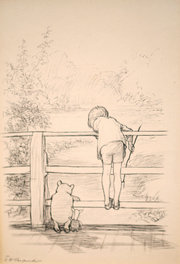
Poohsticks

Days of the Year says it’s “National Winnie the Pooh Day (January 18th)”.

One of the cuddliest holidays around has to be National Winnie the Pooh Day, celebrated on the birthday of author A. A. Milne who was born in 1882.

It’s one special anniversary fans just can’t bear to miss! Every year, the occasion is marked with events such as teddy bear picnics, featuring plenty of honey on the menu….

Learn Fun Facts About Winnie the Pooh

Brush up on some trivia in honor of National Winnie the Pooh Day! Check out and share a few of these fun facts for starters:

  • The name Winnie came from Milne’s own teddy bear, Winnie
  • The “Pooh” part was from the nickname of a swan Milne had met on holiday
  • The story and adventures of Winnie the Pooh are set in the ancient Ashdown Forest of East Sussex, which was near Milne’s home
  • Some of the original plush toys are on display at the New York Public Library…

(10) TODAY’S BIRTHDAY.

[Written by Paul Weimer.]

January 18, 1953Pamela Dean, 73.

By Paul Weimer: One of the legends of Minneapolis fantasy writing, Pamela Dean’s work first came to my attention in the same flush of attention that brought novels such as War for the Oaks to my attention. From my perch in New York, work by people like Bull and Dean and Brust (among others) enlightened me to the fact that the Twin Cities were a hotbed of fantasy and science fiction writing. 

I started reading her with her classic Tam Lin, which I picked up not long after the aforementioned Bull novel. (I was on a kick to read novels set in Minnesota at that point, you seem, especially by this community).  It’s an excellent adaptation and exploration of the Scottish-English story. You know the one. Young man taken by a Queen or noble of Faerie, and the titular Tam Lin must thus be rescued by the love of his life, Janet. You can see the appeal, it is an empowering fantasy that puts a woman in a forward, protagonist position. Since the original reels and songs, it’s been adapted many times by many authors. Dean’s version has the story take place, predictably, of course, in Minnesota, setting it at Blackrock College. 

But it is the Secret Country trilogy that I think of as her best work, or at any rate my favorite. It’s a conceit that was not new to her, as far as I am aware, it dates back to Joel Rosenberg’s Guardians of the Flame series. The idea that a group of people, playing a game with and imagining a fantasy world, find themselves transported into the realm of the very game that they thought was fiction. The idea is the same, but the Secret country is on the brink of war, there’s a dragon afoot, and so there is far more urgency and threat to the realm than wandering about as in Rosenberg’s series. It is one of the classic portal fantasies into a realm you think you already know. 

I’ve gotten to meet Pamela Dean many times at local cons. She might even be able to pick me out of a line up. Happy birthday, Pamela!

Image
Pamela Dean

(11) COMICS SECTION.

(12) LET’S FACE IT. [Item by Steven French.] From this week’s “The Week in Geek” in the Guardian: “The arrival of Two-Face in the new Batman sequel bodes well for a doom-laden moral epic”.

The arrival in Gotham City of Harvey Dent, AKA Two-Face, is rarely without consequence in Batman sagas. Tommy Lee Jones’ shrieking, neon-splashed Batman Forever iteration turned the character into a dissociative identity slot machine, endlessly pulling its own lever, while Billy Dee Williams’ take in 1989’s Batman was a promise of future ruin. In Christopher Nolan’s The Dark Knight, the downfall of Aaron Eckhart’s crusading district attorney signalled the dangers of placing too much faith in the moral resilience of a single individual, especially in a city where the very idea of justice is already under existential strain.

With the news this week cautiously announced in the Hollywood Reporter that Sebastian Stan will be playing Dent in Matt Reeves’ highly anticipated forthcoming sequel to The Batman, it’s quite possible the new episode will be less interested in the masked theatrics of the 20th-century big screen caped crusader, and more in the idea that the very concept of justice is about to slowly disintegrate….

(13) THE BALLAD OF RODGER YOUNG. [Item by Dann.] I came across this from The Heinlein Society and thought it might be of interest.  “On January 17, 1944, (82 years ago today)…”

On January 17, 1944,(82 years ago today) Pvt. Rodger Young was posthumously awarded the Medal of Honor for his actions on July 31, 1943, New Georgia in the Solomon Islands….

Johnny Rico serves aboard the Rodger Young in Heinlein’s Starship Troopers.  The call for troopers and sailors to board the ship is “The Ballad of Rodger Young”.  The call for deployed troopers to leave the combat zone was the same song.

There are a few versions on YouTube.  The full ballad is long, so most of the sung versions are at least a little abridged. Jim Reeves – The Ballad Of Roger Young.

The most prominent photo of Rodger Young has him wearing Sergeant’s stripes.  A week before the combat action for which he would be posthumously be awarded the Congressional Medal of Honor, Sgt. Young realized that his hearing had gotten so bad that he couldn’t really hear.  Rather than lead a squad in that condition, he requested demotion and that he stay with his squad.

A week after that, he found himself wounded and in a position to approach and assault a Japanese pillbox that held a machine gun team that had his unit pinned down.  He crawled forward and tossed a series of grenades into the pillbox.  His action allowed his unit to retreat and reform.  It also cost him his life.

(14) PLANETARY COLLISION. [Item by SF Concatenation’s Jonathan Cowie.] Reported in Nature, a paper that appeared  in Science before Christmas.

Astronomers have seen the aftermath of two planetary pile-ups in the same turbulent star system — providing potential insights into how planets form.

Observations from the early 2000s indicated that Fomalhaut, a star 7.7 parsecs (25 light years) from Earth, was orbited by an object that looked like a dusty planet. But subsequent observations revealed that the bright spot was fading, suggesting that it was a dispersing dust cloud.

Paul Kalas at the University of California, Berkeley, and his colleagues have used the Hubble Space Telescope to make further observations of the Fomalhaut system. They found that the original object had almost disappeared — and that a second cloud of reflective dust had formed elsewhere.

The most likely explanation, say the authors, is that both the original and most-recent observations show the fallout of collisions between rocky bodies called planetesimals, which are often thought of as the building blocks of planets. This is the first time these impacts have been observed directly in another solar system. Studying other planetesimal smashes could help researchers to understand the dynamics of planet formation.

Image

(15) ARTEMIS 2 MOVES AND GROOVES. If you have 10 hours you can watch complete coverage of the “NASA Artemis 2 Rollout LIVE!”. But if you’re pressed for time, then WESH-TV has the solution: “TIME-LAPSE: Artemis II rolls out to launch pad”.

(16) VIDEO OF THE DAY. “Heated Wizardry” from Saturday Night Live. By substituting quidditch for hockey, “A trailer introduces a Harry Potter television series with a heated twist.”

[Thanks to Kathy Sullivan, Steven French, Mike Kennedy, Dann, Andrew Porter, John King Tarpinian, Cat Eldridge, SF Concatenation’s Jonathan Cowie, and Mark Roth-Whitworth for some of these stories. Title credit belongs to File 770 contributing editor of the day Peer.]

Pixel Scroll 10/23/25 It’s True. This Fan Has No Pixel

(1) WORTH WAITING FOR. Here’s something I never expected to find online. Well done, Fanac.org! Issues #2 and #3 of “Uncle Albert’s Electric Talking Fanzine” – which originated in 1981 on cassette tape. This pair features Larry Tucker, Tom Barber, Randy Bathurst, Joe Haldeman, Ted Reynolds, Joni Stopa, Dave Locke and Leah Zeldes.

(Why do I sound surprised? Well, File 770 last reported on efforts to preserve Uncle Albert’s in 2013.)

Image
Larry Tucker as Uncle Albert from the ConFusion 14 (1977) program book.

(2) IN PUBLISHING TIMES TO COME. Silvia Moreno-Garcia doesn’t think the current book sales slump is a reaction against Amazon: “Boycott? Not likely” – an open post at Patreon. As for the future?

…When you talk to agents and editors right now the word on the street is that romantasy is hot. My own publisher is Del Rey. I looked at their acquisitions for 2025. Yep, they have been heavily investing in romantasy. The same can be said of other rival publishers.

I believe that this can easily create a potato famine scenario where publishers over acquire and then can’t sell books. This would not be good.

Predicting the future is difficult, but if you asked me what else is coming, then I would say it’s more reskinned fanfic of popular properties like Harry Potter, more self-published writers with a proven track record being acquired by traditional publishers, and hard times for writers of color.

Look, I don’t want to be alarmist, but things are not looking swell for marginalized writers. We saw a wave of support for Black writers in 2020 which now seems to have died off. Similarly, Latino writers who were eagerly acquired between 2020 and 2022 have now debuted or released books to little fanfare.

No book is assured sales. But part of the downward spiral is the fault of publishers themselves. For example, in 2020 major publishers like Macmillan committed to substantially increasing Latin American representation, from authors to staff, at their companies. Nothing came of this.

I said when it rains it pours, and this remains true. The current focus on nostalgia is not going to help writers of color, who are already underrepresented in the industry. Diversity campaigns and large marketing budgets for BIPOC seem to have evaporated. Plus, people seem to be cutting back on books. Right now, most publishing companies are going to go into safe mode. That’s why nostalgia is so sexy.

Softer sales are bad news for all authors, but marginalized ones are likely to bear the worst of a slump….

(3) HORROR SQUEEZE COMING? Meanwhile, Brian Keene admits to being “Half-Wrong, Half-Right” – indie horror is still in trouble, and he thinks a major market contraction is still coming even though horror is more popular than ever right now.

“I’ve learned a lot from Mary SanGiovanni. Like, for example, that Brian Keene can occasionally be wrong about something.”

— Hailey Piper

This was my favorite quote from last month’s Scares That Cares’ Killer Pride event. Hailey was talking about my insistence a year ago that Horror Fiction is about to go through another downturn and market contraction. And I get why Hailey disagrees with me, because the objective fact is that Horror Fiction — throughout world history — has never been more popular than it is now. The genre’s abundance and accessibility dwarfs the gothic era, the post World War and pulp eras, the Seventies surge, the reign of King and Koontz, the 1980s, or my generation’s own Millennium emergence. There are more publishers and authors doing Horror Fiction than at any time in history, and thus, there is more Horror Fiction available than at any time in history.

But I still think there’s a downturn and market correction coming….

(4) THEIR MILEAGE MAY VARY. In the previous item Keene goes into detail about how his Pennsylvania store Vortex Books in being forced out of its storefront to go entirely online. And yet Publishers Weekly quotes owners of several newly opened indie horror specialty bookstores as having a very positive experience: “Booksellers Ride the Horror Wave”.

While many indie bookstores are bulking up on horror, several entrepreneurs are taking it a step further by opening stores exclusively dedicated to scary reads. These new booksellers are looking to take advantage of a 7% uptick in sales in the genre through the first nine months of 2025, compared to the same period last year, according to Circana BookScan.

“Horror,” says Michaela Granger, who opened Midslumber Media in Portland, Ore. in March, “has always been popular in books and movies across the board.” But she thinks the genre is surging now because of “the state the world”: “Horror has always been deeply political; it’s the place where heavy conversations can be had. Horror is intense.”

Granger became a bookseller because none of Portland’s indies are dedicated to horror. After she came upon a 700-square-foot space that was “too perfect to pass up,” she started selling new and used books, including classic and gothic horror, as well as movies.

(5) MARKED FOR LIFE. “What is the scariest book? 10 horror authors pick the most terrifying stories ever” for USA Today. Here are two of the authors and their choices.

Joe Hill doesn’t have to go very far to find the scariest book ever. Just up a rung on his family tree.

The bestselling horror author of “King Sorrow” knows he’s biased, but the “correct answer” is still “It” by Hill’s father, Stephen King.

“That’s the gold standard when it comes to scaring the pants off people. No one’s ever going to touch that,” Hill says. “The classics – ‘Dracula,’ ‘Frankenstein,’ ‘Dr. Jekyll and ‘Mr. Hyde’ – I love those books but they were written in a more conservative time. People didn’t go for the throat the way my dad went for the throat in ‘It.’ “…

Later on the list is —

‘Let’s Get Invisible!’ by R.L. Stine

[Chosen by Kristen Loesch, the author of “The Hong Kong Widow.”]

“R.L. Stine’s ‘Let’s Get Invisible!’ is about a kid who finds a mirror in his attic that can turn you invisible. It’s one of the original ‘Goosebumps’; I first read it at age 9. I reread it last year, thinking it couldn’t be as terrifying as I remembered. Ha! It was somehow even scarier … and by now I am a seasoned horror reader and not easily spooked. What is it about this story that won’t let me go?”

(6) ABOUT THAT HARRY POTTER INK. “Laser Clinic Offers Discount on Harry Potter Tattoo Removals in Support of Trans Rights” reports Gayety.

A laser clinic in Manchester is making headlines after offering a special promotion aimed at helping fans move on from their Harry Potter-themed tattoos, and making a bold statement in support of trans rights.

Manchester Laser NQ, located inside The Old Volt tattoo studio on Swan Street, announced on Instagram that it is offering 50 percent off the cost of removing Harry Potter tattoos. The promotion comes in direct response to author J.K. Rowling’s controversial and widely criticized views on the transgender community….

…Rowling, 60, first sparked controversy in 2019 when she publicly supported Maya Forstater, a U.K. tax researcher who lost (and later regained) her job after expressing “gender-critical” views. Since then, Rowling has doubled down on rhetoric many view as harmful to trans people, often equating advocacy for transgender rights with threats to women’s rights.

While the author has maintained that she supports trans individuals and opposes discrimination, her repeated comments have ignited backlash from LGBTQ+ activists, fans, and even actors from the Harry Potter films. Yet, many celebrities, including actress Keira Knightley, who recently voiced interest in the franchise, have been criticized for failing to distance themselves from Rowling’s statements.

The promotion from Manchester Laser NQ reflects the deep disillusionment many queer fans feel toward the brand.

“Around 16 percent of people regret getting a tattoo, less than one percent of people regret gender-affirming surgery, and 100 percent of queer people regret their Harry Potter tattoos,” the clinic joked in their caption, adding a disclaimer: “(Last stat not fact-checked).”…

(7) COURT RULES AGAINST TEXAS BOOK RATINGS LAW. “Federal Judge Orders Permanent Injunction Against Texas Book Ratings Law”Publishers Weekly analyzes the verdict.

After two years of litigation over Texas House Bill 900, a federal judge has granted summary judgment and ordered a permanent injunction to block the mandatory book ratings law. In his October 21 decision, Judge Alan D. Albright of the U.S. District Court for the Western District of Texas, Austin division, wrote that HB 900 “compels speech, is void for vagueness, and is an unconstitutional prior restraint” and that “Plaintiffs’ First and Fourteenth Amendment claims are all successful.”…

…The statement represents Valerie Koehler, owner of Houston’s Blue Willow Bookshop; Gregory Day, interim general manager of Austin’s BookPeople; American Booksellers Association CEO Allison Hill; Association of American Publishers president and CEO Maria Pallante; Authors Guild CEO Mary Rasenberger; and Comic Book Legal Defense Fund interim director Jeff Trexler. They were supported during litigation with amicus briefs filed by the American Association of School Librarians, the Association of University Presses, Barnes & Noble the Educational Book and Media Association, Freedom to Learn Advocates, and the Freedom to Read Foundation.

The plaintiffs filed their complaint in July 2023, after HB 900 was signed into law by Texas Governor Greg Abbott. Titled the Restricting Explicit and Adult-Designated Educational Resources Act, or READER, HB 900 was designed to regulate access to “sexually explicit” or “sexually relevant” materials in public school libraries. Under HB 900, the Texas State Library and Archives, chaired by original defendant Martha Wong, would establish content standards; the Texas Education Agency would oversee the standards; and school vendors including bookstores would be required to comply with the rating system by categorizing all their materials….

(8) WHY NOT SAY WHAT HAPPENED? Episode 29 of Scott Edelman’s podcast Why Not Say What Happened? is about “What Steve Ditko’s Family Wants You to Know”. (In addition to the direct link, here’s where it can be found on several dozen platforms.) [Click for larger image below.]

I grow a bit verklempt this time around while I rap about the Spider-Man rock album for which I made sure the band didn’t miss a note, remember watching Dave Cockrum and Len Wein create Giant-Size X-Men #1 out of thin air, pass along the surprising truths Steve Ditko’s family most wants you to know, critique the Metropolitan Opera’s production of The Amazing Adventures of Kavalier & Clay, choke up while praising Marie Severin’s posthumous induction into the Society of Illustrators Hall of Fame, walk the exhibit hall at Baltimore Comic-Con where only a single item of comics memorabilia tempted me, and more.

(9) COMICS SECTION.

(10) HOW TO FIND GAMES. [Item by Steven French.] Keith Stuart extols the virtues of flawed-but-fascinating games in this week’s “Pushing Buttons” newsletter in the Guardian: “Average-but-arresting games used to be the backbone of the industry. What price perfection?”

… The game is also a reminder that flawed-but-fascinating games were once the backbone of the industry. From the mid-1990s to the late 2010s, it was possible for a team of fewer than 50 development staff to create an OK mid-budget adventure, get it published globally and find an audience. I know this because I reviewed dozens of them, from wannabe 2.5D platformer Pandemonium!, to riot simulator State of Emergency, to horror shooter The Suffering. The PlayStation 2 housed hundreds, thanks to its vast popularity. For every Gran Turismo or Metal Gear Solid there was a Enthusia Professional Racing or Kill Switch, or a Toca Race Driver 3 or an Oni….

…For many years the phrase “classic 7/10” was a joke among games journalists as the score became a convenient go-to when a game defied easy critical evaluation. But that seven has often hidden interesting treasures that players would often discover for themselves by playing magazine cover disc demos or renting it from Blockbuster. Those avenues aren’t open any more, so you must use Steam demos and YouTube videos to root out the slightly bruised truffles of the games industry. It’s worth the effort…

(11) NOT THE ONLY GAME IN TOWN. “Catan Movies and TV Series in the Works at Netflix” reports Variety.

Netflix has traded some serious resources to secure the global rights to “Catan.”

The streaming giant is now developing projects based on the beloved board game across film and both scripted and unscripted TV, as well as both live-action and animation. All projects will be produced by Darren Kyman from game publisher asmodee, Pete Fenlon of Catan Studios (an asmodee studio), and Guido and Benjamin Teuber, the sons of ‘Catan’ inventor Klaus Teuber. Roy Lee of Vertigo Entertainment will also produce….

… Klaus Teuber originally released “Catan” in 1995 under the name “The Settlers of Catan.” Since then, the game has become a phenomenon, selling over 45 million copies worldwide and having been translated into over 40 languages. In the game, players reach the fictional island of Catan, where they must acquire resources and grow their settlements, ultimately acquiring victory points in order to win….

Netflix is developing or has already released a number of projects based on both video and board games. The streamer previously aired the acclaimed animated series “Arcane,” which was based on “League of Legends,” as well as an animated adapation of “Castlevania.” Most recently, Netflix announced it had ordered a series version of “Assassin’s Creed” and a “Monopoly” reality competition series.

(12) THE MAGIC FLUTE. [Item by Jim Janney.] I have seen more refined performances of this, but never one with so much joy. “Huw Montague Rendall & Elisabeth Boudreault sing ‘Pa-Pa-Pa-Papagena’ (Mozart: Die Zauberflöte)”.

(13) JUSTWATCH HALLOWEEN STREAMING REPORT. As Halloween approaches, U.S. audiences are turning to streaming platforms for their favorite thrills. Based on JustWatch streaming charts from October 1–13, 2025, horror and suspense titles have surged in popularity — with The Substance and The Last of Us emerging as this year’s most in-demand titles.

Image

Key Insights

  • The resurgence of early-2000s horror is notable this year, with 28 Days Later re-entering the top three, over two decades since its release.
  • Titles blending psychological horror thrillers (The Substance, Longlegs) outperformed traditional slasher-style films.
  • The Last of Us continues to blur the line between prestige drama and horror — capturing both genre fans and mainstream audiences.
  • Cross-platform viewing is on the rise: more than half of the top 10 movies and shows are available across two or more streaming services, showing the fragmentation of horror consumption in 2025.

The Substance and The Last of Us Lead the Pack

  • The Substance, the body horror hit starring Demi Moore and Margaret Qualley, claimed the #1 spot among movies, followed by the possession thriller Talk to Me and the apocalyptic classic 28 Days Later.
  • Among TV shows, HBO’s The Last of Us continues to dominate streaming interest well into its second year, followed by From and Stranger Things, both proving that psychological and supernatural horror still reign supreme during spooky season.

[Thanks to Kathy Sullivan, Mike Kennedy, Andrew Porter, Scott Edelman, Jim Janney, John King Tarpinian, Chris Barkley, Cat Eldridge, SF Concatenation’s Jonathan Cowie, Mark Roth-Whitworth, and Steven French for some of these stories. Title credit belongs to File 770 contributing editor of the day Jayn.]

Pixel Scroll 10/19/25 Tomorrow, When The Scrolls Began

(0) Thanks for your good wishes yesterday – they turned the trick. I’m all better now.

(1) NO KINGS. Scott Edelman joined the No Kings demonstration in Berkeley Springs, West Virginia yesterday. Scott’s in the crowd in front of the Morgan County Courthouse, and says, “If you’re having trouble locating me, I’m right by the dinosaur.” Below, Scott poses with his protest signs.

Image

(2) THREE CAREERS, REVISITED. [Item by Frank Catalano.] This probably will sound a bit like Dick Lupoff’s reported reason as to why he didn’t immediately return to writing science fiction after a seven-year break (I may be wrong, but I recall he said that the field had changed to a point where he didn’t feel he could). And there is an echo of that thinking in my decision, though I never was even as close to accomplished as Lupoff when he bowed out. I only made it as far as neo-pro and never continued. But some of these observations, and lessons, from three career choices may be interesting reading for Filers: “Professional rerun summer” at Franksplaining.

Earlier this year, I was given a rare opportunity to revisit several significant stretches of my career: first education technology, then science-fiction writing and finally daily journalism. I was able to freshly consider my relationship to each. Had the professions changed, or had I?…

Speculation about a future in fiction

…It was confusing, also, that the standards for being considered a “pro” writer were no longer as clear (yet perhaps not as inflexible or daunting) as when I was active, now that self-publishing with self-promotion was much easier. To its credit, self-publishing’s rise also raised many new voices and made it easier for talented writers to keep more of the publishing revenue. But independent publishing has added murkiness to the concept of “professional.”

At Worldcon, like CoSN, I enjoyed speaking and seeing my friends and once-colleagues.

But I had done a poor job keeping up with the field since I stopped publishing short fiction. I didn’t recognize most of the good, newer writers who were up for Hugo Awards. Stepping away mentally was a huge mistake: the field kept morphing and I had subconsciously assumed it would stay like it was when I left it, so I could slip back in when I was ready.

The business of professional science fiction writing had changed since I stopped. Too much. I’d have to start from scratch, again, if I wanted back in. I had left it, and it had moved on….

(3) BAEN WILL CONTINUE ‘1632’ NOVELS. Toni Weisskopf has announced in a Baen Books press release that the company will be publishing more books in the late Eric Flint’s 1632 series.

In accordance with Eric’s wishes, Chuck Gannon has been named the series’ “showrunner.” That role includes oversight and development of all physically published content, managing the series’ thematic directions, and close consulting on cross-platform opportunities and marketing.

Gannon brings broad experience and achievements to his role, both as an editor and a best-selling author. A four-time Nebula finalist (novel), he is also the recipient of the American Library Association Choice Award for Outstanding book, the Dragon Award, and the Compton Crook Award.

His work with other writers has been diverse, including: script/story doctor for feature films; developmental editor for the Ring of Fire and other fiction/RPG properties; senior editor for journals in his roles as a Fulbright Fellow; and Program Director of a Minor In Creative Writing focused on fiction for main-stream markets. As a Featured Speaker, he annually brings these varied skills to the Superstars Writing Seminar, in addition to workshops in world building, collaborative authorship, and cross platform IP development.

The next two releases in the 1632 series are the last that Eric proposed, shaped, and contracted with Baen. The first is 1637: The Pilgrim’s Passage by Eric Flint & Griffin Barber, the third in the Mughal India thread. After that comes 1637: Their Finest Hour, a mainline novel by Chuck Gannon which draws in major characters and elements from the Caribbean thread.

Further development of these and other arcs is underway, but Baen is not yet accepting unsolicited submissions for the Ring of Fire. In the meantime, new, prospective writers should familiarize themselves with the series’ novels, as well as the magazine 1632 and Beyond. All are available as ebooks at Baen.com.

Speaking about this impending re-expansion of the series, Gannon remarked, “Eric’s passing was a deeply personal blow to all of us. But his generous spirit and unique vision continues to guide our journey—as well as that of the uptimers and downtimers whose lives were forever transformed by his Ring of Fire. 

“Lastly, it’s impossible to overstate the importance of his readers’ loyalty and enthusiasm since losing him. Their patience was crucial as we worked toward the moment when Baen could make today’s announcement: that Eric Flint’s 1632 is moving forward at the charge!”

(4) CARE OR DON’T CARE? “Certified organic and AI-free: New stamp for human-written books launches” reports the Guardian.

A new UK start-up is taking aim at the growing wave of AI-generated books, launching an initiative to verify and label human-written works.

Books By People has launched an “Organic Literature” certification, partnering with an initial group of independent publishing houses.

The scheme will involve Organic Literature stamps being placed on books written by humans, with only limited AI use permitted for tasks such as formatting or idea generation.

The start-up, founded by rare books specialist Esme Dennys along with Conrad Young and Gavin Johnston, said it plans to expand globally in 2026….

… Publishers can qualify through commitment to the certification’s standards and annual spot checks. Fees will vary depending on the number of titles produced each year….

(5) ABOUT POKÉMON LEGENDS: Z-A: “These Wild Pokémon Might Be Giants” – a New York Times video game review (behind a paywall).

Image

The quiet, starlit sky belies innumerable fiery battles ahead. Suddenly in the night, your humble pocket monster is enhanced to gigantic size and easily rolls over a weaker Pokémon, the puffy, purple Gengar. To celebrate victory, your friend makes an unusual croissant curry.

In Pokémon Legends: Z-A, the goal is not just “Gotta catch ’em all.” There’s a mystery here. Within Lumiose City, a homage to Paris, I discovered an alluring setting for a sci-fi conundrum involving angry, wild Pokémon who randomly attack like rabid animals.

Before the evening’s strategic battles commence, realistic human trainers stroll tree-lined Champs-Élysées-style avenues. The days are easy as I watch orange and yellow Magikarp splash and leap from water that ripples and flows clearly. I can see the rocky bottom. That’s important because well-rendered environs weren’t always a priority in Pokémon games. Rather, it’s complex game play and new Pokémon species that have brought fans back again and again for almost 30 years.

Here, you’re a young wide-eyed tourist who arrives by train, only to be recruited immediately by the friendly Taunie, a knowledgeable, ponytailed townie who acts as your optimistic guide and occasional battle companion. (It’s she who makes the curry, which is nicely plated.) There’s much to do. Beyond checking out the views from bridges and parks, I helped a researcher find new species and took jobs from a detective to solve minor side-quest enigmas. Sometimes, I just sat at an inviting cafe and observed the town’s varied citizens and manicured flora.

Then, it was back to the fight. The process of Mega Evolution creates Brobdingnagian Pokémon. You can encounter the giant opponents raging in gated parks, basketball courts and roof decks. I scaled the tall buildings and battled on penthouse terraces, which gives a taste of Assassin’s Creed’s rooftop gymnastics. Once you’re triumphant, you can leap stories down to the ground because your advanced phone has a Roto-Glide function. It acts somewhat like an invisible parachute….

(6) VILLAGE POTTER HOLES VANISH AS IF BY MAGIC. [Item by SF Concatenation’s Jonathan Cowie.] “Reparo! Harry Potter film crew mend potholes blighting Devon village” – the Guardian has the story.

If any N. Americans have spent a few months or a year living in Britain the past decade, then they’ll be aware of an issue outside of front-page news stories, that over a decade of austerity has left local government Councils strapped for cash…  And so one of the big issues that only occasionally makes it into the news… that of road pot holes!

As roads fall into disrepair, so pot holes appear that can tumble cyclists or mess up a car’s suspension…  However, for one village there has been some good news!

Residents of Lustleigh, Devon, have been complaining about the state of its roads and lanes for years.  Despite regular reports to the local Council, nothing has been done.  That is, until now!

Lustleigh is a picturesque village on the edge of Dartmoor (the place where Holmes encountered the Baskerville doggy) and Lustleigh was chosen as one of the sites for the filming of the forthcoming Harry Potter television series.  However, they could not do so given the state of its country roads and lanes.  Fortunately, they have been given permission by Devon and Cornwall Highways to repair the roads themselves. It’s a kinda magic. Locals are hoping that one of the show’s episodes might be Harry Potter and the Potholes

Image

(7) MEMORY LANE.

[Written by John King Tarpinian.]

October 19, 1953Fahrenheit 451

By John King Tarpinian: On this day in history one of the most read science fiction novels was published. One of the few, if not only, novels of sci-fi on a majority of middle and high school reading lists.

Fahrenheit 451 is one of three books that as a young man made me think about stuff outside of my comfortable life. The other two were Dalton Trumbo’s Johnny Got His Gun and Robert Heinlein’s Stranger in a Strange Land, the three making up a trio of books that woke up my little brain.

Fahrenheit 451 was made into a movie by the French director, François Truffaut. It was his first movie in color and his only English-language film. Remember the French guy in Close Encounters of the Third Kind?  That was Truffaut.

Flatscreen TVs were in this book. Bluetooth was in this book. Most people know that Ray never drove a car, remember that in the book Clarisse was killed by a speeding car. Montag was a brand of paper; Faber was a brand of pencil. Beatty was named for the lion tamer, Clyde Beatty.

Bradbury’s book rails against censorship, in any form.

Lastly, Ray’s headstone reads “Author of Fahrenheit 451.”

(Use this link to see a parade of Fahrenheit 451 book covers from over the years.)

Image

(8) COMICS SECTION.

Choose your own (research) adventure. My cartoon for this week’s @newscientist.com

Tom Gauld (@tomgauld.bsky.social) 2025-10-18T17:26:49.753Z

(9) YOUR OWN UFO FLEET. Archie McPhee is offering “Itty Bitty UFO’s” in a bag of four.

COW NOT PROVIDED

Itty Bitty UFO’s can only abduct insects and tiny fish. The truth is not only out there, but also much smaller than we imagined. This set of four different UFO’s, 1-1/4″ tall, is made of soft vinyl. Each UFO has its own unique pattern and a mysterious beam emanating from its base, serving as a stand. The purpose of that beam is unknown. It could be to keep the UFO aloft, a tractor beam to abduct subjects for experimentation, or some sort of hypnotic suggestion to buy more Itty Bitty UFO’s.

Image

(10) ANOTHER BRICK IN THE WALL OF CRIME. “Police Break Up Lego Theft Ring, Recovering Hundreds of Beheaded Figurines” reports the New York Times (behind a paywall.)

When detectives from the Santa Rosa Police Department arrived at a house in Lake County, Calif., on Monday, they discovered what looked like a Lego crime scene.

Plastic figurines were everywhere, their heads removed from their bodies and organized in neat rows by facial expression.

Tubs and bins brimmed with loose pieces — tens of thousands of them, according to the police — and were scattered across desks in the living room.

Unopened sets lined the hallway floors.

An investigation that began last month culminated in the arrest of Robert Lopez, 39. The police said in a statement on Wednesday that Mr. Lopez had stolen more $6,000 worth of the popular toys.

“Lopez was directing others to steal expensive Lego sets and purchasing the stolen property at a reduced price to turn around and resell the sets or individual mini figurines at inflated prices,” the police said.

It was not immediately clear who was buying from Mr. Lopez. On Friday, the investigation was still ongoing “to identify others involved and locate the retailers from where the Legos were stolen,” said Sgt. Patricia Seffens of the Police Department.

Mr. Lopez was charged with, among things, organized retail theft and conspiracy to commit a felony. Under Californian law, those convicted of a felony of organized retail theft can face up to three years in prison.

(11) SPACE WELLNESS. [Item by Steven French.] “Astroimmunology”, it’s a thing: “A hitchhiker’s guide to the galaxy of space immunology” at Phys.org.

With the advent of commercial spaceflight, an increasing number of people may be heading into space in the coming years. Some will even get a chance to fly to the moon or live on Mars.

One of the major health risks associated with spaceflight involves the immune system, which normally fights off viruses and cancer. It’s already established that spaceflight weakens immunity; current and past astronauts report clinical issues such as respiratory illnesses and skin rashes. These issues may become even more serious on longer-term flights, such as to Mars.

To better understand the full scope of immunology during spaceflight, Buck Associate Professor Dan Winer, MD, working with colleagues linked to the National Aeronautics and Space Administration (NASA), the European Space Agency (ESA), Cornell University, the University of Pittsburgh, the University of Toronto, Embry-Riddle Aeronautical University, and others, have put together a comprehensive guide describing a full array of science linking spaceflight and the immune system.

Given the large, rapidly expanding knowledge base on the topic, the team used the name “astroimmunology” to define a subdiscipline of immunology dedicated to the study of the effects of spaceflight and its associated stressors on the immune system. The work is published in Nature Reviews Immunology.

“The future of humanity will involve living in outer space or on distant worlds for some people. The larger goal of establishing this emerging subspecialty of astroimmunology is to develop countermeasures to protect the health of those exploring life off of Earth,” says Winer….

(12) CARLA LAEMMLE HOSTS DRACULA FILM HISTORY. “The Road to Dracula (1931)” a DVD Documentary Bonus Feature, produced in 1999, is hosted by Carla Laemmle (1909-2014), then 90, who delivered the first lines spoken in the movie.

The Road to Dracula is a fascinating documentary from the DVD release of the original Universal monster classic Dracula (1931). Hosted by Carla Laemmle, it traces the path from Bram Stoker’s novel to the stage and finally to Tod Browning’s groundbreaking film starring Bela Lugosi. Featuring rare footage, interviews, and historical context, this bonus feature explores how Dracula became the cornerstone of Universal’s horror legacy.

[Thanks to Cat Eldridge, SF Concatenation’s Jonathan Cowie, Mark Roth-Whitworth, Steven French, Kathy Sullivan, Mike Kennedy, Andrew Porter, John King Tarpinian, and Chris Barkley for some of these stories. Title credit belongs to File 770 contributing editor of the day Errolwi.]

Pixel Scroll 10/6/25 The Scrolls Are A-File With A Round Of Pixels

(1) DAVE MCCARTY DOES NOT APPEAR FOR HUGO AWARD CIVIL HEARING. [Item by Chris M. Barkley.] Dave McCarty did not show up for a trial status hearing on Zoom for the 2023 Hugo Award civil case this morning in Chicago. This marks the second hearing in a row that was missed by the defendant. Mr. McCarty’s last appearance was before Judge Joseph Panarese, who heard oral arguments from both parties on June 26, 2025.

The case, asking for $3000, the estimated value of the award in the suit, was filed by Chris M. Barkley for the non-delivery of the Hugo Award for Best Fan Writer that was given out at the Chengdu World Science Fiction Convention in October 2023. The award was entrusted to Mr. McCarty, who had a contingent of 2023 awards shipped to his home address in late January of 2024.

Image
Dave McCarty displaying the Chengdu Worldcon Hugo base in 2023.

In the June hearing, Mr. Barkley claimed that while some of the awards have been distributed by the defendant, he hypothesized that his award was being held up because he and a co-author, Jason Sanford, helped expose a Hugo Award voting scandal the defendant was involved in.

The defendant did not directly address that claim in court, but explained that a majority of awards arrived damaged and that several shipments of replacement parts were damaged as well, which impeded the distribution of the plaintiff’s award along with the awards of sixteen other recipients. The defendant also indicated that he was doing all of the repair work on his own.

The defendant was directed by Judge Panarese to deliver a repaired or a replacement award to the plaintiff by September 22, 2025, but, as of this date, this order has not been fulfilled.

Cook County Civil Court Judge Maria Barlow set a court date and will hear arguments from Chris M. Barkley and Mr. McCarty on November 24 at 9:30am (CST) in Room 1102 at the Richard M. Daley Center.

(2) SUIT AGAINST GAIMAN DISMISSED. By order of a federal district court, “Judge Dismisses Sexual Assault Suit Against Gaiman on Jurisdictional Grounds”. Complete story at the link.

A Wisconsin federal has judge dismissed a former nanny’s claims of repeated and brutal rape against author Neil Gaiman, citing jurisdictional issues….

(3) LAST NIGHT IN CANBERRA. The winners of the Ditmar Awards and the Australasian Shadows Awards were announced at Conflux 19 in Canberra, Australia. See the results at the links.

(4) WHAT’S THAT SMELL? IT’S THE MIGHTY AMAZON. Cory Doctorow explains “enshittification” to Guardian readers in “Way past its prime: how did Amazon get so rubbish?”

It’s not just you. The internet is getting worse, fast. The services we rely on, that we once loved? They’re all turning into piles of shit, all at once. Ask any Facebook user who has to scroll past 10 screens of engagement-bait, AI slop and surveillance ads just to get to one post by the people they are on the service to communicate with. This is infuriating. Frustrating. And, depending on how important those services are to you, terrifying.

In 2022, I coined a term to describe the sudden-onset platform collapse going on all around us: enshittification. To my bittersweet satisfaction, that word is doing big numbers. In fact, it has achieved escape velocity. It isn’t just a way to say something got worse. It’s an analysis that explains the way an online service gets worse, how that worsening unfolds, and the contagion that’s causing everything to get worse, all at once.

This moment we’re living through, this Great Enshittening, is a material phenomenon, much like a disease, with symptoms, a mechanism and an epidemiology. When doctors observe patients who are sick with a novel pathogen, their first order of business is creating a natural history of the disease. This natural history is an ordered catalogue of the disease’s progress: what symptoms do patients exhibit, and in which order?

Here’s the natural history of enshittification:
1 First, platforms are good to their users.
2 Then they abuse their users to make things better for their business customers.
3 Next, they abuse those customers to claw back all the value for themselves – and become a giant pile of shit.

… On average, the first result in an Amazon search is 29% more expensive than the best match for your search. Click any of the top four links on the top of your screen and you’ll pay an average of 25% more than you would for your best match – which, on average, is located 17 places down in an Amazon search result.

Why does this happen? Because Amazon makes more than $50bn every year charging merchants for search placement. When you search for a product on Amazon, the top results aren’t the best matches: they’re the matches that pay the highest fees to Amazon to be top of the list.

Researchers Rory Van Loo and Nikita Aggarwal call this “Amazon’s pricing paradox”. Amazon gets to insist that it has the lowest prices in the business, but no one can find those prices. Instead, we all pay a massive Amazon tax every time we shop there, and the merchants we buy from are paying an Amazon tax, too.

That means that, on average, the stuff at the top of an Amazon search results page is bad….

(5) UKRAINE PUBLISHER EARNS AWARD. “Freedom Letters Receives AAP’s International Freedom to Publish Award”Publishers Weekly has the story.

The Association of American Publishers has awarded its 2025 International Freedom to Publish Award to Freedom Letters, a Russian- and Ukrainian-language publisher operating largely in exile.

The award recognizes Freedom Letters founder Georgy Urushadze, who was previously a political journalist and cofounder of the Moscow publishing house Palmira. He fled Russia in 2022 after being designated a “foreign agent” by the Russian government following his public resignation from leadership positions at the country’s three main literary prizes in protest of the invasion of Ukraine. The AAP recognition highlights a publishing operation that has built a substantial catalog while operating under extraordinary constraints: Freedom Letters is banned in Russia, its website is blocked by Russian authorities, and several of its authors are currently imprisoned or facing criminal charges.

“Georgy Urushadze has made extraordinary sacrifices in the name of free expression, demonstrated remarkable tenacity in building a thriving publishing house while in exile, and inspired people around the world with his fierce dedication to publishing authors that others have tried to silence,” said AAP CEO Maria Pallante.

The scale of Freedom Letters’ operation is notable for an exile publisher. In two and a half years, it has published 236 books by 300 authors, supported by a team of 40 volunteers working across multiple countries including the U.K., Latvia, Georgia, Kazakhstan, Ukraine, and even within Russia itself, albeit surreptitiously.

(6) STICKY WICKER. [Item by Steven French.] Fans of The Wicker Man might be interested in a new book, Children of the Wicker Man, about to be published which is based on letters from the director and writer found in an attic (where else?’): “’An unkind film’: letters reveal rift between director and writer of The Wicker Man” in the Guardian.

A screenplay by one of the UK’s foremost writers, Anthony Shaffer, and a cast headed by Christopher Lee and Edward Woodward should have been the stuff of dreams for the director Robin Hardy in filming The Wicker Man more than half a century ago.

Although it is today revered as a cult horror masterpiece, the extent of the misery that it brought the film-makers has now been revealed in previously unpublished letters and script drafts….

(7) ORWELL DOCUMENTARY REVIEWED. At Yahoo! — “’Orwell: 2+2 = 5’ Review: Raoul Peck’s Documentary Highlights George Orwell’s Relevance at the Expense of His Mystery”.

There are two ways to think about “Nineteen Eighty-Four,” the great dystopian novel of totalitarianism that George Orwell wrote on the Scottish isle of Jura and published in 1949, six months before his death (at 46, of complications from tuberculosis). The first and most obvious way to think about it is as a midnight-dark tale of political oppression: the deprivation and bullying violence that dominates life in a ruthless authoritarian state. To a large degree, Orwell based the book on his perception of the Soviet Union, but he drew from other regimes as well, crafting a myth of what it’s like to exist as a humble pawn in a fascist prison state.

Image
George Orwell.

Yet that’s not ultimately the reason “Nineteen Eighty-Four” remains such a brilliant and mind-blowing book. Orwell was arguably the greatest psychologist of totalitarianism who ever lived. The words and phrases we get from “Nineteen Eighty-Four” that became famous (Big Brother, thoughtcrime, doublethink) remain more relevant than ever, and just as heady to ponder as they were 76 years ago, because what those words speak to isn’t merely the cruelty of life under totalitarianism — it’s the insanity of it, the way that fascist regimes destroy not just freedom but reality. That’s actually the cruelest thing about them.

“Orwell: 2+2 = 5” is Raoul Peck’s documentary meditation on Orwell’s writing, and on how his visionary insight applies to the world today….

(8) TODAY’S BIRTHDAY.

[Written by Paul Weimer.]

October 6, 1950David Brin, 75.

By Paul Weimer: It’s Kevin Costner’s fault that the work of David Brin came to my attention. When the adaptation of The Postman, warts and all, came to the screen, I discovered to my surprise I had not at that time read any of the work of David Brin. I set to rectify that, starting with The Postman…which, to my mystified surprise, I found I preferred the plot of the movie in many respects.  Undeterred, I hit my stride with reading his Uplift novels, reveling in the grand SF idea of species across the galaxy raising others to sentience–but who raised Humanity?  

But my favorite David Brin novel is probably Kiln People. Ostensibly a mystery novel, the big damn idea of Kiln People, being able to make copies of yourself to do various tasks and functions, is such a compelling one that I felt myself propelled on the strength of the premise and its implications for work, humanity, mortality and much more. Even more than the Uplift novels, it embodies the good of Brin’s fiction and thought. 

But Brin is an author whom I can disagree with, especially when it comes to Star Wars. I find Brin’s criticism and denigration of Star Wars to be, I think, way way too much. Sure, it’s a Campbellian monomyth hero chosen one narrative. But I think his criticism is way overpowered (and goes to far too much length) for the arguments he is making. I do get they come from a place of passion and sincere belief, but it is not one that I share. 

Image
David Brin

(9) COMICS SECTION.

(10) SIGOURNEY WEAVER ON HER NEW HORROR FILM. JustWatch spoke with actress Sigourney Weaver about her new film Dust Bunny, directed by storyteller Bryan Fuller in his feature directorial debut. The movie opens in theatres on December 12.

“This film is so original. It really takes you to a world that’s very recognizable. It’s very much our world, but it’s transformed in the most beautiful way — dangerous, but also very, very fascinating.

There are so many aspects of the movie that I think are as good as you’ll ever see in any film. The cinematography, the costumes, the acting, the character actors, the surprises in the script — it’s so fantastic. I just really recommend it, and I think it’s an instant classic.”

About Dust Bunny

Dust Bunny is a horror film written and directed by Bryan Fuller. The story centers on an eight-year-old girl who seeks help from her neighbor to kill a monster she believes lives under her bed and is responsible for the disappearance of her family. The film stars Sigourney Weaver and Mads Mikkelsen and combines elements of family drama and psychological suspense within a contained, imaginative setting.

Learn more about where-to-watch the movie here.

(11) FARAWAY PLACES WITH STRANGE SOUNDING NAMES. Futurism claims “AI Endangering Tourists by Sending Them to Nonexistent Landmarks in Hazardous Locations”.

If you plan a trip using AI, triple check that the locations it recommends visiting actually exist.

The BBC reports that unsuspecting tourists all over the world are leaning on AI to plan vacations — and getting themselves into potentially dangerous situations because AI model are hallucinating fictitious locations….

(12) DOBBY IS FREE! From Saturday Night Live: “Weekend Update: Dobby The House Elf on J.K. Rowling”

Dobby the House Elf (Bowen Yang) stops by Weekend Update to discuss J. K. Rowling and her views on transgender people.

(13) ALTERNATIVELY, IT’S REAL HISTORY. “Comet 3I/ATLAS – A summary of the Science in Story Form” at Comet Chasers.

What if a comet could tell you its story? Alien Comet brings to life 3I/ATLAS, an interstellar visitor older than the Sun itself. This narrated journey follows the comet from its birth during the Milky Way’s “cosmic noon” to its quiet drift through deep time—and its recent encounter with our solar system. Along the way, we explore star formation, thick disk dynamics, and cometary chemistry, all grounded in the best available science. After the story, we break it all down: how much of this is real? What’s still uncertain? Could 3I/ATLAS really be alien technology? This video unpacks the evidence, the speculation, and the scientific method itself.

[Thanks to Mike Kennedy, Andrew Porter, John King Tarpinian, Andrew (not Werdna), Chris Barkley, Cat Eldridge, SF Concatenation’s Jonathan Cowie, Mark Roth-Whitworth, Steven French, and Kathy Sullivan for some of these stories. Title credit belongs to File 770 contributing editor of the day Jayn.]

Pixel Scroll 9/25/25 You’re Pixeliacci? I Hear You Have Some New Baby Shoes For Sale

(1) BUSINESS RISK. What’s one drag on a country’s translated book market you may not have predicted? “Young Finns snub their mother tongue by reading in English” reports the Guardian.

Growing numbers of young people in Finland are buying books in English rather than in their mother tongue, raising fears among publishers over the future of translated literature.

One in four titles sold in Finnish bookshops last year were written in a foreign language, according to figures from the country’s association of booksellers. In the vast majority of cases, that language was English.

A major cause of the increased demand for English language works, say publishers, is BookTok – a reading community on TikTok that has a growing influence on the industry. Young readers do not want to wait for a Finnish translation to come out to take part in the BookTok conversation. Instead, they are simply buying the English-language version.

As is the case in neighbouring Sweden, the dominance of English across the internet, social media, film and TV also means it is seen as aspirational for young people to be seen to speak and read in English.

With a population of only 5.6 million, translated fiction has been a vital part of the Finnish publishing industry. Finnish language titles brought in just €26m (£23m) of the €57m generated by all fiction book sales across digital and print last year.

Among the most popular English language titles were works by the US authors Rebecca Yarros and Colleen Hoover.

Leena Balme of WSOY, a Finnish publishing house, said changed buying habits meant they had to think “very carefully whether it is worth the risk to translate a book into Finnish”. It was rare, she added, that a publisher had the rights and the manuscript for a book in time to publish it in Finnish at the same time as the English language version….

(2) LEVAR BURTON NEWS. Publishers Weekly announces, “LeVar Burton Named ABA’s Indie Bookstore Ambassador”.

The American Booksellers Association announced this morning that LeVar Burton is the organization’s Indie Bookstore Ambassador for 2025-2026. As ambassador, Burton will champion indie bookstores, especially on Small Business Saturday (Nov. 29, 2025) and Independent Bookstore Day (Apr. 25, 2026).

The ABA stated in a release that Burton “has dedicated decades to encouraging children to read,” including with his debut documentary The Right to Read, which premiered in 2023 and “positions the literacy crisis in America as a civil rights issue.” He is the author of a speculative fiction novel, Aftermath (Aspect, 1997), as well as the children’s books The Rhino Who Swallowed a Storm (illustrated by Courtenay Fletcher, Reading Rainbow, 2014) and A Kid’s Book About Imagination (DK, 2023).

In 2021, Burton was named the inaugural PEN/Faulkner literary champion by the PEN/Faulkner Foundation for his “literary advocacy and a commitment to inspiring new generations of readers and writers.”…

(3) SPACEBALLS 2 CAST. “’Spaceballs 2′ Starts Production, Cast Photo Unveiled”. Deadline makes the introductions.

Amazon MGM Studios has made official what Deadline previously told you: There is a Spaceballs 2 with Rick Moranis, Bill Pullman and Daphne Zuniga reprising their respective roles as Dark Helmet, Lone Star and Princess Vespa. There’s also the series additions, which we told you about, including Josh Gad, Keke Palmer and Lewis Pullman.

New cast members who were unannounced are Barry and Superman actor Anthony Carrigan and A Serious Man‘s George Wyner, who played Colonel Sandurz in the original 1987 movie which grossed over $38M domestic.

And of course, the sci-fi comedy pic’s architect, Mel Brooks, is back, returning to his roles as Zen Yiddish wise guy Yogurt and President Skroob.

The photo, of course, mirrors the famous table read image featuring the cast of Star Wars: The Force Awakens, which itself marked a return to a beloved franchise from a galaxy far, far away. Appropriate, given Spaceballs is a parody of that mythos.

(4) PARTY OF FIVE. “Adventures in Tourism: Five SFF Stories About Travel” – selected by James Davis Nicoll for Reactor.

The world exhibiting as it does a marvellous diversity of cultures, the question arises of how best to appreciate them. Unimpeachable experts1 assure us that the answer is “in person.” Pictures in magazines and dense text in hefty tomes are fine, but neither can replace reality.

Perhaps examples of the wonders awaiting travellers are in order. Here are the first five that came to mind….

(5) ‘TIS THE SEASON. Science’s roundup of “Fall Books 2025” includes a review of Ken Liu’s All That We See or Seem (on page 3).

…Loss and reconnection are prominent themes in this work, which are compellingly explored as Julia attempts to make sense of the digital traces Elli left behind. It is in seemingly mundane scenarios—when Piers prepares food and coffee for Julia while she works, for example—that Liu demonstrates how we can show up for each other through simple acts of care. The absurd and treacherous situations the pair find themselves in do not drive them apart but rather allow Julia, in particular, to find safety in community. Although Julia’s identity as a Chinese American is not central to the plot of this book—the first in a planned series—Liu takes the time to contextualize how xenophobia and anti-Asian bias and discrimination have affected herand her “restless and fearless” mother, a Chinese immigrant. This is the sort of book a reader can get lost in—not to escape the world but rather to meditate on questions of deep moral significance….

(6) OCTOTHORPE. Episode 144 of the Octothorpe podcast, “I Have Opinions on Women”, says —

OCTOTHORPE 144 IS THE LAW. As well as a pleasing rhyme, alert listeners will know this heralds the episode on 2012’s Dredd! We hope you enjoy the episode, and remember: until your assessment is formally over, you’re still entitled to dispense justice.

An uncorrected transcript is at the link.

Six cartoons of John as a Judge from MegaCity One with the Clarke Award logo on his helmet, all of which are identical. Beneath them follows text. 0: NO HURT. 1: HURTS A LITTLE. 2: JUST A FLESH WOUND. 3: MINOR GUNSHOT. 4: BULLET THROUGH GUT. 5: FALL OFF SKYSCRAPER. The JUDGE COXON Pain Scale™. The words "Octothorpe 144" appear at the top of the cover.

(7) CONGRATULATIONS. Oghenechovwe Donald Ekpeki proudly announced on Facebook that he has agents.

I’m now represented for film/TV/media by Vince Gerardis of Starling Inc, the producer of Game of Thrones, House of The Dragon, the forthcoming Elden Ring movie, and others. Also reps GRR Martin, Larry Niven, Joe Haldeman, , Robert Silverberg, Robert J Sawyer, the Heinlein, Asimov, Sturgeon, Pratchet estates, etc.

And my literary agent is @lTrident Media Group’s Vice president, Mark Gottlieb SVP and Literary Agent at Trident Media Group.

TMG has also repped Kevin J. Anderson, Brian Herbert, Isaac Asimov, Marlon James, Tom Clancy, etc.

(8) THE GODS THEMSELVES. A Polygon reviewer says “Waiting a year to play Hades 2 was absolutely the right call”.

…Hades 2 in its fully realized form is a splendid sight to behold, with developer Supergiant Games flexing its collective artistic talent. In early access? The gods were hot, yes, but everyone’s favorite merchant Charon didn’t have a complete design yet and someone like poor Narcissus was only just fully revealed in June. Other final artwork, like Melinoë’s now-gorgeous Arcana Cards, were also added over time.

Those are just the superficial aspects, though; Melinoë’s arsenal of Nocturnal Arms was consistently tinkered with throughout the early access period, and they weren’t all available until the game’s first major update five months later. That Olympic Update, like the Warsong and Unseen Updates after it, brought major changes to the game. It introduced a whole new area and more story content and dialogue.

That right there is the real crux of why waiting for 1.0 feels like the right decision. So much of the joy in Hades and Hades 2 comes from interacting and bonding with their casts of gods, incarnates, and other characters. To play through the game without the full cast available — someone like Ares, for example, wasn’t added until nine months in — and without their dialogues complete would be to miss out on so much of what makes these games rewarding….

They’ve also dropped a gameplay video: “Hades II – v1.0 Gameplay Showcase”.

(9) MEMORY LANE.

[Written by Cat Eldridge.]

September 25, 1987The Princess Bride

Thirty-eight years ago today, what might indeed be the sweetest film ever released premiered: The Princess Bride. Yes, I’m biased. Really biased. And the novel is even better. 

Image

Based off the exemplary novel of fourteen years earlier by William Goldman, who adapted it for the screen, I need not detail the story here as I know there’s not a single individual here who’s not familiar with it. If there is anyone here with that hole in their film education, why are you reading this instead of going to watch it? You can watch it on Disney +. 

It’s a very sweet love story, it’s a send-up of classic adventure tales, it’s a screwball comedy, it’s a, well, it’s a lot of things done absolutely perfectly. Did I mention sword fights? Well, I should. Great sword fights they are. 

I fell in love with The Princess Bride when Grandfather played by Peter Falk repeated these lines from the novel: “That’s right. When I was your age, television was called books. And this is a special book. It was the book my father used to read to me when I was sick, and I used to read it to your father. And today, I’m gonna read it to you.” A film about a book. Cool!

Yes, they shortened the title of book which was The Princess Bride: S. Morgenstern’s Classic Tale of True Love and High Adventure, The “Good Parts” Version. Bit unwieldy for a film, I’d say. Though a stellar book title indeed. Though not to put on the cover I suppose. 

There are very few films that successfully adapt a book exactly as it written. (Not looking at you the first version of Dune or Starship Troopers.) The only one I’ve seen that did was Like Water for Chocolate off the novel by Laura Esquivel. That Goldman wrote the script obviously was essential and the cast which you know by heart, so I’ll not detail here were stellar in their roles certainly made a pitch perfect difference.

Rob Reiner was without doubt the director for it and the interviews with him have indicated his deeply affectionate love for the novel.

That it won a Hugo at Nolacon II was I think was predestined. I won’t say it is just magical as it was intrinsically magical in the way the best uplifting films always are. And I think that it was by far the best film that year. My opinion, yours of course might well be different. 

Only six percent of the audience reviewers at Rotten Tomatoes don’t like it. Were they at the wrong film?

Deluxe one-sixth scale figures of the characters including Westley (Dread Pirate Roberts) are being released. You can stage your own version of the film. 

There were film posters, oh there certainly were. I selected the one that was used the most.

(10) COMICS SECTION.

(11) THE PRINCE GROOM. [Item by Steven French.] Chris Sarandon has been through the mill when it comes to his career but he has good memories of The Princess Bride (in which he played bad Prince Humperdinck) as he says here in an interview in the Guardian (sorry Sheffield – I know you have great food. Now.): “’I lost everything!’ Chris Sarandon on Dog Day Afternoon, ex-wife Susan and the fraud that took his life savings”.

He has particularly fond memories of Bride: improvising puns with Christopher Guest; introducing his young daughters to the legendary André the Giant (they ran away in terror. André said to him: “Either they run towards me or they run away from me”); director Rob Reiner and the cast singing doo-wop tunes on the set. Shooting in Sheffield, “the food was not great, so we did a lot of barbecuing. We would go into Rob’s room and sit around and play games, eat burgers and have a great time.”

(12) BOOK VS. FILM. ScreenRant calls these the “6 Biggest Issues With Hermione’s Portrayal In The Harry Potter Movies”.

…Just four years later, Harry Potter and company made the jump to the big screen. The Harry Potter movie series was also a pop culture phenomenon, launching the careers of its young cast and being well-received by fans of the book series. However, the movies had to make some adjustments to the characters and stories that weren’t always beneficial.

Many characters, like Peeves, were completely left out, many others were changed, and some key moments were omitted. Unfortunately, and despite being a main character, Hermione went through this and more, and she was very different from her portrayal in the books…

One of these differences is —

The Harry Potter Movies Made Hermione Too Compatible With Harry

Everyone who read the Harry Potter books knows that Hermione and Harry are always friends, and her romantic bond with Ron is a slow-burn – however, the movies did this differently. The Harry Potter saga changed some of Hermione’s traits and moments from the books to make her more compatible with Harry.

This was also thanks to changes made to Harry and Ron, with the first being portrayed as the brave one of the group, Ron being the comic relief, and Hermione being the brains. This gave Harry and Hermione more interactions and time together, and the movies even showed them comforting each other and working together to essentially save the world.

(13) TODAY’S THING TO WORRY ABOUT. [Item by Steven French.] Not now, invisible asteroids! “’Invisible’ asteroids near Venus may threaten Earth in the future” according to Phys.org.

An international study led by researchers at São Paulo State University (UNESP) in Brazil has identified a little-known but potentially significant threat: Asteroids that share Venus’s orbit and may completely escape current observational campaigns because of their position in the sky. These objects have not yet been observed, but they could strike Earth within a few thousand years. Their impacts could devastate large cities.

“Our study shows that there’s a population of potentially dangerous asteroids that we can’t detect with current telescopes. These objects orbit the sun, but aren’t part of the asteroid belt, located between Mars and Jupiter. Instead, they’re much closer, in resonance with Venus. But they’re so difficult to observe that they remain invisible, even though they may pose a real risk of collision with our planet in the distant future,” astronomer Valerio Carruba, a professor at the UNESP School of Engineering at the Guaratinguetá campus (FEG-UNESP) and first author of the study, told Agência FAPESP.

The study is published in the journal Astronomy & Astrophysics. The work combined analytical modeling and long-term numerical simulations to track the dynamics of these objects and assess their potential to come dangerously close to Earth.

The so-called “Venusian co-orbital asteroids” circle the sun rather than the planet, but they share the same orbital region and similar periods.

“These objects enter into 1:1 resonance with Venus, which means that they complete one revolution around the sun in the same time as the planet,” the researcher explains.

Unlike Jupiter Trojans, which tend to be more stable, the Venusian co-orbitals known to date are highly eccentric and unstable. They alternate between different orbital configurations in cycles that last, on average, about 12,000 years. These transitions mean that the same object can be in a safe configuration close to Venus one moment and pass close to Earth at another.

“During these transition phases, the asteroids can reach extremely small distances from Earth’s orbit, potentially crossing it,” Carruba warns.

(14) CHOW CALL. How It Should Have Ended has composed “’Breakfast For My Food’, the Superman HISHE Song”. Is it actually amusing enough to include in the Scroll? You decide.

(15) VIDEO OF THE DAY. Ryan George has Reasons for asking “What The Hell Is Going On With Disney?”

Disney parks! The happiest places on Earth… with the highest concentration of mobility scooters per square mile. But look, beneath the Mickey-shaped pretzels and overpriced corn dogs, there’s a lot of weird stuff going on. So yeah, it turns out the most magical place on earth is also kinda the weirdest…. Anyway, watch the video, learn some cursed facts, and then try not to think about them next time you’re standing in line for Space Mountain. Leave a comment with your favorite weird Disney fact (or your favorite ash-scattering technique — no actually don’t do that).

[Thanks to Kathy Sullivan, Mike Kennedy, Andrew Porter, N., John King Tarpinian, Chris Barkley, Cat Eldridge, SF Concatenation’s Jonathan Cowie, Mark Roth-Whitworth, and Steven French for some of these stories. Title credit belongs to File 770 contributing editor of the day Jack Lint.]

Pixel Scroll 8/24/25 And All The Boxes That I Ticked, My Inbox Now Cannot Recall; So Fill For Me A Second Fifth: Godstalk, And Joy Be With You All!

(1) STAND AND DELIVERED. Editors Christopher Golden and Brian Keene organized 19 nearly simultaneous signings across three countries — the United States, United Kingdom, and Canada – for their new anthology The End of the World As We Know It: New Tales from Stephen King’s The Stand, which Keene calls the “biggest such undertaking ever, and legit publishing history.”

Image

Catherynne M. Valente participated in the Bangor, ME event and told Facebook readers:

Last night was the Bangor launch of the insanely amazing anthology, The End of the World As We Know It: New Tales from Stephen King’s The Stand, where I got to meet the amazing writers Michael Koryta and Richard Chizmar.

And @stephenking appeared, as if by magic.

I don’t really even have words yet, except that I very nearly almost didn’t cry. At least, I kept it to a wobbly voice and glassy eyes until I got back to my hotel room.

I got to say many of the things I’ve said before about finding, devouring, and being profoundly affected by King’s books, from 9 years old to now. Only this time, he was there, and heard them, and I VERY CAREFULLY tried not to look at him because I knew if I did I really would cry like a kid.

This man’s books have been with me all my life. They have changed the shape of my life, and where that life takes place. I never thought I’d get to meet him, let alone hear that he had ever read, let alone liked, anything I wrote. Certainly not that he’d never forget the elephants in my story in this anthology, into which I poured a lifetime of love….

(2) MARS MY DESTINATION. For LA Times book critic David L. Ulin answers the question “Ray Bradbury’s Martian Chronicles Turns 75: Still Worth Reading?” for Alta.

The Martian Chronicles appeared in 1950, although many of its component parts were previously published in periodicals. It is, in that sense—despite being labeled a novel—more a mash-up book. Now, to commemorate its 75th anniversary, the Bradbury estate has authorized a “deluxe collector’s edition,” which mostly involves the inclusion of some atmospheric illustrations and the presence, as an introduction, of a contemporaneous essay titled “How I Wrote My Book.” There, Bradbury frames planetary exploration through the lens of manifest destiny. “I decided first of all,” he writes, “that there would be certain elements of similarity between the invasion of Mars and the invasion of the Wild West in the years from 1840 until 1900.… I decided that Mars would be nothing more nor less than a mirror in which Earth man would be reflected, twice as large as life, with all of his wonders, beauties and terrors, his petty politics, his ravening greed, and simple faiths.”

This is the aesthetic I recall from The Martian Chronicles, which I read in middle school, around the time I encountered Fahrenheit 451, as well as two additional composite novels: The Illustrated Man and Dandelion Wine. To this day, these remain the only Bradbury books I’ve read in their entirety, which may influence the way I see his work. Middle school, after all, was a long time ago, and much of what I came across then I’ve come to think of as a kind of starter’s kit.

At the same time, what about “The Third Expedition,” originally published as “Mars Is Heaven!,” which I discovered in a reprint of the 1953 comic adapted for the EC Comics magazine Weird Science? In it, an expedition from Earth lands on Mars only to find itself in what appears to be an idyllic Midwestern community, populated by dead friends and relatives. “Don’t question,” one of these beloveds tells the rocket’s captain. “God’s good to us. Let’s be happy.” After the astronauts let down their guards, they are massacred.

As with the take on Los Angeles, there’s something to this story—an existential toughness—that lingers with me. So, how to make sense of the author? I decided to reread The Martian Chronicles and see.

Rereading, of course, can be a complicated process. Or, more accurately, it can cut both ways. I’ve lost books by rereading them (Flannery O’Connor’s Wise Blood is one), books that on second sight reveal their scaffolding or, conversely, my own youthful naïveté. The Martian Chronicles is not exactly such a case, since it was never quite a treasured book for me. Still, I was curious. I had lived for many years in Bradbury’s Los Angeles. I had interviewed him, seen him speak. After his death, I had written an appreciation—focusing, admittedly, more on the life than on the output—in my role as book critic of the Los Angeles Times.

Now, I wondered if his ubiquity had led me to take him for granted. Now, I wondered if I’d missed the point. Was he more than I remembered? The answer, it turns out, is no, yes, maybe. Like everything, it’s more complicated than I thought. That’s true of The Martian Chronicles, as well…..

(3) MY MUSE IS A FICKLE B—-, WITH A VERY SHORT ATTENTION SPAN. [Item by N.] Video games reviewer and video essayist I Finished A Video Game, over the course of a hefty five hours, takes an expansive look at the retrofuturistic BioShock series of games, its history & surrounding context in this retrospective: “Bioshock Series Retrospective: An Exhaustive History and Review” (view on YouTube).

There is always a man, always a lighthouse and always a city…

Twelve years ago – the Bioshock series came to a sudden and shocking conclusion.

Three critically acclaimed games, three captivating politically charged stories, two studios operating at the peak of their powers and two cities seared into our collective memory – all gone in the blink of an eye despite massive sales numbers and legendary reputations.

Today we are going to take on this mystery – unpicking what made Bioshock so special, discovering why these games became so beloved,  exploring the people who put them together and ultimately – working out who is to blame for it’s disappearance…

It’s part critique, part retrospective, part review and part history lesson – obviously full of spoilers and obviously full of my opinions

(4) TAX OFF. “Denmark scraps book tax to combat ‘reading crisis’” reports BBC.

The Danish government has announced it will abolish a 25% sales tax on books, in an effort to combat a “reading crisis”.

The tax is one of the highest in the world. Culture Minister Jacob Engel-Schmidt says he hopes scrapping it will lead to more books flying off the shelves.

The measure is expected to cost about 330 million kroner ($50m, £38m) a year.

Data from the OECD, an intergovernmental think tank, shows that a quarter of Danish 15-year-olds cannot understand a simple text….

(5) POLARI PRIZE HIATUS. “Polari book prize cancelled after row over gender-critical novelist” – the Guardian has the story.

A prize celebrating LGBTQ+ literature has cancelled its awards this year, after a row over the longlisting of an author who has described himself as a “Terf” – the acronym for trans-exclusionary radical feminist.

From a total longlist of 24, 16 authors and two judges withdrew from this year’s prize, and more than 800 writers and publishing industry workers signed a statement protesting against the inclusion of John Boyne, the author best known for The Boy in the Striped Pyjamas.

Polari said it had decided to “pause the prize this year” while it increases “representation of trans and gender non-conforming judges on the panels for all the awards” and undertakes “a governance and management review”, organisers wrote in a statement on Monday.

“What was supposed to be a celebration of exceptional LGBTQ+ literature has been overshadowed by hurt and anger, which has been painful and distressing for all concerned and we apologise to everyone who has been affected”, it added….

(6) POSITIVE OBSESSION. The New York Times reviews a new Butler biography: “Book Review: ‘Positive Obsession: The Life and Times of Octavia E. Butler,’ by Susana M. Morris”. Link bypasses the paywall.

….Morris, an English professor with a well-earned reputation for her study of speculative literature and race, reveals that Butler wrote while living in poverty. She wrote while grappling with profound feelings of loneliness. She wrote while confronting a series of personal losses. Butler wrote to think and understand, to try to make sense of the contradiction between human intelligence and humanity’s instinct to blindly commit to hierarchies. (Butler said her Xenogenesis novels, which tell the story of what’s left of humanity after a nuclear apocalypse, were inspired by her quest to understand how humans somehow believed Ronald Reagan’s claims that a nuclear war could be both “limited” and “winnable.”) Butler turned to science fiction as a salve, because she believed it was the genre most capable of the radical rethinking necessary for humanity to survive….

(7) GUY H. LILLIAN III (1949-2025). Iconic Southern fan and 14-time Hugo finalist Guy H. Lillian III died August 23. His father-in-law, Joe Green, announced:

It is my sad duty to inform you that my son-in-law, Guy Lillian III, died last evening.

Many of you know Guy personally, and others thru his long years as a very active fan. He devoted a large part of his life to fandom and fanzines, including putting out two of his own for many years.

Guy had suffered from Parkinson’s for several years. Earlier this year he had two strokes, and also a fall that broke a bone in his back. He has since alternated from hospital to nursing home. His worn-out body finally surrendered completely yesterday.

File 770 is preparing a tribute that will appear later tonight.

(8) TODAY’S BIRTHDAY.

[Written by Paul Weimer.]

August 24, 1957Stephen Fry, 68.

By Paul Weimer: Sure, he’s done a ton of voiceover work and narration work. Sure, he’s been in a bunch of movies (including delightfully the master of Lake-town in the otherwise not-for-me Hobbit movies). Fry has run a long gamut of work, and I have only scratched the surface of it. I probably should mention Blackadder here, because I will get complaints if I don’t. I really like his serial playing of various Melchett’s in history as the series runs forward. 

Image
Stephen Fry

He is for me, an American, a “definitive” British voice. If I want to stop and imagine a British person speaking who I don’t know personally, Fry’s voice is inevitably the male version of that voice that comes into my head, just because between audiobooks, videogames, and television and movie appearances, he has poured a lot of his voice into my head.  (The definitive female British voice is a bit trickier, it might actually be Emma Newman, who I do know personally, but her voice and aural personally are just so ingrained in my head).

My favorite of Fry’s works, if I have to peel something out of his canon, have to be his three Mythos books: Mythos, Heroes and Troy. Here (and he does the audiobook narration himself, great fun to listen to on a long drive), Fry tackles Greek Mythology from Creation to the Fall of Troy, which he marks as the end of the mythic age of Greece. He embraces a diverse and bushy approach to Greek Mythology and time and again shows that there is rarely if ever just one version of a Greek myth. 

And a bunch of the versions Fry goes into here, I had never even heard of before. And plenty of corners of Greek Myth I had never heard of before…like the ties between Heracles and Troy (and eventually the Trojan War). Fry’s work makes me sad that Hollywood will never take my dream of a “Greek Mythology cinematic universe” and make it a reality, with Jason as the Nick Fury analog:  “I’m here to recruit you for the Argo Initiative”. 

Oh, and I really like Making History, which is most definitively genre of the first order (being a time travel and alternate history novel) and shows the hazards of thinking that removing one man can change history for the better….especially when it turns out the person who fills the power vacuum in removing Hitler turns out to be demonstrably more dangerous and worse for the world. 

(9) COMICS SECTION.

(10) WEYWARD POTTERS. [Item by N.] In “What Does Harry Potter Mean Now?”, video essayist James Woodall uses a spell to separate himself into three people; three separate, yet interlocking viewpoints on the various nuances on Harry Potter‘s current place in culture.

(11) PRATCHETT DEEP DIVE. Christopher Lockett’s series of Terry Pratchett re-reads spends “A season in Hell (and other picturesque locales)”:  “Discworld Reread #8: Eric”.

…Of course, one of the sticking-points that surfaces in the Discworld novels is the occasional reference to a Creator, such as in Wyrd Sisters (#6) with the suggestion that the Discworld possibly came into being because “the Creator of the universe got bored with all the usual business of axial inclination, albedos and rotational velocities, and decided to have a little fun for once” (6). I’ve always been aware that my assertion of Sir Terry’s essentially atheistic fantasy bumps up against this reference to the idea that there is, in fact, a Prime Mover of All Things. Otherwise, all that is divine is predicated on mortals and their infinite capacity for belief; even Death exists as a function of mortality—though I can’t recall if it’s ever spelled out, the implication is that when everything in the universe has died, so too will Death cease to exist….

Image

(12) MEDIA OPPORTUNITY. Matt Goldberg made a fine suggestion on Bluesky.

Image

(13) VIDEO OF THE DAY. Voice actor Mel Blanc once plugged a credit card: “American Express Mel Blanc Advert 1982”.

[Thanks to SF Concatenation’s Jonathan Cowie, Mark Roth-Whitworth, Steven French, N., Paul Weimer, Kathy Sullivan, Teddy Harvia, Mike Kennedy, Andrew Porter, John King Tarpinian, Chris Barkley, and Cat Eldridge for some of these stories. Title credit belongs to File 770 contributing editor of the day Nicole J. LeBoeuf-Little.]

Pixel Scroll 8/18/25 Schrödinger’s Coffee: More Caffeine, Less Caffeine, Who Knows?

(1) MAKE-A-WISH AT WORLDCON. A child’s wish came true at the Seattle Worldcon. (Republished with permission from Facebook.)

The Royal Manticoran Navy would like to extend its heartfelt thanks to the Make-A-Wish Foundation, Seattle Worldcon 2025, Mr. and Mrs. David Weber, and the Talbott Fleet (10th Fleet) for making a very special wish come true for a local Seattle child.

Thanks to your generosity and coordination, this young fan received several autographed books from David Weber, was awarded an honorary Parliamentary Medal of Valor, was named honorary Captain of HMS Truculent for the convention, and received a collection of TRMN-branded materials during a ceremony at Seattle Worldcon 2025.

(2) CORRECTED HUGO REPORTS. The Seattle Worldcon 2025 Hugo Administrators have uploaded a second version of their reports, making some small corrections. They can be downloaded from the following links.

  • Administrators’ Report v2: Best Graphic Story or Comic section updated to note that Warp Your Own Way had two nominations in the Best Game or Interactive Work category, not zero.
  • 2025 Hugo Voting Statistics: Lodestar vote table updated to correct the No Award tally on the first round, from zero to 17.

(3) KUANG PROFILE. The New Yorker has an article about “The Otherworldly Ambitions of R. F. Kuang”. (Behind a paywall.)

Rebecca F. Kuang finished her second year of college with little sense of what she wanted to do with her life. In the fall of 2015, she took a leave from Georgetown, where she was studying international economics, and got a job in Beijing as a debate instructor. In her spare time, she took coding classes online. “I really like mastering the rules of something and then seeing if I can crack it and get really good at it,” she told me. One day, while on a coding website, she came across an ad for Scrivener, a popular word-processing application. Though she had dabbled in fan fiction, she had little experience as a writer. But Scrivener seemed so easy to use that she downloaded it and began writing a fantasy story. Kuang didn’t know much about structuring a story, so she searched Google for how-to books about plotting, world-building, and character development. Each time she finished a chapter, she e-mailed it to her father in Texas, where she’d grown up. He was an ideal reader, offering nothing but praise and a desire for more. When she sent him the final chapter, he asked, “What are you going to do now?” She consulted Google again and, about seven months after she’d begun writing, found an agent….

(4) THE BIG ONE. Dina of SFF Book Reviews offers “My Thoughts On the Hugo Award Winners 2025”. Dina totally endorses the winner. So I’m going to have to buy a copy after all. (You see, I could never massage the edition provided in the HVP into something that was readable on my Kindle…)

Best Novel

We’ll start with the Big One, because it made me so, so happy that The Tainted Cup by Robert Jackson Bennett won! Congratulations, sir!

I managed to read all the finalists and would have been okay with any of them winning, but The Tainted Cup remained my favorite book of 2024. I’m glad that Robert Jackson Bennett’s AI tweets did not end up costing him a win.

The book was brilliant (and I’m going to read the sequel very soon, I promise). I would also have been glad to get another T. Kingfisher speech as A Sorceress Comes to Call may have been my favorite book of hers yet. I was also pleasantly surprised by Service Model by Adrian Tchaikovsky, which had me chuckle throughout the entire book. The other finalists were all fine books in their own right, but I believe The Tainted Cup is a worthy winner who truly represents the best the genre had to offer in 2024.

Image

(5) EASTERN EUROPEAN SFF FILM PICKS. BFI recommends “10 great Eastern European sci-fi films”.

August 2025 sees the extremely belated British premiere release of Václav Vorlíček’s Who Wants to Kill Jessie? (1966), courtesy of Second Run’s Blu-ray. Anyone more accustomed to the gentler comic observations of Vorlíček’s Czechoslovak New Wave contemporaries Miloš Forman and Jiří Menzel won’t initially know what hit them when confronted with this wild farce in which three characters from the comic-strip ‘Who Wants to Kill Jessie?’ invade the real world as flesh-and-blood humans (albeit still communicating exclusively via speech bubbles that pop up above their heads).

But the film also amply qualifies as science fiction, the above-mentioned situation arising as an unintended side-effect of a process designed to make cows more productive. And the whole notion of utopian visions going disastrously wrong has always underpinned much sci-fi, perhaps especially in Eastern Europe, whose films were often made by people living in would-be utopias that in practice turned out to be anything but….

… This list could easily be doubled in length without sacrificing quality, and the final selection was partly dictated by a need for balance – for instance, a cap of three films per nationality, to avoid Soviet and Czechoslovak films swamping the rest….

The list includes —

Invention for Destruction (1958)

 Director: Karel Zeman

Jules Verne’s novels are among the foundational texts of the sci-fi genre, and this visually and conceptually dazzling Czechoslovak adaptation of multiple Verne novels (chiefly 1896’s Facing the Flag) pays simultaneous visual tribute to the iconic etchings of Gustave Doré.

Indeed, no other film looks quite like this one, with director-designer Karel Zeman making extensive use of his background as an animator to incorporate live actors into a world that could have been designed by Doré, down to the black-and-white quasi-engraved line drawing and hatching. Decades before the term was coined, Zeman’s film has also been cited as a pioneering piece of steampunk, for reasons that will be obvious from the first sight of Victorian-era technology standing in for a notionally futuristic weapon – this being the means by which evil Count Artigas (Miloslav Holub) plans to achieve world domination.

Zeman’s other Verne-inspired films include Journey to the Beginning of Time (1955), The Stolen Airship (1967) and On the Comet (1970), with his much-loved The Fabulous Baron Munchausen (1962) being very much a fellow traveller.

(6) NEWBERRY CRIME WRITING WORKSHOP. [Item by Mike Bracken.] Newberry College today announced the launch of the Newberry Crime Writing Workshop (NCWW), an intensive 4-week writers’ workshop for developing crime and mystery authors, taught by major figures in the field. The inaugural workshop will take place July 6-31, 2026, on the historic campus of Newberry College.

Newberry College has always been about helping people grow and develop their vocations, whether that has meant a traditional career or some other gift,” said Professor of English and NCWW co-director Dr. Warren Moore. “This workshop is another way of doing that – we’re working to grow the community of crime and mystery writers, and to keep a popular and powerful genre of fiction vital for today and tomorrow.”

Attendees will take part in daily sessions where they will develop and share their work with one another. Each week’s sessions will be led by an instructor who is active in the crime writing field. The instructors for 2026 include Joe R. Lansdale, Cheryl Head, Michael Bracken, and Moore.

Participants will live and work on the college’s historic campus, with meals provided at the college as well. Part class, part writers’ colony, NCWW is adapting the model of other successful workshops (most notably the famed Clarion Science Fiction and Fantasy Writers’ Workshop) and applying it to a genre with a wide range of fans and writers.

Fifteen applicants will be selected based on samples of work and statements of purpose – writers of any level of publishing experience are welcome to apply. The workshop’s $4000 tuition will cover room and board for the four-week term, as well as instruction, and some financial aid may be available. Applications and further information will be available at the NCWW website: www.newberry.edu/ncww

For further information on NCWW, please contact Prof. Mooreat [email protected].

(7) TODAY’S BIRTHDAY.

[Written by Paul Weimer.]

August 18, 1925Brian Aldiss. (Died 2017.)

By Paul Weimer: I first came across the work of Brian Aldiss as an editor in a used copy of an anthology that I fell hard for. That anthology was Galactic Empires, a seminal anthology of SF stories, a two-volume set of over two dozen stories set in such realms, with authors ranging from Arthur C. Clarke, Isaac Asimov and Poul Anderson to A.E. Van Vogt and Clifford Simak. The age of the stories spanned from the 1940’s to the 1970’s, showing not only a wide range of themes and ideas revolving around Galactic Empires, their rises, heights and falls, but also showed the breadth of style changes in the genre over that period. It was a snapshot of the subgenre, right at the time that Star Wars was dominating the cinema and changing SF forever, and a look backward to the roots of the subgenre as well.

Image
Brian Aldiss

I decided after reading it that I needed to learn more about Aldiss’ work. So through the rest of the 80’s and 90’s, I started tracking down his work in used bookstores where and how I could. I hit upon the Helliconia books, which is the original Long Season books (sorry, Mr. Martin) and do a better job of showing how civilization rises and falls and adapts to such long and often tumultuous seasons. The books also lack a central protagonist because they jump forward hundreds of years at a time, as well. So these books worked for me on the worldbuilding much more than characterization or plotting. 

I remember trying to read Report on Probability A and bouncing off of it, and I have not dared to try it again. Maybe too literary and experimental for me? I found much better traction with the Hothouse stories, set on an Earth overrun with plantlife, and the few remaining humans looking for a way out of their increasingly restrictive circumstances. I thought of these stories a lot when reading Adrian Tchaikovsky’s Saturation Point, and I wonder how much he was influenced by those stories himself. Certainly, too, the far future of Cage of Souls feels like Aldiss’ Hothouse world in its positively feral jungles. 

But where I landed on Aldiss is where I began with him–criticism and editorial work. Billion Year Spree was the second book length piece of SF criticism I read (after Panshin’s Heinlein in Dimension) and it opened up my eyes to the possibility of the form. Was it a germ for me to eventually do my own reviews and genre work? Maybe!  As far as his editorial anthology work, I came across a bunch in used bookstores, his Year’s Best Science Fiction works. Hell’s Cartographers showed me the person behind a number of writers of stories I had read. 

I always have had a feeling, no matter what I read from Aldiss, be it a story, an anthology he edited, a piece of criticism, that Aldiss had a sense of the SF field in a way that was irreplicable. And that he wanted to share this sense with readers, to express what he was seeing and feeling.  He had his fingers on the pulse of science fiction–where it had been, where it was now, and where it might be going. Yes, the SF field was smaller then, and it might be impossible, now. But the breadth of his ability, from writing it, curating it to criticizing it, showed his love and understanding, warts and all, of the field. 

Finally of course, his story “Supertoys last all summer long” was a basis for the Spielberg/Kubrick movie A.I.: Artificial Intelligence. I did go down and track down the story, afterwards, and found it and its sequel, both of which have elements in the movie.  And the end of Supertoys When Winter Comes hit me in the feels in a way that the movie doesn’t quite land. I can see how Kubrick and Spielberg tried to capture the spirit of the stories, but didn’t quite, in the end, succeed. But the work of Aldiss remains unblemished, important, and strong.

(8) COMICS SECTION.

(9) THE TWO-MINUTE FATE. [Item by Mike Kennedy.] Dopamine city. More cheese than Wisconsin. With all the charm of a soap that’s been through a Veg-O-Matic. (If I sound somewhat cynical and curmudgeonly, well, those are two of my best qualities.) “Vampires, romance and billionaires: The bite-size Chinese shows gaining U.S. fans” at NBC News.

Known as minidramas, micro dramas or vertical dramas, they are soap operas condensed into a minute or two per episode.

Each show, reminiscent of a telenovela, is divided into dozens of chapters, each about two minutes long and with all the soapy elements: cheesy romance, over-the-top drama and abundant cliff-hangers.

“The revenge ones, oh, my God, they’re so good,” California-based retail business owner Jacarius Murphy told NBC News in a video interview.

Murphy is a fan of the minidramas, known as duanju in Chinese, which focus heavily on romance, revenge and fantasy. The stories tend to involve wealthy characters such as a chief executive who’s secretly a vampire or a billionaire living a double life — characters often played by American actors.

“People want this fast dopamine hit, and they can snack on it while they’re waiting,” said Anina Net, an American actor based in Los Angeles who has worked on minidramas for the past four years.

The genre originated in China, where production companies have tapped into the popularity of short-form, vertical-produced, TikTok-style video content. About half of China’s 1.4 billion people consume dramas in this style, according to a report released in March by the state-owned China Netcasting Services Association.

The industry made $6.9 billion in revenue last year, more than China’s total box office sales….

(10) NEW GERROLD NOVEL. Starship Sloane has just published The Girl Who Was Silver by David Gerrold, with cover art by Bob Eggleton, and a foreword by A J Dalton. It has already hit Amazon and soon will be available everywhere.

Image

DAVID GERROLD—Hugo, Nebula, Locus & Heinlein Award winner—presents: The Girl Who Was Silver, a thrilling new dark science fantasy short novel!

Mandarin is torn between worlds, his love for an immortal Silver barely dampened by booze and loathing. The Change is to blame. When a youthful redhead turns up brutally slaughtered in Mandarin’s bathtub, he is yanked headfirst into the churning underbelly of a warring city and its factionalized inhabitants. Someone is playing a murderous game of chess—but to what end? Working for a shadowy enforcement agency in the hunt for answers is only part of the equation for Mandarin—the rest is clear-eyed vengeance. High-tech weaponry may let the light in, but no answers are to be found in the murky realms of trolls, halflings and furies. In the calm after the chaos, Mandarin will find the answers, but at a great and unexpected cost.

“A powerful story. . . . The Silvers can live forever, yet immortality is a dangerous trap. ‘The real world of the immortals remained hidden and secret, deeply removed from the knowledge of lesser beings.’ Every page of the novel is a glimpse into fear, a step towards creatures one would not like to encounter or even think of, and strangely enough—a love song that rings true and holds everything together. The Girl Who Was Silver is an alloy of wisdom, tension and the impossibility to stop reading.”

—Zdravka Evtimova, author of He May Wear My Silence & 4x winner for best novel of Bulgaria

(11) UNKNOWN COUSIN. “New Human Ancestor Identified from Fossil Teeth” reports Scientific American.

Researchers working in northeastern Ethiopia have discovered remains of a previously unknown branch of humanity. The fossils, which include teeth that date to between 2.8 million and 2.6 million years ago, belong to a never-before-seen member of the genus Australopithecus—the same genus to which the famous Lucy fossil belongs. They show that this newly identified member of the human family lived alongside early representatives of our own genus, Homo. The findings were published in Nature on August 13.

The discovery team, led by investigators at Arizona State University, has yet to name the new species because the researchers need more fossils from other parts of the body to do so. But comparisons of the teeth with other fossils from the same site—Ledi-Geraru in the Afar Region of Ethiopia—as well as with other hominin fossils, revealed that they are distinctive enough to represent a species of Australopithecus that is new to science….

(12) THE SPEECH THAT NEVER WAS. [Item by SF Concatenation’s Jonathan Cowie.] ‘The speech that never was’, was the subject of a BBC Radio 4 programme this weekend.  Had the Apollo 11 mission failed, and the astronauts could not lift off and rendezvous back with the orbiting command module, President Nixon would have had to make a speech…

You can listen to the 10-minute programme here.

In 1969, William Safire wrote a speech for President Richard Nixon to read in case the Moon landing astronauts never made it back to Earth.

(13) EVERYBODY MUST GET STONED. Selected clips from “The Sorcerer’s Stone but Kermit is Harry Potter”.

[Thanks to Teddy Harvia, Mike Kennedy, Andrew Porter, Paul Weimer, Olav Rokne, Michael Hanscom, John King Tarpinian, Chris Barkley, Cat Eldridge, SF Concatenation’s Jonathan Cowie, Mark Roth-Whitworth, Steven French, and Kathy Sullivan for some of these stories. Title credit belongs to File 770 contributing editor of the day Cat Eldridge.]