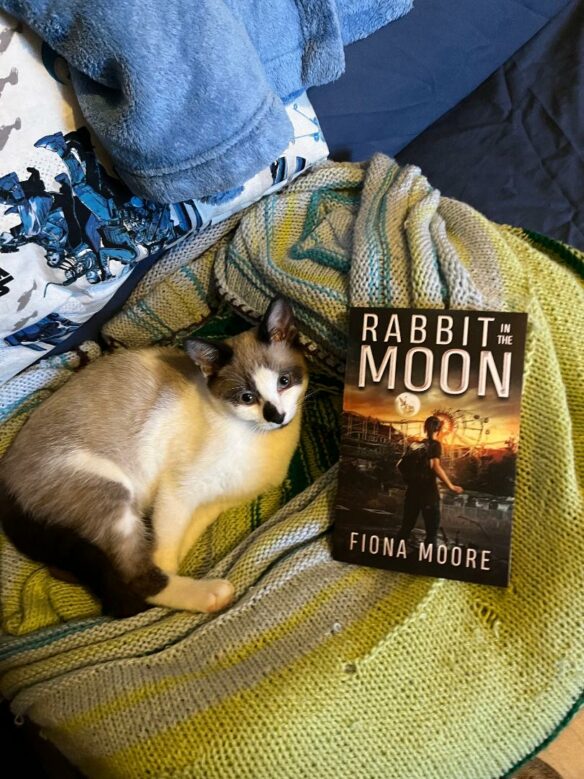
(1) WHO SHOULD WIN THE BRITISH FANTASY AWARDS? The suggestions list for this year’s British Fantasy Awards is now open. Anyone can add their favorite SFF titles first published in 2025. “British Fantasy Awards 2026 Suggestions”.
(2) EARLY GRADUATION. “’Star Trek: Starfleet Academy’ to End With Season 2” reports Variety.
“Star Trek: Starfleet Academy” will end with its upcoming second season, Variety has learned exclusively.
The show was originally picked up at Paramount+ in 2023, with the streamer renewing the show for a second season before the first had aired. The first season debuted in January and aired its season finale on March 12, while the second season recently wrapped production….
… The first season of “Starfleet Academy” reached an 87% critical approval rating on Rotten Tomatoes, with Variety‘s Aramide Tinubu describing it as a “delightful entry point” into the franchise. But the show failed to find a significant audience. Across its 10-episode first season, it has failed to rank on the Nielsen Top 10 streaming viewership charts….
(3) SNAPE ACTOR GETS THREATS. “’Harry Potter’ star details racist ‘abuse’ after joining upcoming TV show” – Entertainment Weekly has the story.
Paapa Essiedu is speaking out on “abuse” he’s endured since being cast as Severus Snape in HBO’s upcoming Harry Potter series.
“I’ve been told, ‘Quit, or I’ll murder you,'” the actor told The Times in career-spanning interview published Saturday.
Essiedu is English of Ghanian descent. Though he’s played famous figures like George Boleyn (Channel 5’s Anne Boleyn) and beloved characters from the literary canon (he played Romeo in a 2015 production of Romeo and Juliet) alike, he shared that the Harry Potter casting has brought out the most vicious racist backlash.
“The reality is that if I look at Instagram I will see somebody saying, ‘I’m going to come to your house and kill you,'” he said. “While I hope I’ll be okay, nobody should have to encounter this for doing their job.”
(4) OKORAFOR AWARD ARRIVES. Nnedi Okorafor has posted a video on Facebook of her NAACP Image Award trophy. She won it for her novel Death of the Author.
(5) SF 101. Episode 63 of Phil Nichols and Colin Kuskie’s Science Fiction 101 podcast takes listeners “Back to the Futures”.

This time on Science Fiction 101, we take some trips down memory lane to revisit classic time travel movies. We mostly focus on the Back to the Future series, but also a couple of wildcards: Primer (2004, Colin’s pick) and Peggy Sue Got Married (1986, Phil’s pick).
(6) SFF INTERVIEWS COLLECTED. The latest book from Space Cowboy is James Machell’s Human Voices, Alien Conversations.
Human Voices, Alien Conversations is a tour through the modern world of speculative fiction, featuring a variety of perspectives. Authors, critics, editors, and artists, legends and new talents, reflect on their passage through words. Interviewees include a TV star turned novelist, the first transgender woman to win a Hugo Award, and the editor of The Best Science Fiction of the Year (2016 – ).
The book takes the form of a literal journey, opening with James Machell stepping off a plane to explore SF. Along the way, he learns the secrets of non-fiction writing from the co-editor and biggest contributor to The Encyclopedia of Science Fiction. The intricacies of world building are explained by a bestselling author of epic fantasy. He discovers the background to some of the most iconic images in SF from their artists as well as the literature that inspired them. “Would artificially created animals be kosher to eat?” is just one of the conundrums traversed.
Featuring candid discussions about creative doubt, the pressures of making art under late capitalism, and how AI threatens a new generation of creatives, Human Voices, Alien Conversations snapshots SF before its predictions come true.
Interviews with: Ken Liu, Bogi Takács, Paolo Bacigalupi, John Picacio, John Clute, Samuel R. Delany, Samantha Mills, Jeff Noon, Steven Youll, P. Djèlí Clark, Chris Moore, Ai Jiang, Cheryl Morgan, Neil Clarke, Pat Cadigan, & Matthew Holness.
Currently available for pre-order and releases on June 1.

(7) SAM KIETH (1963-2026). “Sam Kieth, Comic Artist, Creator of The Maxx and Co-Creator of Sandman, Passes Away at 63”. The CBR.com profile contains many examples of Kieth’s fascinating art.
Sam Kieth, the beloved comic book artist who co-created The Sandman with Neil Gaiman and Mike Dringenberg in 1988, became one of the most popular Wolverine artists in the business in the early 1990s, and created the hit comic book series (which later became an iconic cartoon on MTV), The Maxx, has passed away at the age of 63.
Rich Johnston has confirmed that the acclaimed artist has passed away from Lewy Body Dementia. He is survived by his wife of 43 years, Kathy Kieth.
Kieth made his comic book debut in 1983 while he was just 20 years old in Comico Primer #5 (the same anthology series where Matt Wagner debuted Grendel in 1982), with a short story about a killer hare named Max…
(8) VALERIE PERRINE (1943-2026). “Valerie Perrine Dead: ‘Superman’, ‘Lenny’, ‘Slaughterhouse-Five’ Actor Was 82” – Deadline profiles her career.
Valerie Perrine, whose memorable film roles included a porn actress abducted by aliens in Slaughterhouse-Five, Lex Luthor’s secretary in two Superman films and an Oscar-nominated performance as the wife of Lenny Bruce in Lenny, died Monday at her home in Beverly Hills following a 15-year battle with Parkinson’s disease. She was 82.
… In 1973, Perrine was cast in the PBS presentation of Bruce Jay Friedman’s acclaimed hit Off Broadway play Steambath, a performance that’s often credited for including the first appearance of naked female breasts in network TV history….
If Perrine’s performances to that point had been as infamous as famous, she proved any naysayers wrong in 1974 when she gave an Oscar-nominated (and Cannes-winning) performance in Bob Fosse’s Lenny, playing Lenny Bruce’s stripper wife Honey Bruce opposite Dustin Hoffman’s title character. She followed up that role by appearing two years later in Arthur Hiller’s well-received W.C. Fields biopic W.C. and Me; she played the classic comic’s mistress Carlotta Monti opposite Rod Steiger.
In what would become a signature role, Perrine took on the role of Miss Eve Teschmacher, girlfriend of villain Lex Luthor (Gene Hackman), in the wildly popular Superman (1978) and its sequel Superman II, both starring Christopher Reeve in the title role.
Perrine’s winning streak hit a wall in 1980 when she appeared in the notorious Village People flop Can’t Stop the Music, a performance that earned her a Razzie Award nomination. “It ruined my career,” she later said. “I moved to Europe after, I was so embarrassed.”
If Can’t Stop the Music stalled Perrine’s appearances in top-line projects — as it did with most others associated with it — she nonetheless continued working….
(9) CARRIE ANNE FLEMING (1974-2026). “Canadian actress Carrie Anne Fleming dead at 51” reports The Province.
She died on Feb. 26 in Sidney, B.C., according to Variety.
Her Supernatural co-star Jim Beaver confirmed to the outlet that Fleming died of breast cancer complications.
“My friend, my lover, my bright light, my beautiful costar Carrie Anne Fleming, who played Bobby Singer’s wife Karen on Supernatural died on Thursday, February 26, after confronting cancer for a long time. My heart is broken,” Beaver wrote in a post on the social-media platform Bluesky….
… In 2005, she was cast by director Dario Argento in his show Masters of Horror, playing a disfigured woman with cannibalistic leanings in her Jennifer episode.
She also appeared in various horror shows, including The Tooth Fairy and Bloodsuckers.
Fleming had a recurring role on the popular CW drama show Supernatural, playing Karen Singer, the wife of main character Bobby Singer….
…Fleming’s recurring role on CW’s iZombie had her playing Candy Baker for five seasons….
(10) TODAY’S BIRTHDAY.
[Written by Cora Buhlert.]
March 23, 1904 — H. Beam Piper. (Died 1964.)
By Cora Buhlert:
Content warning: Discussion of suicide.
Considering how well regarded he was and still is as an author, we know surprisingly little about him. For example, we don’t know whether the H stands for Henry, Horace or Herbert. And while we know how he died, we don’t know exactly when or why.
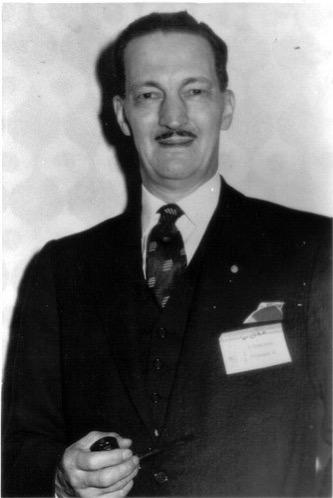
There’s a lot of evidence that the H stood for “Henry” (it’s on census records, his WW2 draft card, and his gravestone), but there is evidence for Horace and Herbert as well.
H. Beam Piper never received a formal higher education, because he considered the college experience unpleasant, but instead educated himself in science, engineering and history. He worked as a laborer and later as a night watchman at the railroad yard in his hometown.
At some point, Piper began to write and in 1947 at age 43 he sold his first story “Time and Time Again” to John W. Campbell at Astounding Science Fiction. More stories followed, both for Astounding and other magazines. In 1961, finally, Piper published his first novel, the juvenile Four-Day-Planet. On the planet Fenris, a year is only four days long, but each of those days lasts four thousand hours with extreme temperatures. Giant whale-like creatures roam the seas of Fenris and are hunted for their valuable tallow wax, which makes for excellent radiation shielding. Protagonist Walt Boyd is a seventeen-year-old boy reporter, who gets entangled in a conflict between the whalers guild and the corrupt mayor of Fenris and some equally corrupt business people. Basically, this is Tintin and the Space Whalers with a bonus message about the importance of formal education, which is ironic considering Piper’s own life. I have read Four-Day-Planet and enjoyed it quite a bit as a fun science fiction adventure.
However, my introduction to Piper’s work was not Four-Day-Planet, but what is probably his best-known work, the 1962 novel Little Fuzzy. I discovered the book as a teenager at Storm, the one bookshop in town with an extensive foreign language section. Most of that foreign language section actually consisted of dictionaries. There was also a table where one could peruse the huge Books-in-Print catalogues as well as a special order desk, where you could order any book listed in those giant catalogues. That special order desk was always busy with university students ordering otherwise unavailable textbooks and literature. Annoyingly, those students also kept staring at me, especially the male ones, and I was sure that they were judging my reading choices. Yes, I was quite dense.
The foreign language section at Storm also has two spinner racks with mass market paperbacks. The paperbacks in those spinner racks were almost entirely genre fiction. Romance, crime and mystery and of course science fiction, fantasy and horror. Whenever I was in the city center, I would stop at Storm (which still exists, though much diminished), head up to the foreign language section on the first floor and check out the spinner racks for anything that caught my eye, all the while dodging annoying male students staring at me. I discovered a lot of great authors and books in those spinner racks. And one day, I discovered Little Fuzzy, the 1980s Ace Books edition with the Michael Whelan cover of protagonist Jack Holloway surrounded by Fuzzies. The books caught my eye at once, because the Fuzzies were not only cute, but they looked just like the Ewoks from Return of the Jedi. Indeed, Little Fuzzy is widely considered to be the inspiration for the Ewoks and the parallels are quite obvious. The cover intrigued me enough that I plopped down my hard earned pocket money to buy the book. And English language mass market paperbacks were expensive in the 1980s due to the bad exchange rate and high import duties.
On the planet Zarathustra, prospector Jack Holloway discovers a furry alien creature he names Little Fuzzy. Little Fuzzy takes Jack to meet the rest of his tribe and Jack realizes that the Fuzzies are intelligent. This causes a problem for the mining company that has set up shop on Zarathustra to exploit the planet’s natural resources, because if the Fuzzies are declared an intelligent species, they and their habitat will be protected by law and the company will lose their mining rights. Being an unscrupulous company in a science fiction novel, they will of course do everything to prevent this, up to and including murder.
My teen self enjoyed Little Fuzzy a whole lot and it’s easy to see why. The plight of the furry aliens and their human protector against the big bad mining company is highly compelling. Though I never read any of the sequels, neither Piper’s own nor those by other authors, mostly because I didn’t know they existed.
One H. Beam Piper novel I did read, though several years later, was Space Viking, which was serialized in Analog from November 1962 to February 1963 and then appeared as a paperback in 1963. Once again, it was the cover – a glorious Michael Whelan cover with the titular space Vikings in front of a bright purple background – which attracted me along with, “Oh, it’s by H. Beam Piper. Cool. I liked Little Fuzzy.”
The protagonist of Space Viking is Lucas Trask, an aristocrat from the planet Gram. Trask is about to marry Lady Elaine, when a spurned former suitor of Elaine’s crashes the wedding and proceeds to gun down the wedding party (shades of the Red Wedding from A Song of Ice and Fire and the Moldavian wedding massacre from Dynasty, though Space Viking predates them both). Elaine is killed but Trask survives and vows revenge. He joins the Space Vikings, a group of space-faring raiders, to go after the killer, who has escaped aboard a stolen spaceship. In the process, Trask winds up establishing a little galactic empire of his own and also finds a new love. And yes, he gets his man, too, in the end.
I enjoyed Space Viking, though not nearly as much as Little Fuzzy. Part of the reason may simply be that I was older when I read Space Viking and more critical. The novel offered plenty of adventure and thrills, but also some irritating politics, including a very American view of emigration and colonization that is common, but also plain wrong. In fact, I remember wondering at the time, “Was Piper always like this and I just didn’t notice?”
Little Fuzzy, Four-Day-Planet and Space Viking are all part of a future history series called the Terro-Human Future History along with the 1963 novel The Cosmic Computer and several pieces of short fiction. The Terro-Human Future History chronicles the rise and fall and rebirth of a galactic civilization and was clearly influenced by the Foundation series by Isaac Asimov.
Piper also wrote the Paratime series, which chronicles the adventures of the Paratime Police who can move between timelines and alternate histories. The Paratime series consists of several pieces of short fiction and one novel, Lord Kalvan of Otherwhen, which was published in 1965 and would be Piper’s final novel.
This brings us to the sad part of this birthday note, namely Piper’s untimely death. It is widely known that Piper committed suicide, but both the reason and the exact date of his death are not known.
What is known is that Piper dated the last entry in his diary November 5, 1964. On November 8, his body was found. Piper had apparently shut off the power and water to his apartment, covered the walls and floors with tarp and shot himself with a handgun from his extensive collection. He left behind a note saying “I don’t like to leave messes when I go away, but if I could have cleaned up any of this mess, I wouldn’t be going away.”
What mess precisely Piper was referring to is not known. The most common explanation is that Piper had financial problems. He had just gone through a painful and costly divorce and his agent was not replying to his letters and calls – due to having died – so Piper assumed his writing career was over. Another explanation is that Piper wanted to prevent his ex-wife from collecting his life insurance payment, so he took his own life to make sure that the insurance company would not pay. Most likely, the reason for his death was a combination of these factors.
More than sixty years after Piper’s death, the legacy that remains is a remarkable body of work, much of which is not only still in print, but is still receiving sequels and prequels written by other authors to this day.
(11) COMICS SECTION.
- Brewster Rockit finds the depressing stories in the library.
- Carpe Diem lists super limitations.
- Saturday Morning Breakfast Cereal gives an interesting twist to the food chain.
(12) TYPO FUN CONTINUES. [Item by John Hertz.] (From Vanamonde 1656.) On my office wall at one of those law reviews [out-of-United-States readers, in our law schools the periodicals we call law reviews are edited by students, an academic honor] I had this “Ode to the Typographical Error”, anonymous so far as I know even yet.
The typographical error
Is a slippery thing and sly.
You can hunt until you’re dizzy,
But somehow it will get by.
Till the forms are off the presses
It is strange how still it keeps,
It shrinks down into a corner
And never stirs or peeps,
That typographical error
Too small for human eyes
Till the ink is on the paper
When it grows to mountain-size.
The editor stares in horror,
Then he grabs his hair and groans;
The copy reader drops his head
Upon his hands and moans.
The remainder of the issues
May be clean as clean can be,
But that typographical error
Is the only thing you see.
(13) WONDER AGAIN. “’Wonder Man’ Renewed for Season 2 at Disney+” reports Variety.
…The news comes around two months after the series launched, with eight episodes of the first season debuting on the streamer on Jan. 27. Yahya Abdul Mateen II and Ben Kingsley starred in the series as Simon Williams and Trevor Slattery, respectively. Both will return for Season 2….
… The news comes around two months after the series launched, with eight episodes of the first season debuting on the streamer on Jan. 27. Yahya Abdul Mateen II and Ben Kingsley starred in the series as Simon Williams and Trevor Slattery, respectively. Both will return for Season 2.…
(14) BREAKER, BREAKER. “NASA’s Hubble unexpectedly catches comet breaking up” – Phys.org has the story.
In a happy twist of fate, NASA’s Hubble Space Telescope witnessed a comet in the act of breaking apart. The chance of that happening while Hubble watched is extraordinarily minuscule. The findings are published in the journal Icarus.
The comet K1, whose full name is C/2025 K1 (ATLAS)—not to be confused with interstellar comet 3I/ATLAS—was not the original target of the Hubble study.
“Sometimes the best science happens by accident,” said co-investigator John Noonan, a research professor in the Department of Physics at Auburn University in Alabama. “This comet got observed because our original comet was not viewable due to some new technical constraints after we won our proposal. We had to find a new target—and right when we observed it, it happened to break apart, which is the slimmest of slim chances.”
Noonan didn’t know K1 was fragmenting until he viewed the images the day after Hubble took them. “While I was taking an initial look at the data, I saw that there were four comets in those images when we only proposed to look at one,” said Noonan. “So we knew this was something really, really special.”…
(15) SCIENTISTS REVIVE ACTIVITY IN FROZEN MOUSE BRAINS FOR THE FIRST TIME. [Item by SF Concatenations Jonathan Cowie.]
‘Cryosleep’ remains the preserve of science fiction, but researchers are getting closer to restoring brain function after deep freezing.
I remember the reproductive biologist and SF fan Jack Cohen telling us that cryogenic suspended animation was impossible. This was back in the day, in the 1980s/1990s when UK Eastercon programming was diverse (talks, games, interviews, films etc) and not largely wall-to-wall filler panels. Jack was one of a number of semi-regular Eastercon speakers. His talks were a bit of a romp and always great fun. He told us on time that the SF trope of cryogenic suspended animation was impossible because you could not get a large brain to flash-freeze fast enough to prevent ice crystals growing and rupturing cells from within. Of course, Jack said, he could do it with small sperm because they were stored in long and very thin cylinders that could be flash-frozen at the necessary speed and so sperm storage this way was possible….
But, back in the day, suspended animation was an SFnal trope – still is – as a way to get to the stars as was used, for example, in the British/US film Alien (1979). All well and good, and now we come up to date.
A news item in Nature reports on new research recently published in which a whole mouse brain was flash frozen for days and then thawed out. Cutting the brain into slices they could test individual neuron response to electrical stimuli and the neurons’ responses to electrical stimuli were near normal.
The method necessitates the brain being saturated with cryopreservation chemicals before being rapidly cooled using liquid nitrogen at −196 ºC. They were then kept in a freezer at −150 ºC. However because the researchers sliced and diced to test neurons, rather than assemblages of them, they were unable to determine whether the animals’ memories had survived cryopreservation. But that could come.
While there is a very, very long way to go before cryogenic suspended animation is achieved, (if it ever is?) the techniques could lead the way to better tissue and organ preservation for biomedical use.
See Thompson, T. (2026) “Scientists revive activity in frozen mouse brains for the first time”. Nature. vol. 651, p563-4.

[Thanks to SF Concatenation’s Jonathan Cowie, Mark Roth-Whitworth, Kathy Sullivan, John Hertz, Danny Sichel, Steven French, Mike Kennedy, Andrew Porter, John King Tarpinian, and Cat Eldridge for some of these stories. Title credit belongs to File 770 contributing editor of the day Steve Davidson.]