Feeds:
Posts
Comments

Archive for the ‘journal’ Category

Image

We’re a little further up the Ribble Valley today at Hurst Green. It’s a cloudy bright sort of day with a fresh wind, the meadows glowering darkly one moment and glowing a lush green the next. The hedgerows closer to home are already in leaf, but here, not an hour’s drive away, it’s still early in the season, trees bare and gaunt in silhouette from afar, and you have to get up close to see they’re budding. It’s the Tolkien Trail today, a loop of the rivers Hodder and Ribble amid some fine, rolling Lancashire scenery. It’s about a year since I last came this way, in tow with a whimsical Galadriel, as I recall. But she’s keeping a low profile today.

Image
The Alms Houses – Hurst Green

Speaking of Galadriel, I’m reminded how elves can at times be as warlike as humans, but their legends don’t depict them being anywhere near as stupid. As we walk we’re mindful the world is shaking to its foundations. The Strait of Hormuz is now closed, a predictable response to the bombing of Iran. As of this morning, UK fuel prices haven’t moved much, but they will, when strategic reserves run out. Then there’ll be panic-buying. All of that will come, but I’m conscious our inconvenience is insignificant, compared with the suffering of others who have munitions raining down upon their towns and cities. Of course, we’ve had Middle-Eastern conflicts before, but there seems a particularly unhinged madness about this one, and I have a bad feeling about it.

There’s a roaring in the trees as we come down to Over Hacking wood and approach the Hodder. Pines soar here, closely packed, and they clatter ominously above like bamboo chimes as we pass, the wind stirring them. Some are freshly fallen, bearing the bright scars of newly splintered wood, the soft earth cratered at their base.

It’s a route I’ve pretty much photographed to death. Still, find myself pausing at the same view-points, looking for something new in the details. Mostly the light isn’t promising, the sun slipping behind cloud at the wrong moments, then on we go. The triptych of trees here, seen from the track leading down from Hodder Place, I’ve not noticed before, so loiter awhile, waiting for light.

Image

But as I wait, I find it hard to avoid the sense that it’s becoming more difficult to find beauty in the passing detail, in the small, like this, when there’s so much going on in the world now that is irredeemably, and profoundly ugly. We woke up this morning to images of burning tankers in the Persian Gulf, and here we are waiting for the light to shine on some trees. At what point does that become ridiculous? When is it less of a resistance to the Zeitgeist and more a refuge from things we cannot alter? Perhaps it’s both. Or perhaps such things become even more important, the uglier the world becomes.

It’s striking how commentators still assume there is a reason for it all, yet even the most informed appear to be struggling with this one. For myself, observing such things from afar, it seems that, once upon a time, terrible acts were undertaken for identifiable reasons, however cynical. Now it more often feels as if explanations have been dispensed with, and confusion itself has become the atmosphere, indeed the entire oeuvre of power. Thus have our leaders moved beyond explanation. They have nothing useful, nothing intelligible to say to us, inhabiting as they do their own world, as do we ours. What this means for our futures is unclear, but disturbing all the same – our certainties shrinking to a bubble no greater than might fit in the palm of your hand, or through the all too selective viewfinder of a camera.

Image
Cromwell’s Bridge – River Hodder

Lunch is by the Hodder, a stretch of pebbled bank where one can get down to the waterside. We’ve had plentiful rains recently, including torrents overnight, so the river is high and deep voiced. There’s plenty of company here, with other walkers and dogs, and the usual detritus – bottles and beer cans and the almost obligatory bags of dog-dog muck. The Tolkien Trail is always well walked, even midweek. I would not think to attempt it at the weekends. The Hodder is reflecting sunlight here, an alluring sparkle to it as it slides by, and the trees on the opposite bank roar in the wind, a touch of March Madness about them.

I filled the car this morning, burned about a gallon on the way over here, another gallon by the time I get home. It used to be I’d be panicking about conserving fuel, needing it for the commute. There was no such thing as home working during previous fuel-shocks, and I recall a particularly inflexible attitude on behalf of employers, too. Unlike in past crises though we now have far more electric vehicles on the road. You can pick used ones up very cheaply, though their battery life is probably much reduced now, with uncertainty over longevity and the cost of replacement. Still, they’d be fine for knocking about locally. Were I in a bind, and still having to commute, I’d be considering an older model as a backup now, though as it is, I can probably ride out at least some of what is coming our way.

Image
The Winkley Oak

We don’t linger over lunch but press on, making our way by Cromwell’s Bridge, up the hill, cross the meadow to Winkley Hall and the Piggery. Here we pick up the broader sweep of the Ribble, the newly diverted path no longer taking us by the spectacular oak, but here it is, captured in other times. Instead, we have this old tractor by the wayside – always something Stoic about them, I think. It doesn’t look to be in working condition, but I’ve seen worse, and still running. How many seasons, I wonder, ploughing the earth? It speaks of continuity, of certainty, of return.

Image

We have a clear path now back to Hurst Green, most of it in company with the run of the river. Up ahead there’s another walker, what looks like a tall young woman, long auburn hair and a Barbour jacket, nipped at the waist. She has a graceful, upright posture. I catch her up as we climb from the valley, to the Shireburn Arms, and exchange greetings in passing. She’s actually getting on in years, a lovely, mature face that smiles easily. We meet again in the coffee shop in Hurst Green, and we exchange a joke, then I’m carrying my coffee-to-go back to the little blue car. It’s looking a bit grey actually, ready for a wash and spruce up.

The woman was interesting – in other times a potential meet-cute of course – but for the writer, it feels more like an introduction to a character who simply has to be written about, after she’s spent some time developing in the imagination. With the world on fire these are such small things, but beautiful in themselves, and we mustn’t forget that.

Sometimes it’s the only thing we have to go on.

Read Full Post »

Image

I find myself caught
Between the tides,
Surrounded by a shallow sea,
With you.
Your heartbeat unfamiliar
But not unkind.
And me,
As always, slow to dance
To rhythms I cannot comfortably circle
With my hips.

But we are not trapped here.
This loneliness is finite,
Familiar in its melancholy,
Transient as birds.
And though the distant shore
Of all we know seems lost,
It is not blackness,
Or treachery that waylays,
More a friendly fate,
I think,
One that in kindness cannot give us up
As flotsam tossed to rot once more,
In mud.

Take then my hand my love,
Until you feel the dance in me
And I in you,
And let us make the rhythm
Of ourselves once more
Our own.

So writes Adrienne Divine, in the poem she promises our protagonist Phil Sampson, this at the end of the story of the tides. Written in late 2012, first self-published in 2013, with records suggesting a minor revision in 2017. Not sure why I picked this one up for revision again, download rates telling me it’s not much looked at any more – just 3 downloads last month. But I wanted to remind myself perhaps of the writer who wrote it, and what he was thinking about in those days, so we’ve had another go at it.

We’ve swept up the usual typos, but also streamlined some of the more verbose passages which perhaps belonged in a novel of their own. And there are changes in language, words, phrases we used back in 2012, that have shifted gear, used lightly then but which carry much greater and unintended weight now. So, we’ve changed those. And the intimate bits, yes I wouldn’t write like that now, so we’ve had a go at cleaning those up. And the ending… the ending should have flowed straight out of chapter 29. I don’t know why I held on for another chapter – perhaps not wanting to part from these characters, with whom I admit I fell in love. So, we took a chunk of that out, which made no difference to anything I could see, and we end with the same closing scene, Adrienne and Phil on their bicycles pedalling back to the mainland after their unintended sojourn between the tides.

A kind of mystical realism, I suppose – the story comes out of the imagination, both of the writer and the protagonists. A literary romance, too, and an exploration of the notion of obscurity. Interesting the references to post-crash economics, and a kind of premonition of the lost decade to come. It’s an attempt also to establish a foothold in the idea there’s no such thing as an obscure life. Do I succeed in that? I don’t know, it’s for the reader to judge. But do we have a story worth the telling? Yes, I think we got away with it.

So, a better version this time round, I hope, and a couple of days enjoyably spent listening to the voice of a younger self. And yes, those fourteen intervening years have changed me. I feel it in the prose. But he’s still there in this version. I’ve not been so severe as to erase him. The new revision is out now. If you’ve not read this one from me, and you’re looking for something different, why not give it a go?

It’s free.

Read Full Post »

Image

Early March, now, and the season of yellowing. Hazel and willow catkins hang from branches like exotic caterpillars, drying themselves. Clutches of daffodils nod in the breeze, and the starry heads of celandines brighten the first light-dappled greening of the woodland floor. It’s a cold sun, but our movement these last few miles grants us the impression of warmth. We find a bench by the murmuring river and sit down to rest.

We’re just a little upstream from Ribchester here, making way towards Dinkley, having in mind a short circuit of the Ribble Valley, and it’s proving to be far enough on wobbly legs. We’ve been out several days in a row now, and we’ve either tired ourselves out, or it’s the shingles jab we had that’s having unexpected side effects.

“You might feel like you’re coming down with something,” the nurse said.

Which would explain it. So, we’ll take our time. We’ll be fine.

It’s not an attractive bit, this stretch of the Ribble, and the lack of foliage reveals much we’d prefer remained hidden. The trees and bushes along the bank are hung with all the trash washed down, some of it from farms – plastic sacking and canisters of ominous and garish colouring. But it’s mostly the petty consumerist trash – the beer-cans, the bottles, the discarded wrappers, all of it heading out to sea, a long slow, infinite outpouring of human detritus. This is our gift to nature, product of a confused sense of who we are, of an imagined separateness, indeed an outright denial of the finiteness of the earth, and its capacity to forgive our childish ways.

We’re covering some old ground today, not just on foot but in our heads as well. From time to time long forgotten writings surface in the blog stats, and serve to remind us of forgotten byways. It’s surprising how we forget these things. I suppose we absorb the ideas, stripped of the detail, and simply move on, but I was once intensely preoccupied with the idea of identity, and it seems that’s what we’re thinking about again today.

Expressions of identity are all the rage of course, but we do far better if we can work out how to shed them. So, who am I? Right now I am just a guy sitting on a bench in the early spring sunshine, listening to the river. That’s all. Anything I add to that description is mere decoration. We used to equate the question of identity with what we did: plumber, poet, engineer. But the world is changing, and jobs are shrinking to a mere flotsam that seems unworthy of pinning something so precious as our identity upon it. We have AI stripping work away from us, or we may be entering retirement and looking for a new identity, or we may be clinging to an identity, courtesy of a former career and to which we no longer have any real connection. I write poetry, fiction, and I keep a blog now. Does that make me a writer and poet? I can call myself that if I want, but it never seems to sit right. No, I am just this guy sitting on a bench by the river.

We take a breath, let it out slow, extend our awareness into the body, open up a gap between the rush of thought, and the softer spaciousness of the inner self. It can be a tight squeeze, but if we can manage it we find in that gap there’s no past or future, no identity, no reputation to be protected. There’s just the river, this low, bright sunlight, and the movement of the breath. It’s not empty – quite the opposite. We sense a fullness and, sliding a hand into that gap, we peel the sides apart and, shedding all thoughts of who we think we are, we step inside.

There we find the presence behind the human, a presence in the world, rather than something pre-defined by culture, or by a label attached to us by ourselves or others. And through that presence we find we are not our thoughts or our feelings. We are more simply the awareness of those things, or every thing. Spiritual teachers will go further and tell us our awareness, the sense of self looking out at the world through our eyes, is the same awareness looking out through everyone else’s. But that’s not an easy thing to get across, or to accept, conditioned as we are, and increasingly so, into a sense of our own profound isolation.

Our times have seen a dramatic shedding of the old ways of belonging, making it all but impossible to find or even to take seriously the idea of meaning. Workplaces, faith-groups, pubs… all are in decline. Meanwhile, consumer culture promises fulfilment but, like all these bottles and cans down there on the riverbank, it delivers only an emptiness to be discarded, rather than something genuine to be adopted and worn for life. And then the rise of our identitarian culture offers so many off-the-peg identities, all of which might feel meaningful in the moment, though often built on nothing more than grievance, or victimhood. And of course, we have the ever present peddlers of “life-style”, false identities, like bubble gum, briefly consumed, soon to lose its flavour and discarded.

We are hungry for belonging, yet look for it in all the wrong places. There is no community, no identity in a mobile phone – absurd to think there might be – yet increasingly, we feel that’s our best shot. Imagine any crowded room of people at their ease, be they strangers, or even friends and family, most faces lit by the glow of screens, and the promise of diversion, of transportation from the here and now, to somewhere else – to a place of promise, a place of meaning. We scroll for connection, finding only fragmented shards, a thousand ways to perform an identity, to enter into community – likes, shares, comments – but no way to simply be. It is a mirrored labyrinth of algorithmic bait-and-switch, yet we keep scrolling, hoping the next post, the next notification, will tell us who we are.

We have forgotten. Who we are lies entirely in this gap of stillness, in this shedding of all decoration, of all identity. And the paradox? It’s just a breath away, the realisation we are at the same time nobody, going nowhere, yet also, and at all times, we are the world and all that’s in it. Of course the trick is to stay in that space, while we get up from this bench, and continue on our way along the river. But that’s not easy in a fractured world, where such teachings might be considered unhelpful anyway, a world where division and isolation serve a greater, if less wholesome purpose.

Thanks for listening

Read Full Post »

Image

The little blue car is full of winter sleep and grime, as am I – sleep at least. There’s been heavy rain overnight, the morning sky is oppressive, and the roads are splashy. But once under way, and the car warms, we begin to feel more optimistic. Then there’s this age old “last Friday of February” thinking, that Glasson has yet to turn us away. Indeed, though the meadows have often been under flood, the sun usually shines against the odds. And so it proves again today, the inland gloom and intermittent drizzle peeling away miraculously as we come up to the harbour. And then a hazy sun breaks through.

Oh, but there was such an accumulation of doubt, diversion and discouragement this year, I wondered if it was not better to let day go. After all, I’ve been coming to Glasson now on this particular day for 12 years, and I don’t know why. It’s more than shaking off the winter, more than striking out again after a long confinement, trapped by weather and short days.

I could try arguing there’s something poetic about it, an alliteration of “Friday” and “February”, but then why not the “the First Friday of February”, which is even more alliterative? Sure, this hanging on is making less sense as the years pass, even without events conspiring against us. Perhaps it comes down most of all to a defence of eccentricity, for holding firmly to an idea without needing to know the reasons why. And it’s about not having to explain it to yourself, or anyone else.

Image

Our determination today is rewarded by sight of the magnificent schooner “Helene” tied up, and now resident, at Glasson basin. Built in Sweden in 1916, she’s owned by the Mersey Trust, who have plans to refit her. A stately tall ship with beautiful lines, she commands tremendous presence.

The forecast for today wasn’t promising. Even less promising, the little blue car desperately needs a new battery, and is cranking very sluggishly. A tired battery puts out 12.4 volts. This one is down to 12.3, so I’ve taken a bit of a risk bringing her out, but I’ve promised her a new battery tomorrow if she sees us home all right.

I suppose another thing that brings me out this way is the stability of the landscape. Not much changes over time, so you have the feel of recreating the same day, and I like to compare my impressions over time. There are changes in Glasson of course, but they’re mixed and subtle. The Victoria Inn is still an abandoned shell, the Lockkeeper’s Rest is still serving tea and biker’s lunches, and the familiar boats come and go. And then there’s the walk, the same route down to Cockerham marsh, and back along the Lancashire Coastal Way. Tide in, tide out, wading birds of all variety, the constancy of nature.

Image

There were shouty signs around the Thursland Hill fishery about keeping to the path, which is now fenced in. This is an increasingly popular trend among landowners, which soon renders the paths impassable due to concentrated footfall turning the ground to a deep slime. The meadows were indeed heavy going, but they’ve been worse, and the coastal path around by the abbey’s chapter house is seeing some devastating erosion. Finally, Jansen Pool in flood, even at low tide, required the usual ingenuity to cross. Then it’s back to Glasson for a bacon sandwich and a mug of tea at the Lockkeepers and, today, in the shadow of that beautiful old ship.

Image

Back in the day when I used to mentor youth, I had the pleasure of working with a young woman who crewed tall ships for fun. I’m reminded of her as I gaze up in the rigging of this craft and feel myself going giddy at the thought of scrambling up there. Oh no, she assured me, that was the best bit. Although necessary, I suppose, in the sailing of tall ships, it seemed still a terrible risk. That she enjoyed it though needed no explanation, and I certainly didn’t ask for one.

Anyway, we seem to have gobbled up the walk at pace, amid a race of thoughts, some of which are catching up with us now as we enjoy our mug of tea. I realise for myself there’s something of a void opening up, a kind of creative exhaustion following the self publication of another novel. I’m not sure what’s been going on with the process recently. In the old days, I would live inside a novel for a year or more, but the last two have come with such an intensity – eighty thousand words, in a couple of months.

Image

The poetry journals, too, are filling up faster than they used to do. I thought I was done, actually, but it seems we’re not. But like this day, the last Friday of February, and a mug of tea at the Lockkeepers, there’s something Quixotic about it. The work is the work, and I know some of you do read it, and I do appreciate that, but one cannot help butting up the rationalist question: whom does it serve?

The answer of course is not a rational one, so we may be up against one of those philosophical category errors, though the question: whom does it serve, reminds me of that question from the grail myth: Whom does the grail serve? It is the right question, says the myth, and the right answer is it serves the King. But who is the King?

Image

Some versions say the King is you, but maybe a better answer is that the King is the ideal within yourself you serve. And what is the ideal? Is it merely fidelity to a craft that has chosen us? Is it that we feel our audience is not so much mortal but more related to soul and the deepening into a shape we have always been becoming? And then, I suppose, like the eccentricity of keeping to this last Friday of February, the answer’s not exactly clear, and needs no explanation anyway other than that the daemon keeps us at it. And that’s answer enough for me.

So, we peel off the boots, somewhat gingerly, them being coated in a great deal of mud, and we grab the last few shots of the lovely schooner, Helene, then settle in the little blue car and turn the key…

She’s painfully slow on the turnover, but the engine starts, and we make it home okay. And as promised, I go out and buy a new battery. We can both use the energy.

Image

About 7 miles round. Dead flat, some seasonal heavy going through waterlogged meadows.

Read Full Post »

Image

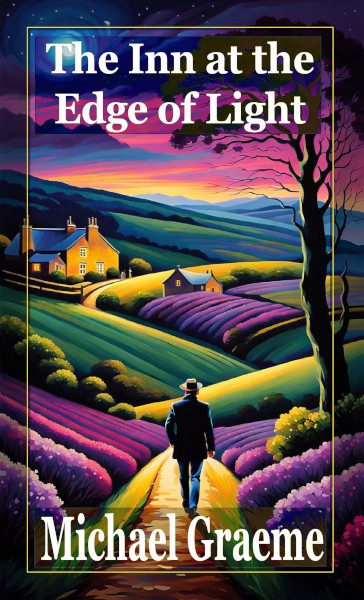
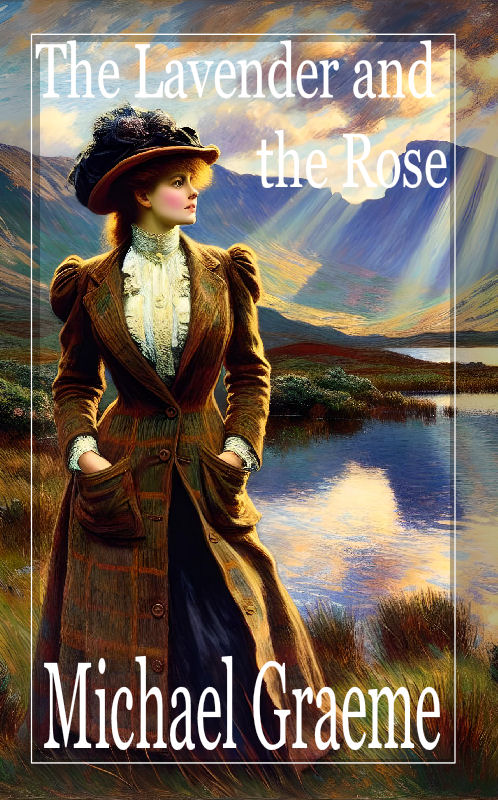
My thanks as aways to those who have read my longer stories. This is just an update on the status of my most recent work in progress, which I’m happy to say is now finished, and available in e-book format here. Although essentially a sequel to my previous story, Beyond Saturn’s Gate, it’s not necessary to have read that one first. If I’ve done this right, you should be able to pick up the various characters and their back-stories seamlessly.

Our protagonist, the poet, Richard Hunter, is now over-wintering quietly at Hill Top, his off grid retreat in the Yorkshire Dales. As usual, he’s concerning himself with living as a poet, living as if dreams matter, and that the imaginal world is objectively real. But when a forgotten Romano-British river goddess begins appearing in the dreams of people he knows, and then a fallen American tech billionaire, Larry Elliot, arrives to restore the old village rectory, Richard finds himself caught between worlds.

As his dearest friend, the curate, Amanda Beckinsdale, faces exile from the parish, and his mysterious housekeeper, Miriam Doyle, brings an ever deepening presence into his life, Richard must navigate the strange hinterland between metaphysics and materialism, between dream reading, and real world action. The goddess appears to demand recognition, while Elliot demands a forgetting, for fear of his past catching up with him, and Richard must learn what it means to explore the labyrinth of both a profane and a mythic mystery, without claiming to know the way out of either.

This is a literary fiction about taking dreams seriously, and about the role of the arts in preserving the patterns and the beauty of our human culture as we move into a late-world dynamic of a creeping authoritarianism and barbarism. As a poet Richard realises his role is not that of the hero, but more subtle, as artist, and archivist, to lay the thread that prevents our heroes from becoming monsters themselves.

That’s the gist of it anyway. I apologise in advance for all the typos that must still remain, but I’ll sweep those up no doubt when I next review it.

Thanks for listening

Read Full Post »

Image

Stepping out of the car, we’re met by a moderate rain. Mid-morning at Vaughn’s Café – again. This time, our plan is a circuit, taking in a slice of the Roddlesworth plantations, then up onto Darwen Moor. We have a new lens for the camera, which we were hoping to try out. It’s a super-wide format, the aim being to add a touch of drama to our lone trees and sky, but we’ve left the camera at home. The forecast just didn’t justify bringing it out.

The lens is an old one, and designed for use with my make of camera – though, it turns out, not my specific model. It still works as a lens, but it doesn’t automatically focus. Now, this should be no hardship since, once upon a time, all our focusing was done manually. We chose the subject, then turned the dial until it was sharp. I could have got the lens a lot cheaper from other sellers if I’d known. Anyway, that’s another story, but it has us thinking about focus and doing things automatically, in metaphorical ways, like sometimes how we roll from bed of a morning, draw back the curtains on yet another flake-white Lowry sky, before rolling automatically back in.

So, we click our imaginary lens from auto to manual, we pick our day, and just go for it. And here we are, the sky more the colour of lead than flake-white, cloud-base so low you can reach up and touch it, and then the rain. It’s never a good sign, having to pull on full waterproofs at the start of a walk, but may the rain wash us clean. I imagined I had found a way of stepping aside from the news cycle, of no longer being triggered by ‘events’, but the world has more recently caught onto me, changed tactics, and now I cannot look at it without feeling unclean.

The forest ways through Roddlesworth are heavy going, dark, and the trees dripping, the paths doubling as lively streams. The body warms quickly under several layers, though the fingers still ache from cold. I have a new waterproof outer which is performing well, the rain beading up and running off, at least for a time. But after a couple of hours, the fabric is starting to wet out and no longer breathable, so we begin to wet from the inside as condensation soaks back into the mid-layers.

We make our way over towards Darwen, through Sunnyhurst, then a brief rest and a stand-up lunch in the shelter of the lych gate, before tackling the climb onto the moor. There’s been no let-up in the rain, and a stiffening breeze now, as the landscape becomes more exposed. But the wind is to our backs, so it helps, rather than hinders. I’m still exercising the legs of a morning with a dumbbell – still not sure if it’s making a difference on the hill, but anything that gets the heart pumping is doing some good, so long as we’re not overdoing it.

There’s a forbidding bleakness to Darwen moor at the best of times, but on a day like this, it’s particularly challenging to the spirit. Interesting now, the proliferation of leaky dams and berms – the moor being engineered to hold water, of which there is plenty today. We make a somewhat bumbling return through the woods, past Sipper Lowe, back to Vaughn’s, slithering in mud as we go.

The car is a relief to see, though I’m almost too weary to pull the gear off. The waterproof trousers have leaked through the pocket slits leaving big cold patches on my thighs. And, as suspected, I’m wet down to the mid-layer from condensation. It was a longish walk, about eight miles at pace, not much by way of meditation, no messing about with photographs. I’m not sure if the day has washed me clean, but that cup of tea in Vaughn’s café was most welcome. We emerge from the steamy interior mid-afternoon to an already fading light, and the rain had stopped.

We’re feeling cold of a sudden, and in need of a hot bath. Back at the car, we set the heater on full and reach for the radio, then think better of it, and drive home in silence. It is plain now that, at a certain elevated – indeed stratospheric – level, the world has always been this dirty. Yet, I’m sure the majority of us bring our children up to believe in magic and kindness, and I still think that’s right. We imagine the damage comes only from the stranger, the predator, the one who lurks at the margins of society, yet some of them are also riding very high, indeed running and shaping the world in their own image.

Perhaps the rain did not wash us entirely clean then, but for a short time at least it has brought the world back into a cleaner focus. It’s shown us how it’s not always wise to go with what comes to us automatically, because it may not be trustworthy. And it reminds us that in order to see clearly, to choose what we look at, instead of having it chosen for us, we have to switch that imaginary lens back to manual. And if we can do that, then even splashing through the wet and the cold of a Lancashire upland in the depths of winter, carries its own form of innocent grace.

Image

Read Full Post »

Image

You catch up with me on the causeway between the Anglezarke and the Upper Rivington Reservoirs. It’s a clear day with an unblemished blue of sky, and a bright sun with no heat in it. It’s only my second outing this year, and January is all but done, now. I suppose that’s the problem when we can pick our days – we tend to hold out for the best of the forecast and save the inclement weather for indoor things: for housework, for writing, or just staying cosy in bed.

And then of course, with its storms, interspersed by interminable grey, the year seems to have kicked off with a mixture of rage and depression. The sparkle has been sadly lacking, but today looks like one of those days sent to rescue us all from oblivion. That said, the forecast was a bit hysterical last night with warnings about a hard frost and ice, neither of which transpired. It’s definitely cold though, as we step out to embrace the air and fasten on our boots.

The Anglezarke reservoir is still low, the last of the reservoirs to fill – the rest of them, from Roddlesworth to the Lower Rivington being now brim-top after all the rains. We take the path by the spillway, a shortcut up to the Yarrow, then loop round to the Parson’s Bullough road. If there was going to be ice anywhere this morning, it would be here, but the way is clear. The moor is shedding water, a bright new spring running down the path, and pooling by the corner of Allance bridge.

Image

Here we take the steep meadow way, up to the finger post on the skyline, and catch our first views of the day – bare trees, and bright contrasts. Indeed, the sun is so bright here the highlights are burning out in the camera, and in my watery eyes too. I’ve been trying to keep the leg muscles in shape over winter by doing squats with one of the dumbbells the kids left behind. It doesn’t seem to have worked. By the time we reach the finger post we’re ready for a long pause and a fiddle with the camera.

The oak trees up Twitch Hills have survived the storms, and beg their photographs as I pass under their spreading branches. I wouldn’t like to lose these two. Always a tragedy when a grand old tree comes down, though it’s nature’s way, I suppose. We take a breather among the ruins of Peewit Hall – views out to the coast, across the gorgeous green of the hills by Jepson’s farm. They’re replacing a long run of wire here with a traditional hedgerow – looks like hawthorn. If anything can survive up here hawthorn can. This will be a boon for birds when it’s mature. Odd how one hand can be so protective of the environment, while the other is so destructive.

Image

Lunch is a cheese and onion roll from the filling station we called at on the way over, and rendered all the more tasty for being eaten out of doors. All around us there’s the familiarity of long years, and an air of ease. Still no warmth in the sun, but it’s good to be out. I feel a whisper of poetry coming through, just a feeling and a rhythm… no words, yet, but it’s something about the importance of the familiar. Winter’s a hard time for getting out, for exploring further afield, but what we’re looking for in nature can be found anywhere, and no more deeply engaged with than here, amid the familiar. What it triggers is a mysterious blend of comfort and a longing.

While we eat, we set the camera on our bag, along with the binoculars, breathe deep of the air. So far, I’ve seen no one since the causeway, but suddenly there’s a loose dog coming at us like a rocket, so I make a grab for my gear. I’ve nearly lost a camera like that before. It got my lunch instead on that occasion. The dog gets a call from its owner who’s passing on the track above. I don’t get a glance, let alone an apology. It’s almost as if it’s my fault for tempting the dog by sitting at my ease. I find it strange.

Image

I’m reminded of that story by the Zen monk, Thích Nhất Hạnh, about carrying a cup of coffee. Someone runs into you and you spill the coffee. Why did you spill the coffee? You’re tempted to say it’s because someone ran into you, but the answer is because you were carrying coffee. Had you been carrying tea, you would have spilled tea. Someone bumps into you, and you tend to spill whatever you’re carrying.

The fact I didn’t feel anything in particular is perhaps telling in other ways – that I’m perhaps carrying a cup of low expectations towards my fellow man, which isn’t healthy, but there’s also a fairly robust compass in there that’s keeping me aligned in other ways, at least for now. That poem though? It’s gone. The muse must have given it to someone else. I’m sure they’ll do a good job of it.

We almost loop back on ourselves here, taking the path down to Lead Mine’s Clough, and back to Allance Bridge. Then we’re up Hodge Brow to Morris’s Barn, and across the meadows above the Yarrow to Rivington and the tearoom. The tearoom is packed out and steamy, seemingly the whole world on its pension. Including me of course. We plump for a Kit-Kat and a cup of tea, sit out with it.

That poem though? We trawl the memory, but it’s like one of those dreams that slips away in the morning, and there’s just no bringing it back. It doesn’t matter. I know what she meant, even if I can no longer articulate it. It’s a doorway, I suppose, a doorway to a feeling for what the Welsh have as hiraeth. There is no direct English translation, but the closest I can get is that it’s a longing for the world behind the world, a homesickness for a place you can never return to. The Germans have a similar word, at least one that occupies a similar emotional space: Sehnsucht, this being a longing for a home, a world you’ve yet to find. I guess my poem fell somewhere down the gap between the two.

Anyway, that’s it for now. We leave the tearooms, take the path around the old chape1l. It’s a place heavy with shadow and centuries of moss, but where the sun slices in, by the gates… there are snowdrops.

Image

About 5 miles round, 390 feet of moderate up and down.

Thanks for listening

Read Full Post »

Image

The Archivist is probably not the title we’ll end up with. But it works for now. It is a working title. After an autumn of consolidation in terms of ideas, and a few short stories punted out into the wilds, we wake up to find we’re already about a quarter of the way into the next novel. All of which suggests it either has sufficient energy to reach the finish line on its own, or it will explode into uncontrollable chaos at some point in the New Year.

It’s also a sequel to my last story, Beyond Saturn’s Gate. We pick up on some of the themes in that story, seeking to explore them a little further – like how should a poet record the sunset of the western world. Do you shake your fist at it, or settle back quietly and archive the good bits, as they come to a close? But it’s proving interesting in other ways, like trying to write a story a reader can pick up without having to read the previous book first. I’ve never done this before. Usually my characters have had enough of me by the end of a story and want to be left alone, but the current cast has turned up for another production. Well, most of them.

This raises certain problems, like how do you précis incidents from your previous story that have led to already established relationships in this one, without excessive exposition? How do you reference previous plot developments that have led to a present state of affairs, without interrupting the flow of a new story? How do you explain the absence of characters who have no role to play in this story, yet were such a big part of the last? The readers of the new story won’t notice or care, but if they’re following on from the last, they might want to know.

All of this grants us an insight into the difficulties other writers have faced, and the skills they’ve had to deploy. But it’s also interesting, trying to work the puzzle of it. If you’re an indie writer and haven’t attempted it yet, it’s well worth giving it a go.

So, Richard Hunter is still dreaming, still trying to live as a poet, still fathoming his relationship with the Reverend Amanda, and the mysterious Miriam Doyle. Along the way, his inner guides manifest as a talking portrait of his art teacher, and a curiously human-like non-human intelligence called Alice, both of whom attempt to keep him on the straight and narrow. And into this milieu arrives an American refugee, a billionaire subject to sanction, separated from his fortune and his business empire, having run afoul of the incumbent regime.

But the story opens with the journal of the obscure Yorkshire poet Elias Hartgrave in 1836, and his vision of a pagan river goddess. This drops Hunter straight back into the realms of myth and magical thinking. Which is fine until he discovers lots of others are having similar dreams, two hundred years later – in fact, just about everyone but him. Is the river goddess ignoring him on purpose? Is that the only way she can get him to take notice, and do something? But do something about what?

Or so the story seems to want to go at the moment.

All of which is to say, we’re going to have a busy winter, and a coming spring. So, as we drift through this strange interregnum between Yule and the New Year, I’d like to wish you all well, and encourage you to keep faith with whatever projects light you up – be they writing, walking, painting, reading… oh, and try not to mind the headlines too much, as we brace for whatever 2026 might have in store for us.

But most of all, a big thank you, once again, for reading me, for your conversation along the way. And those of you I follow, thank you too for sharing with me the world from your perspective – always stimulating and wholesome – easily the best writing on the Internet.

Best wishes then to all, and I’ll see you on the other side of midnight.

Image

Read Full Post »

Image
Andrew

First of all, my thanks to all who commented on my last piece, enquiring after the health of Andrew. I’m pleased to say he’s responded well to some tinkering, cleaning and a judicious drop of oil. He seems very much his old self again. So, we settle him back into his place, let his ticking resume, forming a gentle background to the days. Well, not so gentle, actually. In fact, he’s quite a lively character, a similar rate of ticking to a wind-up wristwatch – which is quite brisk. If he were any louder, I don’t think my good lady would give him houseroom.

Some of us like a ticking clock, others can’t abide them. I suppose it’s down to whether you were brought up with one or not. Indeed, so sensitive are some of us these days to extraneous noise, there is a market for “silent” bedside clocks – not allowed even to tick softly once per second. We had an early version, which met with my good lady’s approval until I was foolish enough to point out it did tick – just once every fifteen seconds. Claims of insomnia ensued. Fortunately, the newer types are completely silent, so harmony is restored. But oh, how I love a ticking clock!

Perhaps the loudest ticker I have is Norman, banished to my study, back of house. He’s the older brother of my clocks, dating to the inter-war years, probably 1935. He’s typically, beautifully Art-Deco in style, boasts a full Westminster Chime and has the steady beat of a big brass pendulum. The guy I bought him off, some forty years ago, had completely restored him. That guy’s name was Norman.

Norman was a colleague and shop supervisor, though formerly a craftsman. He was originally multi-skilled and possessed an eye for precision. I reckon he would have been apprenticed during the early post-war period. Then, much later, as a manager, he kept returning to the tools for a hobby – restoring old clocks – since the tools, precision metalworking and making, were his calling. Which raises the question: is management a calling?

Image
Norman

In my own later years, working in the engineering industry, it seemed the ambition of many youngsters was to be fast-tracked to project management, bypassing as much of the hands-on stuff as possible. Indeed, I encountered many a callow youth I had to be polite to, as one never knew if one would be working for them in a few years’ time. Very few I met possessed any affinity for tools, or indeed for deep technical work in general. Many could not communicate even basic geometry by drawing, or think in three dimensions, which had once been a prerequisite for an engineering position, and certainly for Norman and me. But the world, it seemed, had moved on. Laptops and spreadsheets were now the tools of the trade.
Norman was close to retirement when I knew him, a grand old silver-haired gentleman – old he seemed at least to me, though no older than I am now, which does not seem very old at all. At least, not to me. Others – those aspirant baby-faced project managers – might disagree.

But again: is management a calling? I don’t mean to downplay the importance of the administrative function, nor the management of projects. Indeed, in our post-industrial societies, it’s pretty much all there is, now, with anything below it strictly minimum-waged. Norman adapted well to his position though, had a reputation for being a fair-minded supervisor, occasionally grumpy, but generally well regarded by his men. And as I say, he shifted his calling into other avenues – took it home with him, to his workshop, his hobby-bench.

But no, as a generic term, I wonder if there is not something more evasive about the calling to management. For another thing I noticed was the mobility: responsibilities were not allowed to become burdensome, so roles were switched. In charge of one thing today, something else tomorrow. You never could pin a professional managerialist down. Norman, on the other hand, took forty years – a slow progression, a deepening, a Herculean shouldering of burdens, and an earned degree of soul.

We might say then a true calling requires weight. There is a kind of gravitational pull that draws a person down into the specificity of their work. A craft does this naturally: it binds you to materials, to process, to the stubbornness of the real. The medical and the teaching professions also do this in their own ways, and have suffered their own dreadful losses in recent times. But management – at least as it is commonly practised – seems almost to have purposely evolved to avoid such gravity.

Indeed, it possesses an airy, mobile, unburdened archetype. One is forever moving on, moving through the next post, the next reorganisation, the next initiative. Nothing is allowed to accumulate, and therefore nothing roots down. Norman, by contrast, let forty years of metal filings settle into his pockets like a ship’s ballast, aiding a steady course. He stayed long enough for the place, the people, even the temper of the machines to shape a character. That is what I hear in the ticking of his clock, now: not efficiency, nor ambition, but depth – something earned.

But like Norman – like me too, I suppose – that kind of workplace, that kind of world, is now largely a thing of the past, and we must let it go. Still, I listen, and I wonder if anything comes close to replacing it, for this is not nostalgia for a lost era; more for a mode of being. These old clocks, you see… they don’t just tell the time. In fact, they’re not about telling the time at all. Your phone will do that much better these days. No, it’s more I think the times they have known. As such, they become the keepers of our stories. And the best stories don’t just look back with fondness for something lost. They ask questions about our future.

Have a think about it. What objects in your own life carry the weight of stories? What do they say about the world we’ve lost – or gained?

Read Full Post »

Image

The problem with the likes of Andrew is the times they find themselves in. They’re okay while they’re still ticking along – a little old-fashioned maybe, but there’s always room for nostalgia. The trouble starts when they become unreliable. Then, as often as not, they find themselves on the scrapper. It’s a pity because with only a little attention, a little love and care, they could be kept going nicely. It’s just that no one has the time for them any more, and the professional skills of care are becoming niche. So then it falls to the question of class and position, whether the likes of Andrew can get help or not. Were he your stately home type, your eccentric millionaire collector type, you could still summon the trades, and they’d be swooning at your feet, while naturally charging you an hourly rate to make your eyes water.

But my Andrew’s not that type. He’s more your old-fashioned parlour type, your crackly kitchen range type – Grandma’s house on Sunday afternoons, or counting the minutes on rainy Monday mornings before rushing out to catch the bus to work. So when that class of Andrew starts to struggle, it falls to amateurs like me to do what we can, and we’re a mixed bag. Sure, some of us have skills we’ve transferred over from another life, then some of us what we lack in skill we make up for with enthusiasm and curiosity. Others… well, the least said the better, for opening up the Andrews of this world and seeing what it is that makes them tick can be a dodgy business. Outcomes are uncertain – indeed, they can be fatal. For the Andrews, at least.

Image

Regardless of class, you see, we’re essentially all built the same way – the same things can bring us down, make us fail, make us lose track or just plain stop altogether. When I first met Andrew, someone had already had a go at him – and not much time taken over it. It had stopped him in his tracks for a while, rendered him useless as a companion, so they’d chucked him out – tried to palm him off on a gullible passerby.

Yes, I could see he’d been misused. But we were of an age, he and I, and I reckoned I could do something with him, make something of him. Just a bit of attention was all that was wanted, nothing deep, nothing too meaningful, and he’d be right as rain for a while. We could be friends. So yes, I smartened him up, gave him a home and he’s been good company. But that earlier intervention was always hanging over us, like a cloud in the background, and I knew it was going to catch up with him eventually. I didn’t mention it as he seemed happy enough. I mean, why go poking about before I needed to, especially when I wasn’t sure exactly what I’d find, or even if I was up to it?

But sure enough, the time came, and there he was one morning, silent as the grave. I put it off for a good long while, before I dared broach the subject, but there was no avoiding it. I was going to have to see what more I could do for him.

We’d known each other for three years. When I first saw him he was lying on his back amid an assortment of clock bits, springs, wheels, pendulums, empty cases, screwdrivers, hacksaws, oily bits, rusty bits, broken bits and sad bits. Gingerly, I lifted him clear, brushed the dust off him, and checked for signs of life. He had a nice looking two-train movement, by Perivale, which meant a passing strike on the half hour, and he counted the hours at the top. He had a platform escapement, and I’d been interested in one of those for a while – expensive to replace, and hard to source – but his looked okay. His case was in good nick, but the glass had gone, and there was no key, so we couldn’t give him a turn to see if he was ticking.

Image

Date? Late fifties to mid-sixties? So, yes, we were of an age he and I. Perivale’s Middlesex factory had links with Bentima, another English clockmaker, a milestone in domestic manufacturing (and not just clocks) – its rise, its decline and its final extinction.

His rear plate was thick with a gummy oil which didn’t bode well, but for the price, Andrew was worth a chance. Often, a good strip and clean is all that’s required in such cases. Why’s he called Andrew? It says so on the dial.

At home, I borrowed a key from Norman, another of my clocks. (All my clocks have names). And we gave him a cautious wind. He was hesitant at first, like someone woken up after a long sleep, then, in spite of that layer of sticky oil, off he went, and settled to a lively ticking. Goodness knows when he’d last run, but he seemed keen to make up for lost time. He kept good time, too, kept it for years, bonged when he should, and with a rich resonance.

Until now.

Image

So, yes, sadly, the time has come to get some tools together. Time to open him up and take him to bits – no light intervention this one either, not like last time – more a serious strip and clean. Some parts, like that platform escapement, I’m better leaving alone – just set it to one side a bit, maybe clean up what I can see. The rest, well, there are a lot of wheels in there, a lot of pivots and bearings, all gummed up. We take photographs of how it should all go back together, then we don’t panic. Undo everything, clean it, oil it sparingly. Getting that rear plate back on will be a test of patience, and not a bit of luck. And of course with every screw undone, every part removed, it’s never far from my mind that after sixty or seventy years…
This could finally be the end of Andrew.

Read Full Post »

Older Posts »