Three links, one paragraph, one thread, one book

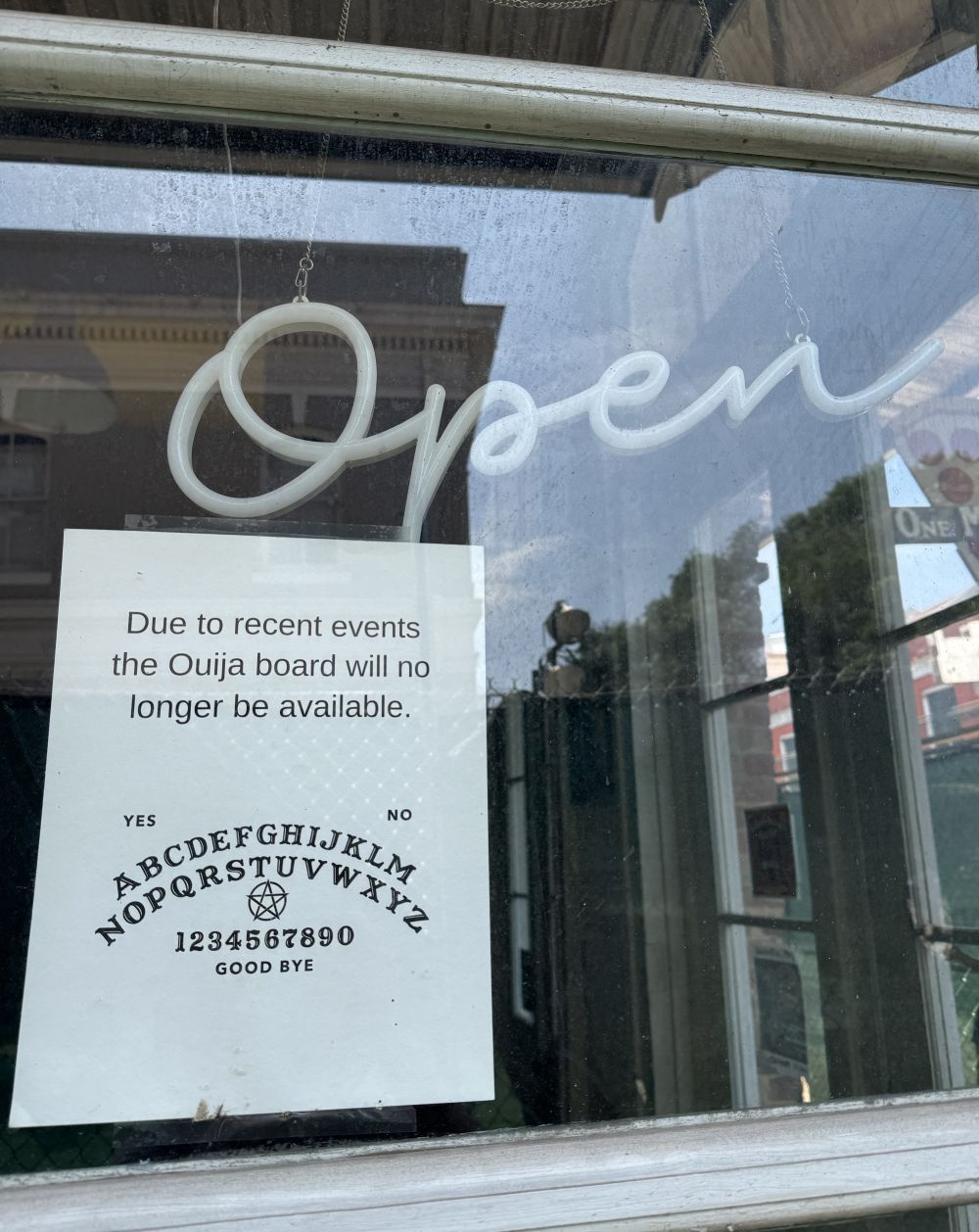
See in a New Orleans window

The first link.

Leads to this paragraph:

Starting twenty years ago, just after the Association of Brewers merged with the Brewers’ Association of America to create the BA, Craft beer went on a tear. Each year brought stories of growth, and naturally the BA touted that success. It was a seductively potent story. Craft beer is growing. It validated everything breweries and the BA were doing. Because of the message’s potency, it became part of craft beer’s brand. In an overall beer industry of flat or declining sales, one segment sparkles with success. Over time, growth became a bigger and bigger part of the messaging strategy. (No shade: there’s not a comms pro alive who wouldn’t jump on the story of 10% growth.)

The second link.

Leads to this thread, which begins by Maureen Ogle asking, “What is the most notable/significant event in U.S. beer in the past decade?”

The third (gift) link.

You don’t have time this morning to read “But What If We’re Wrong? — Thinking About the Present as if It Were the Past,” but this review adds context to ongoing discussions.

One link, one paragraph

The link. I apologize if you find this behind a paywall. I thought the post was supposed to be, but it opened for me . . .

The paragraph:

The point about snobbishness is fair. Sure, there are a few people in there with early morning pints. And the clientele does tend to be older. But the reason you notice the older punters is that in some cities Wetherspoon’s are the only pubs where you do see them. When I lived in a part of north London where most pubs sold high-margin craft beer to affluent customers (I’m not saying that’s a bad thing either, unless every pub does it), Spoon’s was also the only pub where the posties, teachers and students drank; and perhaps more tellingly, the only place where you saw people of colour in numbers that reflected their part in the community.

One link, one paragraph

The link.

The paragraph:

Despite this, there is a vibrant independent and modern beer scene in the county–if you want a DIPA, you’ll be able to find one. Locals may want cheaper, more trad beers on the whole, but the thousands of visitors coming in from the cities boosted a desire for stronger, weirder beers, which Matt (Clarke) and his peers were only too happy to accommodate. Making both styles ensures locals aren’t priced out of the pub while visitors get the beers they’d expect to see back home.

Locals aren’t priced out. Added for emphasis.

Maybe we don’t know better

Parade in progress at New Orleans Jazz and Heritage Festival

When I wrote about New Orleans Jazz and Heritage Festival a couple weeks ago, Bill posed a question the the comments: “I have a question about the New Orleans Jazz and Heritage Festival – I know there are some jazz and New Orleans – based acts (and maybe more this year than in recent years?), but it always seems to be much more of an “acts you hear on the radio” modern music fest. Were things different back in the 1990s?

My quick answer is about 80 percent of the 5,000 musicians and performers (on 14 stages) will be from Louisiana. That’s a lot more that “some,” and I’m pretty sure more Louisiana musicians than appeared in 1990.

We went for the first time twenty years after the festival began. People we met who had been going for years, told us about how much better it was in years before, smaller, easier to get around, truer to its roots, whatever. We’ve tried our best not to become those people.

Yes, it is different. In 1991 you could camp out maybe five-feet in front of the Ray Ban stage (the largest venue, now called the Festival Stage, but also know as the Fess stage, a nod to Professor Longhair). Now there is very expansive fenced off VIP area in front of it. There are signs of corporate creep to bitch about everywhere. In 1993 I laid on my stomach right in front of the Lagniappe stage (really just a wooden floor laid on top of grass) to shoot a picture of Chris Smither’s feet. They were pounding out acoustic backup as he sang. Something you wouldn’t be able to do today.

Read more

One link, one paragraph

The link.

The paragraph:

How can a working journalist afford to buy a bar? “It’s not a fun story,” (Dave) Zirin told me. “My mom passed away and left me a small summer place. I could have kept it and had a place in the summer, or I could have sold it and had a retirement fund, or I could have sold it and bought a bar. I bought a bar.”