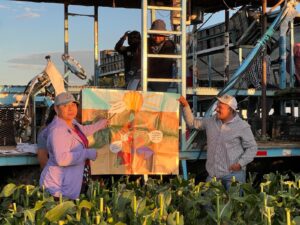
Dr. Joaquin Alfredo-Angel Rubalcaba, lead author on study of the FFP: “We do show that mothers are getting healthier... Their health, in terms of gestational diabetes and hypertension, [is] improving.”
Jon Esformes, CEO of Pacific Tomato Growers and first grower to join the FFP: "At the end of the day, when someone shows up to do a job, they want to go to the job, do their job, earn their money, know that they’re safe and go home."
A few weeks ago, we shared some remarkable news from the Fair Food Program with you: a multi-state, peer-reviewed public health study found that mothers working on Fair Food Program farms gave birth to healthier infants than their counterparts on non-FFP farms — a powerful reminder that when workers are protected, entire families thrive.
This landmark research — published by Duke University Press in the widely respected journal Demography — is the first to demonstrate that a Worker-driven Social Responsibility program can generate population-level public health gains by guaranteeing fundamental human rights on the job. Its findings suggest that the protections embedded in the Fair Food Program — and similar worker-driven models — can reach far beyond the workplace, functioning as targeted public health interventions in communities long exposed to extreme labor exploitation.
Today, we are proud to share a feature-length article that takes a deeper look at this study, tracing how the Fair Food Program’s worker-drafted human rights standards, backed by multi-layered monitoring and enforcement mechanisms, translate into something profoundly human: healthier families and stronger communities. The feature comes courtesy of The Packer, the nation’s leading produce industry news outlet, which has for years documented the evolution and expansion of the Presidential Medal-winning Fair Food Program.
Written by The Packer’s Produce Editor Christina Herrick, the article brings forward new insights from the study’s lead author, who explains that beyond the reduction in low-birth-weight births, the program is also linked to decreases in diabetes and hypertension. These conditions, long prevalent among farmworkers, are closely tied to birth outcomes but also carry serious, lifelong consequences of their own — underscoring how the same protections that support healthier pregnancies are improving overall health in farmworker communities. The story also features reflections from Laura Safer Espinoza, Executive Director of the Fair Food Standards Council, and Jon Esformes, CEO of Pacific Tomato Growers and the first grower to join the FFP back in 2010. At a glance, the piece offers a deeper understanding of the FFP’s win/win impact, showing how its protections safeguard workers’ health while helping participating growers recruit and retain employees by becoming employers of choice.
We're excited to share the article in full with you below. If you'd like to read the article on The Packer's website, click here.
New Research Links Better Pay and Safer Conditions to Healthier Babies
A peer-reviewed study finds that infants born to farmworkers on Fair Food Program farms are 10% less likely to be born at a low birth weight.
A peer-reviewed study published in the journal Demography has found a direct link between participation in the Fair Food Program and improved birth outcomes for farmworkers. Infants born to farmworker mothers on Fair Food Program-certified farms were 10% less likely to be born at a low birth weight.
Low birth weight, the Fair Food Program notes, is closely linked to perinatal mortality, cognitive development, chronic disease risk and more.
Joaquin Alfredo-Angel Rubalcaba, the study’s lead author and an associate professor of public policy at the University of North Carolina at Chapel Hill, says low birth weight is a good marker to track, as it’s a sensitive indicator of the “health spillover” for both mothers and infants.
“We do show that mothers are getting healthier,” he says. “Their health, in terms of gestational diabetes and hypertension, [is] improving.”
Quantifying the Health Spillover
Birth weight, which has already been measured and validated through public health research, would also be a way to quantify how the Fair Food Program influenced maternal and infant health outcomes.
“It’s not just the income; it’s all of these other things that go along with that,” Rubalcaba says, noting that improved working conditions create a positive health spillover that extends beyond the individual.
“When you’re healthy, you don’t have to worry about your child being malnourished,” he says. “When you don’t have to worry about the things that we take for granted on a day-to-day basis, you’re able to focus on the things that make you productive.”
Rubalcaba says this spillover effect continues beyond just a nuclear family and into communities.
“The community is thriving as a result of the efforts, at least, in my opinion, in my survey of the data, and the fact that we were able to see a result in publicly available data, in the birth records data, was pretty remarkable,” he says.
Moving Beyond the Paycheck
While the data is remarkable, the three drivers of these health outcomes — safer conditions, higher wages and reduced stress — manifest in personal ways for the workers.
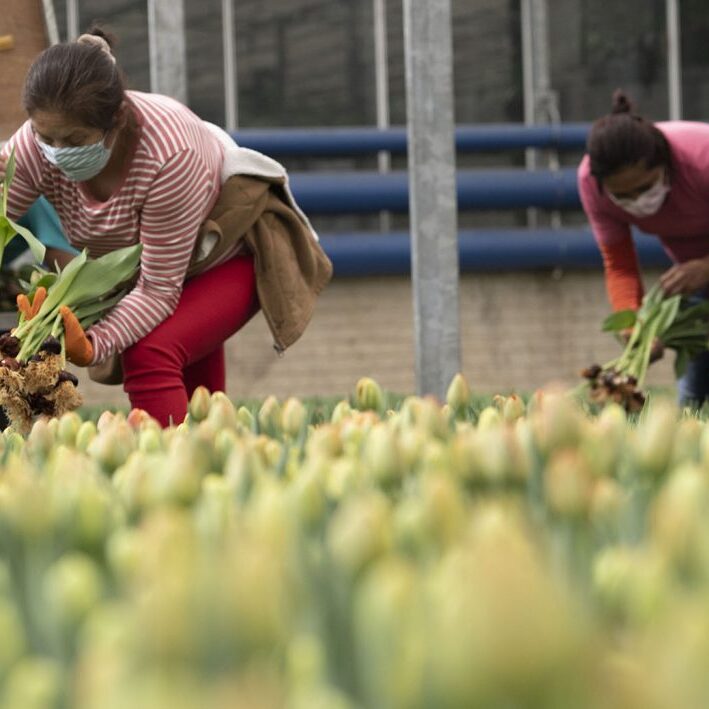
Wage premiums and stricter enforcement against wage theft for farms in the Fair Food Program raised worker incomes by 24%. Legal protections against sexual harassment, forced labor and verbal abuse helped decrease maternal stress levels. The program’s focus on safety standards also helped to reduce physical strain and environmental hazards.
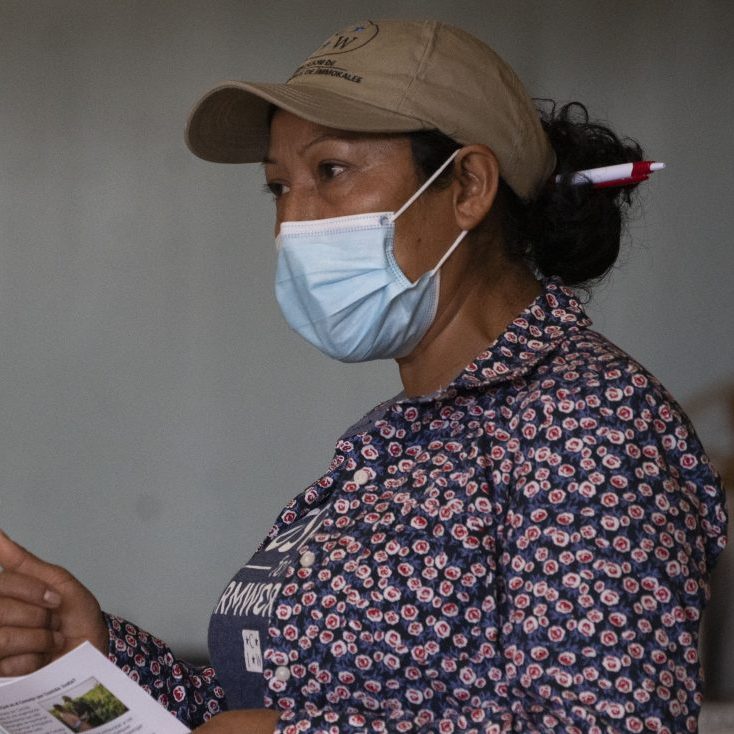
Workers clock in with a timekeeping system--a mandatory feature on Fair Food Program farms that ensures workers are paid for each minute they work
Laura Safer Espinoza, a retired New York State Supreme Court justice and executive director of the Fair Food Standards Council, says the study’s outcome highlights the strong correlation between improvements in overall working environments and increased birth rates.
Safer Espinoza says more than $50 million has been distributed to workers on Fair Food Program farms. What’s more remarkable, she says, is that retailers and brands have pledged to support this program.
“They have agreed to commit their market power and put those purchasing practices to work to incentivize good practices at the bottom of the food supply chain,” she says.
More Than Just Better Pay
Safer Espinoza points to other successes within the program that speak to the broader themes of family. These include requiring workers to be paid at call time, which she says resulted in later starts.
“For the first time, workers who were called to the field at a later time were able to eat breakfast with their children. They were able to walk their children to school,” she says.
As researchers surveyed workers in Immokalee, Fla., about the benefits of the Fair Food Program, it wasn’t only better pay; it was more family time, says Safer Espinoza.
“Families reported that their children were healthier and happier, and parents were delighted to be able to have that precious time with their children in the morning,” she says. “And that’s simply because the law was being enforced.”
Safer Espinoza says this study shows tangible benefits when women working on Fair Food Program farms earn more through increased pay or the elimination of wage theft. She says eliminating sexual harassment and verbal abuse reduces stress and tension, too.
“When mothers can work and expectant mothers can work in an environment where it is safer, where they are treated with more respect, where they don’t have to be fearful and stressed every day, this is the proof that it makes a huge difference,” she says.
And she says the study’s results aren’t necessarily an expected outcome that she and the Fair Food Standards Council members thought would happen on participating farms. She says the survey’s results show a greater impact on the Fair Food Program.
“We were not necessarily thinking, ‘This will increase birth rate and be transformational across generations in the way that it obviously is and has been proven to be,” she says. “It will make a huge difference for the children who are born to workers on Fair Food Program farms. They’ll be healthier and have better futures, and that’s something that I don’t think was necessarily contemplated when we set out, but it is a very beautiful result of this collaboration.”
A New Standard for Growers
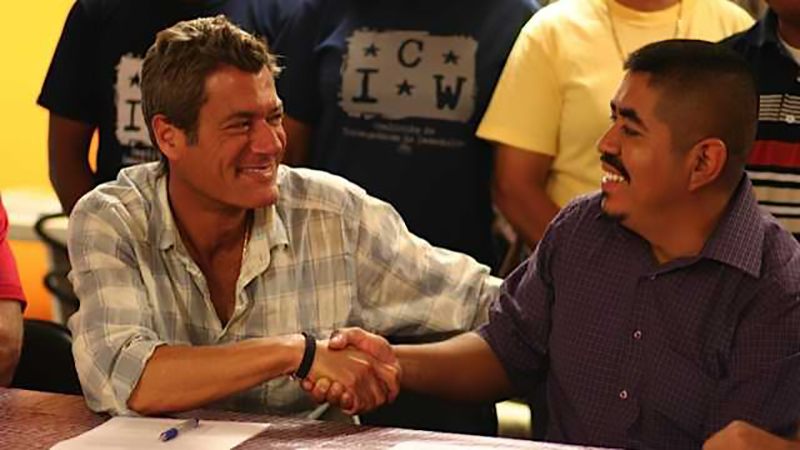
Lucas Benitez with John Esformes, CEO of Pacific Tomato Growers DBA Sunripe Certified Brands as the CIW and Pacific agree to join forces to launch Fair Food Program in 2010
Jon Esformes, CEO of Sunripe Certified Brands and the first grower to join the Fair Food Program, says he’s proud of how his company has become an employer of choice thanks to the positive culture created on his family’s farm. He says a couple of years ago, when he was on a panel about labor shortage with then-Agriculture Secretary Tom Vilsack, he had to say that he had no trouble recruiting and retaining workers as an employer of choice.
“That spoke to over a decade of bridge building and creating what we call a safe and fair work environment where everybody understands their rights, everybody feels safe and making complaints, everybody feels like the company is open to evolution, and that’s been the history of the relationship with the coalition,” he says.
And that’s truly what workers want, Esformes says.
“At the end of the day, when someone shows up to do a job, they want to go to the job, do their job, earn their money, know that they’re safe and go home,” he says.
And this study, Esformes says, helps highlight the intangible benefits from creating this type of workplace culture quantitatively.
“People tend to be evidence-based and need that evidence to convince them to keep doing something,” he says. “We didn’t need that for ourselves. For us, we knew what was happening. But in the meantime, it’s good for the general population to have a greater understanding of the efficacy of this type of program and its impact on the community.”
Sen. Cory Booker, Yale Law: “As a proud alumnus of Yale Law School (Class of 1997) and a longtime advocate for a healthier and more equitable food system, I write to urge Yale Hospitality to join the Fair Food Program (FFP).” “The Fair Food Program is widely recognized as one of the most effective human rights initiatives in U.S. agriculture… Yale has long been a leader in both scholarship and social responsibility. Joining the Fair Food Program would extend that leadership into the University’s food system, demonstrating that Yale is committed to protecting farmworkers and supporting responsible growers… “ […]
Christian Science Monitor on the Coalition of Immokalee Workers: “In many ways, the coalition was built to change a culture of privilege: no singular leader, no hierarchy of moral authority, no person whose reputation placed them beyond accountability. Instead, workers educated workers. Women organized women. And power was explicitly collective and deliberately decentralized.” Nely Rodriguez, CIW: “And that’s what impressed me and what inspired us to continue,” Ms. Rodríguez says. “Precisely because it’s an organization run by farmworkers and formed by farmworkers. Precisely because of the bad conditions the workers faced – and more than anything, the problem of harassment […]
Andrew Storino, Yale University Junior, and Student/Farmworker Alliance member: “Students don’t want abuses in the supply chain that serves Yale’s dining halls, and we’ll continue organizing until Yale does what’s right and joins the Fair Food Program.” CIW Co-founder Lucas Benitez: “Now is the time for Yale to do things the right way… Since when has Yale backed down from being a leader in this country?… What do we say to the University if they don’t do what’s right? We’ll be back!” Students at Yale University are turning up the heat on their administration to ensure that the food served at […]
Associated Press: The Fair Food Program is one the country’s “most robust… and protective programs” in the US, and a ‘game changer” for women farmworkers Last week, The New York Times published a devastating investigative report detailing many deeply disturbing accounts of sexual abuse committed by United Farm Workers (UFW) co-founder Cesar Chavez, including several instances of assault against Dolores Huerta — another co-founder of the UFW and hero of the farmworker movement — and multiple minors associated with the union. These revelations are as shocking as they are deeply disturbing. They also serve as a stark reminder that when power goes […]
Business and Human Rights Resource Centre (BHRRC) 2026 report outlining the problem: “Across the board, companies are neglecting the most critical elements of human rights due diligence: worker-centric monitoring, meaningful remedy, responsible purchasing practices, and genuine engagement with affected rights holders.” BHRRC highlighting the solution: “Walmart is a member of the Fair Food Program, a programme which covers farmworkers in the USA who are paid a premium to ensure a living wage.” Even as the Fair Food Program is ushering in a new day of human rights on participating farms across the US and overseas, beyond the reach of […]
New health study on the Fair Food Program: “Using restricted birth records data from the National Vital Statistics System from 2006 to 2018, we show that the adoption of the Fair Food Program was associated with reductions in low-weight births among foreign-born mothers from Latin America.” Farmworker in the FFP: “For many years, when I worked in the fields, I did not always make enough to put food on my own table for my three children. Because of the Fair Food Program, we started to see better wages, and it changed our lives — for me and for my children.” As […]
As WeCount! released a major new report exposing labor abuses in the plant nursery industry, the South Florida-based worker organization took the next step — announcing a collaboration with the CIW to build Sembrando Justicia (Planting Justice), a worker-driven human rights program for the nursery sector. Miami Herald: “[Planting Justice] is modeled after the Fair Food Program, which protects tens of thousands of farmworkers harvesting dozens of crops across the U.S. It was the world’s first Worker-driven Social Responsibility model which has now been replicated in other industries… The Florida tomato industry, once described as ‘ground zero for modern-day slavery,’ […]
Calling all students, faculty, and staff of universities across the US! Do you want to stand with farmworkers in their fight for justice in the food industry, but aren’t sure how? Do you care deeply about human rights and dignity for all workers, and are looking for a way to make your voice heard? Today, you can join a growing national movement by calling on your university to join the Presidential Medal-winning Fair Food Program! Across the country, students and campus employees are organizing to ensure the produce served in their dining halls comes from farms that protect farmworkers’ freedom […]
2019 University of Michigan Advisory Committee report: “The Fair Food Program is the most comprehensive social responsibility program in the U.S.,” and the best thing that the University of Michigan could do in order to improve labor standards would be to “become a signatory to the Fair Food Program.” Nola De Graaf, a current student at the University of Michigan: “The best part of this program is that it is an organization that amplifies the voices of workers, not attempting to speak over them but rather making them the forefront of the organization, something that is unfortunately not often done. […]
For more than 15 years, the industry-leading protections of the Fair Food Program have stood fast against farm labor abuses ranging from wage theft and sexual violence to dangerous working conditions, physical abuse, and forced labor. Thanks to the FFP’s unique mix of worker-driven, market-backed monitoring and enforcement mechanisms, tens of thousands of workers live and work free of fear and exploitation on dozens of participating farms. Sadly, however, those abuses — and the pervasive climate of fear that protects and enables the abusers — remain all too common today on farms beyond the FFP’s reach. One such grower — the produce giant Mastronardi […]