Discover 150 years of DEME!
In 2026, DEME celebrates 150 years of marine and environmental engineering. From our early roots in 1876, we have grown from our origins in dredging and marine works into a leading, diversified group - shaped by expertise, innovation, resilience and a constant drive to push boundaries.
Throughout this anniversary year, we’ll take you on a journey through our history, sharing stories and moments that show how challenges were approached, solutions were developed and ambitions kept moving forward. Across our channels and on this dedicated anniversary website, you can discover the people, projects and breakthroughs that made DEME what it is today. This website will be updated weekly with new stories. Throughout the year, we will use #DEME150 to share and connect these stories.
As we reflect on 150 years, we continue to look ahead with the same spirit that defines us: We Care. We Dare. We Deliver.
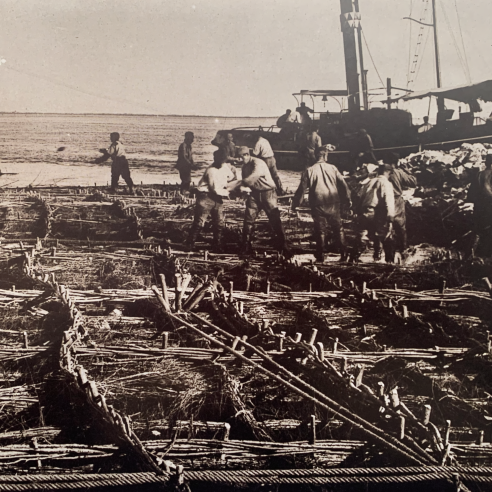
DEME’s roots trace back to 1876, when Hendrik Willem Ackermans (1855–1945), a newly qualified civil engineer from the Polytechnic School of Delft in the Netherlands, joined the contracting enterpri
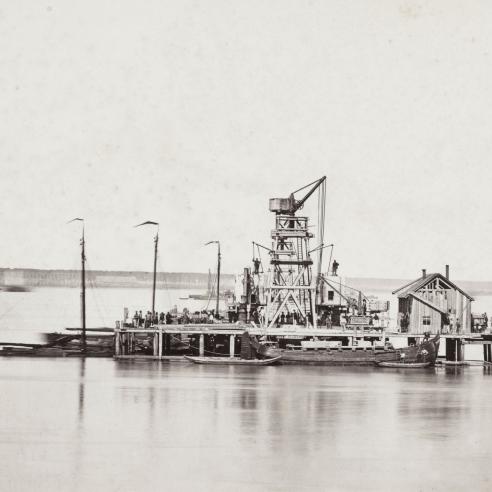
In 1878, Nicolaas van Haaren was awarded the contract for the dike works on Rozenburg Island in the Netherlands, along the Nieuwe Waterweg, the vital maritime link connecting Rotterdam to the North
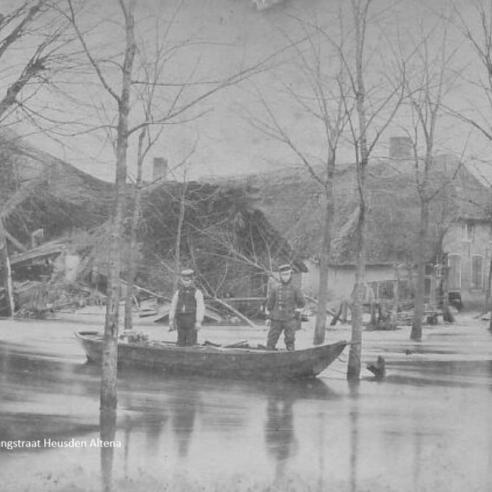
In the winter of 1880–1881, the disastrous floods at Nieuwkuijk had a profound impact across the Netherlands.
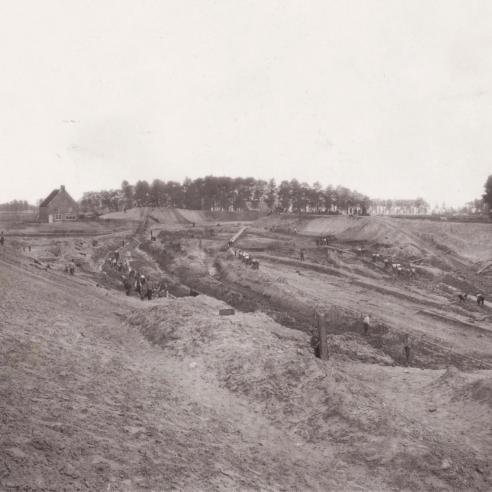
Between the 1880s and early 1900s, the modernization of the Ghent–Terneuzen Canal was driven by the need to keep pace with increasing ship sizes and the transition from sail to steam.

In December 1885, Nicolaas van Haaren again teamed up with Hendrikus Theodorus Wiegerinck and won the contract for the deepening of Het Scheur, which aimed to improve navigability on this important
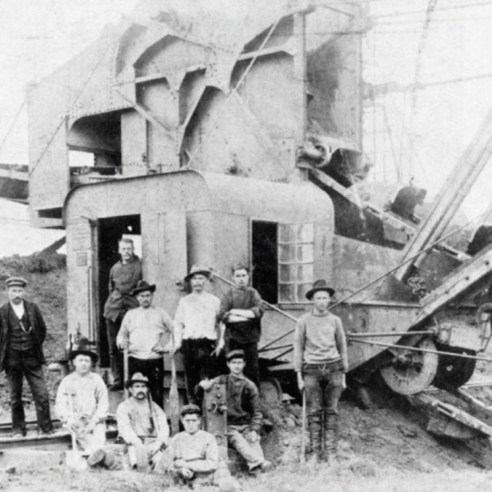
Between 1887 and 1915, works carried out in ’s-Hertogenbosch in the Netherlands contributed to the expansion of the city to the west.
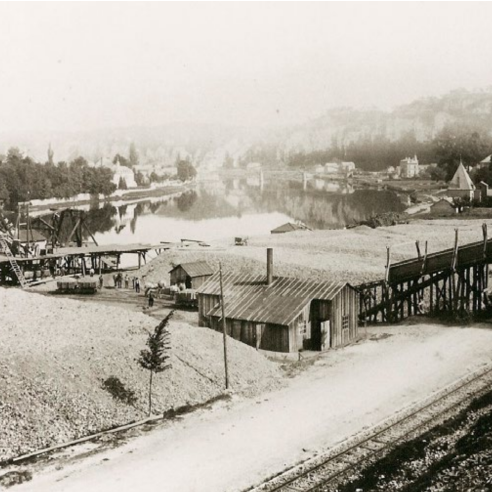
The first major assignment for Nicolaas van Haaren and Hendrik Willem Ackermans in Belgium marked a defining moment in the entrepreneurs’ history.
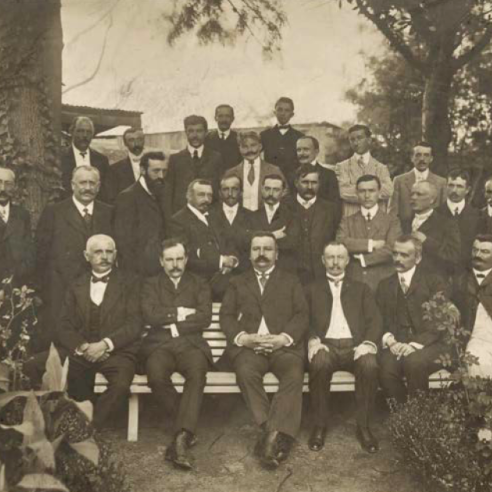
As the scale and complexity of hydraulic and infrastructure projects grew in the late 19th century, Nicolaas van Haaren and Hendrik Willem Ackermans thrived by forging partnerships, not only with f

When the Merwede Canal in the Netherlands opened in 1892, it marked a major step forward in inland navigation, strengthening the shipping connection between Amsterdam and Germany.
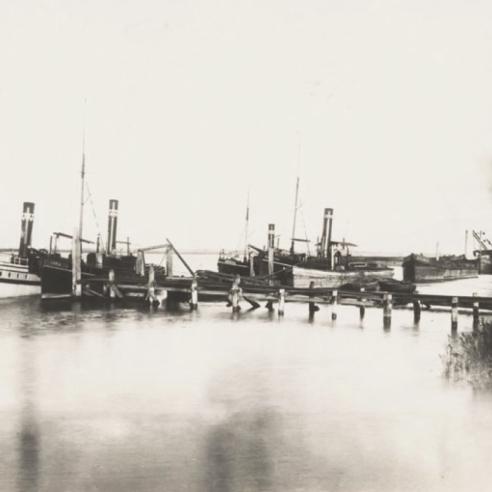
In 1894, Nicolaas van Haaren’s firm was awarded the first contract for hydraulic engineering works on the Lower Scheldt, between Antwerp and the Dutch border, marking a major turning point in the e
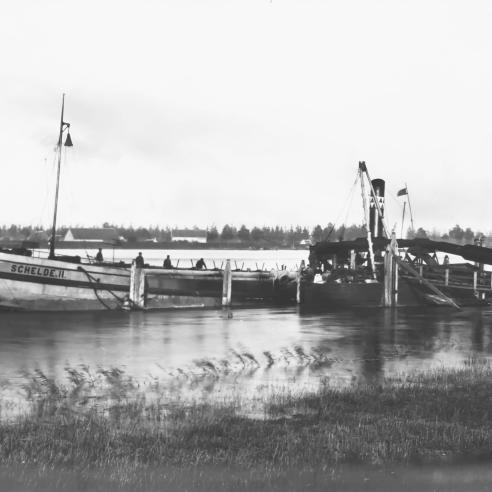
The construction of the pioneering hopper suction dredger Schelde II for the firm of Nicolaas van Haaren set a new standard in dredging.
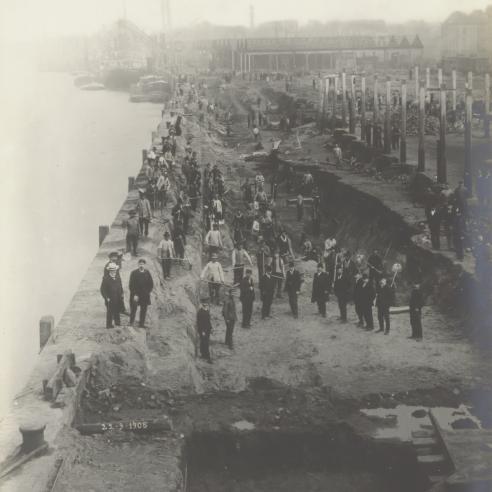
At the end of the 19th century, improving access to the Scheldt was essential for the growth of the Port of Antwerp.
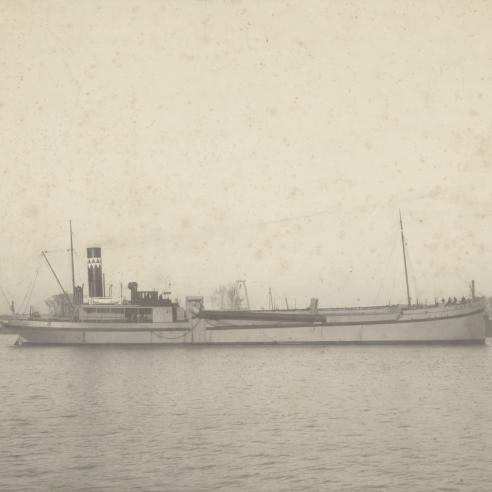
At the end of the 19th century, Hendrik Willem Ackermans and Nicolaas van Haaren continued to push the boundaries of dredging technology and scale.
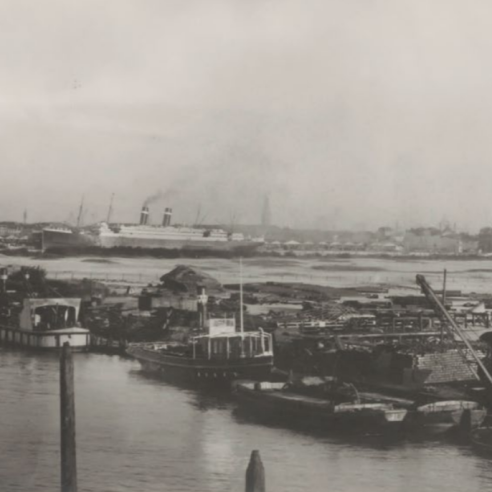
At the turn of the 20th century, the Scheldt was already a vital waterway for trade and industry. Until then, most contracts had focused on deepening the river. But in 1901, a shift occurred.
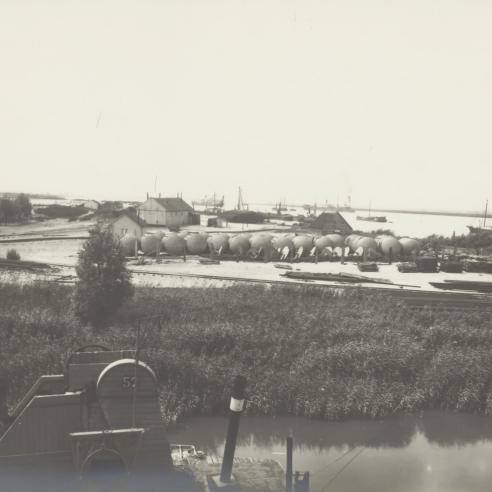
Petroleum had been imported through the Port of Antwerp since the 1860s. By 1898, the city decided to relocate these activities to the Zuider quays, south of the city centre.

Argentina’s booming agricultural exports demanded modern river access to global markets. Rosario, on the Paraná River, was chosen to become that new harbor.

When works began in Argentina, groups of Dutch and Belgian workers boarded ships bound for a long journey to South America.

By the early 1900s, Antwerp was preparing for a bold northward expansion of its port.

When the founders’ activities expanded beyond Argentina, their journey led south to Brazil’s Rio Grande do Sul.

The founders’ ambitions in Latin America extended far beyond the worksites. As projects in Rosario and Bahía Blanca progressed, new opportunities emerged across the region.

By 1911, the founders were increasingly involved in harbor dredging and improvement works in the French port of Le Havre.

When strolling along the legendary Sint-Anneke Plage in Antwerp, few people realize that this much loved riverside beach originated from dredging works on the Scheldt.

Following their early successes in South America, the DEME founders set their sights on a new and far more complex frontier: the Russian Empire.

The First World War brought growing disruption to hydraulic works across Europe.

In and around Helsingfors (today Helsinki), the founders confronted some of the most demanding environments of their early international work: snow, ice and mud, hard granite seabeds and exposed is

As the First World War progressed, operating conditions in Europe became increasingly unstable.

The end of the First World War did not result in things returning to normal right away for DEME’s founders.

In the years following the First World War, the founders rebuilt their position through active participation in major tenders in Belgium.

By the early 1920s, our founders continued to be considered a reliable partner in major infrastructure works.

In June 1928, the DEME founders organized their first-ever press conference, marking a significant moment in how the company presented itself publicly.

In the years that followed, activities on the African continent gradually expanded.

After more than two decades of studies, planning and international collaboration, the first tunnels under the Scheldt open in Antwerp.

In the 1930s, Belgium undertakes one of its most ambitious infrastructure projects: the construction of the Albert Canal, creating a direct link between the Port of Antwerp and the industrial basin

From the late 19th century onwards, the DEME founders invest heavily in expanding and modernizing their fleet, while also being active in shipbuilding.
Disclaimer
With 150 years of history, there are countless moments to tell. In this anniversary year, we share a non-exhaustive selection of stories that illustrate how DEME became the company it is today. These stories are drawn from a variety of historical sources, including books by authors such as Dirk Podevijn and Mon Vanderosteyne, company publications and the input of colleagues across the organization. As this website looks back on 150 years of heritage, it features archival material from different eras. Safety standards and working practices have evolved significantly over time and should be understood in their historical context.
