by Mark R. DeLong
In January five years ago, amidst the turmoil and isolation of a world pandemic, I decided it was time to do a month-long art project. I was newly “retired” (a word that I then disdained and avoided using), and I was intrigued by a project that poet Bernadette Mayer took on when she was in her twenties and living in New York. In July 1971, she took up her 35 mm camera and exposed a 36-shot roll of film every day, processing the film at night, and through it all wrote daily in her free poetic prose. She called her project Memory and it became a gallery exhibition at 98 Greene Street in February 1972—all 1,116 photos with more than six hours of audio narration. In May 2020, nearly fifty years after young Bernadette took her photographs and wrote her words, Memory was issued in book form by Siglio Press.
I wondered whether Memory could serve as a model or at least an inspiration for a project in January 2021. I had my doubts for many reasons, and I knew that having the energy of a twenty-year-old was useful for Mayer back in 1971. My reservations notwithstanding, I decided to apply the “Memory Model” for project I named “Second Act—Re:Tooling.” Maybe I could “use the disciplined, thirty-six exposure method to lay open some matters that might otherwise be obscured from ‘normal’ sight of the everyday,” I wrote a couple days before launch. “I wanted the photography and the writing to, well, focus and direct attentions to new and lurking realities of my new situation.”
It was a good month-long project but not a work of art by any measure, and I rarely achieved thirty-six digital photos in a day—a fact that surprised me a little, given how little effort my digital cameras required. From the first, I treated the month of writing and photo-taking as a data gathering effort—useful in the future perhaps—but not nearly “fully cooked” when the project ended on January 31, 2021. Read more »
 Did you ever read Ambrose Bierce’s short story “An Occurrence at Owl Creek Bridge”? If not, it starts as the story of a man who is going to be hanged. As the trap door opens under him, he falls, the rope tightens around his neck but snaps instead of bearing his weight, and he is able to escape from under the gallows. For several pages he wanders through a forest truly sensing the fullness of life in himself and around himself for the first time.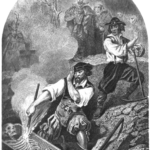

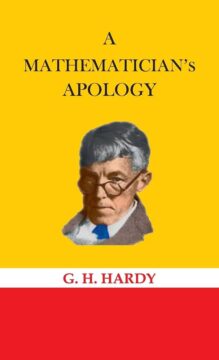 I have put off reading G.H. Hardy’s Mathematician’s Apology (1940) to the end for too long. Now that I have, I can say with conviction that if you ever find yourself needing to justify why people should learn at least some mathematics, then this is the text to avoid, and Hardy provides the arguments you should stay away from furthest. And yet, it grew on me as an honest presentation of Hardy’s perspective on why anything is worth doing.
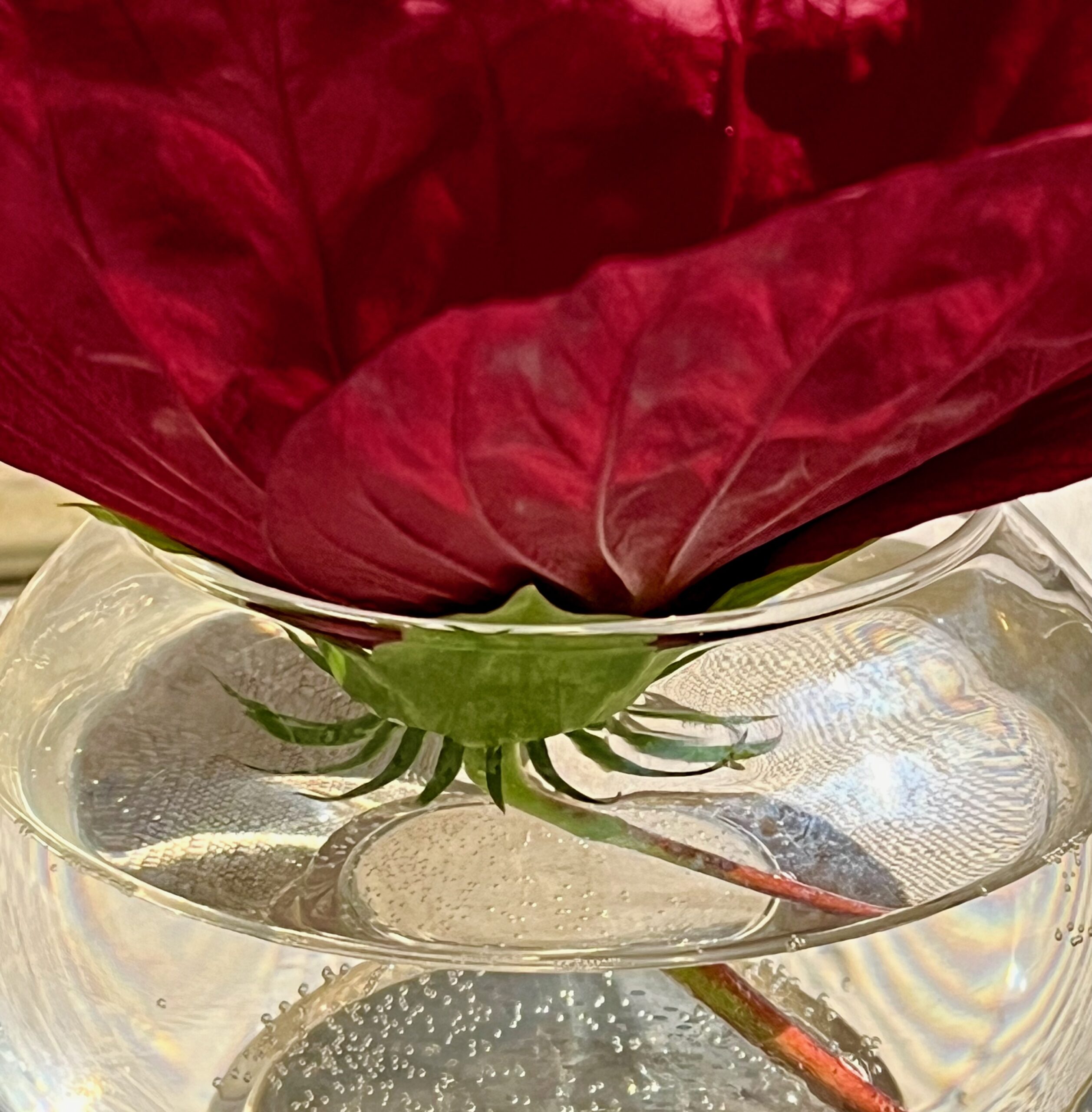 Sughra Raza. Blood. August 2024.
 a prickly pine’s upon one nub,