Buy New
-51%
$15.56$15.56
FREE delivery Monday, May 11 on orders shipped by Amazon over $35
Advertisement
Advertisement
Ships from: Amazon.com Sold by: Amazon.com
Used - Very Good
$10.08$10.08
FREE delivery May 13 - 15
Advertisement
Advertisement
Ships from: Dream Books Co. Sold by: Dream Books Co.
Sorry, there was a problem.
There was an error retrieving your Wish Lists. Please try again.Sorry, there was a problem.
List unavailable.
Download the free Kindle app and start reading Kindle books instantly on your smartphone, tablet, or computer - no Kindle device required.
Read instantly on your browser with Kindle for Web.
Using your mobile phone camera - scan the code below and download the Kindle app.
Follow the author
OK
The Sirens' Call: How Attention Became the World's Most Endangered Resource Hardcover – January 28, 2025
Purchase options and add-ons
From the #1 New York Times bestselling author and MSNBC and podcast host, a powerful wide-angle reckoning with how the assault from attention capitalism on our minds and our hearts has reordered our politics and the very fabric of our society
“An ambitious analysis of how the trivial amusements offered by online life have degraded not only our selves but also our politics.” —New York Times
“Brilliant book . . . Reading it has made me change the way I work and think.” —Rachel Maddow
"A useful primer on how social media and the attention economy have warped our democracy and reshaped our lives." —Barack Obama
We all feel it—the distraction, the loss of focus, the addictive focus on the wrong things for too long. Something has changed utterly: For most of human history, the boundary between public and private has been clear, at least in theory. Now, as Chris Hayes writes, “With the help of a few tech firms, we basically tore it down in about a decade.” Hayes argues that we are in the midst of a transition whose only parallel is that of labor in the nineteenth century: Attention has become a commodified resource extracted from us, and from which we are increasingly alienated. The Sirens’ Call is the big-picture vision we urgently need to offer clarity and guidance.
Sirens are designed to compel us, and now they are going off in our bedrooms and kitchens at all hours of the day and night, doing the bidding of vast empires, the most valuable companies in history, built on harvesting human attention. As Hayes shares, “Now our deepest neurological structures, human evolutionary inheritances, and social impulses are in a habitat designed to prey upon, to cultivate, distort, or destroy that which most fundamentally makes us human.” The Sirens’ Call is the book that snaps everything into a single holistic framework so that we can wrest back control of our lives, our politics, and our future.
- Print length336 pages
- LanguageEnglish
- PublisherPenguin Press
- Publication dateJanuary 28, 2025
- Dimensions6.13 x 0.84 x 9.25 inches
- ISBN-100593653114
- ISBN-13978-0593653111
Explore your book, then jump right back to where you left off with Page Flip.
View high quality images that let you zoom in to take a closer look.
Enjoy features only possible in digital – start reading right away, carry your library with you, adjust the font, create shareable notes and highlights, and more.
Discover additional details about the events, people, and places in your book, with Wikipedia integration.
Frequently bought together

Explore more from across the store
Empire of AI: Dreams and Nightmares in Sam Altman's OpenAIHardcoverFREE Shipping on orders over $35 shipped by AmazonGet it as soon as Monday, May 11
Superbloom: How Technologies of Connection Tear Us ApartHardcoverFREE Shipping on orders over $35 shipped by AmazonGet it as soon as Monday, May 11
More Everything Forever: AI Overlords, Space Empires, and Silicon Valley's Crusade to Control the Fate of HumanityHardcoverFREE Shipping on orders over $35 shipped by AmazonGet it as soon as Monday, May 11
Why We're PolarizedPaperbackFREE Shipping on orders over $35 shipped by AmazonGet it as soon as Monday, May 11
Chip War: The Fight for the World's Most Critical TechnologyPaperbackFREE Shipping on orders over $35 shipped by AmazonGet it as soon as Monday, May 11
Without Precedent: How Chief Justice Roberts and His Accomplices Rewrote the Constitution and Dismantled Our RightsHardcoverFREE Shipping on orders over $35 shipped by AmazonGet it as soon as Monday, May 11
Customers also bought or read
- Murder the Truth: Fear, the First Amendment, and a Secret Campaign to Protect the Powerful – An Essential Investigation of America's War on Journalism
Hardcover$14.50$14.50Delivery May 15 - 18 - The Folly of Realism: How the West Deceived Itself About Russia and Betrayed Ukraine
Hardcover$16.15$16.15Delivery Mon, May 11 - Mad House: How Donald Trump, MAGA Mean Girls, a Former Used Car Salesman, a Florida Nepo Baby, and a Man with Rats in His Walls Broke Congress
Hardcover$21.20$21.20Delivery Mon, May 11 - Giving Up Is Unforgivable: A Manual for Keeping a Democracy
Hardcover$10.95$10.95Delivery Mon, May 11 - Money, Lies, and God: Inside the Movement to Destroy American Democracy
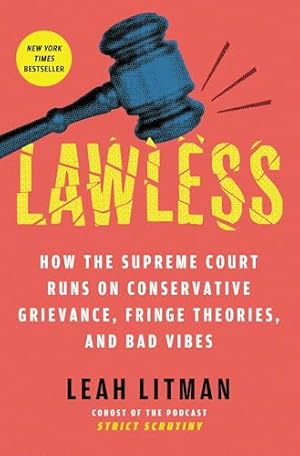
Hardcover$18.62$18.62Delivery Mon, May 11 - Lawless: How the Supreme Court Runs on Conservative Grievance, Fringe Theories, and Bad Vibes
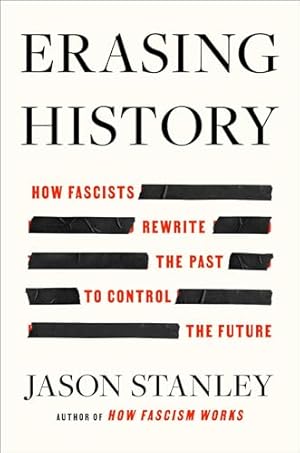
Hardcover$15.49$15.49Delivery Mon, May 11 - Erasing History: How Fascists Rewrite the Past to Control the Future
Hardcover$18.36$18.36Delivery May 18 - 21 - Harbingers: What January 6 and Charlottesville Reveal About Rising Threats to American Democracy
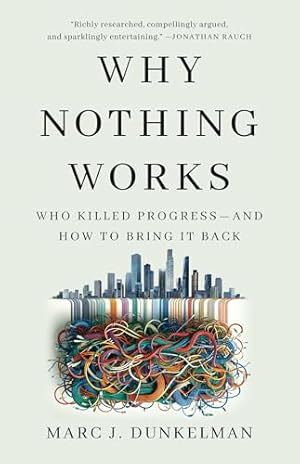
Hardcover$18.96$18.96Delivery Mon, May 11 - Why Nothing Works: Who Killed Progress―and How to Bring It Back
Hardcover$21.29$21.29Delivery May 19 - 24 - 1929: Inside the Greatest Crash in Wall Street History--and How It Shattered a Nation#1 Best SellerEconomic History
Hardcover$20.59$20.59Delivery Mon, May 11 - Into the Wood Chipper: A Whistleblower's Account of How the Trump Administration Shredded USAID#1 Best SellerUnited States National Government
Hardcover$29.00$29.00Delivery Mon, May 11 - A World Appears: A Journey into Consciousness#1 Best SellerScientist Biographies
Hardcover$23.09$23.09Delivery Mon, May 11 - One Day, Everyone Will Have Always Been Against This: National Book Award#1 Best SellerMiddle Eastern Politics
Hardcover$18.05$18.05Delivery Mon, May 11 - Attack from Within: How Disinformation Is Sabotaging America
Hardcover$18.14$18.14Delivery Mon, May 11 - Stuck: How the Privileged and the Propertied Broke the Engine of American Opportunity
Hardcover$16.30$16.30Delivery May 21 - 25 - The Attention Merchants: The Epic Scramble to Get Inside Our Heads
Paperback$11.99$11.99Delivery Mon, May 11 - The Extinction of Experience: Being Human in a Disembodied World
Paperback$18.63$18.63Delivery Mon, May 11 - Chain of Ideas: The Origins of Our Authoritarian Age
Just releasedHardcover$22.75$22.75Delivery Mon, May 11 - Enshittification: Why Everything Suddenly Got Worse and What to Do About It#1 Best SellerSocial Media for Business
Hardcover$23.16$23.16Delivery Mon, May 11
Editorial Reviews
Review
“The Sirens’ Call is a provocative book, readable and well-argued and alarming. Hayes thinks that ‘even the most panicked critics’ of tech haven’t yet reckoned with the full breadth of its disruption, with the vast transformation it has wrought on both our public and inner lives. The book takes big swings—at political and economic regimes—but it’s also quite intimate. Reading it, I thought a lot about my son . . . I don’t want my son’s consciousness in the custody of Google and Meta and ByteDance and Apple; I want it to belong to him.” —The Washingtonian
“Chris Hayes persuasively and heartrendingly argues . . . it has become almost impossible to ‘agree’ to attend to anything in the true, voluntary sense of that word . . . This book is Hayes’s attempt at sounding the alarm, one befitting a great fire, to remind us what’s at stake . . . His writing comes alive with an emotional truth . . . with passion and erudition.” —The Washington Post
“A fascinating history of what [Hayes] calls the attention age . . . A timely guide that’s not just about the attention industry that social media is consuming. He also explains the impact that the fight for attention is having on the consumers themselves . . . A unique approach to a topic that is on everyone’s minds, but avoids feeling like a retread of already mined material on the topic.” —AP News
“Hayes offers a sharper and more politically acute analysis of the problem. We are living in what he calls the ‘attention age’ and, with an infinite stream of information, everyone is clamoring to get our attention . . . It is Hayes’ argument about the effect on politics of this war for attention that I found most arresting . . . We have created a public that has difficulty sustaining any kind of focus at all, quite the opposite of the initial hope for the internet that the wisdom of the crowd would radically democratize global conversations.” —Financial Times
“An ambitious analysis of how the trivial amusements offered by online life have degraded not only our selves but also our politics . . . Attention isn’t a resource like coal or oil, which exist outside us; attention is what makes us human, Hayes maintains, and this particular stage of capitalism is fueled by a fracking of our minds.” —Jennifer Szalai, The New York Times
“Casting a wide net that encompasses philosophers, media theorists, psychologists, and classic literature . . . Hayes unpacks how attention is both a force integral to survival and a resource so sought after that it has become like ‘gold in a stream, oil in a rock.' . . . Relatable and amusing . . . A savvy . . . meditation on the modern attention economy.” —Publishers Weekly
“[Hayes’] facility for lucid synthesis is put to gratifying use in this smart, constructive book . . . He carefully charts how the churning monetization of attention has fundamentally changed news, politics, and leisure time, turning our communications landscape into a kind of ‘failed state’ where common-sense norms have been routed by ‘attentional warlordism.’ Amid the virtual maelstrom, Hayes wants to help readers reclaim a measure of mental tranquility . . . An intelligent, forward-looking analysis of our increasing inability to stay focused.” —Kirkus Reviews
“Hayes’s latest book is part warning, part philosophical inquiry, and a valuable contribution to a growing chorus of works that examines the enfeeblement of attention in the digital age . . . Hayes writes with the urgency of someone keenly aware that the fight for attention is, at its core, a fight for control over our inner lives . . . The Sirens’ Call reminds readers that the reclamation of attention is both a paramount personal challenge—one that calls us to inhabit moments more fully and resist the pull of fragmentation—and an essential societal endeavor. This book deserves yours.” —The American Prospect
“Chris Hayes sees around corners—not just naming and explaining but also solving problems that the rest of us are only starting to sense. The Sirens’ Call is his biggest idea yet, and his most urgent. Reading it has made me change the way I work and think. Brilliant book.” —Rachel Maddow, host of the Emmy Award-winning Rachel Maddow Show on MSNBC and #1 New York Times bestselling author of Prequel, Blowout, and Drift
“Attention has always been an undervalued commodity, yet it‘s the very foundation of a meaningful life. In The Sirens' Call, Chris Hayes uses his keen intellect and knowledge of history to show how the war over our attention is undermining us 24/7. What is the antidote for the urge to constantly grab what he calls 'the little attention box' in our pockets? Read this book to find out!” —Katie Couric, award-winning journalist and #1 New York Times bestselling author of Going There
“With dazzling knowledge and insight, Chris Hayes not only diagnoses our growing social alienation but provides a path to sanity. If you long for something that will hold your attention and even help restore it, then read this utterly compelling and enlightening book.” —David Grann, #1 New York Times bestselling author of The Wager and Killers of the Flower Moon
“Chris Hayes has diagnosed the critical ill of our age—and no one is better positioned to understand and explain it. A profoundly careful and informed thinker, Hayes lives the disease he diagnoses. The depth of his insight, and urgency of his message, are essential reading for our time—if we can muster the attention that careful thinking demands.” —Lawrence Lessig, Roy L. Furman Professor of Law and Leadership, Harvard Law School
About the Author
Excerpt. © Reprinted by permission. All rights reserved.
The Sirens' Call
Let us begin with a story from Odysseus's journey. In book twelve of the Odyssey, our hero is about to depart the island of the goddess Circe when she gives him some crucial advice about how to navigate the perils of the next leg of his voyage.
"Pay attention," she instructs him sternly:
First you will come to the Sirens who enchant all who come near them. If any one unwarily draws in too close and hears the singing of the Sirens, his wife and children will never welcome him home again, for they sit in a green field and warble him to death with the sweetness of their song. There is a great heap of dead men's bones lying all around, with the flesh still rotting off them.
Odysseus listens as Circe provides him with a plan: stuff wax in the ears of your crew, she says, so they cannot hear the Sirens, and have them bind you to the mast of the ship until you have sailed safely past.
Odysseus follows the plan to a tee. Sure enough, when the Sirens' song hits his ears, he motions to his men to loosen him so that he can follow it. But as instructed, his crew ignores him until the ship is out of earshot.
This image is one of the most potent in the Western canon: Odysseus lashed to the mast, struggling against the bonds that he himself submitted to, knowing this was all in store. It has come down to us through the centuries as a metaphor for many things. Sin and virtue. The temptations of the flesh and the willpower to resist them. The addict who throws his pills down the toilet in preparation for the cravings to come, then begs for more drugs. It's an image that illustrates the Freudian struggle between the ego and the id: what we want and what we know we should not, cannot have.
Whenever I've encountered a visual representation of the Sirens, they are always, for lack of a better word, hot. Seductive. From Shakespeare to Ralph Ellison and down through literature, the Sirens are most often a metaphor for female sexual allure. In James Joyce's Ulysses, Bloom describes the man who has taken up with Bloom's wife as "falling a victim to her siren charms and forgetting home ties."
Given this, it is a bit odd to reconcile the original meaning of the word with how we use it today, to describe the intrusive wail of the device atop ambulances and cop cars. But there's a connection there, a profound one, and it's the guiding insight for this book and central to understanding life in the twenty-first century.
Stand on a street corner in any city on earth long enough, and you will hear an emergency vehicle whiz past. When you travel to a foreign land, that sound stands out as part of the sensory texture of the foreignness you're experiencing. Because no matter where you are, its call is at once familiar and foreign. The foreignness comes from the fact that in different countries the siren sounds slightly different-elongated, or two-toned, or distinctly pitched. But even if you've never encountered it before, you instantly understand its purpose. Amidst a language you may not speak and food you've never tried, the siren is universal. It exists to grab our attention, and it succeeds.
The siren as we know it now was invented in 1799 by Scottish polymath John Robison. He was one of those Enlightenment figures who dabbled in everything from philosophy to engineering, and he originally intended the device as a form of musical instrument, though that didn't take. What we think of as the siren didn't reach its current form and function until the late nineteenth century. In the 1880s, a French engineer and inventor who had created electric (and therefore mostly silent) boats, utilized electric-powered sirens that worked to prevent boating accidents. (He even had a boat called La Sirène.) In relatively short order, the technology made its way to land vehicles like fire trucks, replacing the loud bells they'd formerly used to clear the way.
The Sirens of lore and the sirens of the urban streetscape both compel our attention against our will. And that experience, having our mind captured by that intrusive wail, is now our permanent state, our lot in life. We are never free of the sirens' call.
Attention is the substance of life. Every moment we are awake we are paying attention to something, whether through our affirmative choice or because something or someone has compelled it. Ultimately, these instants of attention accrue into a life. "My experience," as William James wrote in The Principles of Psychology in 1890, "is what I agree to attend to." Increasingly it feels as if our experience is something we don't fully agree to, and the ubiquity of that sensation represents a kind of rupture. Our dominion over our own minds has been punctured. Our inner lives have been transformed in utterly unprecedented fashion. That's true in just about every country and culture on earth.
In the morning I sit on the couch with my precious younger daughter. She is six years old, and her sweet soft breath is on my cheek as she cuddles up with a book, asking me to read to her before we walk to school. Her attention is uncorrupted and pure. There is nothing in this life that is better. And yet I feel the instinct, almost physical, to look at the little attention box sitting in my pocket. I let it pass with a small amount of effort. But it pulses there like Gollum's ring.
My ability to reject its little tug means I'm still alive, a whole human self. In the shame-ridden moments where I succumb, though, I wonder what exactly I am or have become. I keep coming back to James's phrase "what I agree to attend to" because that word "agree" in his formulation carries enormous weight. Even if the demand for our attention comes from outside us, James believed that we ultimately controlled where we put it, that in "agreeing" to attend to something we offered our consent. James was rather obsessed with the question of free will, whether we in fact had it and how it worked. To him, "effort of attention"-deciding where to direct our thoughts-was "the essential phenomenon of will." It was one and the same. No wonder I feel alienated from myself when the attention box in my pocket compels me seemingly against my own volition.
The ambulance siren can be a nuisance in a loud, crowded city streetscape, but at least it compels our attention for a socially useful purpose. The Sirens of Greek myth compel our attention to speed our own death. What Odysseus was doing with the wax and the mast was actively trying to manage his own attention. As dramatic as that Homeric passage is, it's also, for us in the attention age, almost mundane. Because to live at this moment in the world, both online and off, is to find oneself endlessly wriggling on the mast, fighting for control of our very being against the ceaseless siren calls of the people and devices and corporations and malevolent actors trying to trap it.
That's basically the world we've built for our minds. Well, maybe not "we," per se. Our agency in the construction of the business and institutions of the attention age is a matter of considerable debate. The combination of our deepest biological instincts and the iterative genius of global capitalism means we are subject to an endless process of experimentation, whereby some of the largest corporations in the history of humanity spend billions to find out what we crave and how much of that they can sell us. From inside our own being, attention is what constitutes our very self, but from the perspective of entities outside of us, attention is like gold in a stream, oil in a rock.
My professional life requires me to be particularly consumed by these questions, but I think we all feel this to some degree, don't we? The alienating experience of being divided and distracted in spite of ourselves, to be here but not present. I bet you could spend day and night in any city or town canvassing strangers and not find a single one who told you they felt like their attention span was too long, that they were too focused, who wished they had more distractions, or spent more time looking at screens. Like traffic, our phones are now the source of universal complaint, a way to strike up a conversation in a barber shop or grocery line. What began as small voices at the margins warning us that the tech titans were offering us a Faustian bargain has coalesced into something approaching an emerging consensus: things are bad, and the technologies we all use every day are the cause. The phones are warbling us to death.
But before we simply accept this at face value and move on with our inquiry, it's worth poking a bit at this quickly forming conventional wisdom. I mean, don't we always go through this cycle? Don't people always feel that things are wrong and that it's because of kids these days? Or the new technology (printing press, steam engine, et cetera) has been our ruin?
In Plato's Phaedrus, Socrates goes on a long rant-half persuasive and half ludicrous-about the peril posed by the new technology of . . . writing: "If men learn [the art of writing]," Socrates warns, "it will implant forgetfulness in their souls: They will cease to exercise memory because they rely on that which is written, calling things to remembrance no longer from within themselves, but by means of external marks. What you have discovered is a recipe not for memory, but for reminder."
It seems safe to say in hindsight that writing was a pretty big net positive for human development, even if one of the greatest thinkers of all-time worried about it the same way contemporaries fret over video games. Indeed, it often feels that for all the legitimate criticism of social media and the experience of ubiquitous screens and connectivity, a kind of familiar neurotic hysteria undergirds the dire warnings. An entire subgenre of parenting advice books and blocking software now exists to manage "screen time" and the mortal peril introduced by our devices into the brain development of children; the broader cultural conversation has taken on all the overdetermined ferocity of a moral panic. In 2009, the Daily Mail alerted its readers to "How using Facebook could raise your risk of cancer." The New York Post warned that screens are "digital heroin" that turn kids into "psychotic junkies." "Teens on social media go from dumb to dangerous," CBS cautioned. And The Atlantic was just one of many to ask the question: "Have smartphones destroyed a generation?" In 2024, social psychologist Jonathan Haidt published The Anxious Generation, which argues that ubiquitous access to smartphones has consigned an entire generation of teens and children to unprecedented levels of depression, anxiety, and self-harm. While some scholars who studied the issue criticized Haidt's polemic for being overcooked, it was a runaway bestseller, and parents and schools across the country organized efforts to keep phones out of schools, as the book urged.
Some of the most grave and chilling descriptions of the effects of the attention age come from the workers who have engineered it. The hit Netflix documentary The Social Dilemma relies heavily on former Silicon Valley figures like whistleblower and former Google employee Tristan Harris to warn of the insidious nature of the apps mining our attention. Sean Parker, the creator of Napster and one of Facebook's earliest investors, describes himself as a "conscientious objector" when it comes to social media: "God only knows what it's doing to our children's brains," he has said. He is very much not alone. A New York Times Magazine article from 2018 tracks what the author calls the "dark consensus about screens and kids" among the Silicon Valley workers who themselves helped engineer the very products they now bar their own children from using. "I am convinced," one former Facebook employee told The New York Times in 2018, that "the devil lives in our phones and is wreaking havoc on our children."
I'm inclined to agree, but also find myself shrinking more than a little at how much the conversation around the evils of our phones sounds like a classic moral panic. Sociologist Stanley Cohen first coined the term "moral panic" in his 1972 book Folk Devils and Moral Panics, a study of the hysteria that surrounded different kinds of youth culture, particularly the Mods and Rockers in the UK in the 1960s. "Societies appear to be subject, every now and then, to periods of moral panic," Cohen writes. Some group or cultural trend "emerges to become defined as a threat to societal values and interests; its nature is presented in a stylized and stereotypical fashion by the mass media; the moral barricades are manned by editors, bishops, politicians and other right-thinking people; socially accredited experts pronounce their diagnoses and solutions."
We can also see this familiar pattern when the target is a new technology rather than a cultural trend or group: excitement and wonder that quickly turn to dread and panic. The cheap printing technology of the late nineteenth century that gave rise to paperbacks and dime-store novels occasioned one critic to decry the genre publisher for "poisoning society . . . with his smutty stories and impure example . . . a moral ulcer, a plague spot, a leper, who ought to be treated as were the lepers of old, who were banished from society and commanded to cry 'Unclean,' as a warning to save others from the pestilence." In 1929, as radio rose to become a dominant form of media in the country, The New York Times asked, "Do Radio Noises Cause Illness?" and informed its readers that there was "general agreement among doctors and scientific men that the coming of the radio has produced a great many illnesses, particularly caused by nervous troubles. The human system requires repose and cannot be kept up at the jazz rate forever."
The brilliant illustrator Randall Munroe, creator of the webcomic xkcd, captures much of this in a timeline called "The Pace of Modern Life" chronicling the anxiety of contemporary critics about the development of industrial modernity, particularly the speed of communication and proliferation of easily accessible information and its impact on our minds. He starts with the Sunday Magazine in 1871 mourning the fact that the "art of letter-writing is fast dying out. . . . We fire off a multitude of rapid and short notes, instead of sitting down to have a good talk over a real sheet of paper." He then quotes an 1894 politician decrying the shrinking attention spans: instead of reading, people were content with a "summary of the summary" and were "dipping into . . . many subjects and gathering information in a . . . superficial form" and thus losing "the habit of settling down to great works." And my personal favorite, a 1907 note in the Journal of Education that laments the new "modern family gathering, silent around the fire, each individual with his head buried in his favorite magazine."
Product details
- Publisher : Penguin Press
- Publication date : January 28, 2025
- Language : English
- Print length : 336 pages
- ISBN-10 : 0593653114
- ISBN-13 : 978-0593653111
- Item Weight : 1.4 pounds
- Dimensions : 6.13 x 0.84 x 9.25 inches
- Best Sellers Rank: #32,301 in Books (See Top 100 in Books)
- #9 in Communication & Media Studies
- #36 in History & Theory of Politics
- #114 in Sociology Reference
- Customer Reviews:
About the author

Discover more of the author’s books, see similar authors, read book recommendations and more.
Products related to this item
Customer reviews
Customer Reviews, including Product Star Ratings help customers to learn more about the product and decide whether it is the right product for them.
To calculate the overall star rating and percentage breakdown by star, we don’t use a simple average. Instead, our system considers things like how recent a review is and if the reviewer bought the item on Amazon. It also analyzed reviews to verify trustworthiness.
Learn more how customers reviews work on AmazonReviews with images
Modern Sirens of the Attention Industry
Top reviews from the United States
There was a problem filtering reviews. Please reload the page.
- Reviewed in the United States on April 12, 2026Format: PaperbackVerified PurchaseThis well organized and thoughtful book presents what social media has done to millions of brains. Hayes writes with clarity and thoroughly.
- Reviewed in the United States on April 9, 2025
5.0 out of 5 stars Thought-provoking and deeply relevant exploration of the modern attention economy
Format: KindleVerified PurchaseChris Hayes' The Sirens' Call: How Attention Became the World's Most Endangered Resource is a thought-provoking and deeply relevant exploration of the modern attention economy and its profound impact on our lives. Drawing on historical, philosophical, and scientific insights, Hayes delivers a compelling analysis of how our ability to focus has been commodified in ways that reshape not only individual behavior but also societal structures.
One of the book's greatest strengths is its historical framing. Hayes draws parallels between the commodification of attention in the digital age and the industrial transformation of labor in the 19th century. Just as industrial capitalism alienated workers from the fruits of their labor, Hayes argues that today's attention economy alienates us from our own consciousness. This analogy is both illuminating and unsettling, as it underscores how deeply ingrained these systems have become in our daily lives.
Hayes also excels in breaking down complex ideas into accessible narratives. For instance, he uses the Greek myth of Odysseus and the Sirens as a metaphor for our current predicament: we are drawn irresistibly to distractions, much like sailors to the Sirens' call, often at great personal and societal cost. This framing helps readers grasp the stakes of what might otherwise seem like an abstract issue.
The book is particularly effective in highlighting the structural forces behind our collective distraction. Hayes critiques how digital platforms exploit human psychology using techniques akin to slot machines—offering unpredictable rewards to keep users hooked. He also examines how this relentless demand for attention erodes democratic discourse, personal agency, and even mental health. Importantly, Hayes doesn't exempt himself from criticism, acknowledging his own role as a media figure in perpetuating these dynamics.
However, The Sirens' Call is not without its shortcomings. While Hayes provides a sharp diagnosis of the problem, some critics have noted that his solutions feel underdeveloped. Suggestions such as regulatory interventions or personal countermeasures like "digital minimalism" are valuable but may not fully address the systemic nature of the issue. Additionally, parts of the book can feel dense or overly academic, which might deter some readers.
Despite these minor flaws, The Sirens' Call succeeds in its primary mission: to make readers rethink how they allocate their attention and why it matters. Hayes challenges us to see attention not as an infinite resource but as something precious and finite—something worth protecting against exploitation. His call to action is both urgent and inspiring: reclaiming control over our attention is not just a personal endeavor but a societal imperative.
In an era where distractions abound and focus feels increasingly elusive, The Sirens' Call offers a roadmap for resisting the pull of modern-day Sirens and reclaiming what makes us human: our ability to think deeply, connect meaningfully, and live intentionally. It’s a must-read for anyone seeking clarity amid the noise.
- Reviewed in the United States on December 26, 2025Format: HardcoverVerified PurchaseThis is a good book. Well written and timely. However, it was hard reading - at least for me.
- Reviewed in the United States on February 26, 2026Format: HardcoverVerified PurchaseMost insightful, Well written, Chris Hayes has another best selling book.
- Reviewed in the United States on February 13, 2026Format: KindleVerified PurchaseOne of the most impactful books I’ve ever read. It made me more aware of what is going on, and with that more confident in my quest of living with intentionality.
- Reviewed in the United States on April 20, 2025Format: HardcoverVerified PurchaseI’ve never enjoyed a book so much that was written by someone with whom I agree so little. Chris Hayes’ incisive critique of culture and technology is timely. The book is full of excellent observations. “What I want to argue here is that … the problem with the main thrust of the current critiques of the attention economy and the scourge of social media is that they don’t actually go far enough” (p. 11). About social media: our “desire for recognition” has led us to develop “a technology that can create a synthetic version of our most fundamental desire” (p. 110-111). “Social attention from strangers is the psychological equivalent of empty calories” (p. 113). He laments the fact that the attention capitalists have figured out how to gain more of our attention “by fracking our minds” (p. 185). “Platforms regulate attention to maximize its monetization” (p. 219). And the best line of the book: “If attention is the substance of life, then the question of what we pay attention to is the question of what our lives will be” (p. 253). Despite the countless references to Marx and Darwinism and Hayes’ disparaging comments about those on the other side of the political aisle, I enjoyed this book and its good-quality writing.
- Reviewed in the United States on October 24, 2025Format: HardcoverVerified PurchaseThis book has value for those who don't understand why they're addicted to social media; it thoroughly explains the reasons for addiction and how corporations, politicians and other marketers on the internet exploit our need for attention. The book fails to explain how damaging this addiction is. Hayes compares the commodity of attention to the commodity of labor but it should be clear by now that attention exploiters operate like drug dealers, not capitalists.
“There is a cult of ignorance in the United States, and there has always been. The strain of anti-intellectualism has been a constant thread winding its way through our political and cultural life, nurtured by the false notion that democracy means that 'my ignorance is just as good as your knowledge.”― Isaac Asimov
Asimov explains the part of the social media addiction Hayes ignores; that a significant portion of the public participates in a cult of ignorance which makes them more susceptible to social media addiction. They help spread the addiction to their family, friends and acquaintances.
Top reviews from other countries
Adam ReinhardtReviewed in Canada on November 23, 20255.0 out of 5 stars Very interesting read
Format: HardcoverVerified PurchaseDefinitely a must read with the current state of overconsumption of tech and social media in the world.
-
FABIANAReviewed in Brazil on March 26, 20265.0 out of 5 stars Entrega rápida
Format: PaperbackVerified PurchaseChegou rápido e em perfeito estado
P RoyReviewed in India on November 4, 20255.0 out of 5 stars Nice book
Format: HardcoverVerified PurchaseGood one
-
Laetitia Strauch-BonartReviewed in France on March 10, 20253.0 out of 5 stars Intéressant
Format: KindleVerified PurchaseUn propos intéressant, notamment sur l'économie de l'attention, mais le style nest bavard et la direction de l'argumentation n'est pas toujours claire.
RobReviewed in Australia on February 20, 20255.0 out of 5 stars Excellent insight to Modern Attention
A very comprehensive and relatable read on modern attention issues. I like the way that we are introduced to the subject through life experience. Only part way through but a great read