
Download Apple‑MGIE – Free AI‑Powered Image Editing Tool for Windows, macOS, Android & iOS
Introduction
In a market flooded with heavyweight photo‑editing suites and subscription‑based AI tools, Apple‑MGIE arrives as a breath of fresh air. Built as a web‑first, open‑source application, it lets anyone—from seasoned photographers to casual smartphone users—transform images simply by typing natural‑language commands. The appeal lies in its accessibility: no bulky installers, no recurring fees, and no steep learning curve. By leveraging multimodal large language models, Apple‑MGIE understands context, identifies objects, and applies sophisticated edits that would normally require layers, masks, or a deep knowledge of Photoshop shortcuts. Because the engine runs in the cloud (or on a local Docker container for power users), the heavy lifting is offloaded from the client device, making it viable on low‑end laptops, tablets, and even phones. This introduction sets the stage for a detailed look at what the tool offers, how to get it up and running, and why it might become a staple in your creative workflow. Whether you are looking to quickly adjust lighting, replace backgrounds, or experiment with artistic styles, Apple‑MGIE promises a seamless, secure, and completely free experience that aligns with modern, cross‑platform expectations.
Overview
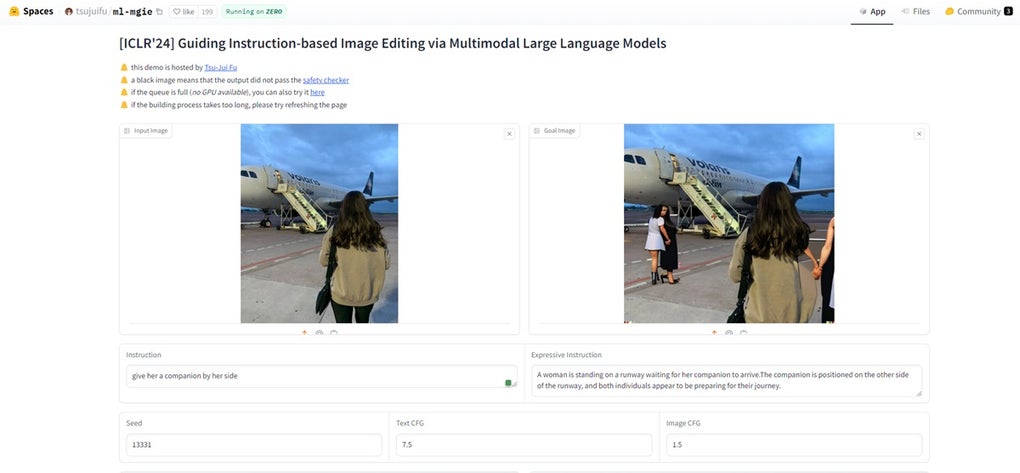
Apple‑MGIE (Multimodal Generative Image Editor) is a groundbreaking, open‑source image‑editing web application that merges the flexibility of natural‑language prompts with the raw power of multimodal large language models. Developed jointly by Apple and researchers at the University of California, Santa Barbara, the platform enables users to articulate visual changes in plain English—no layers, masks, or obscure sliders required. Whether you need a quick crop, a subtle color temperature tweak, or a complex transformation such as “replace the sky with a sunset while keeping the foreground lighting realistic,” MGIE interprets the request, runs it through its AI engine, and delivers a polished result in seconds. Because the service is delivered through a browser, you can launch it from any modern device without installing heavyweight software. The source code lives on GitHub under an MIT‑style license, encouraging developers and hobbyists to fork, extend, or integrate the engine into their own pipelines. A live demo hosted on Hugging Face Spaces allows newcomers to test the capabilities without any local setup. While Apple has not announced direct integration with its consumer hardware yet, the project’s open nature positions it as a test‑bed for future AI‑driven creativity tools. As a free offering, Apple‑MGIE lowers the barrier to professional‑grade editing, inviting photographers, designers, and casual users alike to experiment with AI‑assisted visual storytelling.
Key Features & How to Get Started
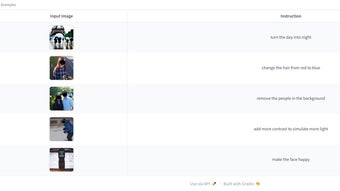
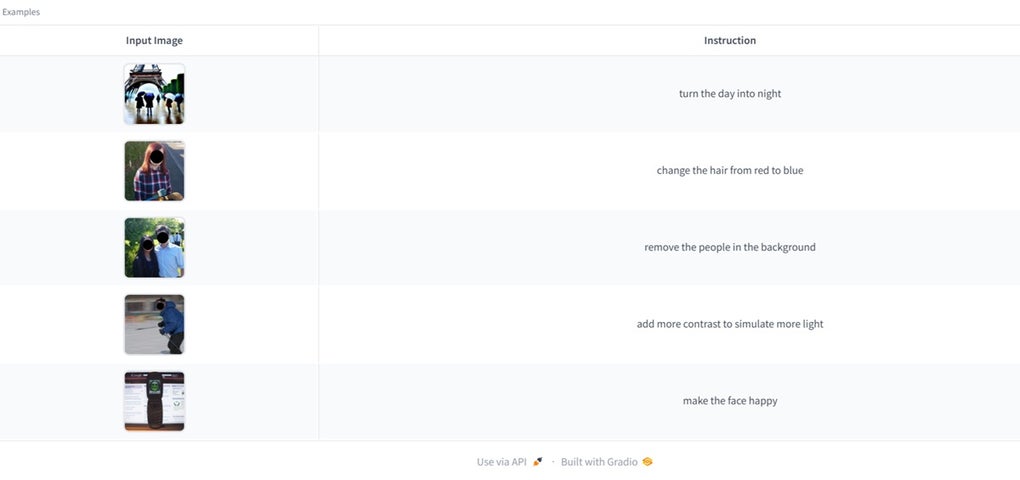
- Text‑Prompt Editing: Convert natural‑language descriptions (e.g., “make the portrait look warmer” or “add a vintage grain effect”) into precise image adjustments.
- Standard Editing Suite: Built‑in cropping, resizing, rotation, and basic color correction tools for quick fixes.
- Region‑Specific Manipulation: Target individual objects or areas—such as changing hair color, removing background elements, or adjusting lighting on a single subject—without affecting the rest of the picture.
- AI‑Driven Style Transfer: Apply artistic styles or moods (e.g., “cinematic”, “nostalgic”, “high‑contrast”) with a single sentence.
- Real‑Time Preview: See AI‑generated suggestions instantly, allowing iterative refinement before committing to the final edit.
- Open‑Source Codebase: Full source available on GitHub for transparency, community contributions, and custom deployment.
- Cross‑Platform Web Access: No OS‑specific installers; run the app on Windows, macOS, Linux, Android, or iOS via a browser.
- Secure Cloud Processing: All image data is processed on encrypted servers; no permanent storage unless the user opts to download.
- Extensible Plugin Architecture: Developers can add new AI models or UI components without altering the core engine.
Getting started with Apple‑MGIE is intentionally frictionless. Because the application is web‑based, the primary “installation” step is simply navigating to the hosted demo or deploying the code yourself.
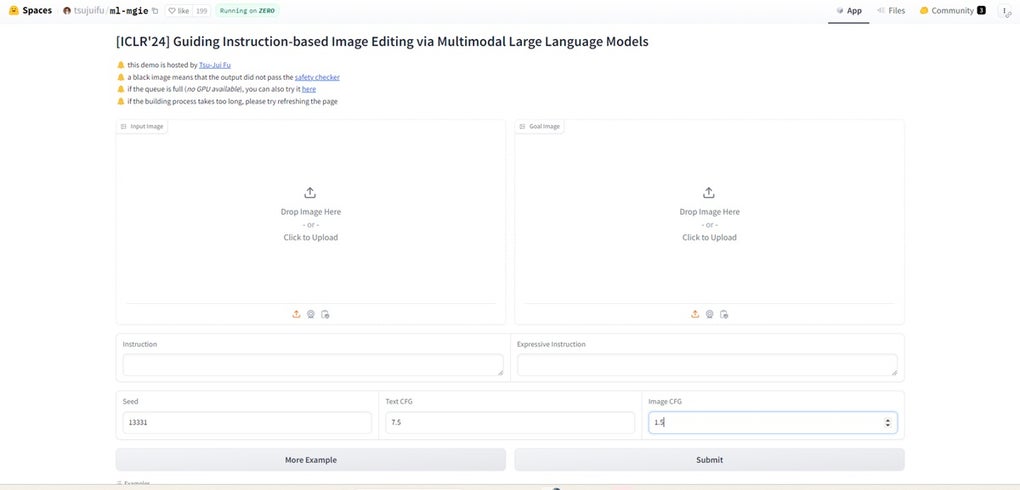
- Try the Live Demo: Visit the Hugging Face Spaces page (https://huggingface.co/spaces/apple/mgie) and click “Open in new tab.” No account or download is required; you can upload an image, type a prompt, and watch the AI work.
- Self‑Host from GitHub: Clone the repository from https://github.com/apple/mgie. The README provides a one‑line Docker command:
docker run -p 8080:80 apple/mgie:latest
This spins up a local server athttp://localhost:8080. Ensure Docker Engine is installed and your machine meets the minimum 4 GB RAM recommendation for smooth inference. - Configure the Backend: MGIE uses a Python‑based inference server powered by PyTorch. If you prefer a custom model, replace the
model.ptfile in the/modelsdirectory and update theconfig.yamlwith the new path. - Upload Your Image: The UI accepts JPEG, PNG, and WebP up to 10 MB. Drag‑and‑drop or click the upload button, then type a clear, concise prompt in the text box below.
- Review & Refine: The first AI pass appears within 2‑5 seconds, depending on hardware. Use the “Undo” or “Regenerate” buttons to iterate, or adjust the “Strength” slider to control how aggressively the model applies changes.
- Download the Result: Once satisfied, click “Download” to save the edited file locally. The output retains the original resolution unless you explicitly resize.
For power users, the repository also includes a REST API endpoint (/api/edit) that accepts JSON payloads with image (Base64) and prompt fields. This enables integration with third‑party tools, mobile apps, or automated batch workflows. Documentation for the API lives in the docs/api.md file and provides example curl commands.
Compatibility, Pros & Cons
Apple‑MGIE runs entirely in a browser, making it inherently cross‑platform. Whether you are on a Windows 10/11 PC, macOS Ventura, a Linux distro, or a mobile device running Android 9+ or iOS 13+, you can access the editor via Chrome, Edge, Safari, or Firefox. The only technical requirement is a stable internet connection for the hosted demo; self‑hosted instances only need a modern CPU/GPU and Docker installed.
Pros
- Free and open‑source, eliminating license fees.
- Natural‑language interface removes the learning curve associated with traditional photo‑editing suites.
- Advanced region‑specific edits rival paid AI tools.
- Instant web access—no bulky installers or updates.
- Strong community support on GitHub, with frequent pull requests and issue tracking.
- Secure processing with no persistent storage of user images.
- Extensible plugin architecture encourages customization.
Cons
- AI model is still in early development; occasional artifacts may appear on complex scenes.
- Performance depends on server resources; self‑hosting on low‑end hardware can be slow.
- Lacks direct integration with Apple’s native apps (Photos, iWork) as of now.
- Limited offline capability unless you run a local Docker instance.
- Advanced features (e.g., custom style transfer) may require additional model downloads.
FAQ & Conclusion
Is Apple‑MGIE really free to use?
Yes. The software is released under an MIT‑style open‑source license, and the hosted demo is offered at no cost. No hidden subscription fees are required.
Do I need an Apple ID to access the tool?
No. The web version runs anonymously. Only if you choose to contribute to the GitHub repository would you need a GitHub account.
Can I use Apple‑MGIE on my mobile phone?
Absolutely. Because it’s a browser‑based app, modern mobile browsers on Android and iOS provide full functionality, including image upload and text‑prompt editing.
How secure is my uploaded image?
Images are processed in memory and discarded after the session ends. The service uses HTTPS encryption, and the open‑source code makes the data handling transparent for anyone who wishes to audit it.
What file formats are supported?
JPEG, PNG, and WebP are supported for both upload and download. Future updates may add RAW support, but currently the tool focuses on widely used formats.
Conclusion & Call to Action
Apple‑MGIE represents a bold step toward democratizing high‑level image manipulation. By allowing users to speak to their photos, the platform bridges the gap between technical expertise and creative intuition. Its open‑source nature ensures continuous improvement, and the web‑first delivery guarantees that anyone with an internet connection can benefit from AI‑driven editing without paying a premium. While the engine is still maturing—meaning occasional glitches or slower performance on modest hardware—its core strengths far outweigh these early‑stage limitations. If you’re a photographer seeking rapid prototyping, a designer looking for quick visual experiments, or a developer eager to build on a cutting‑edge AI model, Apple‑MGIE is worth exploring today.
Ready to give it a spin? Visit the live demo or clone the repository from GitHub. Download, edit, and share your creations—then consider contributing a pull request to help shape the next generation of AI‑powered image tools.



.png)