
Download ArgusLab – Free Molecular Modeling, Visualization & Design Tool
Overview
ArgusLab is a powerful, free‑of‑charge molecular modeling application that lets researchers, chemists, and pharmaceutical professionals design, visualise, and analyse complex molecular structures with remarkable precision. Built around an intuitive tree‑based architecture, the software lets you assemble atoms, residues, and whole macromolecules in a logical hierarchy before rendering them into high‑resolution 2‑D or 3‑D drawings. Whether you need to sketch a folded peptide chain, explore a helical protein motif, or generate a custom ligand for docking studies, ArgusLab provides a robust set of tools that rival many commercial packages. The program also includes a built‑in PDB (Protein Data Bank) browser, a peptide‑to‑sequence converter, and a suite of analysis utilities such as distance measurement, angle calculation, and surface area estimation. While the interface can appear dense to newcomers without a background in molecular science, its depth of functionality makes it a go‑to solution for anyone who needs a secure, regularly updated, and cost‑effective software tool for molecular research. Because it runs on Windows platforms and offers a straightforward installation process, ArgusLab is especially attractive for academic labs and small biotech startups that must balance budget constraints with scientific rigor.
Key Features
- Advanced Structure Builder – Drag‑and‑drop atoms, residues, and polymer chains using a hierarchical tree view that automatically enforces chemical valence rules.
- PDB Bookstore Integration – Directly search, download, and import thousands of crystal structures from the Protein Data Bank without leaving the application.
- Peptide Converter – Transform peptide sequences into three‑dimensional coordinates, generate helical or β‑sheet conformations, and export them for further simulation.
- Measurement Toolbox – Precise tools for bond length, dihedral angle, and surface area calculations, complete with real‑time graphical feedback.
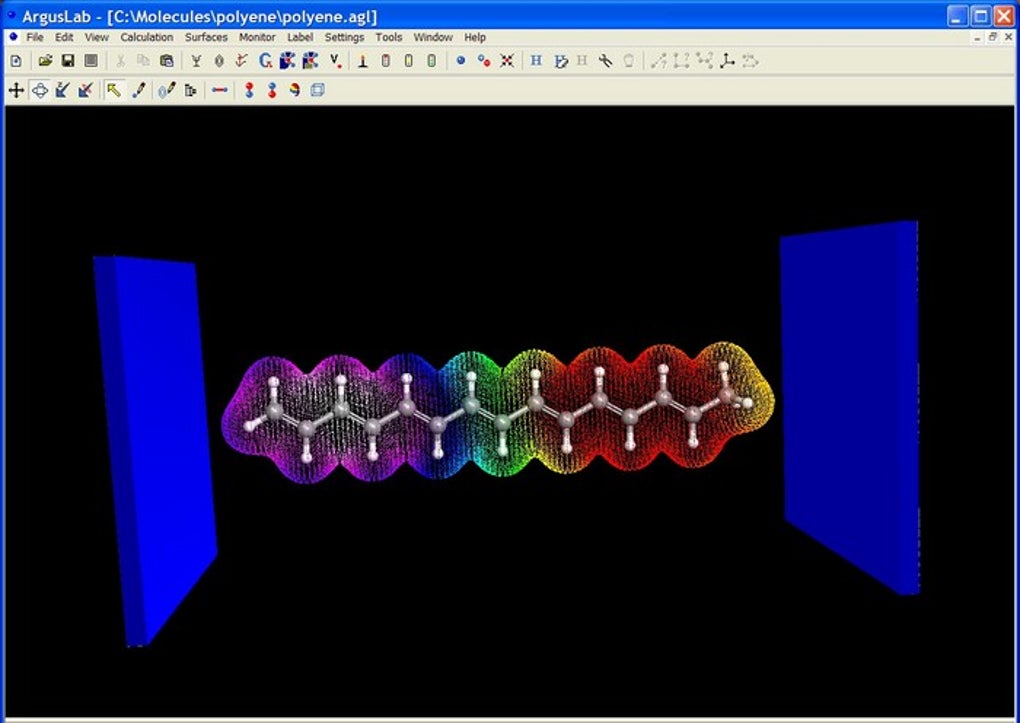
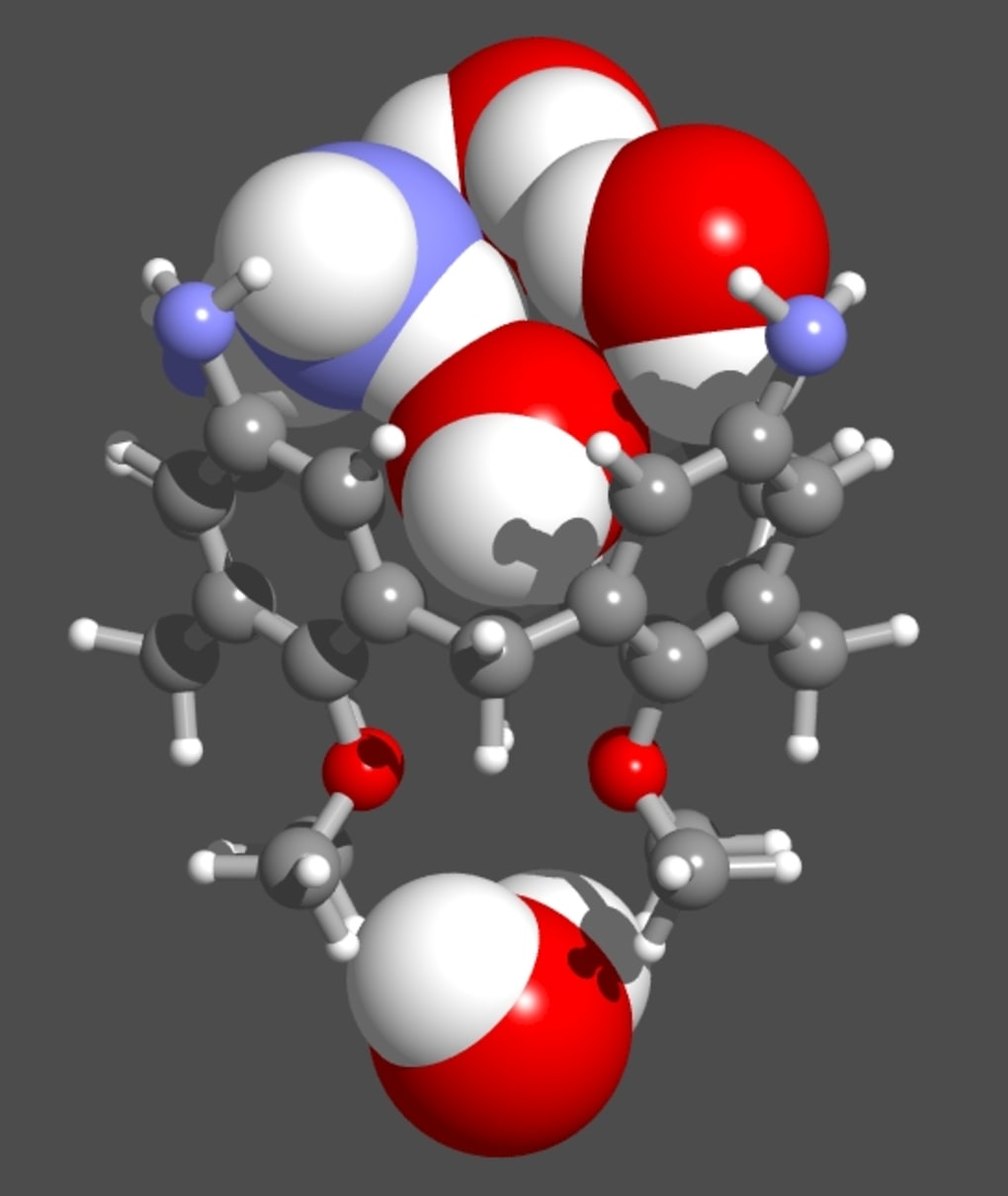
- Visualization Options – Switch between ball‑and‑stick, space‑filling, ribbon, and surface rendering modes; customize colours, lighting, and transparency for publication‑ready images.
- Export & Import Flexibility – Supports common file formats such as .mol, .pdb, .xyz, and .cif, as well as export to image formats (PNG, JPEG, SVG) and 3‑D printable STL files.
- Free & Secure Updates – Regular patches are delivered via a built‑in updater, ensuring that users benefit from the latest security fixes and feature enhancements without any hidden fees.
- Cross‑Platform Compatibility – While primarily a Windows application, ArgusLab can be run on macOS and Linux using compatibility layers such as Wine, extending its reach to a broader scientific community.
These capabilities collectively position ArgusLab as a comprehensive solution for molecular design, whether you are drafting a new drug candidate, teaching protein folding concepts, or simply visualising a complex organic synthesis pathway. The free licence eliminates cost barriers, while the extensive feature list guarantees that you won’t outgrow the software as your projects become more sophisticated.
Installation, Usage & Compatibility
Step‑by‑Step Installation Guide
Downloading ArgusLab is as simple as clicking the Download button on the official website. The installer is a lightweight .exe package (approximately 45 MB) that works on Windows 7, 8, 10, and 11 (both 32‑bit and 64‑bit). Follow these steps:
- Run the installer with administrative privileges to allow the creation of necessary registry entries.
- Accept the End‑User License Agreement and choose the default installation folder (e.g.,
C:\Program Files\ArgusLab). - Select optional components such as the PDB Bookstore cache and the peptide converter; these are recommended for full functionality.
- Complete the installation and launch ArgusLab from the desktop shortcut or Start menu.
For macOS or Linux users, the software can be executed via Wine or a virtual machine. Detailed guides are available on the ArgusLab forum, and the community often shares pre‑configured Docker images for seamless deployment in cloud environments.
Getting Started with the Interface
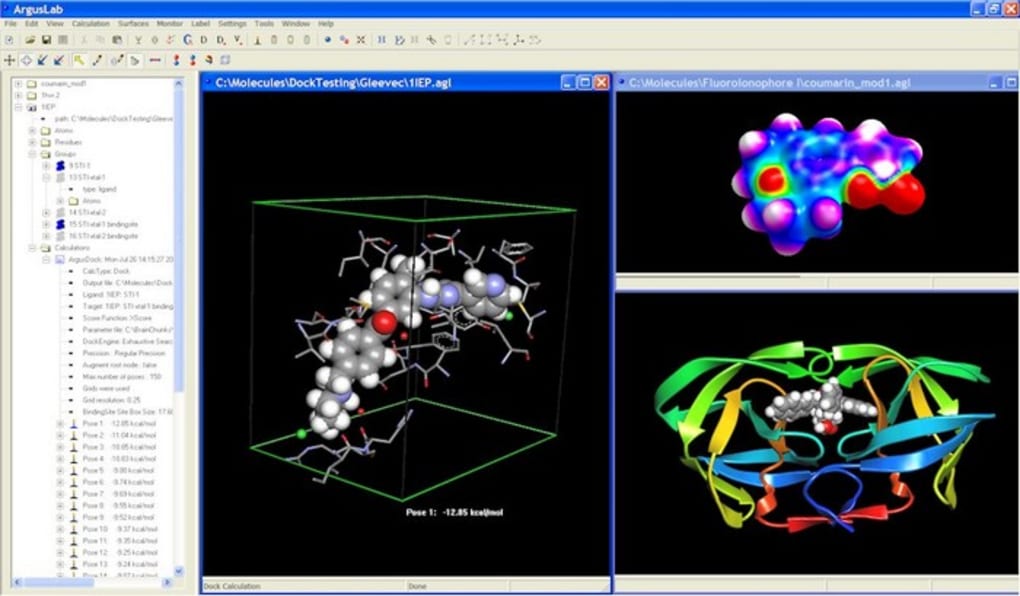
Upon first launch, you will be greeted by a clean workspace divided into three main panes: the Tree Panel on the left, the Graphics Viewer** in the centre, and the Properties & Tools Bar** at the bottom. Begin a new project by selecting File → New, then use the Add Atom and Add Residue icons to build your molecule. The tree panel updates in real time, showing each element’s hierarchical position, which simplifies later editing or deletion. To visualise your structure, click the Render button and choose a display mode (e.g., ribbon for proteins). The software also provides shortcuts for common actions: Ctrl+Z to undo, Ctrl+S to save, and F5 to refresh the 3‑D view.
Operating System Compatibility
ArgusLab is officially supported on Windows 7/8/10/11 (both 32‑bit and 64‑bit). While there is no native macOS or Linux installer, the application runs smoothly under Wine 6.0+ on macOS Monterey and Ubuntu 20.04 LTS. For users who prefer a virtual environment, ArgusLab can be installed inside a Windows virtual machine (VMware, VirtualBox, or Hyper‑V) with negligible performance loss, making it a versatile choice for mixed‑OS research teams.
Overall, the installation process is straightforward, and the software’s low system requirements (minimum 2 GB RAM, 500 MB free disk space, and a modern graphics card for 3‑D rendering) ensure that it can be deployed on most laboratory computers without the need for costly hardware upgrades.
Pros and Cons
What Users Love About ArgusLab
- Zero Cost – Completely free for academic and commercial use, removing budget constraints.
- Rich Feature Set – Includes advanced structure building, PDB browsing, peptide conversion, and comprehensive measurement tools.
- Regular Updates – The built‑in updater delivers security patches and new features without manual intervention.
- High‑Quality Visualisations – Multiple rendering styles and export options produce publication‑ready images.
- Community Support – Active user forums and tutorials help newcomers overcome the learning curve.
Areas for Improvement
- Steep Learning Curve – The dense interface can overwhelm users without a molecular background.
- Windows‑Centric Design – Native support for macOS and Linux is lacking, requiring workarounds.
- Limited Advanced Simulations – No built‑in molecular dynamics or quantum mechanics modules; users must rely on external tools.
- Graphics Performance – Rendering large biomolecular complexes can be sluggish on older GPUs.
- Documentation Gaps – While tutorials exist, some advanced features lack comprehensive official documentation.
Frequently Asked Questions
Is ArgusLab really free for commercial use?
Yes. ArgusLab is released under a free‑software licence that permits both academic and commercial applications without any licensing fees. Users can download, install, and use the full feature set in a commercial setting.Can I import structures from other molecular editors?
Absolutely. ArgusLab supports a wide range of file formats, including .mol, .pdb, .xyz, .cif, and .sdf. You can simply use File → Open to load external structures and continue editing them within ArgusLab.How does ArgusLab handle large protein complexes?
The application can load large PDB entries, but performance depends on your hardware. Using the surface rendering mode on very large complexes may cause slowdowns; switching to ribbon or ball‑and‑stick modes can improve responsiveness.Is there a way to automate repetitive tasks?
Yes. ArgusLab includes a simple macro recorder that captures a sequence of actions (e.g., adding residues, measuring distances) and saves them as a script. These macros can be replayed on new projects to speed up routine workflows.What are the system requirements for optimal performance?
For Windows, a minimum of 2 GB RAM, 500 MB free disk space, and a DirectX‑compatible graphics card are required. For smoother 3‑D rendering of large biomolecules, 8 GB RAM and a modern GPU (e.g., NVIDIA GTX 1050 or better) are recommended.Conclusion – Should You Download ArgusLab?
ArgusLab stands out as a rare example of a full‑featured molecular modeling suite that is both free and regularly maintained. Its extensive toolbox—from a hierarchical structure builder to a built‑in PDB browser—makes it a valuable asset for researchers, educators, and small biotech firms seeking a secure, update‑ready solution. While the Windows‑centric design and steep learning curve may deter absolute beginners, the software’s scalability ensures that you won’t outgrow it as your projects become more complex. If you need a reliable, cost‑effective way to visualise and analyse proteins, peptides, or small organic molecules, downloading ArgusLab today is a smart move. Visit the official website, grab the latest installer, and start turning your molecular ideas into clear, publishable graphics.
Overall, ArgusLab delivers a robust set of molecular design tools at no cost, making it an excellent choice for labs with limited budgets. Its strengths lie in the intuitive tree‑based builder, comprehensive file‑format support, and high‑quality visual outputs. Minor drawbacks include a Windows‑only native client and a learning curve for users new to cheminformatics. Nonetheless, the free licence and regular updates provide strong value for both academic and commercial users.