Laudable Linkage

Laudable Linkage

This had been a great week for blogging. I found more than the usual number of good links to share

Where Is God’s Love When Life Goes Wrong? HT to Challies. “Measuring our Lord’s love for us by our circumstances leads to a pile of wilted petals on the floor, an empty stem in hand, and a discontented heart within. So, how might we measure his love?”

Faith in the Middle of the Mess. “Scripture does not ask us to pretend harm didn’t happen or to spiritualize away real suffering. Scripture shows us how to navigate the hard—how to name the pain, confusion, and dismay while simultaneously holding on to the greater truth that God is good and His plans for us are good, even when life is hard.”

How We Got Our English Bible. “The point isn’t remembering all of the dates and names, but it is getting the flow and seeing the providential hand of God who not only inspired the Scripture to be written in the first place, but has preserved it as it was passed on from generation to generation and one language to another.”

What Exactly Are We Claiming About the Bible? HT to Knowable Word. “When Christians open the Bible and say, ‘This is the Word of God,’ what exactly are we claiming? We need to be precise here, because confusion at this point creates confusion everywhere else. And in a world where the courtroom never seems to adjourn, you need to know what kind of authority you are dealing with when you open the Scriptures.”

3 Reasons to Be Exhilarated–Not Intimidated–By the Bible. “This is the year! Finally, we’re going to fall in love with the Bible—no matter how much it has intimidated us. After all, people do it all the time. We’re determined to become one of those for whom the Bible exhilarates rather than intimidates. The good news is that, as intimidating as the Bible can sometimes feel, the number of ways it exhilarates our souls far exceeds any of its intimidation factors. Here are three ways this is true.”

The Winter of Our Contentment. “I’ve been thinking lately about contentment, about the desire that I have to really live in the moment and enjoy it for what it is.” Melissa goes on to talk about how that’s harder in some days and seasons than others, but possible with God’s help.

Applying the Gospel. “They know the gospel has changed their past and secured their future, but they don’t know how the gospel applies to the present—how it works in the day-to-day realities, challenges, and struggles of life.”

Trading the To-Do List for Rhythms of Grace. “For years, my spiritual life felt like one big to-do list—go to church, complete my Bible reading plan, share my faith, etc. If I didn’t check every box perfectly, I worried God would be disappointed in me. I imagined the Lord sitting on His throne in the heavenly clouds with a clipboard, grading my performance for Him.”

Time Management Tips from the Life of Christ. “I recently finished highlighting my way through the book of Matthew. As I read through this gospel, I took special note of how Jesus managed His time and priorities. Here are three time management lessons from the life of our Lord that I think we would do well to imitate in our own lives.”

Amplify Not a Fool by Responding to His Folly. It’s often hard to know when, how, and how much to engage with online foolishness, even with a desire to shed light. But we need to consider whether that engagement is actually giving foolish words and people a wider audience.

Who Is Rich and Who Is Poor? HT to Challies. “In determining who is rich and who is poor, we subconsciously compare ourselves to those above and below us. We do this whether we are in an American suburb or in a rustic hospital room in East Africa. There is always someone richer and always someone poorer than us. This relative understanding of wealth and poverty can make Scripture’s teaching on the subject confusing. Who then is rich and who is poor—and how do Christ’s commands to generosity apply to each of us?”

Does Your Life Inspire Questions from Your Grandkids? “Let Joshua’s words be a challenge to you: ‘When your children ask in time to come, ‘What do those stones mean to you?’ then you shall tell them…’ What are you doing to pile stones of remembrance in the path of your grandkids?”

I Want to Finish Well for God’s Glory. “But 50 stopped me in my tracks with the dawning realization that I’m most likely entering the final third of my life. How much longer will I have to live and serve the Lord? 25 years? 20 years? Less? Only God know, but this milestone prompted me to step back and consider a vital question: what does it look like to finish well with whatever years the Lord entrusts to me?”

Doom-Scrolling Mozart, HT to Challies. “I receive more information in a day than many people throughout history received in their entire lives. I may not know most of my neighbors’ names, but I am now a global citizen with the responsibility to be informed about current events. But I’m not meant to bear that load. Neither are you.”

The Christian and Media, Part 4. As the author says, Christians may come out at different places on specifics. But there are some Scriptural principles that can guide us in our media and entertainment choices.

Dribs and Drabs, HT to the Story Warren. This is written for writers, but it’s true for everyone that small efforts can add up.

Image

The best way of increasing our knowledge of God’s infinite nature, is by the reverent study of His Word. It is a flimsy religion which discounts doctrine. What the bones are to the body, doctrine is to our moral and spiritual life. F. B. Meyer, Our Daily Walk

Friday’s Fave Five

Friday's Fave Five

We’re expecting another winter storm this weekend. We’ll see what happens! Meanwhile, I’m sharing the blessings of the week with Susanne and friends at Living to Tell the Story.

1. No snowpocalypse. Last weekend, I heard the snow forecast for our area range from a few inches to over 20. We only got a dusting. But we got a lot of rain and sleet that froze overnight, followed by a couple of days of sub-freezing weather. There were a lot of fallen trees around the state. We stayed home Sunday and watched church online due to the potential of icy roads–Jim had walked out to check the night before and almost slipped and fell. We’re thankful we didn’t lose power and the weather was not as bad as it might have been.

2. Perspective. When you’ve had days with the temperatures at 9 degrees F, then suddenly 30 degrees feels nice. 🙂 Well, maybe not nice, but better.

3. A personal letter in the mail. It’s so rare these days to get an actual letter! It was a treat from my aunt.

4. Replacement suction cup thingies. How’s that for technical terminology. 🙂 The shower caddy in our bathroom kept popping out of the suction cup holders. So when I got my shampoo or soap out or held onto the shelf for balance when I rinsed my face, the caddy moved around. Jim found some replacements online. At first having one on each side wasn’t holding it either. So he added an additional one on either side, and that’s doing the trick.

5. Safety bars. I was using the step-in shower in another bathroom for a while after my surgery, and Jim added a safety bar on the outside. Then he got some for the inside of that shower and mine that adhere to the wall with suction. They’ve been a big help.

Otherwise, it’s been a pretty quiet week, which is a blessing in itself.

How was your last week of January?

January Reflections

January Reflections

As most of you know, my new year started with atrial fibrillation, ablations, and cardioversions. I won’t bore you with all the details again, but because of those events and recovery from them, I felt like my New Year didn’t really begin until last week.

I’ve been doing well since then, though, and settling back into my routines.

Watching

My husband indulged me by watching the 1995 series of Pride and Prejudice, starring Colin Firth and Jennifer Ehle. For many of us, this is the best film representation of Jane Austen’s book. I had seen it before, but I don’t think he had. I think he enjoyed the parts he was awake for. 🙂 But he did ask if all of Jane Austen’s novels involved sisters who wanted to marry rich men. In this case it was the mother who wanted them to marry rich men. But I assured him that’s not what Austen was all about.

We also discovered a 2002 series called Sue Thomas, F. B. Eye, based on the true story of a deaf woman who became an FBI agent. Though it’s a little dated, it’s remarkably clean. And while I wouldn’t call it a Christian show per se, there are many favorable references to God and prayer.

We’re also enjoying the new season of All Creatures Great and Small.

Reading

Since last time I have finished:

  • The Characters of Christmas: 10 Unlikely People Caught Up in the Story of Jesus by Daniel Darling. Excellent.
  • Mercy Mild: A 25-Day Christmas Devotional Tracing Christ’s Love from Eden to Eternity by Josh Taylor. Excellent.
  • The Book of Hours by Davis Bunn, fiction, audiobook and Kindle. A grieving husband is bequeathed an old castle by his wife’s aunt. He can’t afford to keep it, so he plans to sell–until he finds a letter with clues to unexpected finds in the buildings. Very good.
  • Count the Nights by Stars by Michelle Shocklee, fiction, audiobook and Kindle. A well-to-do young woman visiting the Tennessee Centennial Exposition in 1897 searches for her missing maid. In 1961, the daughter of the Maxwell House Hotel finds an older woman’s scrapbook from the Expo, sending her to look for clues about what happened. Very good.
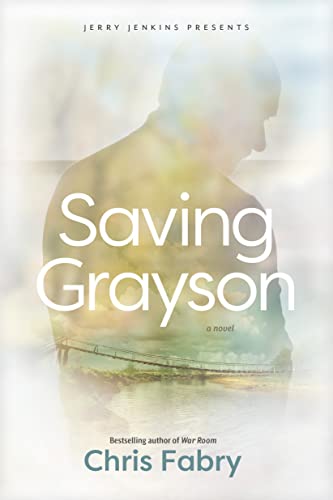
  • Saving Grayson by Chris Fabry, fiction, audiobook and Kindle. A man with Alzheimer’s seeks to right wrongs he can’t fully remember and unravel a mystery that he’s not sure is real. Excellent.
  • The French Kitchen by Kristy Cambron, fiction, Kindle. An American woman works for the OSS undercover as a chef in France while also searching for her missing brother. After the war, she teams up with an unlikely source to continue her search. A good story, but hard to follow.

I’m currently reading:

  • Light Upon Light: A Literary Guide to Prayer for Advent, Christmas, and Epiphany compiled by Sarah Arthur. This has weekly readings from Advent through eight weeks of Epiphany (I hadn’t realized Epiphany was more than a day).
  • Barnaby Rudge by Charles Dickens, audiobook
  • Through Each Tomorrow by Gabrielle Meyer, the sixth in her Time Crossers series
  • All the Beauty in the World: The Metropolitan Museum of Art and Me by Patrick Bringley
  • True Woman 201: Interior Design: Ten Elements of Biblical Womanhood by Mary Kassian and Nancy Leigh DeMoss (now Wolgemuth) with our ladies’ Bible study.

With Bible study and Sunday School reading, I still haven’t gotten back into James for You by Sam Allberry and The Gospel Comes with a House Key by Rosaria Butterfield. But our regular Sunday School time will be involved with a missions emphasis for three weeks, so I hope to finish James then.

I just have James, Revelation, and the last six minor prophets to finish my current trek through the Bible–and our Sunday School is covering the minor prophets this semester. After that, I want to read through a chronological Bible.

I wrapped up my reading year and started a new one with these posts:

Blogging

Besides the weekly Friday Fave Fives, Saturday Laudable Linkage, and book reviews, I’ve posted these since last time:

Writing

Our bi-weekly Zoom critique group resumed this month after taking time off for the holidays. It was good to get back together with the ladies. I’m hoping that getting ready for my presentation will jump start work on my manuscript.

Some writers claim a particular verse for their writing endeavors. I have not done that, but I have started a running list of verses that struck me as pertaining to writing. One that stood out to me was Colossians 4:4. After asking prayer for opportunities to share the gospel, Paul adds the request “that I may make it clear in the way that I ought to proclaim it” (NKJV). Clarity is one of my requests for my own writing.

But recently, another verse has come to the forefront. Psalm 90 is by Moses, and he ends with “And let the beauty of the LORD our God be upon us, And establish the work of our hands for us; Yes, establish the work of our hands” (NKJV).

There are times I come across writing that is so beautiful that I have to stop and turn the words over in my mind for a while. I look up at the ceiling and think, “Wow, I wish I could write like that.” I tend to be more of a factual, practical writer.

There’s nothing wrong with wanting to improve one’s writing and expressiveness, to want to touch the heart rather than just sharing facts. But I have to be careful that my motive isn’t wanting people to fawn over my words rather than being moved by the truth I’ve shared. This verse has the perspective I want: that people see His beauty. And with new writers being told they have to spend hours on social media trying to drum up a zillion followers, I can trust Him to establish the work of my hands.

Looking ahead

I’m looking forward to getting my annual physical and Medicare wellness visit out of the way–back to back appointments this time, thankfully. Valentine’s Day is a highlight for our family. Plus my daughter-in-law’s birthday is next month. The Olympics begin! And we’ll be one month closer to spring!

How was your January? Looking forward to anything in February?

(I often link up with some of these bloggers.)

Review: The French Kitchen

The French Kitchen

The French Kitchen by Kristy Cambron is a novel set mostly in two timelines in France–one in 1943, during WWII, and one after the war in 1952.

Kat Harris likes to work in her deceased father’s garage in Boston, but her high-society French mother wants to turn her into a debutante. Her brother, Gavin, stops by to say he’s going on a trip with friends for a couple of weeks and will write. But he never does. Kat learns that he joined the military to fight in the war, but he’s missing. Kat is recruited by the Office of Strategic Services (OSS) and is sent to France.

Due to an accident on her way to her assignment, she is injured. She wakes up in the house of the Vichy captain in a small French village. Since Manon, the chef at the nearby Chateau du Broutel–also an operative–was expecting a replacement who didn’t arrive, she claims Kat is the person she was expecting, named Celene. Kat aids the OSS and the French Resistance under the noses of the Nazis while also learning to cook French Cuisine.

In 1953, Kat receives a telegram saying her brother is alive. She believes it was from the same Vichy captain. When she confronts him, he neither confirms nor denies it. But they decide to enter a marriage of convenience to help each of them with their pursuits.

Then Kat runs into the man that betrayed her during the war. He goes by a different name now, and they can’t let on that they know each other. But now she wonders if he sent the telegram for his own purposes. In addition to searching for her brother, she has to keep one wary eye in what this man is doing.

Kat’s friend, Mimi, talks Kat into coming to cooking classes with her, taught by Julia Child–before she was known as the Julia Child. As Julia and Kat become friends, Kat learns she has more in common with Julia than a knowledge of French cooking: Julia also worked for the OSS during the war.

Kristy Cambron is one of my favorite authors. I would almost buy a new book from her before knowing what it was about. I liked the overall story here, but I found it very hard to follow. I’ve read many books with dual timelines–and even a few of Kristy’s with three–without any trouble. But I think the fact that these two timelines were close together, involved many of the same people, many of whom had two different names due to their espionage, and both timelines involved looking for Kat’s brother, made them so similar that it was hard to distinguish them at first. I had to make a point of looking at the dates before each chapter to get oriented.

Plus there were a lot of details and surprises of discovering who certain persons were and where their loyalties unexpectedly leaned.

Also, Kristy usually writes Christian fiction. There’s little mention of anything Christian here besides an occasional reference to prayer or a “God help him.”

The book did have its bright spots. It was fun to discover who some of the people really were. I liked the unfolding relationship between Kat and her husband. And though I know nothing about French cooking and little about Julia Child, I enjoyed seeing her in the pages.

I didn’t dislike the book–I just didn’t enjoy it as much as some of Kristy’s others. But lots of other readers did, so you might, too.

Kristy wrote a fun article about what she learned from Julia while writing this book here.

Plug In or Abide?

Plug in or abide?

Most of us have devices we have to recharge: a cell phone, a smart watch, iPads, earbuds, electronic cars, etc. Packing lists for travel include cords and cables for charging. We seek outlets in airport terminals to charge up until our next flight. The threat of storms and power outages causes us to make sure all our devices are charged just in case.

Some of this technological language has filtered into other areas of life. We talk of rest and rejuvenation as needing to recharge our batteries. We say we need to “plug into” some community or power source.

Some might even think of their time in the Bible and prayer as a spiritual recharge. But Joni Eareckson Tada challenges that thought in her devotional book, Spectacle of Glory. In the reading for November 4, she writes that we don’t “sit down for our quiet time and ask ourselves, How long do I have to be plugged into God today to get a good spiritual charge?” She expands that thought by saying:

We don’t get charged up in God in order to unplug and live on our own–until it’s time for the next charge. No. We never disconnect from Him. We are living branches connected to the living Christ. His life is our life.

Instead of plugging in, we abide in Him, as Jesus said in John 15:5: “I am the vine; you are the branches. Whoever abides in me and I in him, he it is that bears much fruit, for apart from me you can do nothing.”

In one of the best definitions for abiding that I have read, Joni says:

Abiding is living in constant awareness of total dependence on Jesus. It involves a constant flow of life-giving sap from the Holy Spirit–not a spiritual charge that takes us up to 80 percent. Abiding in Christ is a 100 percent relationship.

We’re placed in Christ when we believe on Him, and that connection is never severed. But we don’t always consciously think about depending on Jesus.

How do we cultivate that awareness of our dependence on Him? Well, trying to do anything in our own strength will often cause us to fall flat, reminding us we need His strength.

Jesus goes on in John 15 to talk about prayer and His words abiding in us. We don’t confine prayer and Bible reading to our devotional time and then go off on our own. Psalm 1 talks about meditating on God’s instruction day and night. Isaiah 26:3 says “You keep him in perfect peace whose mind is stayed on you, because he trusts in you.” We can talk with Him all through the day. We think about His Word as we make decisions and go about our work, asking Him for help and wisdom in knowing how to apply what He has said.

Then we demonstrate our love to Him by obeying His Word. It’s not that we keep His commandments to try to earn His love. We come to Him for salvation because we can’t keep all His commandments all the time. But when He saves us, we value what He says and we seek His strength to obey Him because we love Him.

Once we believe on Jesus as our Lord and Savior, we’re a branch connected to His vine. His life flows through us. He doesn’t charge us up and then send us off to live independently til we need another charge. We don’t have to worry about becoming disconnected to Him. He’s always with us, constantly empowering us to live for Him. But we abide in Him when we lean into that relationship and depend on Him.

Jesus saying that we can do nothing without Him reminds me of these stanzas from Frances Ridley Havergal’s lovely hymn, “I Could Not Do Without Thee

I could not do without thee,
O Saviour of the lost,
whose precious blood redeemed me
at such tremendous cost;
thy righteousness, thy pardon,
thy precious blood, must be
my only hope and comfort,
my glory and my plea.

I could not do without thee,
I cannot stand alone,
I have no strength or goodness,
no wisdom of my own;
but thou, belovèd Saviour,
art all in all to me,
and weakness will be power
if leaning hard on thee.

May He teach us all to abide more consciously and fully in Him.

John 15:5

(Revised from the archives)

(I often link up with some of these bloggers.)

Laudable Linkage

Laudable Linkage

Some of the good reading found this week:

A (God-Centered) Path from Anxiety to Peace. “In the past, when I turned to prayer in times of anxiety, my focus largely remained on the cause of my anxiety and my desire for his peace. It remained on me, my circumstances, my desires. In fact, praying in this way often increased my anxiety. What I needed was to shift my focus.”

Not a Hindrance, But a Prerequisite. “Many Christians feel they are too unholy or too sinful to participate in the Lord’s Supper. They come to the table downcast, convinced that their sin makes them unworthy. They may refuse to participate at all. But the reality is that being a sinner and having an awareness of that sin is not a hindrance to the Lord’s Supper, but a prerequisite.”

Benefits of Reading Your Bible Every Day, HT to Knowable Word. “Whether you have just become a follower of Christ or have been one for many years, establishing a daily habit of reading the Bible is great medicine for the soul and the means of living effectively in daily life.”

Your Only Sure Protection from the Tragedy of Moral Collapse. “Perhaps Yancey’s parting gift to the evangelical world as he withdraws from public life will be the realization that there’s not a one of us who is immune to the siren call of sin. Every one of us needs to examine our own hearts and pay attention. At age 63, I still have plenty of time to make an unholy mess of my life.”

The Value in Learning to Struggle. “‘We’ve been married for four days,’ we said, practically giggling. I’ll never forget the weathered waitress looking us over and saying ominously, ‘Welp, I hope it lasts.’ Her words would come back to me just weeks later, after the real world had come crashing over our love affair like a wall of water.”

A Helpful Motto for When You’re Exhausted and Overwhelmed. “I didn’t have near the full plate that my friend carried at the time, but I know what it’s like to trudge around all day in a perpetual state of overwhelmedness. I’m not talking about being a bit too busy or somewhat over-committed. Rather, this has to do with the kind of mind-numbing fatigue that stems from circumstantial, hormonal, relational or physical factors that often are beyond our control.”

On Unjust Magistrates: The Doctrine of Interposition. “The doctrine of interposition assumes that magistrates are accountable to a higher moral authority. The laws that they enact can be judged as either just or unjust. The most unjust laws are those that require people to do what is wrong or that forbid people from doing what is morally obligatory. These laws are not only unjust, but immoral. Magistrates must never enact immoral laws. But they often do”

Image

We can all start afresh! However far we have ascended, there is something higher; and however far we have fallen, it is always possible to make a fresh start. F. B. Meyer

Friday’s Fave Five

Friday's Fave Five

We’re supposed to have a winter storm this weekend, so our streets might look like the picture above. I’ve heard different reports about whether we’ll get snow or ice and how much of each. We’ll see! One of my main concerns is losing power, so we’re praying that doesn’t happen.

Meanwhile, I’m joining with Susanne and friends at Living to Tell the Story to cultivate thankfulness by share this week’s blessings.

1. A successful cardioversion. I was sorry to miss FFF last week, but I had a procedure scheduled that day. I didn’t have my thoughts together enough to get a post ready ahead of time. I had an ablation for atrial flutter and atrial fibrillation the week before, but those procedures left me in afib despite three cardioversions. My doctor advised going home and getting back on the medications I’d had to stop for the ablation to see if that helped. It didn’t, so he had me come in for another cardioversion on Friday. Thankfully that went well and my heart rate and rhythm have been back to normal since. My heart might still be a little jumpy over the next few weeks as it heals from the ablation, but it feels so much better than it did! It’s nice to have energy again. I’ve been slowly getting back into my regular routine and even got some tidying done this week.

2. Meals and a visit. Jason and Mittu and Timothy brought a meal over to us and ate with us one night. I enjoyed the food as well as the company. Then Mittu sent over a few other meals another night.

3. An outing. I had my follow-up visit with the cardiologist’s PA Monday, and all went well there. My appointment was for late morning, and his office is near one of Timothy’s favorite restaurants. So I texted his family the night before to see if they might want to meet us there for lunch after my appointment. They did! It was my first excursion in a long while. We enjoyed lunch, then Jim and I went to Crumble Cookies, and then home. I went back out for a haircut with a $9.99 coupon. The stylist got it a bit shorter than I had wanted–I always say to take about an inch off, but people have varying ideas about how much an inch is. 🙂 However, I liked the way it turned out.

4. A working furnace. We’d had a maintenance call scheduled for our AC/furnace unit long before we knew a winter storm was coming. A few hours after having it serviced, I noticed the temperature was a couple of degrees lower than our setting, yet the furnace wasn’t coming on. Jim called the man who had worked on it, and, thankfully, he was able to come back the same day. Some wire hadn’t gotten connected properly. I’m glad it was an easy fix and we didn’t have to wait to make another appointment. Even without a winter storm, it’s been cold at night.

5. Bible study. We had been off over the holidays and started back up in January. I had missed the first couple of meetings, but the books were delayed, so I didn’t miss any lessons. We usually study a book of the Bible, but this semester we’re going through True Woman 201: Interior Design: Ten Elements of Biblical Womanhood by Mary Kassian and Nancy Leigh DeMoss (now Wolgemuth). I had read it about ten years ago, but it will be good to go through it again. Our first discussion was very encouraging.

How was your week? Is a winter storm forecast for you as well?

Review: Saving Grayson

Saving Grayson

In the novel Saving Grayson by Chris Fabry, Grayson Hayes has early-onset Alzheimer’s. He knows his diagnosis and realizes his thinking ability and memories are slipping away. But there are some wrongs he would like to right while he can–even if he doesn’t remember exactly what they are.

He has a recurring dream about a woman in his home town. She’s on a bridge and someone is trying to push her off. Grayson feels his dream is a sign that he is supposed to go back to his home town in West Virginia and either save her from her fate, or find out what happened and who is responsible so justice can be satisfied.

Gray’s longsuffering wife, Lottie, has sworn never to go back to WV. And she can’t let Gray drive alone. But a young Black man named Josh volunteers to drive Grayson from AZ to WV.

As you might imagine, Josh and Grayson have several arguments and misadventures along the way.

Grayson isn’t a very nice person. At first we assume this is because of his condition and his frustration over things like his wife trying to sell his tools and pack up for a move. Grayson is paranoid, instantly thinking people are conspiring against him instead of assuming there is a reasonable explanation for whatever is happening. Lottie knows this is part of his disease but admits she is exhausted.

Yet when Grayson finally makes it to WV, nearly everyone he meets says, “I can’t believe you would come back here.” So we wonder if maybe his abrasiveness is not completely due to his disease after all.

Yet Grayson had an encounter with God late in life that changed him, and moments of clarity sometimes come through.

Chris Fabry skillfully weaves together threads of what it’s like to lose your memories and yourself, to love someone in this situation, the value of all life, the nature of forgiveness and receiving love, a little humor, and some suspense.

I’ll admit the first few chapters were not a cozy read–it was frustrating to read of Grayson’s misunderstandings and antics. Yet I am sure it’s many times more frustrating for all involved to actually deal with these issues.

But I am so glad I kept with the book. I loved the redemptive arc the story took. There was a nice “aha” moment when I realized who one character was (I don’t want to say more and spoil the surprise for other readers). The last chapter was a nail-biter.

Some of my favorite quotes from the book:

He had clear memories of the past, but others were fuzzy, like a photo taken from a car at a high rate of speed (p. 9. Kindle version).

How many of the mean people he’d met in his life were just scared of something, a monster they couldn’t see past? (p. 55).

Can God forgive what a man can’t remember? Can a man atone for the mistakes that haunt him when his memory is in ruins? If I could go back and relive a moment or an action, I don’t know where I’d go or what I’d do to make up for my failures (p. 215).

Let people love you. Don’t push them away. Allow God to love you through those he’s put in your life. Live knowing you are loved. You don’t earn that kind of love. You just receive it every day (p. 229).

Forgiveness is not never thinking of the bad things again. Forgiveness is choosing to move past them. Or maybe better put, allowing the past to move in next door (p. 240).

Chris has a Q&A about the book here. I got the Kindle version on sale last year and then the Audible version, read by Chris, a few weeks ago. It was nice to be able to switch back and forth between them.

I wasn’t sure what “Jerry Jenkins Presents” on the front cover referred to. That wasn’t explained inside the book. But this article shares that this book was one of three published by Focus on the Family and edited by Jenkins which deal with modern issues in a redemptive way.

Though this book would be helpful for friends and loved ones of people with dementia, I think it would be beneficial to anyone. The story itself is excellent and enjoyable. And many of us wrestle with feeling we have to earn people’s love–or God’s–instead of receiving it. Or we feel we have to atone for our sins, when Jesus is the only One who can do that.

Review: Count the Nights by Stars

Count the Nights by Stars

In Count the Nights by Stars by Michelle Shocklee, Audrey Whitfield is the college-aged daughter of the manager of historic Maxwell House Hotel in Nashville in 1961. The hotel had once been one of the grandest in Nashville, but was now mainly used as a residential hotel.

Audrey’s mom passed away the year before. Her brother, Emmett has some kind of unspecified developmental issues–though he’s seventeen, he has the mind of a five-year-old. Her father had a near break-down of his own. Plus the employee who worked at the front desk had just gotten married and moved to Texas. So Audrey is helping out until she can get back to school or decide what to do next with her life.

Then one of their oldest residents, Miss Nichols, suffers a stroke. When Audrey’s father learns that Miss Nichols probably won’t return to the hotel, he asks Audrey to box her things until they know what to do with them.

Andrey finds a scrapbook in Miss Nichol’s room dating back to the time of the Tennessee Centennial Exposition in 1897. She keeps it out to show a friend who is interested in history. They find clippings about the expo as well as postcards written from someone named “Peaches” to a “Luca.” Then there’s an article about six women who disappeared during the exposition. Audrey and her friend, Jason, try to research and find out more about this time in their city’s history.

The book goes back and forth between 1961 and 1897, when Priscilla Nichols was the daughter of a railroad magnate. Their family lived in Chattanooga but came to spend several weeks at the Tennessee Centennial Exposition. Her parents keep thrusting her into the company of Kenton Thornley, hoping for an engagement. But Priscilla refuses to be married as part of a business deal. Plus, she knows Kenton isn’t all her parents think he is.

The luxurious Maxwell House Hotel supplied ladies’ maids and drivers for its guests. Priscilla’s maid is a lovely young Italian girl named Gia, and her brother, Luca, is the family’s carriage driver. Since Priscilla’s parents have various social obligations, and Priscilla can’t go around the Expo alone, she is often accompanied by Gia and Luca. She’s amazed at how much more respectful and thoughtful Luca is than Kenton.

Then one day, Gia mysteriously disappears. As Priscilla and Luca use their separate resources to search for Gia, they discover a seamy side to the beautiful city. As they work to rescue Gia, Priscilla can’t help but wonder about the other young women caught up in the same business about which polite women did not speak. But if no one speaks for them or intervenes for them, how will they ever make it out?

I loved the historical aspects to this book, which sent me on internet searches for more information. The Maxwell House Hotel was a real grand hotel in its day, which later became a residential inn. It’s also where Maxwell House coffee was first served. Sadly, the hotel was destroyed by fire in the 1960s. The current Millennium Maxwell House Hotel was named for it but was built on a different site.

It was fun to learn about the Exposition as well. I found some sites online with drawings of some of the buildings and features mentioned in the book. A replica of the Parthenon from the Expo still stands.

I didn’t see in the author’s notes whether the part about six girls going missing during the expo was true. But I respected the careful way Michelle dealt with the trafficking issue. Priscilla wants her life to count, and she knows that if she starts to work with a couple who helps rescue women in this situation, she’ll likely never marry or be accepted in “polite” society of that era.

Michelle says in this interview that one theme of this book is “I see you,” while another is “Love thy neighbor.” I think she brought out both themes well.

I enjoyed Audrey’s story, too. She’s at a crossroads in her life, waiting until she can take the next step. How God leads her and how she changes in the interim was a nice arc as well.

I listened to the audiobook, nicely read by Sarah Zimmerman. But I also checked the Kindle version from Libby especially for the author’s notes.

This is my second book by Michelle, the first being The Women of Oak Ridge. I am eager to read more.

Dealing with Distractions During Prayer

Distractions during prayer

If you’re like me, settling down to pray triggers all kinds of distractions. It’s not so much that other people interrupt me, though that happens occasionally. The problem is usually in my own mind going a dozen different directions.

Here are some practices that have helped me:

Allow for quiet time during the day. I think one reason our thoughts scatter so much is that we don’t often have quiet time to just think any more. If I am cooking or cleaning in the kitchen, I turn the Christian radio station on. If I am driving or getting ready for the day, I listen to music or an audiobook. All of those things can be edifying in themselves. But especially if you are an internal processor like me, your mind needs time to think things through. So allowing for some quiet thinking time during the day helps our thoughts not to go so far afield when we sit down to pray.

Keep a notepad nearby. If I suddenly remember an item I need to add to the grocery list or a blog idea or an appointment I need to make while I am praying, I jot it down to take care of when I am done. That way my mind isn’t struggling to remember those things while also praying. You could also use the notes app on your phone, if the phone itself wouldn’t be a distraction.

Deal with your phone. You may want to silence your phone, depending on whether someone might need to get in touch with you. I have some prayer prompts on my phone, but otherwise I put it in my pocket or turn it face down on my desk. I have most notifications turned off anyway because I don’t like my phone dinging all day. I check my email and social media often enough that I don’t need my phone to tell me every time something comes through for me.

Pray out loud. Depending on whether or not I am alone, praying aloud or in a whisper can keep me focused.

Walk or do something active while praying. Sitting with head bowed and eyes closed makes some of us sleepy. I know many people who like to pray when they take a walk.

Integrate prayer with Bible reading. We often divide prayer and reading into two separate activities. But we can pray as we read. When we come to a passage about praise, we can praise the Lord right then. If something from the Bible convicts us, we can confess that o the Lord immediately and ask for His help.

Use prayer lists. I didn’t always like prayer lists. I felt that if prayer is just talking to my Father, then wouldn’t it seem weird to bring Him a list instead of just talking to Him normally? But then I realized I do use lists when I talk to people. I always jot down things I want to discuss with the doctor before I see him. I might even do the same before calling or FaceTiming my son–even though we can text or email, some things that are better discussed when we’re actually talking. I think God knows our frailties and doesn’t mind if we use aids to prayer.

Pray throughout the day. In my early Christian life, I felt like I hadn’t officially prayed for something unless I prayed about it during my devotional time. But that can result in a ridiculously long prayer list. Plus I might forget a request I heard during the day. Now I try to pray for a request immediately when I hear or see it. With all our other relationships, we have shorter conversations throughout the day and then longer, one-on-one times. It can be that way with the Lord, too: we don’t have to confine all our prayer to our devotional time.

Divide up requests. Some people pray for their country one day, their church another day, their family another day, missionaries one day, and so on. Others pray through their church directory a few people at a time.

Use prayer prompts. I like to use Scriptural prayers to start off my prayer time. Most often I use what we call “the Lord’s prayer.” For instance, I might start, “Our Father . . . Thank you for being My Father. Thanks for making me Your child. Thank you for giving us a picture of a loving Father and child to understand your care of us.” And I go through the rest of that prayer in like manner.

I also like to use prayers like Paul’s in Colossians 1:9-12 or Ephesians 3:14-19 for myself and others. I’ve made a list of them in my notes app as I have found them.

Though I am not quite as fond of prayer acronyms, I did find them helpful in keeping me focused when I first started praying. One is PRAY:

Pray
Repent
Ask
Yield

Another is ACTS:

Adoration
Confession
Thanksgiving
Supplication

Confess and carry on. When I find my thoughts miles away while praying, I just usually say, “I’m sorry, Lord,” and get back to it. Sometimes the thing my mind runs to is something to stop and pray about.

Let distractions remind us of our need. Elisabeth Elliot once wrote in A Lamp For My Feet:

Distractions can be useful. They provide constant reminders of our human weakness. We recognize in them how earthbound we are, and then how completely we must depend on the help of the Holy Spirit to pray in and through us. We are shown, by a thousand trivialities, how trivial are our concerns. The very effort to focus, even for a minute, on higher things, is foiled, and we see that prayer–the prerequisite for doing anything for God–cannot be done without Him. We are not, however, left to fend for ourselves. The Spirit too comes to help us in our weakness.

What about when people distract us? Jesus faced that as well. He took care to pray alone at night or early in the morning, but people still found Him and interrupted Him. A Sunday School teacher from years ago once said that when someone called his home during family devotions, he wanted to answer the phone by saying, “Do you realize you’re being used of the devil right now?” But Jesus never responded in such a way when His time with His Father was interrupted. He always responded graciously. It is taking me a long time to learn that God is over even our interruptions.

I think one of the most important things to remember about prayer is that it is not a performance or a ritual. We’re talking to our loving Father when we pray. We can lay our hearts bare in all our humanness and imperfection, knowing He loves us and wants what is best for us.

Romans 8:26

(I often link up with some of these bloggers.)