

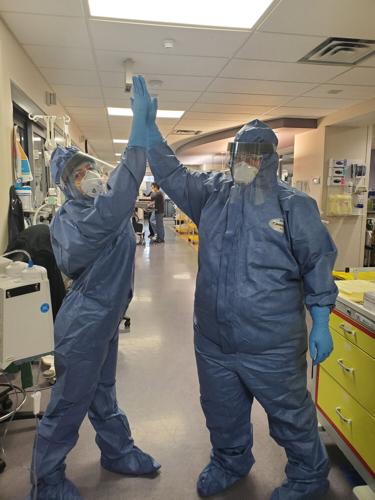
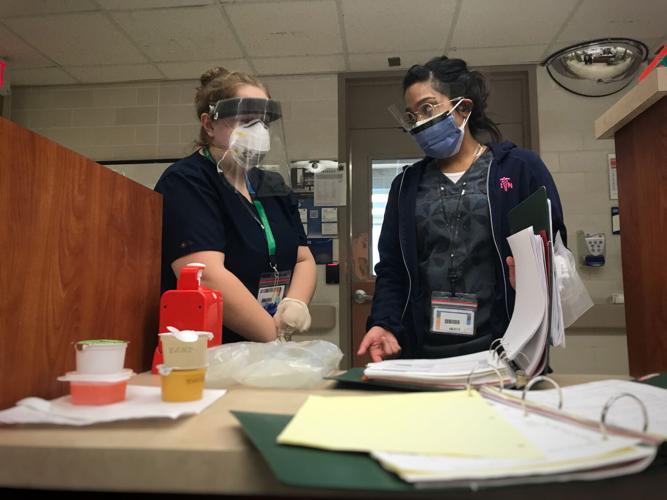
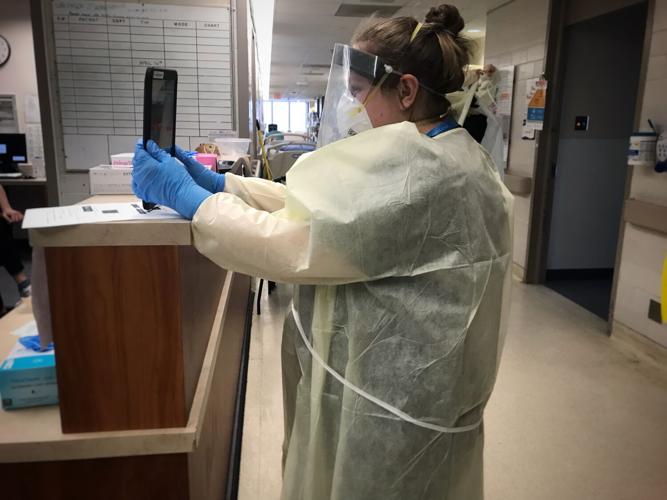
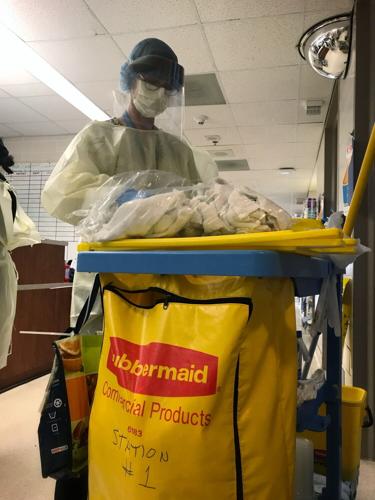
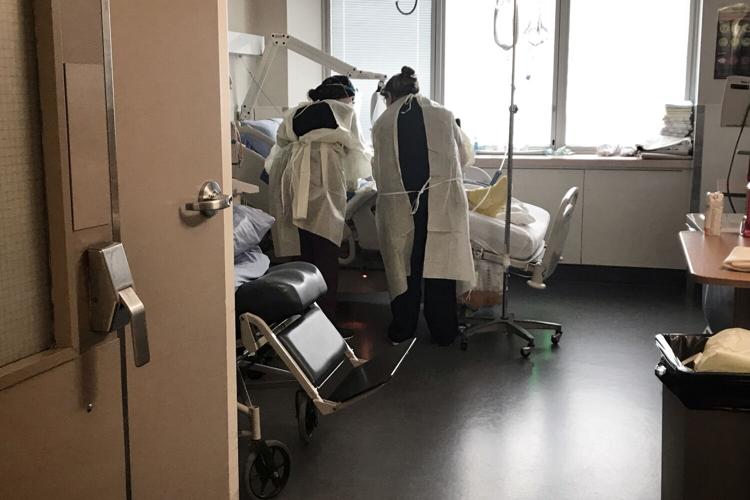
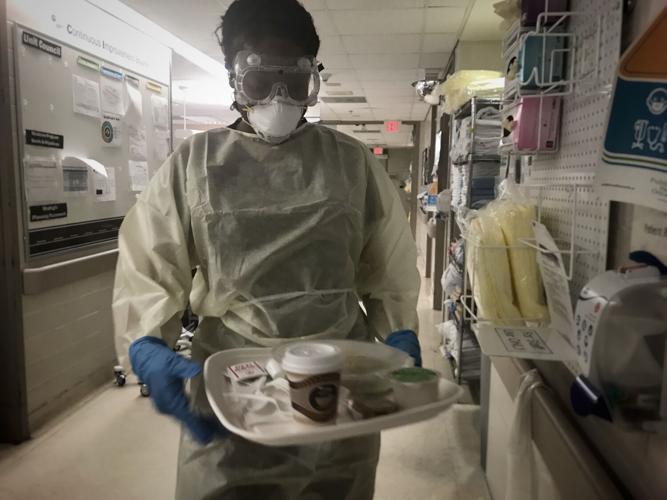


OSHAWA — Staff at Lakeridge Health were ready for a large spike in patients in critical care due to the COVID-19 pandemic, but public health efforts have, for now, prevented that from happening.
“Our numbers are holding steady and coming down and this is happening because of the sheltering in place that people have been doing and it’s actually working,” said Dr. Dan Ricciuto, medical director for infection prevention and control at Lakeridge.
“I’ve seen sometimes the response, why are we sheltering in place, there’s hardly any cases. My point is there’s hardly any cases because we’re sheltering in place. What we’re doing is really helping.”
Dr. Karim Soliman, chief and medical director for the critical care department, explained normally Lakeridge has 43 critical care beds across its system, with the ability to bump that up 100 beds if needed due to COVID. However, like other hospitals in Ontario, Lakeridge has not had to drastically increase the number of critical care beds due to the pandemic.
“Luckily at the moment we’re actually even below our normal capacity,” said Soliman with respect to the number of patients admitted to critical care.
As of April 16, Lakeridge was treating 54 suspected and confirmed cases of COVID-19 with 15 suspected and confirmed cases in critical care.
“We’ve had over 20 patients come through our ICUs — actually probably more than that — we have, however, seen a better mortality rate than in other jurisdictions that come to the ICU,” said Soliman.
“A piece of good news for us is we’ve seen at least 12 of our ICU patients who were ventilated — the highest support you can get when you’re very sick — have been able to come off the ventilator and progress to the next stage in them getting better.”
He explains patients who need ventilation do so because they have a condition called acute respiratory distress syndrome (ARDS), where fluid builds up in the lungs, preventing oxygen from being absorbed and depriving organs of needed oxygen.
“Often people who have that are on the ventilator for some time; we’re finding patients with COVID, for some reason once they go on the ventilator, they even stay on the ventilator for a longer time than other diseases that cause ARDS.”
Lakeridge said COVID-19 patients spend in the range of seven days to beyond two weeks at the hospital, with the average being 12 days.
Looking at other jurisdictions, including China and Europe, the data shows five to 20 per cent of people who contract COVID-19 require hospitalization, said Soliman. He suspects Lakeridge is seeing something in that range, estimating about 10 to 15 per cent of Durham residents who acquire COVID require hospitalization.
“Once you reach the hospital, a number of these people just need supportive care and time and will get better,” said Soliman. “Right now the only thing that we know works for sure is supportive care, things like oxygen, making sure no complications arise,” he said.
“There’s a number of medications that have been reported that potentially help and we’ve been looking at the literature very closely … as of right now there is nothing definitively that works.”
Lakeridge doctors have tried medications like hydroxychloroquine — the malaria drug often mentioned by U.S. president Donald Trump — however recent studies show it does not have any dramatic benefit.
Lakeridge doctors are keeping an eye on research on a drug called remdesivir, which was originally developed to treat Ebola, because it has shown positive results as a treatment for COVID patients in recent studies.
“Some of the biggest advances are just how best to make sure the patient’s getting enough oxygen into the lungs, how best to make sure they’re ventilated correctly,” added Ricciuto, adding that techniques like proning — positioning patients on their stomachs to help them breathe — and other methods have been more helpful than drugs so far.
As COVID-19 is a new virus, doctors are still learning and adapting strategies to treat patients and it’s a global effort to share information among colleagues.
“This is different than when SARS was around in that social media and people connecting from around the world is a lot more prevalent,” said Soliman. “There’s been a lot of conversation between groups in Canada, including us and groups in the United States, groups in the UK, groups in Italy.
“So we’ve been receiving a lot of their experience, both formally in the literature, but also informally via social media and through direct contact, which has been, to be honest, very helpful because they’ve seen a lot more patients than we have, so we’re learning from their example.”
As of April 17, 26 out of 37 COVID-19 deaths in Durham have been at long-term care homes and Ricciuto said some patients from long-term care do not get transferred to hospital.
“A lot of patients will have wishes not to be transferred to hospital or to have heroic measures done, so they try to manage as much as they can in the long-term care facility, given oxygen and fluids and other treatments there,” he said, adding that some patients in long-term care have do not resuscitate orders.
The largest age group for deaths is 90 and older in Durham, with 17, followed by 12 deaths among people aged 80 to 89.
Roughly 10 staff members at Lakeridge have tested positive for COVID, though it’s not clear in some cases whether it was community-acquired or hospital-acquired.
On April 1, the hospital confirmed an outbreak in a cardiac unit with two patients and a health-care worker testing positive.
Riccuito said the patient came into hospital with symptoms, tested negative and improved and then showed symptoms again. It’s unclear whether the patient had a false negative or picked it up from visitors before the hospital put strict visitor rules in place, and as a result a staff member and the patient’s roommate were exposed. The exposure happened before all staff were required to wear masks around patients.
Keeping COVID transmissions down in Durham in the general public ultimately helps health-care workers, said Soliman.
“From a hospital-acquiring perspective, when your resources are overwhelmed like it is New York, when you can’t put patients in proper isolations rooms, there’s too many patients and you can’t do the proper protocol, that’s really when you put the health-care workers more at risk because they can’t take the time to do what they need to do,” he said.
There are constant talks at Lakeridge about when the hospital system can go back to doing much-needed surgeries that have been suspended due to COVID and it will depend on the impact of the virus on the medical system and the ability to rein it in through public measures.
“The government and the region has done great work and the public has to get a lot of credit for it and they’ve listened to the instructions from the chief medical officer of Ontario about social distancing and that’s one of our biggest weapons of this disease to prevent it in the first place,” said Soliman. “As a result of that, primarily we’re seeing our numbers improve. Having said that, all it would take is removing these restrictions in a way that’s not safe and our numbers could easily spike again.”
Error! Sorry, there was an error processing your request.
There was a problem with the recaptcha. Please try again.
You may unsubscribe at any time. By signing up, you agree to our terms of use and privacy policy. This site is protected by reCAPTCHA and the Google privacy policy and terms of service apply.
Want more of the latest from us? Sign up for more at our newsletter page.