America300 and the Legacy of the Class of 2026
May 19, 2026
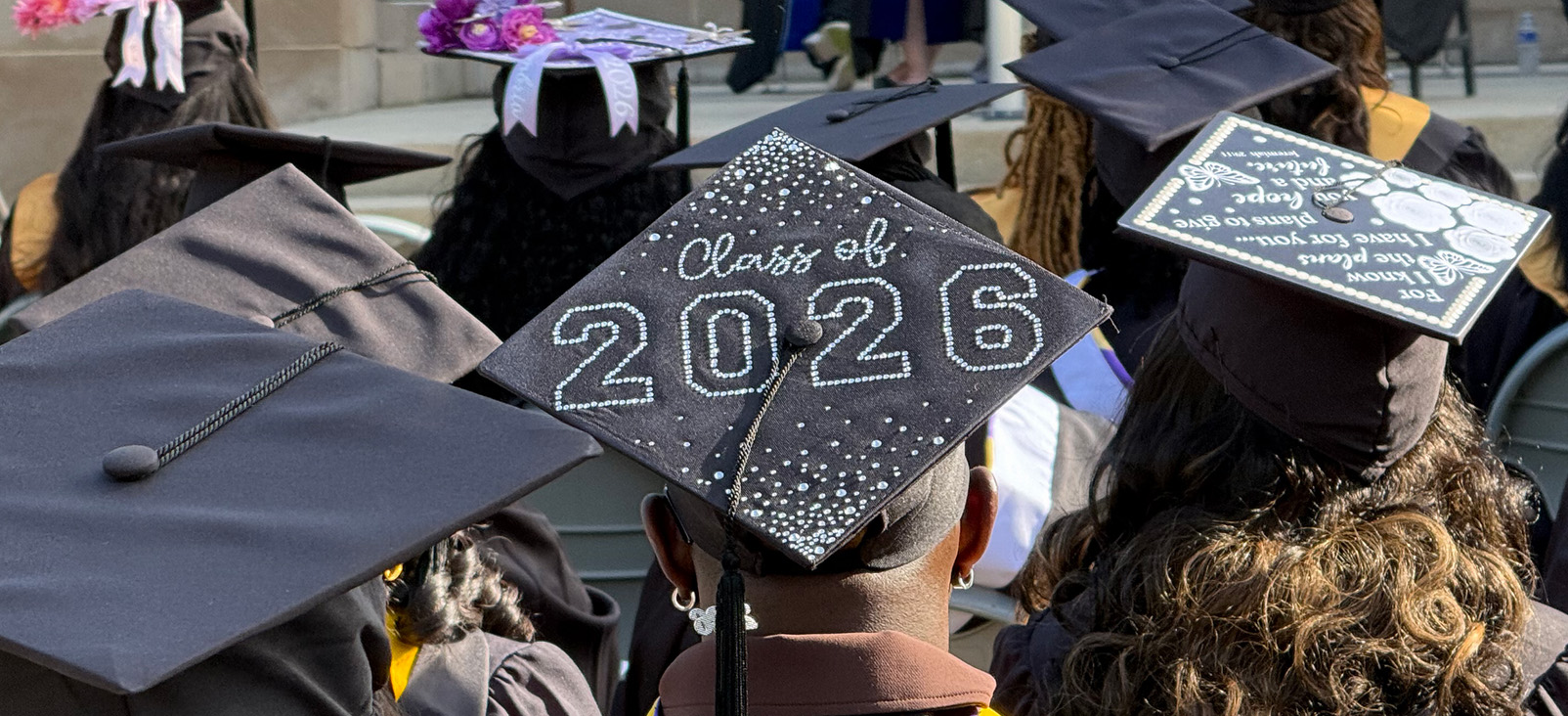
(Photo credit: Timothy Russell)
Envisioning America300: The Legacy of the Class of 2026
President Patricia McGuire
Remarks for the 123rd Trinity Commencement
May 15 and 16, 2026
To Trinity’s Class of 2026: your graduation from Trinity this year coincides with the 250th Anniversary of the Declaration of Independence on July 4, 1776, a date revered as the birthday of the United States. We will spend some time this summer enjoying many festivities — marching bands, fireworks, field trips to historic sites or watching Ken Burns on the American Revolution — or even, I hear, viewing some kind of professional fight on the White House lawn. What could be more American?
But if all we do at this important chalkstripe across history is remember the past and nosh on hot dogs, we will have wasted both time and opportunity to do something far more important. Instead of looking back through a romantic haze of mythology about our nation’s founding, let’s look ahead with a fierce determination to make sure that these 250 years spent in earnest pursuit of the great American Dream do not vanish in a cataclysm of lost hope and authoritarian impulse.
You, the Class of 2026, will be celebrating your 50th reunion at Trinity in the Year 2076. (That seems impossibly distant right now, but having just celebrated my own 50th reunion, believe me, time flies!) 2076 will also be the 300th Birthday of the United States — our national Tricentennial. So, it seems reasonable to ask in 2026, as we celebrate America250: what will your legacy be to ensure that our nation will be strong, united and still free at its 300th birthday?
How will your Trinity education contribute to that legacy?
You have earned your degrees in many major fields — nursing, occupational therapy, counseling, teaching, science, journalism, business, criminal justice, law, global affairs, nonprofit advocacy, to name a few. But while your specific knowledge and skills may vary, if Trinity has done her job well you should have a strong set of shared values and philosophies that will guide your future work as citizen leaders and stewards of families and communities. What are those shared values?
Our banners and logos proclaim Trinity’s commitment: Education for Justice. Working for justice is our foundational value, received from our founders, the Sisters of Notre Dame de Namur, arising from the Catholic teachings on social justice and shared by most faith traditions. What does justice mean in this context? It means respect for the dignity and worth of every single human life, lifting up each person regardless of race or gender or disability or immigration status or who they love or what language they speak or the size of their bank accounts.
Justice is the value that fueled the passion of the Founders of this nation when they proclaimed “self-evident truths” in the Declaration of Independence, with God-given equality being the first of the “unalienable rights” including “…life, liberty and the pursuit of happiness.” The later preamble to the Constitution enumerates one of the purposes of government “to Establish Justice.” We speak of justice every time we pledge allegiance to the flag — “with liberty and justice for all.” “Equal Justice Under Law” is carved into the stone over the entrance to the Supreme Court.
Justice is the bedrock value on which our freedoms flourish. But today, the threats to justice are everywhere. The Supreme Court has diminished the Voting Rights Act of 1965. The Civil Rights Act of 1964 is being warped and twisted to protect the very interests it was enacted to oppose, undermining the rights of the people it was designed to protect. Officials at both the federal and state levels are rolling back the gains of prior eras, forbidding schools from teaching about diversity and inclusion that are manifestations of justice; banning books about racial and gender justice, scrutinizing the syllabi of college professors to find out if they are teaching “divisive concepts” like the role of slavery in the colonial economy; threatening employers and institutions that uphold ideals of equity and justice not only for Black and Latino and Asian persons but also for women and immigrants and LGBTQ persons and others who do not fit the notion of what’s acceptable to the prevailing power structure.
Government officials have imposed steep penalties on universities that once were champions of free speech and equal opportunity — no more, as school after school bows to federal pressure to step back from principles of justice and equity. The government is investigating colleges for enrolling too many Black students. (Just this past week, the Department of Justice opened an investigation into Yale Medical School claiming they favor Black students over others — just 44 Black students are at Yale Medical out of 553 total students.) Recently opening an investigation into Smith College, seems that the Department of Education now wants to tell women’s colleges who we may enroll and teach.
We women’s colleges and minority serving institutions are not reflecting pools to be painted over at the whim of the executive! We reflect our own shimmering commitments to mission rooted in social justice; our values are not subject to governmental edicts!
It took nearly 90 years from the nation’s founding in 1776 to abolish slavery with the Emancipation Proclamation and the end of the Civil War. But Reconstruction did not guarantee equality. It took another 100 years of bitter struggles, sometimes violent confrontations, constant advocacy and courageous action for this nation to enshrine equal justice under law into federal and state laws on equal opportunity, civil rights, voting rights, women’s rights. It took another half century for the impact of those laws to emerge in more level playing fields for people who once suffered historic racial oppression and gender discrimination. But today, in 2026, it’s taken just two years for the hard-won gains of the last two centuries of the American struggle for equal justice to be shattered.
It may take the next 50 years to repair the damage that’s been done — there’s no time to lose!
250 years ago, the Founders debated and rejected the idea of monarchy for their new nation. We hear echoes of that debate as we grapple with the now-contemporary question of how this nation will move away from the precipice of authoritarian rule. Our government is profoundly out of balance right now — Congress and Courts seem increasingly beholden to the will of the executive. We, the People, must use our votes, raise our voices, exercise our rights to insist that public officials act with respect for the Constitutional design of our government — a balance of powers, not a monarchy. No kings!
In 1863, on the battlefield at Gettysburg, Abraham Lincoln beheld a broken, bloody nation, not yet 100 years old, torn apart and killing itself over the most important issue left unresolved by the Founding Fathers — slavery. The Civil War was, in many ways, a consequence of the failure of the Founders including Washington, Jefferson, Madison, Hamilton and others to do what they knew was right — abolish slavery at the founding and bring “all men” truly into the sharing of equality, life, liberty and the pursuit of happiness. Their failure simmered for decades and burst forth in the worst war the United States ever fought, the war with itself. Some now say that war never really ended.
At Gettysburg, Lincoln honored the thousands who died and prayed, “…that this nation, under God, shall have a new birth of freedom — and that government of the people, by the people, for the people, shall not perish from the earth.”
May that be your prayer and call to action, my friends in the Class of 2026! May you use the gift of your Trinity education to serve your students and patients and clients and children and co-workers and neighbors well; and may you always be advocates and activists for the renewal of the American promise of justice, peace, equality and freedom for all people.
May you and your children and grandchildren stand proudly on the occasion of America 300, looking back with pride and satisfaction in the knowledge that you were part of replenishing and strengthening the values that once, and then again, lift up this nation as a beacon of hope, symbol of peace and prosperity for all in the global village.
May the blessings of the Trinity go with you on this journey through all the days of your lives.
Congratulations, 2026!
Continue reading →Read comments (2) Add CommentVOICES OF THE CLASS OF 2026: CONGRATULATIONS, GRADUATES!
May 7, 2026
Congratulations to the Green Class of 2026! I am so pleased to present some of the amazing stories of this year’s graduates, now alumnae and alumni of Trinity! Read, be inspired and celebrate their achievements!
The first two stories below are from twin sisters…. Jamilehy and Christy Ramos…. Trinity is a family affair!!
Jamilehy Ramos, B.A. in Business Administration (CAS)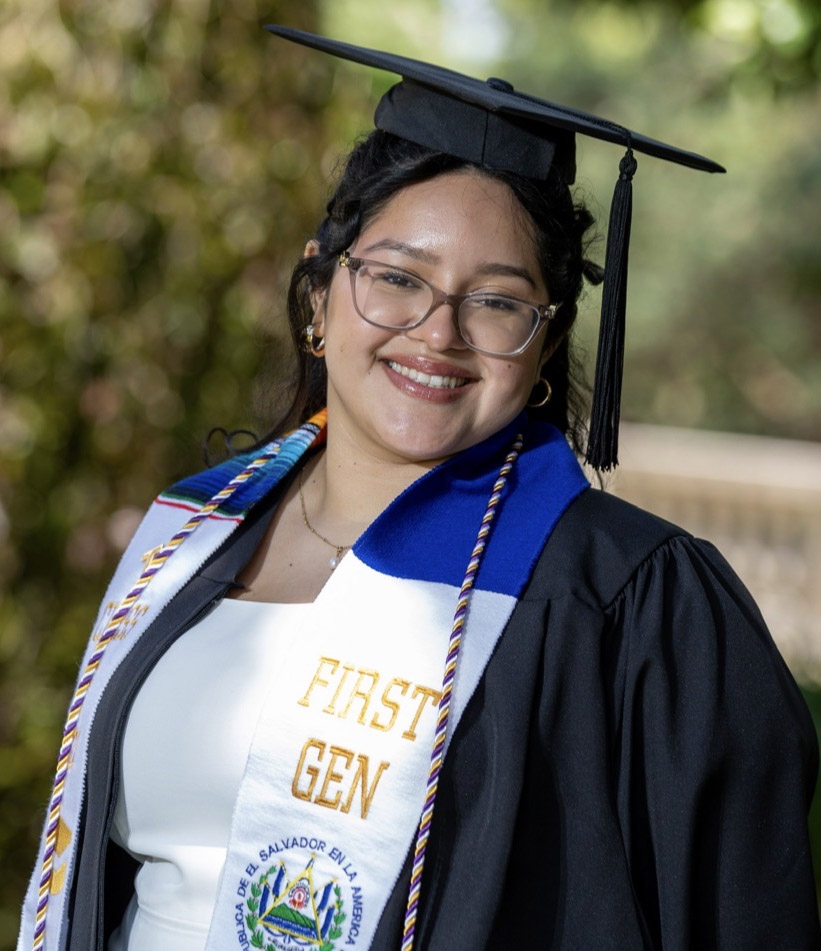
My name is Jamilehy Ramos, but I like to go by Jam. I am graduating with a B.A. in Business Administration and a minor in Fine Arts. Becoming a graduating college student is something very meaningful to me because, when I was in high school, college was something that didn’t feel possible. My twin and I were both planning to attend college at the same time, but I didn’t think it would be financially possible for us, so I originally intended to go straight to work after high school. However, with the scholarship from Trinity and the support and encouragement from my program, Community Bridges, my sister and I became the first in our family to graduate from college. That is something I will always be proud of because it showed me that anything is possible with hard work, connections, and support. My experience at Trinity has entirely changed my life. In high school, all I did was extracurricular activities, classes, and just living my life, but I had never worked a job or held major leadership roles. Trinity helped me grow to be more of a leader and with my profession.My first job was here in the Student Affairs department, where I learned how to be more of an advocate for myself and others, how to work in a team, be more creative, and adapt to challenges. Trinity has helped me to have the confidence to be more of a leader.
Throughout my time here, I served in several leadership positions within SGC. I started as the Vice President of the Green Class in our Freshman year, then Campus Activities Association President in my Junior year, and eventually Student Government Council President this year. I feel that these positions and courses like Leadership have allowed me to connect with my community and make meaningful relationships with students, staff, faculty, and administrators who have supported me throughout my journey here. After graduation, I will continue working at Trinity as the new Student Activities Coordinator, and I am excited for this next chapter in my life. In the future, I also hope to pursue a career in music management and possibly continue to grow as a performer myself. I want to continue advocating for causes that matter deeply to me, especially immigration rights and women’s rights. Trinity’s education has shown me how important being an advocate is in these times, and I hope I can take everything I learned from Trinity to make a positive impact in the world. I am incredibly grateful for my time at Trinity and for all the people who believed in me, encouraged me, and helped prepare me for my future. Trinity has truly become a place that shaped who I am today.
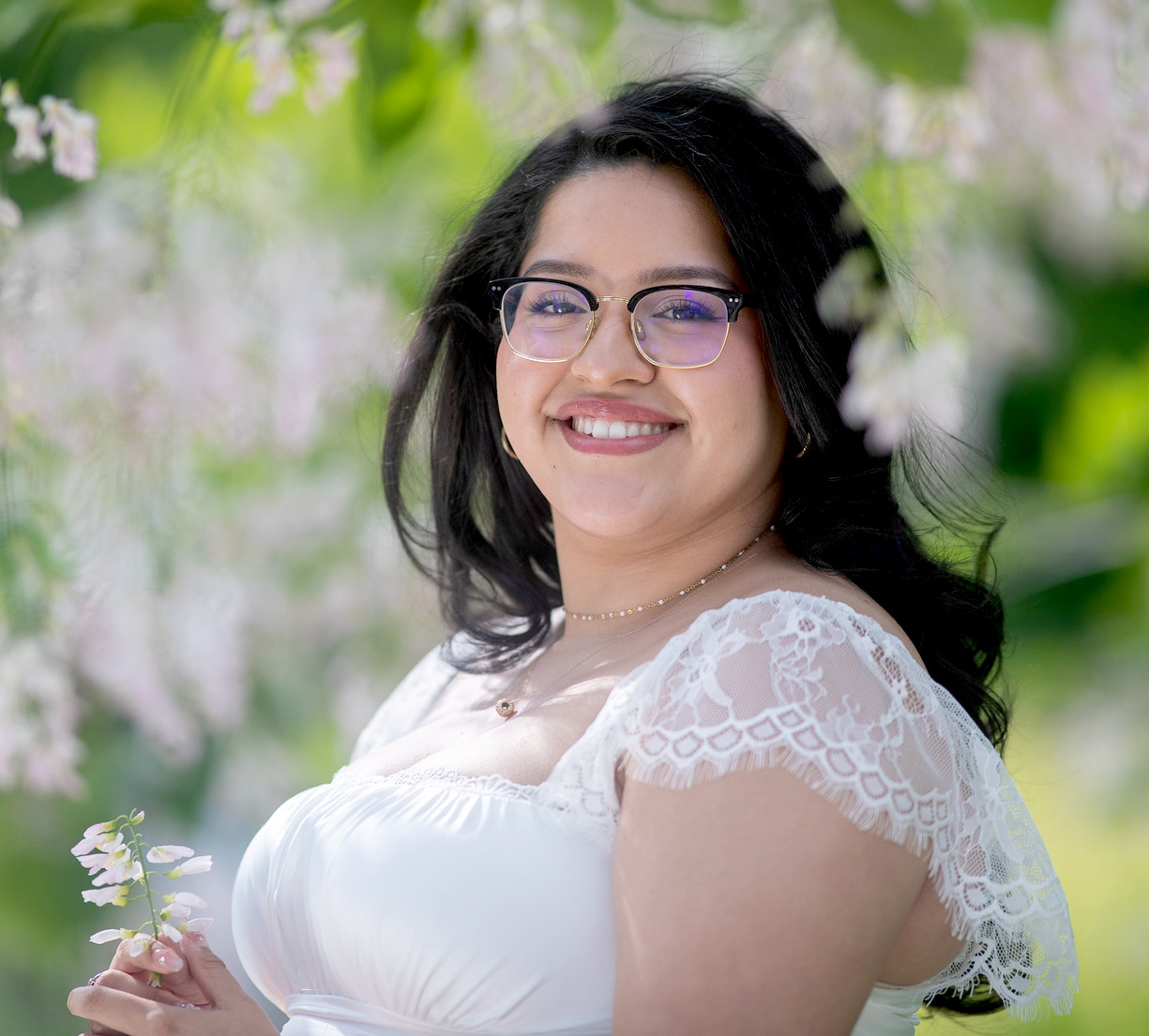 Christy Ramos, B.A. in Psychology (CAS)
My story: When I first started at Trinity, I was both nervous and excited because I never thought college would be possible for me. Coming from a low income family with a single mother, and a twin sister, higher education felt out of reach for me financially. For much of my childhood, I felt like I did not have guidance but everyone told me that I should go to college. My advisor told me I should try to apply to a four year college, and I only applied to Trinity and one other school. When I was accepted, and I found out that my sister got in, it was a no-brainer. Trinity was the school for me. At my program, Community Bridges, they helped walk me through the process, and connected me with financial aid when I needed it. They encouraged me, believed in me, and wanted to do everything they could to make me successful.
During my time here, I was pushed to become more confident with myself in professional and business settings. For me, it felt like everything was interconnected. The student activities coordinator at the time encouraged me to attend more events, and possibly run for green class president. I won, and again I felt like I had no guidance outside of a few people who taught us how to make events. I pushed myself through this, and created events that I was proud of. During one of these events was where I met my future boss at Conference Services, which I did not know at the time. Struggling financially, Trinity gave us an opportunity to be student workers under Dean Meechie. This helped me to learn organizational skills, and when the summer came around, I heard Conference Services had an opening, so I took that chance. At the start, I would avoid talking to clients, but over time I became more outgoing in this professional setting.
Taking these opportunities meant I was forced outside of my comfort zone, and learned that doubting myself was only in my mind. I am actually much more capable than I think I am. My time here has given me the opportunity to be my best self, and become happy with the results. When I was young, I felt very behind in life and knowledge, but after these four years of pushing myself to try my best, I feel like I can now hold my own in conversations. As I leave Trinity, I am still learning about myself. I do not think I have perfected anything, but I am doing my best to improve myself every day, and wherever I go I will take every chance I get, like how Trinity has encouraged me to.
Flor Meraz Torres, B.A. in Business Administration (CAS)
My name is Flor Edith Meraz Torres, and my story is quite interesting. At 18 years old, after graduating high school, I packed two suitcases, left Idaho, and moved to Washington, DC, to pursue a dream that once felt out of reach. I will be graduating from Trinity Washington University with my Bachelor’s degree in Business Administration with a minor in Data Analytics. I will be the first granddaughter, niece, and daughter in my family to earn a college degree. None of this would have been possible without The Dream.US, Trinity Washington University, and most importantly, my parents. They always told me to focus on school and be someone in life. They have always worked hard to support my siblings and I in our dreams and hobbies. Therefore, everything I do is to make them proud and make our last name, Meraz Torres, known!
At times, I feel like I was born a natural leader because leadership has always been a big part of who I am. In high school, I served as President of Business Professionals of America, Vice President of Health Occupations Students of America, and Senior Class President. Once I arrived at Trinity, I was determined to leave a meaningful impact on campus, so I became President of the Business and Economics Club (2023-2026), Green Class President ( 2024-2025), and Green Class Vice President (2025-2026). Apart from being involved in Leadership, I also completed a consulting internship, a marketing internship, mentored 15 students, and maintained a perfect academic record.
One of the proudest moments of my college journey was receiving the Special Service Award during the Senior Award Ceremony. I was also honored to be inducted into Phi Beta Kappa Society, the nation’s most prestigious academic honor society. These recognitions reflected years of dedication, sacrifice, and determination. After graduation, I will be moving back to Idaho to begin my career. I also plan on getting involved with Poder of Idaho to advocate for immigrant communities. In the future, I hope to be a Business Intelligence Analyst, earn my MBA and DBA, and one day return to Trinity to give back to the university that changed my life.
Tiana Gaskins, B.S. in Business Administration (SPS)
 Trinity will always hold a special place in my heart. I am deeply grateful for the incredible professors who challenged me to grow, inspired my love for learning, and encouraged me to think beyond what I believed was possible.
My higher education journey began in 2007 at Virginia Commonwealth University in Richmond, Virginia. After nearly three years, I made the difficult decision to return home due to financial reasons. While that chapter closed sooner than I had hoped, life continued to unfold in meaningful ways. Over time, I found my rhythm in the professional world, building my career through impactful work with several non-profits.
As I progressed professionally, it became increasingly clear that not having my degree was creating limitations in my career advancement. I had the experience, drive, and capability, but I also recognized that completing my education was essential to unlocking new opportunities. I initially applied to Trinity in 2018, and when I returned again in 2024, I did so with a renewed sense of purpose and determination. This time, my mindset was different—I was fully committed to prioritizing my education and seeing it through to completion.
Now, I am just days away from earning my bachelor’s degree in Business Administration.
Returning to Trinity as an adult learner transformed me in ways I did not anticipate. Although I’ve obtained years of professional experience, Trinity provided me with a new set of academic tools that could only be developed through the classroom, intellectual challenge, and practical application. More importantly, this journey allowed me to rediscover myself both academically and personally.
Through engaging conversations with professors, thought-provoking readings, and meaningful discussions with my Trinity sisters, I uncovered new interests, embraced evolving passions, and gave myself permission to reimagine my future. Trinity taught me that it is okay to pivot, to revisit the drawing board, and to pursue new paths as I continue evolving as a woman, professional, and lifelong learner. Growth often requires stepping into unfamiliar spaces, embracing discomfort, and allowing yourself to be a beginner again.
Trinity reminded me that meaningful growth takes time. Life unfolds in its own way, often testing your resilience and patience, but every step serves a purpose. While my journey may have taken longer than expected, I now understand that I am exactly where I am supposed to be. As a first-generation college graduate, I’m grateful to achieve this milestone and light the path for those after me.
Jaasiel Chavez-Gutierrez, A.A. in General Studies, Early College Academy
My name is Jaasiel Chávez-Gutiérrez, and my journey at Trinity Washington University began through the Early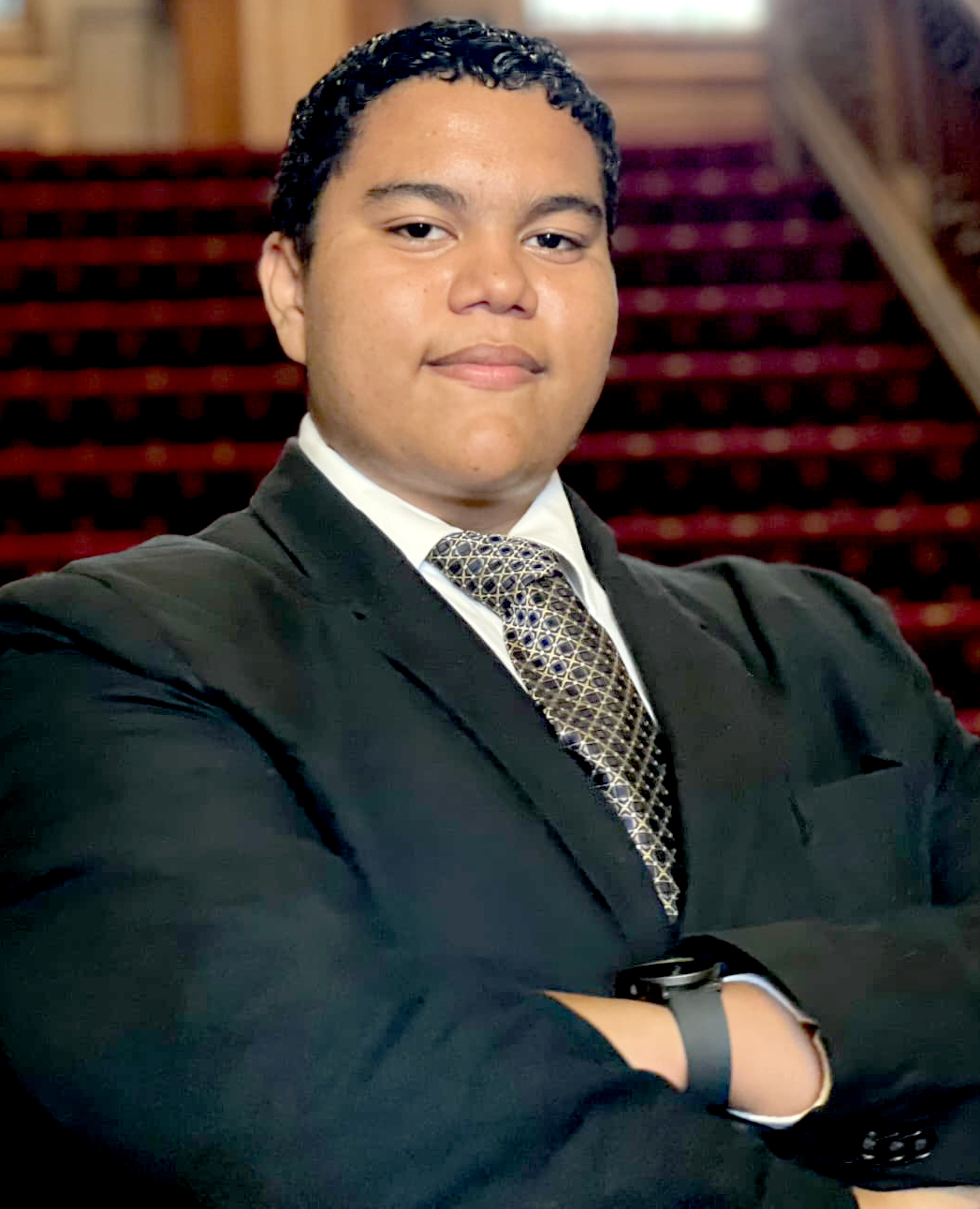 College Academy (ECA) at Calvin Coolidge Senior High School. In 2021, I was accepted into ECA, and during my sophomore year of high school, I was admitted to Trinity as a dual enrollment student. This opportunity allowed me to complete my final two years of high school while studying as a full-time college student, with all expenses covered. As a first-generation Latino college student, this experience has been deeply meaningful, and I am incredibly grateful to God, as well as to the professors, advisors, deans, and peers who have supported me along the way. Through Trinity’s academic programs, student organizations, and resources such as the Career Center, I have grown both personally and professionally.
While at Trinity, I embraced every opportunity to get involved, including serving as President of the Debate Society and participating in certification programs and networking experiences. These opportunities helped me build leadership skills and a strong sense of purpose. Looking ahead, I am proud to share that I have been selected as a Posse Scholar and will continue my academic journey at The University of the South in Tennessee on a full-tuition scholarship, supported by additional university grants. I plan to pursue my bachelor’s degree and continue striving to make a positive impact in my community.
Lauren Woodhouse, B.A. in Global Affairs (CAS)
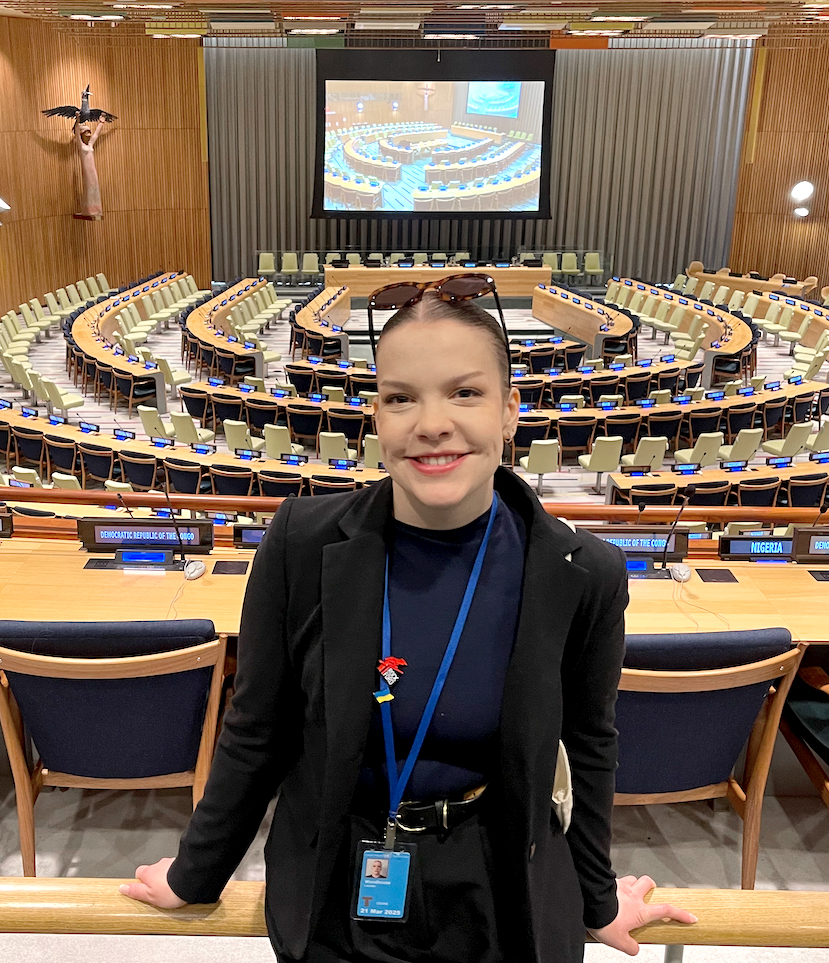 My name is Lauren Woodhouse, and I was raised in Rockford, Illinois, by two hardworking parents who always stressed the importance of higher education. When I was preparing to graduate from high school in 2019, I dreamed of moving to Washington, D.C. to study politics, but my financial reality didn’t align with the offers I’d received.
Determined to keep moving forward in a way that honored my goals and values, I joined AmeriCorps NCCC as a Corps Member and was later promoted to Team Leader at the onset of the COVID-19 pandemic. After my AmeriCorps service, everything finally fell into place, and I fulfilled my dream of moving to D.C. alongside my sister and my mom! I began waiting tables downtown at The Old Ebbitt Grill while holding onto my hope of continuing my education. It wasn’t until two years into living here that my sister happened to walk past Trinity one evening and encouraged me to look into it (Thank you, Sydney!) I went to an information session fully expecting to have my hopes extinguished once again…but instead, Trinity’s extraordinary generosity paved the way for me to soon call myself a college graduate! Even typing that brings tears to my eyes! During my time here, I maintained a 3.9 GPA, spoke at the 69th United Nations Commission on the Status of Women, was inducted into Phi Beta Kappa, spoke at a Trinity event in front of Speaker Nancy Pelosi, and served as a Global Governance Fellow with Citizens for Global Solutions. Trinity made it possible.
After graduation, I have no intention of slowing down. I plan to continue my education and follow in my mother’s footsteps by becoming a nurse. Inspired by my global affairs curriculum, I hope to specialize in humanitarian nursing, serving civilians in conflict and disaster zones worldwide. Long term, I hope to return to my home state of Illinois and run for public office.
I am so incredibly proud to be a Trinity alumna and thank you to everyone who made it possible!
TaNieshia McNeal, B.A. in Criminal Justice (SPS)
My journey with Trinity began in 2006, when I first enrolled with a vision of building a better future for myself 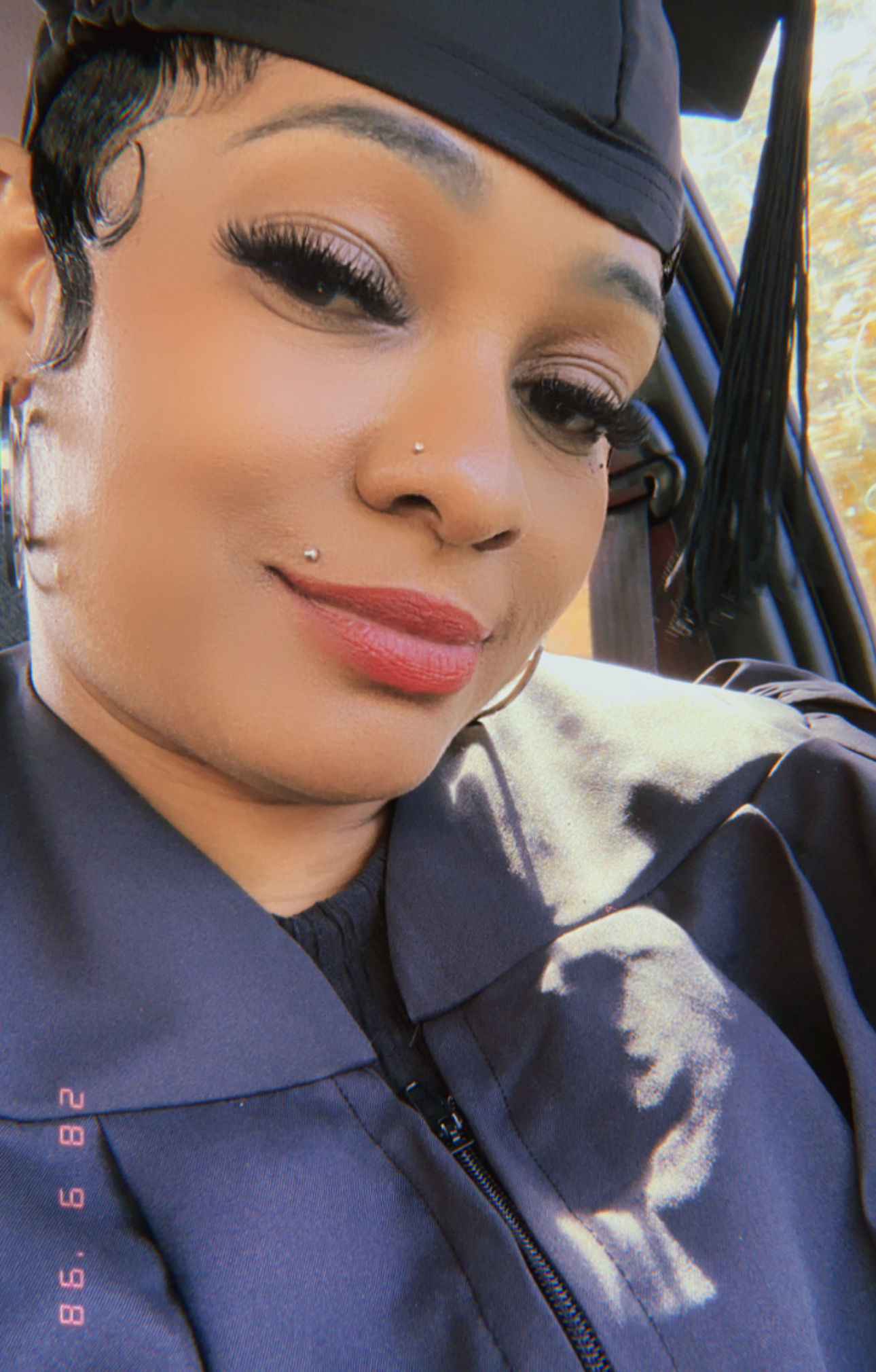 while raising 4 young daughters. Like many students, life presented challenges that caused me to pause my education. However, my determination to succeed never left me. I cried and prayed that one day I would walk to receive my degree. Years later, I made the decision to return to Trinity to finish what I started. This time with greater focus, purpose, and resilience.
Earning my Bachelor’s Degree in criminal Justice is more than an academic achievement for me. It represents growth and commitment to my goals. My experiences have shaped my passion for making a difference in the criminal justice field, particularly in advocating for fairness and supporting individuals as they navigate the system. After graduation, I plan to pursue my Master’s Degree in Business Administration, while working toward a career as a parole officer, where I can support rehabilitation and help individuals successfully reintegrate into society. I am also committed to advocating for survivors of domestic violence and will be training to support and empower women who are affected.
Returning to Trinity has been a powerful reminder that it is never too late to achieve your goals. I hope my journey inspires others to keep pushing forward, no matter how long the path may take. I will say, it was all worth it.
Bailey Squire, B.A. in English (CAS)
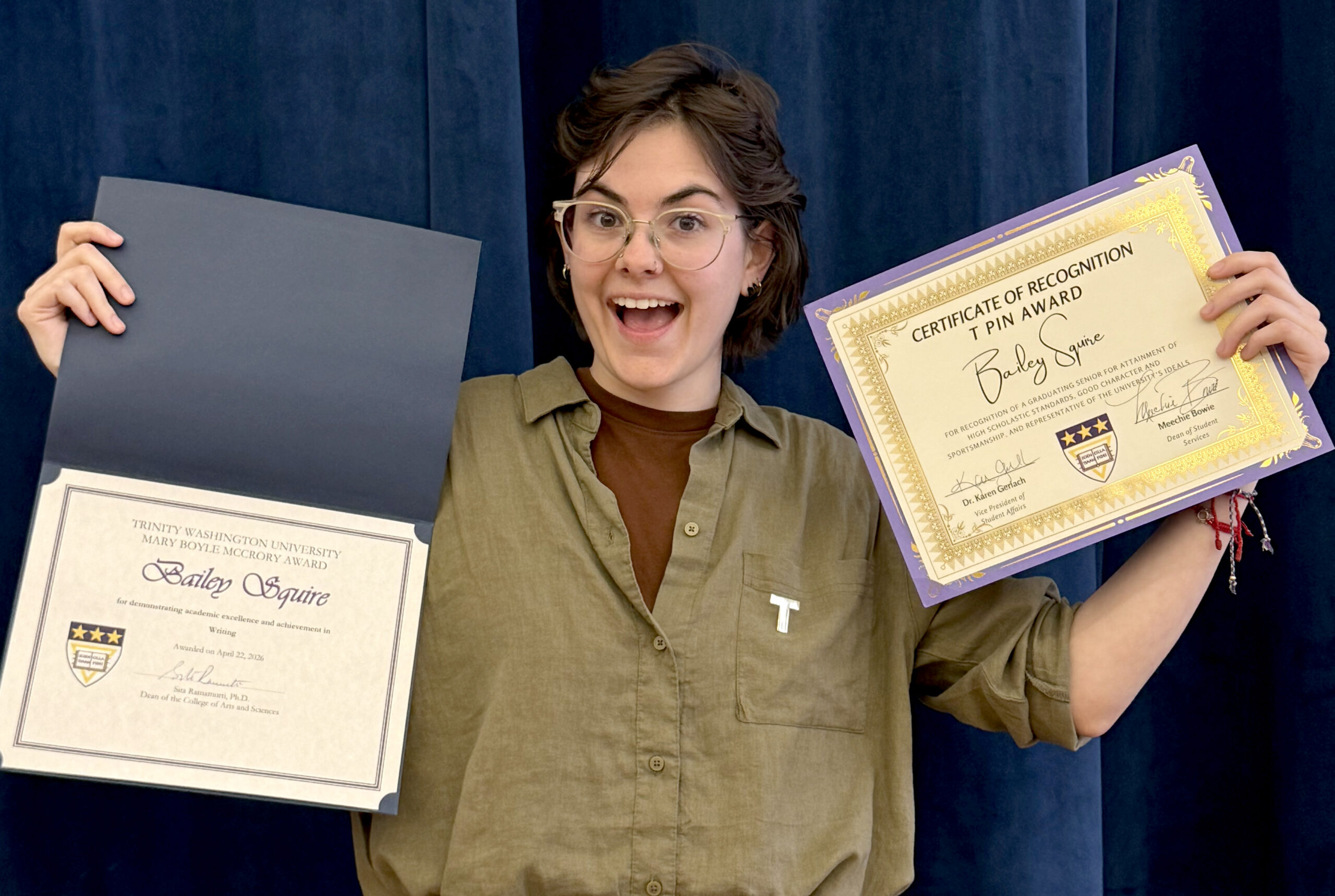 I had no idea what I was getting myself into when I applied to a school 1,600 miles away from everything I’d ever known. Turns out, it was one of the best experiences I’ve ever had. Moving from suburban Colorado, I was exposed to so many diverse experiences, cultures, and people, I never thought I would see. My time here taught me a lot about resilience. These students are so strong, and I want to be here to support in any way I can.
I learned about myself in academia too. I really explored my love of philosophy, and how important it is in the beginnings of what can sometimes seem like a dystopian society. In my literature classes I fine-tuned my skills of creative writing, story telling, and realized – the world of research is what I want it to be for me. I am not limited to what is out there. I bring something different to the table, and that is what is important. I realized my love for libraries archives, and history, and ended up at an internship that I hope becomes a job when I leave here. I found friendships and created bonds that will last far outside this campus, and I can’t wait to see where I go from here. Trinity helped me to find out who I am on my own, and moving 1,600 miles away from town turned into the best four years ever.
Tarniqua Sullivan, B.S. in Business Administration (SPS)
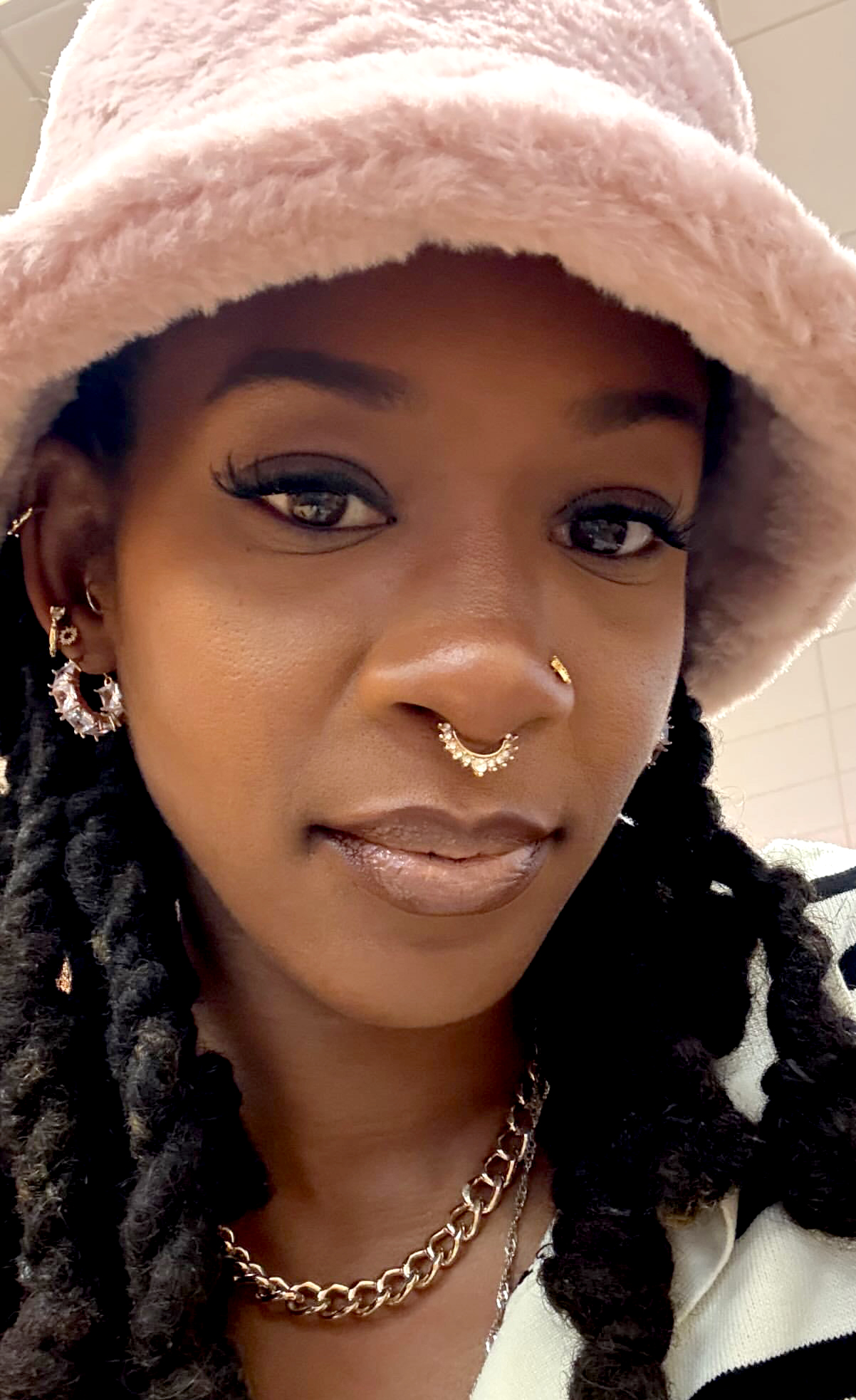 My journey through Trinity has been one of growth, resilience, and purpose. As a Business Administration student preparing to graduate, my time at Trinity has helped strengthen not only my academic foundation, but also my confidence as a leader, thinker, and future professional. Throughout this journey, I have balanced school with real-life responsibilities, which made earning this degree even more meaningful to me. Trinity has challenged me to think bigger about my future, sharpen my goals, and recognize that my experiences, determination, and vision all have value. I am proud to be joining the Trinity alumnae/i community and grateful for the lessons, encouragement, and sense of possibility that have come with this chapter of my life.
After graduation, I plan to continue building toward a career in business, operations, and long-term entrepreneurship, with a special interest in acquisitions, investment, and creating opportunities that can have lasting impact. I also plan to continue my education by pursuing my MBA so I can keep developing the knowledge and skills needed to lead with wisdom, strategy, and purpose. Trinity has been an important part of helping me see that my path is not just about earning a degree, but about building a future where I can create change, help others, and leave a meaningful legacy.
Darlene Carmichael, B.A. in Business Administration (CAS)
My time at Trinity Washington University was a mix of expectations and reality. When I was first accepted, I was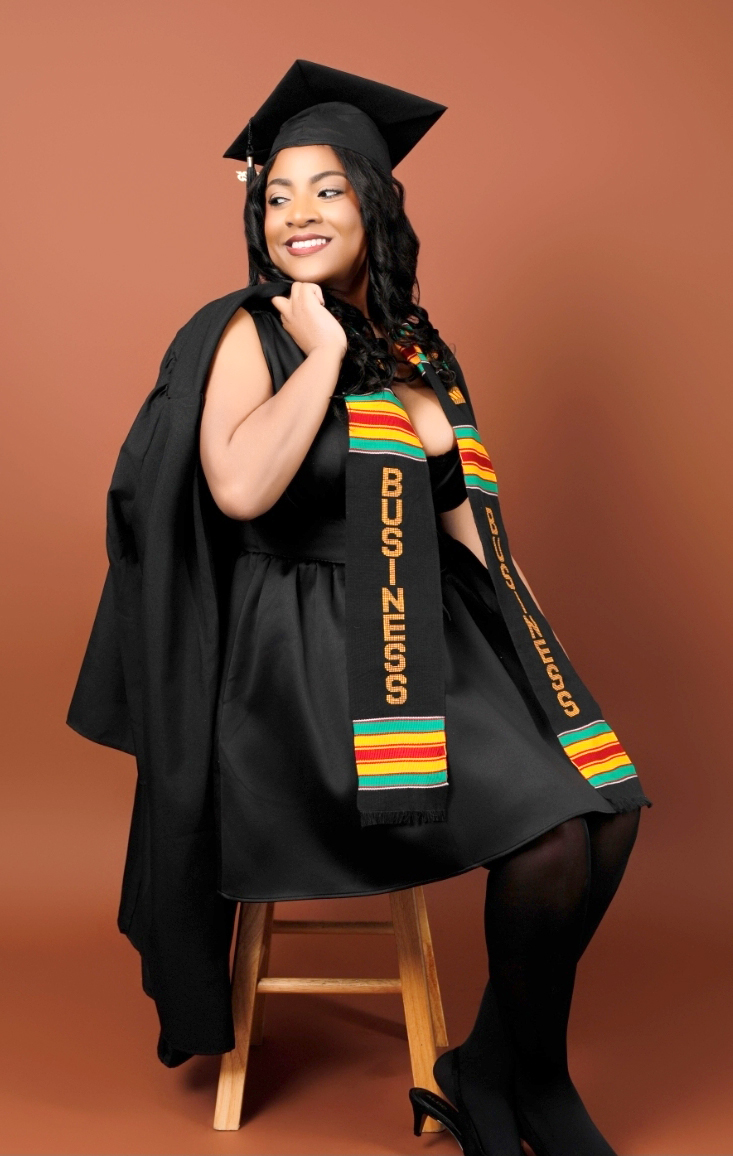 genuinely excited. I pictured myself meeting new people, forming connections, and diving into subjects I had never explored before. In some ways, things didn’t turn out the way I imagined, and that was difficult at times. Still, there were moments that really mattered to me.
I’m especially grateful for the professors who saw potential in me and supported me when I needed it most. Their encouragement helped me keep going, even when I felt unsure of myself.
If I could change one thing about my experience, it would be how much I let certain people affect how I saw myself. I allowed the opinions and actions of some students to get in my head, and that took a toll on my confidence. Looking back, I wish I had trusted myself more and not given others that kind of power.
Even so, that experience taught me something important about self-worth and resilience. It showed me that not every environment will reflect who you truly are—and that it’s up to me to hold onto my sense of self no matter what.
Lindsay Washington, M.A. in Strategic Communications and Public Relations (BGS)

My journey pursuing my Master’s Degree at Trinity Washington University has helped me grow in so many ways. I never thought I would complete a degree in Strategic Communication and Public Relations because I was always a shy person and would rather be in the background so public relations and media seemed so intimidating but once I started the program I instantly knew I made the correct choice. This program has helped me build my confidence personally and professionally with all the skills I’ve learned.
The highlight of my degree was second semester writing an article for the Trinity Times. At the time, I worked for Trinity in the Development and Alumnae/i Relations office and had two immigrant student workers and through daily conversations I learned their story. It was perfect timing with knowing my students and the class I was in. I was so nervous of the process because I never wrote an article or interviewed anyone. Little did I know, I would win an award for the article I wrote, one of my biggest accomplishments to date. I won the 2024 Catholic Media Association’s St. Juan Diego Collegiate Award in the social justice category. I am so proud that I was able to showcase Trinity’s nursing program amazing work and I always highly recommend Trinity to anyone who would listen!
Link to my article: https://trinitydctimes.com/2023/12/11/trinity-nursing-program-bridges-the-gap-for-immigrant-students/
I appreciate all the professors who have been wonderful mentors during this time. I would like to especially thank Dr. Ponder and Dr. Jamal, their dedication to students through the program have been outstanding. They have made my grad program memorable and I will continue to apply their teachings as I look to grow at my current agency, DCHBX, as they help thousands of DC residents have health coverage. I hope to one day be a part of their communications department to educate DC residents on health insurance options. I am truly grateful to be a 2x graduate of Trinity Washington University. May 2019 & May 2026
Taylor Stenhouse, B.A. in Business Administration (CAS)
Returning to school at 27 was not what I originally imagined for myself after graduating high school, but it made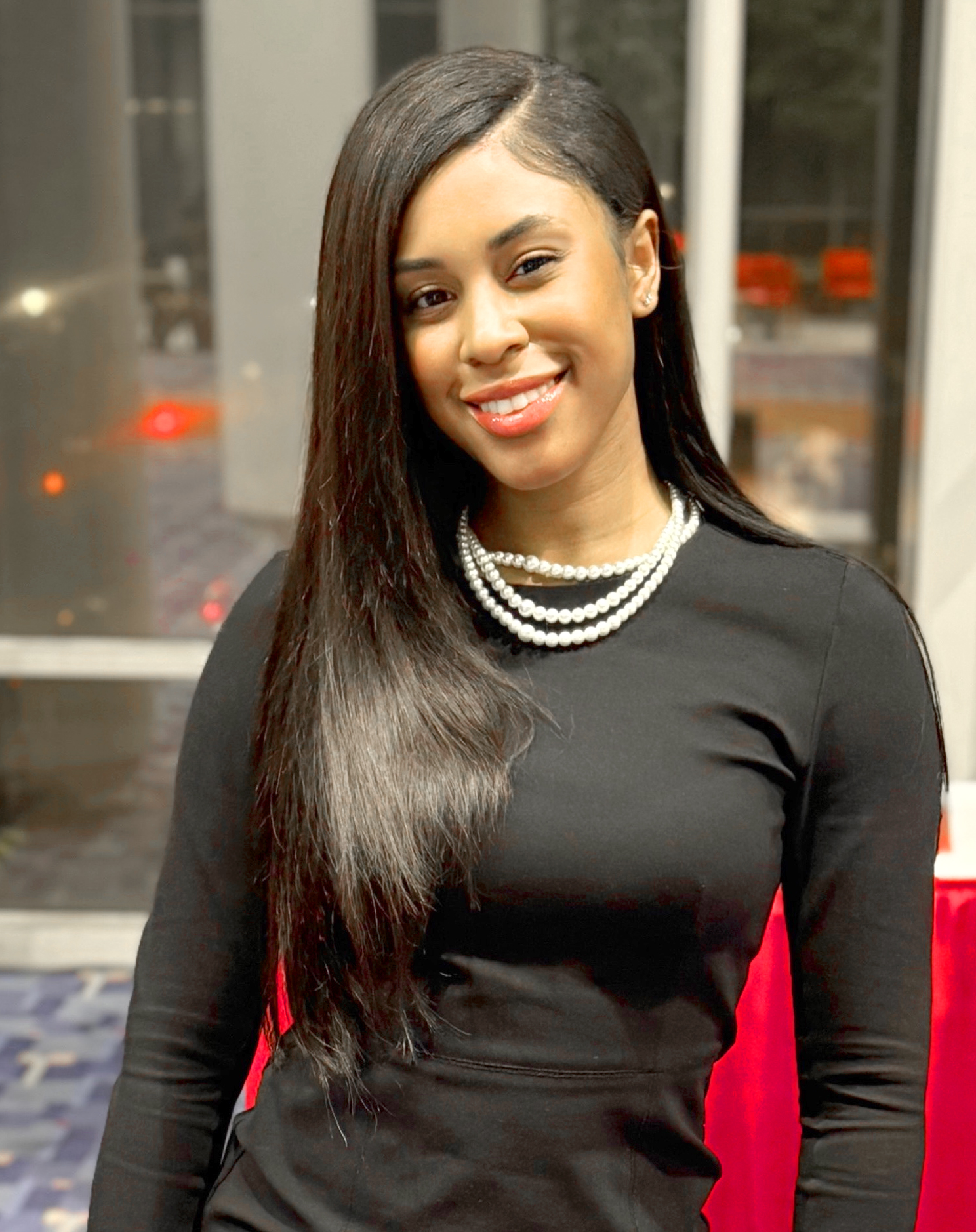 this journey to graduation even more personal and meaningful. This time around, I returned with a different level of determination, discipline, and purpose because I knew exactly what I wanted for my future and how important it was for me to finish what I started. As a student pursuing my Bachelor of Business Administration with a concentration in Finance and Accounting, I learned how to balance academics while working full time, serving in leadership, and continuing to push myself even during difficult seasons. That experience taught me resilience, time management, and the importance of continuing forward even when things feel overwhelming. Most importantly, my faith in my Lord and Savior Jesus Christ grounded me throughout this journey and reminded me to keep trusting God even in moments of uncertainty, exhaustion, or self-doubt.
During my time at Trinity, I also had the honor of serving as Vice President of the Iota Iota Chapter of Delta Sigma Theta Sorority, Inc., an experience that strengthened my leadership, communication, and organizational skills while allowing me to grow alongside women who continuously inspire me. I am especially grateful for the guidance, patience, and encouragement I received from Dr. Grenway and Dr. Hayes-Burrell, whose support played an important role in my academic journey and personal growth throughout my time at Trinity. Their encouragement helped remind me that I was capable, even during moments when balancing work, leadership, and school felt challenging.
After graduation, I plan to begin studying for the LSAT and pursue law school in Fall 2027. I am excited to continue building a future centered around leadership, advocacy, and creating meaningful impact within my community. Trinity reminded me that growth does not always happen in a straight line, but persistence, faith, and discipline can carry you further than you imagined.
Proverbs 3:5-6
Brittany Capers, B.A. in Psychology (CAS)
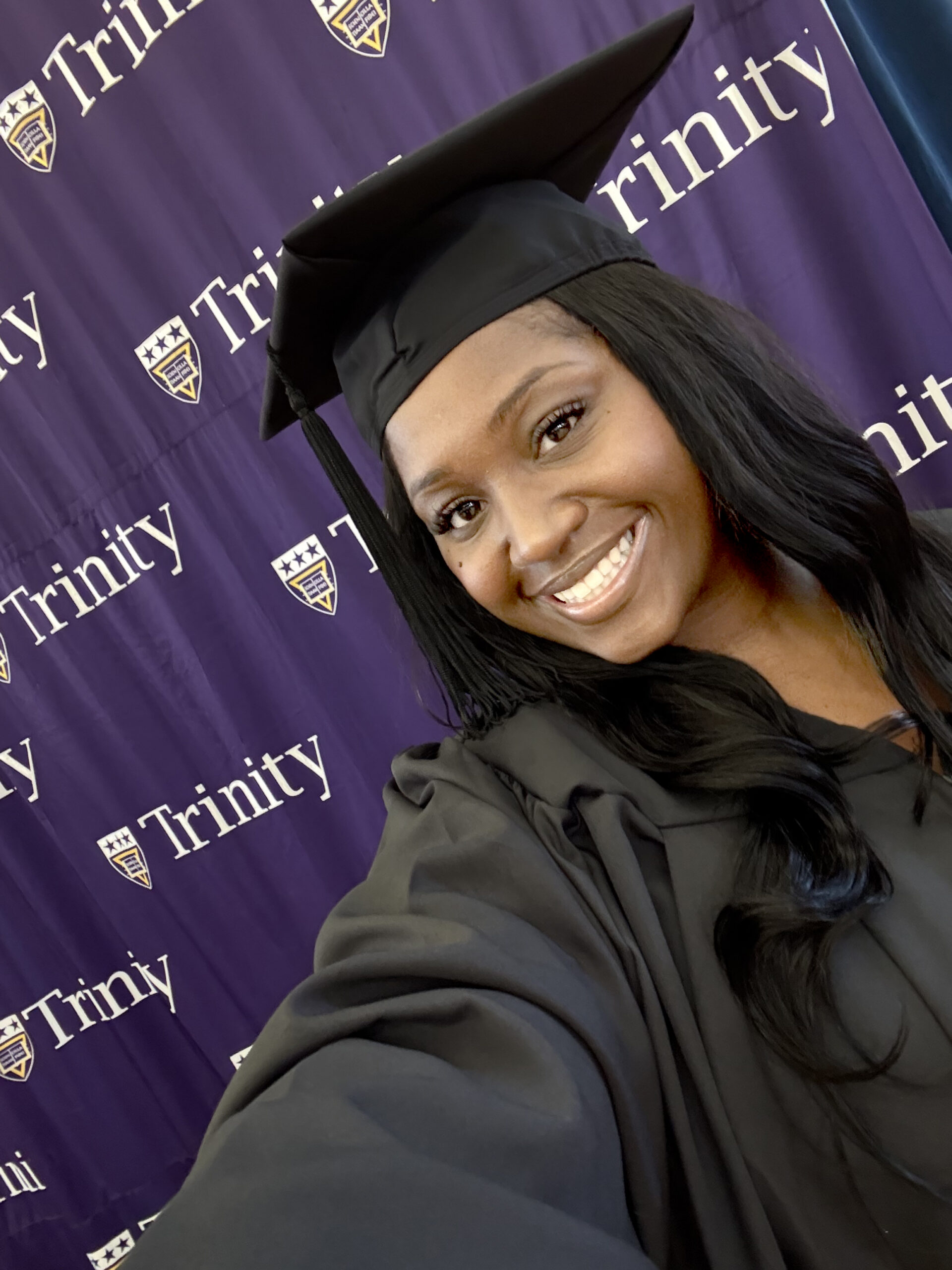 My journey at Trinity Washington University has been one of growth, resilience, and purpose. As a nontraditional student, I returned to school after becoming a mother of two boys, determined to continue my education and build a better future for my family. From the moment I started, I was motivated to accomplish every goal I set for myself. I made it a priority to get involved on campus, connect with others, and take advantage of the many opportunities Trinity offers. Being present, engaged, and intentional about my experience has truly shaped my time as a student and made it meaningful beyond the classroom.
Balancing motherhood, a full-time job, and academics was not easy, but I remained committed to my success. Maintaining an average 3.5 GPA throughout my college experience reflects both my dedication and perseverance. I am proud to have made the Dean’s List over three times, joined the Psychology Club, and become a member of Psi Chi. Being nominated as Trinity’s Psi Chi chapter President has been an incredible honor and a testament to my hard work and leadership. As I prepare to take the next step in my journey at The Catholic University of America, where I plan to pursue my Master’s in Social Work, I carry with me the strength, knowledge, and confidence that Trinity has helped me build.
Felicia Stewart, B.A. in Early Childhood Community Education (EDU)
As I prepare to graduate from Trinity, I reflect on a journey that has truly shaped who I am today. Balancing 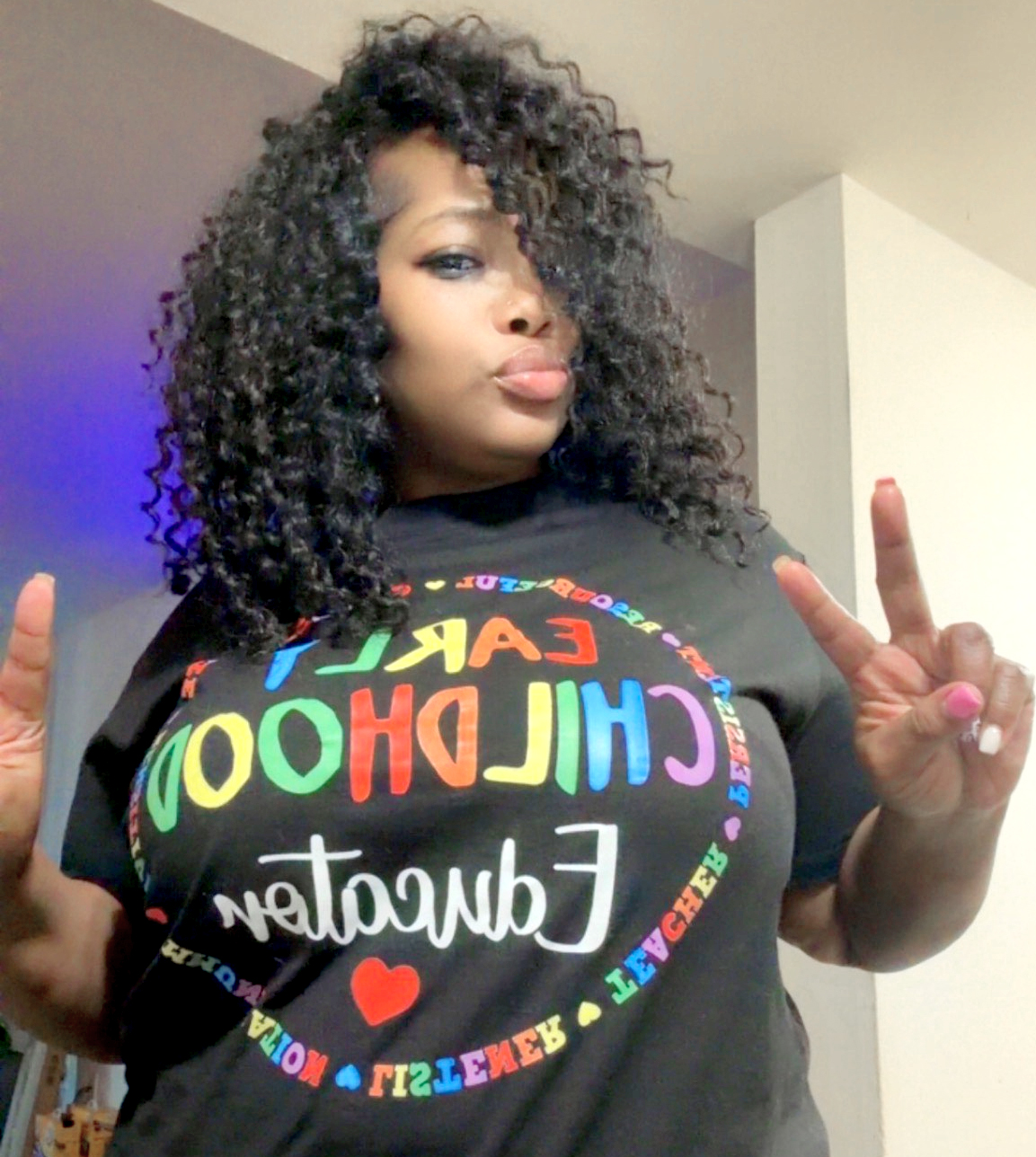 school, work, and motherhood was not always easy, but it pushed me to stay focused, disciplined, and determined. As a mother, everything I did was not just for myself, but for my children, who has been my greatest motivation throughout this journey.
While attending Trinity, I maintained a 3.9 GPA, which is something I am incredibly proud of. I was also honored to be inducted into Alpha Sigma Lambda, the national honor society for adult learners, recognizing my academic achievements and dedication. At the same time, I worked as an early childhood educator, teaching preschoolers and creating meaningful learning experiences for young children. My classroom became a space where I could connect what I was learning in school to real-life practice, strengthening my passion for education every day.
One of the most impactful experiences during my time at Trinity was having the opportunity to speak before the DC Council on behalf of early childhood educators. Although I was nervous, it reminded me of the importance of using my voice to advocate for children, families, and teachers. That moment showed me how much I have grown—not just academically, but as a leader and advocate.
Trinity has given me more than an education. It has given me confidence, purpose, and a strong foundation to continue growing in my career. This journey taught me resilience, time management, and the power of believing in myself, even during challenging moments.
I hope my story inspires other students, especially those balancing multiple responsibilities, to keep going. No matter how difficult it may seem, your goals are possible with dedication and perseverance.
I am proud to soon join the Trinity Alumnae/I community and look forward to what’s ahead.
August Belt, B.A. in Psychology (SPS)
 Beginning my Journey in 2015 at Virginia Union University, continuing through Medtech College and University of the District of Columbia workforce development. I gained many certifications and great knowledge. But never settled. In August of 2022 I made the decision to commit to my study home, Trinity Washington University. On May 5,2026 after completing my final assignment, I found myself overwhelmed, but this time, it wasn’t with stress, worry, or doubt. It was with happiness, pride, and a deep sense of achievement. I cried tears of joy, a feeling that felt so different from the moments of frustration and uncertainty I’ve experienced along this journey. Some may know my story and the challenges I’ve faced over the past years in pursuit of this achievement. What I’ve accomplished means far more to me than earning a piece of paper. It represents a generational barrier I have broken and a promise to those dear to me who are no longer physically here. It has opened doors for me to sit at tables with confidence, knowing my knowledge and capabilities will no longer be questioned due to the absence of a degree.
I bring professional experience in youth and young adult education and counseling, mental and healthcare, youth justice, nonprofit business management, and corporate team building with a DEGREE. These experiences have strengthened my commitment to working within systems that support and advocate for individuals and communities. My long-term goal is to continue developing my nonprofit organization, get my masters to degree and continue to focus on supporting underserved communities and juveniles within the justice system. I hope to contribute to building a more just world through life skills development, career guidance, and mental health and emotional support. One day, I aspire to expand this work globally, reaching communities in need across the world.
Trinity has motivated and push me well beyond my capacity. I knew the stars were always the limit. But the strength I have gained through this journey lets me know I can go beyond that limit!
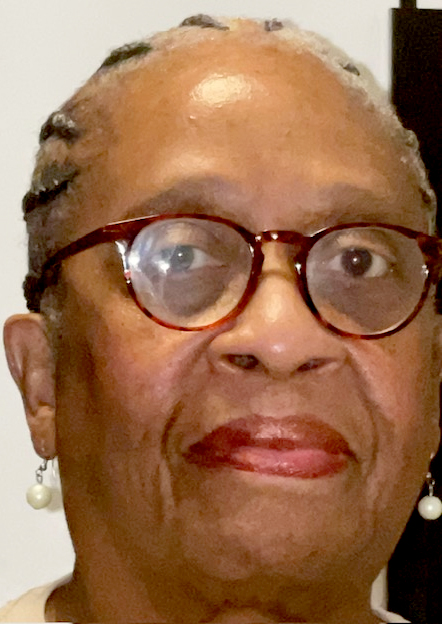 Phyllis Ruth Jackson, A.A. in Health Services (SPS)
The journey to and through Trinity Washington University has been one of both personal transformation and academic discovery. Returning to the classroom as an undergraduate student required a shift in perspective, but the community at THEARC provided a supportive and engaging environment that made the transition seamless. Throughout this program, the focus has remained on bridging the gap between academic theory and real-world application, particularly regarding the health and vitality of the local community. Exploring the complexities of nutritional wellness and food accessibility in Washington, D.C., has deepened a commitment to advocacy and empowered a clearer understanding of how systemic issues impact daily life.
Looking toward graduation, my goal is to translate this education into meaningful community action. I will use the research and communication skills developed at Trinity to address food disparities and promote sustainable health strategies within urban environments. By empowering others with knowledge of nutrition and wellness, I aim to contribute to a future in which healthy resources are accessible to everyone, regardless of their zip code. The experience at Trinity has not just been about earning a degree; it has been about refining a purpose and preparing to serve as a knowledgeable advocate for a healthier, more equitable community.
Blanca Huezo-Quijano, B.A. in Early Childhood Education (EDU)
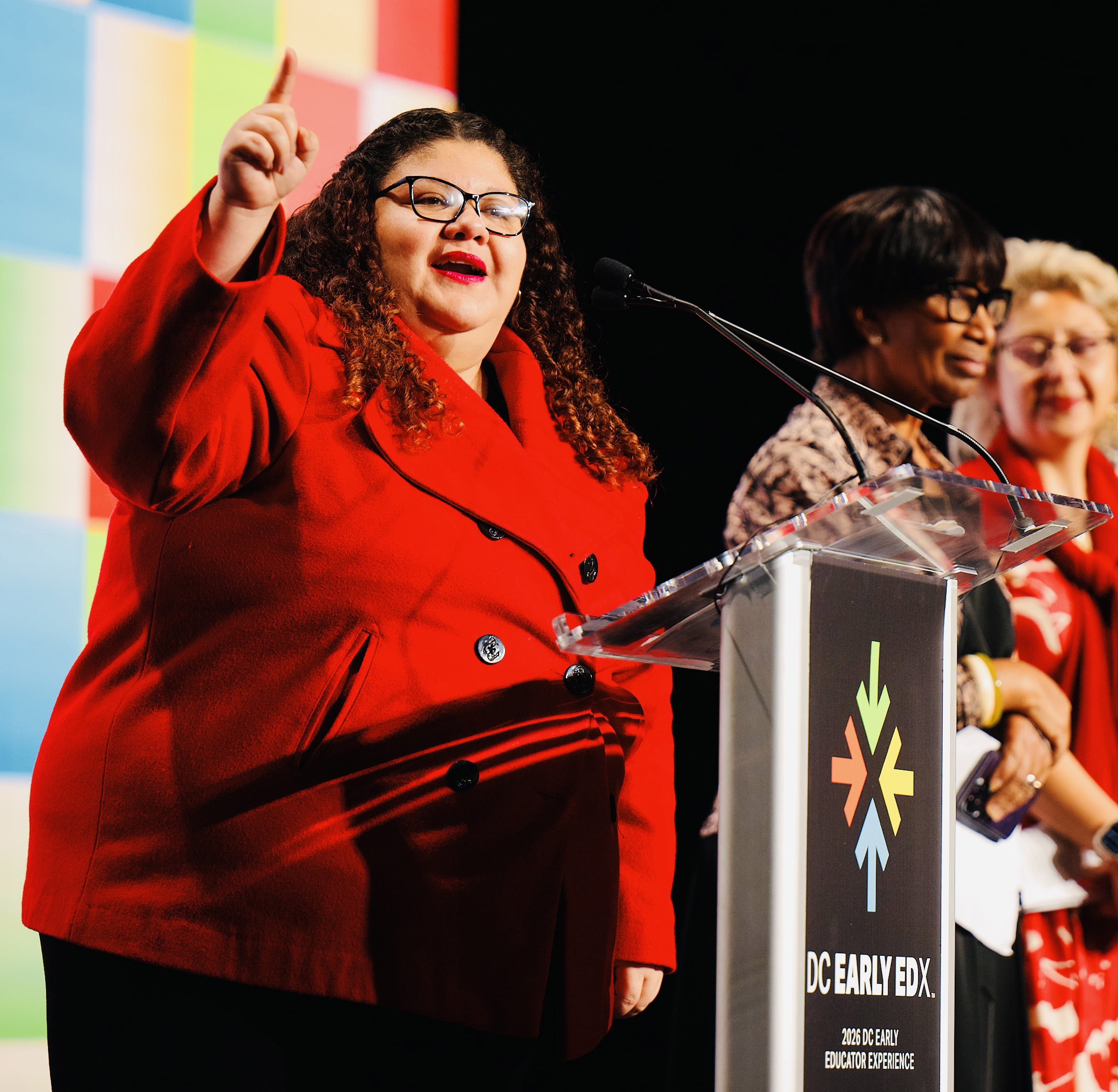
My name is Blanca Huezo-Quijano, and I am proud to be part of the Class of 2026. My college journey has been long, emotional, and full of growth. As an immigrant Salvadoran woman, I know what it feels like to struggle for opportunities. In 2015, I missed professional opportunities simply because navigating the higher education system here was not easy, not affordable, and not designed for people like me, English learners, working mothers, immigrants, and first‑generation students.
As a mother, a community leader, and a family child care provider, I found balancing school, work, and life not easy. There were moments when I felt tired, moments when I doubted myself, and moments when I wondered if I could really finish. But every class, every assignment, and every challenge reminded me why I started: to open more doors for myself, my family, and the community I serve.
Studying while running a child care program and supporting Spanish‑speaking educators through the Multicultural Spanish Speaking Providers Association (MSSPA) taught me discipline, patience, and resilience. I learned that education is not just about earning a degree, but it is about transforming the way we see ourselves. This journey helped me grow as a leader, as an advocate, and as a woman who believes deeply in the power of opportunity.
Along the way, I was lifted by the support of my Trinity faculty and my advisor, who believed in me even on the days when I struggled to believe in myself. Their guidance, patience, and encouragement made a real difference in my journey, and I am deeply grateful for the way they walked with me through this process.
Now, earning my Bachelor’s degree in Early Childhood Community Education is more than a personal achievement. It represents every barrier I pushed through, every sacrifice my family made, and every dream I refused to let go. After graduation, I will continue supporting early educators in Washington, DC, expanding my work with MSSPA, and strengthening Huellitas Kids Early Learning Home. My goal is to keep lifting up the voices of immigrant educators and to help more women access the education and support they deserve.
This degree represents my past, my present, and the future I am building not only for myself, but for my community.
Wendy Colindres Menjivar, B.S. in Business Administration (SPS)
Trinity will always mean so much to me because it became the place where I finally realized that my journey did  not have to look traditional to still be meaningful and successful.
As a first-generation Honduran American student, higher education always carried a deeper meaning for me. My parents sacrificed so much to create opportunities they never had themselves, and their resilience shaped the way I approached life, work, and education.
My college journey originally began years ago when I was selected as a Posse Scholar to attend The University of the South. As a first-generation student, that opportunity meant everything to me and my family. But life became complicated. Financial challenges, family responsibilities, and the pressure of balancing everything eventually led me to step away from school.
For a long time, I felt like I had fallen behind while everyone else moved forward. I focused on working, helping support my family, and simply figuring life out — echándole ganas every step of the way. Even then, the dream of finishing college never fully left me.
Returning to school years later was honestly intimidating. Financially and emotionally, it felt overwhelming at times, but Trinity became the place that gave me another chance to believe in myself. Through the support of the Trinity community, I was able to participate in the DC Futures Program and the Mayor’s Scholars Program, which helped make continuing my education possible.
One of the experiences I will forever be grateful for was receiving the Benjamin A. Gilman International Scholarship Program. Through Trinity and the CIEE study abroad programs, I had the opportunity to study in Barcelona and Tokyo — experiences I never imagined would be possible for someone like me. Those opportunities expanded my perspective and reminded me that my background did not limit how far I could go.
More than anything, Trinity helped me rediscover myself. My professors challenged me to trust my voice, think differently, and embrace growth even when it felt uncomfortable. Trinity taught me that there is no timeline for success and that sometimes the longer path teaches you the most about resilience, purpose, and who you are becoming.
This degree means so much more to me because of everything it took to get here. It belongs not only to me, but also to my family, whose sacrifices made this moment possible.
Now, as I prepare to graduate with my Bachelor’s degree in Business Administration, I do so with immense gratitude and pride. My path was not perfect or traditional, but it is fully mine — and I would not change the person this journey at Trinity helped me become.
 Yanica Mejias, B.A. in Health Services (CAS)
My journey through college has been filled with growth, challenges, and valuable learning experiences that have shaped both my personal and professional goals. Throughout my time in college, I have had to balance academics with responsibilities outside of school, which taught me the importance of time management, resilience, and determination. There were moments that tested me, but each challenge helped me become more focused and motivated to succeed. My coursework and experiences allowed me to develop a deeper understanding of my field while also helping me discover my passion for making a positive impact in the lives of others.
After graduation, I plan to continue my education by pursuing my master’s degree in Social Work at Columbia University. My goal is to build a career centered on advocacy, care coordination, and supporting individuals and families in accessing the resources they need to thrive. I hope to work in a setting where I can make meaningful contributions to underserved communities while continuing to grow as a professional. Graduation is not the end of my journey, but rather the beginning of a new chapter dedicated to service, leadership, and lifelong learning.
Ekema Lydie, B.S. Occupational Therapy Assistant (NHP)
Ekema Lydie, My name is Ekema Lydie, I am an Occupational Therapy Assistant (OTA) student at Trinity Washington  University. My journey at Trinity began while I was completing my prerequisites for the OTA program during my pregnancy. Shortly before officially starting the OTA program, I welcomed my second child, and from that moment, life became a balancing act between motherhood, academics, and family responsibilities. While attending school full-time, I was also caring for my two children and helping care for my aging parents. There were many moments when the responsibilities felt overwhelming, but the support I received from professors, classmates, family, and the Trinity community gave me the strength to continue moving forward. Trinity is a place where people genuinely support you when you are open about the challenges you are facing. As a mother, I was provided accommodations that allowed me to manage my nursing responsibilities while remaining focused and engaged in class. Even during moments of exhaustion and stress, I continued to receive encouragement that reminded me I was capable of succeeding.
Today, I am proud and grateful to say that I am graduating. This journey has taught me perseverance, resilience, patience, and the importance of community support. I am deeply thankful to my family, classmates, professors, and the entire Trinity community for helping me reach this milestone. As I prepare to begin my career as an OTA, I hope to use my experiences to encourage and support others who may feel overwhelmed by life’s responsibilities while pursuing their education. I want others to know that even when life becomes difficult, it is still possible to achieve your goals. If I was able to continue my education while balancing motherhood, caring for family, and managing school responsibilities, then others can do it too. As long as you have the determination to keep going and are willing to seek support when needed, there will always be a way forward.
Continue reading →Read comments (0) Add CommentA Culture of Violence
April 26, 2026

(photo credit: screenshot of President Trump being rushed from the Hilton Ballroom)
Political violence must have no place in American life. None. Period. And yet, the violence keeps happening.
Last night’s shooting at the White House Correspondents Association dinner at the Washington Hilton was another terrible reminder of the dangers we all face — dangers to human persons, yes, but also dangers to our increasingly fragile Democracy. We can and should be grateful that the shooter was quickly apprehended and that no person was killed; we can and should be grateful that, no matter our political differences, the president, vice president and cabinet officers escaped unharmed. We can and should be grateful to the Secret Service officers, police and National Guard troops who responded quickly.
But condemnations of violence and expressions of gratitude for the safety of public officials are not enough. We can and we must recognize the obvious fact that the political tension in this country is well past the boiling point, and that some individuals will take whatever opportunity appears in their imaginations to commit horrific acts of violence. We can and must recognize the fact that our culture has become extremely violent, not only in acts but also in our communication styles, in the accusations and insults that fly so freely on social media, in the deep sense of aggrievement that some people harbor and use as an excuse to lash out.
We have lost the ability to disagree civilly. I disagree with the current president about many issues and his behaviors, but I do not wish him any harm; I just wish he would tone it down and be kinder to those who have different points of view. But in America today, we seem unable to have a rational argument about principles at stake in policies and governing actions. We are living in a zero-sum game in which every opinion that does not align perfectly with the opinion of another invites a brutal, violent, sometimes fatal response.
We live in a very strange era in which the president of this nation, himself, uses violent and profane language in his social media communications and speeches — and some cabinet officials as well — and this verbal violence encourages others. We need our public leaders to grow up and demonstrate a greater awareness of their responsibility to set the tone for our society, a tone that should always communicate respect for others even in disagreement about ideas. Every public figure — elected and appointed leaders, teachers and school leaders, sports stars, movie heroes, music legends — every single one of us must do a better job of showing others how to engage vigorous debate without violent imagery or degraded language.
I’m old enough to remember a time when shots that rang out against public figures were actually shocking — the assassinations in the 1960’s of President Kennedy, Dr. Martin Luther King, Jr., Robert Kennedy. The attempted assassinations of President Reagan and Pope John Paul II within two months of each other in 1981 stunned the world. Now, in 2026, when shots ring out against public figures we hear arguments about whether the event is fake (ridiculous!), whether we can control guns (yes, we should!), whether they had it coming anyway (never!), whether the “other side” fomented the violence (responsibility for the tone of the culture is a burden we all must share). We hear little consensus on the most fundamental issue of the deep and protracted violence of our culture — and how to remedy that profound danger to the health of our society.
On his recent 11-day 10,000 mile tour of African nations, Pope Leo XIV spoke often of peace, at one point referring to himself as a “pilgrim for peace.” Perhaps it is emblematic of our times that even a pope speaking about peace — a fairly routine message for most pontiffs — drew extreme blowback from some commentators. As I read some of the more belligerent rejections of the Pope’s message, including from some Catholic politicians, I found myself wondering how we can ever reach a place in our culture in which we can agree to disagree without wanting to destroy the other person.
Pope Leo offers us hope that at least one powerful leader has the courage to show a pathway to a different future, one that offers peace and hope rather than constant war and violence. We can also hope that the people who feel most at risk of ongoing political violence — current political leaders — might see in the Pope’s careful words and of soft-spoken courage a model for their own public pronouncements.
To change this violent culture, we must work harder to foment peace.
Read the statement of USCCB President Archbishop Paul Coakley on the WHCA incident
Continue reading →Read comments (0) Add CommentDreams of Our Founders
April 22, 2026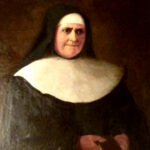

(Portrait of Trinity Founder Sr. Julia McGroarty, SND, original on the Marble Corridor in the Well)
Trinity’s Founders had big dreams. The Sisters of Notre Dame de Namur — led by Provincial Superior Sr. Julia McGroarty (portrait above) and her able “woman on the scene” Sr. Mary Euphrasia Taylor — had a vision for a college for women equal in quality to the colleges for men at the end of the 19th Century. The SNDs were experienced educators; the Academy of Notre Dame on K Street in Washington (now the site of Gonzaga College High School) was one of several SND schools for girls in the U.S. But launching an institution of higher education was another whole level of complexity academically as well as financially and socially. How did they do it in an age without cell phones, email, computers, airplanes or personal cars?
In 1897, their preferred mode of communication was a handwritten letter delivered in person; their transportation depended on horse-drawn carriages, steam engines for trains, or perhaps a ride in one of the amazing new machines known as automobiles.
The dreams of the SNDs received great encouragement from the priests who ran then-new Catholic University. Catholic women were applying to that new university but women were rejected from admission because coeducation was forbidden in Catholic schools. The priests were concerned that the women barred from Catholic University were turning to “godless” colleges for their higher education. One such institution was then called Columbian College, now the liberal arts college of George Washington University.
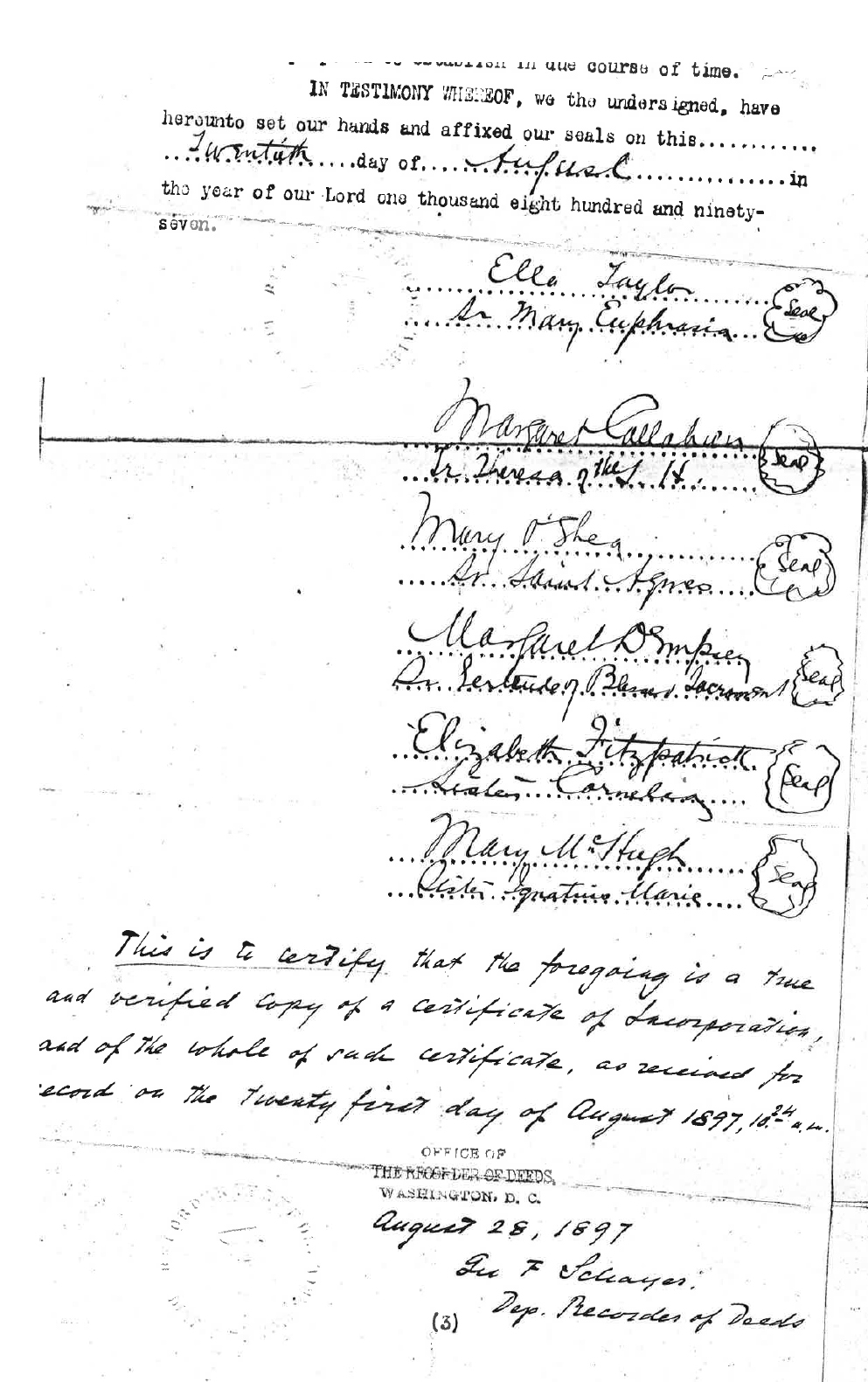 With great zeal, a good deal of creativity, and amazing fortitude, Srs. Julia and Mary Euphrasia moved quickly in 1897 to lay the foundation for Trinity College. In just a few short months, they secure the articles of incorporation (left), bought land and developed building plans. Some conservative priests at Catholic University grew alarmed and tried to stop the project, spreading rumors that the idea for Trinity was simply a subversive effort to bring coeducation to the University.
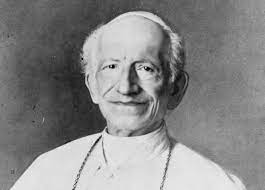 The criticisms reached Pope Leo XIII (right); the critics claimed that the idea of Trinity was an example of the heresy of “Americanism” that the Pope was denouncing in those days. The SNDs responded with an audacious campaign of letter writing to papal representatives and even a one-day round-trip to Atlantic City to plead the case for Trinity to the papal nuncio, the Pope’s ambassador in the U.S.
The persistence of Srs. Julia and Mary Euphrasia won the day; Pope Leo indicated that the founding of Trinity could continue and the opposition died down.
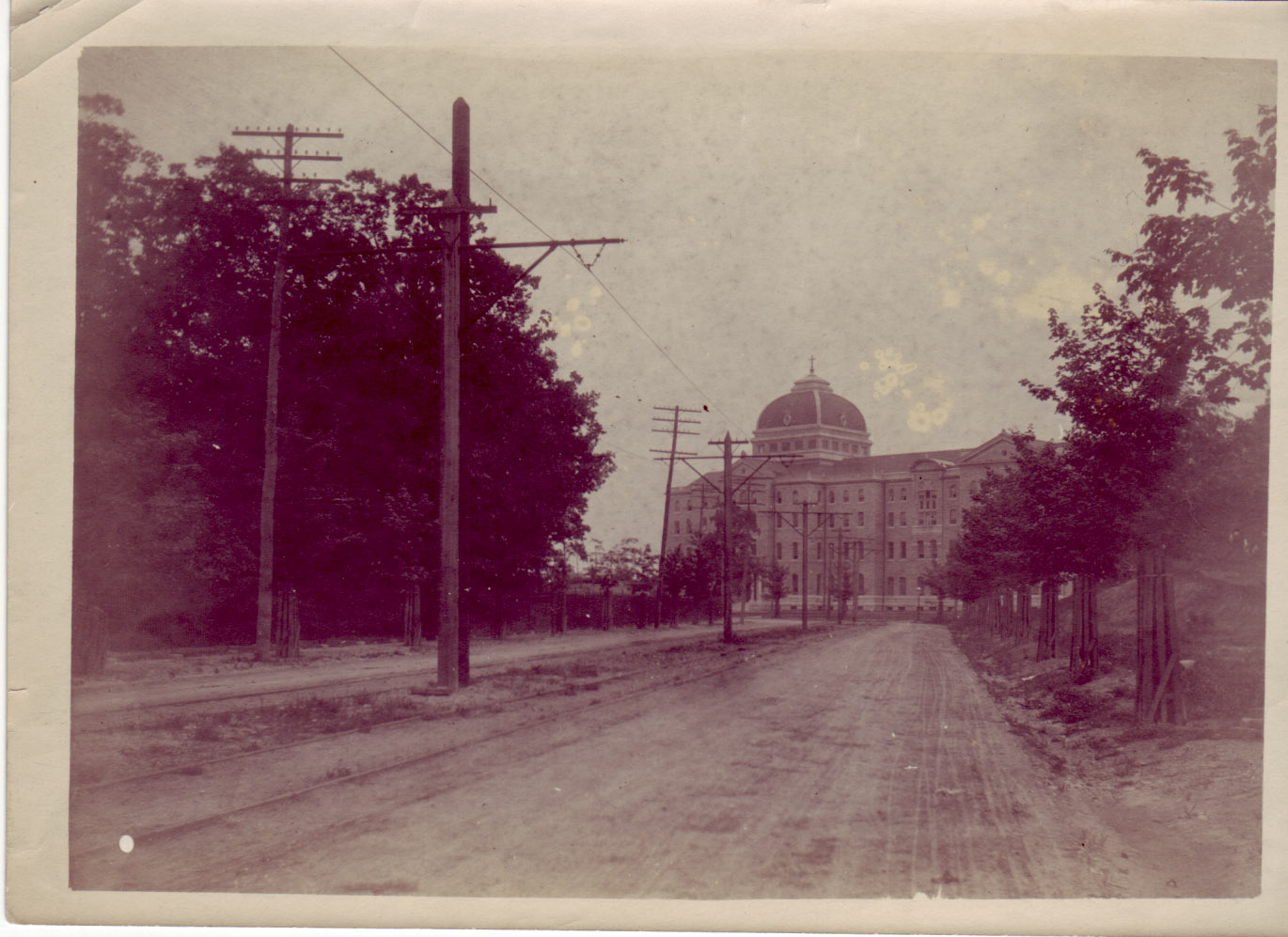 Over the next three years, the SNDs bought the land, raised money, and started building the great Main Hall that became the heart of Trinity’s campus. The first students and faculty moved into Main in November 1900 and Trinity College opened with a grand celebration.
Today, Trinity College — now known as Trinity Washington University — remembers our Founders with much gratitude and joy. Those courageous women could not have imagined Trinity today in our glorious diversity of students and programs, but they surely would celebrate with us as this venerable institution looks to our future with the same zeal and confidence that inspired the Sisters of Notre Dame in 1897.
Let us give thanks to Julia, Mary Euphrasia, and all of those brilliant women who made our lives and work at Trinity possible today!
(Below, the first Trinity students, Class of 1904!)

Of Memes and Men
April 16, 2026
 Has there ever been a time when the stakes for civilization have been so high and the quality of political discourse has been so tawdry? We have come to the point in this endless SNL nightmare of a skit in which the president of the United States posts a ridiculous image of himself as Jesus Christ, then claims he thought it portrayed him as a doctor, then takes down the image from his social media feed all the while carrying on lengthy rants against the Pope who, rightfully, is teaching the world about the profoundly moral issues of war and peace. The line between farce and tragedy, always somewhat thin, is decaying rapidly. The farce IS the tragedy as the consequences of horrific and unjust wars ravage innocent communities abroad and tear apart the fragile social fabric of our domestic lives.
The memification of contemporary politics has gone from an amusing sidebar distraction to a mainstream weapon of mass psychic destruction as each new iteration of the once-silly pictures and phrases becomes more toxic, more dangerous, less tethered to anything resembling what mature adult leaders should be thinking and doing. The very idea that the president of the United States thinks it’s ok to spend his time bleating out inane pictures while berating the pope for preaching the Gospel — exactly the pope’s job — speaks volumes about the dangerous zone our society has wandered into. Critics on both sides of the aisle wonder aloud online about the president’s mental stability while others take the president’s criticism of the pope as license to mock, demean and try to silence the pope’s voice. The president’s surrogates — the vice president, the House speaker — weirdly and wrongly tell the pope that he’s wrong on theology. Then the administration cancelled an $11 million contract with Catholic Charities in Miami to help migrant children. We are very deep into the rabbit hole of official obfuscation and gaslighting.
What we all should be talking about is how do we move our country and our culture back from this perilous edge of self-destruction. The silliness of the memes and late night jokes masks the appalling dangers inherent in a war conducted by someone who seems unable to separate fiction from reality on many days. The problem is not just the president; the problem is everyone who defends him, and also everyone who looks away from the obvious signs of impending social and cultural catastrophe.
This is not the first time that the president has promoted scurrilous memes — his disgraceful and truly disordered posting of a meme showing the Obamas as apes is a fresh and painful gash in our recent national memory. As a political writer noted in 2019 that, “The weaponisation of memes through mass replication has created a powerful tool for waging political war against opponents” (Marina Bulatovic in 2019 Sage Journals) There’s a whole dark industry of political “dirty tricks” that is now empowered with AI tools to take the manipulation of communications and public perceptions to increasingly destructive levels.
The current president surely is not acting alone — someone makes the images that he gleefully sends out to entertain his “base” while supposedly taunting his opponents. Every day brings more examples of the amoral use of artificial intelligence to bend our perceptions of reality in directions dictated by largely unknown operatives-behind-the-scenes who secure power and wealth through manipulation of public discourse.
Serious leaders of civilization’s communities know how to communicate and act with profound reverence and respect for their responsibilities and the people they serve. Pope Leo XIV is a very serious leader, not just for Catholics but for all of humanity whose future is at risk when other leaders threaten to keep us in a state of constant war, conquest, subjugation and the not-unimaginable spectre of nuclear annihilation. The current U.S. president is not the only target of Pope Leo’s message of peace, but he is the one behaving in the most alarmingly bellicose ways in the present moment with the military and economic capacity to follow-through on his threats. When the president writes that, “A whole civilization will die tonight,” if they don’t bend to his will, he has crossed a line from the merely offensive to absolutely irresponsible and dangerous abuse of power. Pope Leo has had the courage to confront the amoral danger of this moment.
The president’s scandalous attacks on Pope Leo have had the effect of unifying the U.S. Conference of Catholic Bishops in support of the pope. Bishop James Massa, chairman of the USCCB Committee on Doctrine, issued a strong statement explaining “just war” teachings and making the pope’s role very explicit: “When Pope Leo XIV speaks as supreme pastor of the universal Church, he is not merely offering opinions on theology, he is preaching the Gospel and exercising his ministry as the Vicar of Christ. The consistent teaching of the Church is insistent that all people of good will must pray and work toward lasting peace while avoiding the evils and injustices that accompany all wars.”
Archbishop Paul Coakley, president of USCCB, also issued a strong statement on the pope’s role in proclaiming moral teachings. And three of the most influential U.S. cardinals — Cardinals Robert McElroy of Washington, Blase Cupich of Chicago, and Joseph Tobin of Newark — gave a joint interview to 60 Minutes to set forth Church teachings and the pope’s role. Cardinal McElroy of Washington also received a rare standing ovation from the congregation after his homily during the Vigil for Peace on April 11.
We must pray for peace, yes, but we must also act as citizens of the most powerful nation in history to demand an end to the perpetration of unjust war, the manipulation of public communications, the demeaning of not only the pope but anyone who dares to disagree, who dares to challenge immoral political actions. We must confront the wholly disordered and inappropriate use of religious rhetoric — especially the rhetoric of the Secretary of War — to somehow justify launching missiles against civilians, blowing up boats on international waters, and otherwise committing the most heinous belligerent acts of war and destruction.
We must stop condoning and looking away from the silliness of the memes. There is nothing funny, nothing religious, nothing patriotic about using power to destroy lives. Even when war is necessary, it is a terrible tragedy. When war is not necessary, it is a horrific crime and profound sin. Those who perpetrate war must be called to account, not dismissed as daft old men with scores to settle.
Continue reading →Read comments (2) Add Comment