
New chapter in UK-India trade relations as Free Trade Agreement (FTA) enters into force on 15 July 2026.
A landmark deal making trade between the UK and India cheaper, quicker and easier.
Signed on 24 July 2025, the UK-India trade deal represents a significant milestone in our economic partnership, delivering unprecedented opportunities for businesses and working people across both nations. This FTA is forecast to increase bilateral trade by £25.5 billion annually in the long run, while boosting India’s GDP by £5.1 billion and the UK’s GDP by £4.8 billion, thus strengthening supply chains, supporting jobs and opening new opportunities for businesses across both countries.
The UK has also agreed to extend the benefits under the Double Contributions Convention [DCC] for UK nationals moving to India to work and continue to build entitlement to a UK State Pension from 36 months to 60 months. They will continue to pay National Insurance Contributions during that period, without also having to pay social security contributions in India. This is reciprocal for both British and Indian professionals and will be applicable to highly skilled professionals on pre-existing visa routes. This is in line with our arrangements with other countries such as Korea, Japan, and Canada. This will be achieved through the UK-India Double Contributions Convention Agreement, which will enter into force at the same time as the UK-India FTA.
Read the full Press release: The countdown begins!opens www.gov.uk in a new tab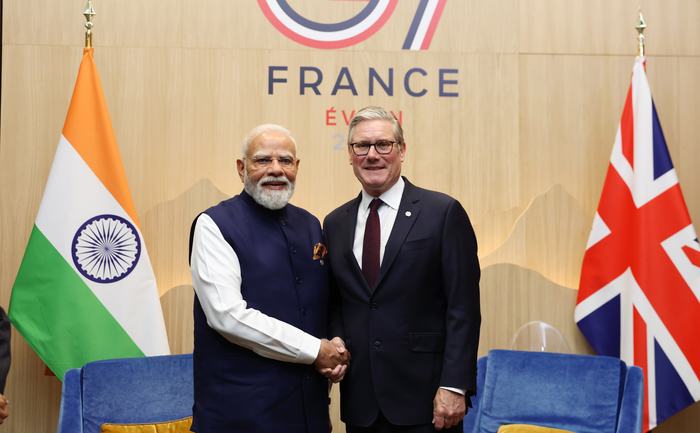
UK Prime Minister Keir Starmer meets Indian Prime Minister Narendra Modi for a bilateral meeting at the G7 Leaders Summit in Evian
Image credit: 16 June 2026 - Simon Dawson / No 10 Downing Street
Why this deal matters
The UK and India are two major economies with deep commercial, cultural and people-to-people links. This agreement gives businesses greater confidence to trade, invest and collaborate across a fast-growing economic corridor, with UK-India bilateral trade already worth £48 billion in 2025. It is one of the most comprehensive trade agreements India has ever done, and the UK’s most economically significant bilateral trade deal since leaving the European Union.
- Boosting trade: forecast to increase bilateral trade by £25.5 billion a year in the long run.
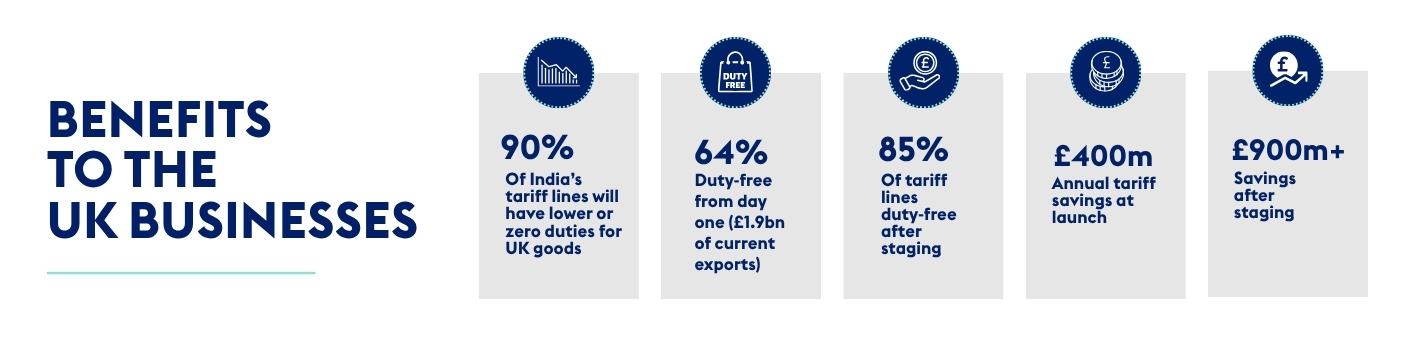
- Reducing costs: liberalises 99% of UK tariffs and 90% of Indian tariffs.
- Supporting growth: expected to raise UK GDP by £4.8 billion and India’s GDP by £5.1 billion a year in the long run.
- Helping businesses: simpler customs, digital processes and clearer rules to make exporting easier thus supporting cheaper, quicker, and easier exports and trade between the markets.
What businesses can expect
From entry into force on 15 July 2026, businesses in both countries will benefit from improved market access, lower tariffs, streamlined customs and stronger support for digital trade, making day-to-day trade more predictable and especially beneficial for small and medium-sized enterprises (SME's). To access preferential tariff rates, UK businesses must complete a one-time registration with His Majesty’s Revenue and Customs (HMRC) through the Origin Registration portal and should registeropens bit.ly in a new tab as soon as possible.
- For UK exporters: India will remove or reduce tariffs on 90% of its tariff lines for UK products; 64% of products will become duty-free immediately, covering about £1.9 billion of current UK exports. Over time, 85% of products will become duty-free.
- For Indian exporters: duty-free access for 99% of Indian exports to the UK from entry into force.
- For consumers: wider choice and better access to goods, services and innovation from both markets.
- For supply chains: simpler processes and stronger economic links between two complementary economies.
Key benefits of the UK-India trade deal
The UK-India FTA will deliver practical benefits from day one: lower tariffs, simpler customs, stronger digital trade commitments and clearer rules for businesses operating across both markets.
Lower tariffs and reduced trade barriers
The agreement significantly reduces tariffs on the majority of goods traded between the UK and India. 99% of UK tariffs and 90% of Indian tariffs will be liberalised, supporting exports and greater trade across both sides. This means UK shoppers will benefit from access to a greater variety of clothes, shoes and renowned food and drink imported from India. On the other hand, Indian consumers will also have better access to iconic British goods, including Scotch Whisky, cosmetics, and cars (including electrical vehicles).
Access to government procurement
The agreement also introduces India’s first comprehensive government procurement chapter in the FTA. UK suppliers will be able to bid for India’s central government procurement contracts for goods and services, a market valued at approximately £38 billion annually. UK firms that source more than 20% of their goods or services from the UK can qualify as “Class II suppliers,” making them eligible to participate in Indian government tenders. In return, India secures legally guaranteed access to the UK’s procurement system.


Paves the way for financial and digital growth
One of the landmark features of this agreement is its pioneering standalone financial services chapter, a significant first for India that locks in long-term market access worth £13.6 billion for UK financial services. This provides crucial legal certainty and equal treatment for financial institutions from both nations, including insurers and fintech companies.
Indian firms can now expand their UK operations with enhanced confidence, while British expertise and capital can more readily support India's dynamic financial ecosystem. India’s IT and digital services economy continues to expand at pace. The digital trade chapter will promote paperless trade across both countries. It will help to drive growth through the openness and stability of digital markets and support collaboration on cutting edge technologies including in sectors like agriculture, health, advanced manufacturing, and clean energy.
Greater opportunities for professionals
The new business mobility commitments agreed in the trade deal will enable specialists from both nations to deliver their expertise whether in financial services, education, information technology or yoga instruction.
The UK exported approximately £1.3 billion of business services to India in 2025 and this deal can help boost services exports to India further. Under this agreement, UK businesses will get equal treatment as domestic firms in India.
These negotiated access arrangements provide businesses with the certainty needed for long-term planning and investment, strengthening the trading relationship between the two countries and unlocking opportunities for learning and mutual economic growth.

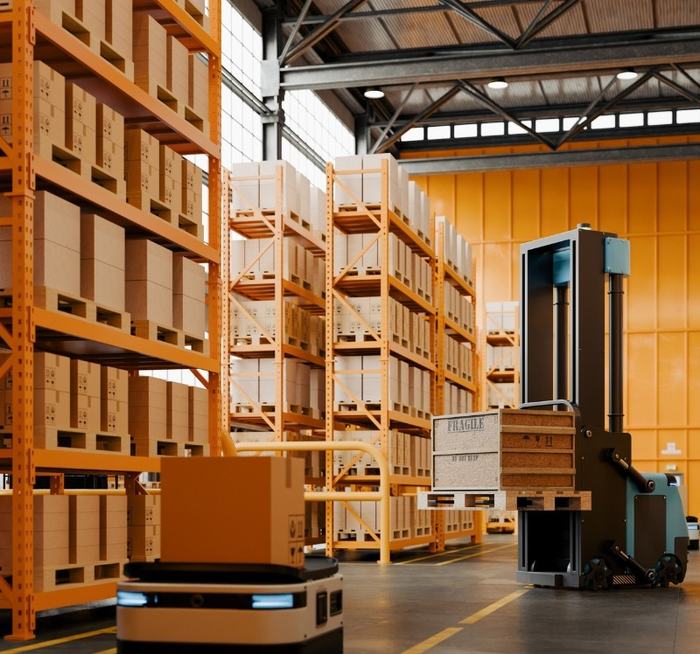
Easier for UK small and medium-sized enterprise (SMEs) to export
The FTA includes a pioneering standalone chapter dedicated to small and medium-sized enterprises, which makes it easier for smaller firms to understand and navigate each other’s systems and processes. But the whole deal has been negotiated with SMEs in mind. For example, the UK and India have agreed mutual commitments on transparency and information-sharing, and includes provisions that encourage co-operation to reduce trade barriers that SMEs may otherwise face. This co-operation will include setting up contact points and facilitating the exchange of best practice that make it easier for SMEs to enter the market. The UK and India will also make trade information accessible online and easier to understand, so that SMEs can clearly understand how to trade effectively.
Both countries have agreed to release goods as rapidly as possible, endeavouring to do so within 48 hours, prioritising perishable products, whilst ensuring customs procedures are easily accessible online. It will also support electronic contracts and transactions through new digital agreements. Equally, this deal will reduce trade barriers further to give India’s SMEs greater access to the UK’s market.
Sector opportunities

Science, Innovation and Tech
The FTA strengthens UK–India collaboration in science, innovation and technology by supporting commercialisation in areas such as agriculture, health, clean energy, AI, telecoms and biotech. It will be easier and cheaper to access cutting edge treatments and medicines and meet our shared net zero targets. From 6G networks to printing tissues and organs, we can co-develop AI, telecoms and biotech innovations faster and manage risks and regulations more efficiently. And we can cut through the red tape by making it easier to sign contracts, protect supply chains from shocks and ensure innovators are rewarded fairly for their Intellectual Property.
Financial and Professional Business Services
The UK–India Free Trade Agreement opens significant new avenues for collaboration and growth by improving certainty, locking in market access and creating a structured pathway for mutual recognition.
India has agreed to a dedicated Financial Services chapter, underscoring the strategic importance of the sector in the bilateral relationship. The chapter, combined with the Schedule of Commitments, provides greater business certainty by locking in existing and new market access arrangements.
The Annex on Professional Services establishes a commitment and a structured process for negotiating Mutual Recognition Arrangements (MRAs), which could benefit professions from accounting and auditing to architecture. It will also support smoother movement of skilled professionals, helping firms serve clients and grow across both markets.


Healthcare and Life Sciences
The deal creates new opportunities for life sciences, medtech and healthcare companies by reducing Indian tariffs on products such as medical devices across the surgical, dental and veterinary fields. Thus, significantly leading to more affordability of products and lower healthcare costs.
- Pharmaceuticals: All Indian tariffs (currently ~11%) will be removed, with 87.6% getting duty‑free access at entry into force and the rest within 5 or 10 years.
- Medical devices: Full market access secured in UK priority medical devices; Indian tariffs (8.25–13.75%) to be eliminated after 10 years, with phased tariff reductions for some sensitive items.
The agreement opens the door for exchange of cutting-edge technologies, expanded market access and deeper collaborative innovation in the sector. Reduced import duties on high-value medical technologies can stimulate joint R&D. The deal also strengthens intellectual property cooperation by committing both sides to transparent and effective administrative and enforcement of IP rights, creating a more stable environment for medtech and biopharma innovation.
Clean Energy Industries
The deal commits both the UK and India to work together to support the development, uptake, and distribution of green technologies in clean energy industries. It will make it easier to exchange ideas on commercial applications for new technologies in priority sectors, including clean energy.
The agreement also supports new opportunities for environmental goods and services businesses, with a commitment to promote trade in these areas. It is designed to encourage a stronger green economy in both the UK and India and increase export opportunities in the sector.
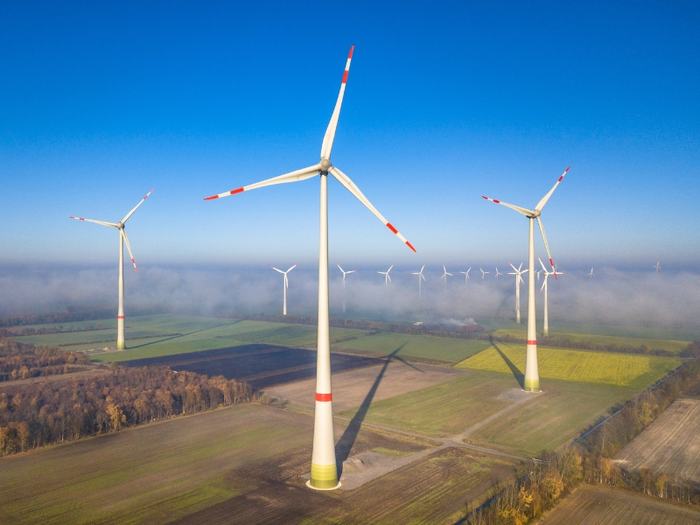
Alongside this, the UK has secured tariff liberalisation on a range of green products, such as turbines, which will help support greater trade in environmental products.

Creative Industries, Sports and Retail
Creative industries, including film, television, music, gaming, design and publishing, will benefit from stronger, more predictable copyright and related rights protections. These commitments will safeguard creators, support innovation and make it easier for Indian animation studios, UK game developers and other creative businesses to collaborate and grow in global markets.
In retail, tariffs of 10% to 20% on UK beauty and cosmetics exports will be removed or reduced, as will tariffs on sports equipment, making these British products more competitive and accessible in India. Faster trading will be supported through practical measures in the FTA including simplified customs procedures and no mandatory requirement to use a customs broker.
Technology and Telecommunications
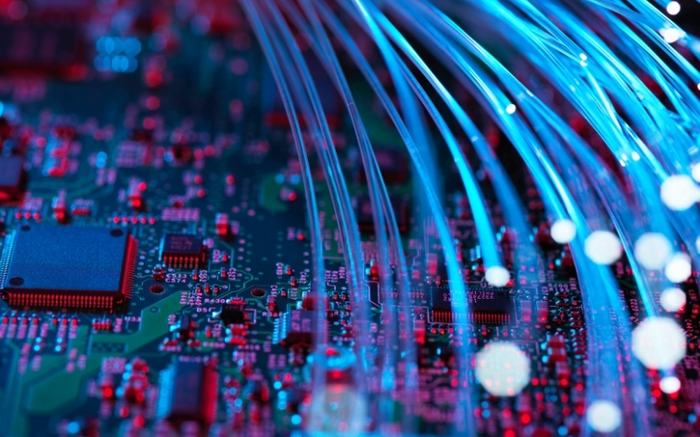
The FTA will streamline digital trade by supporting electronic contracts and paperless commerce, while reducing regulatory barriers and harmonising standards to encourage UK–India partnerships in research, development and emerging technologies.
Commitments on professional mobility will support the temporary movement of highly skilled professionals, including IT specialists, while an innovation working group will help both countries explore emerging technological innovations.

Aerospace
Tariffs have been reduced or removed for UK exports across all advanced manufacturing sectors, ranging from aircraft parts to scientific measuring instruments. For example, UK exports of aircraft parts are currently subjected to tariffs of up to 11%. These will be tariff free under the FTA. This is set to benefit UK exports across engines, aircraft components, instrumentations and much more to become more competitive in India.
Automotive
UK auto-component manufacturers will get tariff-free entry into India over 5 to 10 years. India will also provide tariff-rate quotas (TRQs) for UK automobiles. TRQ gives reduced tariff rates on an annual quota of vehicles exported from the UK.
- UK internal combustion engine (ICE) vehicles can enter India at sharply lower tariffs: falling from ~100%+ to 30–50% initially, and 10% from year 5. The TRQ begins at 20,000 units in year 1 and rises to 37,000 by year 5.
- UK EV/hybrid/hydrogen passenger vehicles get TRQ access from year 6, with tariffs reduced to 40–50% initially and 10% from year 10. Their quota starts at 4,400 units in year 6 and increases gradually to 22,000 units from year 15.
Manufacturing
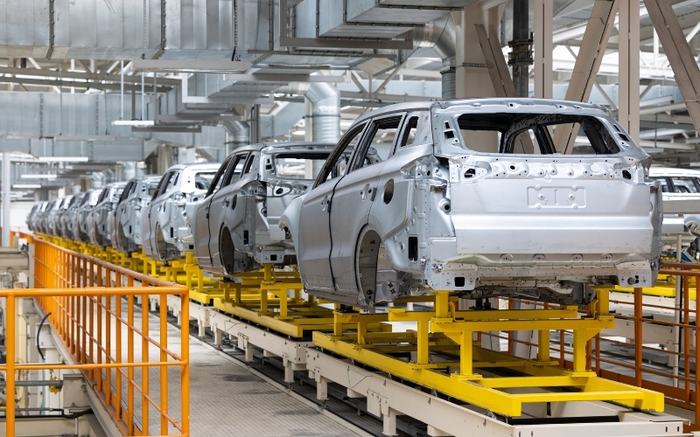
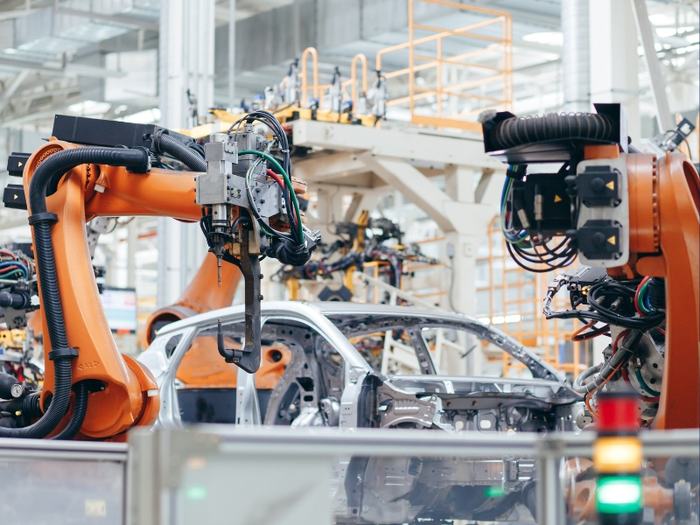
Tariffs will fall significantly on many machinery and industrial equipment (e.g. electrical machinery up to 22% → reduced to either to 0% immediately or gradually). Tariffs on most precision instruments will be phased down to zero over time. Test and Measurement Equipment tariffs to be reduced from 10% → 5% on entry into force, then to zero within five years.
The deal goes beyond just tariff liberalisation. Advanced manufacturing is underpinned by innovation. So, the FTA’s intellectual property (IP) provisions become directly relevant to any UK manufacturer considering a partnership in India. Greater transparency and cooperation around patent systems, reinforced cooperation on IP enforcement consistent within existing legal frameworks, reduce the uncertainty and promote cross-border technology transfer.
Agriculture, Food, and Drink
Lower tariffs will give Indian consumers wider access to high-quality British food and drink, from Scotch whisky to premium seafood such as salmon. Easier customs processes, quicker release of perishable goods and flexible labelling will make the agreement more business-friendly.
The deal also includes India’s first-of-its-kind FTA commitments on animal welfare and antimicrobial resistance. Together, these measures will improve market access while helping protect the health and lives of humans, animals and plants.
- Immediate cuts: UK seafood exports such as salmon and cod will see tariffs fall from 33% to zero when the FTA enters into force.
- Phased cuts: Tariffs on key agrifood products, including chocolate, biscuits and soft drinks, will be eliminated within 10 years, down from current Indian rates of 33% to 55%.
- Scotch whisky gains: India’s customs duties on UK exports will fall from 150% to 75% immediately, then gradually to 40% over 10 years.

Urban Infrastructure
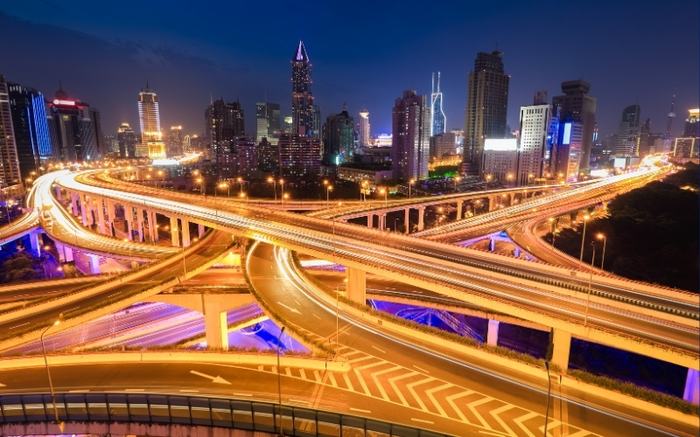
As India delivers one of the world’s largest infrastructure expansion programmes, from transport networks and smart cities to water systems and logistics corridors, the agreement will make it easier for UK companies to bid into the Indian procurement market and contribute to this growth.
Reduced tariffs on infrastructure products will make British specialist equipment, engineering solutions and innovative technologies more competitive in India. Simpler, more secure digital processes will make cross-border transactions and project delivery easier.
The deal also supports business mobility for engineers, consultants and professional services teams, helping them collaborate and deliver complex projects across both markets.
Explore regional benefits
The UK-India trade deal will unlock economic growth across the regions and nations of the UK.
Click on the following links to read the benefits of each region.
UK Prime Minister Keir Starmer brought the largest ever trade delegation to Mumbai, India in October 2025.
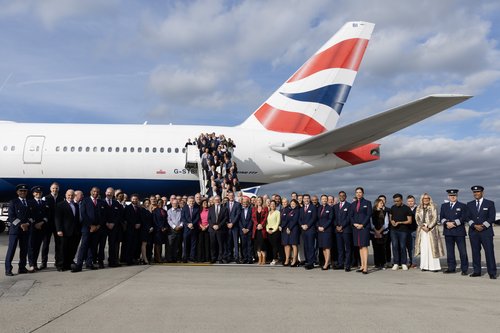
UK Prime Minister Keir Starmer meets with business delegation ahead of India
Image credit: 7 October 2025 - Simon Dawson / No 10 Downing Street
Following the signing of the UK-India trade deal in July 2025, the UK Prime Minister Keir Starmer led the largest ever UK government trade mission to India in October 2025, bringing together business, education and cultural leaders to deepen commercial partnerships. The two-day visit to Mumbai helped translate the trade deal into practical opportunities, with UK and Indian organisations exploring new agreements across priority sectors.
Read the press release - all about PM delegationopens www.gov.uk in a new tab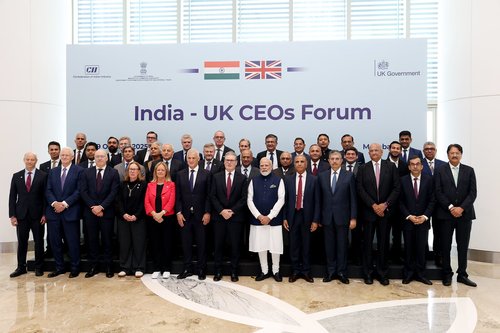
UK PM Keir Starmer joins Indian PM Narendra Modi at India-UK CEO Forum, Mumbai
Image credit: 9 October 2025 - Simon Dawson / No 10 Downing Street
The mission resulted in significant new trade and investment agreements among the businesses of the two nations, demonstrating the immediate impact of the enhanced trading relationship and reinforced both governments’ commitment to long-term growth, jobs and investment.
Read press release - all new trade and investment dealsopens www.gov.uk in a new tabIn the presence of Indian PM Narendra Modi and UK PM Keir Starmer, the landmark UK-India trade deal was signed by Commerce and Industry Minister, Mr. Piyush Goyal and former Secretary of State for Business and Trade, Mr. Jonathan Reynolds
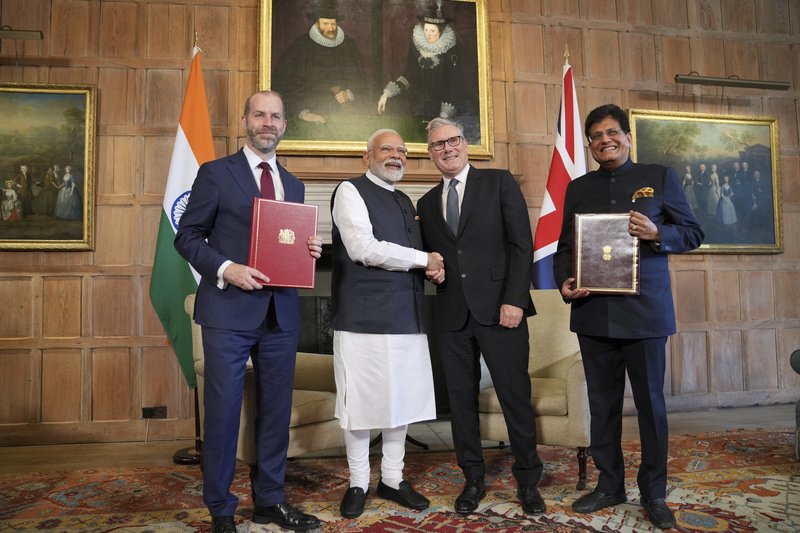
Image credit: 24 July 2025 - WPA Pool/Getty Images
You can find more information by viewing:
Exporting to India? Register here to take advantage of our new UK-India free trade agreement as soon as it comes into force
If you're a UK producer or exporter planning to ship originating goods to India, register with HMRC (His Majesty's Revenue and Customs) to complete origin declarations under the UK-India Free Trade Agreement. This will allow you to self-certify origin, helping your buyers in India access preferential tariff rates.
Speak to an expert
The Department for Business and Trade (DBT) is here to help businesses navigate the new landscape of opportunities to be unlocked with the trade deal; submit your query to get expert advice, insights and technical market guides.
Last updated:
