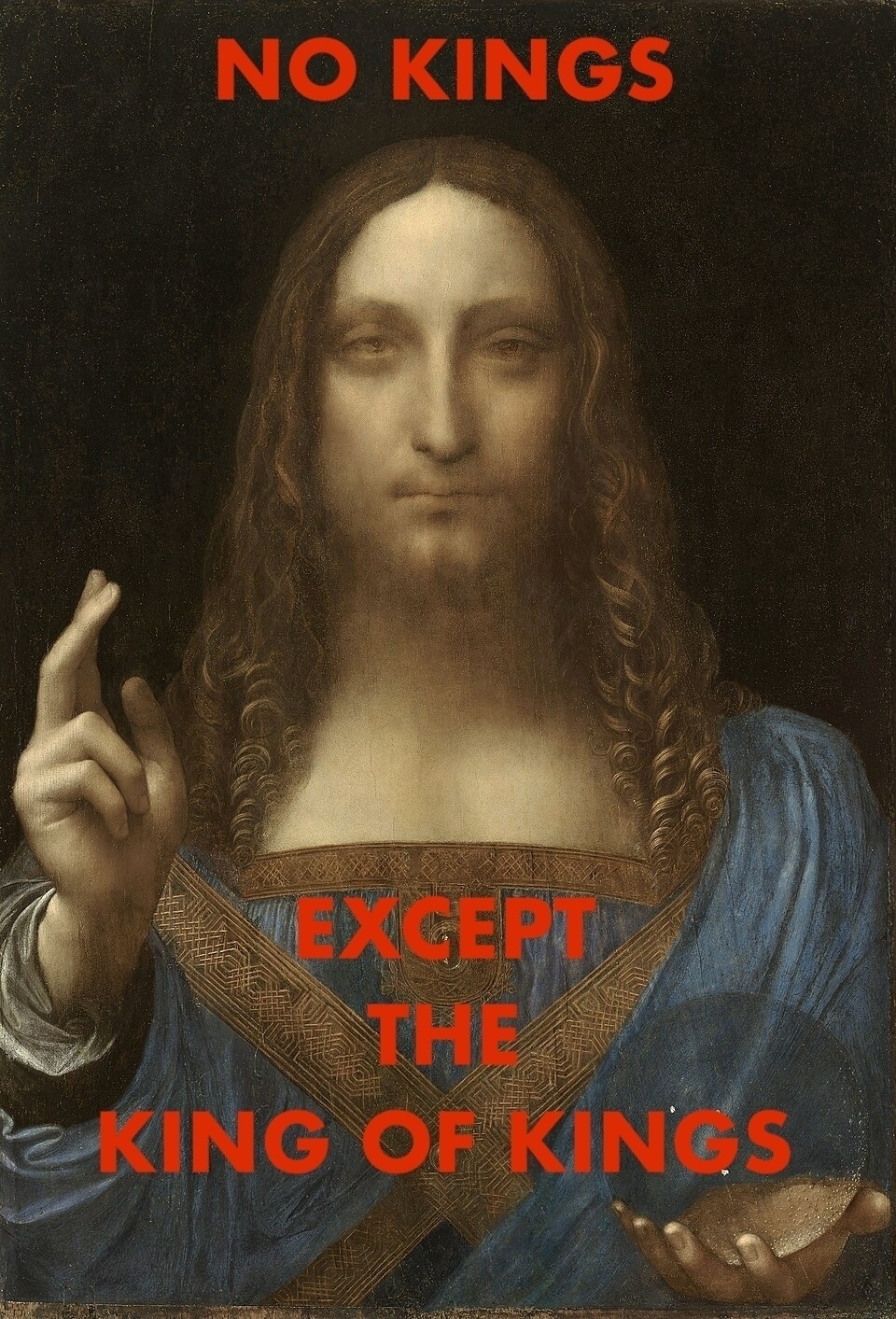
...

The Homebound Symphony

Stagger onward rejoicing

excerpt from my Sent folder: Trek

In an email to my friend Adam Roberts about Star Trek: The Next Generation — about which he has recently written eloquently — I told him this story: 

I was in high school when reruns of the canceled Original Series started getting traction, and my good friend Don was utterly devoted to the show. This was before home video recording was possible, so when an episode was coming on Don would place a portable cassette recorder next to the TV speaker and record the sound, hitting the pause button during commercials. He would then carefully write on the cassette case the name of the episode and the date he recorded it. Eventually he was able to record the entire series, and stored the cassettes in shoeboxes under his bed. Whenever I could I joined him for these sessions, which he conducted with great solemnity. Just before the show came on he would light a couple of joints and hand me one, and throughout the episode we toked in companionable silence, paying less and less attention to what was happening on the screen, or to the fact that the commercials were now being recorded along with the show.  

To which Adam: “This is the perfect Trekfan story.” 

a crisis in my fandom history

In the famous fifth chapter of John Stuart Mill’s Autobiography, “A Crisis in My Mental History,” we learn about the moment that Mill realized that he was in very great trouble: 

From the winter of 1821, when I first read Bentham, and especially from the commencement of the Westminster Review, I had what might truly be called an object in life; to be a reformer of the world. My conception of my own happiness was entirely identified with this object…. But the time came when I awakened from this as from a dream. It was in the autumn of 1826. I was in a dull state of nerves, such as everybody is occasionally liable to; unsusceptible to enjoyment or pleasurable excitement; one of those moods when what is pleasure at other times, becomes insipid or indifferent; the state, I should think, in which converts to Methodism usually are, when smitten by their first “conviction of sin.” In this frame of mind it occurred to me to put the question directly to myself: “Suppose that all your objects in life were realized; that all the changes in institutions and opinions which you are looking forward to, could be completely effected at this very instant: would this be a great joy and happiness to you?” And an irrepressible self-consciousness distinctly answered, “No!” At this my heart sank within me: the whole foundation on which my life was constructed fell down. 

I have a similar story to tell, though on a much smaller scale, and with fewer consequences for my general well-being. Let me tell it to you. 

From the fall of 2011, when I first stared watching the Premier League regularly and intently, I had what might truly be called an object in fandom: to see Arsenal become champions of the the league. My conception of my own fandom was entirely identified with this object. But the time came when I awakened from this as from a dream. It was late January 2026, and Arsenal lost at home to a mediocre Manchester United side. I was in an anxious state of nerves, such as every supporter of a football club is occasionally liable to, but what I then experienced was something more. It came to me that again and again and again, since Mikel Arteta came to manage the team in 2019, a talented Arsenal side had underperformed its talent. Indeed, as the side has grown more talented its underperformance has increased correspondingly. Yes, Arsenal leads the league at the moment, but they lead only because other top sides have underperformed as much as they have, and given the Gunners’ long, long history of choking in pressureful matches, it seems only a matter of time before they give up their lead and end their season in the old familiar lamentation. But even if not… 

In this frame of mind it occurred to me to put the question directly to myself: “Suppose that all your objects in fandom were realized; that all the AFC success which you are looking forward to, could be completely effected at this very instant: would this be a great joy and happiness to you?” And an irrepressible self-consciousness distinctly answered, “No!” At this my heart sank within me: the whole foundation on which my fandom was constructed fell down.

I can’t go through this any more. Arsenal has hurt me too much. The Morgul blade of raised-then-crushed hopes has gone too deep into my heart. “I am wounded; it will never really heal.” Should all my long-cherished hopes come true, should Arsenal even win the treble this season, I could manage nothing more than a wan smile. 

I have deleted the Arsenal calendar from my devices. I have unsubscribed from all my Arsenal RSS feeds. I have deleted my Reddit account and uninstalled the Reddit app from my devices. I can already feel that my burden has lightened. I move with greater peace and hope into my future. 

MacDonald and fantasy

Here’s something I’ll be talking about in my class on fantasy today — we’re just getting started with Phantastes. So I’m asking my students to look at the title page. 

CleanShot 2026-01-26 at 10.54.49@2x.

First, let’s look at all the words on this page that help orient us:

Phantastes: An odd word, obviously related to “fantasy” (sometimes spelled “phantasy”). Its only prior use in English seems to be from an allegorical poem by Phineas Fletcher, The Purple Island (1633), which MacDonald slightly misquotes at the outset of his book.

The root here is the Greek phantasia (ϕαντασία), which first appears in Plato and from him makes its way into later works. It means something like “appearance.” Curiously, its only use in the New Testament is in Acts 25:23, which begins “So on the next day Agrippa and Bernice came with great pomp” — with πολλῆς φαντασίας, great display, a really big show.

St. Augustine renders phantasia into Latin as imaginatio, which is important because of something we’re familiar with, the double valence of “imagination”:

  • “Ah, that’s just your imagination”
  • “What a wonderful imagination she has”

So we get the sense of fantasy as something that might be either profoundly deceptive or surprisingly revelatory. It may hide or reveal the truth. 

Faerie: This is not a creature but a place, just as in Spenser The Faerie Queene does not mean “The queen who is a fairy” but rather “The queen of the land called Faerie.” Thus Tolkien:

[F]airy-stories are not in normal English usage stories about fairies or elves, but stories about Fairy, that is Faërie, the realm or state in which fairies have their being. Faërie contains many things besides elves and fays, and besides dwarfs, witches, trolls, giants, or dragons: it holds the seas, the sun, the moon, the sky; and the earth, and all things that are in it: tree and bird, water and stone, wine and bread, and ourselves, mortal men, when we are enchanted….

Romance: Not what people today call romance — i.e., a story about luuuvv — but rather a story that has a more capacious sense of the real than the realistic novel typically has. So Northrop Frye in a discussion of kinds of hero:

If superior in degree to other men and to his environment, the hero is the typical hero of romance, whose actions are marvellous but who is himself identified as a human being. The hero of romance moves in a world in which the ordinary laws of nature are slightly suspended: prodigies of courage and endurance, unnatural to us, are natural to him, and enchanted weapons, talking animals, terrifying ogres and witches, and talismans of miraculous power violate no rule of probability once the postulates of romance have been established. Here we have moved from myth, properly so called, into legend, folk tale, märchen, and their literary affiliates and derivatives. 

See also two meanings from the OED: 

I.1. A medieval narrative (originally in verse, later also in prose) relating the legendary or extraordinary adventures of some hero of chivalry. Also in extended use, with reference to narratives about important religious figures. 

I.3.a. A fictitious narrative, usually in prose, in which the settings or the events depicted are remote from everyday life, or in which sensational or exciting events or adventures form the central theme; a book, etc., containing such a narrative. Now chiefly archaic and historical. A gradual development from sense A.I.1, from which it is not always easily distinguished…

For Men and Women: That is, not for children.

“In good sooth”: Looks like a quote but isn’t. It’s a very brief summary of what MacDonald hopes his story will be for his readers. He does not claim to make a door through which one can pass into a greater world — but he does hope you will by reading his book begin to see that greater world. C. S. Lewis acknowledged that MacDonald did just this for him when he wrote that reading Phantastes, which he did for the first time at age 16, “baptized my imagination.” (Note: imagination, imaginatio, the forming of images.) 

Image

The German passage from Novalis may be translated:

One can conceive of narratives without coherence, yet with association, like dreams; poems that are merely melodious and full of beautiful words, but also without any sense and coherence, at most individual stanzas comprehensible, like fragments from the most diverse things. This true poetry can at most have an allegorical sense in the large scale, and an indirect effect, like music. That is why nature is so purely poetic, like the chamber of a magician, of a physicist, a nursery, a lumber room and storage chamber.

A fairy tale is like a dream image without coherence. An ensemble of wondrous things and events, for example a musical fantasy, the harmonic sequences of an Aeolian harp, nature itself.

In a true fairy tale everything must be wondrous, mysterious and coherent; everything animated, each in a different way. The whole of nature must be strangely mixed with the whole spirit world; here enters the time of anarchy, of lawlessness, freedom, the natural state of nature, the time before the world…. The world of the fairy tale is the one absolutely opposed to the world of truth, and precisely for that reason so absolutely similar to it, as chaos is similar to the completed creation. 

(Thanks, Claude.)

The link between fantasy and dreams is pervasive and absolutely central — for dreams too may reveal or deceive. See Odyssey XIX (Emily Wilson’s translation): 

But shrewd Penelope said, “Stranger,
dreams are confusing, and not all come true.
There are two gates of dreams: one pair is made
of horn and one of ivory. The dreams
from ivory are full of trickery;
their stories turn out false. The ones that come
through polished horn come true.”  

The idea is repeated in Book VI of the Aeneid

As with dreams, so with fantasy. One must become a shrewd judge of truth and falsehood. 

reorientation

I am rarely hopeful about politics and culture — in the Milne Typology I am an Eeyore, which is the kind of thing that happens to people who reflect often upon original sin — but even so, much of what’s happening now surprises me. I always expect bad things, but I didn’t expect these bad things. 

For the record, and with regard to the current matters of great contention: My sympathies are wholly with the suffering people of Minneapolis and all who recognize that the current administration is defying and mocking the Constitution of the United States in a hundred different ways; I agree completely with Mark Carney and the political leaders of other non-hegemonic countries that the United States is now an unreliable and untrustworthy neighbor; and while I believe that European-American relations are in need of revision, I also believe that the current administration’s inclination to take a chainsaw to them is woefully shortsighted and will bring great trouble for decades to come. 

But if you disagree with any or all of that, it’s okay in one sense at least: That’s not what this post is about. 

Instead, I’m making yet another argument for breaking bread with the dead. In times of social and political crisis, especially when new and often contradictory bulletins are arriving on our ICDs (Internet-Connected Devices) at a second-by-second rate, you and I need to step back. We need the relief. But at the same time, it is impossible, for me anyway, not to think about what’s happening. Just saying “I’m not going to read any more about this” is an inadequate response; it has a tendency to leave me fretful and at loose ends. 

What helps is to read works from the past that deal with questions and challenges that are structurally similar to the ones we’re facing but that emerged in a wholly different context. Right now I am reading the Psalms, especially those that deal with questions of justice and injustice, and the Hebrew prophets. Though comparisons of the current moment to the rise of Nazism often strike me as overblown, they seem increasingly apt these days, so I am returning to Bonhoeffer’s Letters and Papers from Prison. I am also reading, perhaps surprisingly but quite appropriately and illuminatingly, Machiavelli’s Discourses. Machiavelli himself was breaking bread with the dead: reading Roman history as a way of understanding the challenges of 16th-century Florentine politics. 

It’s noteworthy, I think, that Thomas Hobbes in Leviathan thinks that reading books about the history of Rome is dangerous: “One of the most frequent causes of [rebellion against monarchy] is the reading of the books of policy and histories of the ancient Greeks and Romans…. I cannot imagine how anything can be more prejudicial to a monarchy than the allowing of such books to be publicly read, without present applying such correctives of discreet masters, as are fit to take away their venom.” Fortunately, we today in the West may freely read such books. For now. 

This practice of breaking bread with the dead in times of crisis offers a threefold reorientation: 

  • Emotional, because it gives you a break from people who are continually trying to stoke your feelings of anger and hatred; 
  • Intellectual, because in comparing past situations with ours you get an increasingly clear sense of what about our current situation is familiar (and therefore subject to familiar remedies) and what unusual or even unique (and therefore in need of new strategies); 
  • Moral, because, as Aragorn says to Éomer, “Good and ill have not changed since yesteryear; nor are they one thing among Elves and Dwarves and another among Men. It is a man’s part to discern them, as much in the Golden Wood as in his own house.” 

So now back to Machiavelli. What a fascinating guy. 

analog elites

It’s interesting to juxtapose this WSJ story about people building “analog rooms” in their houses with Jason Fried’s account of his parents’ “smart home”: 

It’s new construction. No one has lived in it yet. It’s amped up with state of the art systems. You know, the ones with touchscreens of various sizes, IoT appliances, and interfaces that try too hard.

And it’s terrible. What a regression. 

Consider also this

“It is really important that steering, acceleration, braking, gear shifting, lights, wipers, all that stuff which enables you to actually drive the car, should be tactile,” says [Steven] Kyffin, who once worked on smart controls for Dutch electronics company Philips. “From an interaction design perspective, the shift to touchscreens strips away the natural affordances that made driving intuitive,” he says. 

“Traditional buttons, dials, and levers had perceptible and actionable qualities — you could feel for them, adjust them without looking, and rely on muscle memory. A touchscreen obliterates this,” says Kyffin. “Now, you must look, think, and aim to adjust the temperature or volume. That’s a huge cognitive load, and completely at odds with how we evolved to interact with driving machines while keeping our attention on the road.”

(My one quibble here is with the phrase “we evolved”: natural selection has not been at work in the slightly-more-than-one-hundred-years that humans have been driving automobiles.) The question for me is whether this return to analog will trickle down to the average car models or will remain a luxury good. My bet is on the latter. 

The more ubiquitous screens are the more people hate them, but often, it seems, only the rich have any real chance of escaping them. I’ve noticed the same phenomenon in stereo equipment: if you want to have the tactile button-dial-and-switch experience that everyone’s stereos had back in the Seventies and Eighties, you had better be prepared to open your wallet real wide, because you’ll either be buying an expensive high-end amplifier or (for roughly the same price) a restored vintage one. 

We’ve collectively reached the point, I think, at which the words “digital” and “new” typically convey “cheap, unpredictable, frustrating slop.” This ought to be an opportunity for manufacturing businesses of many different kinds to differentiate themselves from their competitors, but that seems never to happen these days — and not just when the differentiation would involve avoiding touchscreens. 

Consider, for instance, the toaster: All toasters are crap, no matter how much they cost, so you might as well buy a cheap one and expect to throw it out and buy another one after just a few years. So shouldn’t somebody be making a quality toaster? Apparently no one will: it would mean forging a supply chain that’s different than that of the competition, and that’s considered an unacceptable risk these days. So every single toaster manufacturer makes the same crappy product and tries to differentiate via marketing. 

As far as I can tell, what’s happening in every part of the manufacturing sector is an absolute reliance on Chinese factories for components, and the only real factor is price. With a handful of products — say automobiles and cameras (Hasselblads and most Leicas are still hand-assembled) and audiophile stereo equipment — you can, if you’re wealthy enough, buy things that offer more mechanical components and fewer cheap-ass digital ones. And you can display some of your cool mechanical gadgets in your “analog rooms.” But those of us who are not among the one percent are probably gonna be stuck with touchscreen slop. 

Last year, on a very rainy day, I was driving my 2013 Toyota RAV4 down a Texas highway and hydroplaned into a tree. I was unhurt, and was even able to drive the fifty miles to my house. But eventually my insurance company decided that the car was totaled, and when I learned that one of my first thoughts was “Oh great, now I’ll have to buy a car that shoves a stupid big screen in my face.” Ever since then I’ve been sharing a car with my wife while I try to decide whether I should buy a new car or take a chance on an aged but largely screenless used one. It’s a tough call. 

Related: the Sam Vimes Boots Theory

normalizing

Arvind Narayanan & Sayash Kapoor:

We articulate a vision of artificial intelligence (AI) as normal technology. To view AI as normal is not to understate its impact — even transformative, general-purpose technologies such as electricity and the internet are “normal” in our conception. But it is in contrast to both utopian and dystopian visions of the future of AI which have a common tendency to treat it akin to a separate species, a highly autonomous, potentially superintelligent entity.

The statement “AI is normal technology” is three things: a description of current AI, a prediction about the foreseeable future of AI, and a prescription about how we should treat it. We view AI as a tool that we can and should remain in control of, and we argue that this goal does not require drastic policy interventions or technical breakthroughs. We do not think that viewing AI as a humanlike intelligence is currently accurate or useful for understanding its societal impacts, nor is it likely to be in our vision of the future. 

A helpful framing indeed, and one that offers a helpful counterbalance to utopianism and catastrophism alike. Almost nine (!) years ago, at the outset of the first Trump administration, I wrote about “the absolutizing of fright,” and we’re still in that mode: everything (in technology, politics, sports, you name it) is is either the best thing ever or the worst thing ever — though usually the worst: do-what-I-say-or-we’re-all-gonna-DIE. It’s the huckster’s standard rhetorical mode, and it has been the register of all social-media and almost all legacy-media discourse since we first elected a huckster as President. 

Even in this crazy moment — and yeah, it certainly is crazy — there’s a lot more that’s normal than we’re typically allowed to think. Normal isn’t good — a lot of perfectly normal things are very, very bad — but what’s normal works according to established laws and patterns. We can use our experience and our understanding of history to help us figure out how to cope.  

I very strongly recommend to everyone this interview with my old friend Yuval Levin, who in his usual calm, rational, extremely well-informed way explains calmly and rationally what the current administration has accomplished, what it hasn’t accomplished, which among its accomplishments are likely to last and which are almost sure to be evanescent. Even the Trump administration is in many ways — more ways than we’re typically allowed to think — normal. Yuval’s analysis will give you the same kind of helpful reset in your thinking about politics that the Narayanan & Kapoor essay will give you about the promise and threat of AGI. 

angels in the architecture

Image

I remember the precise moment I fell in love with Coventry Cathedral. It was on my first visit. As I entered I saw what you see above, which is quite wonderful in many ways. But after I had walked up towards the altar to inspect the great tapestry, I pivoted — and that’s when it hit me.

It’s important to understand that I had just made the movements that people make when they receive Communion: I had approached the Lord of Glory with the wounds in his hands and feet and side; I had come to the place where his body and blood are given for me; and then I turned.

What I saw, first, was tall thin columns of bright color: the stained glass windows that cannot be seen when you’re facing the altar. (There are surprisingly few good photographs online taken from where I stood, but you can get a few glimpses in this short film, though the commentary is uninformed about the theology that underlies the design.) 

And then of course I saw the angels. 

Coventry 20.

Much larger version here

It’s as though, having received the Holy Meal, you are suddenly able to see the world as it is: radiant with light and populated by angels engaged in their everlasting music of healing and consolation. Truly they are there

And they stand between us and the broken world, for the vista they look out upon is the world broken by humans: more particularly, the ruins of the medieval cathedral that had been bombed in the Second World War.

Here’s a brilliant BBC documentary about the building of the cathedral, first shown in 2021. And here’s a rather academic but still fascinating article about the making of that film, written by John Wyver, the film’s writer/director. 

Excerpt from my Sent folder: Markdown

April 1, 2005, to John Gruber:

John, I just wanted to write to thank you for Markdown, which is one of the coolest and most useful tools I’ve come across in a long time. I’m an English professor who does a lot of writing, and one of my frustrations over the years has been dealing with the various file formats of the text editors and word processors that I’ve used: different versions of Word and AppleWorks, RTF files, Mellel, and now Pages. I have spent way too much time over the years cleaning up old files to make them usable again – which is one of the reasons I started using BBEdit: it will open anything, and you can’t clean up a file you can’t open. […] 

Markdown, in conjunction with BBEdit 8, has pretty much solved my problems. The Markdown syntax is highly intuitive – relying on the conventions of plain text email was a brilliant stroke on your part – and enables me to use very straightforwardly all the formatting options that I normally need, including some that were difficult or impossible to access via Ulysses, whose file conversion tools aren’t nearly as good as Markdown’s. And now that BBEdit uses the OS X system spellchecker, and has one of the best implementations of drawers (which I usually despise) that I’ve seen, I have the best tools I have ever had as I move into my next book project. But without Markdown I’d still lack a really satisfying writing environment. Markdown allows me to write almost completely in plain text – this focusing on composition rather than formatting – but allows me to add formatting options when I need to. When I’m finished writing a piece, I run Markdown and save the document as HTML; then I can send it to anyone in that format; or, if someone happens to need RTF, it’s trivial to open it in TextEdit and convert. 

This got a very kind reply from Mr. Gruber.

It’s a bit of a shock to realize that I have been writing almost everything in Markdown (and writing my Markdown largely in BBEdit) for twenty-one years

Anil Dash, from a great post on the history and (now) ubiquity of Markdown:

As hard as it may be to believe, back in 2004, the default was that people made new standards for open technologies like Markdown, and just shared them freely for the good of the internet, and the world, and then went on about their lives. If it happened to have unleashed billions of dollars of value for others, then so much the better. If they got some credit along the way, that was great, too. But mostly you just did it to solve a problem for yourself and for other like-minded people. And also, maybe, to help make sure that some jerk didn’t otherwise create some horrible proprietary alternative that would lock everybody into their terrible inferior version forever instead.  

You know, that really is hard to believe … but true! It was a different world then. 

done, not done, undone

A few days ago I submitted my biography of Dorothy L. Sayers to my editors at Oxford University Press. I always find this stage of the book-writing process emotionally complicated. At the moment, while I feel gratified that I have told my story, that I have taken this person in words from the cradle to the grave, I also know that I’m not done. Indeed, just a few hours after I sent the file I got files back: an Author Questionnaire for marketing, the assignment to summarize each chapter of the book for the Oxford Scholarship website.

Later I will get suggestions from my editors, and probably suggestions from peer reviewers, and then later still there will be rounds of copy-editing with many queries, at least some of which I won’t know how to answer. All of this will take months, and I doubt that the book will appear until 2027. The one thing I know for certain is that at the end of the process I will be heartily sick of the book and will never want to think about it again — but I will have to, because there will be interview requests to respond to. 

It hasn’t always been like this, at least not for every writer. Consider: 

  • 20 September 1935 (approx.): Sayers sends the complete typescript of Gaudy Night to Gollancz. 
  • 4 November 1935: Gaudy Night is published. 

And remember, this was in the days of mechanical printing: no digital editing or typesetting. All the editing was done by people with pencils, and the typesetting and printing done on a Monotype machine

The speed and efficiency of the operation meant that Sayers could then immediately turn to whatever she wanted to write next. What a beautiful dream. 

design amnesia

Like many (most?) Mac users, I keep my frequently-used applications arranged in my Dock in a logical and easily-remembered order; but a few months ago, my Mac stopped remembering that order and began to display those apps randomly. At first I thought they were displayed with the most recently opened on top — I keep my Dock on the side of the screen — but nope, it’s random. When that happened, I would patiently re-arrange the apps according to my habit and preference, and they’d stay that way for a day or two or three; but eventually, they’d randomize themselves again. (Yes, I have tried all the fixes suggested on various message boards. No dice.) It has happened often enough that I’ve given up on restoring my preferred order: I am now trying to retrain my mind to pretend that I don’t have a Dock, and to navigate between apps by command-tab and by search.

Now, one might think that the obvious thing to do is to upgrade to Tahoe, and I have been mulling that possibility over … but then I read this post by Howard Oakley. Oakley is one of the very best writers about the Mac — experienced, capable of going deep into the technical weeds but also capable of writing clearly and vividly about the typical user’s experience with the Mac. His post convinces me to stick with Sequioia … well, forever, maybe. But only because I can’t go further back. Oakley features a screenshot from the Mac circa 2014 and all I can think is: I would pay real serious money to make the computer look like that again. It was simply and objectively a better design: easy on the eyes, enjoyable to look at, and characterized by readily distinguishable kinds and units of information.

Relatedly: Not long ago I happened across some interviews with Guillermo del Toro and was struck — as I have always been struck when reading or listening to interviews with him — by how thoughtful and perceptive he is. And I thought: Then how can he not see how terrible his Frankenstein looks? Why did he think those CGI wolves, for instance, were acceptable? The wargs in The Lord of the Rings, made a quarter-century ago, look better.

This question in turn had me thinking about this short video essay by Patrick Tomasso in which he shows some brief clips from David Fincher’s Se7en and makes the provocative comment that no one today — not even David Fincher — knows how to make a movie that looks like that. (Maybe nobody knows how to make those wargs either.)

I’m wondering whether in movies and UI design alike we’re afflicted by supposedly creative people who suffer from design amnesia: they’ve forgotten what good design looks like. They’ve become so focused on trying new tricks that they have lost the frame of reference that knowledge of past art gives us. I’m not talking about mere imitations of past styles — something like Steven Soderbergh’s The Good German, which is fun to look at but is also essentially a pastiche of Hollywood films from the Second World War era.

So what am I talking about? Well, a good example would be one of the very finest films of this century, Wim Wenders’s Perfect Days. In some key respects the movie is a tribute to Wenders’s cinematic idol, Yasujiro Ozu. Wenders employs Ozu’s favored 1.33-1 aspect ratio; he uses silence and stillness in Ozu-like ways; like Ozu, he is interested in people whom most of us don’t notice. All that duly acknowledged, this movie is not pastiche: Wenders’s camera moves much more freely than an Ozu camera ever does; he employs music much more intentionally and emphatically than Ozu ever did; he uses close-ups frequently and to great effect. What Ozu’s distinctive style provides is that invaluable frame of reference that enriches and intensifies Wenders’s cinematic grammar.

T. S. Eliot famously said that “Tradition … cannot be inherited, and if you want it you must obtain it by great labour.” Perfect Days is a great movie in part because Wenders has performed that great labor. It’s an example that even UI designers could profit from.

expertise in action

Diarmaid MacCulloch:

The particular appeal of Orthodoxy for a certain sort of young man comes from the fragility of so much of young American masculinity: disoriented by assertions of female equality and the new self-confidence of many people in their variations on gender and sexual identity. 

I have two questions. First, why ask Diarmaid MacCulloch this question? He’s an English historian of Christianity, primarily of the Reformation, with almost no discernible knowledge of contemporary American religion. (Recent American Christianity gets about two paragraphs — which is approximately the right amount — in MacCullouch’s excellent A History of Christianity: The First Three Thousand Years. And even those paragraphs are really about politics.) 

Second, why does MacCulloch offer so confident (and sneeringly dismissive) an answer, when he should have said, “I don’t know, you should ask someone who has studied the matter”? Instead, he’s just doing what most people do when faced with the Repugnant Cultural Other: claiming to be able to read their minds and reporting that your telepathic scrutiny has revealed fear and loathing. (This is what the Freudians call “projection.”) 

My suggestion is this: if you want to know why groups of people are acting in a particular way, the first step is always to ask them. In this case, that’s what Ruth Graham of the New York Times did. You don’t stop there, but you start there. And then you move on to get the views of people who have indeed studied the matter. 

The tag at the bottom of this post will lead you to posts I’ve written over the years about why the very idea of expertise has fallen into such disrepute, and one of the chief reasons is that people who have expertise in one area think themselves thereby qualified to speak authoritatively on many other matters — often unrelated. McCullough is at least remaining in some very broad sense within his own discipline, something that cannot be said about the custodians of the ridiculous Doomsday Clock, i.e., people who think that expertise in physics qualifies them to make predictions about international politics. 

Our social order needs to have some trust — not blind trust, never blind trust, but reasonable trust — in expertise, but that will never happen as long as experts’ arrogance leads them to pontificate on matters about which they are ignorant. That makes people doubt their actual expertise. 

Daniel Treier, R.I.P.

Men in their latter years fall into three general types, which can to some degree overlap but are nonetheless distinct: 

  • Grumpy old men 
  • Explorers (“Old men ought to be explorers,” T. S. Eliot said, but this is not common) 
  • Wise elders 

Dan Treier would have been a wonderful wise elder, had he not died very prematurely, which happened yesterday. In 2015 I lost two dear friends — Brett Foster and Roger Lundin — within four days, and now in 2025 I have lost two more dear friends — Jay Wood and Dan — within four months. All of them died too young, Brett and Dan several decades too young. 

Many years ago an acquaintance said to me, “You Christians say you believe that the dead will be resurrected, and that Christians will experience eternal joy — so why do you cry at funerals?” I replied: “If you were going to be parted, possibly for a very long time, from someone you love, would you cry?” This thought had not occurred to him. Such partings are painful, even if they’re not forever.

When people die, you typically think first of their family — and I am constantly remembering Dan’s wife Amy and his daughter Anna in my prayers — and then of their friends, and then of their larger community. Dan, whom I felt had always been a grown-up, was a repository of wisdom, compassion, and good counsel to everyone he knew, and to be parted from Dan is to be parted from those virtues, those gifts. 

Dan and I had a lot of fun together, in large part because we had amassed a repertoire of jokes over the years that we deployed often and joyfully. For instance, he took a wicked pleasure in reminding me that a story I had just told was one he had heard several times before. (“You told it really well that time, though.”) But whenever I had a difficult decision to make I knew that Dan’s counsel would be immensely valuable to me, and I always sought it. Dan, though considerably younger than me, was a wise elder for me. I will miss that greatly. 

Dan was an Ohio farm boy, raised in a very conservative Christian environment, and though his own theology and spirituality developed over the years in ways that could be said to set him somewhat apart from that world, it didn’t feel that way, because he was always so grateful for the faithfulness of those who raised him. This was a great lesson for many of Dan’s doctoral students: that it’s possible to hold different theological positions than one’s friends and family while remaining united with them in Spirit and in Love. “There is one body and one Spirit — just as you were called to the one hope that belongs to your call — one Lord, one faith, one baptism, one God and Father of all, who is over all and through all and in all.” 

I had hoped — well, really, I had expected — that Dan would be offering his wise-elder counsel to those who sought it for another thirty or forty years. That was not to be. So those of us with less wisdom and charity must take up the cause — until we meet again. 

The Egyptian

Egyptian 1954 opening credits 3.

I just watched The Egyptian, a 1954 movie. It’s very interesting in a number of respects. It’s not good — the acting is almost uniformly poor, though Peter Ustinov is enjoyable as a roguish servant — but it’s interesting. The titular character is played by a little-known English actor named Edmund Purdom, and he is boring with excellent diction. The part was originally supposed to be played by Marlon Brando, and I cannot even imagine what Brando would have done to the movie. For the moment anyway you can watch it for free on YouTube.

The Egyptian was one of the first CinemaScope movies, and the combination of the wide screen and Technicolor really is beautiful. There’s memorable shot fairly early in the picture (starting at 35 minutes) in which the director — Michael Curtiz, of Casablanca fame — has his camera set up facing a courtyard outside a palace. It’s night, and everything in the courtyard is tinted a deep blue. But you see through the open doorway of the palace a dancer who’s wearing bright yellow. All of the colors inside that room are yellows and reds, and everything there is brightly lit; the contrast to the dim blue courtyard is striking. The camera slowly dollies through the courtyard and into the room. Curtiz may have been a journeyman director, but he had some great moments. (Now if the lion-hunting scene just before hadn’t been hideously bad….)

Another point of interest: according to Foster Hirsch, the research that went into the making of the sets and the costumes here was exceptionally thorough and detailed — Hirsch says that the research unit of 20th Century Fox was at that time the best in the business, and I would love to know more about how that unit operated — and the sets really are feast-for-the-eyes material. Hirsch also points out that the wide-screen format with its deep-focus images allow the viewer’s eyes to wander and attend to whatever seems to reward attention. It is noteworthy, I think, that this is also how Terrence Malick tends to film his scenes, and I wonder if the big CinemaScope epics of the 1950s may have had a greater influence on him than is usually recognized.

By the way, many of the beautiful props used in these indoor scenes had a future: Cecil B. DeMille bought them when he was making The Ten Commandments just two years later. 

Image

But maybe the most interesting thing is what The Egyptian does thematically. The protagonist of the story is a physician named Sinuhe, but the ups and downs of his life — there are many of both — are largely determined by his relationship with the Pharaoh here called Akhnaton and better known as Akhenaten. I wrote about Akhenaten at some length in this post, and I pointed out that the Pharaoh’s monotheism has been linked by many with Judaism, usually in the time of Moses, though Thomas Mann makes Joseph ben-Jacob Akhenaten’s vizier.

In this movie Akhnaton (Michael Wilding, doing the best he can with a weird part) is portrayed as a dreamy mystic who cares only about his god and his family. He cannot see, and if he could see probably would not care, how profoundly he is disrupting his country with his abandonment of the old gods and their replacement by an anti-anthropomorphic sun god, Aten. In the end he does so much damage that his trusted physician Sinuhe gives him poison, which he accepts with (bizarre) good grace: he knows, he says, that he made a mess of things. But he believes that The Day Will Come when his monotheism, his belief in a single God who loves all of His creatures, will conquer the world. “My death does not matter. I was no more than a shadow of things to come. One voice that spoke for Him.”

I’m leaving out almost all of Sinuhe’s story here, in case any of you would like to watch the movie, but Sinuhe, having been moved by the dignity of Akhnaton’s death, makes a similar confession at the movie’s end. “A truth cannot be killed. It passes in secret from one man’s heart to another’s” — and he pledges himself to become to the messenger of this egalitarian monotheistic truth. “All men are equal. And no man is alone.” Cue the swelling music. (And try to say these words in Brando’s voice. Impossible.)

In the movie’s final shot, words are superimposed on the screen: “THESE EVENTS HAPPENED THIRTEEN CENTURIES BEFORE THE BIRTH OF JESUS CHRIST.” The Egyptian looks like a biblical epic. It’s got sandals and swords and the ancient Middle East, but there’s nothing biblical about it until that last moment — and the Bible it invokes has a New Testament.

There’s no Moses here, no Joseph, no Israel. Akhnaton is the first monotheist, after which the idea runs underground, I guess, until Jesus comes along. The most surprising and disconcerting thing about The Egyptian is its complete erasure of the people of Israel. Which wouldn’t have been an issue except for that final splash of words, purporting to give relevant context, but instead offering a very misleading story indeed. 

escape clause

This story about a long-time Apple developer and writer whose account was closed without explanation and without any means of redress has been making the rounds in Apple-user world. And: scroll to the bottom of that post and you’ll see that the blogger, Michael Tsai, has covered several very similar stories in the past. 

(UPDATE: Account restored! But that doesn’t change anything for me. In similar circumstances, I couldn’t count on my own story going viral.) 

The story made me wonder — and if you’re an Apple user should make you wonder — what one could do if similarly locked out. I have everything backed up to Backblaze and to a hard drive attached to my computer, which is great for almost all my writing — mainly in plain text files (including HTML) and in Microsoft Word — but not great for everything else. For instance, I have almost 40,000 images and videos in Apple Photos, but those are kept in a proprietary database that I would be unable to open if my Apple account because inaccessible for any reason. 

Greg Morris shrewdly puts the key point: 

The scale of dependency is what makes this different from older tech problems. Losing your email account twenty years ago was bad. Losing your iCloud account now means losing your photos, your passwords, your ability to access anything else. We’ve built these single points of failure into our lives and handed them to corporations who can cut us off for reasons they won’t explain. That’s not a sustainable system.

So the first thing I did after reflecting on the story was to download as JPGs all the photos in my Photos database to a hard drive. I could of course have sent them to Google Photos, since it’s highly unlikely that I would lose access to both my Apple and Google accounts, but while I’m trying to avoid future trouble: I want to have every file I own to be saved in non-proprietary formats that can be so saved — I do this already with my email, which is saved in .mbox files — or in formats like .docx that have been reverse-engineered to be openable and editable by open-source applications. 

The next step: to ensure that other mission-critical data are transferred to cross-platform or even non-digital sources. I’ve exported my notes from the various note-taking apps I’ve used in the past to text files, and I’ve stopped using Apple Reminders and Calendar — in those cases going all-in on paper (I was already mostly there). For some task-related matters, I may be making more use of Workflowy, which offers the option of regularly uploading copies of your outlines as text files to Dropbox. 

The really time-consuming thing — I’m gonna see if Claude can help me write some scripts to manage this — will be to get files in Apple-specific apps and formats (Pages, OmniOutliner, OmniGraffle) into formats readable on other platforms. One sad thing about this situation is that some blameless developers for Apple devices — like Omni, for instance — will suffer if many people do what I’m doing. They have pegged their business mission to the belief that Apple will be a reliable custodian of people’s data, or anyway to our belief in that somewhat questionable proposition. 

Paper in preference to digital; flat files in preference to databases; cross-platform tools in preference to one-platform tools. This is the only way. 

Claudia’s dream

Dorothy L. Sayers’s sequence of twelve radio plays, The Man Born to be King, happened because the BBC asked her to put the life of Christ, distilled from the Gospels, in dramatic form. But Sayers was not content simply to string together episodes: she wanted to make something thematically coherent and aesthetically powerful. The through-line of the plays, it seems to me, can be put in the form of a question Jesus asks in all three of the synoptic Gospels: “Who do you say I am?” (Matthew 16:15, Mark 8:29, Luke 9:20.) In these plays, everyone who meets Jesus is implicitly confronted by this question, which most of them answer. They may admire or worship or mock or comdemn or despise, but they all respond. They seem compelled to.

But it is not just individual persons who need to respond to Jesus. The two Great Powers whom Jesus challenges are the Sanhedrin and Rome; and the members of those bodies respond in complex and often contradictory ways.

For Caiaphas, the High Priest, Jesus is not an unique figure: he is, rather, exemplary of an ongoing problem: the inability of the Sanhedrin to command the respect and obedience of the Jewish people. And that inability leads to the increasing dominance of Roman power in Judaea. In the eleventh play, which concerns the Crucifixion, Caiaphas reflects despairingly on this situation:

CAIAPHAS … It is the duty of statesmen to destroy the madness which we call imagination. It is dangerous. It breeds dissension. Peace, order, security — that is Rome’s offer — at Rome’s price.

JOSEPH [of Arimathea] (gloomily): We have rejected the way of Jesus. I suppose we must now take yours.

CAIAPHAS: You will reject me too, I think…. Be content, Jesus, my enemy. Caiaphas also will have lived in vain.

I may have more to say in a later post about the role of the Jewish authorities in these plays. These are matters that call for great delicacy, and I think it’s fair to say that delicacy was not Sayers’s strong suit. So stay tuned.

What Jesus means for Rome — and what Romans think Jesus means for Rome — is the question I want to focus on here.

One of the more intersting minor characters in these plays is a Roman named Proclus. We see him in the first play as a young soldier assigned to the household of Herod the Great; later we see him, a much older man, as the one Les Murray calls “the say-but-the-word centurion”; and we see him once more giving vinegar to the dying Jesus. Sayers’s decision to make these disparate figures one character is striking — and a reminder of how brief the earthly life of Jesus was. For a Roman soldier who was beginning his career when Jesus came into the world could still have been on duty to see this strange man out of it.

To Pilate Jesus is an object of little interest — though he does admire the fortitude with which the prophet bears his suffering: he muses that Jesus should have been a Roman. For most of the Roman soldiers he’s just another criminal they must deal with, along with the usual crowd-control problems. For one of the aristocrats his execution is worth seeing: it’s a pleasing “novelty” to watch a god being crucified.

But the most interesting figure here is Claudia Procula, the wife of Pilate. As Jesus hangs on the cross, Pilate asks her about this dream she has had, and she replies (I must quote at length here):

CLAUDIA: I was in a ship at sea, voyaging among the islands of the Aegean. At first the weather seemed calm and sunny — but presently, the sky darkened — and the sea began to toss with the wind….

(Wind and waves)

Then, out of the east, there came a cry, strange and piercing …

(Voice in a thin wail: “Pan ho megas tethneke — Pan ho megas tethneke– ”)

And I said to the captain, “What do they cry?” And he answered, “Great Pan is dead.” And I asked him, “How can God die?” And he answered, “Don’t you remember? They crucified him. He suffered under Pontius Pilate.” …

(Murmur of voices, starting almost in a whisper)

Then all the people in the ship turned their faces to me and said: “Pontius Pilate.” …

(Voices, some speaking, some chanting, some muttering, mingled with sung fragments of Greek and Latin liturgies, weaving and crossing one another: “Pontius Pilate. … Pontius Pilate … he suffered under Pontius Pilate … crucified, dead and buried … sub Pontio Pilato … Pilato … he suffered … suffered … under Pontius Pilate … under Pontius Pilate…. )

… in all tongues and all voices … even the little children with their mothers….

(Children’s voices: “Suffered under Pontius Pilate … sub Pontio Pilato … crucifie sous Ponce Pilate … gekreuzigt unter Pontius Pilatus … and other languages, mingling with the adult voices: then fade it all out)

. . . your name, husband, your name continually — “he suffered under Pontius Pilate.”

This is an extraordinary scene in several ways. Note, for instance, the inclusion, in the midst of the Second World War, of French and German voices. If you listen to the performance of this play available online and compare it to the book, you’ll discover that the performed version of the scene is considerably shorter than the published version and is placed after the death of Jesus rather than when he is dying — the book has the Roman soldiers giving the dying Jesus vinegar, then switches to Claudia Procula and Pilate, then returns to the cross for Jesus’s last outcry and death. It’s impossible to be sure, but it seems likely that Sayers allowed changes to her script in order to meet the exigencies of radio broadcast but then restored the full version for publication — because she thought what she had written and her placement of it are important. 

The most remarkable thing about the scene is Sayers’s inclusion of words written by the Greek historian and biographer Plutarch, a pagan who was born probably just a few years after Jesus was crucified. Plutarch was from the village of Chaeronea in Boeotia, about twenty miles from the famous temple of Apollo at Delphi, where he served as a priest. His devotion to Apollo seems to have been sincere and deep. Therefore he was appropriately concerned about the silence of the oracles, his essay/dialogue on which I wrote about at some length here.

Philip, one of the characters in the dialogue, tells this story:

As for death among such beings, I have heard the words of a man who was not a fool nor an impostor. The father of Aemilianus the orator, to whom some of you have listened, was Epitherses, who lived in our town and was my teacher in grammar. He said that once upon a time in making a voyage to Italy he embarked on a ship carrying freight and many passengers. It was already evening when, near the Echinades Islands, the wind dropped, and the ship drifted near Paxi. Almost everybody was awake, and a good many had not finished their after-dinner wine. Suddenly from the island of Paxi was heard the voice of someone loudly calling Thamus, so that all were amazed. Thamus was an Egyptian pilot, not known by name even to many on board. Twice he was called and made no reply, but the third time he answered; and the caller, raising his voice, said, ‘When you come opposite to Palodes, announce that Great Pan is dead.’ On hearing this, all, said Epitherses, were astounded and reasoned among themselves whether it were better to carry out the order or to refuse to meddle and let the matter go. Under the circumstances Thamus made up his mind that if there should be a breeze, he would sail past and keep quiet, but with no wind and a smooth sea about the place he would announce what he had heard. So, when he came opposite Palodes, and there was neither wind nor wave, Thamus from the stern, looking toward the land, said the words as he had heard them: ‘Great Pan is dead.’ Even before he had finished there was a great cry of lamentation, not of one person, but of many, mingled with exclamations of amazement. As many persons were on the vessel, the story was soon spread abroad in Rome, and Thamus was sent for by Tiberius Caesar. Tiberius became so convinced of the truth of the story that he caused an inquiry and investigation to be made about Pan; and the scholars, who were numerous at his court, conjectured that he was the son born of Hermes and Penelopê.

Tiberius, of course, was Caesar at the time of Jesus’s death. So, though Plutarch was writing around 100 A.D., this story concerns an event that occurred decades earlier; and it seems likely that Philip, who gives the account in a for-what-it’s-worth spirit, is suggesting that the oracles may have fallen silent because the gods or demigods who spoke through them have died.

The Christian interpretation of this story is of course that the coming of Jesus is what silences the oracles, whether by slaying the gods or by rendering them powerless.


Brief Digression: Conversely, the implication of Arthur Machen’s superb horror story “The Great God Pan” (1894) is that such deities have neither died nor lost all their power but have gone underground, as it were, conducting a permanently furtive campaign of resistance to a triumphant Christianity. And of course the justly famous “Piper at the Gates of Dawn” chapter in The Wind in the Willows (1906) makes a similar suggestion, but in a gentler and sunnier key. The survival of paganism in Europe is the subject of Francis Young’s Paganism Persisting: A History of European Paganisms since Antiquity and his consistently interesting Substack. Here is a recent piece by him on the renewal, real or imagined, of British paganism. These matters too deserve more attention than I can give them here. End of digression.


Sayers probably was alerted to Philip’s story by Chesterton’s The Everlasting Man (1925), which offers a very interesting take on the meaning of Philip’s tale. His suggestion is that Jesus did not have to kill Pan, because the disenchanting bureaucratic system of the Roman empire had already done so:

The Empire at the end was organised more and more on that servile system which generally goes with the boast of organisation; indeed it was almost as servile as the modern schemes for the organisation of industry. It is proverbial that what would once have been a peasantry became a mere populace of the town dependent for bread and circuses; which may again suggest to some a mob dependent upon doles and cinemas. In this as in many other respects, the modern return to heathenism has been a return not even to the heathen youth but rather to the heathen old age. But the causes of it were spiritual in both cases; and especially the spirit of paganism had departed with its familiar spirits. The heart had gone out of it with its household gods, who went along with the gods of the garden and the field and the forest. The Old Man of the Forest was too old; he was already dying. It is said truly in a sense that Pan died because Christ was born. It is almost as true in another sense that men knew that Christ was born because Pan was already dead. A void was made by the vanishing of the whole mythology of mankind, which would have asphyxiated like a vacuum if it had not been filled with theology. But the point for the moment is that the mythology could not have lasted like a theology in any case. Theology is thought, whether we agree with it or not. Mythology was never thought, and nobody could really agree with it or disagree with it. It was a mere mood of glamour, and when the mood went it could not be recovered. Men not only ceased to believe in the gods, but they realised that they had never believed in them. They had sung their praises; they had danced round their altars. They had played the flute; they had played the fool.

So came the twilight upon Arcady, and the last notes of the pipe sound sadly from the beechen grove.

The superior organization of the great Empire governed from a great City easily defeated this ancient pastoral paganism, which was, after all, “a mere mood of glamour.” (Stalin famously asked how many divisions the Pope had; one might imagine Tiberius Caesar asking how many legions Pan can command.)

Sayers’s use of all this is fascinating, and especially powerful is her decision to embed it in her narrative as a dream. For like all important dreams, that of Claudia Procula has an iron logic beneath its chaotic surface. The surface confuses the death of Jesus and the death of Pan; in fact, Pilate in his role as a Roman bureaucrat has indeed helped to kill Pan, though his acquiescence in the death of Jesus … well, that’s a more complicated matter. It is true that Jesus, at the very moment that Claudia Procula tells her dream, is dying on a Roman cross; but it is also true that, as King Melchior says in the sequence’s first play, “It is written in the stars that the man born to be king shall rule in Rome.” Immolatus vicerit

two quotations on historicizing

What If Our Ancestors Didn’t Feel Anything Like We Do? – The Atlantic:

But as a historian trying to comprehend feelings, [Rob] Boddice can’t stand those cute Inside Out characters. Because not only do we imagine other people to have the exact same set of emotions that we have, but we project this thought backwards through time. Love for us can’t be that different from what it meant to Heloise and Abelard writing letters to each other in the 12th century. The laborers who hauled stones to build the pyramids in Giza felt anger that is our anger. We perform this projection on any number of human experiences: losing a child, falling ill, being bored at work. We assume that emotions in the past are accessible because we assume that at their core, people in the past were just like us, with slight tweaks for their choice of hats and standards of personal hygiene.

Boddice starts with the opposite premise, that we are not the same — that the experience of being human in another era, with all of its component feelings and perceptions, even including something as elemental as pain, is so foreign to us as to live inside a kind of sealed vault. “There is nothing about my humanness that affords me insight into humanity,” Boddice has said. 

Tom Stoppard, The Invention of Love, at a moment when A. E. Housman as an old, in fact a dead, man (AEH) is meeting his 20-year-old self (Housman): 

AEH There are always poetical people ready to protest that a corrupt line is exquisite. Exquisite to whom? The Romans were foreigners writing for foreigners two millenniums ago; and for people whose gods we find quaint, whose savagery we abominate, whose private habits we don’t like to talk about, but whose idea of what is exquisite is, we flatter ourselves, mysteriously identical with ours. 

Housman But it is, isn’t it? We catch our breath at the places where the breath was always caught. The poet writes to his mistress how she’s killed his love — ‘fallen like a flower at the field’s edge where the plough touched it and passed on by’. He answers a friend’s letter — ‘so you won’t think your letter got forgotten like a lover’s apple forgotten in a good girl’s lap till she jumps up for her mother and spills it to the floor blushing crimson over her sorry face’. Two thousand years in the tick of a clock — oh, forgive me, I … 

AEH No (need), we’re never too old to learn.

Gal Beckerman, the author of the Atlantic article on Boddice, treats his claims as revolutionary new ones. In fact, they were the reigning orthodoxy when I was in graduate school forty years ago. We were all reading Fredric Jameson’s The Political Unconscious, with its instantly famous opening sentence: “Always historicize!” We got busy historicizing the crap out of everything, and were duly scornful of the very idea that one should — or even, if one’s mind was properly formed, could — be moved by the works of ancient and medieval literature that we read, as though those people were “like us.” Such thoughts were deemed ahistorical.

(People who had read Julian Jaynes’s The Origin of Consciousness in the Breakdown of the Bicameral Mind — I knew quite a few — had further means of historicizing. That was a niche view, but interesting; maybe a topic for a future post.)  

Only gradually did it occur to me to ask why, if the past is an utterly foreign country, we laugh at the places in Shakespeare that were obviously meant to be funny, and cry when the characters on stage were crying — even yes, even cry when reading something as ancient as the Iliad, for instance when Hector tells his beloved wife Andromache that what grieves him the most about this terrible war is the certainty that someday he, being dead, will be unable to rescue her from enslavement. 

Absolute historicizing cannot survive the experience of reading. Lament that if you wish. 

Boddice’s view that the past can teach me nothing about my humanity is of course ruled out for me by my Christianity, but it’s worth noting that it is equally ruled out by evolutionary accounts of human experience ands behavior.

One more thing. Beckerman writes, 

The universalism that Boddice mistrusts is a relatively new concept in human history. It comes to us from the Enlightenment. The presumption that all people share a common nature was dreamed up by European intellectuals sitting in their salons. 

This is nonsense on stilts. It is a character in a play by the Roman dramatist Terrence who says Homo sum, humani nihil a me alienum puto. The ancient Israelites believed that “man” (adam) was created in the image of God, and the apostle Paul says that “all” — which is to say, all human beings: he’s not talking about pigs and lice — “have sinned and fallen short off the glory of God.” Later, Christian theologians in particular, working from Genesis 10, would argue that the three sons of Noah populated different regions of the world: Shem in Asia, Ham in Africa, Japhet in Europe. These understandings of humanity — these modes of humanism —  underline the emergence of the individual person as the subject of laws and the bearer of rights, as Larry Siedentop has patiently and thoroughly demonstrated

(This is not, of course, to say that the concept of the human is always and everywhere precisely the same, and it is certainly not to say that claims of universal humanity led to the acknowledgment of universal equality. They did not. For much more on these fascinating matters, see Jonathan Z. Smith’s 1996 essay, “Nothing Human Is Alien to Me.”) 

Moreover, if the passage of time so radically distinguishes us from other members of our species, does not space do the same? Maybe we have nothing in common with people from other cultures either. Slaveowners in the antebellum South told themselves that it was acceptable to separate slaves’ children from their parents because “they” — the children of Ham — don’t feel it as “we” — the children of Japhet — do. The mistrust of universalism always has a demonic side, and many of the Extremely Online, on the left and right alike, are making careers out of the rejection of universalism. We don’t need any more manufactured Otherness. There’s already plenty to go around. 

By all means historicize, but strive also to know the limits of historicizing. You’re never too old to learn. 

where hope lies

The People Outsourcing Their Thinking to AI – The Atlantic:

James Bedford, an educator at the University of New South Wales who is focused on developing AI strategies for the classroom, started using LLMs almost daily after ChatGPT’s release. Over time, he found that his brain was defaulting to AI for thinking, he told me. One evening, he was trying to help a woman retrieve her AirPod, which had fallen between the seats on the train. He noticed that his first instinct was to ask ChatGPT for a solution. “It was the first time I’d experienced my brain wanting to ask ChatGPT to do cognition that I could just do myself,” he said. That’s when he realized “I’m definitely becoming reliant on this.” After the AirPod incident, he decided to take a month-long break from AI to reset his brain. “It was like thinking for myself for the first time in a long time,” he told me. “As much as I enjoyed that clarity, I still went straight back to AI afterwards.” […]

Ines Lee, an economist based in London, told me that at times she has slipped into the habit of “not being able to start meaningful work without first consulting AI.” On her Substack, Lee has written that ChatGPT and Claude are now more seductive distractions than social-media apps such as YouTube and Instagram: She frequently turns to them to get her work done, even while feeling her critical-thinking skills may be atrophying in the process. Mike Kentz, an educator and AI-literacy consultant, told me that he, similarly, has found himself depending on chatbots for help writing emails. “Areas where I used to feel confident in my own skills and abilities — like writing concise, thorough, balanced emails — have now become areas where I consistently reach out to AI for feedback,” he wrote in a recent blog post. “The 2015 version of me would be quite disturbed.”

But the 2025 version of me is totally chill!

One last time: Everyone knows. Everyone. We really don’t need any more stories explaining what people are doing to themselves. But I think journalists keep writing them because they believe that if they just tell the story often enough people — including themselves — will develop some resistance to Silicon Valley Slop. Isn’t it pretty to think so?

I am just finishing teaching The Brothers Karamazov — a book I once taught every year but had not revisited in a long time — and something that struck me quite forcibly this time was the dramatic change in direction that occurs in Book Ten. After having plunged us for hundreds of pages into the profound pathologies of the Karamazov family and those who orbit it, we now find ourselves in a small community of children: boys who are increasingly attracted to and fascinated by Alyosha. In one sense this development is consistent with the story to that point: the dying Father Zossima has sent his disciple Alyosha out into the world, where he believes the young man’s vocation lies. Not in a contemplative monastic life, but rather a life of “active love” in the messy and chaotic secular world.

Yet it is odd to be immersed in these children’s lives, after spending so much time with the Karamazovs. Some of them are not totally new to us: we met Kolya and Ilushsa much earlier in the book, but we had no reason to think that they would become significant characters. And it’s not common for any novelist to bring peripheral figures to the center of a narrative in the tenth of twelve books.

So why does Dostoevsky do this?

I think I know: because there’s still hope for these kids. Old Fyodor, Ivan, Mitya, Smerdyakov — they’ve gone too far down the path of wickedness to be easily rescued, or in Smerdyakov’s case and the old man’s to be rescued at all. Both Ivan and Mitya are punished in their bodies for the violence they have done to their consciences, and their recovery is not assured. Mitya’s sensuality is less spiritually corrosive than Ivan’s cold intellectual pride, but he has indulged his lusts for so long that the way back for him will be long and hard. And it is hard to have much hope for Ivan  — though the fact that he has confessed his sins may be sufficient to expel or at least suppress the demon that has possessed him.

But the boys are another matter. Though they show many of the same traits as the Karamazovs (irrational rage, self-indulgent pride), they have not traveled as far down those paths. Their characters have not yet become fully formed. The intervention of someone like Alyosha in their lives could mean everything to them.

Look, I’m a Christian, I don’t give up on anyone. As I have said many times, my favorite saint is Martin of Tours, who, when Satan appeared to him and told him that he and his fellow monks could not be saved, replied, Not only are we saved, but you too, if you repent of your wickedness, can be redeemed. (How can you not love a guy who sees Satan before him and thinks, What an evangelistic opportunity!) But I also have limited powers and time. We all have to focus our energies where they have the best chance of making a difference.

I look at my students and see the possibility of participating in their intellectual and moral and spiritual formation.

I look at what has captured the minds of the people in that Atlantic article and think: That kind comes out only by prayer and fasting. As I wrote a while back,

I merely wish you, dear reader, to consider the possibility that when a tweet provokes you to wrath, or an Instagram post makes you envious, or some online article sends you to another and yet another in an endless chain of what St. Augustine called curiositas — his favorite example is the gravitational pull on all passers-by of a dead body on the side of the road — you are dealing with powers greater than yours. Your small self and your puny will are overwhelmed by the Cosmic Rulers, the Principalities and Powers. They oppress or possess you, and they can neither be deflected nor, by the mere exercise of will, overcome. Any freedom from what torments us begins with a proper demonology. Later we may proceed to exorcism.

Hugh and Guy

Almost everything that makes this collection worth reading happens between 1962 and 1964, with 1962 being the year when Kenner and Davenport are maximally stimulating of each other’s ideas — as I think this post demonstrates. Much later in life, both men are aware that their friendship is not what it once was. In 1977, Davenport wrote to Kenner, “We, you and I, are beginning to drift out of synchronicity” (II:1671). But it had already happened, indeed had happened a decade earlier. 

It seems to me that it’s quite easy to pinpoint the moment that initiated the change. In September of 1964, when Kenner’s wife Mary-Jo was dying of cancer, both of them were received into the Roman Catholic Church.

Kenner explained his decision to Davenport thus:

Yesterday was the first day in the Christian west that baptism all in English has been [licit], and one assumes that the unclean spirit, whose ears are perhaps inured to Latin, was astonied out of his skin. Then Penance. Then Mass with Communion. The Change, while I sat beside Cathy Ann [his daughter] at Mass on the morning of the Feast of the Assumption, was instant, massive, silent, total, and unlike any previous previous major decision of mine was quite untended by a certain reckless postponement of detailed consequences. In the hospital that afternoon, Mary-Jo turned out to have been likewise gathered, independently, and she was received that evening, being an emergency case, and carried even as far as Extreme Unction. [I:614]

(The phrase “turned out to have been likewise gathered, independently” is a strange one, and I assume means that he didn’t know precisely when a priest would show up to receive her. They obviously had been on the same path together.) 

To this Davenport replied, 

I can only stand in awe of your metanoia, not having the gift of faith. My religion is a great hash of biological, sexual, botanical, and transcendental ideas, meeting somewhere, never the same place twice, I think. I cheerfully say I’m a Christian, and I’m not being merely poetical when I say it. But to ask for grace within what I think the church is would be (as I’ve twice discovered) and act intolerable to my conscience. I can get so far, no further. Either the devil has a firm grasp, or it pleases the Lord to stiffen my neck. [I:615] 

(The “twice discovered” is a mystery to me, but I suspect that one of those occasions was when he was married: that union proved disastrous.)  

Kenner: 

Re: grace, I suppose what blocks you may be what blocked or rather deflected me for some twenty years, a well-formed suspicion as to where the term of the process will bring one: aut Roma aut nihil. And having come at last, I find not the [constriction] I shunned, but freedom; and (with as much on metaphorical singleness, as though Mr Eliot had never juggled these words) not an end, but a beginning. [I.617] 

Later in the same letter Kenner, at the end of an excursus on Modernism and Catholicism, says “Do not worry, I am not deflecting it all into apologetics.” And then the subject is dropped. 

From this point on the friendship was never again what it had been. Before Kenner’s reception, each man had opened his mind fully to the other, and that’s how they were able to stimulate each other’s thinking and writing. But now there is an essential element of Kenner’s experience that is a closed book to Davenport, and from that point on Kenner’s letters manifest much less thinking: they are newsy and gossippy, sometimes asking for information about an author or artist or artwork that Davenport might know about, often informative about his own work, but never again open-endedly explorative. 

The men continued to be friends, indeed close friends. When Kenner remarried — just eight months after his first wife’s death, and to a woman he had known for only a few weeks when he proposed to her — Davenport not only came to the wedding but also spent a great deal of time playing with and generally attending to Kenner’s children, who had to have been disoriented by this radical change in their lives, coming so soon after the even more radical change of their mother’s death. He had done the same at Mary-Jo’s funeral, which earned Kenner’s profuse thanks (I:650). Davenport’s sensitivity and kindness were much appreciated by Kenner and by Mary Anne, his new wife. Indeed, Mary Anne obviously liked Davenport very much, as can be seen by the letters in this collection that she herself wrote to him. Davenport seems to have reciprocated the affection, and it’s noteworthy that soon after the marriage he regularly addresses letters to Hugh and Mary Anne. But this in itself marks a very different kind of relationship than he had had with Kenner earlier.

Davenport feels the change: in January of 1966 he writes, “Whatever had I done that you’ve not written since you were here [in Kentucky]? Must have been something terrible. To lose your friendship would be hard indeed. What is it?” (I:765) Kenner replies with a brusqueness that I don’t believe he had ever previously shown: “Long silence implies neither indifference nor hostility: merely preoccupation” (I:763). That he says no more, and offers not one word of reassurance about their friendship, strongly suggests a message: Expect no more of me

The letters become less frequent — which probably had to happen: when their mind-meld had been at its most intense they sometimes wrote each other twice a day. By most people’s standards they write to each other quite often for the next few years, but the heat has been lowered considerably. The two friends talk about what they’re writing and about annoyances with editors and publishers; they commiserate over bad reviews; they consider the relative merits of various academic positions they hold or might hold; they try to figure out how Ezra Pound is doing. (They had gotten to know each other because they were both Pound scholars when there weren’t many of those in the world.) Kenner manages to visit Pound in Rapallo and reports at length to Davenport; later Davenport reciprocates. Davenport is the better storyteller and provides some excellent grist for Kenner’s mill as he writes what would become his magnum opus, The Pound Era (1971). But the thrill is gone, and gone because there is a major element of Kenner’s sensibility that Davenport does not and cannot share. 


P.S. Careful readers will have noted that Kenner’s reply to Davenport’s “What have I done” letter comes before that plea. That’s because Edward M. Burns, the editor, has mixed up the chronology. This happens more often than one would like, sometimes because letters aren’t given specific dates; other times because each man will sometimes include two or three letters, written over a period of several days; and occasionally because of simple editorial error. Burns’s decisions to include every letter that survives and to annotate everything he can possibly annotate — the notes are done by year, and some years have over a thousand notes — laid an enormous burden on him, and he does not manage to carry that burden unfailingly. But who would? As someone who has edited texts and made editorial mistakes, I deeply sympathize, especially since the sheer size of the task here is mind-boggling. But there are hundreds of errors in these volumes: Burns’s practice is to correct misspellings and typos, but he does so inconsistently, and sometimes “corrects” words that were already correct; as noted, he occasionally gets letters out of order; he will sometimes identify a person mentioned in a letter on their first appearance, but often will do so only after they have appeared several times; he will send readers to letters that don’t exist or that exist but on different pages than the ones the readers are sent to. It would be great to have a one-volume selection of the most important letters that is more carefully edited and annotated. 

As you all know, I don’t typically post about politics, but this post by my old friend Noah Millman: brilliantly illuminates the profound ethical failures — the abdications of ethical responsibility — that underlie many of the pathologies of our current moment: 

A view of power that sees it as incompatible with any respect for law and ethics is obviously one that will trash both law and ethics. But if you follow it, you will ultimately destroy the foundation of your power as well. (Beinart would probably say that this is precisely what is happening in Israel today, and I might well agree.) The same is true for an ethics terrified of the exercise of power, though. It will obviously and directly destroy your own power, but in doing so it will also destroy your ability to act ethically or achieve ethical goals. It turns you into a supplicant at the table of those who are willing to use power, to whose consciences you have surrendered your own in order to avoid the burden of ethical choice. And what makes you think that once you have surrendered your conscience to them, those people will prove any less corruptible by that fact, any less willing to throw ethics in the garbage because that feels like power to them, than the people you once broke with because of their moral failings and corruption by power?

epigraph

An essay I have long meant to write bears (will bear, might bear) the following thesis: The last great masterpieces of the modernist epic are an anthropologist’s memoir and a work of literary criticism: Claude Levi-Strauss’s Tristes Tropiques (1955) and Hugh Kenner’s The Pound Era (1971). 

Kenner thought about that book for several years before writing it, and I discover from his correspondence with Guy Davenport that his ambitions for it were quite large indeed, and artful: 

I still walk round the unwritten Pound Era, craning my neck to study its structural geometry, and occasionally doing a study of some ornamentation. Quite Frank Lloyd Wright. I see that book like a Wright house. He counterpointed his great structural thrusts with magnificent detailing, a lamp post, a flower pot, integrally so. [I:328] 

He was always talking through ideas for the book with Davenport, and when he realized that a stray comment from his friend — “Thought is a labyrinth” — would make an excellent final sentence of his book, so it became. Davenport’s June 1963 visit to the house Pound had grown up in, in Wyncote PA, led to a conversation with the then-current owner of the house, who recalled that five years earlier, when Pound had just been released from St. Elizabeth’s Hospital, he came there and slept in the house one last time, waking at dawn and walking barefoot down the street. “For a long time he sat on the steps of the Presbyterian church a block away” (I:355). When Kenner read this account from Davenport, he immediately realized that it would make a beautiful ending to the book he had not yet written (I:358). And so it became. 

For some time Davenport tried to get Kenner to read a favorite book of his: The Lord of the Rings. (That someone with as intricately Mardarin a sensibility as Davenport loved LOTR is fascinating.) Finally, later in the year of Davenport’s visit to Wyncote — when the Kenner family were living in Charlottesville, Virginia and the scholar’s wife was dying of cancer — Kenner picked up the first volume from the University of Virginia’s library. On 16 October he wrote to Davenport, prefacing the letter with a quotation: 

… But I will say this: the rule of no realm is mine, neither of Gondor nor any other, great or small. But all worthy things that are in peril as the world now stands, those are my care. And for my part, I shall not fail of my task, though Gondor should perish, if anything passes through this night that can still grow fair or bear fruit and flower again in days to come.

Then: 

Dear Guy:

What do you think of the above as general epigraph to The Pound Era? On a page by itself, written without attribution, exact credit left to notes in back of book. [I:428] 

This was not to be so: The Pound Era does not have an epigraph, only a dedication in memory of Kenner’s wife. And I think Kenner was probably right not to use it: it would not really have fit the tone and mood of the book. But the triangulation of these three works of epic scope – Pound’s Cantos, Tolkien’s novel, and Kenner’s own masterpiece — is an interesting one to reflect on. Certainly Davenport saw that: “Great! the epigraph. It pulls together EP as wizard, transmuter, translator, transmitter of tradition; Gondor as the “city in the mind,” Wagadu, the holy mountain, besieged Ithaka” (I:435). 

“Wagadu” — a word embedded in the name of the city now known as Ouagadougou — is the great empire of Ghana. Pound had read about its repeated destruction and rebuilding in Leo Frobenius: in Canto LXXIV he says it is “now in the mind indestructible.” Davenport’s essay “Pound and Frobenius” is brilliant on all this. Davenport may have linked Wagadu to Gondor only thematically, but I wonder if the connection to Africa may have come to him because of the Ethiopian city of Gondar. Leo Frobenius spent some time in Ethiopia…. 

Image

motion and machine

Mack sennett in mack sennett comedy album.

Hugh Kenner to Guy Davenport, 27 April 1962 (I:99):

Yes, machines evolve, as Disney knows. His art utterly germane to a machine biology. The clue to decline of silent film was switch for 24 f.p.s., with introduction of sound. Before that, projection speed was 16 f.p.s., and camera speed was whatever the cameraman cranked at. Result was funny flicker, mechanizing human form. The men become machines. Note that Sennett comedies always show them contending with machines, notably cars. That was the art form cinema briefly created, a flicker-world where men & machines meet on equal terms, but machines, being normal denizens, have all the advantage. Killed, as usual, by misunderstanding of the form’s nature; people thought it was meant to be verisimilitude, and standardizing speeds made for same, for smoothness. That accursed word “photoplay.” The movies were full of Stoic Comedians, for a brief period. I think Ulysses owes much to silent film. The animated cartoon retains that allimportant flicker, because the successive frames, even when their number is correct for completing the action in a natural time, are each of them sharp; whereas in live movie the “moving” frames (swing of arm or leg between extreme positions) are blurred.

Davenport to Kenner, days later (I:101):

World’s first photo (Niépce) looks exactly like a De Chirico. I think “technology” may have anticipated (in Siegfried Giedion’s sense) a great deal of the style of modern art. Then the first movie is merely a length of film showing the arrival of a locomotive in a station. For Muybridge motion was the human body flowing from attitude to attitude, and nude — last logical nude (dismissing the academic houri of Matisse’s and Picasso’s dream-visions) to appear in art. Modern industrial man is definitely a clothed critter. Isn’t it Premier amour where the hero can’t think for any reason for taking off his hat? For the true arrival of the motion picture motion meant a steam locomotive. That locomotive (dinosaur to the horse’s tyrannosaurus, other way around I believe) has been in the movies ever since.

Untitled (point de vue), Niépce 1827 — HRC 2020 (cropped).

Giorgio de Chirico, 1914-15, Le mauvais génie d’un roi (The Evil Genius of a King), oil on canvas, 61 × 50.2 cm, Museum of Modern Art, New York.

Kenner to Davenport, 3 May 1962 (I:103):

You are profound on motion and movies. You are in fact very often profound, merely for private eyes, and I cannot escape the reflection that there are potential aficionados … who are deprived of something. That paragraph ought to be an essay! In fact you should consider a John Pairman Brown-sized book on 19th century visual, so organized as to permit sequence of miniatures, interspersed with illustrations. Not a flowing & bloated treatise, but something that wd. use Muybridge, parts catalogues, locomotives, movies, Degas vs. Leica, etc., in ideogram.

Davenport to Kenner, 8 May 1962 (I:108):

I like the idea of a neat little book on motion, machines, metaphors, painting, photography, the nude, or

JOHN RUSKIN’S VELOCIPEDE

Ten Illustrated Lectures

Chap. I: Mr Babbage’s Stomach Pump and Herbert Spencer’s Utilitarian Suit of Clothes. Chapt. II: PreRaphaelite Surfaces and the Seascapes of William Holman Hunt as Index of the Age.

I’m not wholly facetious. No one has ever encouraged me to do anything, and it makes me dizzy to think that anyone would. Harry Levin’s attitude was to keep me from writing anything. [Levin was Davenport’s dissertation advisor at Harvard.]

More on the “little book” as seed sprouts dicotyledonously in the mind.

"A Velocipede of Fifty Years Ago." - DPLA - 30d0e457725e50000048790f382fbf20.

1200px-William Holman Hunt - Our English Coasts, 1852 (`Strayed Sheep') - Google Art Project.

Kenner to Davenport, 10 May 1962 (I:111):

Yes yes, JOHN RUSKIN’S VELOCIPEDE. You are right, lightning strike disclosing the most prominent object (hitherto overlooked): MOTION is the 19th century theme. Everybody has thought it was morals, but that was their stasis. Our views of the age are greyly sociological; Dark Satanic Mills, etc. Babbage takes child labor for granted. IF one can simply take such things for granted, as we take slavery for granted when we consider Greece, then we can see the technological/aesthetic exhilaration. I remember the revelation in 1956 of seeing some pre-Raphaelite paintings in the original, after years of sepia reproductions: color juicy & exultant. N.B.: NO OTHER ART REPRODUCES SO BADLY. Think out why that should have been so, when all minds were on problems of reproduction, and you will have hit on the central dialectic. Old Man Mose has spoken. I do not know the answer, I merely know that that is the problem or a way of posing the problem.

Muybridge race horse animated.

Davenport to Kenner, 15 May 1962 (I.119):

For years I’ve wanted access to the gr-r-reat Muybridge study of the human body in motion (that kept Degas and Meissonier up all night, looking). I have the Dover edition: incomplete and miserably reproduced. Harvard has none. I had planned to go look at Penn’s this summer. Well, last night I was wandering about our library — elephant folder! Muybridge’s Animals in Motion! The other half of the great undertaking! I lugged it to my office, cleared the desk, and opened it. Bless Gawd, some 1887 benefactor of knowledge had bought the Human Body in Motion, disguised it as the animaux, and snuck it into our pious, clean library. I wonder if anybody has ever looked at it in all these years. I haven’t told anybody, as the depraved students will no doubt snitch the plates of surrealistic ladies, stark nekkid, taking tea, raking, washing bébé, walking upstairs. A treasure, and discovery. Since Muybridge’s name was Muggeridge (and Eadweard, Edward), I suspect him of being as great a crank and splendid genius as Babbage.

Davenport to Kenner, 24 May 1962 (I:129):

Now Disney and Babbage belong to you. I’ve picked your pockets enough, but only when you spread the contents onto a printed page. Stealing from you, though, is like dipping water from the sea. As the curious “motion book” shapes itself, I shall place all Kenner-hatched material before you, so you can object. In the matinal notes I’ve made thus far, I think I shall start with Eakins, Muybridge, and Ives. I wouldn’t venture that statement to anybody but you. I need a broad base of activity to which I can point and say, See! your ideas about the corrosive spirit of the Machine Age are whacky. Eakins & Muybridge, the first to analyse motion, gave Disney his starting place. They took apart, showing him how to put together. Eakins perceived nothing but the intelligent mind at its skill: surgeons, athletes, mathematicians: the whole oeuvre which fits together without a seam. At the Paris Exposition Eakins took no interest in the Impressionists (on view in a shed by the main gallery) but was ecstatic over the great American locomotive. Ives will be my Babbage, and my musical knowledge will have to be got up. I’ll go into all this later.

The adjective for what I want to isolate and expose can only be Counterpreraphaelite: the kind of word that Frank Meyer has been upset over lately.

If I can work with two themes, fine:

MACHINE

MOTION

Then I have a web in which I can weave Muybridge and Butler, Darwin and Birdwhistell, Morris and Ruskin, photography and Cubism, Stein and Carlos Williams. Shall try to be informative about transmutations of subjects as they pass from mind to mind.

Eakins, Thomas (1844-1916) - Study in the human motion.

Kenner to Davenport, 26 May 1962 (I:131):

Dear Guy:

There is no property in the things of the mind; and if Babbage and even Disney are part of your subject for heaven’s sakes use them. I will with equal aplomb use anything handy that I pick up from you. I suspect you will need Babbage before you are finished. All rot, as you say, the corrosive influence of the machine. The machine is homeopathic therapy for the Cartesian poison. The story of technology since the 18th century is the story of Locke’s and Descartes’ metaphors being realized in hardware. Camera, tape recorder, data file. Analysis of motion (leading via Muybridge to the ciné camera) is already there in Geulinex (vide quotes in my Beckett). ENIAC, MANIAC, UNIVAC, the IBM world, all this is to the adding machine as Bach’s D Minor Toccata & Fugue is to the solo recorder; and the adding machine was excogitated by Pascal. The romantics who thought they hated machines, and gave us the cant phrases of hate, hated Locke their father. (One of the decisive gestures in i canti is the substitution of gold for the machine as counter-symbol, old Ez American enough to know that the steam-engine ain’t never done a poet no harm.)

Eakins, Muybridge, Ives — an utterly fresh beginning. On with it!

Image

excerpt from a letter to a friend

I don’t know what’s happening elsewhere, but in the Honors College here at Baylor — or rather among those of us who teach the humanities — it’s been fun to see what we’re doing to banish the LLM demons. Most of us are incorporating a lot of handwriting into our teaching: several colleagues have been doing blue-book exams, a couple have bought their students cheap composition books from Walmart and are making them create commonplace books, and I am regularly handing out passages from the texts we’re reading, printed out with very wide margins, and asking students to annotate them. I tell them I want their pages to look like Balzac’s galley proofs.

Image

We’re not just going back to the pre-PC era, we’re going back to the pre-typing era. 

And the students almost to a person think it’s cool! They know that they’re being protected from temptations that they couldn’t resist.

Lady Jill Freud

From my biography of C. S. Lewis, The Narnian:


There was a bright spot in the Lewis home during at least part of the war: her name was June Flewett, and she was one of the many thousands of children who were evacuated from London and housed elsewhere as soon as the war began. The Kilns had taken in four schoolgirls the day after the Germans invaded Poland; they and others would come and go throughout the war. But June, who came to live with the Lewises in the summer of 1943, was different. She was certainly a saint, perhaps an angel of mercy. Sixteen when she arrived, she was a devout Catholic and an aspiring actress, and her favorite writer was C. S. Lewis, but she had no idea that the “Jack” whose house she was living in was the same man. It is not even clear that she knew his last name was Lewis, since it was Mrs. Moore to whom she was first introduced, and Jack and Warnie, as far as June knew, were just Mrs. Moore’s sons. Only after she had been around long enough to develop what she later called “a tremendous crush” on Lewis — “Of course I fell madly in love with him” — did she discover his identity. It was quite a shock. (Significantly, the first thing that attracted June to Lewis was his unfailing kindness to Minto, and she also saw very clearly that Minto nearly worshiped Lewis. The relationship had become very difficult, but much love was still in it — though obviously of a very different kind than that with which their relationship began.)

The two years that June lived at the Kilns were the best of the decade in that household. Everyone adored her, and she managed to keep Minto happier than anyone else could. There were … two maids working in the house at this time, but both of them were in their different ways mentally unstable, and in any case they could not achieve the standards of housekeeping that Minto thought necessary. Only June could mediate these conflicts, and when it became clear in late 1944 that at the turn of the new year she would be leaving — to study at the Royal Academy of Dramatic Art in London — the whole household was devastated. Warnie’s tribute to her, in his diary, is really astonishing:

I have met no one of any age further advanced in the Christian way of life. From seven in the morning till nine at night, shut off from people of her own age, almost grudged the time for her religious duties, she has slaved at the Kilns, for a fractional wage; I have never seen her other than gay, eager to anticipate exigent demands, never complaining, always self-accusing in the frequent crises of that dreary house. Her reaction to the meanest ingratitude was to seek its cause in her own faults. She is one of those rare people to whom one can venture to apply the word “saintly.”

Lewis too — habitually more precise in his language than Warnie, who tended to exaggerate — called her “a perfectly saintly girl” in a letter to Sister Penelope, and to her parents said that “she is, without exception, the most selfless person I have ever known.”

A difficult moment for Lewis had arisen when June’s parents wrote to ask him whether she should leave the Kilns to enroll in the Royal Academy, where she had already been accepted. Though acting was her passion and lifelong dream, the difficulty had arisen because, as Lewis told her parents, “June’s own view is simply and definitively that she won’t leave here of her own free will.” Lewis — and clearly this took an extraordinary effort of will — replied that “June ought, in her own best interests, to go to the Academy this coming term.” The conventions of such a situation required that he go on to say how much they would all miss her, but he did not, and he told the Flewetts why: “I don’t like thinking of it.” However, he had already spilled the beans: earlier in the letter he had written that “when June goes the only bright spot in our prospect goes with her.”


June Flewett acted under the name Jill Raymond. In 1950 she married Clement Freud — grandson of Sigmund Freud, a radio and TV personality and later a Liberal member of Parliament — and when Freud was knighted she became Lady Jill Freud. It is often said that she was the model for Lucy Pevensie in the Narnia books, though I do not recall any real evidence for that claim. There may be something that I have forgotten.

She has now died at the age of 98. Rest in peace.

Clement Freud Jill Freud.jpg.

Malocchio

Mario Praz Museo Lazio Secrets294.jpg.

The Museo Mario Praz in Rome is the home of the great art historian and critic named, you guessed it, Mario Praz (1896-1982). Though Praz took degrees from Bologna and Florence, he was born in Rome, died there, and in between was a constant figure in the city’s social world. In graduate school I read his 1930 book The Romantic Agony and was quite taken with it, though I realized, with regret, that I couldn’t actually use it — the day of its idiom had passed. (I would have been quite surprised to know that he was still alive at the time.) Praz was very much a Romantic himself, a figure marked by a powerful artistic sensibility, which much of his criticism was intended to document. 

(Update: Here’s a post by Adam Roberts on Praz and collecting.) 

The most interesting fact about Praz is this: his fellow Romans believed him to have the Evil Eye. Most of them did not think that he used it intentionally — though some have said that he would sometimes, as a kind of party trick, shatter light bulbs by looking at them. Generally, it seems, mild calamities would accompany him, like small dogs. 

Muriel Spark, who lived in Rome for a time in the late Sixties, wrote soon after his death

On one special evening when Montserrat Caballe was singing in a Bellini opera, the rain started coming through the roof. Now, a well-known Roman of that time was the late Mario Praz, a critic and scholar of English literature (he wrote The Romantic Agony). He was said to have the Evil Eye and was known as the Malocchio. This nickname wasn’t attributed with any repugnance, but rather as an affectionately recorded and realistic fact (for such people are regarded as carriers rather than operators of the Evil Eye). Naturally, everyone noticed when Mario Praz was present at a party, and waited for the disaster. There was usually a stolen car at the end of the evening, or someone called away because his uncle had died. Well, when I saw the rain coming in the roof at the Opera, and heard the commotion behind me, I looked round instinctively for Mario Praz. Sure enough, there was our dear Malocchio sitting under the afflicted spot. He died recently and was mourned on a national scale. (The Italians put their artists and people of letters on a higher level than anywhere else I have known.) Before his house could be unsealed for his heirs, robbers got in and looted his lifetime collection of museum pieces and memorabilia. 

It seems that the thieves managed to steal around 200 pieces — a disturbing number, but over a thousand remained. The official tourism site for Rome says of the Museo Mario Praz that 

every single piece [in the museum] had been bought by the collector in the European antiquarian market for more than sixty years and carefully set in the buildings where he lived in Rome, at the beginning in the great apartment of Palazzo Ricci in Via Giulia and then in 1969 at Palazzo Primoli, where he remained before passing. 

Praz is perhaps best known today for his writings on interior design — this has been so since late in his life — and Guy Davenport once speculated that Praz became so attentive to interiors because his possession of the Evil Eye made him reluctant to go out in public. This is certainly a romantic idea, and therefore one tempting to associate with Praz, but Spark’s narrative suggests that he was a frequent presence at parties and concerts.  

I want to visit the Museo Mario Praz one day, but I wonder if in doing so I’ll lose my wallet or sprain my ankle on the steps. 

1711456542761 praz.

like that

When I’m trying to decide whether I want to watch a movie, my first step is to ask this question: Do I want to watch a movie that looks like that? I know from long experience that I have strong responses to the visual Gestalt of a film, so strong that if that Gestalt alienates me I will not enjoy the movie, no matter how strong the story and the acting. For example: I watched the trailer for del Toro’s Frankenstein and said: Nope. Not for me. Frankenstein is one of the essential myths and del Toro is at least a semi-genius, but I simply do not want to watch a movie that looks like that

It’s true that I generally prefer film to digital, but some of the most beautiful movies I know (e.g. Malick’s A Hidden Life) were filmed digitally. So it’s not digital photography as such that alienates me, though perhaps certain practices of filmmaking strongly associated with digital technologies do. That’s pretty vague, I know — maybe this brief video by Patrick Tomasso alongside this one will flesh things out. 

(A number of people seem to like this much longer video on the same subject, but I dunno, anyone who holds up the Avatar movies as paragons of cinematic excellence is not on my wavelength. I couldn’t even get through the trailers of those things.) 

What goes into the making a beautiful visual Gestalt? So many things: directors and DPs have to be sensitive to — and this is an incomplete list —   

  • color 
  • exposure 
  • light and shadow 
  • grain 
  • depth of field
  • camera placement
  • camera movement
  • pace of cutting 

And there are no fixed rules to any of these things. Terrence Malick and Emmanuel Lubezki developed The Dogma, but the final item on the list is “Accept the exception to the dogma” — in much the same way that Orwell, having made a list of rules of good writing, makes this the last one: “Break any of these rules sooner than say anything outright barbarous.” 

So I might in general prefer a still camera, à la Ozu, but the way that Max Ophüls moves his camera is one of the great joys of movie-watching: take a look at this scene, for example. Or this justly famous scene from Taxi Driver: still, moving, still. Or any Malick movie — but let’s remember the astonishing crane shots from The Thin Red Line

I don’t really have a Dogma; I just know that some movies’ visual worlds draw me in and and those of others drive me away, alienate my sensibility. And though I can’t tell everything about a film’s visual world from a trailer — for instance, trailers tell you little about how a movie is cut — I can tell enough. So hooray for trailers: they save me a lot of money. 

a Euclidean mind

In one of my classes we’re about halfway through The Brothers Karamazov, and we had an interesting conversation yesterday in which we tried to sort through what Ivan means when he says he has a “Euclidean mind.” One of my students rightly pointed out that my own explanation of the phrase did not seem to fit all his uses of it. So I came home and wrote up some thoughts that I emailed to the class. This is what I wrote to them.


Here’s how Ivan introduces the concept of a “Euclidean” mind:

… it is not for me to understand about God. I humbly confess that I do not have any ability to resolve such questions, I have a Euclidean mind, an earthly mind, and therefore it is not for us to resolve things that are not of this world. And I advise you never to think about it, Alyosha my friend, and most especially about whether God exists or not. All such questions are completely unsuitable to a mind created with a concept of only three dimensions. And so, I accept God, not only willingly, but moreover I also accept his wisdom and his purpose, which are completely unknown to us….

That is: because our minds are earthly we cannot understand anything about God, since God is by definition trans-earthly. Therefore the only option is accept, by an act of will I suppose, what we cannot possibly understand.

So Ivan says

  1. “I accept God” 
  2. “I also accept his wisdom and purpose” 
  3. “I do not accept this world of God’s”

Now, at first this seems nonsensical to me. If you do not accept the world that God created then how can you claim to accept “his wisdom and purpose”? But I think he means this: I know that God is God and I am not, I agree in principle that He is infinitely good and in comparison with him I am just a bedbug, but still, with my Euclidean mind — the mind God gave me, by the way — I look at the way children suffer in this world and I say: No thanks. I can’t accept that and I don’t want to accept that.

Then, at the end of his discourse, he comes back to the “Euclidean” theme and reaffirms some of his points made earlier — but adds some confusing ones:

I am a bedbug, and I confess in all humility that I can understand nothing of why it’s all arranged as it is. So people themselves are to blame: they were given paradise, they wanted freedom, and stole fire from heaven, knowing that they would become unhappy — so why pity them? Oh, with my pathetic, earthly, Euclidean mind, I know only that there is suffering, that none are to blame, that all things follow simply and directly one from another, that everything flows and finds its level — but that is all just Euclidean gibberish, of course I know that, and of course I cannot consent to live by it! What do I care that none are to blame and that I know it — I need retribution, otherwise I will destroy myself.

He goes on for some time in this way. The more I think about it the more confused I get. Some of it I can make no sense of at all: I have no idea what he means when he says “everything flows and finds its level.” But as far as I can tell he’s saying three chief things here:

  1. Christianity teaches that “people themselves are to blame” for rebelling against God; 
  2. But with his Euclidean mind he can only see that, thanks to the way God chose to make the world, “there is suffering” for which “none [that is, none of us human beings] are to blame”; 
  3. Nevertheless, even if no human being is to blame, “I need retribution, otherwise I will destroy myself.”

So who will be the object of his retribution? We find out in the story he goes on to tell, the story of the Grand Inquisitor: the Son of God will be the one he punishes.

Ivan has a very complicated relationship to what he thinks Catholicism is: he believes it to be a power-hungry politically-motivated corruption of the Gospel, a network of manipulators using the appeal of Christianity to accomplish their own ends — but that’s precisely what he would do in the same circumstances, because he wants retribution here and now, not in some imagined hereafter. If Ivan could have been anything he wanted to be, he probably would have been a great Renaissance Pope: corrupt by the standards of the Gospel, but effective in worldly terms.

What Ivan tries to avoid seeing, what he can’t quite face or reckon with, is what we learn from Alyosha and Zosima: that God explicitly offers Himself to be the object of our retribution. “No one takes [my life] from me, but I lay it down of my own accord. I have power to lay it down, and I have power to take it again; this charge I have received from my Father” (John 10:18). 

W.H.A. and D.L.S.

Dorothy L. Sayers had written ”Kings in Judaea,” the first play of a series she had been asked to write for the BBC Children’s Service, in the autumn of 1940, the project fell apart when Sayers refused to make changes demanded of her by the Children’s Service staff. But the Rev. James Welch, the BBC’s director of religious broadcasting, who had originated the idea, was unwilling to let it drop and eventually managed to get Sayers writing again, with the Children’s Service no longer involved. In late 1941, then, she resumed writing the plays that would become The Man Born to Be King, and would work on them through the middle of the next year. (A play was performed every four weeks between December of 1941 and October of 1942.) 

You may read more about this contentious and often comical situation in this excerpt from Kathryn Wehr’s outstanding critical edition of the sequence — which includes James Welch’s own preface to the original publication of the plays in book form. 

Curiously enough, at the same time in 1941 that Sayers resumed work on her plays, W. H. Auden began writing what could become For the Time Being: A Christmas Oratorio — a task he would complete in the late spring of 1942. 

Two gifted Christian writers, then, asking themselves at the same time the same question: How might one portray, for a 20th-century audience, the life (or part of the life) of Jesus Christ in a manner that is artistically and religiously serious? 

In an introduction to the published version of the plays, Sayers writes incisively and shrewdly about the challenges she faced: 

This process is not, of course, the same thing as “doing the Gospel story in a modern setting.” It was at a particular point in history that the Timeless irrupted into time. The technique is to keep the ancient setting, and to give the modern equivalent of the contemporary speech and manners. Thus we may, for example, represent the Sanhedrin as “passing resolutions” and “making entries in the minute-book,” for every official assembly since officialdom began has had some machinery for “agreeing together” and recording the result. We may make a Roman officer address his squad with modern military words of command, since some similar verbal technique must always and everywhere have been used to start and turn and stop bodies of soldiery, or to inspect their kit and parade-order. We may make a military policeman or a tax-collector lard his speech with scraps of American slang; for the local speech must have been full of catch-phrases picked up from the foreign soldiers and merchants who swarmed along the great trade-routes of the Empire; and for these bits and pieces of vulgar Latin, bastard Greek, and Syriac dialects the language of Hollywood is the modern equivalent. 

The American cultural imperium!

These changes were necessary, she felt, precisely because the story was so well-known to many BBC listeners in the lovely cadences of the Authorized Version: 

It is this misty, pleasant, picturesque obscurity which people miss when they complain, in the words of one correspondent, that in the modern presentation “the atmosphere created seems so different from that of the original story ….. where it is all so impressively and wonderfully told.” So it is. The question is, are we at this time of day sufficiently wondering and impressed? Above all, are we sufficiently disturbed by this extremely disturbing story? Sometimes the blunt new word will impress us more than the beautiful and old. “Except ye eat the flesh of the Son of Man,” said Jesus — and then, seeing perhaps that the reaction to this statement was less vigorous than it might have been, He repeated it, but this time using a strong and rather vulgar word, meaning “to eat noisily, like an animal” chew? Munch? Crunch? Champ? Chump? (But in the end, I was pusillanimous, and left it at “eat” not liking to offend the ears of the faithful with what Christ actually said.)

Thus far, then, concerning the language. I should add that no attempt has been made at a niggling antiquarian accuracy in trifles. The general effect aimed at has been rather that of a Renaissance painting, where figures in their modern habits mingle familiarly with others whose dress and behavior are sufficiently orientalised to give a flavor of the time and place and conform with the requirements of the story. 

Auden was faced with few of the challenges that beset Sayers: no grumpy listeners writing under the impression that “the original story” was made by King James’s translators, no Protestant Truth Society denouncing the plays before they even had been written. But when he sent his oratorio to his father — a physician and a learned man, but not especially literary — he received much the same kind of criticism. 

Auden replied on 13 October 1942 — as it happens, five days before the final play of Sayers’s sequence, “The King Comes to His Own,” was broadcast — with gentle firmness: 

Sorry you are puzzled by the oratorio. Perhaps you were expecting a purely historical account as one might give of the battle of Waterloo, whereas I was trying to treat it as a religious event which eternally recurs every time it is accepted. Thus the historical fact that the shepherds were shepherds is religiously accidental — the religious fact is that they were the poor and humble of this world for whom at this moment the historical expression is the city-proletariat, and so on with all the other figures. What we know of Herod, for instance, is that he was a Hellenised-Jew and a political ruler. Accordingly I have made him express the intellectual’s eternal objection to Christianity — that it replaces objectivity with subjectivity — and the politician’s eternal objection that it regards the state as having only a negative role. (See Marcus Aurelius.) . . .

I am not the first to treat the Christian data in this way, until the 18th Cent. it was always done, in the Mystery Plays for instance or any Italian paintings. It is only in the last two centuries that religion has been “humanized,” and therefore treated historically as something that happened a long time ago, hence the nursery picture of Jesus in a nightgown and a Parsifal beard.

If a return to the older method now seems startling it is partly because of the acceleration in the rate of historical change due to industrialization — there is a far greater difference between the accidents of life in 1600 AD and in 1942 than between those of 30 AD and 1600. 

That last point is a very shrewd one, and an explanation of why Auden makes such a point of modernizing his narrative: he rarely misses the opportunity to introduce a chronological incongruity, and is not afraid to relish the resulting humor. Here, for instance, is King Herod reflecting on his reign in Judaea: 

Barges are unloading soil fertiliser at the river wharves. Soft drinks and sandwiches may be had in the inns at reasonable prices. Allotment gardening has become popular. The highway to the coast goes straight up over the mountains and the truck-drivers no longer carry guns. Things are beginning to take shape. It is a long time since anyone stole the park benches or murdered the swans. There are children in this province who have never seen a louse, shopkeepers who have never handled a counterfeit coin, women of forty who have never hidden in a ditch except for fun. Yes, in twenty years I have managed to do a little. Not enough, of course. There are villages only a few miles from here where they still believe in witches.There isn’t a single town where a good bookshop would pay. One could count on the fingers of one hand the people capable of solving the problem of Achilles and the Tortoise. Still it is a beginning. In twenty years the darkness has been pushed back a few inches. 

Sayers could not have done this, even if she had wanted to — and she was unlikely to have wanted to. She was tasked with sticking closely to a narrative shape clearly recognizable from the Gospels, and I think she enjoyed that challenge. Auden’s (self-chosen) job was a very different one. But both of them were moved to reflect, and reflect very intelligently, on the ways that the Gospel story demands that we understand it both historically and contemporaneously. It is Then and it is Now. 

back to the brothers

Forty years ago, I attended a conference of literature professors at Christian liberal-arts colleges in which the keynote speaker was an esteemed Christian journalist, tasked with giving us advice, I guess. Whatever his task was, he lectured us about our narrow-mindedness, our parochial attitudes, our failure to introduce our students to the most challenging literary masterpieces. Instead of teaching them … well, whatever we did teach them, we should dare to assign Dostoevsky! 

As this harangue went on, the woman sitting next to me — my department chair, as it happened, Beatrice Batson, an impressive Southern lady of the old school who (inexplicably) spoke with the kind of mid-Atlantic accent I associate with Irene Dunne — was steaming. When the lecture finally ended and there was a Q&A session, she stood up and informed the journalist (Sir, pronounced “Suh”) that every student at Wheaton College was required to read The Brothers Karamazov

“Oh,” he replied. 

It was true. In the two-course introduction to literature that all Wheaton students were required to take, a teacher could assign either the Iliad or the Odyssey, and the Greek tragedy of one’s choice; and you needed to do some of the Aeneid and the Divine Comedy but not necessarily all of either. But when the nineteenth-century novel rolled around, one had no options: The Brothers Karamazov ended up being the only work of literature that every Wheaton College student, regardless of major, was required to read from cover to cover. 

That edict remained in force for the first twenty years of my Wheaton teaching career, and in those two decades I taught Karamazov at least once each year and sometimes twice. There was a time I knew it better than any book in the world. I began by using this edition: 

https://m.media-amazon.com/images/I/91QcrWXmviL._AC_UF1000,1000_QL80_.jpg

(Despite the testimony of this cover image, the brothers in the novel are not in their fifties.) But when the Pevear-Volokhonsky translation came out and was clearly the Cool New Thing, I switched to that. And that’s the one I know best. The curriculum had changed and my teaching assignments had changed by the time the great Gary Saul Morson’s fierce critique of their work appeared, so I never taught any alternative to P-V. 

When I decided earlier this year that I would teach the book one last time, I thought long and hard about whether to go back to Constance Garnett’s version, which Morson likes, or whether to try a newer translation … but in the end I decided to stick with P-V, in large part because that allowed me to use the greatly-worn, much-annotated copy that I used all those years ago. 

However, I did not realize that a revised version of the translation had appeared in 2021 — and that’s the one the bookstore ordered for my students. If the text had remained the same, I probably would’ve used my old version and identified the page numbers of the key passages for the new edition. But sometimes the actual words are different, dadgummit. (For example, where in the previous version old Karamazov claimed to love his own “wickedness,” in this one he claims to love his own “filth.” I do wonder how many of the changes are responses to Morson’s critique.) So now I’m having to transfer all my annotations and highlights from the old copy to the new, which is tiresome but probably good for me. 

The book is as electrifying as ever, and I am delighted to be immersed in its strange world again. Reports from my journey will be forthcoming over the next few weeks. 

Image

the acceleration of misrepresentation

Jesse Singal posted the other day about an academic named Peter Coviello who denounced David Brooks for saying something silly when in fact Brooks was outlining a position that he disagrees with. (Follow the link for the details). Singal says, 

Either Coviello has a real reading comprehension problem — one that would pose genuine challenges to his ability to write about anything — or he’s a transparently disingenuous writer and thinker. I’m not sure which is worse. 

I think what’s going on here is something more specific. My guess is that Coviello thought (a) David Brooks is a conservative and (b) this dumb dismissal of Foucault is just what a conservative would say. I think that also helps to account for the gleefully mocking tone of Coviello’s essay: though he claims to have “all but committed to memory” Brooks’s column, it seems more likely that as soon as he got the one sentence that fit his pre-existing caricature of conservative thinking he effectively stopped reading and certainly stopped thinking. 

This is a very common phenomenon. 

Recently the Telegraph of London did a kind of exposé of the BBC’s political biases, focusing on (among other things) a documentary that aired just before last November’s Presidential election. In it, Donald Trump’s words on January 6, 2021 were carefully edited and spliced to connect phrases that were not connected in his speech and to alter the timing of those words. When confronted with these facts

Deborah Turness, the chief executive of BBC News, even tried to justify the doctoring of the Trump speech, telling a meeting of the broadcaster’s standards committee that it was fine because it broadly reflected the truth about Trump’s actions. 

After all, it’s the kind of thing he would say. 

Similarly, in 2024, when it was pointed out to J. D. Vance that there had actually been no reports of Haitian immigrants in Springfield killing and eating people’s pets, he replied

If I have to create stories so that the American media actually pays attention to the suffering of the American people, then that’s what I’m going to do…. I didn’t create 20,000 illegal migrants coming into Springfield thanks to Kamala Harris’ policies. Her policies did that. But yes, we created the actual focus that allowed the American media to talk about this story and the suffering caused by Kamala Harris’ policies. 

Maybe the Haitian immigrants didn’t kill and eat pets, but it’s the kind of thing they would do, or might do, and it calls attention to real problems. In short, “it broadly reflected the truth” about Haitian immigrants in America. 

To be sure, the BBC’s reports came much closer to reflecting the truth about Trump than Vance’s lie-spreading did to teaching Americans about Haitian immigrants; but all the parties mentioned above are on a down escalator to the sub-basement, and once you step onto that device it’s extremely difficult to get off.

If you report that someone said X, not because she said X, but rather because X seems broadly consistent with what you take her views to be, then X becomes your new baseline for interpreting her. Then if someone tells you she said something much more extreme, say 2X, well, that’s plausible, isn’t it? After all, she said X, you remember that. And now 2X is the new baseline, so when you hear that she said 3X…. And before too long the escalator dumps you off in the sub-basement, where you’ll say anything at all about those you believe to be your Repugnant Cultural Other, because, after all, you have so much evidence against them

Tot

I’ve tried all the major note-taking apps in the Apple ecosystem. For some years, starting more than a decade ago, I used Simplenote, then Drafts, then Bear. I used Ulysses for a while, though that’s really more of a text editor than a notes app. Obsidian, yep. Notion, yep. I tried Day One to take notes as well as keep a journal. I even tried Apple’s own Notes app, though I hate everything about it, starting with its ugly yellow color. Etc. (I’m not naming them all, so do not write me to ask “Have you tried … ?” Whatever it is, the answer is Yes: I have tried it.) My favorite was Notational Velocity, in its original form — I dislike all the supposedly more capable forks of it. 

After a long while, I finally came to realize that what all note-taking applications have in common, what they primarily feature, is for me a bug. What they all offer is a place to store text — and in some cases images, though that starts to take us into Everything Bucket territory. And yes, I’ve tried all the Everything Bucket apps as well, starting with Evernote and then moving to Yojimbo and then DEVONThink — among others. 

Anyway: the promise of the note-taking app is that you can jot down or copy bits of text, put them in folders or add tags or employ some other way to organize them, and then retrieve them later. But I didn’t retrieve them later. I dutifully tagged them and then … almost always forgot about them. If I happened to remember, then I could do a quick search and easily find them, but that was a rare event. Thus, the fact that all my little scraps of text were present and searchable did me no good at all. If I could have asked an app “Look through the hundreds of items in your database and find the five that would be of greatest interest to me right now,” and gotten a useful answer — well, then that app would have been tremendously useful to me. But technology hasn’t reached that point.

So for years I just kept on adding notes to apps and then forgetting about them. Lord knows what brilliant ideas of mine are hidden away in those now-neglected apps, because I have no idea how to search for them. I would just have to take time out to scroll through note after note after note, which of course makes the whole tagging-and-organizing thing pointless. 

My search for a proper notes app ended when I realized that what virtually all notes apps do is counterproductive for me. The answer, for me, turned out to be Tot. Tot is beautiful, simple, limited in its formatting possibilities, easy of access on all my devices, and — this is the absolutely essential thing — it allows me to make seven notes. Seven. That’s it.

What that means for me is this: when I want to store a chunk of text, written by me or by others, I put it in Tot. But then, after a few days, I’ve run out of storage spots. So then I take a look at my most recent additions to Tot and ask myself: What do I want to do with this? I can put it in a micro.blog post, put it in a post for this blog, create a draft of an essay containing it, add some task associated with it to my Reminders list, or delete it. Tot’s limitations force me into that decision, and for me that’s ideal. Textual things don’t just disappear into the depths of a database: they have to be dealt with, so I deal with them. Productive resistance for the win, once again! 

Pynchon and Woolf

Edward Mendelson, writing in 2013 on two apparently very different novels, Thomas Pynchon’s The Crying of Lot 49 and Virginia Woolf’s Mrs. Dalloway:

I have no way of knowing whether Pynchon has ever read Virginia Woolf, but it seems clear that both chose a similar problem and found a similar solution. Each experienced, as everyone does sooner or later, the great unanswerable questions that only get asked in solitude and silence, when the fuss and clatter of daily life suddenly falls silent and “the party’s splendour fell to the floor.” Each chose a more or less ordinary woman, with no special strengths beyond a sharp distaste for power-hunger and cruelty, as the reluctant hero of an inward quest for meaning and value. Each told a story with little outward drama, because the heroine faces a crisis that is invisible to everyone but herself.

Like all of Virginia Woolf’s novels and, despite their misplaced reputation for high-tech cleverness, all of Thomas Pynchon’s novels, including his latest one, both books point toward the kind of knowledge of the inner life that only poems and novels can convey, a knowledge that eludes all other techniques of understanding, and that the bureaucratic and collective world disdains or ignores. Yet for anyone who has ever known, even in a crowded room, the solitude and darkness that Clarissa and Oedipa enter for a few moments, that experience, however brief and elusive, is “another mode of meaning behind the obvious” and, however obscured behind corruption, lies, and chatter, “a thing there was that mattered.” 

A good passage to remember with the nearly-simultaneous release of a new Pynchon novel, Mendelson’s edition of Mrs. Dalloway, and his new monograph on that wonderful novel

towards Old Man Willow

Brian Eno, interviewed by Ezra Klein, recalled a moment some years ago when he was talking with the engineers at Yamaha about one of their synthesizers. Like most synthesizers, this one came with a series of preset tones but was also programmable, and Eno told the engineers that they should make the synthesizer easier to program. They replied that nobody ever programs the synthesizer, they just use the presets. There would be no value for Yamaha in investing the thought and effort into making programming easier, given the vanishingly small number of people who would benefit from the change.

In a sense, these people are not not using the synthesizer; the synthesizer is using them. You know the old line that a chicken is an egg’s way of making another egg? Well, a human being’s fingers are a synthesizer’s way of getting its preset sounds played. A human thumb is the TikTok interface’s way of getting itself scrolled. The human being is a means to the device’s end. And that’s ultimately what the device paradigm, as Albert Borgmann called it, leads to. When Eno told that story about his encounters with Yamaha Ezra Klein rightly commented that people who think they are using social media end up conforming themselves more and more closely to the affordances of whatever social-media platform they’re on.

I’m reminded of that passage in The Fellowship of the Ring where the hobbits are trying to get through the Old Forest, and the one way that they don’t want to go is down into the valley of the Withywindle. But they keep being forced down there. The lay of the land, the affordances of the land push them towards the place they’re trying to avoid. And eventually they discover that resisting those affordances is just too exhausting. And that’s what it’s like when we use social media, and when we use chatbots: it’s characteristic of all of our currently dominant technologies to force us to become devices. The entire system is oriented towards the transformation of what had formerly been human beings into devices. Jaron Lanier says You Are Not a Gadget but, increasingly, you really are. Eventually you’re drawn head-first into the roots of Old Man Willow and in danger of being crushed to death.

This explains why, in the face of varied but always vociferous complaints, the big tech companies keep shoving their AI programs in our faces, keep building out data centers in the face of protests, keep stealing people’s electricity and water, etc. etc. People say, You can’t force this on us against our will, and the techlords reply, Of course we can, we always have. Eventually down into the valley of the Withywindle we’ll go — unless we don’t enter the Old Forest in the first place.

And for now, anyway, we have that choice. The other day I happened to read this piece by Charlie Warzel on the deluge of AI slop that he encounters every day. “This Is Just the Internet Now,” the title says. But it isn’t. I’m on the internet every day, and I haven’t seen any of the crap he describes. Almost all of it comes from the major social-media platforms and I’m not on any of them — and you don’t have to be either. The hobbits had good reason to take the great risk of entering the Old Forest; I don’t.


UPDATE: A friend wrote to disagree with this post, but I think he misunderstood both Eno and me. So I’m pasting in some of my reply here in case I’ve confused others also.

Eno didn’t [criticize people who use] presets. He just said that he thinks it would be better if people had a legitimate option to program if they want to. They shouldn’t have to be technical wizards in order to program. Yamaha could have made it easier, so that someone might think, Hmmm, what could I do with this?

Similarly, with social media, Instagram for example, there might be very legitimate reasons for people to choose an algorithmic timeline rather than a chronological one — but they don’t have the choice. Meta doesn’t make it difficult to view posts chronologically, they make it impossible. With Substack, if I don’t want to see Notes — and I damn sure DON’T want to see Notes — I have no way to opt out. (I just have to avoid the Substack homepage, which I do. That’s something, I guess.) An algorithmic timeline by default is fine, a Notes view by default is fine, but when the defaults become the only option then that technology is undergoing enshittification.

And when you make your synthesizer so that choosing anything but the presets is impossible, or impossible for you if you’re not a wizard, then that’s the same kind of enshittification. [I should add here — I didn’t put this in my email — that I don’t think it’s nearly as bad for an individual instrument to be enshittified in this way, because no single model of any instrument has the kind of dominance that the big social media platforms have in their domain. You can usually, if not always, buy other instruments with different features. The enshittification of the really big social-media platforms is more consequential — though even then we are other options, e.g. for posting photographs, that aren’t enshittified in the way Instagram is.] 

Eno’s point is not a criticism of the users of technologies, it’s a criticism of the makers of technologies.

Murray and Mann

Lauren Walsh:

Thomas Mann’s four-part novel, Joseph and His Brothers (1933-43), a tremendously important book to [Albert] Murray’s thinking, enacts this mix of gravity and lightness, in this case even desolation and resilience. In the titular character, who was sold into slavery, Murray saw a rascally figure of the hero who endures despite the odds. One day, Murray and I read together the opening of Joseph in Egypt (the third book of the novel), where Joseph yammers on to one of his captors, waxing rather philosophical about the interwovenness of individual destinies. Murray laughed in response to the scene, delightedly calling the protagonist a “cocky, conceited S.O.B.” Indeed, even Joseph’s captor notes that he talks too much. But it’s a spirited moment and Murray admired the character’s spunk and intellect, as well as the author’s decision to craft a hero who is arrogant but at times also humbled. After his laughter broke, and in a tone both serious and full of exuberant zest, Murray went on to talk about how “Mann is singin’ it” in his exploration of the human condition and his allegorical confrontation of contemporary problems.

Joseph and His Brothers was foundational to Murray’s aesthetic philosophy and theories of culture. As Murray explains in The Hero and the Blues (1973), “to make the telling more effective is to make the tale more to the point.” In other words, literary craft — sophisticated, textured, allegorical style that elevates prose to fine art — serves socially committed writing that educates, while still “singing.” He also regarded Mann’s Joseph as a timeless and universal hero, a blues hero before there was the blues: one who rises above the obstacles in his path through improvisation and wit, a highly developed figure of unbroken human spirit. For Murray, there was no dissonance in linking this European retelling of a Bible story with the American blues idiom. Joseph, an “excellent epic prototype,” was of a piece with the American blues hero because he “goes beyond his failures in the very blues singing process of acknowledging them.” 

This makes a lovely and thought-provoking connection between my 2023 essay on Murray and my series of posts on Mann — from the same year! 

two quotations on economics

John Ruskin, from Unto This Last (1860):

THERE IS NO WEALTH BUT LIFE. Life, including all its powers of love, of joy, and of admiration. That country is the richest which nourishes the greatest number of noble and happy human beings; that man is richest who, having perfected the functions of his own life to the utmost, has also the widest helpful influence, both personal and by means of his possessions, over the lives of others.

A strange political economy; the only one, nevertheless, that ever was or can be: all political economy founded on self-interest being but the fulfilment of that which once brought schism into the Policy of angels, and ruin into the Economy of Heaven.

David Graeber, from “Bullshit Jobs” (2013):

In the year 1930, John Maynard Keynes predicted that, by century’s end, technology would have advanced sufficiently that countries like Great Britain or the United States would have achieved a 15-hour work week. There’s every reason to believe he was right. In technological terms, we are quite capable of this. And yet it didn’t happen. Instead, technology has been marshaled, if anything, to figure out ways to make us all work more. In order to achieve this, jobs have had to be created that are, effectively, pointless. Huge swathes of people, in Europe and North America in particular, spend their entire working lives performing tasks they secretly believe do not really need to be performed. The moral and spiritual damage that comes from this situation is profound. It is a scar across our collective soul. Yet virtually no one talks about it. […]

But rather than allowing a massive reduction of working hours to free the world’s population to pursue their own projects, pleasures, visions, and ideas, we have seen the ballooning of not even so much of the ‘service’ sector as of the administrative sector, up to and including the creation of whole new industries like financial services or telemarketing, or the unprecedented expansion of sectors like corporate law, academic and health administration, human resources, and public relations. And these numbers do not even reflect on all those people whose job is to provide administrative, technical, or security support for these industries, or for that matter the whole host of ancillary industries (dog-washers, all-night pizza delivery) that only exist because everyone else is spending so much of their time working in all the other ones.

These are what I propose to call ‘bullshit jobs’.

It’s as if someone were out there making up pointless jobs just for the sake of keeping us all working. And here, precisely, lies the mystery. In capitalism, this is precisely what is not supposed to happen. Sure, in the old inefficient socialist states like the Soviet Union, where employment was considered both a right and a sacred duty, the system made up as many jobs as they had to (this is why in Soviet department stores it took three clerks to sell a piece of meat). But, of course, this is the sort of very problem market competition is supposed to fix. According to economic theory, at least, the last thing a profit-seeking firm is going to do is shell out money to workers they don’t really need to employ. Still, somehow, it happens.

the Newman problem

Any serious reader of Newman’s Apologia Pro Vita Sua, and of the many controversies appertaining thereunto, will repeatedly face a certain kind of problem. I will explain by reference to one example, though I could choose dozens of others.

In late 1845, when Newman had recently swum the Tiber, “the editor of a magazine who had in former days accused me, to my indignation, of tending towards Rome, wrote to me to ask, which of the two was now right, he or I?” Newman replied at length, and, among other things, said this:

I have felt all along that Bp. Bull’s theology was the only theology on which the English Church could stand. I have felt, that opposition to the Church of Rome was part of that theology; and that he who could not protest against the Church of Rome was no true divine in the English Church. I have never said, nor attempted to say, that any one in office in the English Church, whether Bishop or incumbent, could be otherwise than in hostility to the Church of Rome.

And yet — I thought as I read those words — earlier in the Apologia he says that

I had a great and growing dislike, after the summer of 1839, to speak against the Roman Church herself or her formal doctrines. I was very averse to speak against doctrines, which might possibly turn out to be true, though at the time I had no reason for thinking they were, or against the Church, which had preserved them. I began to have misgivings, that, strong as my own feelings had been against her, yet in some things which I had said, I had taken the statements of Anglican divines for granted without weighing them for myself. I said to a friend in 1840, in a letter, which I shall use presently, “I am troubled by doubts whether as it is, I have not, in what I have published, spoken too strongly against Rome, though I think I did it in a kind of faith, being determined to put myself into the English system, and say all that our divines said, whether I had fully weighed it or not.” I was sore about the great Anglican divines, as if they had taken me in, and made me say strong things, which facts did not justify. Yet I did still hold in substance all that I had said against the Church of Rome in my Prophetical Office. I felt the force of the usual Protestant objections against her; I believed that we had the apostolical succession in the Anglican Church, and the grace of the sacraments; I was not sure that the difficulty of its isolation might not be overcome, though I was far from sure that it could. I did not see any clear proof that it had committed itself to any heresy, or had taken part against the truth; and I was not sure that it would not revive into full apostolic purity and strength, and grow into union with Rome herself (Rome explaining her doctrines and guarding against their abuse), that is, if we were but patient and hopeful.

When I look at the overall tone of this passage, it seems obvious to me that these are not the words of someone “in hostility to the Church of Rome.” How could you be said to be hostile to an institution that you “dislike” speaking against, whose doctrines you felt “might possibly turn out to be true,” and about which you “did not see any clear proof that it had committed itself to any heresy, or had taken part against the truth”? None of that sounds the least hostile.

But then I have to ask: what does Newman mean by “hostility”? I could imagine him saying that anyone not submitting to the authority of Rome is ipso facto hostile to that Church — and in that sense even one holding the views he held when he wrote Tract 90 would still be “in hostility to the Church of Rome.” Now, of course, that would be to use the term in a highly idiosyncratic way — in a way likely to confuse others. But this is what Newman does all the time.

Many of his disputes with his contemporaries take this form:

Opponent: You lied when you said X.

Newman: I did not lie. How dare you accuse me so?

Opponent: You certainly did lie, for elsewhere you say Z, and Z contradicts X.

Newman: Z is fully compatible with X.

Opponent: How so?

Newman: By Z I mean to affirm φ.

Opponent: But Z does not entail φ, it entails δ!

Newman: I define it so as to entail φ.

Opponent: You know perfectly well that everyone thinks that Z entails δ!

Newman: I am greatly surprised by what you say. It had never occurred to me that anyone would ever infer δ from Z.

Opponent: You deliberately misled your readers!

Newman: You have merely reiterated your former accusation in a new form. As an English gentlemen I resent this attack upon my honour.

(In his disputation with Charles Kingsley Newman often appeals to his honour as an English gentleman.) So I could easily imagine Newman saying “I never imagined that anyone would think ‘hostility to Rome’ to mean anything other than ‘disinclination to submit to Roman authority, even when full of admiration for almost everything that Rome stands for.’”

But even if we allow Newman to appeal to the authority of his own private, unstated definitions of key terms, he is still in difficulty — or rather, we his readers are. We still have questions. How can he at one and the same time think that the distinctively Roman doctrines “might possibly turn out to be true” and that he has no reason for thinking them true? Here his answer would presumably be that he has no evidence one way or the other, because he had never actually studied the matter but instead had trusted “the great Anglican divines.” Fair enough — though should not Newman be “sore” at himself for trusting without evidence, instead of resenting the people whose opinions he had trusted?

(Later in the book he says that his reliance on the Anglican divines “of course was a fault” — but he strictly constrains the scope of the fault as he sees it: “This [trust in the divines] did not imply any broad misstatements on my part, arising from reliance on their authority, but it implied carelessness in matters of detail.” That’s as far as he will go in self-criticism. But was it a “matter of detail” that they condemned in harsh and strict terms the very Church that Newman would later enter?) 

Setting such issues aside, there’s a further question to be asked: If he had realized that his judgments on Rome were derived at second-hand from others and therefore had no real value, why does he say, “Yet I did still hold in substance all that I had said against the Church of Rome in my Prophetical Office”? He still holds in substance the views that he just said he had no evidence for holding? This seems impossible, for in 1833 he had written, for instance, “Rome is heretical now … Their communion is infected with heresy; we are bound to flee it as a pestilence,” whereas he says that in 1839 “I did not see any clear proof that it had committed itself to any heresy, or had taken part against the truth.” (The earlier statements were the subject of his post-conversion retractions.) These positions are quite obviously irreconcilable with one another, so how Newman could say that they were “in substance” consistent I cannot imagine. 

I say that; though I suspect that if I were to challenge Newman on this point he would reply, “Ah, but when I said those things in 1933 I was not speaking in my Prophetical Office,” and then would go on to define in exhaustive detail how he distinguishes between things said in his Prophetical Office and things said in other offices, and further to explain that any inconsistencies in statements made in the different offices are not blameworthy in any sense.

This is just how Newman thinks. What almost everyone else believes to be cheese-paring, logic-chopping, evasive circumlocution he sees as perfectly normal and indeed commendable. The avalanche of accusations he gets not only from avowed enemies but also from many friends he responds to with blank incomprehension:

I incurred the charge of weakness from some men, and of mysteriousness, shuffling, and underhand dealing from the majority.

Now I will say here frankly, that this sort of charge is a matter which I cannot properly meet, because I cannot duly realise it. I have never had any suspicion of my own honesty; and, when men say that I was dishonest, I cannot grasp the accusation as a distinct conception, such as it is possible to encounter.

And I don’t believe he was intentionally dishonest, at least, not more often than anyone else — though I cannot think of another writer whose absence of self-knowledge is quite so complete. That he never suspected his own honesty is something he avers in his own favor, but it’s a damning admission. All of us should sometimes ask whether we are what we habitually tell ourselves we are. Whatever the logical virtues (if any) of his natural method of thought, it had the effect of disguising from himself and from others the complex truth of his own ever-shifting responses to his Anglican inheritance and the Roman church towards which he was ever more strongly drawn. And it had the further effect of preventing him from acknowledging the influence he had over so many others. 

But of course, all this concerns retrospection: accounting for something one said in the past. It is odd that Newman gets so pettifogging about these matters when, almost immediately after the passages I have been quoting, he freely confesses, in one of the more moving passages in the Apologia, how long he struggled to make logical sense of his position: 

What then was I to say, when acute minds urged this or that application of [the principle of Antiquity] against the Via Media? it was impossible that, in such circumstances, any answer could be given which was not unsatisfactory, or any behaviour adopted which was not mysterious. Again, sometimes in what I wrote I went just as far as I saw, and could as little say more, as I could see what is below the horizon; and therefore, when asked as to the consequences of what I had said, had no answer to give. Again, sometimes when I was asked, whether certain conclusions did not follow from a certain principle, I might not be able to tell at the moment, especially if the matter were complicated; and for this reason, if for no other, because there is great difference between a conclusion in the abstract and a conclusion in the concrete, and because a conclusion may be modified in fact by a conclusion from some opposite principle. Or it might so happen that I got simply confused, by the very clearness of the logic which was administered to me, and thus gave my sanction to conclusions which really were not mine; and when the report of those conclusions came round to me through others, I had to unsay them. And then again, perhaps I did not like to see men scared or scandalised by unfeeling logical inferences, which would not have touched them to the day of their death, had they not been made to eat them. And then I felt altogether the force of the maxim of St. Ambrose, “Non in dialecticâ complacuit Deo salvum facere populum suum;” — I had a great dislike of paper logic. For myself, it was not logic that carried me on; as well might one say that the quicksilver in the barometer changes the weather. It is the concrete being that reasons; pass a number of years, and I find my mind in a new place; how? the whole man moves; paper logic is but the record of it. All the logic in the world would not have made me move faster towards Rome than I did; … Great acts take time. At least this is what I felt in my own case; and therefore to come to me with methods of logic, had in it the nature of a provocation, and, though I do not think I ever showed it, made me somewhat indifferent how I met them, and perhaps led me, as a means of relieving my impatience, to be mysterious or irrelevant, or to give in because I could not reply. And a greater trouble still than these logical mazes, was the introduction of logic into every subject whatever, so far, that is, as it was done. Before I was at Oriel, I recollect an acquaintance saying to me that “the Oriel Common Room stank of Logic.” One is not at all pleased when poetry, or eloquence, or devotion, is considered as if chiefly intended to feed syllogisms. Now, in saying all this, I am saying nothing against the deep piety and earnestness which were characteristics of this second phase of the Movement, in which I have taken so prominent a part. What I have been observing is, that this phase had a tendency to bewilder and to upset me, and, that instead of saying so, as I ought to have done, in a sort of easiness, for what I know, I gave answers at random, which have led to my appearing close or inconsistent. 

As far as I can tell, this is as close as he comes to taking responsibility for the confusion he so often sowed in others. 

paranoia strikes deep

Ars Technica:

In an April 28, 2025, appearance on Dr. Phil Primetime, an audience member asked Kennedy what he would do about “stratospheric aerosol injections,” which she claimed are “continuously peppered on us every day.” Kennedy responded: “It’s done, we think by DARPA [a research agency in the Department of Defense] and a lot of it now is coming out of the jet fuel. … I am going to do everything in my power to stop it. We’re bringing on somebody who is going to think only about that — find out who is doing it and holding them accountable.”

In 2023, Kennedy spoke with chemtrail activist Dane Wigington on a podcast and credited actor Woody Harrelson for making him believe in chemtrails after watching contrails from a plane transform into clouds.

“I’ve looked up many times since then and seen that happening, and I don’t have a good explanation for it,” Kennedy said. 

Me on a Thomas Pynchon novel, 2013: 

Pynchon seems from early in his career to have intuited what Michel Foucault writes about in books like Discipline and Punish: a “power-knowledge regime” which cannot be located in a person or institution, but whose control of our world is imperceptibly dispersed — an evil inversion of the ancient mystical definition of God as a circle whose center is everywhere and circumference nowhere. A secret cabal of Freemasons or Communists or Republicans would be comforting by comparison, as a character in Bleeding Edge, an aging Sixties-style radical, notes: “Some conspiracies, they’re warm and comforting, we know the names of the bad guys, we want to see them get their comeuppance. Others you’re not sure you want any of it to be true because it’s so evil, so deep and comprehensive.” Or, as Doc [Sportello, in Inherent Vice] reflects further on the existence of those “rigid, unsmiling” men at the periphery of every festivity,

“If everything in this dream of prerevolution was in fact doomed to end and the faithless money-driven world to reassert its control over all the lives it felt entitled to touch, fondle, and molest, it would be agents like these, dutiful and silent, out doing the shitwork, who’d make it happen. Was it possible, that at every gathering — concert, peace rally, love-in, be-in, and freak-in, here, up north, back East, wherever — those dark crews had been busy all along, reclaiming the music, the resistance to power, the sexual desire from epic to everyday, all they could sweep up, for the ancient forces of greed and fear?”

From within this paranoid (or observantly realist) logic, there is an obvious answer to the question, “Was 9/11 an inside job?” — Of course it was. The invisible power-knowledge regime brought about the destruction of the Twin Towers when that suited its interests — just as it had earlier erected them for equally inscrutable reasons — and those who think that President Bush and his henchmen engineered 9/11 are not looking far enough inside: in this vision the Bushies were at most servants or emissaries of larger, ever-nameless forces. 

I keep telling you people that Pynchon explains everything, but you don’t listen. 

pinches of Pynchon

The NYT asked a number of people to share their favorite moments from Thomas Pynchon’s fiction. Yikes. I have so many. The problem is that not one of the greatest passages in his glorious body of work makes complete sense to out of its rich and densely-woven context.

I’m gonna break the rules and choose two. Both concern rubbish — a topic in which I am greatly interested

The first is from my favorite Pynchon novel, Mason & Dixon

Does Britannia, when she sleeps, dream? Is America her dream — in which all that cannot pass in the metropolitan Wakefulness is allow’d Expression away in the restless Slumber of these Provinces, and on West-ward, wherever ’tis not yet mapp’d, nor written down, nor ever, by the majority of Mankind, seen, — serving as a very Rubbish-Tip for subjunctive Hopes, for all that may yet be true, — Earthly Paradise, Fountain of Youth, Realms of Prester John, Christ’s Kingdom, ever behind the sunset, safe til the next Territory to the West be seen and recorded, measur’d and tied in, back into the Net-Work of Points already known, that slowly triangulates its Way into the Continent, changing all from subjunctive to declarative, reducing Possibilities to Simplicities that serve the ends of Governments, — winning away from the realm of the Sacred, its Borderlands one by one, and assuming them unto the bare mortal World that is our home, and our Despair. 

The second is from Bleeding Edge

Sid kills the running lights and the motor, and they settle in behind Island of Meadows, at the intersection of Fresh and Arthur Kills, toxicity central, the dark focus of Big Apple waste disposal, everything the city has rejected so it can keep on pretending to be itself, and here unexpectedly at the heart of it is this 100 acres of untouched marshland, directly underneath the North Atlantic flyway, sequestered by law from development and dumping, marsh birds sleeping in safety. Which, given the real-estate imperatives running this town, is really, if you want to know, fucking depressing, because how long can it last? How long can any of these innocent critters depend on finding safety around here? It’s exactly the sort of patch that makes a developer’s heart sing — typically, “This Land Is My Land, This Land Also Is My Land.”

Every Fairway bag full of potato peels, coffee grounds, uneaten Chinese food, used tissues and tampons and paper napkins and disposable diapers, fruit gone bad, yogurt past its sell-by date that Maxine has ever thrown away is up in there someplace, multiplied by everybody in the city she knows, multiplied by everybody she doesn’t know, since 1948, before she was even born, and what she thought was lost and out of her life has only entered a collective history, which is like being Jewish and finding out that death is not the end of everything — suddenly denied the comfort of absolute zero.

This little island reminds her of something, and it takes her a minute to see what. As if you could reach into the looming and prophetic landfill, that perfect negative of the city in its seething foul incoherence, and find a set of invisible links to click on and be crossfaded at last to unexpected refuge, a piece of the ancient estuary exempt from what happened, what has gone on happening, to the rest of it. 

judgment day

Daring Fireball:

If your opinion of a work art changes after you find out which tools were used to make it, or who the artist is or what they’ve done, you’re no longer judging the art. You’re making a choice not to form your opinion based on the work itself, but rather on something else. […] If an image, a song, a poem, or video evokes affection in your heart, and then that affection dissipates when you learn what tools were used to create it, that’s not a test of the work of art itself. To me it’s no different than losing affection for a movie only upon learning that special effects were created digitally, not practically.

Gruber is a tech writer, not an art critic, but his view is not uncommon, and I think it’s nonsense. Knowing how Chuck Close’s paintings were made changes the experience of them, and should.

A close up of one of Chuck's paintings made up of lots of colourful diamonds that make up the face of a child

Or consider this 16h-century Dutch miniature altarpiece — something I make a beeline for whenever I’m in the British Museum:

Image

If I found out that it had been 3D-printed rather than meticulously hand-carved, that would change my experience of it, and rightly so.

In precisely the same way, I judge an essay differently — I apply different standards, have different reactions — depending on whether (a) it was written by a 20-year-old student who is wrestling with the things we’ve been discussing in class or (b) it was written by ChatGPT at that student’s prompt.

See also: “Pierre Menard, Author of the Quixote.”

Gruber appears to be interested only in artistic product, not artistic process. I’m interested in both, as are most people, and our judgments of works of art are complex things that involve everything we know about both process and product.

look who’s reasoning

Image

Jean: You have a right to have an ideal. Oh, I guess we all have one.

Charles: What does yours look like?

Jean: He’s a little short guy with lots of money.

Charles: Why short?

Jean: What does it matter if he’s rich? It’s so he’ll look up to me. So I’ll be his ideal.

Charles: That’s a funny kind of reason.

Jean: Well, look who’s reasoning.

— Preston Sturges, The Lady Eve


Randy Stein and Abraham Rutchick:

Why do some people endorse claims that can easily be disproved? It’s one thing to believe false information, but another to actively stick with something that’s obviously wrong.

Our new research, published in the Journal of Social Psychology, suggests that some people consider it a “win” to lean in to known falsehoods. […] 

Rather than consider issues in light of actual facts, we suggest people with this mindset prioritize being independent from outside influence. [Just ignore the bad grammar of that sentence.] It means you can justify espousing pretty much anything – the easier a statement is to disprove, the more of a power move it is to say it, as it symbolizes how far you’re willing to go. 

I’ve looked at the paper, and it seems pretty sketchy to me: a matter of asking people vague questions and then speculating about what their answers probably mean. 

What Stein and Rutchick are overlooking, it seems to me, is what a great many of MAGA folk will tell you straight out: that if loony lefties say that X and Y are “actual facts,” that Z is a “known falsehood” “that can easily be disproved,” it ain’t necessarily so. If President Trump says that crime in Washington D.C. is the worst it’s ever been and the socialist Democrats are at fault, and then some socialist at CNN — they’re all socialists at CNN — says that some “experts” have produced “scientific” research proving him wrong … well, MAGA knows who’s more trustworthy. They say: Look who’s reasoning. 

They’re not thinking, “Yes, we know that you have the Scientific Facts on your side, but our tribal loyalties are more important to us than facts!” They’re thinking, “You claim that you have facts, but we think it’s far more likely that you have cooked the books to generate an outcome that confirms your political preferences. Hasn’t that happened often enough in the past? Haven’t you and your kind been caught in the act?” 

People across the political spectrum do this all the time. Not long ago there was an online kerfuffle stemming from a post by John Ganz called “Against Polling.” When some people declared that Ganz was anti-science, anti-data, anti-fact, he replied

Is it so unreasonable to ask, why is it that the data brigade and the positivists are constantly urging a move rightwards, why they happen to be the same faction that wants to mend fences with the business world and Silicon Valley, and why they have the ear (and wallets) of the donors? Why should I grant their pretensions of embodying reason and factuality itself? That’s the very definition of ideology: a tendency that claims not to be a tendency, to be in fact, the absence of tendency and pure neutrality. There’s no such thing. The polling shit is part of an ideology that hides values in value-neutral language. 

You can find similar examples every day: someone says These are the facts and someone else says Those are not the facts, they’re factoids conjured up by people in the grip of motivated reasoning. The latter group are not simply by virtue of their disagreement anti-fact weirdos whose behavior needs some deep explanation. Even when they’re MAGA, they’re often just saying: Look who’s reasoning. 

The Stein and Rutchick argument tells people on the left exactly what they want to hear: that they haven’t failed in the task of persuasion, that the blame lies wholly with those anti-data tribalists in MAGAland. A comforting message, but not, I think, the correct one. Far more people are persuadable on particular questions — like whether the crime rate in D.C. is the worst it has even been, which, for the record, it definitely isn’t — than most partisans think. But persuasion has to be done retail, not wholesale, and you can’t sell everyone instantly on everything in your store. 

Another way to put this point: Most people can be persuaded on many (probably not all) points, but not by a tweet or a link — not online at all. It’s hard work that requires patience. By contrast, dismissing everyone who disagrees with you as irrational doesn’t take any work or patience at all. 

one condition

Dear Colleague, 

I understand that you wish me to participate in your protests against the Trump administration’s proposed “compact” with American universities. I will do so on one condition: that you openly acknowledge (a) that you were completely comfortable with the Obama and Biden administrations’ use of “Dear Colleague” letters — e.g. — to strongarm universities into supporting their and your preferred political outcomes, and (b) that a chief purpose of your current protests is to ensure that people with my social, religious, and aesthetic views remain unemployable in your universities. 

Sincerely, 

Your Colleague 


I’ve gotten some grumpy emails about this admittedly grumpy post, so perhaps I should explain myself further. 

During the Obama years, and continuing with somewhat less fervor during the Biden administration, the Department of Education wrote a series of “Dear Colleague” letters that demanded first administrative and then academically substantive obedience to a series of progressive positions on a wide range of issues. The trend began in 2011 with a letter ordering universities to create systems to prevent and punish sexual violence — but the specific mandates of that system, as Jill Lepore has noted, forbade anything like due process for the accused in any such cases. (You can see how this system worked, and in some cases still works, here and in later reports from FIRE.) When Harvard Law School protested the mandates and sought a more fair-minded approach to assessing accusations of sexual violence, the DoE went after the school and enforced compliance. Despite the complexity and variability of the circumstances in which accusations of sexual violence occur, no alternative model for dealing with such cases was permitted. 

That letter involved administration and governance. Later letters, such as the one linked to above, effectively mandated the creation of DEI bureaucracies in every university that receives government funding and led to the farcical demands that every candidate for every faculty position show how their work in music theory or biochemistry promotes diversity, equity, and inclusion — and, if they were white or white-adjacent, confess their own complicity in racism, sexism, homophobia, transphobia, etc. (As someone once said, in Stalin’s Soviet Union you only had to sign your confession of guilt; in American academia you have to write it too.) Prospective faculty members, and in many cases existing faculty members, were obliged to proclaim their practical, not just verbal, allegiance not just to DEI but to a very specific interpretation of what DEI means; and these obligations were an obvious assault on academic freedom. As FIRE — an organization recently doing yeoman work to protect universities from the new assaults on academic freedom from the Trump administration, about which more later — has concisely put it, “Vague or ideologically motivated DEI statement policies can too easily function as litmus tests for adherence to prevailing ideological views on DEI, penalize faculty for holding dissenting opinions on matters of public concern, and ‘cast a pall of orthodoxy’ over the campus.” 

And of course casting a pall of orthodoxy over campus is precisely what many academic progressives want. That’s why, as Lepore says in the interview cited above, when she decided some years after the 2011 “Dear Colleague” letter to explain why she thought that Harvard Law was right and the DoE wrong, she significantly delayed its publication.  

I was pretty afraid, but I had written the piece to be published. Then a number of people informed me that it would destroy my life. I could have insisted. It’s hard to even recall the ferocity of that time. It probably would have destroyed my life in some significant ways. But looking back, it would have been the right thing to do. 

Indeed, she says, even after that particular controversy has been sorted out, the incessant ideological police-work of her fellow faculty members makes Harvard a “miserable” place to be even now. 

All that is the background to my chief point: A great many of the academics protesting most loudly against the Trump administration’s demands upon universities — its threats that noncompliance with its preferences will lead to a withholding of federal funding — either were silent when Democratic administrations made the same kinds of demands, accompanied by the same kinds of threats, or enthusiastically endorsed such action and condemned colleagues who didn’t share their enthusiasm. I know or have read the writings of a significant number of academics  who would think it their moral duty to “destroy the life” of anyone who dissented from their preferred practices.

Now, if professors and administrators have this highly particular vision of what the American University should be and pursue it with vigor, I understand. It is certainly not true that “Transgender equality is the civil rights issue of our time,” as some staffer tweeted for Joe Biden a few years ago; but racism remains pervasive in American life, an open wound that in recent years seems to have grown worse, and efforts to combat it are commendable. But racism is not the only wound our body politic suffers, or the only culture-wide problem that needs to be addressed, and perfectly reasonable and compassionate people do not think it the greatest problem we face or the only one worthy of being acknowledged in our hiring practices and institutional structures. Nor are any of the pet progressive causes objectively more significant than those the academic left neglects. Still, I understand the urgency felt by the antiracists. 

However: many such people now present themselves as defenders of academic freedom and the sovereign right of universities to set their own course. They are nothing of the kind, and have proven themselves to be nothing of the kind. They want their version of progressivism to be hegemonic not only in their own universities but in all American universities, and are eager to pursue that hegemony by any means necessary. Ideological policing is the name of their game — which means both including whom they want to include and excluding those who refuse to conform — and academic freedom is not one of their core values, indeed is not something they even believe in. They just now want to be free from the kinds of governmental pressures that they have been glad to impose on others.

As Ross Douthat said in a recent column,

Progressivism in the last 10 years has pursued increasingly radical measures through complex, indirect and bureaucratic means, using state power subtly to reshape private institutions and creating systems that feel repressive without necessarily having an identifiable repressor in chief — McCarthyisms without McCarthy, you might say.

To borrow a term from law, in light of this history the progressive ideological police have no standing to complain about governmental interference in academic life. 

So why, then, do I say that if they simply owned up to this obvious truth I would participate in their protests? Because, as Douthat wrote in the same column, “Progressivism has absolutely weaponized the law against its opponents, but it’s still more constitutionally destabilizing when the president himself is screaming on social media about the need to prosecute his enemies.” So I will indeed join in their protests against this presidential strong-arming — but not under the self-congratulatory covering fiction that any of these progressive protestors would ever stand up for my academic freedom, or that of anyone who dissents from their preferred policies. 

Socrates again?

Mark Liberman:

For decades, people have been worrying about declines in literacy rates, and even steeper declines in  how many people read how many books, especially among students. For a striking recent example, see Niall Ferguson, “Without Books We Will Be Barbarians”, The Free Press 10/10/2025 — that article’s sub-head is “It is not the road to serfdom that awaits — but the steep downward slope to the status of a peasant in ancient Egypt”.

Although I mostly agree with the article’s content, I find the reference to ancient Egypt ironic, given how Socrates frames his argument against reading and writing in education. 

And then comes the inevitable quotation from the Phaedrus. References to this passage annoy me about as much, and as often, as claims that in the Areopagitica Milton defends freedom of the press. Points to be kept in mind: 

Socrates says in dialogue after dialogue that the only way truly to know something is through the process of dialectical disputation, the famous “Socratic method.” The problem with poetry, as he illustrates in the Republic, is that it’s anepistemic: it’s knowledge-free, it’s just empty storytelling. But he introduces his anecdote about Thoth and Thamus by saying “I have heard a tradition of the ancients, whether true or not they only know.” So he explicitly says that he doesn’t know whether the story bears truth; and in any case as a story it cannot bear truth into the soul of the inquirer. 

Thus his later comment, which Liberman also quotes:

… writing is unfortunately like painting; for the creations of the painter have the attitude of life, and yet if you ask them a question they preserve a solemn silence. And the same may be said of speeches. You would imagine that they had intelligence, but if you want to know anything and put a question to one of them, the speaker always gives one unvarying answer. And when they have been once written down they are tumbled about anywhere among those who may or may not understand them, and know not to whom they should reply, to whom not: and, if they are maltreated or abused, they have no parent to protect them; and they cannot protect or defend themselves. 

So Socrates’ argument is not really a critique of writing or books as such: it is an epistemic critique of anything — written, spoken, painted, whatever — that is not dialectics. 

And finally: How do we know that Socrates had this view? Because Plato wrote it down and put it in a book. Maybe Plato would side with Niall Ferguson on this question. 

By the way, the best thing ever written on the complexities of this passage in the Phaedrus is the chapter called “Plato’s Pharmacy” in Derrida’s Dissemination. I don’t suppose there’s any essay in criticism that I more fervently wish I had written. 

Ella’s Songbooks

Image

Last month, when I was suffering from a vertigo and unable to read for more than a few seconds at a time, my constant companion was the incomparable Ella Fitzgerald, and especially her four great Songbooks: Gershwin, Ellington, Cole Porter, and Rodgers & Hart. Collectively they constitute, I believe, one of the great achievements of 20th-century American art.

Ella recorded other “songbook” albums, including an Irving Berlin one, but these four are the masterpieces. And I might note that the Ellington songbook is different than the others, in two respects. First, here Ella sings with the composer and his orchestra; and second, the lyrics are undistinguished. Ella gets to show off her vocal chops, including scat singing — a style of which she is the undisputed champion — and that’s wonderful. But she doesn’t get to show us how she interprets great lyrics.

The other three Great Songbooks have her singing the words of some of the best lyricists of their (or any) time: Ira Gershwin, Lorenz Hart, and Cole Porter. The first two wrote lyrics to the music of others, while Porter wrote words for his own music. When the producer Norman Granz played Ella’s recordings of his songs, Porter said, “My, what marvelous diction that girl has” — a comment that has been taken as dismissive, but I don’t think it was. Porter would have heard his songs sung by many singers with lovely voices, but he had probably never heard a singer so intelligently attentive to his lyrics, of which he was very proud, and able to communicate their meaning clearly, vividly, and most musically. That would have captured his attention.

Ella indeed had marvelous diction, along with perfect pitch, a tone of exceptional purity from the top of her range to the bottom, and — something not often enough noted — great breath control. You never hear her breathe, no matter how long the line lasts or how fast the notes come. (This is a rare achievement. When Joni Mitchell, a great singer if there ever was one, sings “Twisted” — a vocalese gem that I don’t believe Ella ever recorded, though it was perfect for her — she nails every note but struggles to catch her breath. The only pop singer I can think of who has great breath control is k. d. lang, but she’s almost as freakishly talented as Ella.)

If you want to get started with this music, try these two songs: Rodgers and Hart’s “Bewitched, Bothered, and Bewildered” and the Gershwins’ “But Not For Me.” The latter is simply perfection: gorgeous and heartbreaking in the highest degree. I often think of what Ira Gershwin said: He knew that he and his brother had written some good songs, but he never knew just how good they were until he heard Ella sing them.

should Christians be anarchists?

Image

I wrote in my anarchist notebook:

Jacques Ellul thinks that Christians should be anarchists because God, in Jesus Christ, has renounced Lordship. I think something almost the opposite: it is because Jesus is Lord (and every knee shall ultimately bow before him, and every tongue confess his Lordship) that Christians should be anarchists. 

I hadn’t remembered writing that, but came across the post this morning, just after posting on Phil Christman’s book. Do I think that Christians should be anarchists in the way that Phil thinks we should be leftists? Am I ready to grasp that nettle? 

Maybe not yet, though I will say that the essential practices of anarchism — negotiation and collaboration among equals — are ones utterly neglected and desperately needed in a society in which the one and only strategy seems to be Get Management To Take My Side. And Christians are a part of that society and tend to follow that strategy. 

It’s often said that the early Christians as described in the book of Acts are communists because they “hold all things in common” (2:44-45, 4:32-37). But there is a difference between (a) communism as a voluntary practice by members of a community within a much larger polity and (b) communism as the official political economy of a nation-state, backed by the state’s monopoly on force. The former is much closer to anarchism. We are not told that the Apostles ordered people to sell their possessions and lay the money at the Apostles’ feet, but rather that people chose to do so. We are told that the early Christians distributed food to the poor, but not that the Apostles ordered them to do so. The emphasis rather is on the fact that they were “of one heart and soul” (καρδία καὶ ψυχή μία). 

It is commonly believed by Christians in the high-church traditions, like mine, that the threefold order of ministry (bishop, priest, deacon) mandates a hierarchical structure of decision-making, but I am not sure that’s true. Things did indeed develop along those lines, but that’s because — this is an old theme of mine — church leaders saw the administrative structure of the Roman state as something to imitate rather than something to defy. A diocese was originally a Roman administrative unit; nothing in the New Testament even hints that an episkopos is anything like the Roman prefect (praefectus praetorio) or a priest like his representative (vicarius). The office developed along Roman/political lines, but it needn’t have developed that way.

And indeed, in some traditions — for instance, American Anglicanism — it’s possible to discern the lineaments of a somewhat different model: when the rector is charged with the spiritual care of the parish and the vestry are charged with the material care of the parish, there’s something of the division of labor and spheres of autonomy that we see in the better-run anarchist and anarcho-syndicalist communities. There are always tensions at the point when the spheres touch, but that’s what negotiation and voluntary collaboration are for: to resolve, or at least ease, tensions. 

In these contexts I often find myself thinking of a passage from Lesslie Newbigin’s great book The Gospel in a Pluralist Society (1989): 

[Roland] Allen, who served in China in the early years of this century, carried on a sustained polemic against the missionary methods of his time and contrasted them with those of St. Paul. St. Paul, he argued, never stayed in one place for more than a few months, or at most a couple of years. He did not establish what we call a “mission station,” and he certainly did not build himself a mission bungalow. On the contrary, as soon as there was an established congregation of Christian believers, he chose from among them elders, laid his hands on them, entrusted to them the care of the church, and left. By contrast, the nineteenth century missionary considered it necessary to stay, not merely for a lifetime, but for the lifetime of several generations of missionaries. Why? Because he did not think his work was done until the local church had developed a leadership which had mastered and internalized the culture of Europe, its theological doctrines, its administrative machinery, its architecture, its music, until there was a complete replica of the “home church” equipped with everything from archdeacons to harmoniums. The young church was to be a carbon copy of the old church in England, Scotland, or Germany. In rejecting this, and in answering the question, What must have been done if the gospel is to be truly communicated? Allen answered: there must be a congregation furnished with the Bible, the sacraments, and the apostolic ministry. When these conditions are fulfilled, the missionary has done her job. The young church is then free to learn, as it goes and grows, how to embody the gospel in its own culture. [pp. 146-47] 

It seems to me that this argument has implications not just for missionary activity but for every church. The model that Allen favors seems to me a way to reconcile the principle of authority with the practices of anarchism. Is it possible to have both the threefold order of ministry and a congregational life that’s based on the one-heart-one-soul way of life?

I want to mull that question over for a while and return to it later. I feel confident that Christians should incorporate more of the foundational anarchistic practices into their common life, but does that mean that Christians should be anarchists? Hmmmm. 

should Christians be leftists?

Phil Christman has said that Adam Roberts, Francis Spufford, and I form a kind of writerly school — though he has yet to define its parameters. I kinda hope he does that one day. 


 UPDATE: Phil has written firmly to me: 

Now, listen here — I did not call you and Adam and Francis a “school!” I called you a Poundian/Wyndham Lewisian vortex and said that you don’t quite constitute an ism! If you were a school, I’d be trying to matriculate!

Disagreements about politics are one thing, about exegesis another, but a man can’t stand for misrepresentation!

Dammit, Phil is correct. I repent in sackcloth and ashes. The post will now continue but my “be true to your school” joke doesn’t work any more. That said, it’s way cooler to be a VORTEX than a mere school. 


But in any case, Francis has blurbed Phil’s new book Why Christians Should Be Leftists, and Adam has written at some length about the book, so I suppose I have no choice but to weigh in. Be true to your school. 

But I haven’t been able to corral my thoughts into a coherent essay, and my next week is going to be crazy busy, so I think I will present my thoughts in all their clunking incoherence as a series of numbered points.


1.

I would be more positively disposed to Phil’s book if it had a different title, for instance:

Though Until Quite Recently Christians Could Not Have Been Leftists Because the Nation-State Model Under Which the Category “Left” Makes Sense Did Not Exist, and With the Further Qualification That Political Questions Are Largely Empirical in Nature and Therefore If I Could Be Convinced That Some Other Political Economy Did a Better Job of Fulfilling or Helping to Fulfill the Mandates of the Sermon on the Mount I Would Adopt That Political Orientation, I Believe Christians Should Be Leftists


2. 

It’s noteworthy that in this interview Phil talks about how much of his money to give away in exactly the same way that my fundagelical Republican friends and family members do. “Should we be generous to the poor until it hurts us?” is a question which, for Christians, has a clear answer; “Should generosity to the poor be mediated through governmental institutions or come primarily from individual contributions and charitable NGOs?” is a question with no equally clear answer. Phil says that the teachings of Jesus demand “massive redistribution of wealth (either through alms or taxes)” — but which will it be, alms or taxes? Again, what works best is largely if not wholly an empirical question, which I think means that the decision whether to be on the Right or Left is not principial but rather pragmatic. And that lowers the stakes in the debate.

Also, I think the question above is hard to answer because it’s hard to answer this question: What’s worse, (a) a society in which the poor are in absolute terms poorer but are closer in income to the rich, or (b) a society in which poverty-as-such is greatly reduced but the rich are ever-more-filthy rich? That is: What’s the key problem here, poverty-as-such or inequality? And I don’t think the Sermon on the Mount (or the Bible as a whole) tells us.

Phil writes, “God wants all of us to acknowledge that love by lifting up those at the bottom of our social arrangements. The Bible is clearer about that then it is about most of the theological and ethical issues we fight about. And the only durable way to do this is to lift up that bottom.” Well, amen to that. But what if the best way to lift up that bottom also lifts the top? That’s basically the argument Deirdre McCloskey makes in her massive Bourgeois Trilogy, about which I’ve written a bit here and here — really important work pointing to certain indubiable facts about the astonishingly swift and great rise in wealth that has occurred throughout the world during the reign of capitalism. In my experience, most leftists just pretend that none of this even happened, but the more acute ones agree that it has happened but also that capitalism has done all the good work it can do and now needs to give way to the next stage of economic development. That, however, requires subtle and detailed argumentation, and it’s a lot easier to shout “CAPITALISM IMMISERATES” even when that’s obviously not true. Unless …

Unless you are referring not to material misery — which capitalism has dramatically reduced — but rather to the social and psychological pain of inequality. Then the question becomes: Is material improvement coupled with increased inequality and therefore decreased social solidarity a deal we’re willing to make?

Or, to return to specifically Christian terms: What does Jesus primarily want, (a) deliverance of the poor from their poverty or (b) social solidarity among us all, even if that means a reduction in collective wealth? Some people, of course, will say that we don’t have to choose, that we can all together ascend the golden escalator to universal wealth. Isn’t it pretty to think so?


3.

If I had been making Phil’s case, I might have said something like this:

To my conservative/libertarian brothers and sisters, greetings in the name of the Lord Jesus Christ! Obiously, we all believe that the teachings of the Sermon on the Mount are binding upon us, and also that the teachings of the Hebrew Prophets are equally binding upon us (because the whole of the Bible is the Word of God). That means that we are obligated to alleviate the sufferings of the poor, the despised, the outcast, the stranger. But the Bible does not tell us how we are to do that necessary work. You don’t think it should be done through the government, which, though I do not agree, I understand. But that means that you really need to raise your game. If we are not going to redistribute resources — that is, share our blessings — through governmental action, then we need as individuals and families and churches to give until it hurts. We need to increase our support of charitable organizations that do this work. We need to make sure our churches preach this Biblical message. We need to encourage our fellow Christians to give more generously — to see lifting up the poor not as a nice thing, not as an acceptable option, but an absolute Gospel mandate. Some of us (some individual Christians, some families, some churches) obey this mandate, but not all of us, not nearly enough of us, else we would not see so many people among us who can’t afford to buy healthy food for their families, can’t afford safe and clean housing, can’t afford decent health care. There are enough of us to make a far bigger difference than we make, and our goal should be that the whole world says that they know us by our love. We don’t have to do it through governmental intervention, but we have to do it, and if you can’t see any way to make that happen on the scale that it needs to happen … well, then maybe we should revisit the question of whether the government might, after all, be the best instrument to pursue this common good.

And indeed you can find an argument that touches on some of these themes in an essay I wrote in 2005


4. 

My biggest Amen goes to this paragraph from Phil’s book:

Jesus takes sides in particular situations — the victim of violence over the perpetrator; the sufferer over the oppressor. But I also think Jesus is playing for all the marbles. As he judges the oppressor’s actions, he also sees every second of the life that took the oppressor to that moment, the poor moral formation the oppressor received from his parents (and that they in turn received), the ideological lies that that oppressor started to learn before he was old enough to notice or think about them, the person that that oppressor might have been had he been born in more auspicious circumstances. Jesus sees the thing that Jesus himself, as the second person of the Trinity and God’s creative Word, formed in the womb. And he wants to redeem that too. He wants all of it. He wants all of us.

revival, retrospection, assessment

At Evangelical Colleges, A Revival of Repentance – The New York Times (1995):

Students at evangelical colleges are embracing a revival calling them to repent. “We haven’t seen a student revival since the Jesus movement days of the late 60’s and early 70’s,” said the Rev. John Avant, pastor of a Baptist church in Brownwood, Tex., where the movement started. […] 

Some … say it is premature to gauge the significance of the movement in relation to other revivals in American religious history. “I would say that the thing to do is to call back in 40 years,” said Mark Noll, a historian at Wheaton. 

It’s only been thirty years, so the jury’s still out. But I doubt that many of you reading this have ever heard of this revival. 

That doesn’t mean that it has had no impact. These things are exceptionally difficult, probably impossible, to discern. In 1964, in his introduction to an anthology called The Protestant Mystics, W. H. Auden described a kind of experience that he called “the Vision of Agape.” In that context he included a brief narrative account of an experience “for the authenticity of which I can vouch.” Here is that testimony, somewhat abridged:

One fine summer night in June 1933 I was sitting on a lawn after dinner with three colleagues, two women and one man. We liked each other well enough but we were certainly not intimate friends, nor had any one of us a sexual interest in another. Incidentally, we had not drunk any alcohol. We were talking casually about everyday matters when, quite suddenly and unexpectedly, something happened. I felt myself invaded by a power which, though I consented to it, was irresistible and certainly not mine. For the first time in my life I knew exactly — because, thanks to the power, I was doing it — what it means to love one’s neighbor as oneself…. My personal feelings towards them were unchanged — they were still colleagues, not intimate friends — but I felt their existence as themselves to be of infinite value and rejoiced in it….

The memory of the experience has not prevented me from making use of others, grossly and often, but it has made it much more difficult for me to deceive myself about what I am up to when I do. And among the various factors which several years later brought me back to the Christian faith in which I had been brought up, the memory of this experience and asking myself what it could mean was one of the most crucial, though, at the time it occurred, I thought I had done with Christianity for good.

This whole account is fascinating, but I want to call attention to this: the experience had a major influence on the direction of Auden’s life only some years after it occurred. Indeed, at the time it occurred he didn’t understand it: his calling it a “vision of Agape” is a retrospective interpretation, one quite different from how he thought of his experience in the poem he wrote shortly after it happened. He seems to have thought it a curious event, but not an especially important one. Between the event and his reinterpretation of it, the experience went underground: imagine a branch falling into a river that plunges below the land’s surface and emerges much farther downstream, bearing some of the cargo it acquired much earlier. (I saw such a river once.)   

Presentists — which is to say, 99.7% of Americans — think that whatever is happening right now is the best or worst thing ever, certainly the most dramatically extreme and totally important thing ever. (Just as they also think that “desperate times require desperate measures” and Right Now is always a desperate time.) So a great many Americans believe that a major revival is happening right now — North Americans, perhaps I should say, because one of the most interesting reflections on this development is by the Canadian writer and scholar Marilyn Simon.

Simon asks a good question and makes a good point: “And so what is this revival (it is most certainly a revival) going to accomplish? Of course we don’t yet know.” But what I would say is: We may never know. Indeed, we will almost certainly never know.

In 2035, if people follow Mark Noll’s advice and think back to the 1995 Christian-college revival, how will they assess its influence? Even the people who were there may not know how it shaped them. Think of how writers can commit inadvertent plagiarism, a phrase having dropped into the mind and remained in the current long after its origin is forgotten. Maybe people involved in that revival can’t recall the words they heard there but have internalized them all the same, or have certain feelings when singing a hymn or reading the Bible that (without their realizing it) have the source in that long-ago experience. 

To be human is, it seems to me, to care about the origins and sources of things, but we know very little, it also seems to me, about what most deeply shapes us. At the end of Middlemarch, George Eliot says of her heroine Dorothea that “the effect of her being on those around her was incalculably diffusive.” Of how many people and experiences is this true? Many, I suspect. The truly defining events of our lives will may remain unknown to us — and that, I suspect, is true on a social as well as a personal level. 

I’m not sure what lessons are to be drawn from all this, except one: It’s best not to make decisions about what to do, or even what to think about, based on an immediate perception of what’s really important, really influential. So hear the words of the Preacher: “In the morning sow thy seed, and in the evening withhold not thine hand: for thou knowest not whether shall prosper, either this or that, or whether they both shall be alike good.” 

a slightly embarrassed announcement

Two weeks ago I entered mortal combat with Covid, and have emerged victorious but not unscathed. This bout featured an unexpected symptom: persistent vertigo, especially when looking at text. Not a great situation for someone in my line of work! (And with my personal preferences.) 

But if I kept my computer screen at a certain distance and held my head still, I could without experiencing physical nausea read stuff on the internet. So for about a week what’s what I did, and the positive result, as I saw it, was that I was able to queue up several posts for my blog. 

After about a week I started feeling better, and one evening I put on an Ella Fitzgerald record and sat down with my notebooks … and just started laughing. Laughing at how simply pleasureable pen and paper and music were. How much happier I was with the internet at a safe distance

And the next day, when I looked over the posts I had queued up, I thought: these are unpleasant. These are the posts of … not an angry man so much as a petulant man. A man who had over the course of a week absorbed, as by osmosis, the Spirit of the Internet. And that is a foul, foul thing. Think of the polluted river in Spirited Away before Chihiro/Sen cleans him up. 

EaMhFqUWAAIoIbw.jpg large.

I feel that in the last few days I’ve been purging myself. My head was full of this: 

Image

I had five posts queued up, and I’ve deleted all five of them. That means that in the coming week or two you’ll have fewer posts in your feed, but also that you’ll have less petulance in your feed. You’re better off, trust me on that.  

And by the way, all this happened before the murder of Charlie Kirk. I only had a vague sense of who Charlie Kirk was, but suddenly my informational world was filled with people being maliciously idiotic online, while the legacy media were producing articles titled “Breaking News: People Being Maliciously Idiotic Online.” (See image above for what all that looked like.) At least that gave me the opportunity to purge my RSS feeds. 

All this leads me to one more thought: often, when some current event crosses my horizon, I’ll start to write about it and then pause and ask myself whether I’ve written about that kind of thing before. I’ll do a little search, and usually I discover that I have indeed written about that kind of thing before. New events tend not to be anomalous; rather, they continue patterns of action and thought that are well established. Cultural change almost never happens suddenly. There’s a long, slow development or evolution along established lines. For instance, Yuval Levin’s book The Great Debate demonstrates quite conclusively that the pattern of contemporary political debates was established by the contest in the late 18th century between Edmund Burke and Thomas Paine. This is typical. 

I hear many people saying that the assassination of Charlie Kirk “changes everything” for them, but they already said precisely that about the attempted assassination last year of Donald Trump. In fact neither event altered anyone, except to consolidate their myths. There is very rarely anything new under the sun, and the surest sign that all the existing norms and terms and disputes are firmly in place comes when people start shouting “This changes everything!” 

When I look back through this blog I see certain themes, both analytical and prescriptive, articulated repeatedly. I have a fairly consistent explanatory framework to account for our culture’s primary traits, especially its pathologies; also for the conflicts that afflict the church. I have little new to add by way of explanation or prescription because my culture is locked into certain obsessively repeated patterns from which very few people learn anything. What I said five or ten years ago is equally applicable today (if it was ever applicable at all). 

It’s especially important to remember that people love hating their enemies — they love that more than anything. So the worst thing you could do to them, as far as they’re concerned, is to diminish their hatreds. To those of us who don’t happen to share those hatreds, their behavior might look like wearying, pointless repetition. But from the inside, those hatreds are the primary instrument of myth confirmation. They give security, and people want security. I can’t blame them for that, but I sure wish they chose different means to that end. I have no influence in the matter, though.

In short: I’m wondering what the point of this blog is. Increasingly, I think of it as something complete. I don’t regret writing it, but it may have served its purpose, and I’m inclined to think that I should focus on my microblog as a kind of Cabinet of Curiosities, linking to posts from here when they seem to illuminate some new-but-not-really-new situation but writing new things here only rarely. And then almost always little essay-reviews on books and movies. 

I need to mull all this over further — not that it matters much. My sense is that I’m one of those writers whose books make more of a difference than their online presence, though of course not much difference. So few people read anything I write — glamping videos on YouTube get eight million views while I’m a long way from a thousand true fans — that if I made decisions on the basis of influence I would just quit. But I’m trying be obedient to my calling. Hard to know what that means in this media environment, though.

Anyway, no matter how much or how little I write here, I’ll keep the blog up for public access. 

consolidation of myth

What people do in response to violence is consolidate the myths they live by. This focuses emotion and fosters solidarity, but it also renders people susceptible to control by non-human forces, submission to which, in times of crisis, looks like virtue. 

I’ve written a lot about all this. See: 

I’ve also written about the artists who reveal to us the power of our myths, including William Blake and Thomas Pynchon and, of course, Auden

If you want to know what’s really going on with us, you can’t just ask yourself what side to take in the tempest du jour. But of course very few people want to know what’s really going on. Most people are not interested in understanding anything, they want to experience powerful emotions, good or bad — “All emotion is pleasurable,” Craig Raine has said —, that make them feel righteous. 

See also the myth tag at the bottom of this post. 

chaplains in the fire

The starting point for my friend Tim Larsen’s new book The Fires of Moloch is another book, one published in 1917 and often reprinted over the next few years. The Church in the Furnace is a collection of essays by Anglican clergymen who served in the Great War as military chaplains. The chaplains were sometimes thought to be of a modernizing or liberalizing tendency because they were so straightforward about the horrors of the war — and what they believed to be the church’s unpreparedness to minister to people who had been through such horrors, or even those who merely observed them from a distance. It a collective cry for the Church of England to take steps, however dramatic, to prepare itself to minister to a world very different than that which their Victorian ancestors had known.

The brilliant idea that Tim had was to look at the stories of each of the seventeen contributors to The Church in the Furnace. Throughout his career Tim has written books that provide brief biographies of a series of related figures and then show how these figures are related to one another, whether personally, intellectually, or culturally. For instance, his book The Slain God concerns a series of anthropologists and their encounters with Christianity. When imagining Tim’s books, think Lytton Strachey’s Eminent Victorians, with a good deal of the humor but without the cynicism and the camp. This group of chaplains is particularly well suited for this kind of treatment, because if you look at their experiences you’ll see that they were uniformly appalled by the war into which they were thrown, and agreed that the Church of England was not prepared to meet the challenges of the war — but they had very different senses of what the key problems were. 

It seems to be believed in some circles that these were Anglo-Catholic clergymen, but as Tim points out at the beginning of his account, only some of them were. They really covered the whole spectrum of the Church of England — high church, low church, and broad church — and while some embraced modernist revisions to traditional Christian theology, others were conventionally creedal in their thinking. They also had widely varying ideas about what the primary emphasis of the church should be as it strove to meet the challenges of a bloody twentieth century.

Tim does an exceptional job of contextualizing The Church in the Furnace, first by showing who these chaplains were when they entered the war: what they brought to their work as chaplains, what experiences, what history, what theological formation, what pastoral philosophies. You can see the wide variety of ways in which they were not (as  indeed they could not have been) prepared for what they had to face. But then, having shown that, Tim goes on to show how deeply and permanently they were, without exception, marked by their experience as military chaplains. For the rest of their lives — and in some cases those lives were quite long — they continued to think of Christianity and Christian ministry in ways that shaped by their experience in war. For instance, almost all of them became inclined at one time or another to conceive of the Christian life in military terms. This imagery, of course, is is present in the New Testament, though present among many other metaphors; but it becomes central for most of these chaplains. Some of them speak of Christ as “our great captain” who has recruited us into his army, has made us his soldiers. This image becomes the default model of the Christian life for several of these clergymen, and a significant part of the rhetorical and theological equipment for all of them.

Finally, one other noteworthy theme emerges. There’s a general sense that war has the effect of alienating people from their religion. But in fact, what was seen in the Great War was a dramatic increase in prayer, both individual and public. One of the most consistent messages of these clergymen was that they found that, other than the Lord’s Prayer, which most of the soldiers knew, they really didn’t have any idea how to pray, never having been instructed in prayer. And if there was one thing that all of these clergymen agreed on, it was that the church desperately needed to to teach people how to pray. And I suspect that is a message that is as relevant now as it was then, if not more so.

KK on publishing

This post by Kevin Kelly about publishing is interesting and informative, but it gets some things wrong. For instance, he says this about the traditional publishing route:

The task: You create the material; then professionals edit, package, manufacture, distribute, promote, and sell the material. You make, they sell. At the appropriate time, you appear on a book store tour to great applause, to sign books and hear praise from fans. Also, the publishers will pay you even before you write your book. The advantages of this system are obvious: you spend your precious time creating, and all the rest of the chores will be done by people who are much better at those chores than you.

Book tours have always been for bestselling authors, not for midlisters. I’ve never had a book tour, though I have had publishers pay for the occasional one-off talk. And “pay you even before you write the book”? — well, they’ll pay you something, but, as I’ve said before, advances are parceled out: if you get a book contract on the basis of a proposal, then you’ll get a certain about on signing, a certain amount on turning in a complete manuscript, a certain amount on pub date. All of this is an “advance” in the sense that it arrives before any copies have been sold, but if you hear that someone has a $100,000 advance, they’ll probably on signing the contract get $25,000. Long gone are the days when a writer could live on his or her advance while writing the book. (The people who could live on their advances are people who already make so much money that they don’t need the advances.)

One note about “packaging”: I have found that, in general, publishers will work with authors to get a cover that everyone likes — often by showing three or four options. But when Profile in the U.K., the publisher of Breaking Bread with the Dead, showed me the cover of the book — one design and one only — I told them that I hated it more than I could possibly say and they replied that they were going to use it anyway. (One editor added that what I had written was basically a bunch of essays so it’s not like it really matters what it looks like.) When they sent me my author’s copies of the finished book I tossed the box in a closet and have never opened it. I really think that with that dreadful cover they killed any chance of the book doing well in the U.K.

Their cover for How to Think, my other book with them, was great.

New York book publishers do not have a database with the names and contacts of the people who buy their books. Instead, they sell to bookstores, which are disappearing.

No, the decline in bookstores stopped around 2019, and since then there’s been a mild upturn. Who knows whether it will continue, but for now bookstores still matter, very much.

Are agents worth it? In the beginning of a career, yes. They are a great way to connect with editors and publishers who might like your stuff, and for many publishers, this is the only realistic way to reach them. Are they worth it later? Probably, depending on the author. I do not enjoy negotiating, and I have found that an agent will ask for, demand, and get far more money than I would have myself, so I am fine with their cut.

This isn’t wrong, but it’s not the whole picture. An agent will almost certainly negotiate a bigger advance for you than you could negotiate for yourself, but a good agent will also retain foreign rights and then negotiate with overseas publishers and translators. If you do not have an agent, then your initial publisher will keep those rights for itself and then do whatever it wants. I am not sure how much money I have made over the years from overseas editions of my books, but a rough guess would be $50,000. Not a fortune, but nothing to sneeze at.

Now, about trade publishing KK makes one essential true point:

BTW, you should not have concerns about taking a larger advance than you ever earn out, because a publisher will earn out your advance long before you do. They make more money per book than you do, so their earn-out threshold comes much earlier than the author’s.

Two of my books (Original Sin and Breaking Bread with the Dead) have not earned out their advances, but the publisher has made money from both of them.

About self-publishing I know absolutely nothing, but KK makes me wonder whether I might want to try that at least once in my life. But, as he makes clear, when you’re DIY-ing it all the work is on your shoulders, including the following things that in traditional publishing others do for you:

  • Editing
  • Designing
  • Printing
  • Binding
  • Storing
  • Selling
  • Shipping
  • Promoting

You may say “Well, I can hire people to do those things for me” — but that process will itself be time-consuming, and you might find that at a certain stage you’ve simply re-created the traditional publishing model.

unenlightened self-interest

Ted Gioia:

People often ask me why I don’t teach a YouTube lecture course on jazz history. It’s a great idea — but I can’t teach the course without playing music, and record labels would shut me down in a New York minute.

It’s absurd. I might be able to develop a huge new audience for jazz — maybe even a million new fans. The record labels would benefit enormously. But that doesn’t matter. They would still shut me down.

Rick Beato deserves better than this. His audience knows how much good Beato does. We see how much he loves the music and how much he supports the record labels and their artists. They should give him their support in return.

If UMG wants to retain a shred of my respect, they need to act now. And if they don’t, maybe the folks at YouTube should get involved. They are bigger than any record labels, and this might be a good time for them to show where they stand. 

Just as Universal Music Group should have the brains to know that their music showing up on Rick Beato’s channel is good for them, so also YouTube should know that it’s in their interest to support their creators when possible: the more people who watch Beato’s channel the better it is for YouTube. But one of the fascinating things about our megacorporations is how unenlightened and unreflective their self-interest (i.e. rapacity) is. Unlike Ted, I doubt that anyone in authority at YouTube cares about creators. They should; it’s stupid not to; but if they haven’t always been stupid they’ve been stupified. 

Who stupefied them? Right now I’m reading Dan Wang’s brilliant book Breakneck: China’s Quest to Engineer the Future, and the governing distinction of his book is a simple but, in its development, very powerful one: China is run by engineers, while America is run by lawyers. And engineers are very good at making things happen, while lawyers are very good at preventing things from happening. 

This is not Wang’s way of saying that China is superior to America: he makes it clear that when engineers are in control they often end up making stuff that should never have been made, and that lawyers often prevent the bad stuff from being unleashed on the world. His point is that if you want to know which of these two massively powerful countries will dominate the next few decades, you need to know who’s in control in each country. 

At Universal Music Group, the lawyers control the engineers, so they assign the engineers to write code that will auto-detect copyright violations and then auto-send takedown notices to the supposed violators. That the code returns a lot of false positives is of no concern to the lawyers: for them it’s better that ninety-nine innocent people be punished than one copyright violator go free. Likewise, while they know that U.S. copyright law has fair use provisions, they hate those provisions, and would prefer ninety-nine people who stay within the boundaries of fair use to be punished than to allow one person who transgresses fair use limits to go free. 

When Rick Beato — like thousands of other music-focused YouTubers — gets a takedown notice from YouTube, he can contest it, arguing that his musical clips were so short that they clearly fell within the scope of fair use, or that he actually didn’t use the UMG-owned music at all. But then someone at YouTube has to evaluate his claim, and does YouTube have enough people assigned to the task of evaluating claims? Of course not. Is the evaluation of such claims the kind of thing that can be reliably assessed by bots? Of course not. So the easiest thing for YouTube to do is to sustain the takedown demand and demonetize the offending (or “offending”) videos. 

The next step for Beato would be a lawsuit, against UMG or YouTube or both, but while Beato is a very rich man compared to me he is poverty-stricken in comparison with corporations like UMG and Alphabet. If he could survive financially long enough to get to trial — something that the corporations would do everything in their extensive power to prevent — he would surely win his case. But then there would be appeals. 

The message of UMG and Alphabet to creators is simply this: It doesn’t matter if the law is on your side, we are so much bigger than you that we will destroy you. And they’re almost certainly right; I don’t even think a class-action suit entered by all the offended creators would be able to overcome the weight of megabucks. 

As I say, it’s just stupid. Because the music companies are terrified of losing even more economic ground than they’ve already lost, they treat their best friends as enemies. They’d be appalled and disgusted by the idea that they need people like Rick Beato and Ted Gioia, but they do. They’re like a zillionaire being swept away by a flood: some redneck on the bank tosses him a lifeline, and before he goes under for the last time the zillionaire sputters, What’s in it for me? 

css.php