The blog header depicts an important and yet mis-understood New Testament scene, Jesus flogging the money-changers out of the temple. I selected it because the faith that gives us consolation can also make us very uncomfortable. Both Divine Mercy and Divine Justice meet in Jesus. Priests are ministers of reconciliation, but never at the cost of truth. In or out of season, we must be courageous in preaching and living out the Gospel of Life. The title of my blog is a play on words, not Flogger Priest but Blogger Priest.
The film seems oblivious to the fact that the conflict is one-and-the-same as that of the Roman empire against the early Church. It is the question as to whether we follow Caesar or the Lord. The courts and the world of politics have no jurisdiction over the faith of the Church. That is where the story should have ended. However, the premise of the film is that the Catholic Church might be compelled to open the priesthood to women by intimidation of the civil legal system. This is not the case. Whatever the state might decide, the Church would refuse to comply, even if it meant persecution and martyrdom. One is reminded of the Church of England that sought to manipulate the Church when a king demanded a divorce. But the Church was willing to allow an entire country to evade its grasp to preserve the meaning of marital fidelity. Like holy orders, marriage is a sacrament of the Church. The Church has the right to administer her sacraments as she feels fit. The jury in the film judges a male-only priesthood as discrimination; but this is not true because priesthood is not a job or an entitlement. Yes, as a vocation it is a calling, but just like the nature of our saving faith, it is both personal and corporate. Any calling from the candidate must be affirmed by the Church, notably the bishop and those placed in charge of formation. Priesthood is a gratuity and no one can demand that gift.
The film would intimate that our religious liberty comes entirely from the state, but our founding documents merely acknowledge that such freedom comes from God, himself. No judge and jury, particularly made up of non-Catholics and/or those unsympathetic to Catholicism have any say about the Church. Indeed, even the laity that constitute the “sensus fidelium” must live and share the tenets of our holy religion. Pope John Paul II definitively answered the question about women’s ordination, explaining that the Church has no power to change the practice of ordaining only males. Short of any new miraculous revelation, the Church is bound to keep the tradition. Responding to the challenge of stereotypes, the pagan world had many priestesses and yet the new dispensation of Christ that fulfilled the promises of Judaism maintained male leadership among the apostles. Our Lord was shown to break convention as when he spoke to the Samaritan woman at the well. She would become a prophetess to her people, but not a priest. The Blessed Virgin Mary was the holiest woman to ever walk the earth and yet while she takes a priestly stance at the foot of the Cross, she is entrusted to the apostle John who was a sharer in Christ’s ministerial priesthood. While all of us participate in a baptismal priesthood (given that sacrifice defines our faith and charity), the ordained priesthood is reserved to men, and not all men, but a select few. If the state were to assume authority over our ministers, then it could just as likely demand married and divorced men and women or even overt homosexuals. But our sacraments are not subject to the fads of changing times or the capricious desires of men and women. Indeed, even if we should want to ordain women, we cannot do so.
The reasoning of the Church is clear and sound. While the Church can mitigate disciplines like celibacy in specific cases, the matter of gender is no accidental that can be brushed aside. The theology of the body focuses upon gender as being constitutive of our deepest identity and personhood. Just as only a man can be a father and only a woman can be a mother, only a man can be a priest. If we should attempt to ordain females and it should prove against the will of Christ, then we would forfeit both the sacrament of holy orders and the Mass. There would be no more Eucharistic real presence of the risen Christ. There would be no more unbloody re-presentation of the sacrifice of Calvary. The oblation and banquet that renews our covenant with Christ would disappear with the loss of apostolic succession.
A male-only priesthood is no injustice and not chauvinism. The house of the Church is that of a family with a given structure. Would you allow strangers to come into your house and tell you how to run your home? Children obey parents, not the other way around. The objective of this film would introduce dysfunction into the home of faith, the Church. Where there was a faint promise of teaching on this subject, the film gives a simplistic and one-sided view. Even the churchmen are so terribly caricatured that they are hard for knowing believers to watch. The nun in the movie might believe but she is also a rebellious daughter. Her journey will likely take her into Anglicanism where they have priestesses that go through the motions but a faith that compromises to secular modernity at every turn.
The Anglican communion has proven itself more a daughter to secular modernity than a son of ecclesial tradition. It goes through the motions but behind the show it is hollow of substance. Only the bare bone of the Gospel remains. When Pope Paul VI reminded them of the perennial and constant reservation of holy orders to men, a practice that both Catholicism and the schismatic Eastern churches maintain, he was immediately rebuffed. The demands of feminists and gays took precedence over the reservation of Jesus and the constant practice of the Church. The late Pope John Paul II would add that any effort to ordain women would threaten the validity of holy orders. Of course, Anglican orders had long since already been compromised when their prayer book denied the sacrificial nature of the Eucharist. The definition of a priest is intimately tied up with our appreciation of the Mass. When the text was corrected, apostolic succession among the Anglicans had already been lost.
1534 King Henry VIII breaks with Rome.
1552 and 1662 Thomas Cranmer removes references to the Eucharist as a propitiatory sacrifice in the BOOKS OF COMMON PRAYER.
1896 Pope Leo XIII in APOSTOLICAE CURAE declares Anglican orders “absolutely null and utterly void.”
1994 Saint John Paul II in ORDINATIO SACERDOTALIS solemnly professes priestly ordination as reserved to men alone.
Even if there should be a few valid clergy due to Catholic defections and the presence of Old Catholics and Orthodox bishops at ordinations, the intrusion of women would be the proverbial nail in the coffin to any such sacramental lineage. Pope John Paul II professed infallibly that women cannot be ordained. If they cannot be priests, then they most certainly cannot be bishops. Thus, they cannot ordain men to holy orders, either to the presbyterate or to the diaconate.
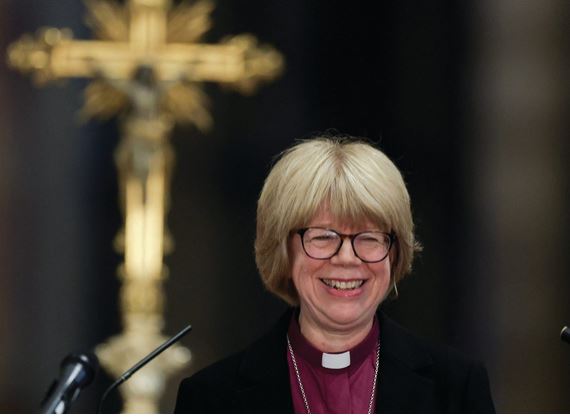
Politeness will only summon further confusion. We must be blunt with the truth. Sarah Mullally is not really the bishop of either London or Canterbury. She may be the first woman to hold the title of “Archbishop of Canterbury” in 1,400 years, but she is only the latest of a long line of pretenders to the throne. Ordained in 2002 as a part time cleric, her background is in nursing. She later got a degree in pastoral theology. She is a self-professed pro-choice feminist and favors the blessing and full inclusion of LGBT+ people. Of course, she is not alone as there are increasing numbers of wannabee women priests and bishops in the Anglican communion. Indeed, the new archbishop of Wales is Bishop Cherry Vann who is openly living in a lesbian same-sex civil union.
A female archbishop of Canterbury is problematic because of the ecumenical aspirations of the Church. Many had long sought and prayed for reunion of the churches. Now, except for those who have joined the ordinariate, it looks as if that will never happen. This also complicates matters of gathering because these women who dress up like priests and bishops give scandal to the Catholic faithful. It also fuels wrongful aspirations among women with radical agendas that include women’s ordination. Of course, with neither a valid priesthood nor Eucharist, the Anglican communion forfeits the canonical and realistic right to term itself a “church.” Error leads to error and now this faith confession tolerates divorce, adultery, fornication, abortion, and homosexuality— even among its ministers. It is sad but true that with every step forward in ecumenical dialogue, the Anglicans have taken two steps backward. Short of a revolution among the Anglican and Episcopal faith communities, it must be proclaimed that their “church” is essentially dead. Any effort to proclaim the Good News or to expand holiness is short-circuited by the advocacy of mortal sin.
The Gospel this evening is the presentation of the Beatitudes by our Lord. It is essentially a guide toward holiness or sainthood. As Catholics we ordinarily ponder the men and women canonized by the Church. Here at Holy Family, we even celebrate a monthly saint, requesting intercession and seeking our own emulation. But in truth, there are far more saints than those few on any list that we might keep. The saints of God are listed in heaven. While we struggle with our sinfulness, how many living saints have we encountered over the years? I think of all the good Catholics that helped their fellow man and were faithful to the sacraments. There are likely some in this Church as I speak who are very close to God. Sainthood is not an unreachable goal. By God’s grace, we can all know sanctification and holiness of life. It is the one goal we have in life. Nothing else matters other than becoming holy and eventually finding ourselves with the Lord in his heavenly kingdom. Years ago, I had the opportunity to visit the mount upon which Jesus preached the Beatitudes. There was a small but beautiful chapel there. Just as our Lord instructed his apostles, today there is a seminary on that hill where men are prepared for the priesthood. What do these benedictions teach us?
“Blessed are the poor in spirit, for theirs is the kingdom of heaven.”
The word for poor here is (’anāwîm), taken from the Old Testament it refers to the destitute who have nothing but God. It came to infer the qualities of lowliness or a profound humility. The addition of the words “in spirit” are added by Matthew to clarify that being materially poor would not necessarily save anyone. We know that in our own society, poverty is often a catalyst for jealousy and crime. Hearts can be poisoned by resentment toward the rich or because of struggle. Disappointment can twist or corrupt the soul. Poor people often suffer from the rich man’s dreams. By contrast, poverty in spirit might be voluntary, as with religious who embrace poverty for the kingdom. Christian poverty also implies acceptance in whatever comes. We see ourselves as unworthy and all that we have as a gift. It also implies generosity. We would not want to be well off at the cost of a neighbor who is homeless, hungry, naked and afraid. Poverty in spirit means that we might have things, but we would not allow the things to have us. True richness is not found in material things but in standing in right relationship with God. We are all the poor man or woman, dependent upon God.
“Blessed are they who mourn, for they will be comforted.”
Many question God because of the problem of pain or suffering. This blessing would turn that around. We should not get angry or run away from God because of loss or a hard life. Rather, we should trust that God will make all things right. This implies not only that God will give comfort, but that as his stewards we should try to bring a healing presence to the pain of others. The ultimate response of God to pain is solidarity with Christ in his passion and death. God is present with us, and we must be present to one another. We are together in this. We are not alone or abandoned.
“Blessed are the meek, for they will inherit the land.”
Just as in the story of salvation, the Jewish promise of Jerusalem and a land of their own was only made possible by the power of God. Human strength of arms would always fall short. However, if we keep the covenant, God will keep us. As Christians, this land refers to the kingdom of Christ, realized in the Church and in the promise of heaven. We must acknowledge our profound dependence upon God.
“Blessed are they who hunger and thirst for righteousness, for they will be satisfied.”
This benediction gives root to the Church’s teachings on social justice. We yearn for a world where the right prevails and evil is thwarted. Unfortunately, then and now, there is so much injustice and prejudice. Good people suffer and the bad seem to flourish. Ordinarily we understand righteousness as moral conduct that conforms to divine law or God’s will. Here it means something more. Righteousness is literally the saving power of God. We cannot make ourselves good, only God can do that. Only the Lord can save us. We cannot save ourselves. We are sinners who need a Savior. We must submit to God’s plan of salvation. Jesus is faithful to this mission from the Father, unto the Cross.
“Blessed are the merciful, for they will be shown mercy.”
It is as in the Lord’s Prayer, “Forgive us our trespasses as we forgive those who trespass against us.” It is only by forgiving others that we open ourselves to divine mercy.
“Blessed are the clean of heart, for they will see God.”
Just as one had to be ritually pure to worship God in the temple, our Lord takes it one further and teaches that we must be clean of heart or pure to see God in heaven. We must become perfect as our heavenly Father is perfect. This appreciation is behind our understanding of penance, absolution and prayer for the poor souls.
“Blessed are the peacemakers, for they will be called children of God.”
Ultimately this peace is about more than avoiding hostility or violence. It means a radical imitation of Christ. Our Lord would have us joined or united with him in how we confront earthly power and injustice. The peace of Christ demands trust and sublime courage in facing the mystery of evil. This unity is in terms of adoption into the family of God.
“Blessed are they who are persecuted for the sake of righteousness, for theirs is the kingdom of heaven.”
We will know that we are on God’s side because the world will target us as signs of contradiction. If there is no tension with the world and no opposition, it means one of two things: either we have converted the world (which is unlikely) or that the world has compromised us.
“Blessed are you when they insult you and persecute you and utter every kind of evil against you falsely because of me. Rejoice and be glad, for your reward will be great in heaven.”
I suspect this last beatitude is where our Lord lost some of his disciples. Who wants to be insulted or persecuted or even murdered. We naturally turn away from such prospects. And yet, as a parable people, we are to find joy in such adversity. It is not because we love suffering or pain, that would be sadistic. No, the overriding reality in this scenario is that we walk with the Lord. Whatever the world takes away. God can give back many times over. The natural man must give way to the supernatural man. There is a crown in heaven waiting for the saints who have followed the Lamb.
Is This a Genuine Application Newman’s Organic Development?
(CLICK the image to go to document.) The first paragraph of his document to the cardinals at the extraordinary consistory speaks about past historic changes in the Mass and about the process of liturgical reform as one of “organic development.” It is true that the Mass has always been subject to “a process of organic development.” However, this fact does not mitigate the tension over post-Vatican II reforms. Reforms were historically not accomplished over a period of months or a few years but extending decades and even centuries. Further, they were the product of priests and the lay faithful alike, not a small group of so-called experts or a single liturgist. Changes in the liturgy would consist of an addition here or a small deletion there, but not a wholesale rebranding and substitution of the Roman Canon. How can anyone with a straight face argue that the changes effected during the last half-century were truly “organic” in scope? There is no getting around it, the changes were revolutionary. The practical proof of this claim was the reaction among those in the trenches. While many youths embraced folk and rock Masses as part of their natural rebellion, older Catholics were upset but complied because of a strong affinity toward obedience of just authority. Catholics often did as they were told because they loved the Pope and trusted their bishops and priests. I can still recall whole parish and religious school libraries being emptied into dumpsters because the “new Church” would no longer need the old liturgical books or morality manuals. Despite debates to the contrary, this negative treatment against treasures from the past spoke volumes about a hermeneutic of rupture. The psychology here was not rooted in continuity but in a break or a new start. Everything old was deemed bad and everything new was judged good. Ironically, this mentality, in reverse, is what we hear from certain traditionalists— that the “old” is better and holier and that the “new” is bad and heretical. Increasing numbers of learned critics contend that the liturgical changes went far beyond the mandate of the council. Nevertheless, the reforms received ecclesial approbation. This truth cannot be sidestepped. It must be said that the reforms were imposed based upon various contemporary presuppositions (of questionable credulity): that the Latin liturgy was unintelligible to modern men and women, that it lacked logical internal organization, that it wrongly rebranded the preparation of the gifts into an offertory functioning as a secondary natural oblation, that it overly anticipated the transformation of the sacred species, that it lacked a coherent and clear epiclesis, that the liturgy of the Word was eclipsed or minimized by the Eucharist, and that it deified the person and power of the priest over any active participation by the laity.
Does One Faith Demand Absolute Uniformity?
The second paragraph of his missive to participants of the extraordinary consistory is just as nonsensical as the first. As a defense for the abrogation of the traditional Latin Mass, it is ironic that Cardinal Roche should cite Saint Pius V’s assertion that since “there is only one way of reciting the psalms, so there ought to be only one rite for celebrating the Mass.” Today there are many ways that the psalms are recited given the many translations, chant and modern musical renditions. The psalms may be recited straight through, antiphonally or with intruding responses. The Roman rite was translated into the vernacular from Latin, and one translation often disagrees substantially with another. Where we had one canon in the West, we now have four ordinary ones, as well as special Eucharistic prayers for children and reconciliation. Further, the Anglican returnees have their traditional liturgy and Catholicism permits many lesser rites around the world. Given all this diversity, why cannot room be carved out for those spiritually attached to the old Roman Canon? That which is not from God will pass. That which belongs to the Lord will blossom and grow under the movement of the Holy Spirit. Can we not trust God about this? How can the good cardinal both impugn Pope Pius V’s logic and then claim it as a support for the intransigence of Traditionis Custodes?
Constant Reform or Long-Term Stability?
The third paragraph of Cardinal Roche’s consistory document would seem to argue for perpetual reform without end. This ignores several important concerns. The reformed liturgy was neither something entirely old nor simply the product of “cultural elements that change in time and place.” It was largely the result of one time and place. There was an almost “Pollyanna” optimism during and after Vatican II. The signs of the times were a tradeoff of antiquity and the ageless for the contemporary and fickle. Note that many modern liturgies and the accompanying music still resemble something from the 1969 Woodstock festival. First, not all cultures and times are the same. The Church is the mother of Western civilization. It is not that she is just the product of her times but that often her faith and rituals were the catalyst and source for the ideas and cultural values around her. Second, while the relationship of the Church to the surrounding culture communicates in two directions, sometimes the situation is mutually supportive and at other times, clashing and combative. No authentic liturgical reform can embrace elements that are contrary to authentic Christian beliefs. Third, the nature of the paschal mystery itself mandates that certain elements of faith and ritual should be judged as immutable. Just as Jesus is the same, yesterday, today, and tomorrow— a liturgy should be historically grounded as a permanent anchor in a world of incessant change. Do words and ceremony communicate what they should— making present the mediation of Christ in his passion, death, resurrection and ascension? Is it not precisely the argument of the advocates for the traditional Latin Mass, that the sacred language, silence, ordered movement, and heightened reverence, all better convey a sense of the paschal mystery of Christ?
Pope Benedict versus Pope Benedict?
Is there no shame? Cardinal Roche in paragraph four of his consistory document would quote Pope Benedict XVI (out of context) to support the suppression of the traditional Latin Mass and the reversal of Summorum Pontificum. Really? Has he not read what the late Pope wrote about liturgy? Pope Benedict XVI did indeed speak about sacred tradition as a “living river,” but the streams of that river extend both to the Vatican II reforms and to what came previously. Indeed, one might ask, are the waters freely flowing to the tried-and-true of centuries past as to the novelties not yet a hundred years old? Indeed, to keep the analogy going, might Traditionis Custodes be interpreted as a dam to those waters.
A Bias for One Liturgy Over Another?
Paragraph five of Cardinal Roche’s consistory document seems to envision a “dynamic vision” as belonging exclusively to the Novus Ordo. Is this not the same kind of negative bias of which the other side in this debate is accused? Legitimate progress must not be interpreted as change for change’s sake. It is true that a living tradition would forestall a “collection of dead things.” But it was never Pope Benedict XVI’s intent to resuscitate a zombie rite. Both rituals are alive and make Christ present in his person and in his saving activity. He hoped that the old and reformed liturgy, side-by-side, might cross-pollinate and enrich one another. Might the old liturgy be pruned in part? Might it benefit from an enriched lectionary and an extended responsorial for the gradual? Might it be offered in Latin and the vernacular? Could a form of concelebration be returned to the old liturgy? Might a sense of reverence and order be given the reformed rites? Might there be a reconsideration of the reduction of the offertory in the Novus Ordo? Could we see a restoration of some Latin and Gregorian chant? Might the liturgical calendar be reconciled between the old and new? Unfortunately, all this is short-circuited by the current suppression. How is this healthy? How does this promote the life of souls? If we are all about giving the people a voice, then why do churchmen make demands against kneeling and communion on the tongue? What became of freedom about such things? Why should we care if reverence and care are taken?
Might Something Be Gained & Lost By Reform?
Paragraph six of the consistory document simply says that there is no reform of the Church without liturgical reform. This is true given the intimate inter-connectiveness of constitutive elements of the Church. Paragraph seven is an expression of confidence in the scholarship (theological, historical and pastoral) behind the liturgical reform. Left unspoken is the possibility that reformers, no matter how well intentioned, can lose their way. Reformed Judaism had gone through its own reform earlier and with unanticipated negative results. The rabbis warned churchmen that a more streamlined and ordered liturgy might not have the same compelling power of a somewhat messy conglomeration. A ritual that arises over time from the genuine prayer of a priest and congregation around an altar often proves itself better than one composed by a professor more familiar with academic than the pastoral setting. Ritual touches the human being, not only on the rational level, but upon the emotive and spiritual as well. For instance, repetition and striking the breast might change little in terms of meaning but have a tremendous impact upon the human psyche. Similarly, the “artistic” and “beautiful” cannot be reduced to cold mathematical formula. As for paragraph eight, while formation is invaluable for deeper understanding, we must not forget that the language of sign and symbol should also immediately convey a sense of the sacred and a meaning imbued with mystery. Those attached to the traditional Latin Mass may not have degrees in liturgy, but we should not devalue or undermine as inconsequential any attestation of a powerful experience of the transcendent. If the reformed liturgy places a premium on words and translation, the older ordo placed greater weight upon the sacred spectacle of smells, bells, gesture and chant. While the reformed liturgy emphasizes external participation, the older ritual emphasized an internal movement of just being present and many personal prayers. Who is to say which is better? Maybe different people vary in the type of liturgy that serves them best?
Does an Old & Reformed Liturgy Signify a Defunct and a New Church?
The danger of paragraph nine and the extended quote from Pope Francis should be self-evident. It is a direct appeal to a rupture in the tradition. It asserts that one cannot be faithful to the Vatican II Church and desire a strict association of the prior liturgy. However, in truth it is the same Church. Further, who is not to say that certain conciliar principles will not have an impact on the Tridentine liturgy over time? The argument that the Mass change is a fait accompli to which everyone must slavishly comply seems nonsensical if brute authority must be exacted against otherwise good and faithful Catholics? If the new liturgy were perfect, then it is doubtful that a problem would have arisen. Why would Pope Leo XIV beseech Eastern churches to maintain their tradition of liturgy while we have largely thrown ours away. Allowing both the old and the new to exist side-by-side may be the perfect way toward integration, not by ecclesial force but by a natural spiritual attraction. Maybe we have been too stringent in restricting and defining the movement of the Holy Spirit to the work of Archbishop Annibale Bugnini and his team? The groundswell of support for the old Mass and the demand for an end to abuses in the new might be the true work of the Spirit of God. While there is much in the way of cultural adaptation and freedom given Catholics in regard to all sort of parallel traditions and experimental liturgies, then why not carve out a space for those who acknowledge papal authority but should be shown sensitivity and compassion about a liturgy that bred many of the saints and still resonates with the Catholic soul?
Paragraph ten simply gave some of the recent history about the liturgy and the popes, conveniently omitting the name of Pope Benedict XVI. Paragraph eleven returns us to Pope Francis’ view in paragraph nine. He writes: “I do not see how it is possible to say that one recognizes the validity of the Council . . . and at the same time not accept the liturgical reform born out of Sacrosanctum Concilium . . .” Both Cardinal Roche and the late Pope Francis view it as an ecclesial matter. This mentality pretty much insures an eventual full schism with the SSPX and makes any future for groups like the Fraternity of St. Peter more than precarious. It is ironic that an attachment with the old liturgy should call their Catholicity into question. Contestations to the contrary, much of Vatican II can easily be reconciled with tradition.
A Few Broader Vatican II Questions Beyond Liturgy
As for the harder Vatican II questions like freedom of conscience and the extent of religious freedom and ecumenism, should they not be argued and hammered out by believers. Given a world where Catholic states have all but disappeared, it makes sense for Catholic social teachings to honestly reflect the current lived reality. While we have every right to insist upon the truth of our beliefs, we can still work with others for a peaceful and just society. Is it really too much to concede that believers should not use torture or violent intimidation? Indeed, is this not the high ground of the Church against Islamic extremism? Further, an emphasis upon the incommensurate value of human life and the high dignity of “persons” is no threat to the divinization of believers by grace. None of us should be so attached to the anachronistic that we would further fracture the Church and society when there is a desperate need to build bridges and heal old wounds.
Mother Angela was a dear friend to the late Delores Grier, vice chancellor of NY and founder of the Association of Black Catholics Against Abortion (ABCAA). When visiting her brother Reggie Grier (a parishioner of mine at Holy Spirit), she would attend my Masses. She was a regular on the station.
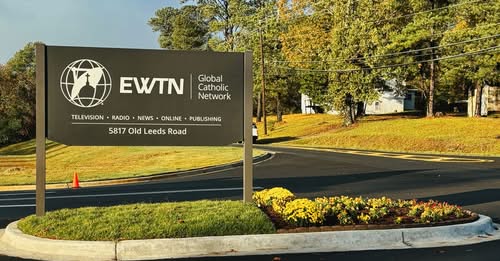
Many of us were pleased to see Gloria Purvis take up her mantle in speaking about the place of Black Catholics in the Church. But she upset the powers-that-be and she was fired from EWTN television and radio. It still upsets me.
I had the good fortune to meet Mother Angelica back in the 1980’s. She gave me a tour of her studio and the chapel which was then under construction. While she sometimes challenged wayward bishops, she was a holy woman whose faith was real and life-changing for millions. Since her passing, the news outlet element of her network has grown increasingly political.
EWTN should not have visible ties to Fox News or any such secular network. The main news anchor seems increasingly self-serving and fawns over certain celebrities in the entertainment industry. It is embarrassing.
The main anchor has adopted a not so subtle adversarial stance toward the Holy Father, first with Francis and now with Leo XIV. Liturgical issues aside, are conservative, or better yet, supposedly “orthodox” Catholics, too quick to challenge the Pope on matters like immigration and ethnic justice? Are we the arbiters of papal authority, pronouncements and actions?
The December 29 headline in the KANSAS REFLECTOR read, “Kansan returns to the Catholic Church as the state’s first woman priest,” by Anna Kaminski. The story was published under the sectioned off heading of CIVIL RIGHTS. All I can say is No, and No. Tina Thompson is not a Catholic priest and vocations in the faith are not entitlements in justice but gifts for service. Further, I suspect Episcopal female clergy might be offended because while Catholicism judges Anglicans orders as null-and-void, they also consider themselves priests. Arguably the more appropriate term here is “priestess,” although there are unavoidable pagan connotations.
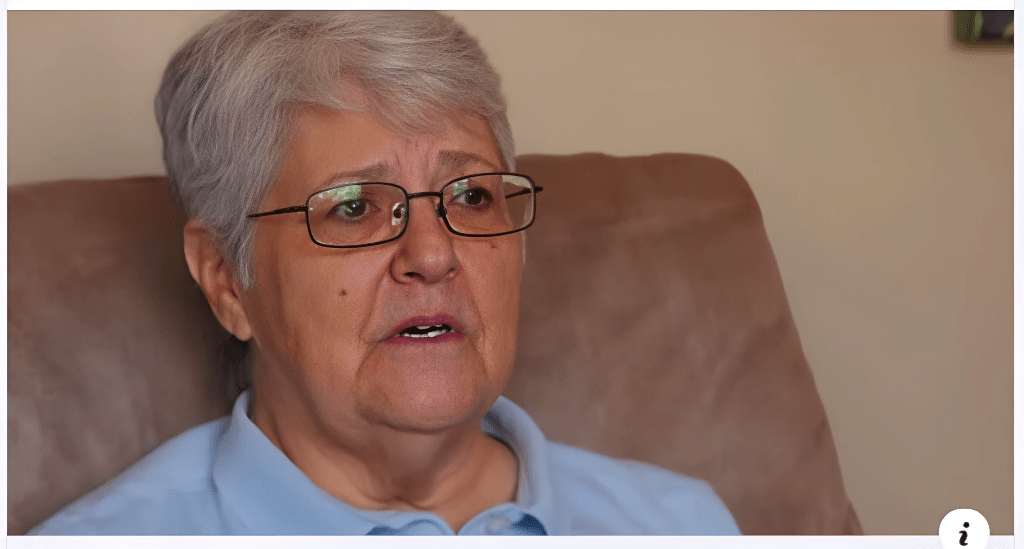
Thompson attempted ordination not in the Catholic Church but in a dissenting, meaning “protestant” sect called Roman Catholic Womanpriests (RCWP). More than lacking formal recognition, this group is spurned by the Catholic Church. Those involved with such efforts to circumvent sacramental laws are regarded as excommunicated from true faith. She says the matter is “so much bigger” than her, but it is really all about her. Along with other like-minded women, the issue is rebellion from clearly articulated teachings that stem from long-standing tradition and from Pope John Paul II’s solemn definition. She may be one of hundreds around the world but none of these ladies is a licit or valid priest of the Roman Catholic Church. Even if a legitimate bishop (possessing apostolic succession) had sought to ordain her, she would still not be a priest as it is not the will of Christ and his Church.
She says, “We are still the church, but we are different in that we open the tent. We want everyone to feel like they are welcome.” This is a deception. The theological definition of “church” requires both a valid priesthood and Eucharist. She and her girlfriends have neither. They can dress up but all they are doing is playing priest. They are fooling themselves and would seek to do the same to others. It is terribly sinful because it would cost the gullible both absolution from sin and the saving Eucharist. A priest is a man configured to the incarnate Christ as our high priest. He is an icon of our Lord. Some orders and Eastern rite congregations would even have the priest grow the accidental of a beard to help convey his ministerial unity with Jesus. A woman cannot sacramentally signify Christ at the altar.
Estrangement from the Church for twenty years is hardly proper formation for ministry. Tina Thompson talks about her work as an artist but says next to nothing about the sacrament of Penance and the Eucharist. She is a fake, not a priest and only tenuously a juridical Catholic because of baptism. The church in which Tina Thompson attempted ordination was not Catholic. Unity Church in Lawrence, Kansas must have rented their facility because, while led by women, it does not even claim bishops. We read on the website for Unity Church in Lawrence, Kansas: “Unity is an open-minded, accepting spiritual community that honors all paths to God and helps people discover and live their spiritual potential and purpose. A positive alternative to negative religion, Unity seeks to apply the teachings of Jesus as well as other spiritual masters. Unity affirms the power of prayer and helps people experience a stronger connection with God every day.” They also reject the notion of heaven with the saints, asserting, “Heaven is not a place, but a state of consciousness.” Nonsense! Ordination in such a setting further compromises any claims of Catholicity. It is literally a NEW AGE movement that is arguably not even Christian. It might be a welcoming tent, but it is not the house that Jesus built. The ordinations are not valid despite her protestations. They have not abided by apostolic succession because while they might have satisfied form, they have substituted invalid matter. The line back to Christ is broken.
The KANSAS CITY REFLECTOR steps away from its headline and Tina Thompson’s claims by stating: “Women priests do not perform their duties in Catholic churches, and they cannot be officially ordained in one either. They are not recognized and are often excommunicated from the Catholic Church if they are heavily involved before their ordination as Roman Catholic women priests.”
Thompson might claim to be Catholic, but she has turned away from basic truths transmitted by the faith. She does not believe in the indissolubility of marriage and accepts divorce. She also dissents in her approbation for homosexuality. The aging women of Roman Catholic Womanpriests would redefine, not just Holy Orders, the Church and her values. None of these imposters in the presbyterate would demand a celibate priesthood. Most would also redefine marriage. No matter what Thompson calls herself, she is a Protestant minister, pure and simple. She says that she was ordained a deacon on August 22, 2024, and a Roman Catholic Women Priest on Nov. 1, 2025. But notice that the article is silent as to who attempted to ordain her.
After doing research online, it appears that Bishop Paula Hoeffer attempted to ordain her as a priest. Hoeffer is a former religious sister (Sister of Notre Dame de Namur) who left the convent half a century ago for marriage. She only became a supposed bishop, herself, in 2025. Her initiation into this fraudulent sacerdotalism was through Joan Houk, still another fake woman bishop. Houk’s elevation into this feigned episcopacy was the work of Patricia Fresen (Germany), Ida Raming (Germany) and Christine Mayr-Lumetzberger (Austria). They were three from the infamous Danube Seven ordained on a river boat in 2002 by Rómulo Antonio Braschi (a priest who defected to found the Catholic Apostolic Charismatic Church of Jesus the King) and Ferdinand Regelsberger (a former Benedictine monk that Brashi consecrated as bishop). It is not a pedigree to be proud about.
Thompson admits herself, “We’re just a schism, as they say,” and are not in unity with Rome. The fact remains that Rome decides who is or is not a “Roman” Catholic priest. Like so many aging militant feminists, she errantly equates a “male-guided” Church with a “misguided” institution. The article observes, “Her ministry as a priest isn’t yet clear.” That is an understatement if ever there was one. We are told that her time gravitates toward art. Does this not reduce priesthood to a side-line hobby instead of as a sacrificial vocation?
I read with interest the article by Gregory DiPippo about Brian Holdsworth’s video on the Church’s liturgies. A position is critiqued that argues that it does not matter which liturgical form is followed, either ordinary (reformed) or extraordinary (TLM). But in all honesty, I know of no learned believers who hold such a position. Note that the question here is not whether either liturgy (particularly the reformed ritual) is valid, licit, or spiritually effective. Catholics in good standing hold that the Mass in either form is a re-presentation of the sacrifice of Calvary, makes Christ present in the Blessed Sacrament, participates in the marriage banquet of heaven, and is an oblation for propitiation or for the satisfaction of sin. Either form constitutes Catholic worship, although one form or the other (and even how it is conducted) impacts upon what is communicated as well as to aesthetic tastes. The tension is real because both sides in the debate feel it does matter which form is followed, at least to them.
As a priest who is familiar with the older ritual, but has always said the reformed liturgy, my preference is for the somewhat streamlined liturgy of Paul VI. However, I can lament the reduction of certain beautiful prayers, especially from the revised offertory. Having admitted this, I believe in the freedom acknowledged by the late Pope Benedict XVI in granting liberty for priests and communities to celebrate the TLM. The two forms side by side might provide for deeper insight into any future reform. Indeed, looking back, it is likely that such a strategy might have borne better fruit than the reductionist intervention imposed after the council. While what is done is done, we can pursue a more gradual organic development of the Mass in the days to come. I suspect something of the blueprint in the English-speaking world might be the providential inclusion of the Anglican returnees in their three Personal Ordinariates. Their missal savors tradition, sacred worship-language, and a profound respect for the Roman Canon.
Why does a sizable remnant prefer the Traditional Latin Mass (TLM) or Mass of Pius V? Advocates cite its perceived reverence or sense of mystery (especially with chants, Latin and sacred silence), historical continuity, and theological clarity. The concise rubrics give order to a worship that highlights the transcendent.
Those who prefer the Novus Ordo (Ordinary Form) or the Mass of Paul VI list the following: more complete biblical selections, renewed emphasis given to the homily, the restored intercessions or bidding prayers, clearer emphasis on community participation, an understandable vernacular, and an effort to connect with modern believers.
More than just subjective, the differences between the liturgies are real and objective, However, are they worth alienating whole groups in the Church? Traditional believers who argue that the reformed or “new” Mass is dangerous and refuse to attend are not being helpful and probably had a part to play in the renewed suppression of the TLM. Those who attend the reformed liturgy are also guilty of blaspheming the Holy Spirit by maligning an ancient Mass that formed and enriched the many saints.
The article sides with the advocates for the TLM and views the reformed liturgy as an orphaned child, belonging not to Vatican II and only vaguely to the Church’s patrimony. Pope Paul VI is faulted for placing his stamp of approval upon it. The author of the articles writes, “If we understand this, we can see why it is possible to question and even reject the modern rites without being disloyal to the Council.” Councils aside, popes view themselves as the Roman Rite. The late Pope Francis thought so for sure. Priests of the ancient Church imitated the papal liturgy and made it their own. If this is the case, can we really claim loyalty and reject outright the rite of the last six popes? We may each firmly believe we are right, but regardless of this, how do we move forward? I would stop worrying about the extremist fanatics and ponder the needs of the good people in the pews. If they love and feel enriched by the old Mass, then let them have it. If people prefer the new, and the celebration is reverent and sacred, then let them have their worship. Neither are second-class or bad Catholics.
We can discuss and debate the elements of liturgy. We can judge one as superior to another, or at least better in-tuned to our spiritual character. There are many rites of Mass within Catholicism. The Roman Rite is currently divided between the Traditional Latin Mass, the Novus Ordo, and (to a lesser extent) that of the Personal Ordinariate (former Anglicans). All liturgy should be reverent, giving emphasis to the sacred and focus upon the Almighty. Accidentals do matter. But the substance should not be eclipsed. There is a bottom line but all liturgies are not the same. Many today judge the Traditional Latin Mass by beautiful Gregorian chants, mysterious Latin which is the language of the Church, organized ritual and meaningful sacramentals, etc. But in days of old, there were no microphones on altars, priest often rushed through the prayers at machine-gun speed (especially on weekdays), low Masses lacked music or it was poorly done, homilies were skipped, and we simply said our rosaries or personal prayers during Mass. People grew spiritually but there was sometimes a disconnect. It was hoped that the Novus Ordo would bridge this, but problems remain and may have grown worse. Many today are quick to judge the Novus Ordo, not by reverent renderings, but by clown and puppet shows or with liturgical dancers or whatever. But these are the crazy aberrations.
My ministry is about the forgiveness of sins and helping people to get into heaven. That is really what the Church should focus upon. The Mass and the Eucharistic Christ are essential. Without the Mass, we will spiritually starve. Without the Mass, we cannot render the worship that Almighty God demands. If I were to reject a form of the Mass authorized by the Church and her popes, then my ministry would end and my flock would suffer spiritual starvation. A priest cannot reject a form of the liturgy that he is morally committed to offer. This being the case, how can any of the flock reject that Mass? I am only a poor simple parish priest in the trenches. I will leave it to better minds to ponder the important accidentals of Catholic liturgy. Meanwhile, I will daily approach the altar, knowing that I am a sharer in the Lord’s priesthood, and with the epiclesis and words of consecration, transform bread and wine into the body and blood of Christ.
My evangelical friends delight in distributing pamphlets that urge all they meet to make “a saving faith profession in Jesus Christ as their personal Lord and Savior.” This usually comes along with a few essential questions posed to Catholics about their state of faith. The believer might answer that he is a baptized Catholic who partakes of the sacraments. Frequently this response is rebuffed because the non-Catholic questioner has little or no place in his faith system for sacraments. A follow-up query is, “If you were to die right now, where would you expect to spend eternity?” Learned Catholics might say “purgatory,” an answer sure to set the evangelical off because he already presumes Catholics are destined for hell and he can allow for no purification after death or prayer for the dead. His faith ignores the history or tradition of faith and any escape from stark individualism. His notion of “church” is one of fellowship but not of sanctification.
The heart of the Church are the sacraments instituted by Christ. These divine mysteries have undergone development but in one form or another were celebrated from the earliest days of the new dispensation. Indeed, the Mass is a command performance given to us by the Lord. The redemptive Cross and paschal mystery of Christ is remembered and made present. We find ourselves at the sacred oblation of Calvary where the Lord Jesus is substantially present and “really” active for our sake. He is the one high priest and the saving victim. Baptism as the gateway to the sacraments stems from the Lord’s demand to his apostles at the Great Commission.
Apologetics arguably would have the informed Catholic immediately assault the simplistic assumptions of the non-Catholic. Indeed, the fundamentalist missionary at this point often fully unveils his anti-Catholic posture. But given poor catechesis and lackluster devotion, most Catholics prove lacking in making any kind of suitable reply. Some will fall prey to the traps laid before them and accept the hollow and bigoted negative assessments of their holy faith. Those that will try to argue often run out of steam. They find themselves on the offensive but only armored with a faith based upon authority and not directly upon the truths of Scripture and Catechism.
As I said, the gullible might allow their faith to be errantly taught to them from a source hostile and bigoted to Roman Catholic. False teachings emerged either from outright ignorance or deception. I would urge those with a superficial faith-understanding not to engage such outreach ministers. Those trained to recruit Catholics are often given a series of religion questions to undermine the faith of those targeted. They have memorized biblical proof texts. Sadly, biblical quotes are taken out of context and are often misinterpreted. We must not relinquish the parameters of the discussion. Ideally, we should have the same stamina and desire to make converts as our challenger. How should we proceed in such situations if one is a knowledgeable Catholic?
First, realize that you and the fundamentalist speak a very different faith language. Do not surrender the upper ground. This is how I respond at the very top of the conversation: “Yes, I have accepted Jesus as my Lord and Savior, not just personally but corporately within the context of the Church that Christ directly founded upon his rock Peter and given to the apostles.” Second, if they should ask about our eternal destiny, make it clear, “Trusting in Jesus Christ, my Lord and Savior, I have every reason to HOPE for a share in eternal life with God in heaven.” Remember, even should we pass through purgatory, all the poor souls are destined for paradise.
Third, if they should emphasize the need for a verbal faith profession, explain that you affirm Christ and your belief in the Mass and in a weekly creedal profession. If they debate this, I would explain that “once saved, always saved” has been proven repeatedly to be false. Even Protestant ministers who claimed “Jesus” have fallen and committed the most devastating sins. While the faith of a few might have been counterfeit, we take them for their word that they believe in Jesus and his saving works. But real faith can die. One must remain steadfast in faith.
Fourth, I would ask the would-be missionary a question, “what is faith?” It is amazing how many people stumble on this matter. Faith is not magic. Too many regard it as did Martin Luther, simply as a juridical imputation. The argument is that we remain sinners, but that Jesus stands between us and God the Father. When the Father looks upon us, he only sees his Son and gives us a share in his Son’s reward. But Jesus speaks in the Bible of being born again— that repentance and conversion must be effective and genuine— that we must be changed. We must be holy as God is holy. A saving faith in Christ is transformative. We can still stumble but baptism has configured us to Christ. The sacrament (water baptism in the name of the Trinity) is essential. We are incorporated into the mystical body of Christ and into the family of faith. This is a royal family, and we enter the divine kingdom. Christ is King and Mary is our Queen Mother. We become adopted sons and daughters to the Father, children of Mary and kin to Christ. Sin is washed away, original and personal. We are granted sanctifying grace. Our Lord gives us the sacrament of penance so that we as sinners (who believe in Jesus) might become saints. The Bible makes the dynamics of faith quite clear. I would tell the missionary who targets Catholics, “We are saved as members of a new People of God, the Church. This personal and communal faith must be realized in loving obedience.” The two-fold commandment of love toward God and neighbor comes from the mouth of Jesus. The commandments given the first people called by God have not lost their binding force. We must realize or manifest a saving faith through works of charity. We cannot save ourselves. Works have value because “greater is he who lives in me than he who lives in the world.” If Christ is alive in us, then his works will always have saving or meritorious value. We must be transformed into the likeness of Christ. This is made possible by sanctifying grace. We are saved, not by faith alone but by grace alone.
Faith in the Lord is everything. There is no such thing as a part time Christian. Ours is a jealous God. The posture of the creature to the Creator is one of humble submission and dependence. We must surrender ourselves to him and to his service. Prayer and the sacred liturgy allow us to join the angels of heaven in their celestial praise of God as Holy, Holy, Holy.
Maybe I am handicapped by chronic cynicism? But I am often wary of those who criticize others about how they understand justice when their own appreciation would likely not muster close inspection. The word “justice” like “love” and “rights” has been hackneyed in every possible way, as well as assumed into the ranting politics of left, right and all stances in-between. The Black Lives movement clamors for justice against racism and power. Radical feminists define justice as liberation, not only from males but from their own biology and fertility. Militant Zionists demand a justice for past Jewish martyrs with a retributive justice hard to distinguish from revenge. Marxists demand a one-sided variation of justice reminiscent of Robin Hood, where the people “rise up” to steal from the rich (the bourgeoisie) and give to the poor workers (the proletariat). [In practice a party dictator takes power and all bets about justice are off the table.] While American citizens can rightly demand border security, what becomes of justice without sufficient compassion or mercy, particularly when the poor and the persecuted are lumped with criminals and the gangs from drug cartels? Can a society justly take the lives of the guilty in capital punishment when it wrongly strips the innocent unborn of any right to life? [The late Pope John Paul II said “no,” that any jurisdiction to deprive another of life under the banner of justice is forfeited in a culture of death.]
It is hard for a civilization to appreciate the cardinal virtue of justice when it is saturated with a parade of vices. While quick to judge, many people literally do not know what it means to be good or what constitutes the “right thing.” I suspect that is why we see the vast multiplication of surveillance cameras. Increasing numbers of people feel it is okay to steal, so long as they are not caught. Intimidation has replaced the virtues.
What do we as human beings have coming to us and what is “due” or owed to others? This varies from person to person. Business and general exchange of services relates to commutative justice. The employer should pay his employee an adequate wage. The employee needs to be diligent in providing serves or goods for which he or she is remunerated. Distributive justice is directed toward our relationship with a community. We all have equal rights to the same freedoms and general opportunities. But we do not all have the same resources, talents or obligations. This form of justice respects proportionality. Each person in a society does his or her part for the whole. Finally, there is what we call social justice. Here we often find a conflict between legal definitions and what we regard as just according to both divine positive law and natural law.
Turning to the Church, we need to cease mimicking the polarity that we find in partisan civil politics. Otherwise, we violate the peace of Christ that we celebrate at the Eucharist. This peace is focused upon our unity in Jesus Christ. How can we possibly appeal to those outside the Church for either evangelization or for social justice while our own believers are at each other’s throats in divergence from one another. We should not compromise the Gospel of Life by making too little of abortion or making too much of capital punishment. There need be no conflict about preserving secure borders and in proportional justice to illegals, distinguishing between desperate families who love the promise of America and the criminal invaders who should be expelled or punished. Neither side should use the justice system to attack political enemies. All should demonstrate a religious respect for the Holy Father, instead of a nasty knee-jerk criticism about the role of women, gays, environmental stewardship or various liturgical concerns. I really hate the current politicization of faith. We should not be quick to judge or condemn the Catholic character of men and women who voted either for Harris or Trump or someone else in the last election. Neither candidate articulates nor manifests the full kerygma as we understand it. No Catholic should allow his or her party platform or agenda to supplant the demands of the Gospel. The moral values of the Gospel are what they are. We should all seek to be good Catholics, keeping the commandments and loving God and our neighbor. We should exhibit a modicum of human respect, even when differences of opinion are severe. This must be the stance from both authority and from the rank-and-file. We need to be contrite about past ridicule and careful not to mock others or to use incendiary language. It is far better to build bridges than to burn them down.
Today we begin the Advent season and Advent is a time of preparation. Look into your lives as you prepare for the non-spiritual celebration of Christmas – a time of shopping and cooking – of tree-buying and decorating – a time of cleaning. It is also a time of renewal. Before texting, Facebook and emails, many of us would write letters and holiday cards to friends reconnecting and telling them about the past year with its joys and sorrows. We would renew old friendships. Given the current cost of postage and the intrusion of modern technology, letters and cards are increasingly out of fashion.
It is still a time of travel. Families and friends try to get together. If this is so physically, I would remind us that Advent is a season of spiritual travel. We travel into the Light and by the Light. Today, we ignite one candle on the Advent wreath and as the weeks go by we will light the second, third, and fourth. It is hoped that the Light of Christ will burn evermore brightly in our hearts. While we might be surrounded by darkness, we are called as pilgrims to follow the one who is the Light of the World. He illumines our way into the kingdom. The promise of the first reading is realized: “O house of Jacob, come, let us walk in the light of the Lord!” Without the Lord, we would be lost.
Advent is a time of coming home. It is also a season of becoming, knowing both growth and fulfillment in the Lord. Advent is the pregnant time in the history of salvation. We make ready for the Second Coming of Christ by remembering his first coming hidden in the womb of Mary. Advent signifies the ancient promise given the Jews for a coming Messiah. Christmas is the realization of that promise. Later Lent and Easter will celebrate the work of our Savior to redeem a people and to give us a share in his divine life.
Today’s first reading speaks of a day of promise when God’s justice will be fulfilled and peace will reign. The responsorial recalls Jerusalem as the city for the first people chosen as we await a new house of the Lord. “Let us go rejoicing to the house of the Lord.” This admonition is fulfilled with the house Jesus built, the Church. The second reading urges us to read the signs of the times. The days grow short and we must be awake or alert as watch-persons for the Lord, ready when he comes. We read: “You know the time; it is the hour now for you to awake from sleep. For our salvation is nearer now than when we first believed . . . .” The Gospel continues this theme. We are urged to be steadfast, awake sentinels for the Lord’s return and judgment. Jesus says, “So too, you also must be prepared, for at an hour you do not expect, the Son of Man will come.”
In our readings over the next few weeks, we will hear of a call to peace, and a call to justice. There is a joyful hope. Indeed, we will be told to rejoice because the Lord is near, because the Lord has removed the judgment against us. We also begin a new liturgical year. We have a fresh start; a chance to set our spiritual lives on a path that will lead us to that joyful welcoming of the Christ-child on Christmas morning. We will also heed the words of John the Baptizer when he says, make ready the way of the Lord; and when he tells us to receive a baptism of repentance. In the light of the liturgical renewal and in response to the Baptist’s cry, we would do well to reflect upon the sacrament of reconciliation.
The sacrament of reconciliation, as we shall see is also a means of preparation. It allows us to be healed and restored. It joins us more closely to Almighty God as it is his life, his grace, which we receive every time we celebrate the sacrament. Oftentimes we think that we only receive God in the Eucharist. We receive God every time we celebrate any of the sacraments; because each sacrament was instituted to be a channel or instrument of God’s life – God’s grace. The sacrament of penance is a sign of hope and loving trust in God’s forgiveness. It is a call to justice, a justice which forces us to examine, in truth, our relationship with God, with our brothers and sisters, and with our very selves. The sacrament also brings us peace. Oftentimes, the emotional burdens of guilt can weigh heavily upon us. It causes stress and disruption in our lives. By celebrating the sacrament of reconciliation, we can put much of this behind us. We can be at peace with ourselves and with those whom we encounter. Finally, this sacrament allows us to begin again— to be restored— to be made whole.
This is the home of the AWALT PAPERS, the posting of various pieces of wisdom salvaged from the writings, teachings and sermons of the late Msgr. William J. Awalt.












 Blogger Priest
