Romantic Gesture: Celine Song on the love stories, hand acting and movie kisses that shaped Materialists

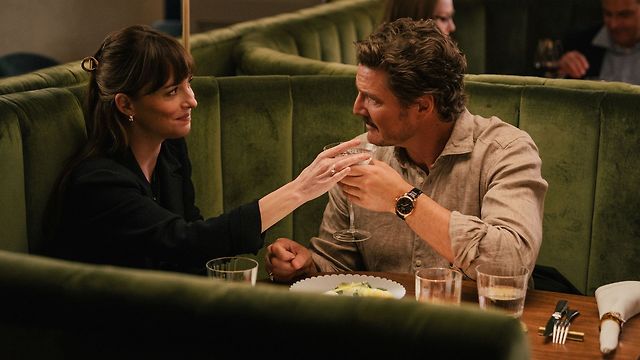
Dakota Johnson and Pedro Pascal demonstrate the importance of hand acting in Materialists. — Photographer… Atsushi Nishijima/​A24
Dakota Johnson and Pedro Pascal demonstrate the importance of hand acting in Materialists. Photographer… Atsushi Nishijima/​A24

With Materialists now in theaters, writer-director-real yearner Celine Song chats with Mia Lee Vicino about the romance films that influenced her second feature, from the Pride & Prejudice hand flex to the Phantom Thread mushroom omelet.

List: The films that influenced Materialists

When it comes to scenes with closeness, sometimes the only thing I’m giving [actors] direction on is where their hands should be... There’s something amazing about hands as a storytelling apparatus, as a part of your material self.

—⁠Celine Song

Just as Nora Ephron made films for New York in September, Celine Song makes them for New York in June. The Materialists writer-director and I first spoke almost exactly two years ago, for the release of her stunning debut, Past Lives. Fast forward through a whirlwind awards season in which the film snagged Oscar nominations for Best Original Screenplay and Best Picture, plus Independent Spirit Awards for Best Feature and Best Director—among many more accolades, such as a 4.2-out-of-five-star rating on Letterboxd—and we’re both once again reveling in the sunny idealism of a New York June.

Her follow-up feature depicts this singular city through a breezy gossamer filter, even as protagonist Lucy (Dakota Johnson) maintains a cynical edge. She’s a matchmaker tasked with guiding moneyed New Yorkers towards romantic partnership, an independent woman who thinks of love as a business transaction led by head over heart. That is, until she meets the tall, handsome—and most importantly, wealthy—Harry (Pedro Pescal).

But when an old flame, struggling actor/cater-waiter John (Chris Evans), flickers back into her world, Lucy is torn between two paths: a safe yet sterile lifestyle with Harry in his penthouse, or an unstable yet sincere one with John (and his three slovenly roommates) in a rundown apartment. The sudden upending of her previously cemented values pushes her to the precipice of disillusionment with her career. It’s a classic rom-com set-up, and Song infuses it with her signature ear for authentic conversation and eye for meticulous framing—an encyclopedic knowledge of Victorian period love stories helps, too.

Our conversation below touches on that very sub-genre, one that pops up frequently throughout her list of 24 films that helped shape Materialists. Topics also include the yearning eroticism inherent in hand acting/flexing, the inspirational joy of watching auteurs like Paul Thomas Anderson and Martin Scorsese explore the domain of romance and the world-stopping importance of one good movie kiss.


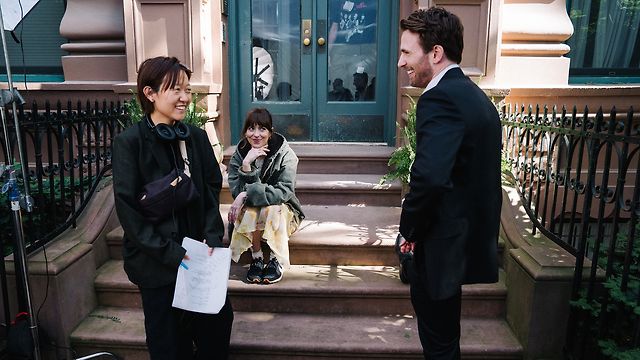
Celine Song, Johnson and Chris Evans on the Materialists set. — Photographer… Atsushi Nishijima/​A24
Celine Song, Johnson and Chris Evans on the Materialists set. Photographer… Atsushi Nishijima/​A24

I would love to start with Phantom Thread. It’s one of the best romantic comedies of the past ten years, and one of the most authentically romantic films of the past hundred years, partially because of its vulnerability.
Celine Song: Some of it is about almost being half in love with death. That’s what’s so romantic about it, more than almost anything, because that movie is about the darkest corners of what love or what connection is. It was also the visual language that my DP Shabier Kirchner and I are always so inspired by. The main thing that we were really drawing from is the way that [Paul Thomas Anderson] shoots conversation. It’s such an art to get to shoot a conversation in a way where it is so rooted in the characters and you feel everything. It’s easy to just go from close-up to close-up to close-up to close-up, but PTA’s approach to it is so elegant. It has steps to it.

It’s amazing to see these masters who otherwise make movies in many different genres, not necessarily romance, really show up for a romantic film. You get to experience what they believe is romantic and you learn so much. That’s really what it was for Phantom Thread—it’s my favorite PTA.

In general, love is a topic that is worthy of cinema. It is worthy of being talked about with the same philosophical seriousness as any other topic.

—⁠Celine Song

Phantom Thread is also my favorite PTA! About the conversations—the two scenes that come to mind are when Alma (Vicky Krieps) cooks the asparagus for Woodcock (Daniel Day-Lewis) and he gets mad because she cooks it with butter. Then of course, the climactic mushroom omelet scene, one of my favorites ever.
Ever! In cinema! That’s how I feel about that scene. It’s incredible, and it’s a conversation that completely changes their relationship. That’s the truth of it, right? Think about a break-up conversation, or a “Let’s see each other more seriously” conversation. It was one conversation and you completely changed the relationship. We’re making a romantic film—so much of it has to do with how one conversation between two people can completely change that relationship. And also in doing so, how each of them see themselves.

It feels like a big twist, but it’s not. Every rewatch of it, it gets more satisfying and exhilarating.
Yeah! And the incredible New York party scene, especially with the dancing… Those things, we were just straight up pulling from [for] this film, because it’s the most beautiful way to shoot it. Shabier and I were talking about that New Year’s Eve scene so much as we were making a plan for how we were going to shoot those dances.

This approach to the topic of romance and marriage and relationships being made through the eyes of Scorsese, a master of the gangster genre, inspired me so much for this movie.

—⁠Celine Song

Another Daniel Day-Lewis film is on your list: Martin Scorsese’s The Age of Innocence, adapted from Edith Wharton’s novel.
This movie is always a touchstone, and I imagine that it’s going to be a touchstone forever. At the time, Scorsese was making a lot of gangster films, and I remember being like, “I really want to know what Martin Scorsese’s romance is.” Period romance, one of my favorite genres of movies. He’s made a period romance, and you watch it and you’re like, “Well, actually, that’s incredible!” Because some parts of it are made like it’s GoodFellas, right? There are some sequences where I’m like, “This is The Wolf of Wall Street.”

It’s incredible, the way that this domain of the marriage market is being treated like it’s the lair of the gangsters. And there’s this beautiful voiceover that really hammers it in. What is it about the topic of love that it’s not seen or treated with the same kind of connection to power and danger as a gangster film? When I was making Materialists, I was thinking about [the structure] very much as a noir. Because it’s about a person who is in a cynical job. There’s a femme fatale. There’s a partner you trust. There’s a police chief.

And then, of course, in the first five minutes—you may not know it at the time—you meet the case that changes your life. That’s a pretty classic noir. And the movie ends with either you get promoted or you run away with the femme fatale. This approach to the topic of romance and marriage and relationships being made through the eyes of Scorsese, a master of the gangster genre, inspired me so much for this movie. The chemistry, the intimacy. It’s incredible. The longing, yearning.

The question of marriage and love, he’s approaching it with the same seriousness that he would approach any other topic. As how he would approach death. In general, love is a topic that is worthy of cinema. It is worthy of being talked about with the same philosophical seriousness as any other topic. The great filmmakers all know that—I mean, PTA deals with it all the time. Licorice Pizza is about love.

I’m pumping my fist. I agree 100 percent.
Yeah, I know we align! We know each other; we freaking agree about this—on the same freaking wavelength. That’s why I love talking to you so much. We just chat. We just have fun.
We are on the same wavelength! I love chatting with you, too. We’re about to get into some more literary adaptations, especially the Merchant Ivory films adapted from E.M. Forster. You picked Howards End and A Room with a View.
Howards End, I love that this whole movie is about this piece of property. What I really felt connected to, when making Materialists, is that we haven’t come as far from these Victorian romance times as we hope.

There is a huge improvement, in that women can make a living on their own. There is independence for modern-day women, but there’s still this very deep practicality and materialism connected to marriage and romance. How do you find true love in the middle of all that? And how would it end?

Most of that film is about what’s going to happen to this incredible property they all love, which has some dark sides, too. It’s this amazing interplay between the practical and the material that we’re dealing with, Especially women of this time, because the only way to not be living in squalor is to marry well. The pressures of that were so beautifully drawn, so funny and so charming.

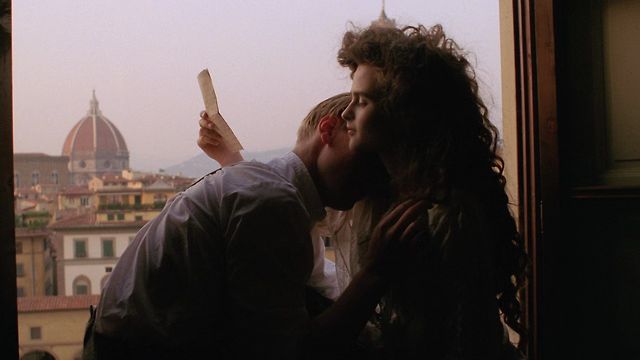
It’s also connected to A Room with a View, which is about a very adventurous woman contending with the things we’re talking about: can a woman be independent? What is it like to be in love as well as independent? [My production designer] Anthony Gasparro, my DP [Kirchner], and my costume designer, Katina Danabassis, all of us were talking a lot about A Room with a View as a film that I want to move into and live in. Materialists is a story about New York City in the way that A Room with a View is about Venice. We want it to be the city at its most romantic and most beautiful.

Even the less “pretty” places, there’s a way to approach it that’s beautiful. Like, John’s space in front of the bodega: we’re looking for the most romantic bodega possible. That was really a guiding principle. I would talk about how Venice is not just shot for its majesty and natural beauty, but it also has such a point of view about how pretty and cute it is, too. It has such a unique personality.

The mapping out of the psychology of an intimate act, that kind of thing is always more romantic than slamming each other against the wall and sticking your tongue into each other.

—⁠Celine Song
A room with a view in A Room with a View (1986).

I was also thinking about the late-eighteenth/early-nineteenth century literary adaptations throughout Materialists. They’re so intrinsically tied to class because, as you were saying, as a woman in that period, they just had to be. With Materialists, you’re showing how these times are cyclical. These issues are essentially the same, just repackaged, and you’re updating them to this modern-day setting of New York for a new generation.
Honestly, if you show me a Victorian romance, I’ll probably love it. Like, Far from the Madding Crowd is incredible, and it’s not even the one that everybody talks about.

Marriage, for such a long time, has been a domain of women because it’s, again, the only place where women had any control over their destiny. Now, because of our foremothers and our rights and everything that they fought for… Like, how lucky that I was born into a world where I can work, make a living on my own and be independent? I get to be a director—it’s so cool!

But that history remains in society. The marriage market used to run on the gossip mill, in the powder rooms, in the salons. Now it’s happening on our phones—this thing of, “Well, where are you in the marriage market?” Say somebody is walking around with a guy who’s six feet tall and makes this much money and they go on a vacation and post photos of it. Now, a million people are going to look at that and feel less than. There’s this commodification and objectification of the self and of each other.

In my film, a character says, “I’m not merchandise; I’m a person.” I think that, increasingly, it is easier and easier to turn people into merchandise. So much of Victorian romances have been about this meat market. The stories are always about women trying to find their personhood in that. Then, the fantasy is that these women meet men who love them for it. Like, how incredible that Darcy’s in love with Liz [in Pride & Prejudice]! Liz is somebody who says, “I’m not merchandise; I’m a person.” That, to me, is the most powerful fantasy of all these movies.

Emma., as well, is about somebody who wants to be helpful. She’s a matchmaker and wants to be helpful in the way that Lucy wants to be helpful. That’s what’s amazing about Emma: she’s much closer to the women that she’s setting up than the men. She’s very much trying to give them some sense of destiny on their own.

It’s easy to treat everybody like they’re merchandise; that’s where [Lucy] is in the beginning. Over time, she’s going to learn the lesson that Emma also has to learn: human life is not something you can control. Love is not something you can control. It feels like you can, but you can’t—even if you’re a matchmaker. You yourself are in the dating market as well. How are you going to contend with love in that situation, too? Emma. is very connected to our story.

I also love their kiss. People have been kissing in movies for such a long time that now it has to get a little specific. I like it when I can feel the psychology of each character in every kiss. Emma. has the most intelligent scenes where she kisses him, and she’s just trying it out. She does it and she’s like, “Huh, what do I think?” He responds with the most adorable smile, and he just turns her head and they kiss—a really full kiss.

It’s an amazing performance. There’s something so sweet and coy about it. She’s like, “I know I’m in love; am I gonna like kissing him?” Then she tries it and she’s like, “Oh! Nice!” and then he’s like, “Shut the fuck up,” and then he just kisses her? It’s so romantic. Small details like that, in the mapping out of the psychology of an intimate act, that kind of thing is always more romantic than slamming each other against the wall and sticking your tongue into each other. In my movie, the way that Harry and Lucy kiss comes from having reached a deal, like a celebration. Every kiss has to have something, some meaning in it.

They understand how to kiss in a way that implies yearning. What’s a kiss for, except for relief of some longing?

—⁠Celine Song

Not to bring everything back to Phantom Thread, but, “Kiss me my girl, before I am sick.” That kiss? Yes!
It’s insane. Daniel Day-Lewis is one of the best on-screen kissers in history. Him and Ralph Fiennes. I’m sure the actors who are kissing them have their own thoughts, but it looks incredible. It’s always because they’re showing up with so much of themselves in it. It’s always about the vulnerability of it. It’s not just, like, they make out. They understand how to kiss in a way that implies yearning. What’s a kiss for, except for relief of some longing?

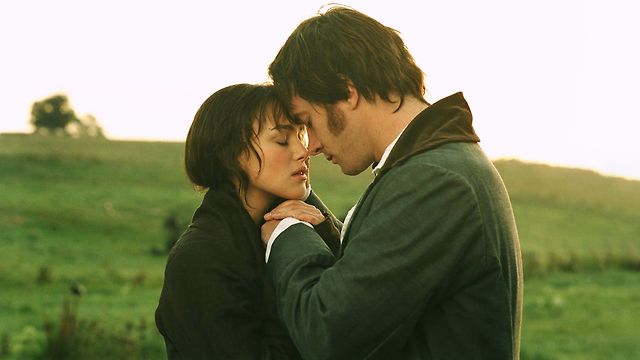
I was just about to bring up the yearning, especially in Pride & Prejudice and Atonement. The hand flex!
Yes! And the hand over the water, on the fountain [in Atonement]. It’s a small gestural thing that goes a really long way. This was true of Past Lives and it’s also true in Materialists: when it comes to scenes with closeness, sometimes the only thing I’m giving them direction on is where their hands should be, and then where you move it to. There are moments in every single one of these movies where there is something with the hands. You can hold hands, you can touch someone—there’s something amazing about hands as a storytelling apparatus, as a part of your material self.

This is the way we reach out to everything, so of course, it’s the way you reach out to the one you love. Your hands will reveal more than anything else. When we’re longing, we don’t know what to do with our hands, because you want to go and reach and touch the person you love. But you can’t—so what’s gonna happen to those hands?

The men, James McAvoy and Matthew Macfadyen, what they’re expressing with their gesture is this desire to reach over and touch someone, the object of their love. Then when they aren’t able to, it’s an amazing thing where you’re getting to see them not know what to do with it. That’s so much more erotic than getting naked and rubbing your body against each other, to see a person’s hands not know where to go because it has only one place it wants to go.

I have a private list on Letterboxd called “Hand Acting”.
You do? I have to get up to go see this list.

It’s private right now—it’s very personal—but now you’re encouraging me.
If you make it public, I’m going to go look, okay?

You are allowed to look! I’ll jump ahead to the end of your list now in the interest of time.
Yeah! By the way, Breakfast at Tiffany’s [which is on the list], the yellowface in it is so wild and horrible. I don’t think it’s rewatchable. But there’s a sequence at the end with the cat, named Cat… And then of course the very iconic image of her looking into Tiffany’s, staring into the window. That itself is something that is a beautiful reference. But the movie itself, the yellowface is really egregious. So, you don’t need to watch it. Or maybe read the book. The book is incredible.

Yeah, it’s a tough watch. They need to release a yellowface-less edit of Breakfast at Tiffany’s.
Oh, wouldn’t that be great? When I was a kid, I don’t think that I even fully understood how egregious it was. I don’t think that I knew that that person [Mickey Rooney] was not Asian. When you’re a kid, you’re just like, “I don’t know what’s happening. That’s a weird character. So annoying.”

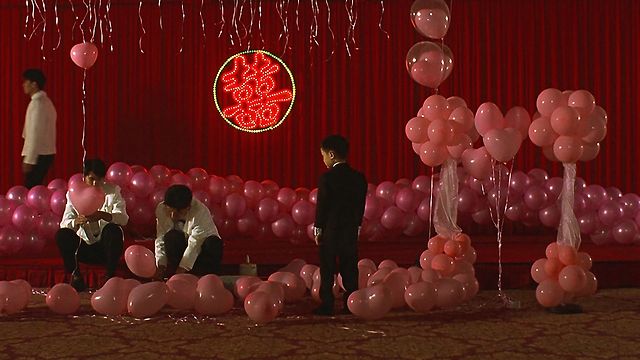
The wedding scene from Yi Yi (2000).

We don’t know the full history of it, as kids. And then as an adult, you can tell. In tribute to actual Asian cinema, we’ll end on Yi Yi by Edward Yang. It’s currently the eleventh highest-rated narrative feature of all time on Letterboxd.
Yi Yi is a really foundational film. It’s like a textbook. And Yi Yi has one of the best wedding scenes in history, easily. There’s a moment where the wedding guests are singing ‘Sweet Caroline’ in my movie. For that scene, my second second AD Stephen Coleman, who is in charge of directing background, he hadn’t seen Yi Yi, and I asked him to watch it so that he could create the wedding vibes.

There’s so much storytelling that the environment, background and framing can do, even beyond the incredible work the actors are doing. Also, Yi Yi is an incredibly emotional, psychological, beautifully drawn film, but it doesn’t necessarily mean that it’s going to be one explosive tearfest after another. It’s always about characters trying to fight the thing that they’re feeling, rather than the person in front of them.

Yi Yi is going to be a part of my list in every movie. That’s probably why it’s in the top eleven films [on Letterboxd], because I feel like if you’re a cinephile, you end up really appreciating what it’s like to tell a story in a way where it uses all aspects and corners of cinema. The storytelling is even in the little piece of fabric that’s on the curtain. It’s the most detailed, and also on top of it, it’s so devastating. Everything is beautiful.


Materialists’ is now playing in theaters worldwide, courtesy of A24.

Further Reading

Tags

Share This Article

Image