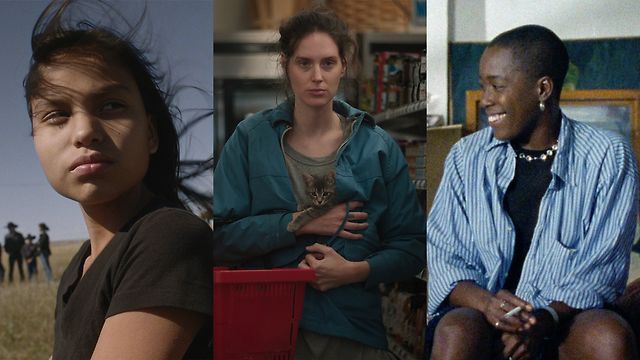
Inside Looking Out: Sorry, Baby’s Eva Victor on healing and humor in their miraculous debut feature

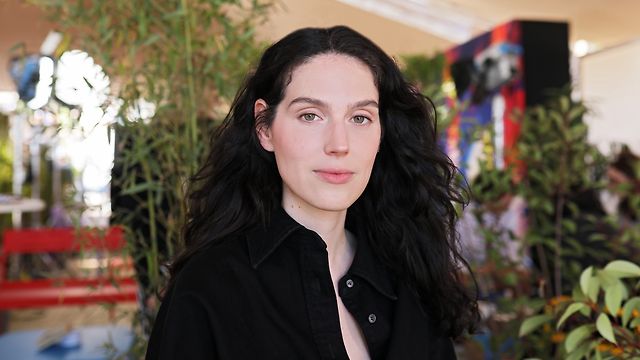
Eva Victor at the 2025 Cannes Film Festival. — Credit… Ella Kemp
Eva Victor at the 2025 Cannes Film Festival. Credit… Ella Kemp

As Sorry, Baby finds more audiences globally, writer, director and star Eva Victor tells Ella Kemp about their comedy rules, favorite performances, and an update on their cat, Clyde. 

I knew I made the film I wanted to make, which is what allowed me to sleep at night, but I didn’t know if I made a film that other people would want to see. It’s a very bizarre, surreal thing, and there’s also grief to it.

—⁠Eva Victor

The intersection between personal catharsis and empathetic, careful storytelling isn’t always a given—a period of life that meant a lot to you may not mean anything to somebody else. But if movies are empathy machines, Sorry, Baby is firing on all cylinders with its original, delicate understanding of betrayal and then growth, friendship as a life force, and the power of a good sandwich to turn your day around.

It’s the work of debut writer, director and actor Eva Victor, who cut their teeth making comedy videos for Comedy Central and instantly cemented themselves as a singular force on the big screen. Always knowing they had a story to tell, it was thanks to Barry Jenkins and his production company PASTEL (which also produced the heartrending and memory-fluid independent marvel Aftersun) that Victor had the support and care from others to take the leap.

Before getting into the plot, Robert’s 4.5-star review sets things up perfectly: “This is going to be the most important movie someone watches and I hope it helps them on their journey.” Victor plays Agnes, a brilliant young literature professor who finds her world tilted off its axis after something really bad happens—is done—to her. But she still has her house, her best friend Lydie (Naomi Ackie), and, soon, a little cat as well. There has to be a way out, and through.

When I first met Victor at this year’s Cannes Film Festival, their own cat hadn’t been doing too well. The filmmaker had already had an intense few months—after Sorry, Baby received its world premiere at Sundance in January, where it won the Waldo Salt Screenwriting Award, it was the closing film of the Directors’ Fortnight sidebar on the Croisette. We pick up our conversation remotely in the summer—Victor is in Austin for more press, their cat is doing better, and mine, whom I forgot to show Victor a photo of when taking their portrait in Cannes, feels the need to be involved, too. Exactly like Soph says, “the cat distribution system works when you need it the most.”


You don’t have to answer this if you don’t want to, but how’s your cat?
Eva Victor: My cat is good. He’s on the mend. He had a little medical issue while I was at Cannes, and I called him and I was, like, ‘This is very important to me to be at Cannes. Please chill.’ He got the message. I came home and he’s doing better. So thank you for asking. How about you? What’s your cat’s name?

He’s doing well, thank you. His name is Stevie, full name Stevens. What’s yours?
Clyde—Clyde and Stevens, that’s not too bad. There’s something in there.

Transitioning seamlessly into the film, I love the way you shared the poster by saying that the cat doesn’t die.
My big need right now is for everyone to go see the movie and know that the cat lives a long, healthy life. Nothing bad ever happens to the cat.

Had people been asking you about this, or did you want to preemptively reassure us?
It’s a concern based on something someone told me, which is that a lot of her friends don’t want to see the movie because they’re worried the cat gets hurt. I was like, okay, we have to legitimately speak up. We have to make loud noise about the fact that the cat’s fine. I even said, “Should we put it on the poster?” Everyone was, like, “That’s not a good idea. When it’s on the poster, it makes it sound like something bad does happen to the cat.”

The cat in your film reminds me of my cat before Stevie, who lived to be thirteen. My dad gently said after he died that he thinks I was so devastated because after every bad date in my twenties, I’d come home to my cat. It’s so important, but also very casual. He’s just there, and thank God.
It is very, very meaningful and insane to have this creature that you’re so connected to, and you don’t speak the same language, but you understand everything they need at any point. I know his every move, why he is or isn’t doing something. There’s so much intimacy in that. I got my cat when I was 22, and he’s seen me through so much. I hope I was a good parent when I was younger. It’s a big chunk of your life, and it’s so intense that we have to say goodbye to them on a different timeline than other things.

The cat in my movie felt really important. I wanted to honor Clyde by giving this character this nice animal that can speak to her without a voice. They can understand each other and cohabitate. I saw this tweet about people who don’t like cats having consent issues. Dogs will let you touch them whenever, but cats will decide if they want you to touch their body; they have their own body rules. It’s very roommate and also lover, the relationship with a cat. We give and compromise the same amount for each other. But cats are also so cuddly! I feel like people don’t know that. And when you earn it, it’s euphoric. There’s nothing like it.

When I first watched the film, I was so moved in a serious way—but I couldn’t imagine this working so well coming from someone who’s not a comedian. Could you talk about your sensibilities when it comes to approaching tender, very painful periods of life?
I spent a lot of time writing jokes, as my job, about things that are hard to write about, and are more serious. There are all these rules in comedy about who it makes sense to make fun of. We punch up, we don’t punch down. We punch up to the people in power, who are making our lives harder, being cruel or using their power to do evil things. You never punch down at the people going through the hard things, victims of whatever systems are at play. That training made when and how to use comedy intuitive.

There are two comedic roads in the film. It’s Lydie and Agnes as a unit looking at the world and being, like, “This is insane. Why is the world treating us so crazy?” It’s them finding joy and laughing together. The other one is being able to poke fun at the people who, in this mundane way, are making their life really difficult, like the doctor or the HR people. It’s fun to heighten how bad they are at their jobs, or how their jobs set them up to be bad. To heighten things helps you see them more clearly, and it can sometimes make an audience feel like they’re being held through something. Using humor about something so serious is a constant calibration of, “Is my audience taken care of here? Would humor help, would it dilute, or would it make it more pure?”

A movie that allowed so many folks to feel incredibly taken care of is Jane Schoenbrun’s I Saw the TV Glow, which you shadowed them on. What did they teach you about navigating the decisions you have to make as the director—particularly on a script that’s part of you and has to ultimately live outside of you?
I had met Jane for pie once and we became friends, and then I sent them an email and was, like, “I know this is potentially insane, but can I please come shadow you? I need to learn how to do this and watch someone who I think is brilliant.” They were so welcoming. They invited me and said, “Come for as long as you want.”

It was a complete master class in everything. Jane is such a calm and confident director. Watching someone really own being the expert of their own film was very, very meaningful, because it gave me this feeling, like, “Yeah, I guess I am the expert of this film. I don’t know anything about anything in the world. I don’t have any expertise. But this thing I wrote, I understand probably better than anyone else right now.“ It’s very, very important to be the advocate for the film along the way.

Jane is very, very clear about what they want from a shot, and they will go and go until they get it. It’s also such a personal and intense film. It was really special to be by Jane’s side while they were making that. It’s a hard film, and everyone just dove into it so completely. It was a real big collaboration of people with their hearts on their sleeves. I realized through watching Jane that I will never completely know how to do this until I do it.

Can you remember a scene in particular that you watched come to life that cemented the feeling of, “Oh, this is probably why we make movies?”
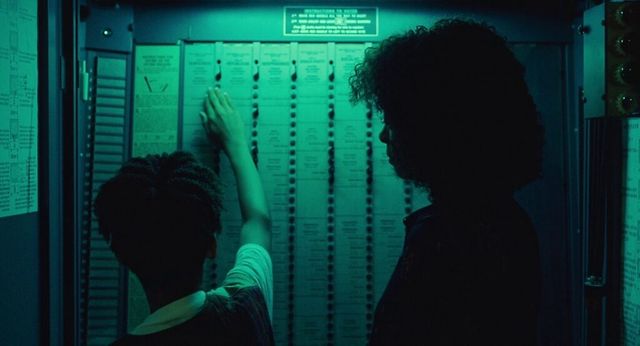
My favorite shot is of Owen and Brenda in the voting booth at school, and there’s this profile shot of them talking to each other in silhouette. I just remember being, like, “This is such a cool thing we do.” Jane is also really adamant that putting beauty on film for beauty’s sake—it’s a valuable thing. I didn’t know you were allowed to want that. That that was allowed to be a really joyful part of it. It felt like lightning in a bottle in my opinion, but I think they’re going to do that again and again.

Eva Victor’s favorite scene in I Saw the TV Glow.

Let’s come back to your film and the way that sets are constructed. I keep thinking about doors, and windows—‘Door’ by Caroline Polachek was all I could listen to after watching. Could you speak to the construction of these interior spaces? I loved what you said in Cannes about films and novels telling you very specifically where to look in the frame.
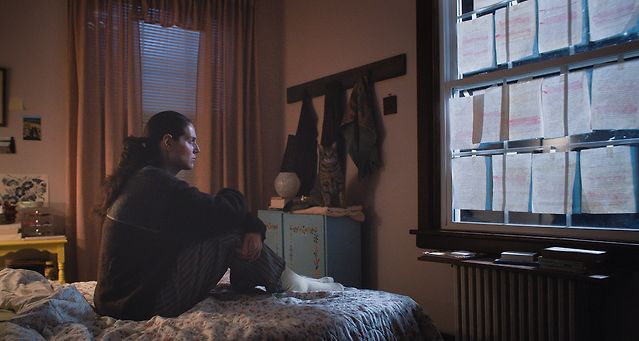
There are two parts to it. Agnes is someone who’s looking out the window and desperately wants to go outside, but is terrified of what’s outside. There’s a duality of “I need to go outside and I cannot go outside.” And then I am finding over time as I watch things and make things, you just get a hold of your taste. And man, if I don’t love a frame within a frame. Sometimes I’m watching a movie with friends, and I’m, like, “I love that shot.” And they’re, like, “You idiot. You like it because it’s through a fucking hole in the wall.” That’s so embarrassing that that’s just what I like, but I think it’s beautiful.

It’s also a way to feel and create coziness and claustrophobia in different ways. It’s all of that, and also, just, the cottage was small! So there was a need to shoot things that were wide through a doorway, which I was happy about.

You’ve mentioned that COVID was instrumental in falling in love with movies. What are some different films that have moved you, as a filmmaker?
Lee Chang-dong’s Secret Sunshine and Burning were two films that got a hold of my heart and kept me there. Drive My Car and 45 Years, too. I watched Kiki’s Delivery Service, which made a huge impact on me, and The Handmaiden, I love that film. Certain Women was a film that directly impacted Sorry, Baby visually. I reverse shot-listed that whole film and tried to figure out exactly how [Kelly Reichardt] shot that. I was really interested in how she showed interiority while also keeping a distance from a person. Manchester by the Sea, that film is very, very moving. I remember seeing Moonlight in 2016 at the Angelika, and I just remember the hands in the sand holding each other.

As an actor, were there any performances you wanted to draw on for Sorry, Baby?
I mean, Lily Gladstone in Certain Women is one of the best performances of all time. And honestly, I’ve been hugely inspired by Elliot Page in Juno my whole life. That’s a really funny film that made an impact on me when I saw it in high school. It’s interesting thinking about performances, because the first thing that comes to my mind is Gene Kelly in Singin’ in the Rain, and it’s, like, “No.” But there is something where people are choosing to move with an open heart that you can really feel on-screen.

In the performing of the film, we would always be asking, “What is the true experience of this moment?” One scene it was particularly important for me to have that in was when Agnes comes back and was thinking about lighting Decker’s office on fire. She’s just standing there and is, like, “I don’t want him to die.” There was a version of that scene that was almost like the devil tempting me, almost really comedic and bigger. But this is actually a devastating moment because this person is realizing it would be so much easier if she wanted him to die. That would be so satisfying, but that’s not her experience right now and it’s hard because it’s infinitely more complicated.

Agnes in the best and worst place in the world.

I do want to talk about Decker, played by Louis Cancelmi, a little bit, not too much but—
No, I mean, I’d love to, because we worked so hard on calibrating that.

I’m interested in conversations you had with your intimacy coordinator, Kayleigh Kane, around Decker. You’re obviously working with her on the intimate scenes with Gavin (Lucas Hedges), but when it comes to intimacy we’re talking about the way Agnes’s body moves through every scene, right? Was that something you explored with Kayleigh directly?
With my acting coach, a huge thing we talked about was that Agnes comes in at the beginning with a ton of creative force, artistic energy and excitement about the future in her schooling. There’s so much tragedy that happens when you go through something like this, and one of them is that she loses that creative force for a bit. It’s something he took from her. That’s really, really hard. But it was important to show that her time with him, before this happens, should actually feel really warm. There’s so much chemistry and they really vibe. Louis understood this completely, that we needed to not undermine Agnes by making him weird before she goes to the house. The rug gets pulled out from under her and we never see him again, because that’s true to her experience.

[Kayleigh] was incredibly helpful, not just in the scenes with me and Lucas, because I’m directing and acting, and it’s important that we both as actors have advocates—I have the role of director. I want him to have his say and be able to work on it with someone besides me.

She also helped me with the panic attack scene. Everything in the intimate scenes was about breath. It was very, very grounding. Nothing has to be happening, except for you having to breathe. She gave me very helpful advice, like “You need to have something to smell in your breath.” Every time we did the scene, I smelled this lemon thing and it would be helpful. We had a mental health person on set, too, for some of the harder scenes, and her tip was always to have these little candies called Toxic Waste, and they’ll stop a panic attack because they’re so sour that you just have to be with your senses. We had many, many people helping with the more intense body stuff.
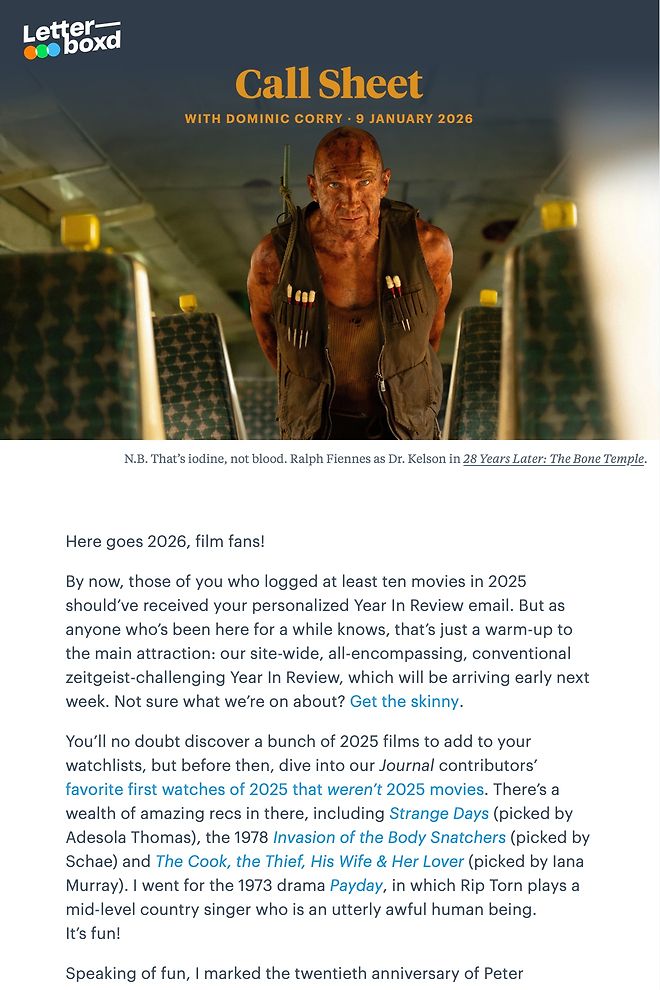

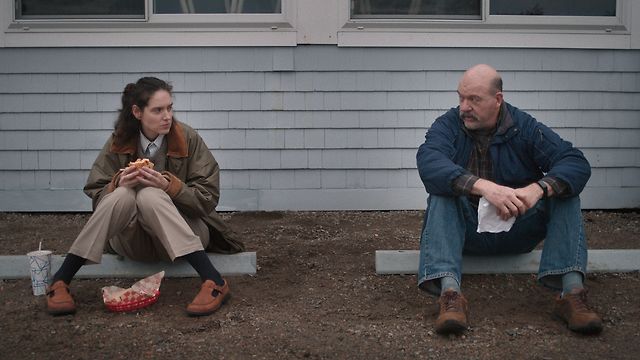
The healing power of a good sandwich.

We always talk about research and production, but you’ve also spoken about how emotional the edit was. Another PASTEL movie, Aftersun, has so much emotion in the way that film deals with memory—as much diegetically as in its construction—remembering and reconstructing things out of order, that seems to have a similar journey to yours.
The edit was such a special thing. You go in every single day and the film begins to happen: you have to cry, do math, solve this gigantic puzzle in a small, dark room. It’s the opposite of production, with a million people and no time. It was really special to have new energy come in at that part of the process. Editors are fucking awesome. They’re chill, they’re smart, they’re like brain surgeons.

It was a really emotional thing to watch Agnes go through this and be, like, “Shit, that’s really bad.” Watching it from the outside was like, ”We made something really intense.” We were experimenting until the film showed us what it wanted to be. When the magic moment happened, the film started rejecting things I would have never expected. Scenes that I think are part of the reason the script got made didn’t work anymore. The film decided to be this straight shot of Agnes, and the tension existing in this line of this person. Any time we left that, it felt like we were diffusing tension in a way that wasn’t helpful to the piece.

I knew I made the film I wanted to make, which is what allowed me to sleep at night, but I didn’t know if I made a film that other people would want to see. It’s a very bizarre, surreal thing, and there’s also grief to it. When you’re in pre-production, the film could be anything. In post, we have a finite amount of footage, and we have to start over and create this film again.

In terms of the film existing and being finished for other people, something that stayed with me when talking to Molly Manning Walker about How to Have Sex
That’s a brilliant, beautiful movie. Put that in my list! Put that in my fucking list!

It’s a perfect film. When I saw it for the first time, so many of us had a full-body visceral feeling of, “God, I went on that holiday.” It’s a lot, when you’ve made this film you want to make, and people come to you—doing what I’m doing right now—going, “Here is all my shit.” What has it been like for you, in terms of Sorry, Baby reaching other people, it becoming theirs, and them bringing their experiences back to you?
You want the honest answer? It’s hard. It’s sad to make a movie that resonates in ways I wish it didn’t. It’s a really personal film, and I put all the things I wanted to say into it. I’m very honored that people feel like they know me, like I’m a safe place as a person to share something they maybe haven’t shared with many people. It’s also very heavy. It’s not easy to hear about that because it’s so sad, but it’s also the greatest honor to be part of someone’s journey, even though the film is not me. The dream is that the film is where you put that, or the theater is where you put that.

But also… Come on, I once went up to Kristen Stewart and thanked her in a pretty weird way. So life is long, and you learn a lot over time.

It must be a really vulnerable, special position to be in. Life is long, but film release rollouts are long too.
There are people like Molly who are very, very helpful. I’m very lucky to have brilliant people who have come before me and made vulnerable things. It’s intense, and it’s the only way.


Sorry, Baby’ is in US theaters now from A24. The film will be released in the UK and Ireland on August 22 via Picturehouse Entertainment.

Further Reading

Tags

Share This Article

Image