Bonjour! The Best in Show crew digs into the Best International Feature race, with an entrée of an interview between Brian, Juliette Binoche and Trần Anh Hùng about their César-nominated collaboration, The Taste of Things. Gemma, Mia and Brian also divulge the recipe for the International Feature category and how its submissions work—and briefly bring in Perfect Days director Wim Wenders as a treat.
A Man Escaped: Kelly Reichardt on observance and disruption in The Mastermind
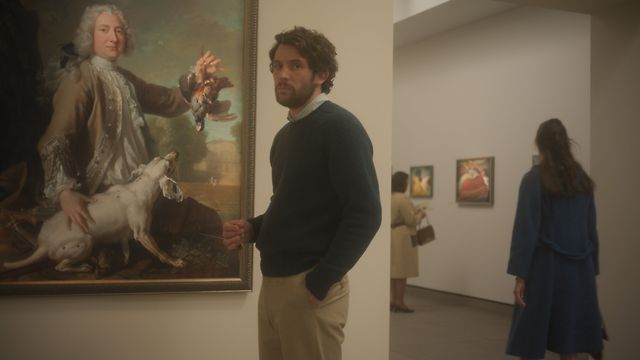
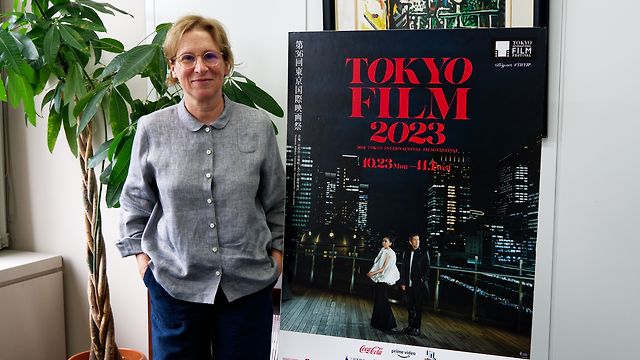
With the release of her new art heist film The Mastermind, director Kelly Reichardt speaks to Mitchell Beaupre about the tension of life’s disruptions, Josh O’Connor’s shifting performance, and her endless fascination for people watching.
I always think when I’m making a film, ‘Oh, this is going to be so different than anything I’ve done before,’ and then for better or worse, when you get in the editing room, you’re like, ‘Oh, here’s this reoccurring voice that appears.’
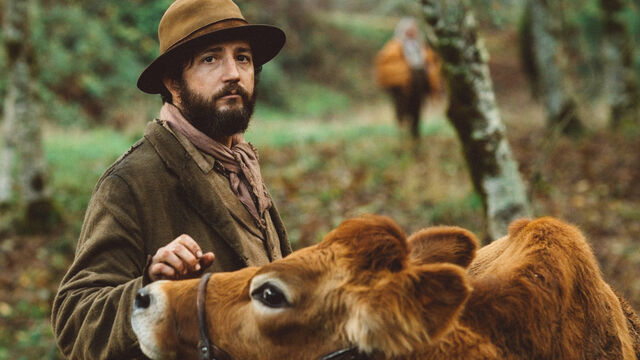
—⁠Kelly Reichardt“The ultimate anti-heist movie,” is how Mamador describes The Mastermind, the latest piece of understated, contemplative character study from Kelly Reichardt, one of the modern masters of American cinema. Following on from her quasi-heist western feature First Cow and her most recent picture, Showing Up, which was set in the art world, The Mastermind combines those elements to focus on J.B. Mooney (Josh O’Connor), an art thief in 1970 Massachusetts, dissatisfied with his humdrum suburban life, who puts together a plan to rob four Arthur Dove paintings from the local museum. As tends to be the case in cinema, the scheme goes awry, putting Mooney on the back foot and forced to spend the bulk of the story addressing the consequences of his actions.
The Mastermind harkens back to Reichardt’s influences, particularly the heist pictures of French icon Jean-Pierre Melville (Le Cercle Rouge, Un Flic), but more than anything it is, as is true with all of her work, a distinctly Kelly Reichardt film. “If you approach this film expecting a conventional heist film full of chases, gunfights, and characters explaining everything in podcast rhythm, disappointment will be inevitable. The only familiar thing that remains is the inevitable collapse of everything,” writes Noen, who goes on to say that, “it’s a film that prefers to suggest rather than explain and that understands that the true heist doesn’t take place in the museum but within people when they realize that the world, suddenly, no longer revolves around them.”
I spoke with Reichardt about how The Mastermind connects and diverges from her previous work, why O’Connor was the perfect choice to navigate the biggest challenges of the story in his subtly shifting performance, what draws her towards letting scenes play out in her observational approach, and more.
You previously described First Cow as being more of a heist film than a Western, and recently you described The Mastermind as being more of a coming-undone film than a heist film. When you’re approaching a story that exists somewhere in a genre space, does it bring a sense of discovering what it is in the process itself, or do they end up being more or less what you’re expecting them to be when you set out to do them initially?
Kelly Reichardt: A little of both, I’d say. With The Mastermind, I had thought of starting with a genre, the shape of an art heist, and then instead of the art heist happening at the end of the second act or wherever it should usually start, moving it up front and then having him have to improvise his life after that and watch. But when you screw around with a formula or a shape or a narrative form, you realize all the reasons why things are set the way they are set. [Laughs] So then, yeah, it was a lot of trial and error for the next part of the writing to get it to where I wanted it to end up. And that’s process and that’s just sort of working at it every day.
Yeah, the movie of yours I thought of the most when watching The Mastermind was Night Moves, because similarly it has a structure where the blowing up of the dam happens midway through, and here the heist happens at the end of the first act. What interests you in observing the consequences of those actions in more of this character-study approach?
Well, when you have the planning of something—much like a genre, there’s things to follow. You have a to-do list, you’ve got things you must accomplish. Have that in the filmmaking part of it, you have a path to follow. You must get from here to here, and there’s clarity in that. Then when you take that away, like post-heist or post-dam, the road is less clear and more improvising has to happen on the part of the character. You go from a proactive role to a defensive thing of responding to whatever the outcome is. So that’s a different space to live in and to write in.
The great heist films of the world have been made, so there’s not really a reason for me to try to do that. But I think that you could offer a different point of view. It’s like you’re walking a line of when are you being part of what you’re trying to do and when are you stepping back and looking at it or showing a new… Well, maybe nothing’s new, but maybe it’s a different perspective.
I mean, a lot of the films in the Hollywood New Wave were deconstructing genre, so it’s not like that’s not a well-worn path also. So I don’t know. In the end I think I just like to put my head down and think about my character and their situations. You have your own intuition. I always think when I’m making a film, “Oh, this is going to be so different than anything I’ve done before,” and then, for better or worse, when you get in the editing room, you’re like, “Oh, here’s this reoccurring voice that appears.” That happens, I think, with all people who make things, whether it’s music or paint or whatever. You see that as much as it identifies itself to everyone else, it also identifies itself to the person making the things.
One unique quality here is that many of your films focus on people who are existing on the fringes of society, but J.B. Mooney is very much assimilated. He’s a family man, but it’s almost like he can’t shake the mindset of an outcast. He has this inability to adjust.
Like a lot of the country at the time, I think he’s rebelling against his middle-class life and his parents, his father, but at the same time he doesn’t really have a clear idea of what the alternative would be. He is also completely, maybe mindlessly, willing to take advantage of his privilege whenever he is in trouble or whenever he needs to. It’s just so much a part of him that he can’t really separate himself from it. So I think this idea of personal freedom, which is such a popular thing in America—usually one person’s personal freedom is taxing for somebody else that doesn’t hold the same place in society. I find that kind of interesting, and interesting about this character, whose quest for personal freedom is nothing if not a privileged errand to run and, of course, that falls on other people.
Thinking of that privilege, the way you background the media commentary on Vietnam is quite interesting. I’m 35 now, and in this moment it feels like more than ever in my lifetime we are constantly bombarded with reminders of the horrible things happening in the world all the time. It’s literally right there on our phones, but we also have this privilege to go about our lives and let it be this thing in the background. Watching The Mastermind, it feels like maybe that’s always been a thing. I’m curious how much you’re threading that through on the page as you’re writing the script, with its use as this backgrounding, textural element that tells us so much about the character through his lack of engagement with it.
A script is like a working document, so it’s always on the page so that it can be in the movie, but the details of how something’s going to come together… You work from that. You research from that script, you look and you try to fulfill that. Everyone tries to fulfill that, but then there become options along the way and your team, your production designer, Tony Gasparro, has an idea. It evolves, but there is a question while I’m filming, like, “Is it the right amount, and when is it the right amount? And is it too much? Is it too little?” You’re committing to things that you’re not going to necessarily be able to cut out of the film.
You’re committing it in a way when it’s on the page, which will be different than it is when it’s in a movie. But nothing’s a sure thing, and you are always, I think, wondering if what you’re doing is going to work. That’s kind of what keeps it exciting. If it was an absolute thing, then you wouldn’t bother, right? It’s interesting what you’re saying, that there’s different ways to disconnect. It’s true that you’ve got too much information. It’s funny because the whole thing about the internet is that it connects us supposedly, but there’s so much of it that you get overwhelmed and you disconnect.
I was watching this interview that your cinematographer Christopher Blauvelt did for First Cow, where he said, “A lot of what Kelly’s stories are about, or what she gravitates to, is not the extraordinary thing that happens in typical movies. It’s a lot to do with just the functionality of life and really observing these human beings.” What pulls you towards that observational approach in your work?
I like thinking about process and I like watching people do stuff. I like people-watching. I like people watching people do stuff, and I really like an animal watching people do stuff. [Laughs] But yeah, I mean there’s times to slow down and catch up with a character. There are different ways to get at things, and sometimes it’s by moving things along and sometimes it’s stepping back and observing. All filmmaking is, really, is either condensing time or spreading time out, and those are the two. That’s what you’re doing, basically. It depends. Sometimes tension can come because you’re cutting between two things and someone’s waiting and it has to do with time, and the getaway car is outside and the cop’s going to make his rounds, and you are opening the safe upstairs and the cop’s going to make his rounds in the next couple of minutes and the cop is on a bike, and the chain falls off it and now it’s stopped…
There’s all different ways to do it, but if you’re not intercutting and you’re just staying with your character, that’s a different approach. Then it’s becoming a more observational way at something, but all these things aren’t even relating to what you want people at the movie to be thinking about necessarily. But yeah, it’s just how you would think of something and watch someone figure out how they can solve a problem as opposed to the problems already solved because it’s just procedural. That’s opposed to the quandaries of working in low light or the smell of the place you’re in or all those things. Other things that happen in life where you can picture how your day is going to go and how you’re going to get downtown by a certain time and your phone tells you that’s it, but then you get on the train and someone’s losing their mind on the train and the train has to stop and whatever interrupts that, that’s what makes the trip memorable, right?
In terms of that building tension, something I love in The Mastermind is how there’s less leaning on those conventional “the cop is making his rounds” moments and more on the ordinary, everyday issues. Problems that anyone could face, like parental issues that come up with the kids, but it just happens that J.B. is dealing with these dilemmas while also trying to be an art thief.
The disruption is par for the course for the heist film. Think of Rififi. There’s always the unexpected thing with the night guard or the sharpshooter who’s actually an alcoholic and having a delusion. Disruption is built into the heist. I mean, disruption’s built into anything. I was having this conversation the other day where someone said, “Well, if AI solves all our problems, how will we tell stories?” Because stories are all based on the disruption and something happening that’s not supposed to happen. So when AI makes everything perfect, which I’m sure it’s going to, for all of us, it’s going to work out for humanity.
[Laughs] That goes without saying.
We won’t have anything to make stories about—well, first of all, because no one will have a job. But secondly, because of those disruptions. Things not going as planned is not an invention by me. That’s part of narrative storytelling. It’s just like, is something going wrong because there’s a giant shark in the water, or is something going wrong because the door handle breaks off your car? Your shoelace gets caught in the elevator. Those are your dilemmas. So aside from the heist genre, the Hollywood New Wave was bringing in so-called naturalism, or the antihero. It was already breaking down the genre, but still a certain man-romance existed, no matter what. Still, Jack Nicholson’s a total jerk to everyone, but you love him because why? You know what I mean?
Well, not Nicholson, but one film that came to mind for me when watching The Mastermind was Straight Time, the 1978 Dustin Hoffman picture.
I love that film.
It’s one of my favorites, and likewise, it’s a heist movie, but it’s more about a guy who can’t get out of his own goddamn way, and just keeps falling back into these bad patterns.
Classic. I’m out of jail and there’s just one more, just one more thing. But he has that George Simenon thing of doom being in the recipe because Dustin Hoffman says in the film, he says… Oh, who’s the actress?
Theresa Russell.
Theresa Russell says, “Why can’t we be together?” and he says, “Because I’m going to get caught.” He says that right off the top, and then he’s got bumbling Gary Busey waiting in the car. Young Kathy Bates, young Gary Busey—those are two great performances. But he’s very much like, “I’m going to get caught.” So it’s the sort of A Man Escaped thing that it’s doomed from the word go, and now I’m just going to play it out.
Similarly to Straight Time, there’s this quality to J.B. Mooney where we’re seeing him progressively burning every relationship he has. His parents, his wife, etc. One of my favorite sections in the film is where he visits with Gaby Hoffmann’s and John Magaro’s characters, and we get a sense of their history, and see now that they’ve settled down, and John is feeling a bit of a void, like life isn’t exciting anymore, but Gaby is at peace and wants J.B. out of there so he doesn’t bring them back down with him. Could you speak a little to building out his relationship with those two characters?
Well, gosh, Mitchell, it’s so hard to give away everything in your movie and say the why of it. You’d really like people to go have a look and see. I know you’ve got a job to do.
[Laughs] I appreciate that.
I don’t want to say what all that is. I’ll say, the idea of bringing John Magaro and Josh O’Connor together is really a fun idea. Then Gaby, who came on the last two days of the shoot—that was fantastic—and watching her and Josh work together was really special. Watching the three of them work together was really, really nice. [Laughs] How can I not answer your question further?
I mean, these people have a history with each other. You don’t spell out your history with people when you’re with them. And yeah, Magaro is a little more excited by just a little action in his life. Then, like I was saying, I think the thing with the antihero is it helps if you see him through someone else’s perspective who is around him sometimes, which was not always the design of those films in the ’70s. But that his way of life is a bit taxing on the women around him, specifically, and we see that. That’s all I got for that one, Mitchell.
I wanted to talk a little bit more about Josh O’Connor specifically, because he’s fantastic in this. I read that you were always picturing him in it—
I’ve never even said that, by the way!
Oh, no? They have it in the press notes for the film.
I mean, I love Josh, but the romance of… That happens with every movie. “You wrote it for this person, blah, blah, blah.” Anyway, I’ve never said that. I love Josh, and I never really talked to any other actors about it. That’s true. But these things evolve and I hadn’t even met Josh when I was writing the script, and I love Josh and I love him in the part, and I wanted him in the part, but the whole long romance of “Your first idea was to write a script for Josh O’Connor” is not true. I don’t know. I hate the fantasy of everything being so set in the stars.
This interview’s going to set the record straight, Kelly. Everybody’s going to know now.
[Laughs] But he’s great to work with. I liked working with Josh a lot. There’s a lot of different types of acting in the film, which was one of the biggest challenges of this movie. The tone changes often and the tone of the actors around the lead character, Josh’s character, changes often, and so to me, that was the most scary thing about the film. Could all of these people live in the same world and can this be a coherent thing? You mentioned Gaby’s scene, which is a pretty heavy scene, and then there’s Matthew Maher, whose scene is a totally different tone.
That was the biggest challenge of the movie, and I was putting all of my eggs in the basket that Josh—that that would be Josh’s problem and not mine. [Laughs] That Josh could handle it, and he did. Because he would have to respond in kind and sort of get into the moment with each of these actors, without any pre-design, that would be something that would carry him through the whole film. So he’s responding to the moment and the person in front of him. He did an amazing job with that because that, to me, was one of the biggest challenges of the movie.
One last thing that I hope you did say because I read it in an interview with you—
[Laughs] And no one ever misquotes.
Exactly. I read that you said this was your most enjoyable film to make, and I was wondering if there was anything in particular that made this one enjoyable which you’re looking to bring with you into your next project?
Well, I mean, things that made it good. First, it wasn’t COVID. We had great local crew and we had great crew that we brought with us, and we didn’t shoot in the dead of winter, and we didn’t shoot at the peak of summer. When we shot Showing Up, it was like 120 degrees one day, and when we made Certain Women, it was negative 20 degrees on some days when the day started. So that made a huge difference. Some of it has to do with if you can afford to shoot five-day weeks and then have a day to think. With First Cow, we got to take time. It’s unheard of that we got to take time off, but we were sort of forced to take time off for Thanksgiving, which gave me four extra working days in the middle of the film, which is great just to solve some problems or think. A lot of the problems with filmmaking on the budgets that me and my crew work on is that there’s no time to think while working and having a little time to think is a great, amazing thing, so you can kind of adjust as you’re going.
Every film is so different. You can never predict what the problems are going to be, and there’s going to be problems. That’s the nature of it. Tony Gasparro, the production designer I work with, always says, “The universe does not want you to make a film.” And every film you make is trying to come up against that. That’s kind of true, but some of it is just that I have had these ongoing collaborations with Chris Blauvelt and the assistant director, Chris Carroll. We’ve worked together for so long, and Neil [Kopp] and Anish [Savjani], the producers and I and Tony Gasparro, some of the people I’ve just been making films with for a long time, and it becomes easier than starting from scratch.
A lot’s been written about the collaboration with Chris Blauvelt, but Chris Carroll, the assistant director I work with—it’s just like if you are directing and you have to be thinking about the background, sometimes you stop thinking about what’s happening in the foreground and your main actor, and your head can’t be in both places. I’ve been working with Chris for so long and he’s so good at his job and never treating the background like background. He treats them like very important players. So yeah, the three of us, the two Chrises and myself, our joint problem-solving and how we work together, I think there’s payoffs for having done it so long together.
‘The Mastermind’ is in theaters now from MUBI.