Seek the LORD, all you humble of the earth, who have observed his law; seek justice, seek humility; perhaps you may be sheltered on the day of the LORD’s anger.
But I will leave as a remnant in your midst a people humble and lowly, who shall take refuge in the name of the LORD: the remnant of Israel. They shall do no wrong and speak no lies; nor shall there be found in their mouths a deceitful tongue; they shall pasture and couch their flocks with none to disturb them.
R. (Mt 5:3) Blessed are the poor in spirit; the kingdom of heaven is theirs! or: R. Alleluia. The LORD keeps faith forever, secures justice for the oppressed, gives food to the hungry. The LORD sets captives free. R. Blessed are the poor in spirit; the kingdom of heaven is theirs! or: R. Alleluia. The LORD gives sight to the blind; the LORD raises up those who were bowed down. The LORD loves the just; the LORD protects strangers. R. Blessed are the poor in spirit; the kingdom of heaven is theirs! or: R. Alleluia. The fatherless and the widow the LORD sustains, but the way of the wicked he thwarts. The LORD shall reign forever; your God, O Zion, through all generations. Alleluia. R. Blessed are the poor in spirit; the kingdom of heaven is theirs! or: R. Alleluia.
Consider your own calling, brothers and sisters. Not many of you were wise by human standards, not many were powerful, not many were of noble birth. Rather, God chose the foolish of the world to shame the wise, and God chose the weak of the world to shame the strong, and God chose the lowly and despised of the world, those who count for nothing, to reduce to nothing those who are something, so that no human being might boast before God. It is due to him that you are in Christ Jesus, who became for us wisdom from God, as well as righteousness, sanctification, and redemption, so that, as it is written, “Whoever boasts, should boast in the Lord.”
When Jesus saw the crowds, he went up the mountain, and after he had sat down, his disciples came to him. He began to teach them, saying: “Blessed are the poor in spirit, for theirs is the kingdom of heaven. Blessed are they who mourn, for they will be comforted. Blessed are the meek, for they will inherit the land. Blessed are they who hunger and thirst for righteousness, for they will be satisfied. Blessed are the merciful, for they will be shown mercy. Blessed are the clean of heart, for they will see God. Blessed are the peacemakers, for they will be called children of God. Blessed are they who are persecuted for the sake of righteousness, for theirs is the kingdom of heaven. Blessed are you when they insult you and persecute you and utter every kind of evil against you falsely because of me. Rejoice and be glad, for your reward will be great in heaven.”
The youngest of three sons, John Bosco was born into a poor family in northwest Italy in the rural hamlet of Becchi. His father, a farmhand for a neighboring family, died when John was only two. His mother continued to raise her sons with much love and affection.
Until the age of twelve, John spent most of his time trying to support the family by working as a shepherd and farmhand like his father. His family’s poverty made it difficult for him to obtain a good education. His learning came from his lived experience, homelife, and the sermons at church that he listened to attentively.
At the age of nine, John had the first of many dreams that would greatly influence him. In his dream, he came across a group of rough boys who were talking and cursing. John became angry with them and raised his fists to threaten them for their cursing. Suddenly, a man appeared in his dream who was radiant like the sun. The man said to John, “Conquer the hearts of these, your friends, not with violence but with charity. Begin at once. Teach them the evil of vice and the excellence of virtue.” When John asked the man who he was, the man replied, “I am the Son of the lady I will send to be your teacher.” With that, the Blessed Mother appeared in the dream and began to teach John about his future mission of caring for boys with kindness.
John began his “ministry” when he was only ten. He would attend the shows of entertainers who performed juggling, magic tricks, and acrobatics. John studied their shows and then attempted to imitate them for other boys, always including prayers within the show and lessons he learned from Sunday sermons.
As was typical with many boys, John and his brother were always fighting with each other. This was one of the reasons that John decided to leave home at age twelve to look for work. A few years later, John caught the attention of a newly ordained priest and future saint, Father Joseph Cafasso, who saw his intellectual gifts and assisted him with his education. By the time John was twenty, Father Cafasso, with the help of some money from John’s mother, helped him enroll in the seminary. After six years of study, at the age of twenty-six, John was ordained a priest.
After ordination, Father John joined his mentor, Father Cafasso, in Turin to continue his studies at the Institute of Saint Francis where Father Cafasso was in charge. The two also engaged in ministry to the poor and imprisoned, cared for girls at a boarding school, and assisted in country parishes. It was in the prisons that Father John became aware of the number of boys who needed help. Of this experience, he later wrote in his Memoirs, “I saw large numbers of young lads aged from 12 to 18, fine healthy youngsters, alert of mind, but seeing them idle there, infested with lice, lacking food for body and soul, horrified me. Public disgrace, family dishonor, and personal shame were personified in those unfortunates.” He thought to himself, “Who knows?…if these youngsters had a friend outside who would take care of them, help them, teach them religion…they could be steered away from ruin…” Many of them were repeat offenders, and Father John’s heart was drawn to help them. His dream from when he was nine years old began to come to fruition as he sought to teach them, encourage them, listen to them, and befriend them as a mentor and spiritual father.
Father John’s plan was to found an oratory to provide structure and purpose for these boys. He helped them get jobs by teaching trades. At the same time, he provided them with food and shelter, taught them catechism, and gave them moral guidance and hope. Within ten years, Father John was assisting as many as 800 boys in need.
Less than a decade later, in 1861, some of the boys Father John mentored wanted to follow in his footsteps and assist other boys. Therefore, Father John founded the Society of St. Francis de Sales with a priest, seminarians, and a high school boy. The Salesian Order was formally approved by the Vatican in 1869. In 1871 Father John expanded his mission by founding a Salesian religious order of women called the Daughters of Mary Help of Christians to care for girls. Finally, in 1874 he founded the Salesian Cooperators, a lay organization that worked with the male and female Salesian Orders.
Saint John Bosco saw a need as he encountered troubled, imprisoned, poor, orphaned, but good-hearted young boys. He followed his inspiration not to be harsh with them, but to offer them loving discipline, friendship, education, skills to support themselves, and a family within his oratory. This loving concern for these young boys overflowed into the hearts of many others, and God used this saintly man to save the souls of many by raising up an army of workers to care for them.
Ponder those in your life who are troubled, abandoned, disgraced, or struggling in other ways. Strive to imitate Saint John Bosco by seeing the good in them and helping to draw that goodness out so that they will find hope in the midst of their struggles with despair.
Saint John, your heart was a merciful one, and it was touched by the plight of many suffering boys living in poverty and imprisonment. You loved them with the heart of Christ and brought them hope. Please pray for me that I may see Christ in all people, never condemning or judging, but working to build them up as a loving minister of God’s compassionate heart. Saint John Bosco, pray for me. Jesus, I trust in You.Amen.
O Godhead hid, devoutly I adore Thee, Who truly art within the forms before me; To Thee my heart I bow with bended knee, As failing quite in contemplating Thee.
Jesu, eternal Shepherd! hear our cry; Increase the faith of all whose souls on Thee rely.
Sight, touch, and taste in Thee are each deceived; The ear alone most safely is believed: I believe all the Son of God has spoken, Than truth’s own word there is no truer token.
Ave Jesu, Pastor Fidélium; Adáuge fidem ómnium in te credéntium.
God only on the cross lay hid from view; But here lies hid at once the manhood too; And I, in both professing my belief, Make the same prayer as the repentant thief.
Ave Jesu, Pastor Fidélium; Adáuge fidem ómnium in te credéntium.
Thy wounds, as Thomas saw, I do not see; Yet Thee confess my Lord and God to be; Make me believe Thee evermore and more; In Thee my hope, in Thee my love to store.
Ave Jesu, Pastor Fidélium; Adáuge fidem ómnium in te credéntium.
O Thou memorial of our Lord’s own dying! O living bread, to mortals life supplying! Make Thou my soul henceforth on Thee to live, Ever a taste of heavenly sweetness give.
Ave Jesu, Pastor Fidélium; Adáuge fidem ómnium in te credéntium.
O loving Pelican! O Jesus Lord! Unclean I am, but cleanse me in Thy Blood! Of which a single drop, for sinners split, Can purge the entire world from all its guilt.
Ave Jesu, Pastor Fidélium; Adáuge fidem ómnium in te credéntium.
Jesus, whom, for the present, veil’d I see, What I so thirst for, oh! vouchsafe to me; That I may see Thy contenance unfolding, And may be blest Thy glory in beholding.
Ave Jesu, Pastor Fidélium; Adáuge fidem ómnium in te credéntium.
0 most blessed and sweet Virgin Mary, Mother of God, filled with all tenderness, Daughter of the most high King, Lady of the Angels, Mother of all the faithful, On this day and all the days of my life, I entrust to your merciful heart my body and my soul, all my acts, thoughts, choices, desires, words, deeds, my entire life and death, So that, with your assistance, all may be ordered to the good according to the will of your beloved Son, our Lord Jesus Christ.
From your beloved Son, request for me the grace to resist firmly the temptations of the world, the flesh and the devil.
My most holy Lady, I also beseech you to obtain for me true obedience and true humility of heart So that I may recognize myself truly as a sinner, wretched and weak, and powerless, without the grace and help of my Creator and without your holy prayers.
Obtain for me as well, O most sweet Lady, true charity with which from the depths of my heart I may love your most holy Son, our Lord Jesus Christ, and, after Him, love you above all other things.
Grant, O Queen of Heaven, that ever in my heart I may have fear and love alike for your most sweet Son.
I pray also that, at the end of my life, you, Mother without compare, Gate of Heaven and Advocate of sinners, will protect me with your great piety and mercy.
and obtain for me, through the blessed and glorious Passion of your Son and through your own intercession, received in hope, the forgiveness of all my sins.
When I die in your love and His love, may you direct me into the way of salvation and blessedness.
COMMENTARY: Amid rapid advances in artificial intelligence, the Vatican’s 2025 note ‘Antiqua et Nova’ draws a clear distinction between technological power and human intelligence.
Last year, the Vatican issued Antiqua et Nova, examining the relationship of artificial and human intelligence. The document offers timely insights that can help us appreciate the contributions AI can make to society, as well as the moral dangers presented by this new phenomenon.
The idea that technology can imitate and surpass the power of the human mind, while popular in this age of artificial intelligence, is not new. The 18th-century French philosopher Julien de La Mettrie famously asserted that man is no different from a machine. The century in which he lived witnessed various attempts to produce “automatons,” or mechanical devices, that could imitate human actions.
The development of digital computing in the mid-20th century gave renewed confidence to the belief in the power of technology to replicate human behavior.
In a 1950 paper, English mathematician and computer scientist Alan Turing devised a famous test — now known as the “Turing Test” — as a way of assessing whether machines can replicate human intelligence. He predicted that by the end of the century, it would be possible to program computers so that an interrogator would not have more than a 70% chance of distinguishing a human from a computer after five minutes of questioning.
In 1956, Dartmouth computer scientist John McCarthy organized a summer research project on artificial intelligence, which is today recognized as a foundational moment for AI. A group of mathematicians and scientists met on the top floor of the Dartmouth Math Department to brainstorm, starting from the idea that “every aspect of learning or any other feature of intelligence can in principle be so precisely described that a machine can be made to simulate it.” The event articulated principles that would later develop into some of the key principles used in AI today, such as enabling computers to use language and simulating human neurons to engage in activity bearing a certain likeness to human reason.
In later decades, the technology experienced what are known as “AI summers,” moments of optimism marked by technological breakthroughs, as well as “AI winters,” when progress slowed and pessimism prevailed regarding the grand ideals of artificial intelligence.
The Turing standard was widely recognized not to have been achieved by the end of the 20th century. Nonetheless, advances in later years have ignited widespread enthusiasm for AI’s possibilities.
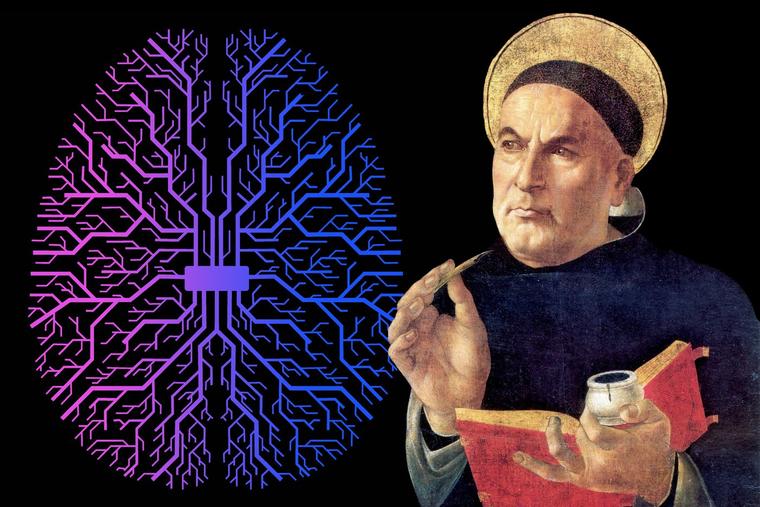
One key model that has guided artificial intelligence throughout its long and multifaceted history has been the human brain, insofar as science has been able to understand this complex organ.
As early as 1943, Warren McCulloch and Walter Pitts, two researchers at the University of Chicago, first proposed the concept of “neural networks,” a vast system of “nodes” modeled after neurons in the brain. These nodes are computational units that transmit signals to each other by means of a network that operates somewhat like the synapses connecting neurons in living organisms.
The development of computing technology in recent decades has allowed for the creation of vast, multi-layered systems of artificial neurons, capable not simply of carrying out programmed tasks, as in traditional computing, but of making inferences from patterns too complex to be defined in code. Such processes bear at least a loose resemblance to human intelligence.
One important reason for these developments in AI capability has been the application of Graphics Processing Units (GPUs), high-powered microchips originally used for video games and PC graphics. By 2011, researchers in the field of AI had discovered that GPUs made by the California technology company NVIDIA — today the world’s largest company — were capable of handling the immense quantity of processing power required to train neural networks.
Using the large amounts of data produced by the internet and other sources, such networks have been trained through a process known as “deep learning” to produce a desired output, whether a realistic image, a judgment about a complex situation, or other useful information.
The development of such technology has no doubt taken computing technology to a new level. Computers in the age of AI no longer simply follow a defined set of rules; they possess a certain autonomy to produce their own way of solving a given problem based on patterns identified in human knowledge.
But is AI capable of thinking? While this technology is capable of receiving and processing information at a high level, many commentators have noted the essential distinction between it and actual human intelligence.
Canadian psychiatrist Ralph Lewis comments that AI falls short of the intelligence characteristic of the human being. Current AI systems, he notes, lack the ability to continually adapt to new information and incorporate that learning into what has been previously learned. They are highly capable, Lewis states, of “sophisticated statistical pattern matching” but lack the ability to form an authentic understanding of the world.
Some argue that it is only a matter of time before AI matches the abilities of the human mind. However, the recent Vatican document, while appreciating the capabilities of artificial intelligence, maintains that this technology remains essentially different from human intelligence.
Human beings, as the philosophical tradition has long appreciated, possess a unique ability to abstract and to grasp the “nature and meaning of things” as Antique et Nova observes. The human mind is capable of analysis and argumentation, but also ofintelligence, by which it carries out what Thomas Aquinas describes as “an intimate penetration of the truth.”
This capacity for intellectual understanding, the Vatican document reminds us, is rooted in the human person’s bodily existence. At the same time, the document states that “the human person transcends the material world through the soul,” by which — in the words of the Second Vatican Council’s pastoral constitution on the Church in the modern world, Gaudium et Spes — the human person “shares in the light of the divine mind.”
From this perspective, the advances in AI, however impressive, only serve to highlight more clearly the exalted dignity of the human person, created in the image and likeness of God. With his body and soul, the person is able to continually interact with the world and come to understand its meaning in a way fundamentally distinct from the information processing that artificial intelligence carries out, however vast and complex such operations might be.
Antiqua et Nova also highlights the specifically relational aspect of human beings, who possess “the capacity to know one another, to give themselves in love, and to enter into communion with others.” Genuine relationships require not merely intellectual knowledge, as the document points out, but empathy and the desire to seek the good of the other.
In light of this reality, the document cautions against the idea that AI can replace human beings, particularly in such fields as education and health care, as well as in human relationships more generally.
With these and many other salient points, the Dicastery for the Doctrine of the Faith and the Dicastery for Culture and Education — which jointly produced the document— have offered some key points of reference to guide Christians and all people in approaching recent technological advances and the vast media hype surrounding them.
Most protagonists of the current AI revolution pay little attention to such principles.
Archie McKenzie, a young executive at an AI startup based in San Franscisco who was invaluable in providing background for this essay, tells me that in his industry very few people apply Christian thinking to these topics.
Given the great possibilities, but also the serious risks, of this new technology, perhaps the most pressing next step is to rediscover the richness of the human person and his exalted dignity. In this area, the Church’s philosophical and theological tradition remains a sure guide, so that technological progress might genuinely serve the good of society.
Calling of the Apostles Peter and Andrew LORENZO VENEZIANO (active 1356-1372 in Venice)
Sunday, January 25 Third Sunday in Ordinary Time Roman Ordinary calendar
Book of Isaiah8,23.9,1-3.
First the Lord degraded the land of Zebulun and the land of Naphtali; but in the end he has glorified the seaward road, the land West of the Jordan, the District of the Gentiles. Anguish has taken wing, dispelled is darkness; for there is no gloom where but now there was distress. The people who walked in darkness have seen a great light; Upon those who dwelt in the land of gloom a light has shone. You have brought them abundant joy and great rejoicing, As they rejoice before you as at the harvest, as men make merry when dividing spoils. For the yoke that burdened them, the pole on their shoulder, And the rod of their taskmaster you have smashed, as on the day of Midian.
Psalms27(26),1.4.13-14.
The LORD is my light and my salvation; whom should I fear? The LORD is my life’s refuge; of whom should I be afraid?
One thing I ask of the LORD this I seek: to dwell in the house of the LORD all the days of my life, that I may gaze on the loveliness of the LORD and contemplate his temple.
I believe that I shall see the bounty of the LORD in the land of the living. Wait for the LORD with courage; be stouthearted, and wait for the LORD.
First Letter to the Corinthians1,10-13.17.
I urge you, brothers, in the name of our Lord Jesus Christ, that all of you agree in what you say, and that there be no divisions among you, but that you be united in the same mind and in the same purpose. For it has been reported to me about you, my brothers, by Chloe’s people, that there are rivalries among you. I mean that each of you is saying, “I belong to Paul,” or “I belong to Apollos,” or “I belong to Kephas,” or “I belong to Christ.” Is Christ divided? Was Paul crucified for you? Or were you baptized in the name of Paul? For Christ did not send me to baptize but to preach the gospel, and not with the wisdom of human eloquence, so that the cross of Christ might not be emptied of its meaning.
Holy Gospel of Jesus Christ according to Saint Matthew4,12-23.
When Jesus heard that John had been arrested, he withdrew to Galilee. He left Nazareth and went to live in Capernaum by the sea, in the region of Zebulun and Naphtali, that what had been said through Isaiah the prophet might be fulfilled: Land of Zebulun and land of Naphtali, the way to the sea, beyond the Jordan, Galilee of the Gentiles, the people who sit in darkness have seen a great light, on those dwelling in a land overshadowed by death light has arisen.” From that time on, Jesus began to preach and say, “Repent, for the kingdom of heaven is at hand.” As he was walking by the Sea of Galilee, he saw two brothers, Simon who is called Peter, and his brother Andrew, casting a net into the sea; they were fishermen. He said to them, “Come after me, and I will make you fishers of men.” At once they left their nets and followed him. He walked along from there and saw two other brothers, James, the son of Zebedee, and his brother John. They were in a boat, with their father Zebedee, mending their nets. He called them, and immediately they left their boat and their father and followed him. He went around all of Galilee, teaching in their synagogues, proclaiming the gospel of the kingdom, and curing every disease and illness among the people.
St Hildegard of Bingen (1098-1179) Benedictine abbess and Doctor of the Church The Book of the Rewards of Life; §32 p. 177-178
God in Christ seeks and renews us
“I am the power of divinity before eternity and before time, and I have no origin. Indeed, I am the strength of divinity with which God created all distinguishing and recognizing things. I am also a mirror of Providence for all things. I Throne with the strongest power, I who am Word that sounds forth, when pronounced the Fiat from which all things proceed.
Then I descended like a flame, I rested in the lap of the Virgin and after turning it on, I incarnated of his flesh that never suffered from any dirt of sin, as the flesh of Adam was the beginning. And as a big giant proceeded with the force of virtue surpassing all men. Then, out of the lap of the Virgin man recovered by immersion in water, …and thus all cleansed.
I circled the world, to lead back to the original purity men who turned away from God. And since I had kissed the form of man I touched it, I founded a legitimate conjugal union. I destroyed the irresistible force of the devil, he will not know me completely until I sit in the judgment seat, and there he will be completely confused.
With my imprisons humanity and I destroyed the irresistible force of the devil, I do not know completely but when I sit in the judgment seat, and there will be completely confused.
Prophecies of Our Lady of Good Success About Our Times
During the sixteenth and seventeenth centuries, Our Lady of Good Success appeared in Quito, Ecuador to a Spanish nun whose little-known but extraordinary life has a direct connection with our days.
The Pope’s “infallibility will be declared a dogma of Faith by the same Pope chosen to proclaim the dogma of the mystery of my Immaculate Conception. He will be persecuted and imprisoned in the Vatican through the usurpation of the Pontifical States and through the malice, envy, and avarice of an earthly monarch.”
“Unbridled passions will give way to a total corruption of customs because Satan will reign through the Masonic sects, targeting the children in particular to ensure general corruption.
“Unhappy, the children of those times! Seldom will they receive the sacraments of Baptism and Confirmation. As for the sacrament of Penance, they will confess only while attending Catholic schools, which the devil will do his utmost to destroy by means of persons in authority.
“The same will occur with Holy Communion. Oh, how it hurts me to tell you that there will be many and enormous public and hidden sacrileges!
“In those times, the sacrament of Extreme Unction will be largely ignored.… Many will die without receiving it, being thereby deprived of innumerable graces, consolation, and strength in the great leap from time to eternity.
“The sacrament of Matrimony, which symbolizes the union of Christ with the Church, will be thoroughly attacked and profaned. Masonry, then reigning, will implement iniquitous laws aimed at extinguishing this sacrament. They will make it easy for all to live in sin, thus multiplying the birth of illegitimate children without the Church’s blessing….
“Secular education will contribute to a scarcity of priestly and religious vocations.”
“The holy sacrament of Holy Orders will be ridiculed, oppressed, and despised, for in this both the Church and God Himself are oppressed and reviled, since He is represented by His priests.
“The devil will work to persecute the ministers of the Lord in every way, working with baneful cunning to destroy the spirit of their vocation and corrupting many. Those who will thus scandalize the Christian flock will bring upon all priests the hatred of bad Christians and the enemies of the One, Holy, Roman Catholic, and Apostolic Church. This apparent triumph of Satan will cause enormous suffering to the good pastors of the Church…and to the Supreme Pastor and Vicar of Christ on earth who, a prisoner in the Vatican, will shed secret and bitter tears in the presence of God Our Lord, asking for light, sanctity, and perfection for all the clergy of the world, to whom he is King and Father.”
“Unhappy times will come wherein those who should fearlessly defend the rights of the Church will instead, blinded despite the light, give their hand to the Church’s enemies and do their bidding. But when [evil] seems triumphant and when authority abuses its power, committing all manner of injustice and oppressing the weak, their ruin shall be near. They will fall and crash to the ground.
“Then will the Church, joyful and triumphant like a young girl, reawaken and be comfortably cradled in the arms of my most dear and elect son of those times. If he lends an ear to the inspirations of grace –one of which will be the reading of these great mercies that my Son and I have had toward you – we shall fill him with graces and very special gifts and will make him great on earth and much greater in Heaven. There we have reserved a precious seat for him because, heedless of men, he will have fought for truth and ceaselessly defended the rights of the Church, deserving to be called ‘martyr.’”
“At the end of the nineteenth century and throughout a great part of the twentieth, many heresies will be propagated in these lands.…
“The small number of souls who will secretly safeguard the treasure of Faith and virtues will suffer a cruel, unspeakable, and long martyrdom. Many will descend to their graves through the violence of suffering and will be counted among the martyrs who sacrificed themselves for the country and the Church.
“To be delivered from the slavery of these heresies, those whom the merciful love of my Son has destined for this restoration will need great will-power, perseverance, courage, and confidence in God. To try the faith and trust of these just ones, there will be times when all will seem lost and paralyzed. It will then be the happy beginning of the complete restoration….
“In those times the atmosphere will be saturated with the spirit of impurity which, like a filthy sea, will engulf the streets and public places with incredible license.… Innocence will scarcely be found in children, or modesty in women.
“He who should speak seasonably will remain silent.
“There shall be scarcely any virgin souls in the world. The delicate flower of virginity will seek refuge in the cloisters.…Without virginity, fire from heaven will be needed to purify these lands.…
“Sects, having permeated all social classes, will find ways of introducing themselves into the very heart of homes to corrupt the innocence of children. The children’s hearts will be dainty morsels to regale the devil.…
“Religious communities will remain to sustain the Church and work with courage for the salvation of souls.… The secular clergy will fall far short of what is expected of them because they will not pursue their sacred duty. Losing the divine compass, they will stray from the way of priestly ministry mapped out for them by God and will become devoted to money, seeking it too earnestly.
“Pray constantly, implore tirelessly, and weep bitter tears in the seclusion of your heart, beseeching the Eucharistic Heart of my most holy Son to take pity on His ministers and to end as soon as possible these unhappy times by sending to His Church the Prelate who shall restore the spirit of her priests.”
The late American Catholic novelist Walker Percy once remarked that the contemporary vision of a human being is a brain connected to a pair of “genitals” (the actual term he used is a bit salty for the present site). There seems to be nothing in between for us. C.S. Lewis, another great Christian writer, called us “men without chests.” Other things that once made us human – wisdom, courage, self-discipline, sacrifice, loyalty, above all love (the whole spectrum, not just sex) – barely have names among us any longer.
Just last week, for instance, we were treated to two comic dramas in the capital of the world’s sole superpower. Naturally they involved sex. Lawyers argued before our Supreme Court that “trans” girls (i.e., boys) have the “right” to play girls’ sports. When asked how to define “boy” or “girl,” the high-priced legal mouthpieces suddenly became tongue-tied. In some circles, it’s now self-evident (i.e., needs no explanation) that “gender” means something other than the “sex assigned at birth,” a ridiculous phrase that suggests some nefarious power is seeking to pre-empt a baby’s right to choose its sexual identity.
Similarly, in a Congressional hearing last week, Senator Josh Hawley asked Dr. Nisha Verma, an ob-gyn specialist, whether men can become pregnant. She, too, immediately went doolally. If she said yes, she well knew she would be stating what everyone not brain-damaged by gender ideology knows is false. If she said no, she was risking her career, not least from her woke-subservient colleagues in the medical profession. So she punted, suggesting that raising the question was “divisive.”
Walker Percy, who was a medical doctor with a wicked Southern sense of humor, satirized what he foresaw as the coming collapse of medicine, law, and the whole culture. Which is why he once explained that he converted to Catholicism, because, “What else is there?
The Church is the living embodiment of a tradition of both the great ancient philosophical heritage as well as the metaphysical vision of the Old and New Testaments. She’s the only institution in the Western world that still retains enough substance and sheer life – despite spectacular failures – to counteract the emptiness and nonsense around us.
If our leaders, that is, are up to the challenge. Which is urgent. It’s not the Church’s business to “make the world a better place.” That’s best left to former student council presidents and graduation speakers. Her business is much larger: to get us to Heaven. Yet there are many things needed in the meantime to put us on the right road.
Pope Leo, in a recent address to the Vatican diplomatic corps, struck a new and much-needed note that, unlike many papal speeches, pointedly responds to our current plight:
It is painful to see how, especially in the West, the space for genuine freedom of expression is rapidly shrinking. At the same time, a new Orwellian-style language is developing which, in an attempt to be increasingly inclusive, ends up excluding those who do not conform to the ideologies that are fueling it.
The excluded are, often and notably, Christians and other sane people.
Pope Leo XIV prepares to address diplomats accredited to the Holy See, January 9, 2026 [source: Vatican News]
But the pope went even further, explicitly criticizing abortion and even surrogacy: “By transforming gestation into a negotiable service, this violates the dignity both of the child, who is reduced to a ‘product,’ and of the mother, exploiting her body and the generative process, and distorting the original relational calling of the family.”
So have our American bishops, along with the trans assault on the very notion of truth and falsehood. In November, the U.S. bishops voted overwhelmingly to ban “gender-affirming care” from Catholic hospitals. And good for them. Because much of the world is paralyzed by the false claim that failing to “affirm” the current social madness will lead to many suicides.
But we need a follow-up. We have a pro-life movement, various ministries to people with same-sex attraction. Where is the like sense of urgency about protecting thousands of confused young people from taking puberty blockers and undergoing surgeries – with or without parental consent – that not only lie about the nature of reality, but condemn our young people to deeply mangled lives, sexual and otherwise?
By contrast, at the Extraordinary Consistory of Cardinals, also during the past busy weeks, Cardinal Víctor Emmanuel (“Tucho”) Fernández, head of the Vatican’s doctrinal dicastery, while claiming to be echoing Pope Leo, warned: “Often, we end up speaking about the same doctrinal, moral, bioethical and political questions,” adding that these come with grave risks: that the Gospel message “does not resound” or “only certain themes are put forward outside the wider context of the spiritual and social teaching of the Church.”
Pope Francis, too, used to say that Catholics needed to stop “obsessing” and “insisting” solely on neuralgic moral questions like abortion and homosexuality.
But does anyone really do that – and is it the greater danger?
Pro-life and pro-family leaders around the world, precisely out of that larger Christian vision, have sacrificed – sometimes including their very livelihoods – to stop the slaughters induced by the sexual revolution. Sixty million children are killed globally in the womb yearly via abortion. It’s as if the entire populations of California and New York state were being slaughtered, year after year. Or the populations of the UK, France, Italy. Is it a narrow obsession to notice death on that scale?
Our newest Doctor of the Church, St. John Henry Newman, advocated “Holiness before peace.” It’s hard not to think that many people prefer to avert their gaze from current horrors because it would disturb the peace. But we need to concentrate efforts, however hard it may be, at the points where the attacks on humanity are most intense. To do otherwise would be like confining Christian defenders to the parade grounds while the Turks were storming Vienna.
Pope Leo has sounded some new notes in the Church’s public witness. Let’s hope he takes them to heart, pursues them vigorously, and gets the rest of the Vatican to follow him.
The LORD said to me: You are my servant, Israel, through whom I show my glory. For now the LORD has spoken who formed me as his servant from the womb, That Jacob may be brought back to him and Israel gathered to him; And I am made glorious in the sight of the LORD, and my God is now my strength! It is too little, he says, for you to be my servant, to raise up the tribes of Jacob, and restore the survivors of Israel; I will make you a light to the nations, that my salvation may reach to the ends of the earth.
Psalms 40(39),2.4.7-8.9.10.
I have waited, waited for the LORD, and he stooped toward me and heard my cry. And he put a new song into my mouth, a hymn to our God.
Many shall look on in awe and trust in the LORD. Sacrifice or oblation you wished not, but ears open to obedience you gave me.
Burnt offerings or sin-offerings you sought not; then said I, “Behold I come.” To do your will, O my God, is my delight, and your law is within my heart!”
I announced your justice in the vast assembly; I did not restrain my lips, as you, O LORD, know.
First Letter to the Corinthians 1,1-3.
Paul, called to be an apostle of Christ Jesus by the will of God, and Sosthenes our brother, to the church of God that is in Corinth, to you who have been sanctified in Christ Jesus, called to be holy, with all those everywhere who call upon the name of our Lord Jesus Christ, their Lord and ours. Grace to you and peace from God our Father and the Lord Jesus Christ.
Holy Gospel of Jesus Christ according to Saint John 1,29-34.
John the Baptist saw Jesus coming toward him and said, “Behold, the Lamb of God, who takes away the sin of the world. He is the one of whom I said, ‘A man is coming after me who ranks ahead of me because he existed before me.’ I did not know him, but the reason why I came baptizing with water was that he might be made known to Israel.” John testified further, saying, “I saw the Spirit come down like a dove from the sky and remain upon him. I did not know him, but the one who sent me to baptize with water told me, ‘On whomever you see the Spirit come down and remain, he is the one who will baptize with the holy Spirit.’ Now I have seen and testified that he is the Son of God.”
Saint Cyril of Alexandria (380-444)
Commentary on Saint John’s gospel, 2, prologue ; PG 73,192
“Behold, the Lamb of God”
“John saw Jesus coming toward him and said: ‘Behold, the Lamb of God, who takes away the sin of the world’…” For one lamb has died for all, winning back for God the Father the whole flock of those who dwell on earth. One died for all in order to bring all back to God; one died for all that all might be won for him… For we were all living in our many sins and, for this reason, had a debt of death to pay and became mortal. That is why the Father delivered up his Son for our sakes (Jn 3,16; Mk 10,45). One died for all since all things are in him and he is above all. One died for all that we might all live in him, since death, which had swallowed up the lamb that was sacrificed for all, has yielded them all back again in and with him. For we were all included in the Christ who died for us and in our place and who was raised to life again. The origin and occasion of death is sin. But once sin was destroyed how could death escape complete destruction? Once the root has died how can the seedling coming out of it still be preserved? Once sin has been wiped out what fault remains for which we might die? So let us joyfully celebrate the sacrifice of the lamb, saying: “Death, where is your victory? Hell, where is your sting?” (1Cor 15,55; Hos 13,14)… “Christ ransomed us from the curse of the law by becoming a curse for us” (Gal 3,13) so that we might escape from the curse of sin.
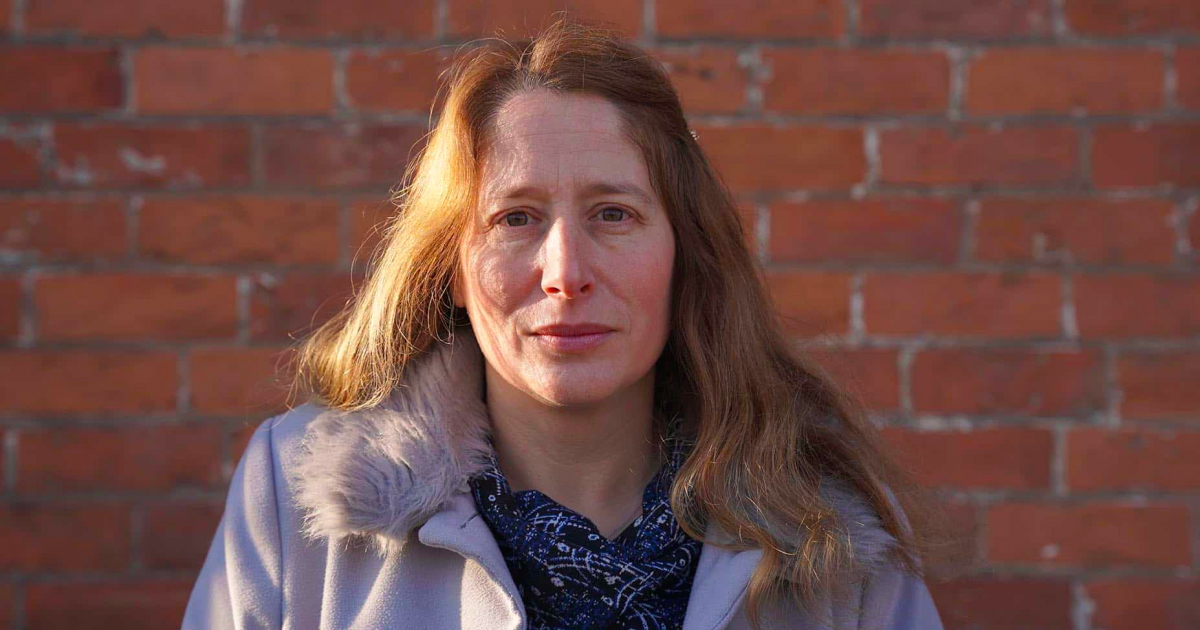
If there ever were a candidate for ante-mortem canonisation, and if such a thing were theologically possible, Isabel Vaughan-Spruce would be it. Her tireless defence of the unborn, combined with her equally resolute defence of freedom of speech and thought, has received international praise, while the state-administered sanctions imposed upon her have attracted equally fervent condemnation.
Raised in a Catholic family with five siblings, she was inclined towards pro-life beliefs before she became a figurehead in the movement. As a child, when a local facility housing mentally ill adults was closed down, leaving the patients without a home, Isabel’s father welcomed them into the family home. He also invited the homeless and those who had fallen on hard times, with people staying for months or even years. The children of the family would share a room and were taught to call the visitors “the guests”. This early experience taught Isabel to value people for who they are, created in the image of God and possessing inherent worth.
As a teenager, Isabel often read war stories, asking herself what she would do if she found herself in such difficult situations. She gradually realised that this was the wrong question. She should not be asking what she would do in those circumstances, but rather what she could do now to follow God in her life. She began to look for ways to live out her pro-life beliefs, which led her to travel to Birmingham to pray outside abortion centres with some of her siblings. Twenty years later, they are still doing the same.
In 2013, she, alongside other pro-life activists, marched through Birmingham for the first March for Life UK, an event which has taken place every year since and has now migrated to London. Attendance has grown from a few hundred to over ten thousand. Today, Isabel is co-director, working year-round running various projects and initiatives for the organisation.
By 2022, Isabel was propelled into the national and international spotlight. Despite a 2018 public consultation which did not recommend the introduction of buffer zones around abortion clinics, Birmingham’s local government decided to impose a Public Spaces Protection Order around an abortion clinic, preventing pro-life witness. Isabel was arrested for standing silently, with no placards or signs, no leaflets, and no interaction with those around her, after admitting that she may have been praying silently in her head. She was charged, but in early 2023 Birmingham Magistrates’ Court dismissed the case, finding insufficient evidence that she had breached the PSPO. She was arrested again in March 2023 in similar circumstances, but no charges were brought. In August 2024 Isabel received a £13,000 out of court settlement from police after she made a claim against them for wrongful arrest and breaching her human rights.
Despite the settlement, throughout 2025 various West Midlands’ Police Officers demanded that Isabel leave a buffer zone area citing different reasons including because she was the leader of a pro-life organisation. By December of the same year, she was criminally charged under the national buffer-zone law, with a court hearing set for 29 January 2026 and with a trial at a later date.
The national buffer-zone law is a dystopian reality of modern Britain. The government has made it a criminal offence to attempt to influence a person’s decision to access abortion services within 150 metres of an abortion clinic. According to the Home Office, such influence includes “silent prayer”. There are 366 abortion providers in England and Wales, according to the government’s own 2023 statistics. The combined area covered by these buffer zones therefore amounts to 25,870,710 square metres, or about 0.02 per cent of England and Wales. This means the government has imposed restrictions on the thoughts of people within 0.02 per cent of the country’s geographical area. Isabel is the first person to be charged under the law, but there will doubtless be more.
The case has received international attention. The Trump administration has taken particular offence at what it regards as state overreach. A State Department spokesperson told the Daily Telegraph: “The decision to prosecute a woman engaged in silent prayer is not only concerning in terms of its impact on respect for the fundamental freedoms of expression and religion or belief, but is also an unwelcome departure from the shared values that ought to underpin U.S.–U.K. relations.”
The spokesperson added: “We are monitoring Isabel’s case closely. It is common sense that standing silently and offering conversation should not constitute harm.”
Isabel’s case encapsulates many of the concerns raised by a society increasingly willing to constrain free speech. Yet it is important to remember that, at its centre, is simply a woman doing her best to serve God and her neighbour. Her love for mothers and babies is rooted in her love for God, not in any desire to act as a counter-cultural warrior. Her courage stands as an example to all.
The cardinal, 93, made his remarks during one of two free discussion periods during the Jan. 7-8 consistory that drew together 170 of the 245 members of the College of Cardinals in Pope Leo XIV’s first major meeting with the sacred college since his election.
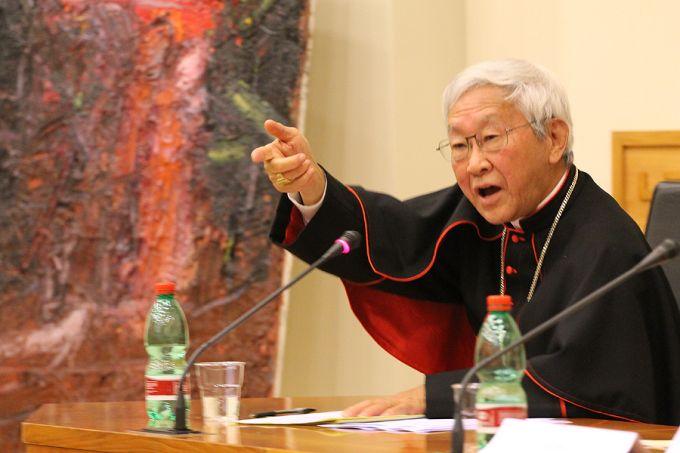
Cardinal Joseph Zen Ze-kiun speaks at the Asianews Conference at the Pontifical Urbaniana University in Rome, Nov. 18, 2014. (photo: Bohumil Petrik/CNA)
Cardinal Joseph Zen Ze-kiun delivered a forceful critique of synodality at the extraordinary consistory of cardinals this week, decrying the process as an “ironclad manipulation” that was an “insult to the dignity of the bishops.”
The bishop emeritus of Hong Kong also described the “continual reference to the Holy Spirit” during the 2021-2024 Synod on Synodality as “ridiculous and almost blasphemous.”
The cardinal, 93, made his remarks during one of two free discussion periods during the Jan. 7-8 consistory that drew together 170 of the 245 members of the College of Cardinals in Pope Leo XIV’s first major meeting with the sacred college since his election.
In impassioned comments, first reported Jan. 9 by the College of Cardinals Report, the bishop emeritus criticized Pope Francis for bypassing the college of bishops while at the same time Francis was insisting it was an appropriate means for “understanding the hierarchical ministry.”
The cardinal questioned the ability of any pope to listen to the entire People of God and whether the laity represent the People of God. He asked if the bishops elected to take part in the synodal process had been able to carry out a work of discernment.
“The ironclad manipulation of the process is an insult to the dignity of the bishops, and the continual reference to the Holy Spirit is ridiculous and almost blasphemous,” Cardinal Zen said. “They expect surprises from the Holy Spirit. What surprises? That he should repudiate what he inspired in the Church’s two-thousand-year tradition?”
The cardinal also observed apparent inconsistencies in the synod’s final document: That it was declared to be part of the magisterium and yet it said it did not establish any norms; that although it stressed unity of teaching and practice, it said these could be applied according to “different contexts;” and that each country or region “can seek solutions better suited to its culture and sensitive to its tradition and needs.”
The cardinal also pointed to what he called “many ambiguous and tendentious expressions in the document,” and asked if the Holy Spirit guarantees that “contradictory interpretations will not arise.”
Cardinal Zen openly wondered whether the results of what the document calls “experimenting and testing” of these “new forms of ministeriality” will be submitted to the Synod Secretariat and, if so, whether the secretariat will be “more competent than the bishops to judge different contexts” of the Church in various countries or regions.
“If the bishops believe themselves to be more competent, do the differing interpretations and choices not lead our Church to the same division (fracture) found in the Anglican Communion?” the cardinal asked.
Regarding the Orthodox Church, Cardinal Zen said he believes their bishops “will never accept” what he called “Bergoglian synodality” as, for them, synodality is “the importance of the Synod of Bishops.”
Pope Francis, he said, “exploited the word synod, but has made the Synod of Bishops — an institution established by Paul VI — disappear.” Cardinal Zen’s remark was an apparent reference to how the late pope had reshaped the institution by giving non-bishops a formal role, making the institution no longer simply an episcopal advisory body.
The Vatican press office and cardinals chosen to speak to the press made no mention of Cardinal Zen’s remarks during the consistory.
In press statements, it was claimed there was no criticism of Pope Francis during the two-day meeting, although Cardinal Stephen Brislin did speak of a “divergence” of opinion, saying some cardinals wanted the concept of synodality to be further clarified.
The consistory was a closed-door meeting to which no media were admitted, and cardinals were asked to keep the proceedings confidential.
Here is my servant whom I uphold, my chosen one with whom I am pleased, Upon whom I have put my Spirit; he shall bring forth justice to the nations, Not crying out, not shouting, not making his voice heard in the street. A bruised reed he shall not break, and a smoldering wick he shall not quench, Until he establishes justice on the earth; the coastlands will wait for his teaching. I, the LORD, have called you for the victory of justice, I have grasped you by the hand; I formed you, and set you as a covenant of the people, a light for the nations, To open the eyes of the blind, to bring out prisoners from confinement, and from the dungeon, those who live in darkness.
Psalms29(28),1-2.3-4.9-10.
Give to the LORD, you sons of God, give to the LORD glory and praise, Give to the LORD the glory due his name; adore the LORD in holy attire.
The voice of the LORD is over the waters, the LORD, over vast waters. The voice of the LORD is mighty; the voice of the LORD is majestic.
The God of glory thunders, and in his temple all say, “Glory!” The LORD is enthroned above the flood; the LORD is enthroned as king forever.
Acts of the Apostles10,34-38.
Peter proceeded to speak to those gathered in the house of Cornelius, saying: “In truth, I see that God shows no partiality. Rather, in every nation, whoever fears him and acts uprightly is acceptable to him. You know the word (that) he sent to the Israelites as he proclaimed peace through Jesus Christ, who is Lord of all, what has happened all over Judea, beginning in Galilee after the baptism that John preached, how God anointed Jesus of Nazareth with the holy Spirit and power. He went about doing good and healing all those oppressed by the devil, for God was with him.
Holy Gospel of Jesus Christ according to Saint Matthew3,13-17.
Then Jesus came from Galilee to John at the Jordan to be baptized by him. John tried to prevent him, saying, “I need to be baptized by you, and yet you are coming to me?” Jesus said to him in reply, “Allow it now, for thus it is fitting for us to fulfill all righteousness.” Then he allowed him. After Jesus was baptized, he came up from the water and behold, the heavens were opened (for him), and he saw the Spirit of God descending like a dove (and) coming upon him. And a voice came from the heavens, saying, “This is my beloved Son, with whom I am well pleased.”
Blessed Columba Marmion (1858-1923) Abbot Christ the Ideal of the Priest, Christ the Model and Source of Priestly Sanctity, p.37
In the image of the Son
The heavenly Father has himself undertaken the task of establishing for us, (…) our ideal of sanctity. He predestined for us to become like, not to any creature, nor to an angel, but to his Son, (…). Saint Paul reveals this thought of the Father to us when he says: “He predestined them to be like the image of his Son” (Rm 8:29). God provides for us a divine model of perfection. He wishes to see reproduced in us the characteristics of his incarnate Son, and, thereby, to see our soul resplendent with the reflection of his own sanctity. (…)
Though God, that ocean of perfection, is incomprehensible to all created intelligence, he himself in his infinity, grasps at once, the fullness of his grandeur; he expresses his knowledge in one thought, in one single expression, his Word. To this Word, he communicates all his divine life, all his light, all that he is. This generation within the very bosum of Father, being the very life of God, had no beginning and will have no end. At this moment as I write, the Father, in infinite exultation, says to his Son: “You are my Son; today – that is to say in an eternal present – I have begotten you” (Ps 2:7). The Father has given us this Son as a model and as the source of all sanctity. “In him reside all the treasures of the wisdom and knowledge of God” (Col 2:3). An eternity of contemplation will not be enough to exhaust the knowledge of this mystery and to thank God for this benefit.
If, as Saint Thomas Aquinas writes, “the natural and eternal filiation of the Word in the bosom of the Father is the sublime example of our adoptive filiation” (Sermo, XXXI, 3), the holiness specific to humanity of the true only Son of God must also serve as a model for the holiness of adopted sons.
As should be obvious by now, the Solemnity of the Epiphany (celebrated in the Extraordinary Form and in all the Eastern Churches on January 6 and on January 4 in the United States this year in the Ordinary Form) is the day for the Gentiles at the Crib. Mary and Joseph represent believing Jews; Herod, stiff-necked or faithless Jews; the wise men, Gentiles with open minds and open hearts. A charming, ancient legend says that these wise men actually became the first Christian missionaries, their efforts meeting with both success and failure as they encountered both belief and unbelief among the Gentiles to whom they preached.
Surely, the point of this celebration is that “the Gentiles are now co-heirs with the Jews,” but how does this happen? St. Paul gives the answer: “Through the preaching of the Gospel.” If the barrier between Jew and Gentile is to be broken down, it will happen as both are brought into contact with the saving truth of Jesus Christ. That occurs through the process of evangelization, the sharing of the Good News, the Gospel. The day’s solemnity, then, would have us reflect on the awesome task of evangelizing the world.
Therefore, a fundamental concern of the Church in every age must be the spread of the Gospel. For that very reason, the Fathers of the Second Vatican Council (appropriately enough), taught: “The Church on earth is by its very nature missionary” [Ad Gentes n. 2]. This truth was highlighted some years later in Pope Paul VI’s landmark exhortation, Evangelii nuntiandi. It is important to keep that fact in sharp focus because it is one of the distinguishing characteristics of Catholicism.
Judaism, for instance, has no interest as such in making converts; they are not turned away, to be sure, but it is not a major thrust of that religious tradition. Nor is it so for the various Eastern religions, like Buddhism or Shintoism or Taoism. Even Eastern Orthodoxy and most of mainstream Protestantism have not had an evangelistic drive to them. What makes us different? Nothing less than taking Christ at His word in His great commission: “Go, therefore, and make disciples of all nations, baptizing them in the name of the Father, and of the Son, and of the Holy Spirit, teaching them to observe all that I have commanded you.” (Matthew 28:19f).
And from Epiphany’s Magi to the modern missionaries, the Gospel has been shared and taken root on every continent. Thus, Germany has Boniface and Ireland Patrick. And 500 years ago, the so-called New World received the great blessing of being put into contact with the saving message of Jesus Christ through the selfless labors of dedicated clergy and religious.
Evangelization, however, is not a work of the past; nor is it the responsibility of a chosen few; nor is it restricted to what we generally consider to be “mission territories.” On the contrary, evangelization is the obligation and privilege of every baptized Christian at all times and in all places. Indeed, Pope John Paul called for a “new evangelization” aimed primarily at those lands which were among the first to hear and accept the Gospel, but who have regrettably strayed from it through indifference or secularization. Certainly, this theme has been stressed at all the continental synods of the John Paul era.
In 1990, the Holy Father gave the Church the gift of an encyclical entitled Redemptoris missio, on the permanent validity of the Church’s missionary mandate. Why was that encyclical needed? A look at the topics reveals the answer. Many people in the Church, through a confused and confusing form of ecumenism, had come to the position that one religion is as good as another and, therefore, that no one should attempt to bring anyone else into the Catholic Church.
Most astounding of all, however, was that many full-time missionaries had bought into that mentality, reducing themselves, their work, and the Church to mere conveyers of social services at best or political and even violent revolutionaries at worst. Perhaps the most disturbing passage of the entire encyclical states that “the number of those who. . .do not belong to the Church. . .has almost doubled” since the end of Vatican II (n. 3). Imagine – double the number of those unrelated to the Church in just twenty-five years!
Sometimes people ask me what God will do with all the peoples of the world who have never heard of Jesus Christ. Are they damned? Are they saved in some other way? I leave those matters to God. I would rather ask how Christ will judge me because so many have never heard His saving Word – precisely because of my lack of enthusiasm or my desire to keep aloof from the missionary work of the Church.
Today, the Magi bring the Infant Lord gifts of gold, frankincense, and myrrh, and I am sure these pleased the Heart of God. But if those first seekers of truth in fact became the first Christian missionaries, the Heart of Christ was gladdened ever so much more.
Do you want to offer “the new-born King of the Jews” a gift? May I suggest that you resolve to be part of the sainted Holy Father John Paul II’s program of re-evangelizing the First World, setting a two-fold goal for this new year: Pray for and work with one lapsed Catholic to bring that person back to a vibrant practice of the Faith; pray for and work with one person who has never been a believer to bring that person into the fullness of truth and life found only in Christ’s one, holy, catholic and apostolic Church.
That would be a gift which would really mean something to the Infant King. That would tell everyone that you are a worthy heir to the evangelism of the magi.
Caspar, Melchior, Balthasar, pray for us, that we may be made worthy of the promises of Christ.








 Catholicism Pure & Simple

You must be logged in to post a comment.