

Download CmapTools – concept maps, knowledge modeling, academic research, study tools, cognitive tools
Overview
CmapTools is a mobile application developed by the Florida Institute for Human & Machine Cognition (IHMC), designed to support knowledge modeling through interactive concept maps. The app enables users to create, navigate, share, and critically evaluate structured representations of information, making it a valuable tool for academic and cognitive learning processes. It is particularly useful for students, educators, and researchers who rely on visual knowledge organization to enhance comprehension and retention. By transforming abstract ideas into interconnected visual frameworks, CmapTools supports deeper understanding of complex subjects across disciplines such as science, humanities, and engineering.
The app addresses the challenge of information overload by providing a structured method for organizing knowledge. Instead of linear note-taking, users can build dynamic maps that reflect relationships between concepts, helping to identify patterns, gaps, and hierarchies in understanding. This functionality is especially beneficial in collaborative learning environments and long-term research projects where conceptual clarity is essential. The application is rooted in cognitive science research, which lends it credibility and academic rigor.
Although the developer did not provide additional technical details, the app’s foundation in research from IHMC suggests a focus on usability, accuracy, and educational impact. Real-world use cases include lecture note organization, thesis outlining, curriculum design, and peer review of knowledge structures. In the broader app ecosystem, CmapTools fills a niche for specialized academic tools that prioritize cognitive engagement over entertainment or convenience, offering a unique contribution to digital learning resources.
Key Features & Functionality
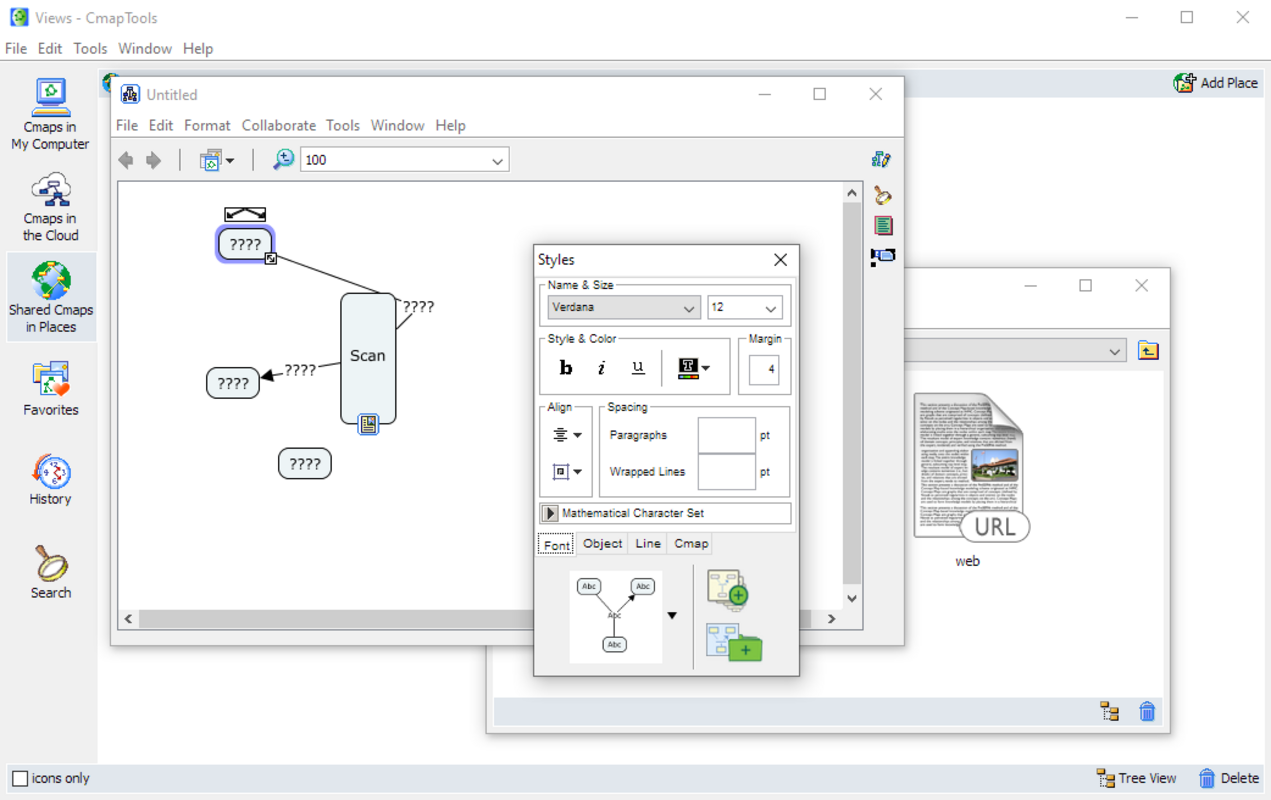
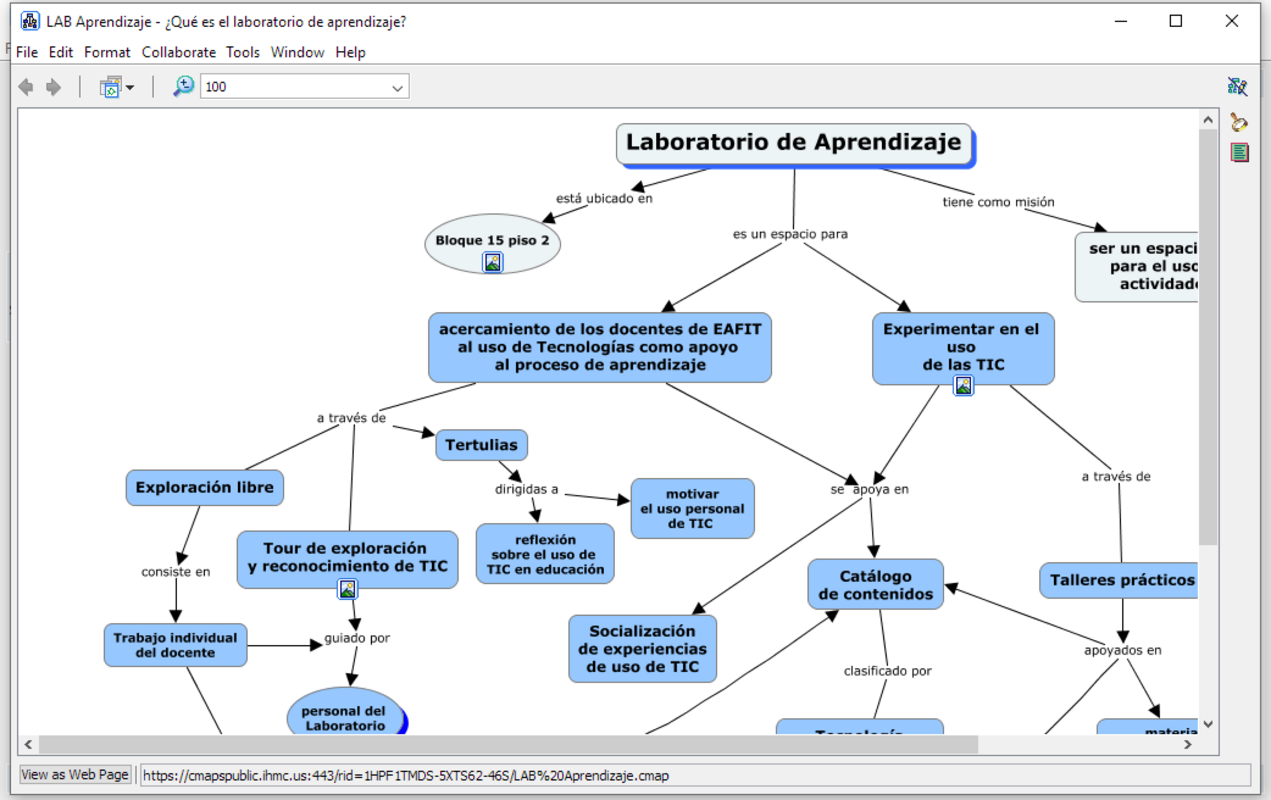
- Concept Map Creation: Users can build visual representations of knowledge by linking concepts with labeled relationships, allowing for structured expression of ideas.
- Interactive Navigation: The app supports zooming, panning, and node exploration, enabling users to traverse complex maps without losing context.
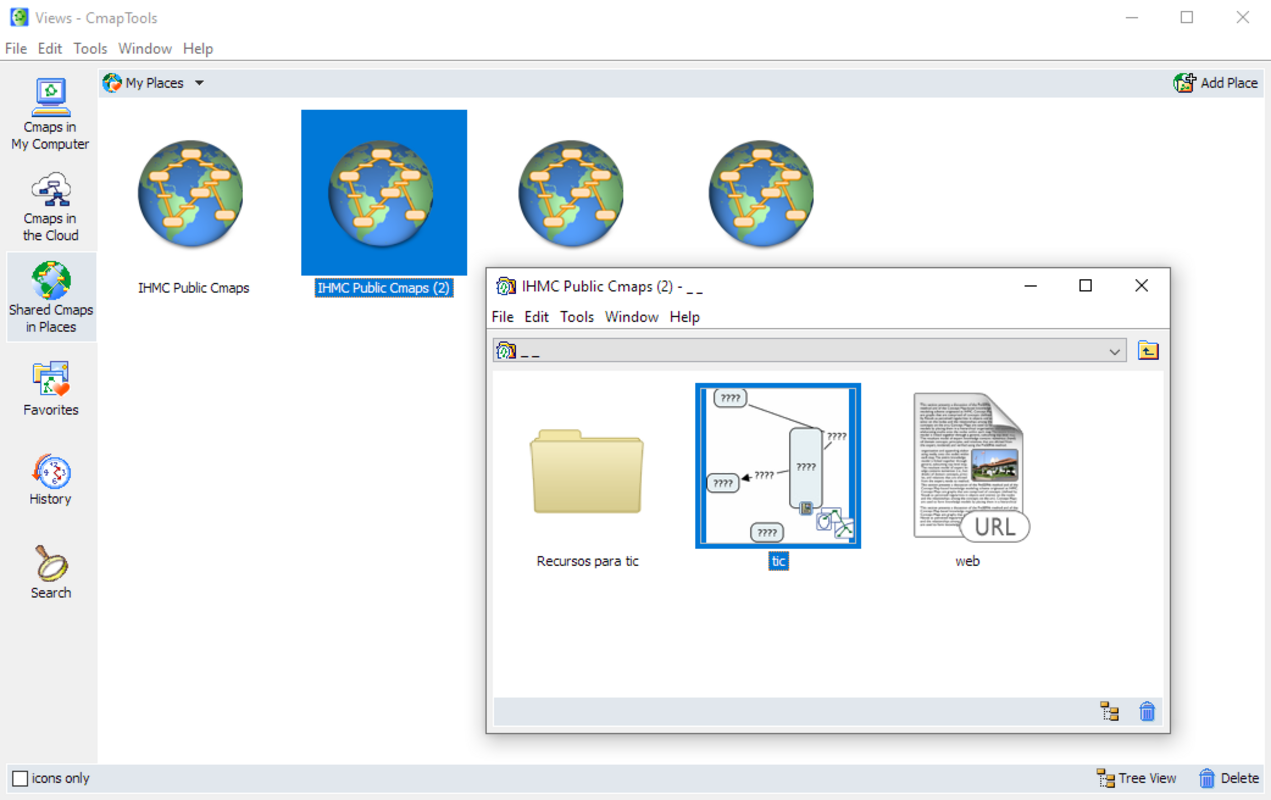
- Collaborative Sharing: Maps can be shared with others for feedback, discussion, or joint development, supporting peer learning and academic collaboration.
- Critical Evaluation Tools: Users can annotate and critique maps, fostering reflective thinking and iterative improvement of knowledge models.
- Offline Access: Once created, concept maps can be accessed and modified without an internet connection, ideal for study or fieldwork.
For example, a university student preparing for exams might use CmapTools to map out key theories in psychology, linking foundational concepts like “cognitive dissonance” and “behavioral reinforcement” with supporting evidence. A professor could design a course syllabus as a concept map to visually align learning objectives with modules. Researchers may use the app to model hypotheses and test logical consistency across variables. These practical applications demonstrate how CmapTools transforms abstract thinking into actionable visual frameworks, enhancing both individual and group understanding.
Interface, UX & Performance
The interface of CmapTools is designed with functionality and clarity in mind, featuring a clean, minimal layout that prioritizes content over decorative elements. Users interact with concept maps through intuitive gestures such as tapping to select nodes, dragging to reposition, and pinching to zoom. Navigation is smooth, with consistent visual cues that guide users through complex maps without confusion.
Although the developer did not list formal performance metrics, the app’s lightweight file size of 24.7 MB suggests efficient resource usage. The application appears to run reliably on various Android devices, maintaining responsiveness even when handling moderately complex maps. Stability is likely optimized for academic use, where data integrity and consistent behavior are crucial.
Users can expect a stable experience across different device categories, including smartphones and tablets, though specific compatibility details were not disclosed. The app’s performance during map creation, editing, and sharing operations appears to be well-balanced, minimizing lag or crashes. Overall, the user experience reflects a thoughtful design philosophy centered on cognitive efficiency and ease of use, aligning with its academic and research-oriented purpose.
Platform Compatibility & Technical Requirements
CmapTools is available exclusively on the Android platform. The current version is 2024.0.2, with a file size of 24.7 MB. This compact footprint makes it accessible even on devices with limited storage space.
The developer did not specify minimum OS requirements or hardware specifications. However, given its focus on educational and research use, it is likely optimized for modern Android devices running recent versions of the operating system. Compatibility with older Android versions remains unclear, and users should verify system requirements through their device’s app store.
Pros and Cons
Pros
- Free to download and use, making it accessible to students and educators worldwide.
- Developed by a reputable research institution, ensuring academic credibility.
- Supports offline functionality, ideal for use in low-connectivity environments.
- Encourages active learning through visual knowledge modeling and critical feedback.
- Lightweight design with minimal storage footprint.
Cons
- Platform availability is limited to Android; no iOS version was listed.
- Specific technical requirements were not disclosed, which may affect user expectations.
- Limited visual customization options for concept maps.
- May require a learning curve for users unfamiliar with concept mapping.
- No in-app purchase or subscription model, which could limit future feature development.
FAQ
Is CmapTools safe to download and use?
Yes, the app is developed by the Florida Institute for Human & Machine Cognition (IHMC), a trusted research organization. It is available for free on official Android app stores and does not require sensitive permissions.
Can I use CmapTools offline?
Yes, once a concept map is created or downloaded, it can be accessed and edited without an internet connection.
Is CmapTools available for iOS devices?
The developer has not released a version for iOS. The app is currently only available on Android.
How often is CmapTools updated?
The latest version, 2024.0.2, was released on April 24, 2024. The app receives periodic updates to improve functionality and fix bugs.
Can I share my concept maps with others?
Yes, users can export and share concept maps with peers, instructors, or collaborators for review, discussion, or joint editing.
Final Thoughts
CmapTools stands out as a powerful, research-backed tool for anyone engaged in academic or cognitive work. Its ability to transform abstract ideas into structured, visual knowledge models makes it an essential utility for students, educators, and researchers. The app’s free availability, lightweight design, and focus on critical thinking elevate its value in the productivity and study tools category.
While its Android-only availability may limit some users, the app’s core functionality remains robust and purpose-driven. For those who benefit from visual learning and structured knowledge organization, CmapTools offers a unique and effective solution. It is not merely a note-taking app—it’s a cognitive tool designed to deepen understanding and improve learning outcomes.
Download CmapTools now


