
Hi all,
As we reach the midpoint of our summer break, I’ve asked each of our AHSS summer research award winners to talk about their research projects, what they’re seeing, and what sorts of provisional conclusions or vista points they’ve found. Here’s what Tessa Samuels had to say about her fascinating and timely project:

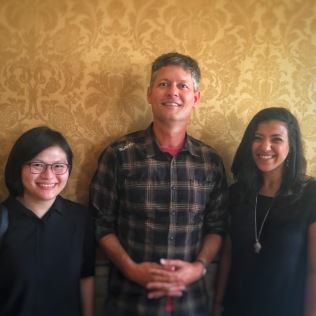
Tessa Samuels about to conduct another interview for her summer research project.
My research seeks to determine what public schools, day-camps, and childcare facilities can do to help newly-arrived refugee families in the socialization process. With my AHSS summer research project, I hoped to bridge the communication gap between school/childcare systems and refugee families. This project was to mainly be executed through the use of semi-structured interviews and participant observation.
What I have quickly come to understand is that the families are not so concerned with the on-goings in classrooms or childcare facilities (with only one exception to date) — they face greater challenges with transportation, with understanding various rules and regulations, and with getting longer hours so as to have a little time to themselves.
All childcare workers and teachers I’ve encountered have been enthusiastically willing to accommodate cultural preferences or teachings — such as making special accommodations on Ramadan, or not serving pork to families. However, some childcare workers and teachers have faced behavioral and safety issues that they are unsure about — should they combat these behaviors? And how should they communicate with parents about these behaviors?
Moreover, many of these refugee households are headed by single mothers. Because many of these households’ challenges concern transportation and hours, there is little that the teachers and childcare facilities can do to address them. As a result, my project has shifted slightly — I’m now looking at what ways these needs can be better met, what ways childcare facilities can aid in these solutions, and how they might communicate and help with the behavioral and safety issues the encounter at these childcare facilities.
My understanding of these issues has grown tremendously. Many of the refugee families have accepted me in as almost family. I have been spending 20 – 30 hours a week in participant observation with seven different families. I’ve grown to know the troubles they face in their daily routines, the long hours they work, and their heavy reliance on public transportation to pick up their children and then get home — sometimes even after dark. I have conducted twelve ethnographic interviews and have recently begun

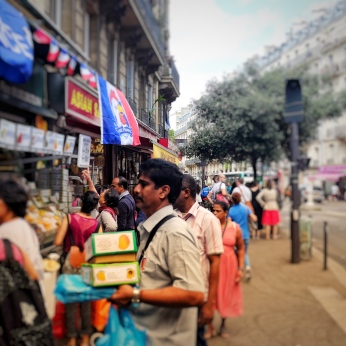
Public transportation is an integral feature of refugees’ quotidian existence in America
transcribing them.
And I’ve grown to realize that I’veacquired more insightful information from participant observation with the families than from these interviews! I’ve spent the majority of my time doing participant observation with these families, while I’ve conducted more formal interviews with childcare facilities and IRC workers to better understand these institutions and the refugee clientele they serve. I went into this project with the idea that this was fascinating work and something of tangible value for multiple communities, but this research has enveloped my life. I’ve developed life-changing relationships, I’ve been invited to family meals, I’ve had deep heart-to-heart conversations about the struggles of childcare in the United States, and I’ve fielded urgent late-night calls from these families.
 I spend a couple hours each night writing up field notes, processing my day, and analyzing the interactions, conversations, and interviews. I’ve come to realize the deep complexity of the issue through the interviews and field notes. One major issue regards best beginnings scholarships — a state scholarship for childcare from lower income families. The complexity with best beginning scholarships is that in order to qualify for this one must be working, but to be able to work one must have childcare – so the timing and coordination between families, child care resources, and childcares has to be perfect which is challenging. Another provisional finding that has appeared in the interviews and field notes is that all families I have spoken to are so confused on why people have to pay for childcare at all in the United States. On the side of childcare facilities a common pattern in interviews is that many childcare facilitators are concerned at how desperate for help families are and that they are too trusting on handing over their children when people offer to watch them.
Two of the biggest challenges I’ve faced concern coordinating schedules with the families, and attempting to understand and translate everything I hear in interviews. Many of these refugee families speak Swahili or Tigrinya, and I need a translator to help conduct the interviews and to coordinate much of my fieldwork. This coordination has been very challenging. It’s been easier to tag along on errands and bus trainings with the translators and families, and interview them en route, although I have occasionally sat down with families for a focused interviews. Being invited into their home and having them talk freely has been an easier way to obtain genuine information and thoughts. During more formal interviews, many families are often very polite, but in participant observation and less formal settings I’m privy to the complaints and hardships these families face. Additionally, the translators I use are refugees themselves, and oftentimes

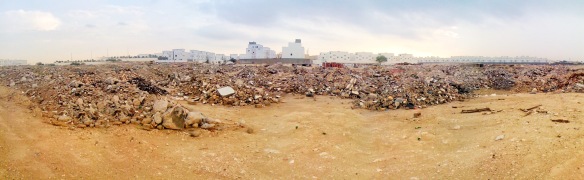
Some refugees in the region come from the DRC, transposed on a map of America to gauge its size
it’s difficult to understand everyone on my interview recordings.
I have eight more days left in the field for this project. During that time I intend tocontinue partaking in participant observation. I hope to conduct two more interviews with refugee families, and I’ve planned three more interviews with day camp staff personnel. I will continue to write field notes and analyze data in the evenings. When my fieldwork ends, I plan to compile all these data and begin to analyze those data. In that analysis, I hope to discern patterns in the conversations, complaints, and hardships these families have described to me. I hope to mark some of the best practices of the institutions involved, to point to areas of improvement, and suggest areas where better communication might be helpful, and areas where more services would be of great assistance. All of that will allow me to begin writing an ethnographic assessment of these refugees’ experiences here.
Thanks so much for the update, Tessa, and good look carrying your project to the finish line. We’ll look forward to hearing more from you as the Fall semester approaches.
Andrew
 SOAN
SOAN 
