

Download Default Programs Editor – default programs, file associations, context menu, file types, Windows, customization
Overview
Default Programs Editor is a utility application designed to streamline the management of default programs and file associations on Windows systems. It addresses the common frustration users face when trying to customize which application opens specific file types, modify context menu entries, or adjust autoplay behaviors for external drives. By providing a centralized and intuitive interface, the app simplifies tasks that are often buried deep within Windows settings or require manual registry edits. This makes it particularly valuable for users who want greater control over their system’s behavior without needing advanced technical knowledge.
The target audience includes both casual users and power users seeking to personalize their Windows experience. Whether someone wants to change the default PDF reader, remove unwanted context menu items, or set a preferred media player for video files, Default Programs Editor delivers a structured approach to these adjustments. Its focus on usability and direct functionality positions it as a practical tool within the Windows utilities ecosystem. Although the developer, Thomas P. Larson, is not widely known outside niche technical circles, the app has maintained relevance since its initial release in 2012, indicating long-term stability and user trust. The app remains free to use, making it accessible to a broad audience.
Real-world use cases include optimizing workflow by ensuring files open in the preferred application, reducing clutter in right-click menus, and customizing how external devices are handled upon connection. For example, a photographer might use it to set their preferred image editor as the default for .RAW files, while a student may streamline document handling by setting a specific word processor as the default for .docx files. These practical applications underscore the app’s ongoing value in enhancing system efficiency and user satisfaction.
Key Features & Functionality
- Change File Associations: Allows users to assign specific programs to open certain file extensions. This feature enables seamless workflow customization, ensuring that .jpg files open in a preferred image viewer or .mp3 files launch in a favorite music player without manual intervention each time.
- Modify Autoplay Settings: Provides control over automatic actions when external storage devices like USB drives or SD cards are inserted. Users can define which actions appear in the autoplay dialog, such as opening a folder, playing media, or launching a specific application.
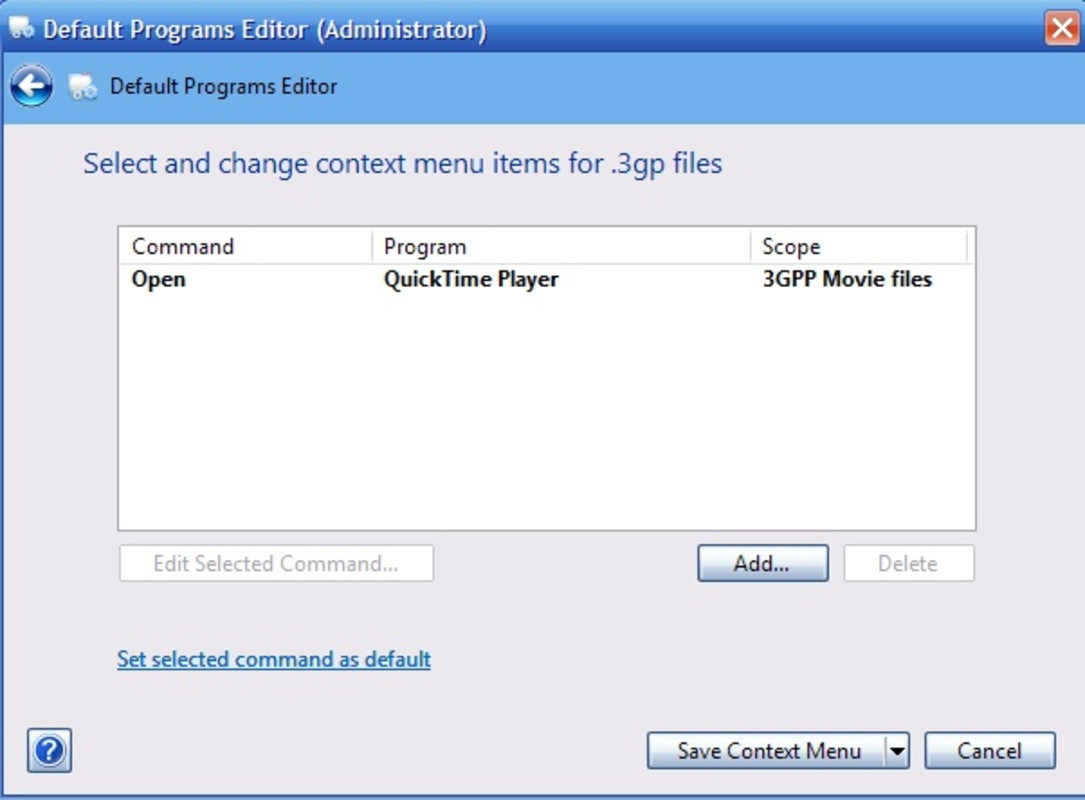
- Context Menu Customization: Enables users to edit the right-click menu for different file types. This includes changing the display name, icon, and available actions, which helps declutter the menu and prioritize frequently used options.
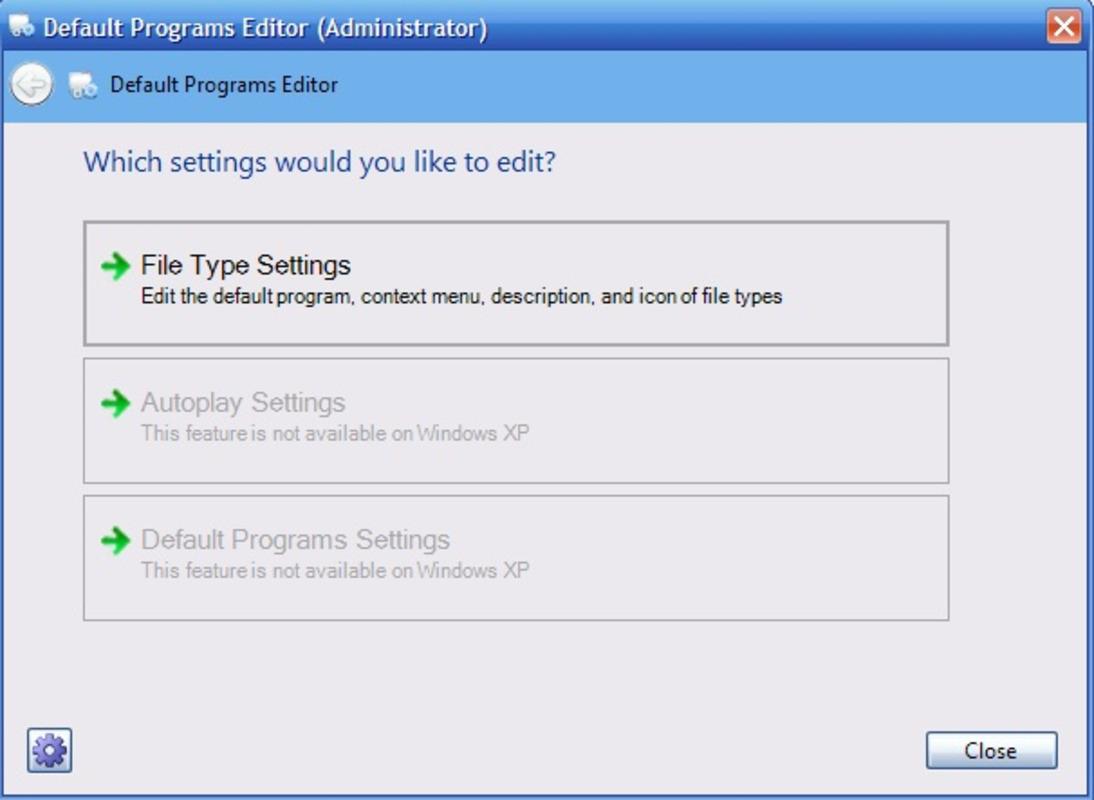
- User-Friendly Wizard Interface: Guides users step-by-step through each customization task. The intuitive design reduces the learning curve and makes the app accessible even to non-technical users, ensuring that changes can be made confidently and safely.
- Compatibility with Modern Windows Versions: While some features are not available on Windows XP, the app functions effectively on more recent Windows operating systems, offering enhanced functionality and stability for up-to-date users.
For instance, a user managing a large media library can use the context menu customization to add a “Convert to MP3” option directly in the right-click menu for video files. Another user might use the autoplay feature to automatically import photos from a camera’s SD card into a specific folder without manual selection. These real-world applications demonstrate how Default Programs Editor improves daily interaction with the operating system by making file handling more predictable and efficient.
Interface, UX & Performance
Default Programs Editor features a clean, step-by-step wizard interface that prioritizes clarity and ease of navigation. The layout is structured around logical workflows, with each customization task divided into manageable stages. Users are presented with clear labels, visual cues, and consistent controls, reducing the likelihood of errors during configuration. The design avoids clutter, focusing on essential options while still providing sufficient depth for advanced users who wish to make granular changes.
Navigating through the app is straightforward, with intuitive buttons and well-organized sections. The application does not rely on complex menus or hidden settings, which enhances accessibility for users of all skill levels. Although the developer did not list formal performance metrics, the app’s lightweight nature—only 2.2 MB in size—suggests minimal resource consumption. It is likely to run smoothly on a wide range of Windows systems, including older hardware.
Responsiveness is expected to be consistent, given the app’s modest size and non-interactive nature. Stability is also likely high, as the application does not require constant background processes. Users can expect reliable operation during configuration tasks without crashes or freezes. While no specific compatibility details were provided, the app’s continued availability and use suggest a stable performance profile across supported systems.
Platform Compatibility & Technical Requirements
Default Programs Editor is designed for the Windows operating system. It supports modern versions of Windows, although specific compatibility details were not fully disclosed by the developer. The app is available in a version 2.1.0.1, with a file size of 2.2 MB, indicating a lightweight footprint. This small size suggests minimal system requirements, making it suitable for installation on both older and newer Windows machines.
The developer did not specify minimum OS requirements, nor did they list compatibility with Windows XP beyond noting that some features are not available on that platform. Users are advised to ensure their system meets standard Windows installation criteria. The app is free to download and use, with no additional costs or in-app purchases. It is distributed as a standalone executable, meaning no installation wizard or complex setup is required—simply run the file to begin using the tool.
Pros and Cons
- Free to download and use
- Lightweight and fast-loading
- Intuitive wizard interface suitable for beginners
- Effective for managing file associations and context menus
- Offers customization without requiring registry edits
- Some features are not available on Windows XP
- No official update history or changelog provided
- Developer support channels are not publicly listed
- Limited documentation beyond basic functionality
- Not available on non-Windows platforms
FAQ
Is Default Programs Editor safe to download and install?
Yes, the app is free and distributed without known malware or harmful components. It operates as a standalone executable and does not require administrator privileges for basic use, though some changes may require elevated permissions.
Can I use Default Programs Editor on Windows 10 or Windows 11?
Yes, the application is compatible with modern Windows versions. While specific compatibility details were not listed, it functions effectively on systems beyond Windows XP, including Windows 10 and Windows 11.
Does Default Programs Editor require an internet connection?
No, the app does not require an internet connection to operate. It functions entirely offline after installation, making it suitable for use in restricted or secure environments.
Are there any risks associated with changing file associations?
Changing file associations is generally safe, but incorrect settings may prevent certain files from opening properly. The app includes safeguards to prevent system-level damage, and users can revert changes through standard Windows settings or the app’s interface.
How do I update Default Programs Editor?
As of now, no official update mechanism or changelog has been published. Users should check the developer’s website or trusted sources for new versions, though the app’s stability suggests infrequent updates may be needed.
Final Thoughts
Default Programs Editor remains a reliable and practical utility for users seeking greater control over their Windows file management experience. Its focus on simplicity, combined with powerful customization options, makes it a valuable tool for both novice and experienced users. By streamlining file associations, context menu settings, and autoplay behaviors, it enhances productivity and personalization without adding complexity.
While it lacks modern app features like cloud sync or automatic updates, its core functionality is solid and well-executed. The app’s longevity—over a decade since its release—speaks to its reliability and user satisfaction. For anyone looking to fine-tune how their system handles files and external devices, this free tool offers a straightforward solution.
Download Default Programs Editor now


