-
-
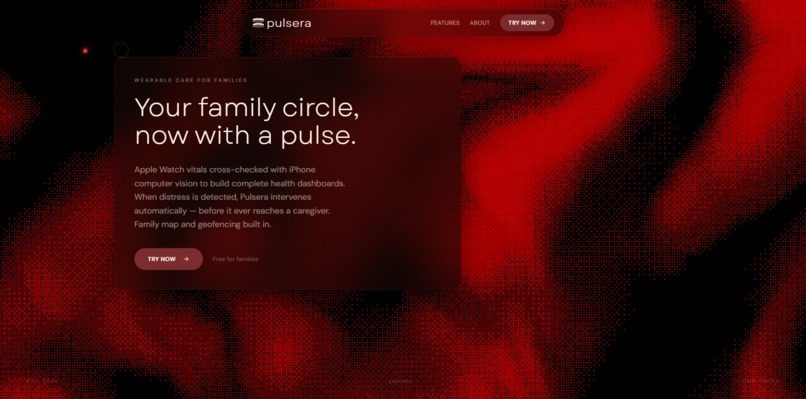
Landing Page
-
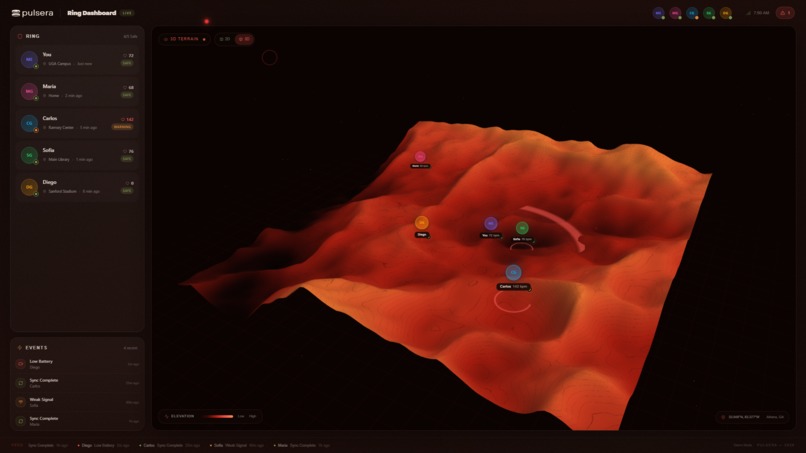
Map 3D
-
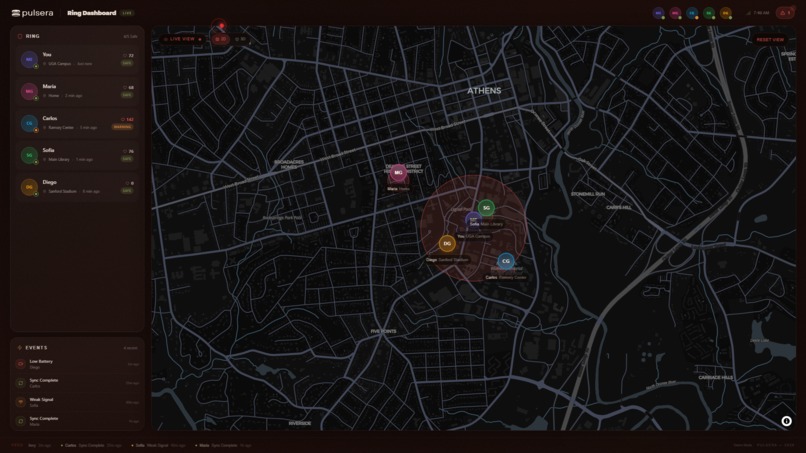
Map 2D
-
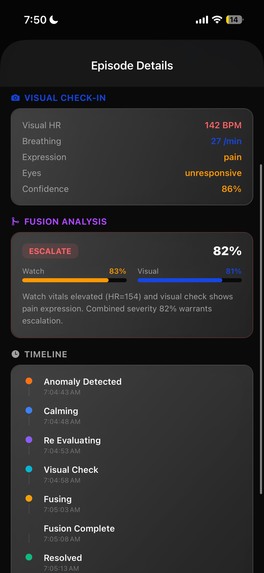
Mobile View of Pulse
-
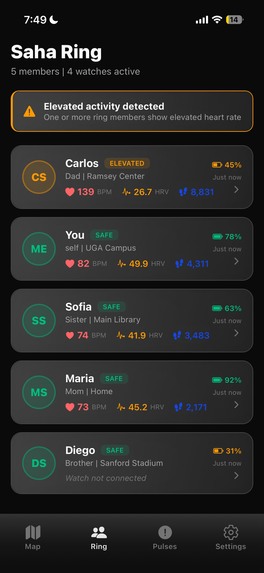
Mobile View of rings
-
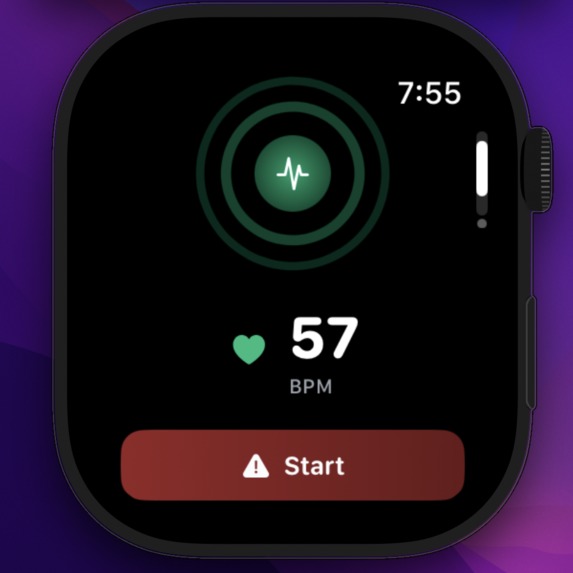
Watch Monitoring
-
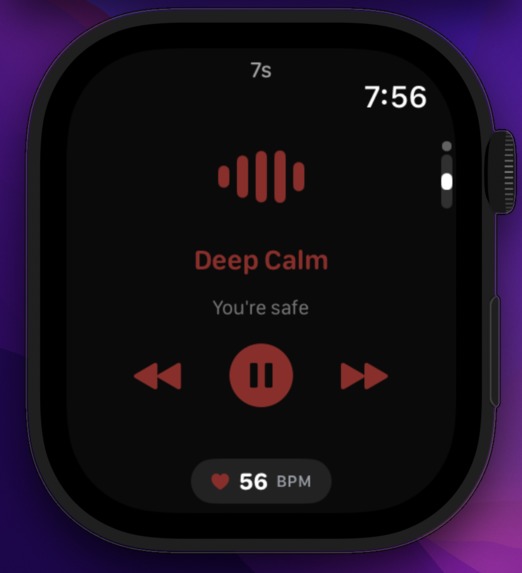
Watch Music State
-
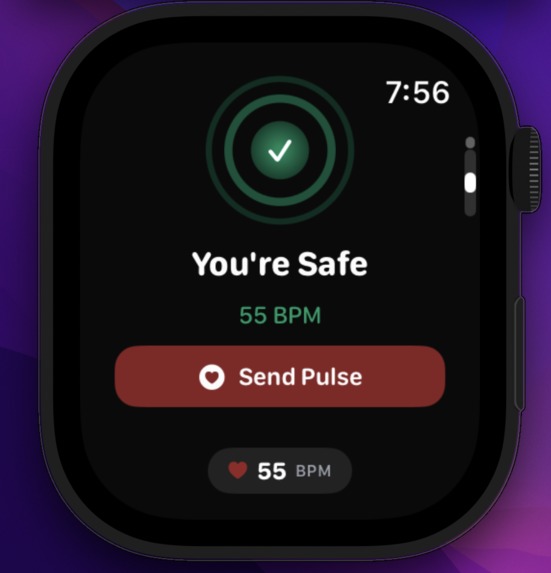
Pulse State


Inspiration
We're international students whose grandparents are now oceans away. Their safety depends on buttons they have to press or a dot on a map — tools that get your attention when it's already too late. We asked: what if a single system could predict emergencies with elderly loved ones and actually take action? That's why we built Pulsera.
What it does
Pulsera (Spanish for bracelet) continuously monitors heart rate, HRV, and movement through Apple Watch. When it detects distress, Alma (our calming voice agent powered by ElevenLabs) intervenes immediately on the wrist with haptic taps, guided breathing, and spoken support. Once the episode resolves and vitals stabilize, Pulsera prompts the user for a quick selfie check-in on their iPhone. Using the Presage SmartSpectra SDK, it analyzes facial expression and breathing to confirm that the person has truly returned to baseline. That photo and health snapshot are sent as a Pulse: a visual confirmation shared with all members of the user’s Ring so everyone can see with their own eyes that their loved one is okay. If an episode doesn’t resolve, Pulsera escalates by alerting Ring members in a configurable cascade. Members of a Ring see everything on a shared dashboard with live vitals, location, and episode reports.
How we built it
We developed an Apple Watch app using HealthKit, CoreMotion, and WatchConnectivity for biometric monitoring; created an iPhone companion app that integrates the Presage SmartSpectra SDK for contactless vitals via the front camera and computer vision; powered our real-time calming voice agent Alma with ElevenLabs Conversational AI over WebSocket; used Google Gemini for LLM-powered health analysis and episode recommendations on the backend; built a backend sensor fusion engine to combine watch and camera data into a single confidence score; and designed a React-based family dashboard and map view.
Challenges we ran into
- Ensuring WatchConnectivity reliably triggers the iPhone camera check-in from the watch in real time.
- Tuning anomaly detection thresholds to catch real distress without firing on every jog or staircase.
- Designing the Pulse selfie check-in to feel friendly and low-friction for elderly users.
- Integrating the Presage SDK and mapping its output to our scoring logic.
Accomplishments that we’re proud of
The full flow works end-to-end: detect → agent calms → confirm → send Pulse to members of the Ring. Most episodes resolve at the wrist without ever bothering a caregiver. The post-episode Pulse gives Ring members real peace of mind. Not just a “resolved” notification, but visible proof that their loved one is okay. The dashboard and map view make monitoring feel like Life360, not a hospital system.
What we learned
Single-signal detection is unreliable, and combining wearable data with visual analysis dramatically improves confidence. The most valuable moment isn’t the alert; it’s the confirmation afterward. Families don’t just want to know something went wrong; they want to see that it’s over.
What’s next for Pulsera
- Expand from family Rings to trusted community Rings: neighbors, local caregivers, support groups.
- Add longitudinal trend analysis so Pulsera can predict bad days before they happen based on multi-day HRV and sleep patterns.
- Android and Wear OS support.
- Clinical partnerships to validate intervention efficacy with dementia care providers.
Built With
- 3js
- elevenlabs
- gemini
- next.js
- postgresql
- presage
- python
- pytorch
- react
- rest
- sqlalchemy
- typescript


Log in or sign up for Devpost to join the conversation.