-
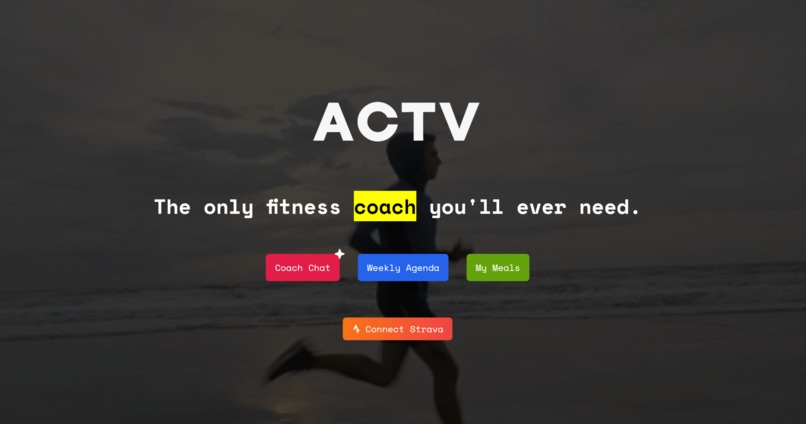
Landing page with minimal but thought after UX for Easy and Efficient Access.
-
Landing page for the AI Coach.
-
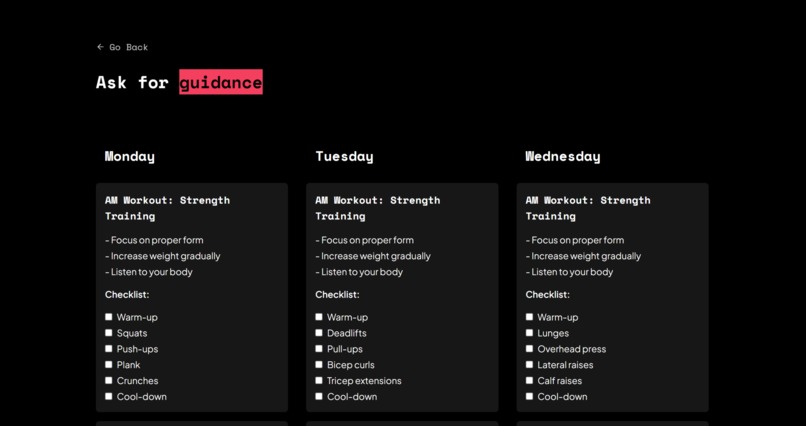
Personalised workout suggestions made by the AI Coach.
-
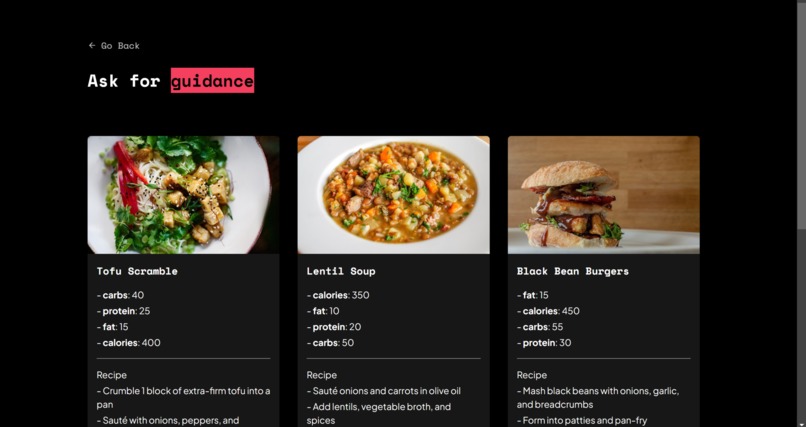
Personal AI coach suggesting meals according to the workout and recovery loads.
-
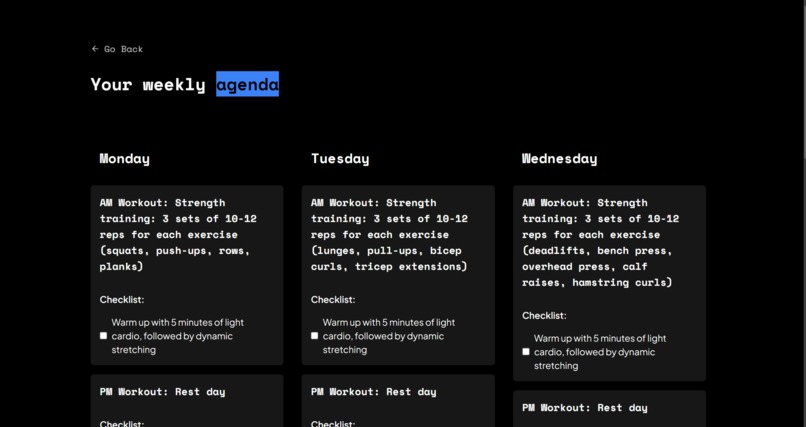
Once you like the Suggested Workout Week Block, you can add it and save to your agenda.
-
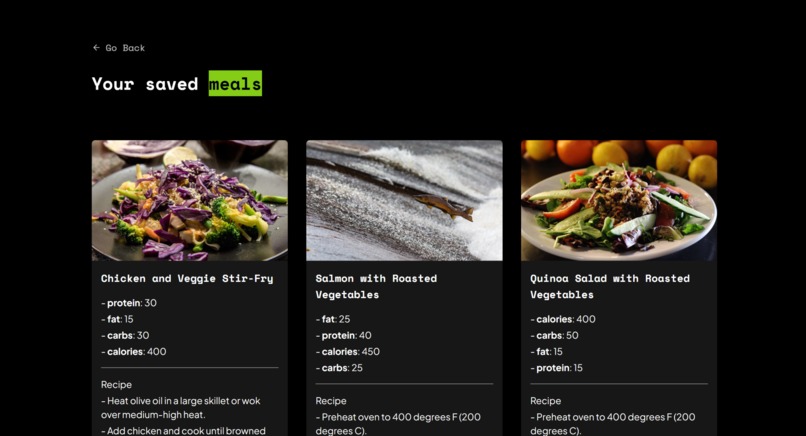
Saved meals page for all the suggested meals that turned out to be favourites.


Inspiration
ACTV was born out of a personal need—while training for my Ironman, I realized how much professional coaching could help but was well beyond my budget as a student. I wanted to be at my peak but couldn’t justify paying so much for the tailored advice that would take my training to the next level. That frustration drove me to find a solution. Instead of giving up, I saw it as an opportunity. What if I could build something for myself, something that others in a similar position could use as well? When I learned about the potential of using large language models (LLMs) like GPT and integrating fitness data from apps like Garmin and Strava, I knew I had to bring this idea to life. The hackathon was the perfect stage to take this dream beyond a basic concept and turn it into a working reality.
What it does
ACTV is a personalized fitness coaching platform built from the ground up to provide smart, actionable training plans and nutritional recommendations tailored to individual athletes. By pulling real-time data from Garmin and Strava, the app analyzes user performance and adapts workout plans to ensure that every recommendation is fine-tuned to the person’s current fitness level and goals. On the nutrition side, the AI suggests meal plans and uses an API to fetch images of food items, making it easier to visualize and implement the dietary advice. Whether you’re an aspiring Ironman athlete or simply want to improve your health, ACTV turns data into insights, and insights into progress.
How we built it
The journey to building ACTV was as intense as any Ironman training. We started with OpenAI’s GPT as the core recommendation engine, generating workout suggestions based on the athlete’s current condition and upcoming targets. Integrating Strava and Garmin was a game-changer—it allowed us to tailor those recommendations with real, personal data, such as heart rate, mileage, and time splits. Unfortunately, Garmin's API wasn’t available to smaller developers, which meant we had to get creative. We turned to Strava, which has data overlap with Garmin, allowing us to build a bridge that pulled the data we needed.
Building the backend involved a lot of careful planning, especially when it came to MongoDB for storing training data, user profiles, and nutrition logs. We hit a big roadblock when the GPT API unexpectedly stopped working right after we set up the MongoDB integration. Our entire AI-based foundation seemed in jeopardy, but we quickly adapted by switching to Google’s Gemini model. Rebuilding the prompt engineering around this new model was a challenge, but we managed to fine-tune it to deliver the detailed responses our users needed. Adding the food image API was another layer of complexity—it wasn't just about fetching random images but ensuring they corresponded exactly with the nutrition plans. The effort was worth it because this feature added an essential, visual dimension to the experience.
Challenges we ran into
Building ACTV was like racing through a course filled with unexpected obstacles. One of the biggest challenges we faced was the Garmin API not being accessible to small developers like us. That was a huge letdown because Garmin is such a widely-used platform among athletes. We had to pivot and leverage Strava’s API instead, as it shares some datasets with Garmin. Another challenge was the technical complexities of working with GPT. Fine-tuning the AI model for our specific use case required a lot of trial and error. The API suddenly stopped functioning during development, leaving us scrambling for alternatives. This led to a frantic but rewarding decision to integrate Google’s Gemini model, which came with its own learning curve. Moreover, integrating multiple APIs into one seamless experience took a lot of testing and tweaking, particularly with the MongoDB database and food image APIs. All of this required countless late-night sessions of debugging and redesigning, but we pushed through.
Accomplishments that we're proud of
Despite all the hurdles, we’re incredibly proud of what we built. ACTV isn’t just an app; it’s the solution I personally needed months ago, now brought to life. The integration of fitness data from Strava and Garmin allowed us to create something truly personalized and intelligent. Shifting from GPT to Google’s Gemini and fine-tuning it to match our requirements felt like an uphill battle, but we made it work. The nutrition recommendation feature, with its visual food item images, was another milestone that we’re proud of because it elevates the user experience beyond text-based advice. To see the platform come together exactly how I envisioned is something I’m really excited about, not just for myself but for the countless other athletes who could benefit from it.
What we learned
Throughout the project, we gained a wealth of knowledge. On the technical side, we learned how to effectively use APIs and navigate limitations like the ones we encountered with Garmin. We discovered the immense value in understanding how to process large sets of fitness data and convert them into actionable insights. Working with AI models like GPT and Google Gemini taught us a lot about prompt engineering—how to extract the best responses and how to optimize it for a specific audience. More than that, we learned about perseverance, about how to handle setbacks when everything seems to be going wrong, and how to pivot without losing momentum.
What's next for ACTV
ACTV’s future is bright, and this is just the beginning. Next, we’re planning to integrate the platform with our app RASP (Retrieval Augmented Search for People), which connects users with like-minded athletes for events and outings. The combination of ACTV’s fitness and nutrition guidance with RASP’s social networking features will create an ecosystem where athletes can not only improve their training but also find a community to train with. We’re also excited to explore potential partnerships with other health and fitness platforms, expanding ACTV’s capabilities to deliver even more holistic fitness solutions. Scaling this beyond just triathletes to a wider audience is something we’re eager to pursue. Our vision is to make ACTV not just a tool but a trusted fitness companion for anyone looking to improve their health and performance.
Built With
- express.js
- gemini
- jitter
- mongodb
- mongoose
- node.js
- openai
- pexel
- pixabay
- postman
- react
- strava
- typescript


Log in or sign up for Devpost to join the conversation.