-
-
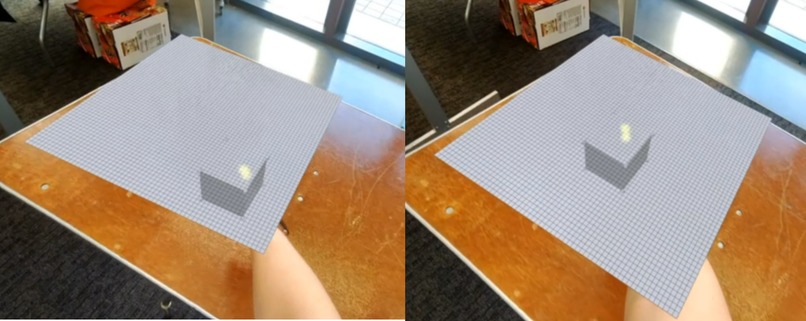
Mesh manipulation (movement) with pinch and drag
-
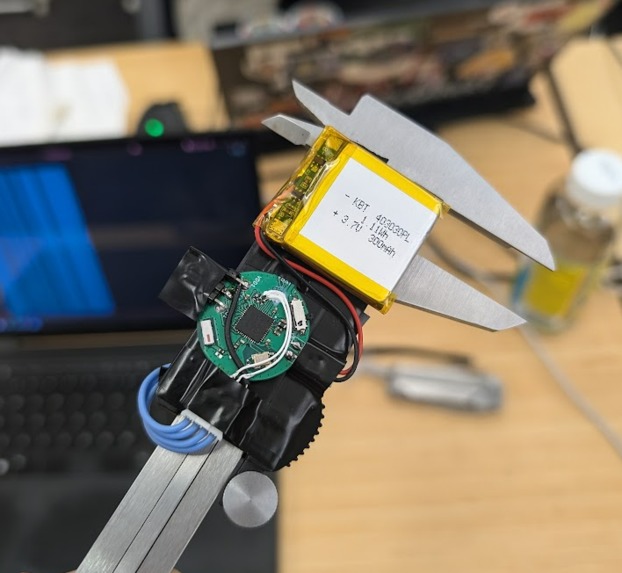
Internet and Bluetooth connected digital calipers
-
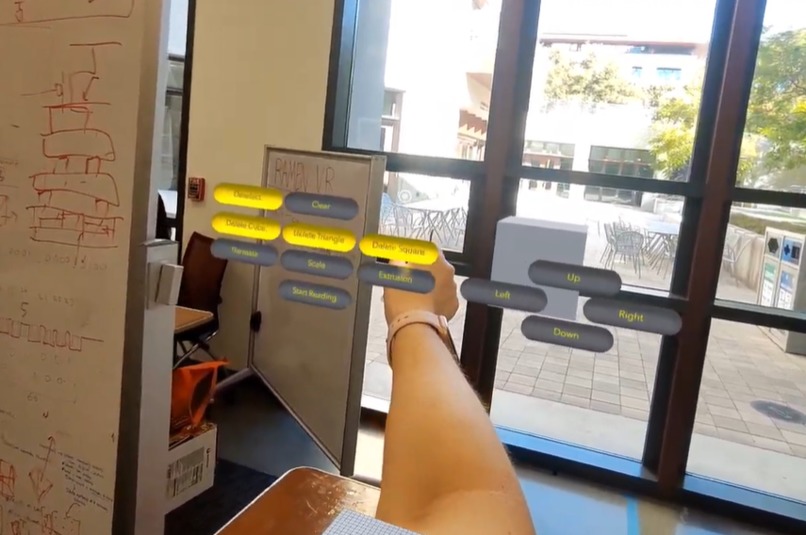
Menus!
-
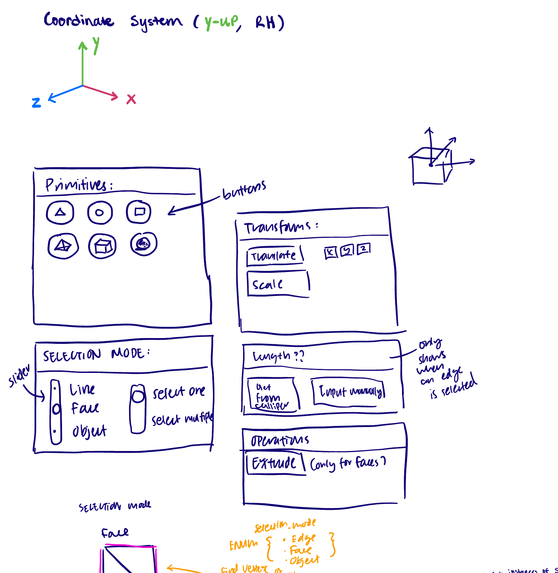


Inspiration
Inspiration for ARCAD came from the limitations in existing AR/VR/XR modeling tools that, while creative and intuitive, often lack the precision necessary for real-world applications like engineering, industrial design, and prototyping. We wanted to create a tool that could bring the tactile experience of physical measurement and modeling into AR. The key breakthrough was integrating Bluetooth-connected digital calipers to input real-world dimensions directly into the AR environment, enabling users to model with the precision and accuracy they need. By combining physical instruments with AR technology, we saw an opportunity to create a more reliable, professional-grade tool for industries that rely on dimensional accuracy.
What it does
ARCAD is a mesh-based modeling software designed for the Snap Spectacles, combining AR’s immersive capabilities with the precision of physical measurement tools. It uses a pair of Bluetooth-connected digital calipers to measure real-world dimensions, which are then directly input into the AR environment, allowing users to create 3D models with real-world accuracy. The system’s core strength is its ability to overlay 3D objects with real-time, physical measurement data, making it a powerful tool for designers, engineers, and anyone needing high-precision modeling in AR. The app also supports basic mesh manipulation, enabling users to scale, rotate, and modify 3D objects based on their real-world measurements.
How we built it
ARCAD was primarily developed using Lens Studio, integrating the Snap Spectacles -- a seamless AR platform for users to interact with the 3D models. Additionally, Python and embedded C are used to bring real-world measurements into the virtual world. The integration of all these components — hardware, backend APIs, AR interface, and modeling engine — was challenging but ultimately led to a cohesive and functional application.
Challenges we ran into
The most significant challenge was integrating multiple hardware and software components into a seamless system. The ARCAD project involves a complex communications pipeline involving both the Snap Spectacles and the Bluetooth-connected digital calipers. Ensuring that real-time data from the calipers is consistently received and accurately reflected in the AR environment required careful planning within the AR frameworks, the backend, and the peripheral firmware. Additionally, a user-friendly interactive experience had to be built into the AR environment that could take full advantage of our novel instrumentation.
Accomplishments that we're proud of
We’re extremely proud of having developed a feature-rich 3D modeling experience in a time-limited situation, including the successful integration of a custom Bluetooth peripheral into a custom AR environment. The real-time input of dimensional data from the physical world into the AR design space is a key feature that sets ARCAD apart from other AR modeling tools. We also managed to develop a rudimentary, yet functional, mesh-based modeling engine that responds to real-world measurements. Seeing this all come together in a seamless AR experience was incredibly rewarding. Furthermore, being able to test and demonstrate the software on a cutting-edge device like the Snap Spectacles was a huge accomplishment in itself.
What we learned
This project taught us a great deal about combining hardware and software in an AR context. Specifically, we learned how crucial it is to optimize for performance on wearable devices with limited resources, as well as how to design intuitive interfaces for AR that support physical tools like calipers. We also learned a lot about the challenges of wireless communication with precision tools, and how to make sure that real-world measurements can be reliably fed into a virtual system. Finally, we gained deeper insights into user experience design for AR—balancing immersion with usability while avoiding clutter.
What's next for ARCAD
In the future, we see ARCAD evolving into a fully-fledged AR-based CAD tool that can be used in more complex industries, from product design to manufacturing and engineering. We plan to refine the mesh modeling capabilities, adding support for more advanced features like surface texturing, scaling, and more interactive modeling tools. There’s also potential to integrate additional physical measuring tools, like laser distance meters or thermal sensors, to further increase the accuracy and versatility of the platform. Our long-term vision includes expanding to other XR devices beyond Snap Spectacles, making ARCAD a versatile tool that can be used by professionals in multiple industries to bridge the gap between digital design and physical reality.
Built With
- c
- flask
- javascript
- python
- tender-loving-care
- typescript




Log in or sign up for Devpost to join the conversation.