-
-

Welcome to the Future of Interior Design
-
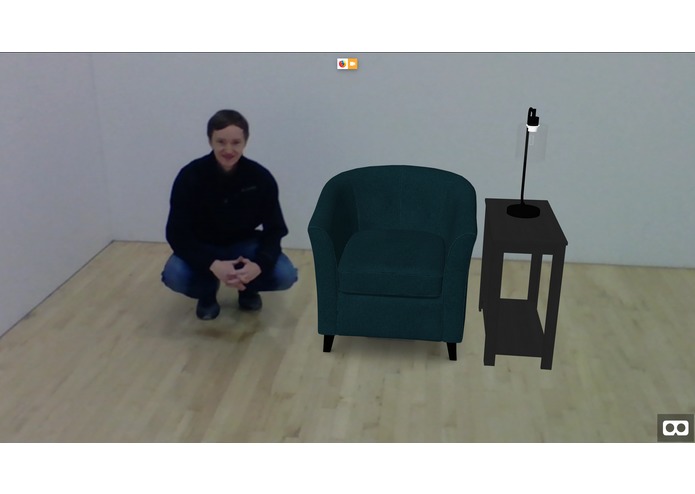
Size is accurate to furniture dimensions
-
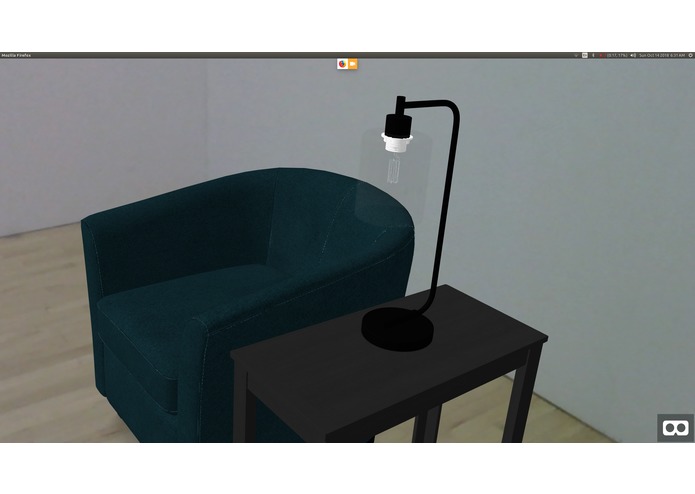
Real-time pose tracking of the marker make the model move in real space
-
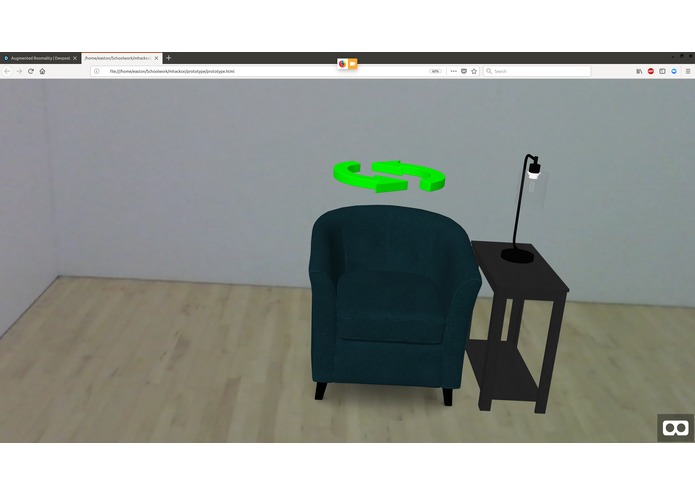
Object selection is notated by green rotation arrows
-
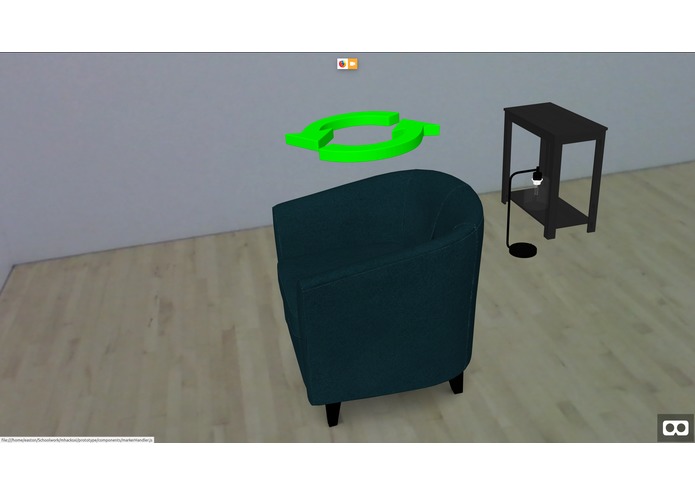
Selecting the ground around an object while it is selected will move it


Inspiration
We created Augmented Roomality as the next step in consumer-level interior design and product assurance. Augmented Roomality was created with the purpose of providing Wayfair's customers with virtual models of Wayfair products in their own living room.
How we built it
We built Augmented Roomality using AR.js and A-Frame's powerful WebVR platform, Wayfair's product API, and Google Cloud.
Challenges we ran into
75% of our team had little-to-no web development experience, and this was the first time we had deployed any code to be hosted on something like Google Cloud. AR.js is clunky and hard to work with, so a lot of time was spent on movement and rotation of the furniture and tag tracking that was unfortunately abstracted away from us within the AR.js code.
Accomplishments that we're proud of
Selecting objects in a 3D scene is something that was very difficult, but was crucial for our application. We searched for several different implementations of raycasting from click events and eventually got item selection to work to move around objects in our virtual world.
In addition, pushing through to the end on a web-development project was a feat in itself. As a group of mostly hardware and embedded engineering students, this was out of our comfort zone and yielded some different skills we didn't think we would gain.
What's next for Augmented Roomality
We would like Augmented Roomality to be a standalone system that integrates product selection within the application itself. To achieve this, we would need to implement a menu system, which is difficult in 3D space. In addition, we would like to incorporate direct linkage to Wayfair's website for the checkout component of the application.
Built With
- aframe
- ar.js
- google-cloud
- html
- javascript
- jquery
- wayfair-api



Log in or sign up for Devpost to join the conversation.