-
-
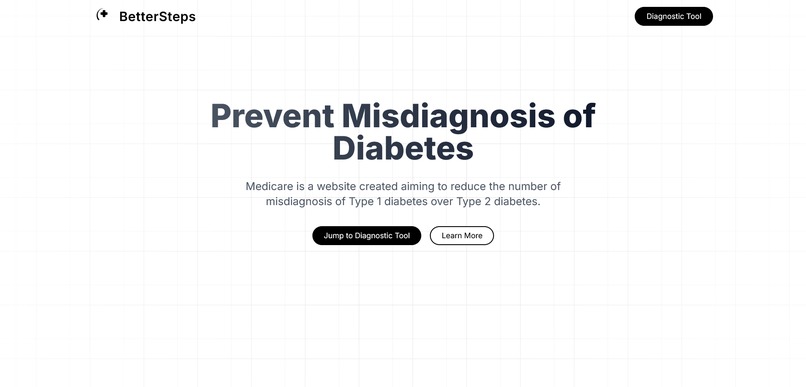
Homepage of Better Steps
-
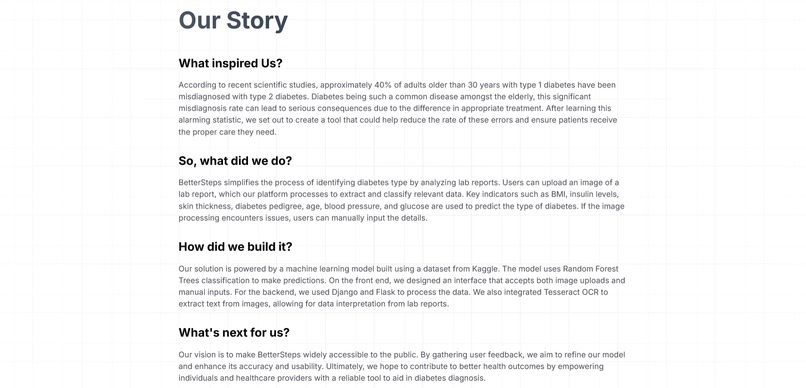
Description
-
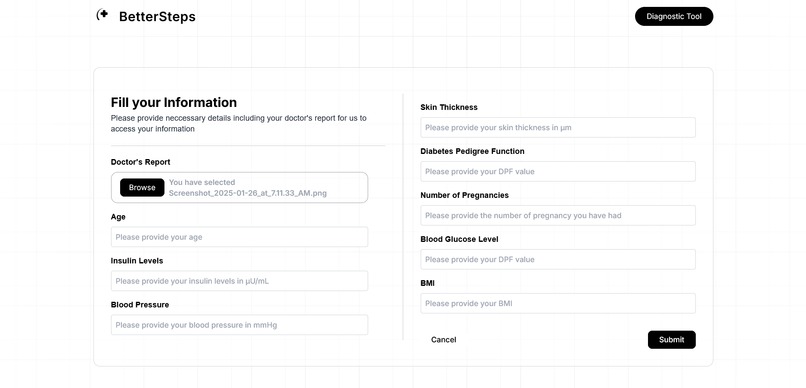
Report upload or manual entry
-
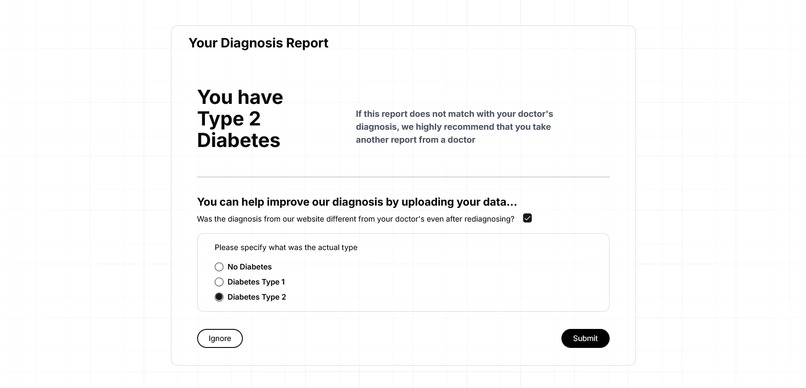
Report Result


Inspiration
According to recent scientific studies, approximately 40% of adults older than 30 years with type 1 diabetes have been misdiagnosed with type 2 diabetes. This significant misdiagnosis rate can lead to serious consequences due to the difference in appropriate treatment. After learning this alarming statistic, we set out to create a tool that could help reduce the rate of these errors and ensure patients receive the proper care they need.
What it does
BetterSteps simplifies the process of identifying diabetes type by analyzing lab reports. Users can upload an image of a lab report, which our platform processes to extract and classify relevant data. Key indicators such as BMI, insulin levels, skin thickness, diabetes pedigree, age, blood pressure, and glucose are used to predict the type of diabetes. If the image processing encounters issues, users can manually input the details.
How we built it
Our solution is powered by a machine learning model built using a dataset from Kaggle. The model uses Random Forest classifier to make predictions. On the front end, we designed an interface that accepts both image uploads and manual inputs. For the backend, we used Django and Flask to process the data. We also integrated Tesseract OCR to extract text from images, allowing for data interpretation from lab reports.
Challenges we ran into
One of the biggest hurdles was our lack of experience with Tesseract OCR, which required significant time to learn and implement effectively. Additionally, finding a dataset that included all the indicators we wanted for our model proved challenging and required creative problem-solving to address.
Accomplishments that we're proud of
We’re thrilled with the performance of our model, which achieved an accuracy rate of 82.5%. More importantly, we’re proud of the potential impact BetterSteps could have in reducing diabetes misdiagnoses and improving health outcomes worldwide.
What we learned
This project allowed us to gain valuable technical skills, including how to effectively utilize Tesseract OCR and work with machine learning models. Additionally, each team member shared knowledge with one another during the collaborative process, so everyone left learning new skills. Beyond the technical aspect, we learned about the likelihood of diabetes misdiagnosis and the factors that affect diabetes classification.
What's next for BetterSteps
Our vision is to make BetterSteps widely accessible to the public. By gathering user feedback, we aim to refine our model and enhance its accuracy and usability. Ultimately, we hope to contribute to better health outcomes by empowering individuals and healthcare providers with a reliable tool to aid in diabetes diagnosis.


Log in or sign up for Devpost to join the conversation.