-
-
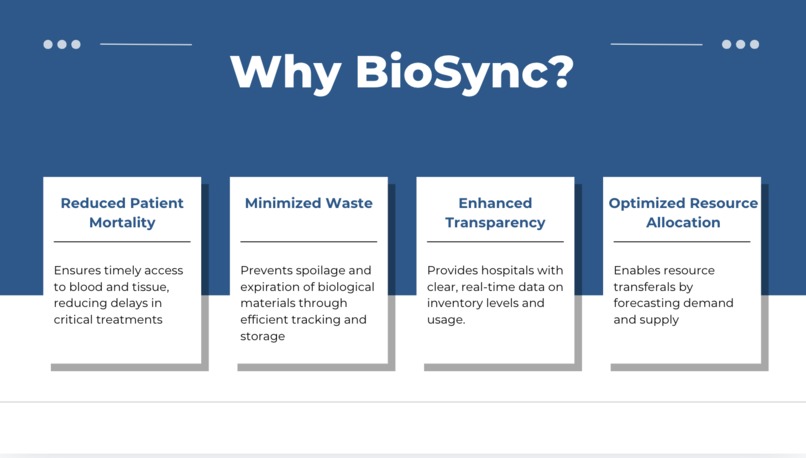
Why BioSnyk? Read some of our features here
-
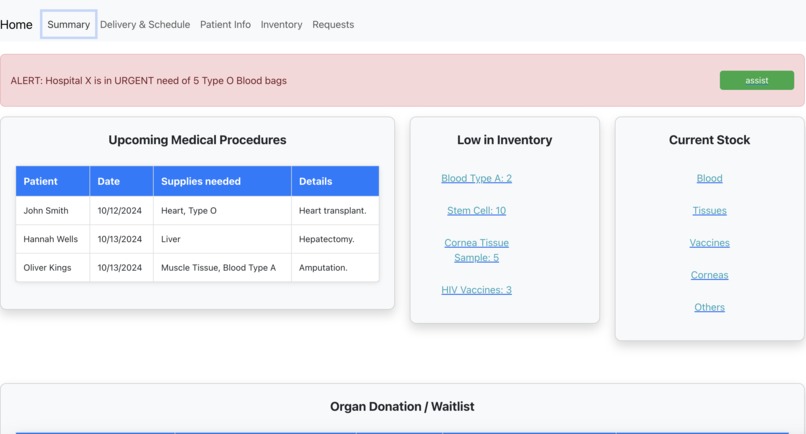
Website Summary page
-
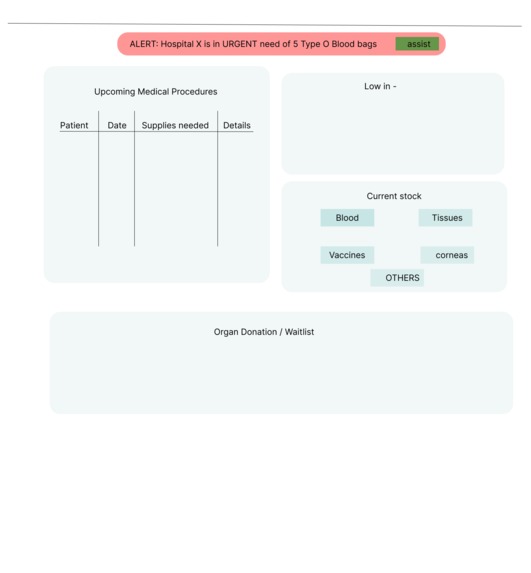
Our earliest prototype work!
-
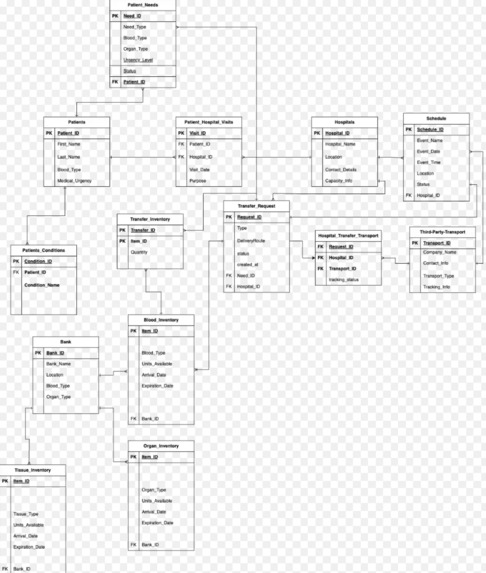
Our database design thought process


Inspiration and What It Does
"Every two seconds, someone in the U.S. needs blood or platelets" (Red Cross). In emergencies—like the devastation caused by hurricanes such as Helene and Harvey—the demand for biological materials like blood, tissues, and organs spikes, making their availability critical for saving lives amid severe injuries and high mortality rates. However, hospitals face a significant challenge: limited real-time visibility into their inventories and the absence of an efficient system for connecting with other hospitals to receive resources when needed. Many hospitals still rely on manual inventory counts to maintain accuracy, which often leads to delays in resource allocation, inefficient distribution, and shortages—compromising their ability to provide immediate care during emergencies. For instance, during Hurricane Katrina (2005), national and regional blood donations were mobilized for victims in impacted areas, but hospitals faced immense logistical challenges in coordinating and distributing these life-saving materials effectively.
To address these issues, we have developed BioSync—a biological material inventory tracking system that continuously monitors inventory levels and identifies nearby hospitals with available stock. BioSync enables the efficient sharing of critical resources through its auto-scheduling feature, ensuring that life-saving materials are delivered asap to where they are needed most, enhancing the quality of care during emergencies.
Our solution revolves around the use of RFID tags and sensors. We plan to tag biological materials with RFID tags as they are logged into the system, along with detailed information such as type, product, deficiencies, and other relevant data. When the RFID tags are scanned, the products are added to the database, which is reflected in the inventory tracker.
When a person removes a product from the premises, a sensor will capture the RFID and automatically remove its data from the inventory. Additionally, if the inventory level drops below a specified threshold or there are insufficient materials for the next surgery, the system will automatically send a request to nearby hospitals with available stock. Conversely, hospitals can also view incoming non-urgent requests and approve inventory transactions as needed.
To receive materials, the system will schedule a delivery time based on the availability of drivers and coolers, creating a seamless process across the supply chain. This ensures that hospitals receive the necessary resources in a timely manner.
How we built it
We began by identifying the problem, validating it through research, and understanding the needs of the users. From there, we researched existing solutions and devised our approach by addressing the shortcomings we identified in those solutions.
To start the building phase, we prototyped the UI using Figma and mapped out our database design using an ER diagram. For the UI development, we used HTML, React, Bootstrap, APIs, CSS, and JavaScript within Visual Studio Code. To collaborate efficiently, we used a shared repository where each team member worked on individual UI pages in their own branch and then merged them after completion.
For the backend, we designed our database in MySQL and integrated it with the frontend system using Gradle and JavaScript extensions. Additionally, we utilized ChatGPT as a learning tool to help us address unfamiliar challenges we encountered during coding.
Challenges we ran into
As beginners in the software development industry, we encountered many challenges due to our limited knowledge in areas such as database management, frontend and backend integration, programming languages, and API integration. To overcome some of the obstacles, we sought guidance from mentors and collaborated with nearby groups for support. Additionally, we used search engines and AI to find solutions while continuing to learn throughout the process.
Accomplishments that we're proud of
~ Gaining knowledge about database structures, associative entities, technical terms, and ER diagrams. ~ Implementing tables and integrating APIs. ~ Attempted to integrate backend and frontend systems. ~ Improving frontend development skills using React and Bootstrap. ~ Network and met amazing people
What we learned
~ Despite building a functional user interface, not all programming languages are compatible with each other, which required a minor switch in language. ~ Collaboration with peers and clear communication of goals and outcomes leads to a successful team. ~ Don’t be afraid to step up and take the lead in areas where you may be unfamiliar. ~ Gaining technical knowledge and hands-on experience is invaluable.
What's next for BioSync
~ Incorporating RFID and sensors into the project. ~ Integrating more useful APIs to create a more functional product. ~ Experimenting with an alternative database. ~ Improving the User Interface (UI) and User Experience (UX) on the website. ~ Enhancing frontend and backend integration.
Built With
- api
- bootstrap
- css
- design
- er-diagram
- figma
- google-cloud-console
- html
- intellij-idea
- javascript
- mysql
- qrcode
- react
- red-hat
- sql
- vs-code


Log in or sign up for Devpost to join the conversation.