-
-
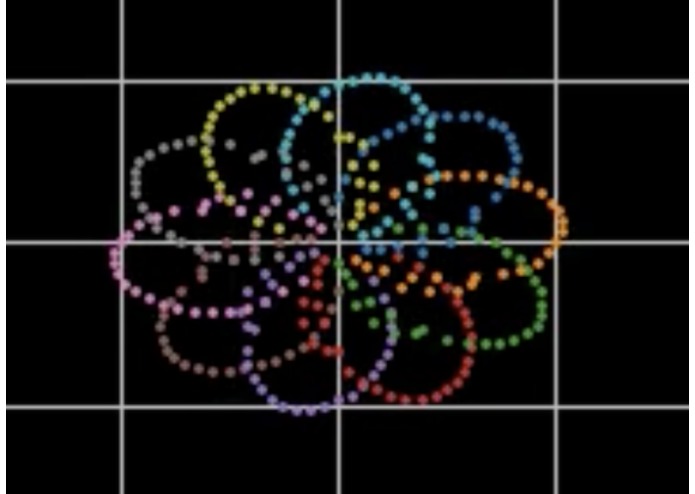
Stable state
-
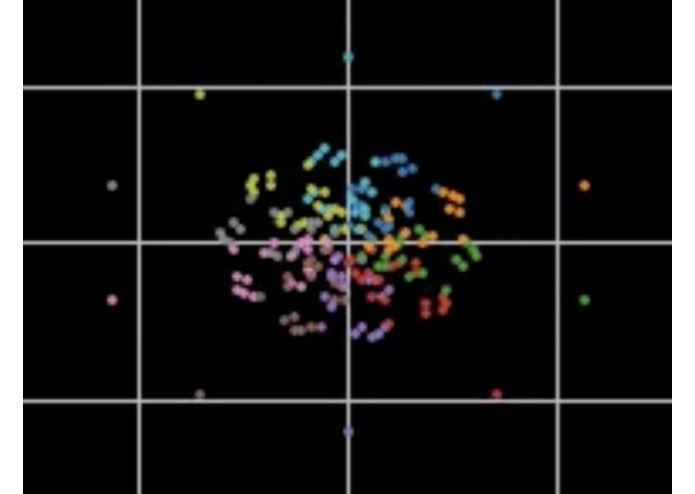
Unstable, ejecting matter


Inspiration
- Idea is to extend the concept of a liquid droplet radiator https://en.wikipedia.org/wiki/Liquid_droplet_radiator to astronomical scales where it self gravitates, to answer the question of how big can you make a radiator.
- Limiting factor for many systems, including performing massive amounts of computations in one place, is heat dissipation. In particular, radiators work less effectively at colder temperatures, so this project seeks to determine the mass and size of a radiator that would be effective operating near the temperature of the cosmic microwave background radiation.
How the project works
For a given radius, results for power and mass flux can be determined analytically, but results for total mass and maximum velocity require a step simulation, which we implemented in python.
Simulations' timescales vary wildly, so we performed recursive experiments to automatically determine the best time step size for given conditions.
What we learned
- Lots of astrophysics and thermodynamics.
- Solids have poor heat capacity at cryogenic temperatures unless they are superconducting
Results:
A disk structure is unstable and will eject matter. Spherical structures are stable.
It is possible to build very large radiators that operate at cryogenic temperatures. This suggests that current surveys for the waste heat of extraterrestrial civilizations should search in the submillimeter wavelengths instead of only infrared.
Material: Water
Power, mass flux, mass and velocity for initial radii from 1e11 through 1e17 for water. For larger initial radii, velocity approaches the speed of light. Specific heat capacity of water is 4181.3 J/(kg*K) at temperature 323K. Temperature change from 373K-273K was assumed.
Radius | Power | Mass Flux | Mass | Velocity
1.00E+11 | 3.88E+25 | 9.27E+19 | 1.02E+28 | -4.56E+03
1.00E+12 | 3.88E+27 | 9.27E+21 | 2.37E+30 | -2.09E+04
1.00E+13 | 3.88E+29 | 9.27E+23 | 4.66E+32 | -9.97E+04
1.00E+14 | 3.88E+31 | 9.27E+25 | 1.02E+35 | -4.56E+05
1.00E+15 | 3.88E+33 | 9.27E+27 | 2.37E+37 | -2.09E+06
1.00E+16 | 3.88E+35 | 9.27E+29 | 4.66E+39 | -9.97E+06
1.00E+17 | 3.88E+37 | 9.27E+31 | 1.02E+42 | -4.81E+07
Power, mass flux, mass and velocity for initial radii from 1e11 through 1e19 for superconducting lead. Specific heat capacity of water is 297 J/(kg*K) at temperature 6K. Temperature change from 9K-3K was assumed.
Material: Superconducting Cryogenic Lead
Radius | Power | Mass Flux | Mass | Velocity
1.00E+11 | 4.62E+18 | 2.59E+15 | 9.27E+24 | -1.38E+02
1.00E+12 | 4.62E+20 | 2.59E+17 | 2.03E+27 | -6.64E+02
1.00E+13 | 4.62E+22 | 2.59E+19 | 4.48E+29 | -3.05E+03
1.00E+14 | 4.62E+24 | 2.59E+21 | 9.27E+31 | -1.38E+04
1.00E+15 | 4.62E+26 | 2.59E+23 | 2.01E+34 | -6.77E+04
1.00E+16 | 4.62E+28 | 2.59E+25 | 4.48E+36 | -3.05E+05
1.00E+17 | 4.62E+30 | 2.59E+27 | 9.27E+38 | -1.38E+06
1.00E+18 | 4.62E+32 | 2.59E+29 | 2.01E+41 | -6.77E+06
1.00E+19 | 4.62E+34 | 2.59E+31 | 4.48E+43 | -3.05E+07
Power, mass flux, mass and velocity for initial radii from 1e11 through 1e17 for beryllium. For larger initial radii, velocity approaches the speed of light. Specific heat capacity of water is 1820 J/(kg*K) at temperature 298K. Temperature change from 373K-273K was assumed.
Material: Beryllium
Radius | Power | Mass Flux | Mass | Velocity
1.00E+11 | 2.81E+25 | 1.54E+20 | 1.44E+28 | -5.42E+03
1.00E+12 | 2.81E+27 | 1.54E+22 | 3.20E+30 | -2.71E+04
1.00E+13 | 2.81E+29 | 1.54E+24 | 6.54E+32 | -1.13E+05
1.00E+14 | 2.81E+31 | 1.54E+26 | 1.44E+35 | -5.42E+05
1.00E+15 | 2.81E+33 | 1.54E+28 | 3.20E+37 | -2.71E+06
1.00E+16 | 2.81E+35 | 1.54E+30 | 6.56E+39 | -1.15E+07
1.00E+17 | 2.81E+37 | 1.54E+32 | 1.44E+42 | -5.42E+07


Log in or sign up for Devpost to join the conversation.