-
-
1 - Title
-
5 - Dashboard
-
4 - Financial Profile Development Cont.
-
3 - Financial Profile Development
-
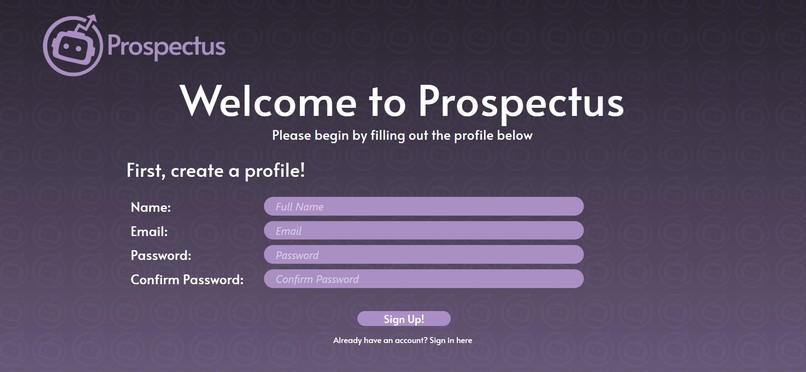
2 - Sign Up / Log In


Inspiration
As a team of current or newly graduated university students, we are all fairly new to adulthood and managing our finances. Factoring in tuition, independent living, and other costs that we may not be familiar with, it’s easy and common to fall into a pattern of debt. Spending isn't the only reason - what money we do have, either collects dust in a bank account without return or is spent on things we may not intend to spend on. As we grow up unfamiliar with saving, investing, and growing our assets, we may never fall into a pattern of financial sustainability. Thus, our team decided to improve financial sustainability, by offering easily accessible support and encouraging learning about investments to support and sustain individual lifestyles without succumbing to a life of debt.
What it does
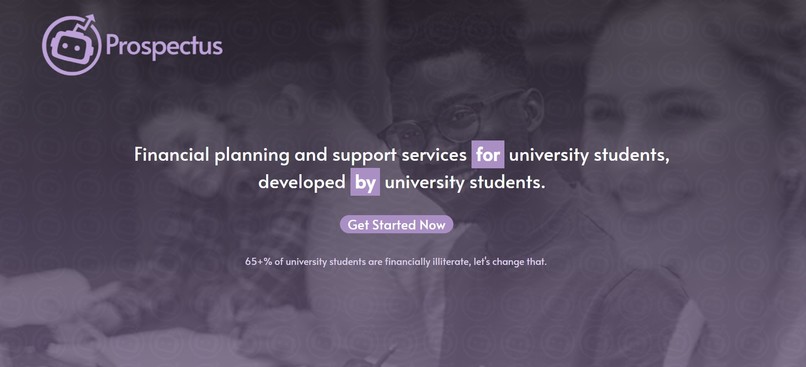
Prospectus provides all of the tools university students need to achieve financial literacy, providing them with minimally invasive and easily accessible financial advice and resources.
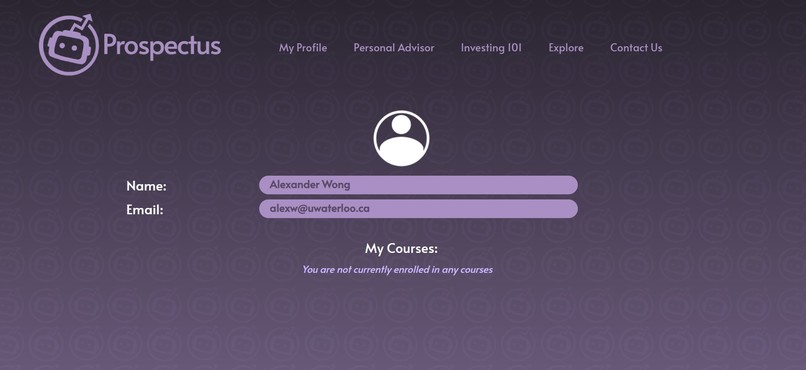
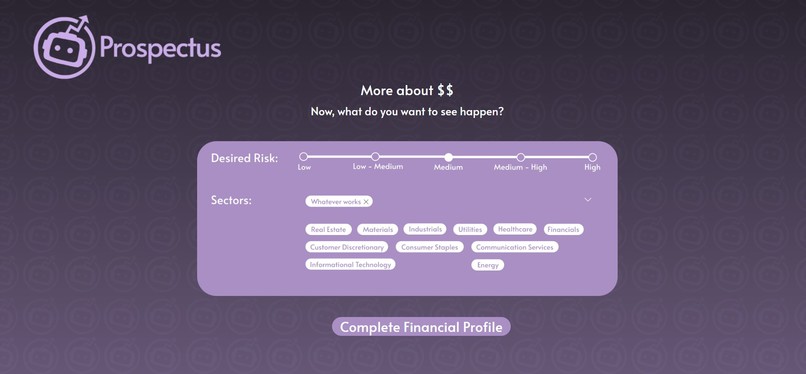
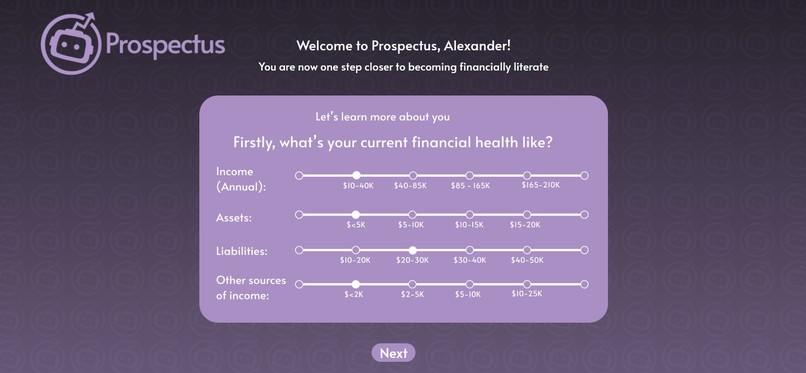
Users begin by creating and setting up a financial profile including information about their contact, current financial health, and financial interests. We take several factors into account, including their income, assets, risk preference, etc. This helps generate a basic identity that our website can then use to match with ideal investments and plans of action for the individual. In addition, we extended our robo-advisor to advocate for financial literacy, including resources offered to beginner-level investors with different interests (i.e. putting away money, returns, etc.)
How we built it
A dataset was randomly generated with possible values that users could input for each field specified in the questionnaire. This data would be labeled with suggestions by financial experts and then used to train a machine learning model. The trained machine learning model would use the data collected from the questionnaire to predict what a financial expert would say. By using AI, we would be able to reduce the cost associated with receiving financial advice. The frontend of the web app was built using HTML, CSS, and JavaScript. We first designed the app using Figma, then building it in HTML and CSS.
Challenges we ran into
Without real-time data, building the UI was a bit arbitrary, which we mitigated by imagining the user flow and using design thinking to build a user experience that would debunk any intimidation surrounding investment in uni students!
Accomplishments that we're proud of
- Creating a plan and executing as much of it as possible within a 24 hour time span
- Strengthening frontend web development skills by working under pressure
- Addressing financial sustainability, targeted to the upcoming generation
What we learned
User-centric design thinking is the key to approaching any consumer-based problem. With a human-first approach, it’s easier to empathize with the demographic and create features that we, personally, would want to see implemented in some accessible resources.
What's next for Prospectus
With access to professional and reliable financial data, we may be able to create some regression models and predict trends in stocks that are more student-friendly. We can leverage our models to ensure that students can make short-term but revenue gain-focused investments in reliable stocks. In addition, we can incorporate courses and resources targeted to improve financial literacy in the student community, with opportunities for learning and awareness at every level so to create a next generation of financially sustainable individuals.


Log in or sign up for Devpost to join the conversation.