-
-
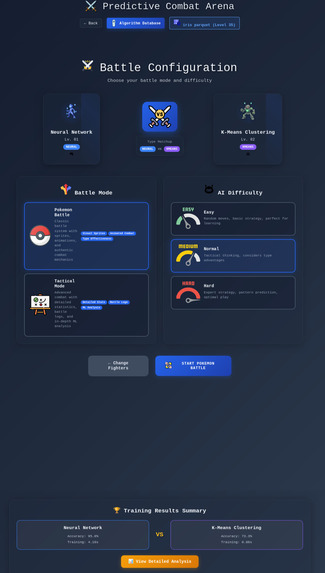
Battle configuration
-
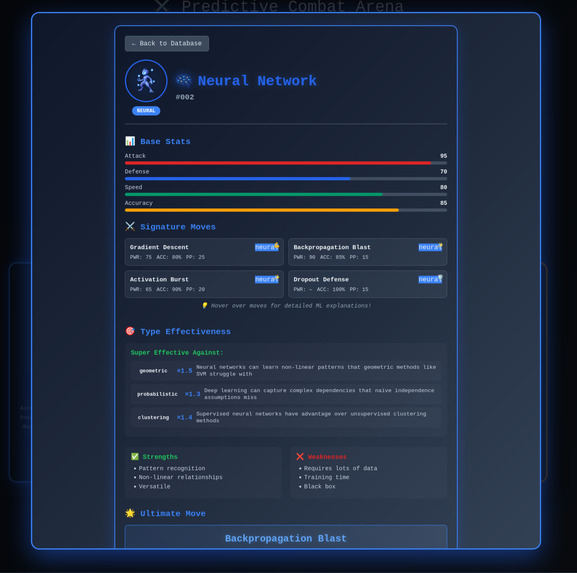
Pokedex card
-
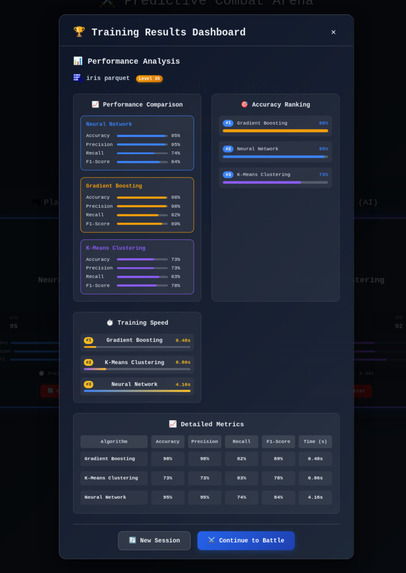
Performance analysis
-
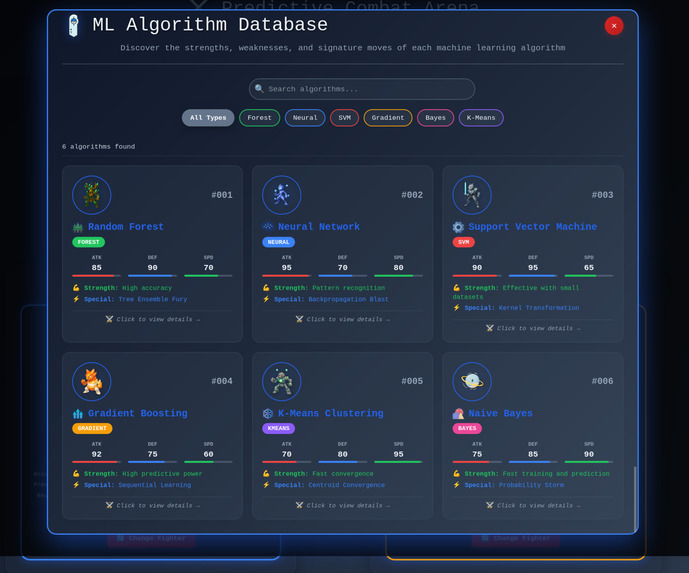
Pokedex
-
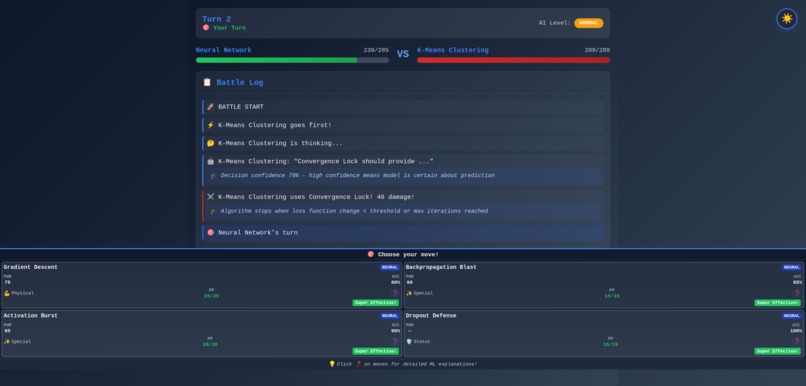
Tactical battle gamemode
-
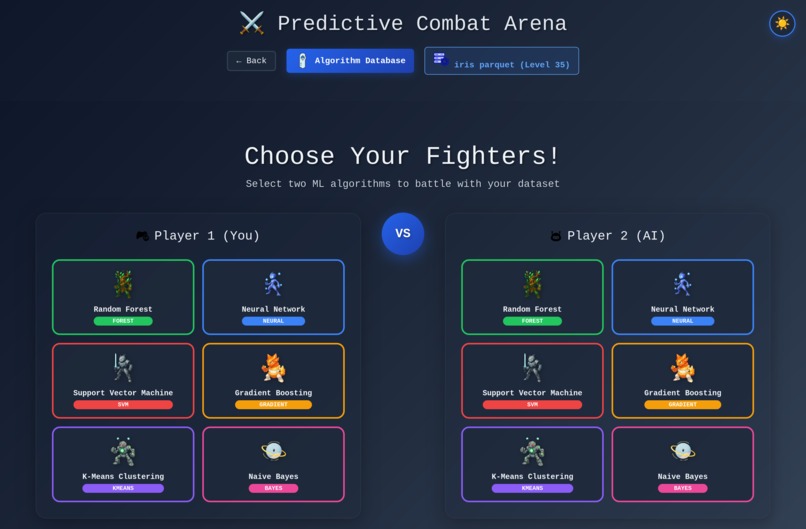
Main page
-
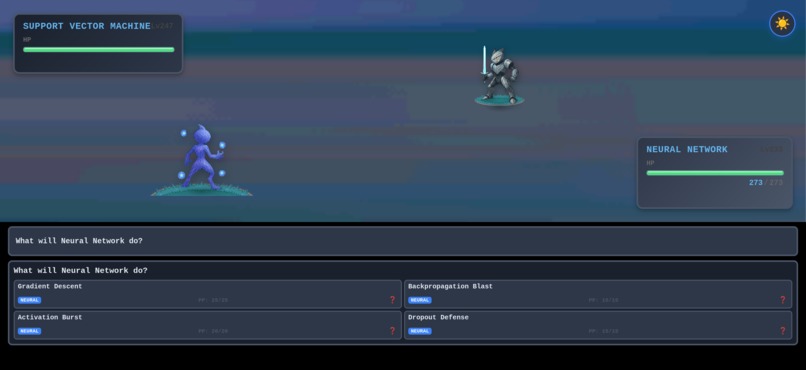
Pokemon battle gamemode
-
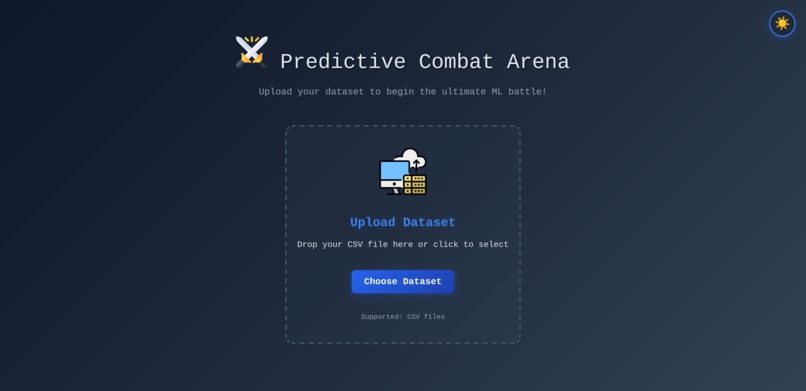
Dataset upload


Inspiration
Machine learning and Artificial Intelligence can seem overwhelming, with concepts like gradient descent sounding too complicated or being presented in ways that don't engage audiences.
We decided to create something completely original: a combat system where machine learning algorithms battle each other using real performance data. The Pokemon-style extension came later when a soundtrack played during our 3 AM development session, inspiring us to add the familiar gaming aesthetics to make the concept even more engaging.
What it does
Predictive Combat Arena transforms machine learning algorithms into fighters that battle using real performance data from your uploaded datasets.
Upload a CSV file and watch six different algorithms train on your data using real scikit-learn running directly in the browser. Each algorithm becomes a custom-designed character with unique sprites, movesets, and combat stats derived from actual performance metrics like accuracy, precision, and recall.
Select two algorithms to battle in a comprehensive Pokemon interface with health bars, type advantages, and special moves (attaques/boosts) representing real ML concepts like "Bootstrap Assault" for Random Forest or "Kernel Trick" for Support Vector Machines. The application features two battle modes: Pokemon-style combat for engaging battles and tactical mode focused on educational algorithm understanding.
The application features a complete Pokedex for exploring algorithms, real-time training visualization, and comprehensive analytics dashboards with D3.js charts showing performance comparisons and interactive data exploration.
How we built it
Built with SvelteKit and TypeScript, the core innovation was integrating Pyodide to run scikit-learn directly in the browser, enabling real machine learning training without servers.
We created custom sprites for each algorithm using DALL-E for initial generation, then refined and pixelized them using specialized Pokemon-style tools. Custom icons, sound effects inspired by Mario, Street Fighter, and Pokemon, and comprehensive audio systems create an immersive experience.
Data visualization uses D3.js for professional-grade charts including radar comparisons and interactive dashboards. Gemini API provides intelligent dataset analysis while all performance metrics come exclusively from real scikit-learn training.
Challenges we ran into
Coordinating development across time zones from India to Europe required careful asynchronous collaboration. The complex backend architecture presented the main technical challenge, though our maintainable codebase made working with hundreds of lines of code manageable.
Getting Pyodide and scikit-learn working smoothly in browsers required significant optimization to achieve acceptable loading times.
Maintaining consistency across the type system, algorithm colors, and combat mechanics across 15+ components while preserving educational authenticity required careful architectural planning.
Accomplishments that we're proud of
We created the world's first browser-based machine learning combat system, implementing a completely original concept. Running full scikit-learn algorithms client-side while maintaining smooth user experience represents a significant innovation in educational technology.
We completed a polished, fully functional product within 48 hours, including custom sprite creation, comprehensive audio design, advanced data visualizations, and seamless Pokemon-style interface. The application handles real machine learning training with authentic metrics while making complex concepts accessible through gaming mechanics.
Custom visual assets including algorithm sprites, icons, and audio effects create an immersive experience that captures Pokemon nostalgia while serving genuine educational purposes.
What we learned
Rohan gained his first experience with Svelte and discovered the framework's powerful reactive capabilities. We developed effective communication strategies for distributed teams working across 8+ hour time differences.
We learned to integrate audio feedback for interactions as an additional layer of polish. Browser-based machine learning using Pyodide opened new possibilities for client-side data science applications.
The project reinforced that combining education with entertainment requires maintaining authenticity while creating engaging experiences.
What's next for Predictive Combat Arena
Expanding the algorithm roster with XGBoost, LightGBM, and deep learning models would increase educational breadth. Advanced customization including hyperparameter tuning, tournament brackets, and custom battle modes would provide deeper learning opportunities.
Platform evolution could include multiplayer capabilities, community features with leaderboards, and integration with data science platforms like Kaggle. Educational expansion includes structured curriculum development for universities and corporate training modules.
Long-term vision includes academic partnerships, presence at major data science conferences, and enterprise training solutions for organizations seeking to improve technical literacy.





Log in or sign up for Devpost to join the conversation.