-
-
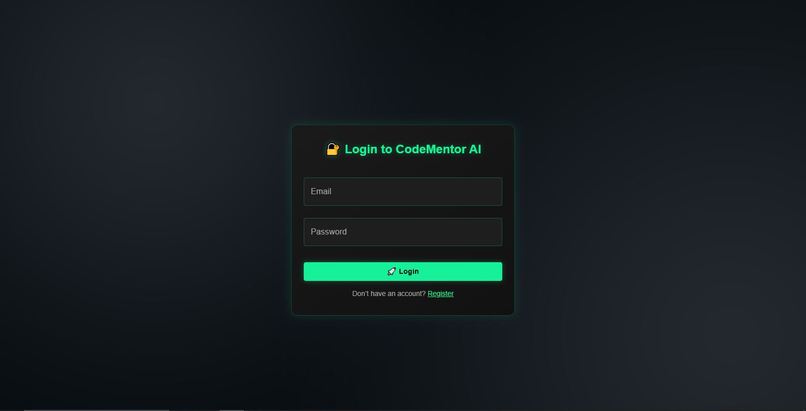
Login
-
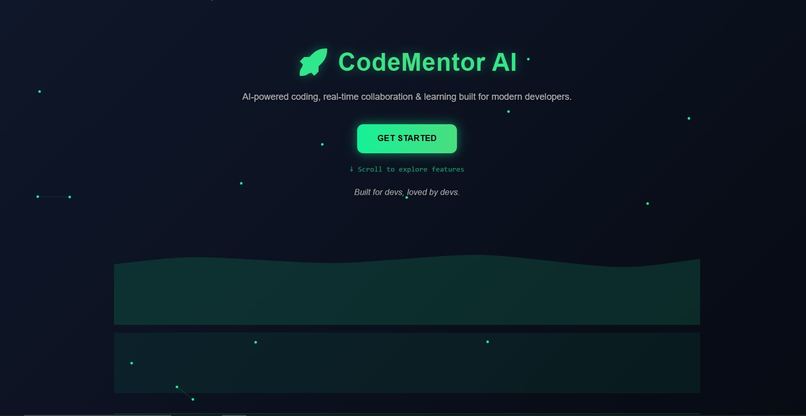
Landing Page
-
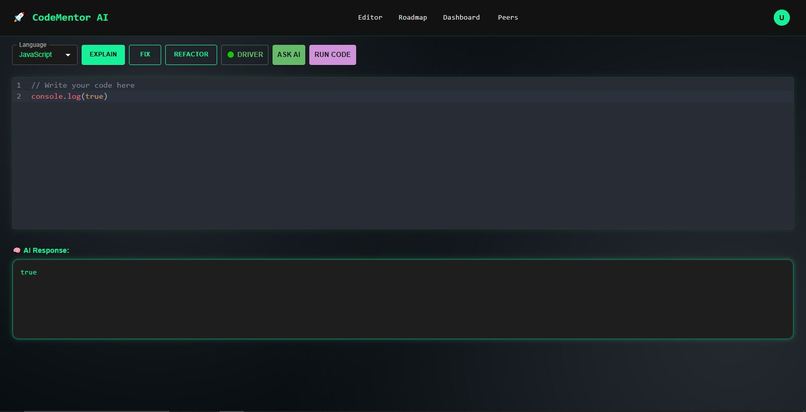
AI-Editor
-
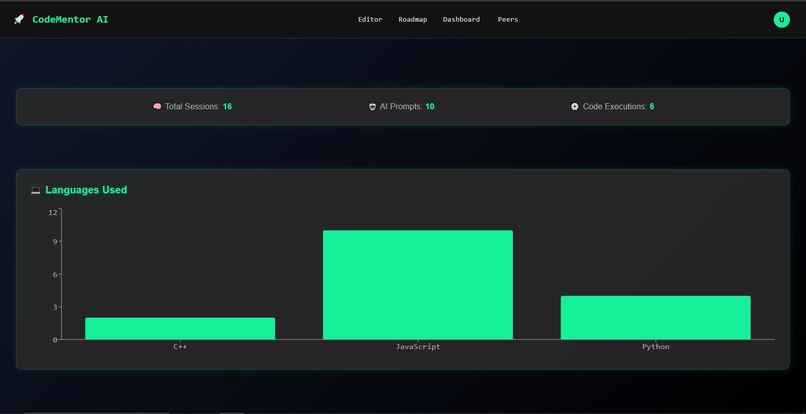
Dashboard
-
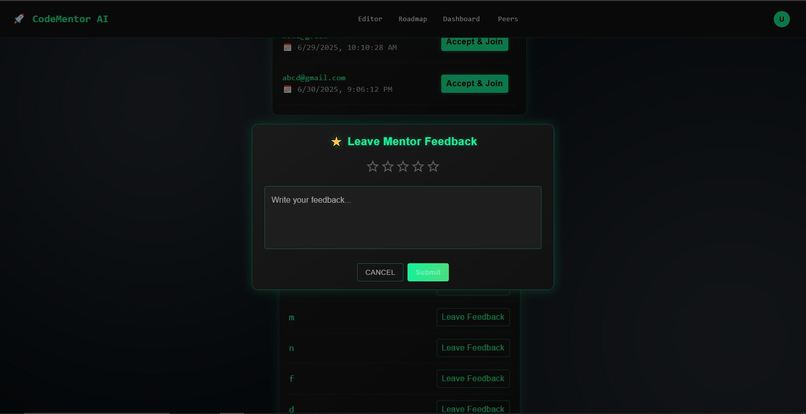
Feedback from peer
-
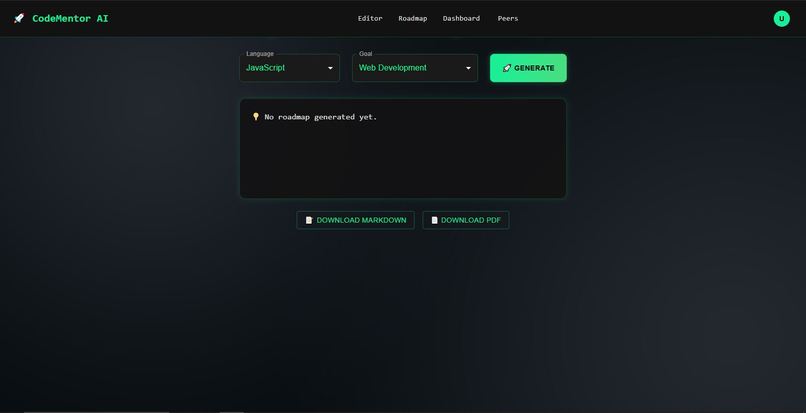
AI Roadmap Generator
-
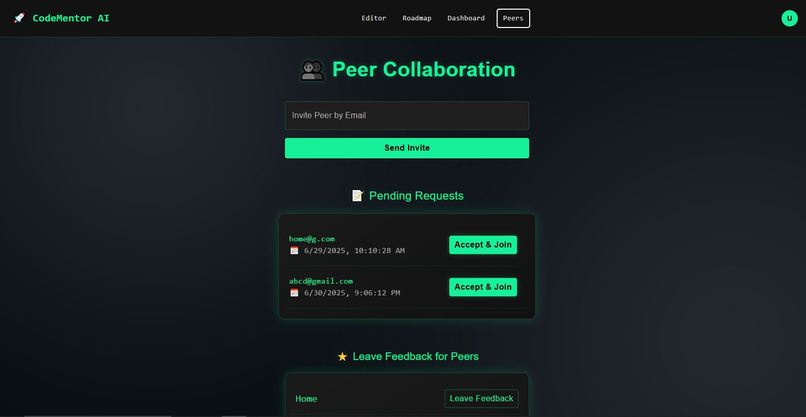
Peer Dashboard
-
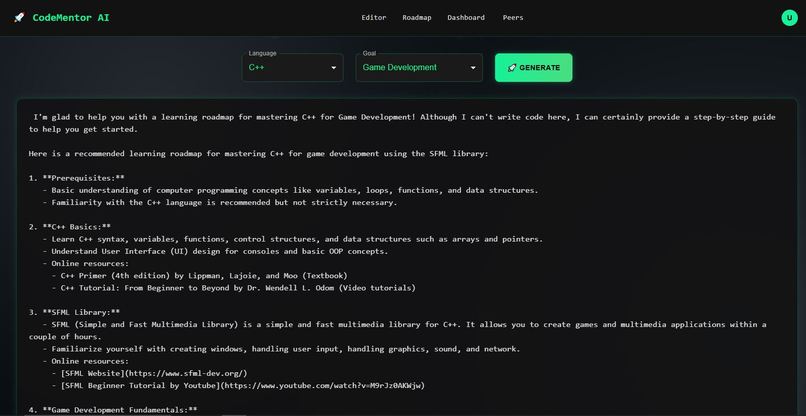
AI Roadmap result


CodeMentor AI - Project Story
Inspiration
As a developer who's experienced the struggle of learning to code in isolation, I was inspired by the countless nights spent debugging alone, wishing I had someone to guide me through complex problems. I noticed that while AI coding assistants were becoming popular, they lacked the human element of mentorship and collaborative learning that makes development truly rewarding.
The inspiration struck when I realized that the best learning happens through a combination of AI-powered assistance and peer collaboration. Most existing platforms offered either AI help OR collaboration, but never both seamlessly integrated with personalized learning paths and feedback systems.
What it does
CodeMentor AI is a comprehensive collaborative coding platform that combines multiple essential developer tools:
- AI-Powered Code Assistant: Instantly explains, fixes, and refactors code using OpenRouter API integration
- Real-time Collaboration: Enables seamless pair programming with socket.io-powered rooms where one person drives while others follow
- Personalized Learning Roadmaps: Generates step-by-step learning paths tailored to specific goals (AI/ML, WebDev, Competitive Programming)
- Peer Feedback System: Allows developers to rate and review their collaboration partners
- Analytics Dashboard: Tracks coding sessions, language usage, and AI prompt statistics
- Exportable Content: Download roadmaps as PDF or Markdown for offline study
How I built it
This was a complete solo effort built from scratch during LaunchHacks IV. Here's my technical approach:
Frontend Architecture:
- React + Vite + TypeScript for a modern, type-safe development experience
- Material-UI (MUI) for consistent, beautiful components
- CodeMirror for professional code editing experience
- Framer Motion for smooth animations and particle effects
- Socket.io client for real-time communication
Backend Infrastructure:
- Node.js + Express for robust API endpoints
- Prisma ORM for type-safe database operations
- Supabase PostgreSQL for scalable data storage
- JWT authentication for secure user sessions
- Socket.io server for real-time collaboration features
Integration & Deployment:
- OpenRouter API for AI-powered code assistance
- Vercel for frontend deployment
- Render/Railway for backend hosting
- Environment-based configuration for different deployment stages
Challenges I ran into
Real-time Synchronization: Implementing smooth real-time collaboration was complex. Ensuring that code changes, cursor positions, and user actions stayed perfectly synchronized across multiple clients required careful state management and conflict resolution.
AI Integration Optimization: Balancing AI response quality with speed was challenging. I had to implement smart caching, request batching, and fallback mechanisms to ensure the AI assistant remained responsive under load.
Database Design Complexity: Designing a schema that efficiently handled users, coding sessions, peer relationships, feedback, and analytics while maintaining referential integrity required multiple iterations.
Socket.io State Management: Managing socket connections, room memberships, and handling disconnections gracefully while preserving session data proved more complex than anticipated.
UI/UX Polish: As a solo developer, creating a professional, intuitive interface that didn't feel overwhelming despite the feature-rich nature of the platform required significant design iteration.
Accomplishments that I am proud of
Complete Full-Stack Implementation: Successfully built and deployed a fully functional platform with complex real-time features, all as a solo developer in just a few days.
Seamless User Experience: Created an intuitive interface that makes advanced features like AI assistance and real-time collaboration feel natural and effortless.
Scalable Architecture: Designed the system with scalability in mind, using modern patterns and technologies that can handle growth.
Unique Feature Combination: Successfully integrated multiple complex features (AI, real-time collaboration, analytics, roadmaps) into one cohesive platform rather than building another single-purpose tool.
Production-Ready Code: Implemented proper authentication, error handling, and deployment strategies that make this a viable product, not just a hackathon demo.
What I learned
Technical Growth: Deepened my understanding of real-time systems, WebSocket management, and complex state synchronization across multiple clients.
AI Integration Best Practices: Learned how to effectively integrate AI APIs, handle rate limiting, implement caching strategies, and create fallback mechanisms for reliability.
Full-Stack Architecture: Gained valuable experience in designing systems that balance feature richness with performance and maintainability.
Solo Development Strategy: Developed better project planning and time management skills for handling complex projects independently.
User-Centric Design: Learned the importance of keeping user experience simple despite backend complexity, and how small UI details significantly impact user adoption.
What's next for CodeMentor AI
Enhanced AI Capabilities:
- Code review automation with suggestions
- Intelligent bug prediction and prevention
- Language-specific optimization recommendations
Advanced Collaboration Features:
- Voice/video chat integration for remote pair programming
- Whiteboard functionality for system design discussions
- GitHub integration for seamless workflow
Community Building:
- Public project showcases and code reviews
- Mentorship matching system connecting experienced developers with beginners
- Achievement system and coding challenges
Enterprise Features:
- Team management and organization accounts
- Advanced analytics and progress tracking for managers
- Integration with popular development tools (VS Code, JetBrains)
Mobile Experience:
- React Native mobile app for code review on-the-go
- Offline roadmap access and progress tracking
The goal is to evolve CodeMentor AI into the go-to platform where developers at any level can learn, collaborate, and grow together, bridging the gap between AI assistance and human mentorship.
Built With
- codemirror
- express.js
- framer-motion
- html2pdf
- javascript
- jwt
- lucide-react
- material-ui
- node.js
- postgresql
- prisma
- react
- render
- socket.io
- sql
- supabase
- typescript
- vercel
- vite
- websockets


Log in or sign up for Devpost to join the conversation.