-
Hovering system expansion
-
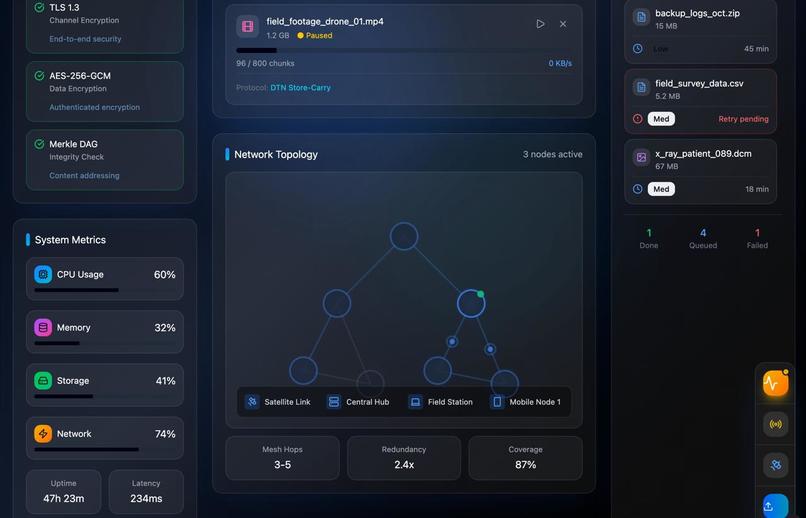
status info
-
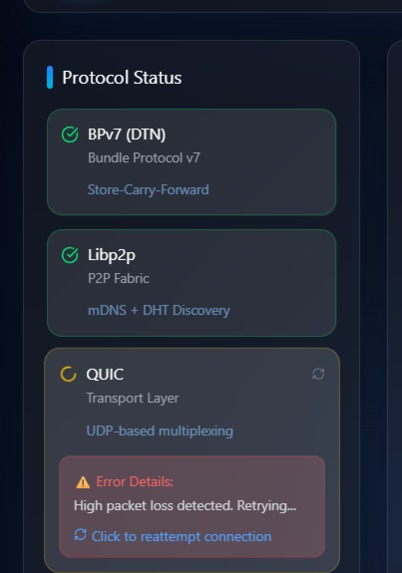
Status Report
-
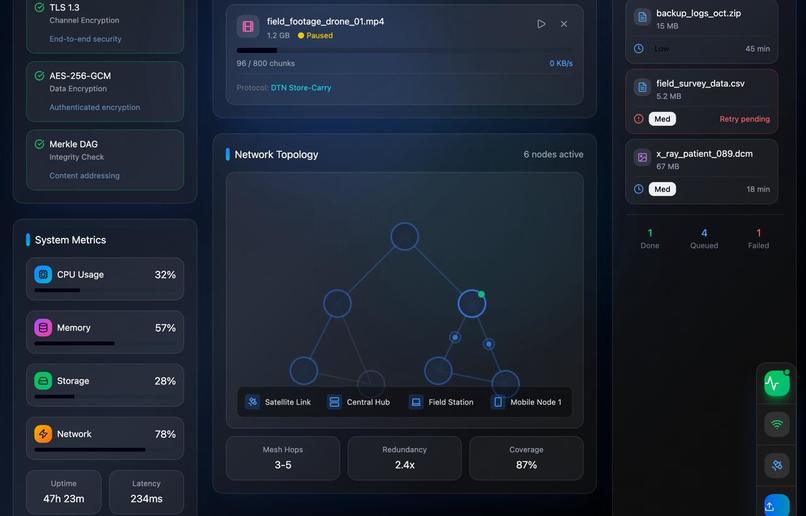
Main transfer page
-
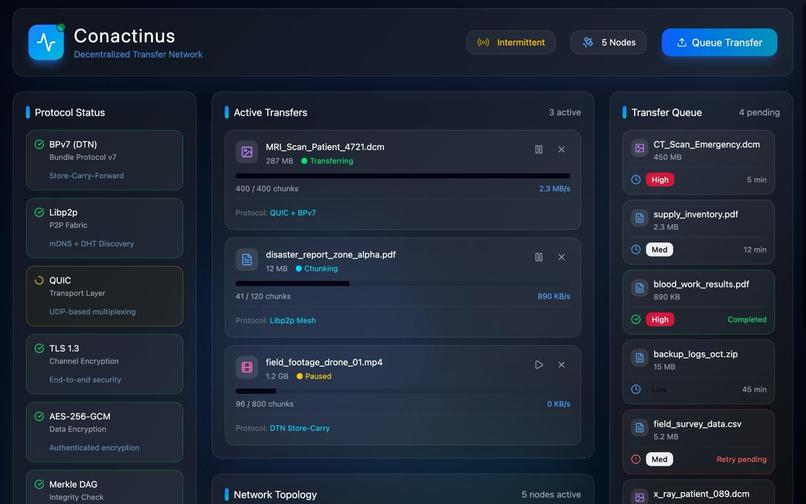
Intermittent connection check
-
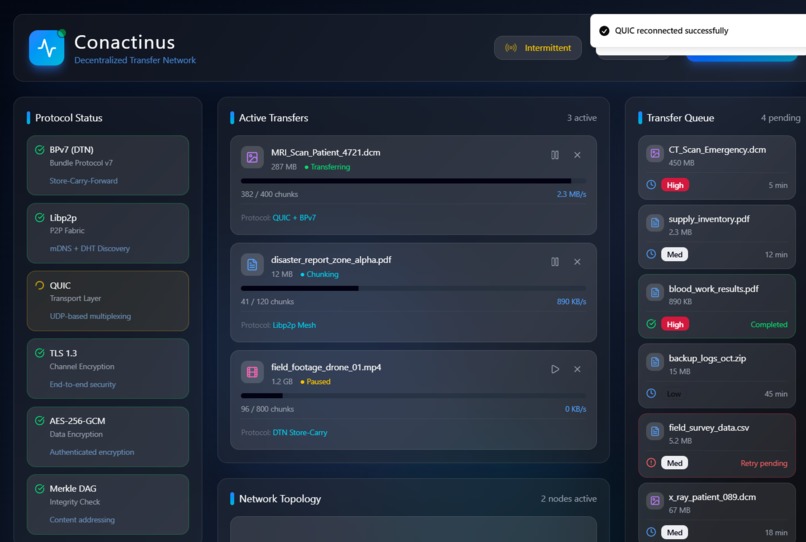
Protocol Reconnect
-
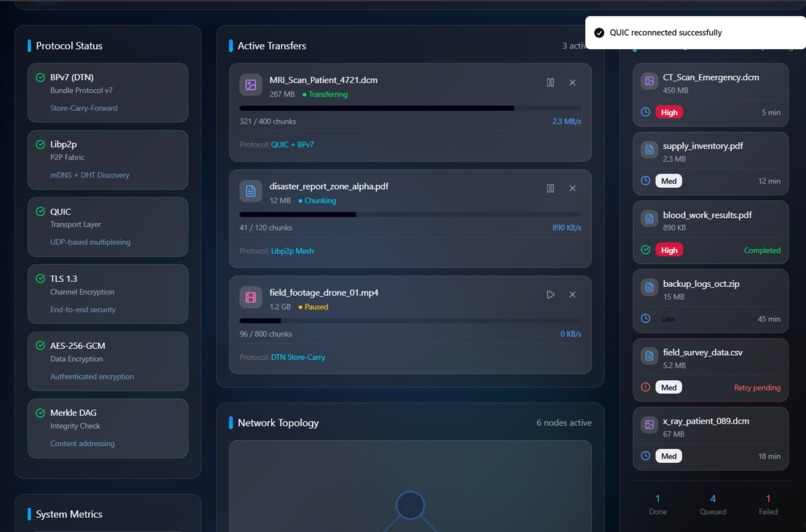
All systems go
-
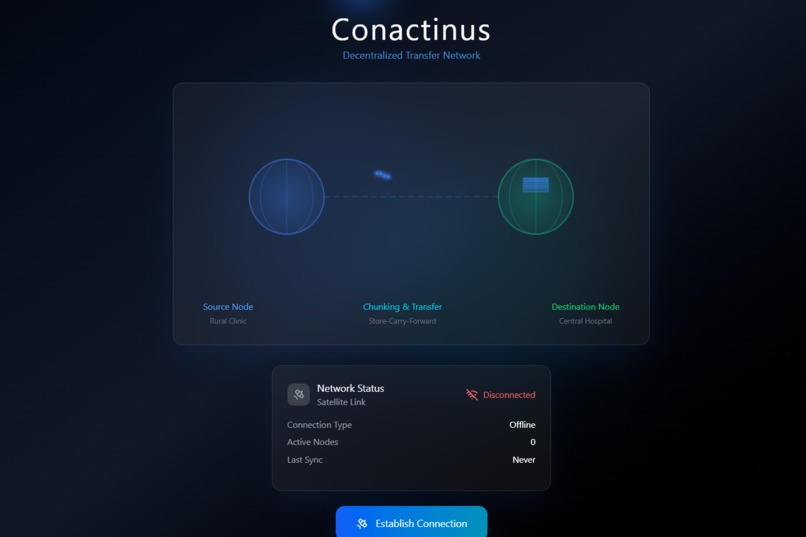
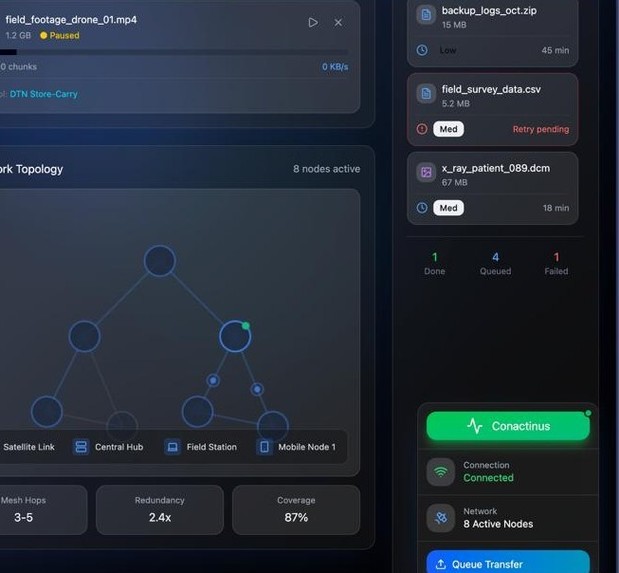
Home page


Inspiration Modern systems assume uninterrupted internet, but rural healthcare and disaster zones expose this as a dangerous fiction. Clinicians often cannot send large diagnostic files like MRIs due to poor bandwidth, delaying treatment. Disaster responders face total communication collapse, creating isolated “information silos.” Conactinus was built to treat failure as the norm, not the exception.
What It Does
Conactinus is a decentralized, “fire-and-forget” file transfer system designed for extreme conditions. Instead of requiring stable connections, it guarantees eventual delivery by exploiting every connectivity opportunity—satellite bursts, local Wi-Fi, or “data mules” like trucks and drones.
• Healthcare Use Case: A rural doctor can queue a 300 MB MRI scan and shut down her computer. Conactinus automatically sends chunks whenever connectivity appears, even via a passing supply truck.
• Disaster Response: Devices form instant ad-hoc mesh networks using Bluetooth/Wi-Fi Direct. Critical files propagate locally, and later, a helicopter node forwards them to central command when a satellite link is restored.
Architecture Conactinus uses a layered approach: • DTN Overlay (BPv7): Store-Carry-Forward bundles with custody guarantees. • P2P Fabric (Libp2p): Peer discovery via mDNS and DHT; encrypted channels using TLS 1.3 or Noise. • Transport (QUIC): Handles mobility and packet loss without stalling. • Data Handling: Adaptive chunking, AES-256-GCM encryption, Merkle DAG integrity.
Challenges & Solutions • State Sync: Avoiding metadata floods solved with gossip-based Bloom filters. • Security vs Performance: Hardware crypto acceleration and policy-based profiles. • NAT Traversal: STUN, hole punching, and encrypted TURN relays for hard cases.
Key Achievements • Delivered 100 MB over a simulated worst-case satellite link (high latency, 50% packet loss). • Seamless transfer across Wi-Fi to cellular using QUIC migration. • Instant ad-hoc networking in zero-coverage zones within five seconds.
Lessons Learned • Design for disconnection, not stability. • Modular composition beats monolithic design. • Trust must be cryptographically guaranteed—end-to-end encryption is non-negotiable.
Roadmap • Short-Term: Implement BPSec, CGR routing, power-aware scheduling. • Mid-Term: Cross-platform apps with drag-and-drop workflows; plugin architecture for data transformation. • Long-Term: Public testnet, federation protocol for NGOs, hardware integration into rugged devices.


Log in or sign up for Devpost to join the conversation.