-
-

Logo
-
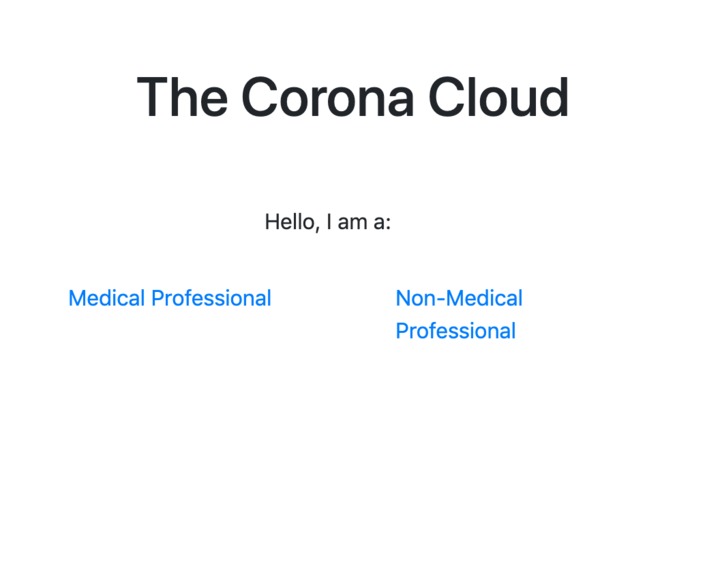
Homepage
-
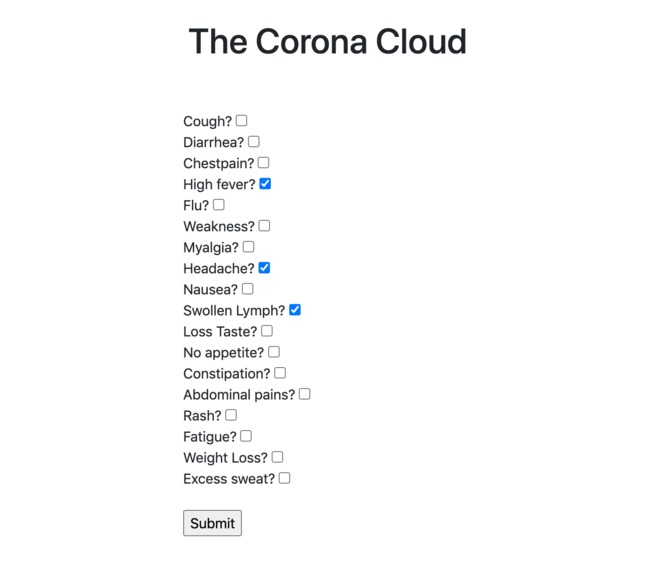
Medical Professional view: Check the list of symptoms
-
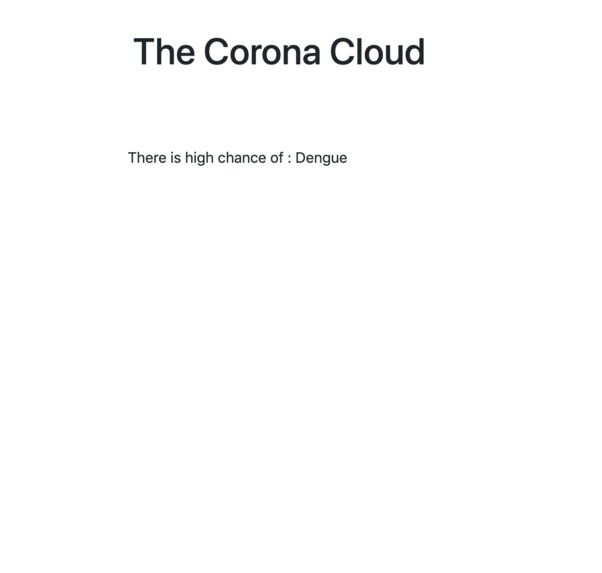
medical professional view: result returned
-
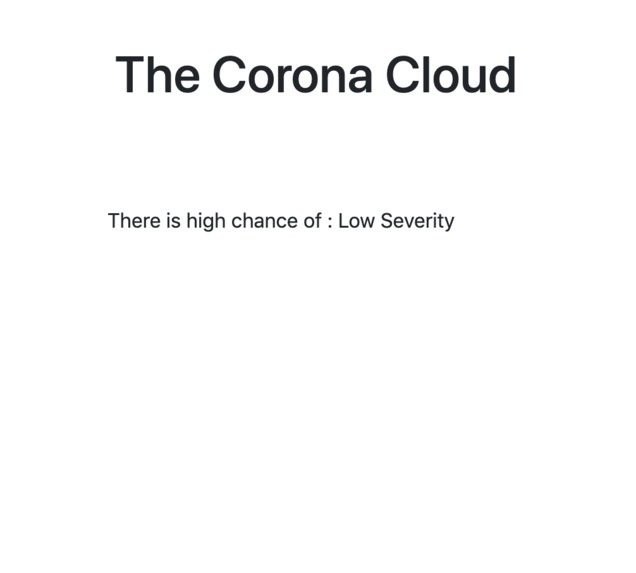
non-medical professional view: result returned
-
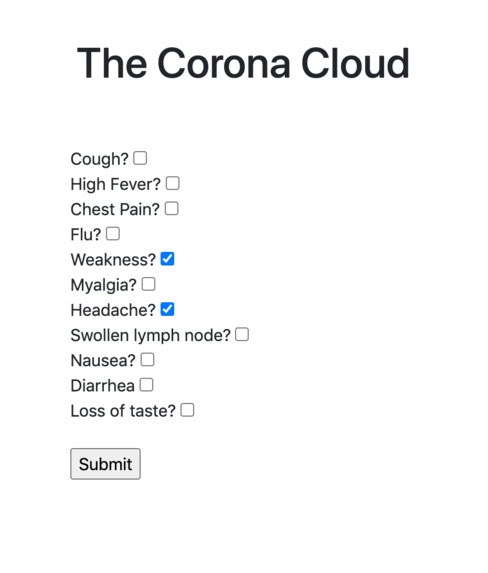
non-medical professional view: check list of covid symptoms


Inspiration
Indonesia is currently facing a battle against coronavirus. But even before the pandemic, Indonesia has long struggled with diseases like tuberculosis and dengue fever, especially in impoverished areas. The variation and overlap in symptoms make diagnosis challenging. But unlike the two, coronavirus is highly contagious. The cost to care for a patient infected with the coronavirus is high. We are aware that many hospitals lack access to PPE and testing material. We want to help health care workers, regions that are impoverished, and especially hard hit and improve the health care system in general. Our first goal is by helping health care workers make faster decisions.
What it does
Our final project is a website that serves both parts.
In the first part, we want to help healthcare works make faster decisions by analyzing a patient's symptoms. We built a machine learning algorithm that assigns a score of the likelihood a patient has coronavirus, dengue, or tuberculosis. All the healthcare worker needs to do is to select the list of symptoms. This will hopefully help healthcare workers detect coronavirus quickly and allocate testing effectively. Helping them make decisions faster and allocate resources properly (especially in hospitals that are lacking PPE, testing) is crucial during a period like this.
In the second part, we want to help people who are showcasing from coronavirus symptoms to decide whether they should self-isolate or go to the hospital. Due to the gravity of the disease, if everyone showing even the mildest symptoms went to the hospital, hospitals would be overwhelmed. We built another algorithm that gives probability to the severity of a coronavirus case. The person using our site needs to enter their list of symptoms. If the person returns a high likelihood of low severity, then the patient will be recommended to self-isolate instead of visiting a hospital. We also included a basic graphic of the 7 day average of coronavirus cases in six provinces to help people understand how the cases are progressing. We realize after looking at the official Indonesian government website that a lot of the numbers were presented poorly and give a false impression that the cases are not progressing (In other countries' news sources, they use a seven-day average as an indicator of how the pandemic is progressing).
How I built it
Frontend: Used Flask and Bootstrap to build the basic structure of the website Data: For the visualization for the province, we scraped the official Indonesian government website. For the symptoms, we found data on Google, consulted with a medical student in Indonesia on how to read and interpret the numbers. Since we couldn't find a complete data set, we used sampling to create a data set of an imaginary 1500 people infected with either coronavirus, dengue, or tuberculosis. We did the sampling using the percentages and symptoms check we found and consulted with. Afterward, we used log regression and k-means to test and train the models. Plotly: Scraped the Indonesian government website and produced visualization in plotly.
Challenges I ran into
Data: A lot of the data especially in relation to Indonesian diseases are incomplete, even from the official government website. As a result, we consulted with a medical student to help make sense of the data we had before we started sampling and creating a simulation of cases. Frontend: It was the first time for us to create a front end project. We faced challenges at first but we are proud of what we've achieved!
Accomplishments that I'm proud of
We feel the idea, given access to high-quality data, will be especially helpful during a time like this. This is also easily applicable. But overall, we are proud of our final product.
What I learned
We learned how to be resourceful given limited resources (such as lack of data). We learned how to manage a project since this project had a long list of technical tasks we had to undertake. We also learned that because of the high number of dengue and tuberculosis cases in Indonesia, the fight against coronavirus in Indonesia is much harder than in other countries.


Log in or sign up for Devpost to join the conversation.