-
-
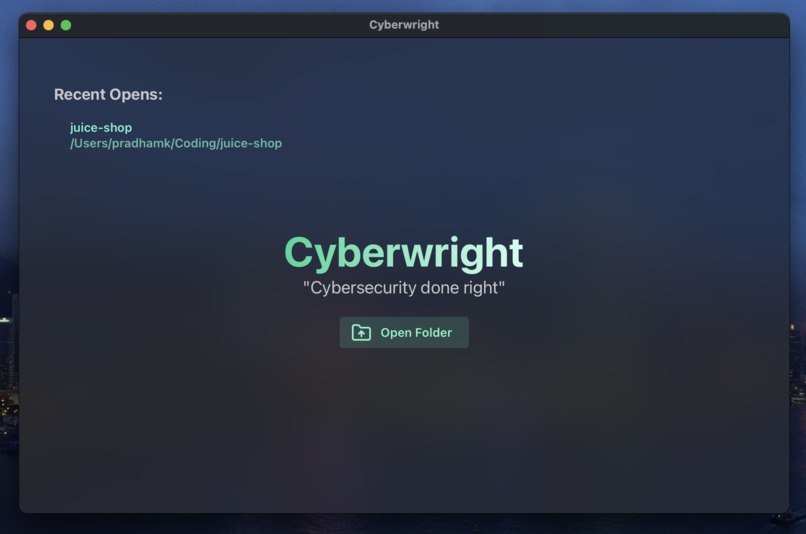
Landing page
-
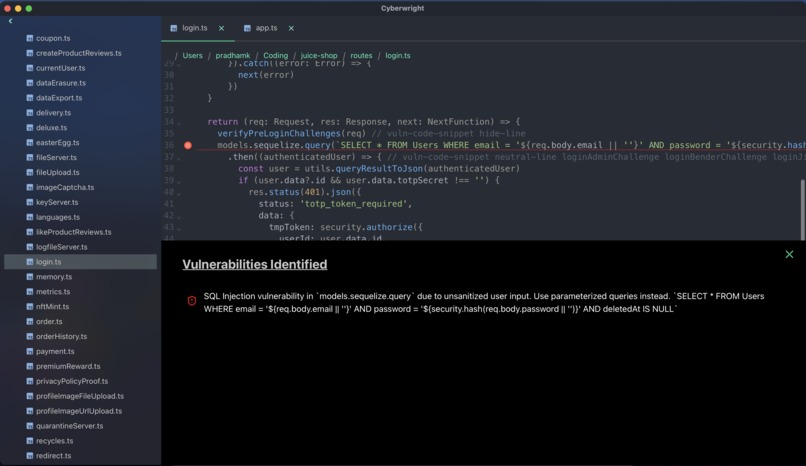
View page


Inspiration
Cyberwright was inspired by the lack of efficient, cheap ways for developers to check for vulnerabilities in their code. For most, identifying bugs in their code before hackers do is a costly endeavor that increases production time and is incredibly confusing.
What it does
Cyberwright leverages Llama 3.1 to analyze developer's code, find relevant bugs, categorize them based on severity, provide a synopsis, and suggest remediation techniques. We allow developers to open their project directory and go through files and dependencies to systematically identify and fix bugs.
How we built it
Our main platform is a desktop app built using Tauri which has a Next.js frontend and a Rust backend. We combined Tauri with a variety of React packages like Mantine and Lucide to maximize the functionality of our front end.
Challenges we ran into
Rust and React are both hard. Combining our frontend UI with our backend rust code that handled all of the API calls was difficult. We also ran into plenty of challenges getting CSS to work as intended.
Accomplishments that we're proud of
We created a professional front-end reminiscent of VS code from scratch, adding in details like breadcrumbs, file explorer nesting, syntax highlighting, and file I/O. We combined those tried and true features with our custom backend that leverages AI to identify bugs. We're very proud of the frontend UI/UX and how we combined it with our Rust backend to create a unique full-stack application.
What we learned
We learned a lot about different vendors like Intel and how to leverage their capabilities to tackle modern problems. The project also helped us brush up on our React, Tailwind, and Rust experience.
What's next for Cyberwright
We hope to continue further training our model to help improve it's capabilities in identifying bugs. We're also working towards making a server plugin that integrates with company's in-production code to dynamically identify and prevent attacks like DDOSes.


Log in or sign up for Devpost to join the conversation.