-
-
Logotipo
-
Protótipo da app


Inspiration
The inspiration for Da Terra came from the urgent need to reduce food waste and promote a sustainable circular economy. In a world where tons of food are discarded daily, we believe that creating a platform where people can buy and sell their surplus produce can have a significant environmental and social impact. We aim to revive the essence of community sharing, support small farmers, and encourage more conscious and healthy consumption.
What it does
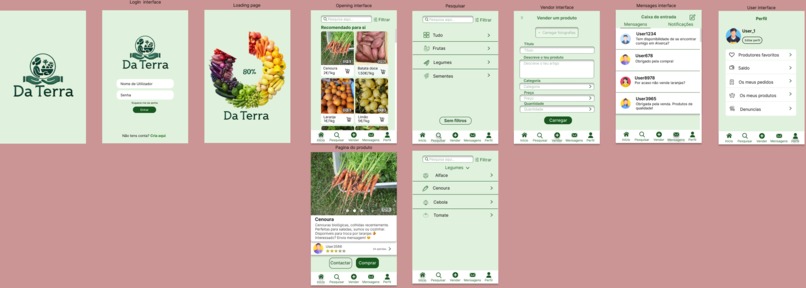
Da Terra is a digital platform that facilitates the sharing, trading, and selling of surplus fruits and vegetables. It allows individuals with home gardens or small farmers to list their products and connect with interested consumers. Additionally, it promotes a sustainable circular economy by reducing food waste and strengthening the local organic market.
Key Features: Geolocation to find nearby produce. Trade, sell, or donate surplus fruits and vegetables. User review system to build trust within the community. Gamification system to encourage sustainability practices.
How we built it
We are developing Da Terra using: Frontend: Planned to be built with Flutter for compatibility with iOS and Android. Backend: Using Node.js and Express, with Firebase as the database. Geolocation: Integrated with Google Maps API to display available produce nearby. Authentication: Implemented with Firebase Authentication for secure user login. Cloud Storage: Used to store images and product details.
The platform is being designed with a user-friendly and responsive interface to ensure accessibility for all users.
Challenges we ran into
One of the key challenges in developing Da Terra is ensuring product quality, which is why we plan to implement a rating and review system. This will allow users to provide feedback on their transactions, encouraging fair practices and trust within the community. Another crucial aspect is user engagement—to motivate people to actively trade or sell their surplus, we aim to introduce incentives such as gamification, badges, or rewards for sustainable practices. Beyond engagement, logistics and delivery present a significant challenge, as users may need assistance in transporting their products. We are exploring potential collaborations with local delivery services to facilitate seamless exchanges. Additionally, we recognize the importance of food safety regulations and are researching compliance requirements to ensure that transactions align with legal standards while mitigating potential risks. By addressing these challenges, we aim to build a reliable, engaging, and legally compliant platform that fosters sustainability and community-driven food sharing
Accomplishments that we're proud of
We are proud to be developing a scalable solution that can be implemented in multiple communities, ensuring widespread impact. By creating a fully functional platform, we are demonstrating the feasibility of our concept and proving that food-sharing can be both practical and sustainable. Our project is designed to promote sustainable consumption and support small farmers, contributing to a positive environmental and social impact. Additionally, we are focused on designing an intuitive and accessible interface that guarantees a seamless user experience, making it easy for anyone to participate and benefit from the platform
What we learned
While shaping Da Terra, we realized that community engagement is key—trust and interaction will define the platform’s success. We also learned the importance of scalable technologies, ensuring a smooth and efficient experience as the platform grows. Exploring legal and regulatory considerations highlighted the need for clear guidelines on food safety and liability. Additionally, we saw how supporting local economies can empower small farmers by providing a direct channel for selling or trading surplus produce. Above all, we learned that Da Terra is more than a marketplace—it’s a movement to reconnect people, food, and sustainability.
What's next for Da terra
As we move forward, our focus is on building and launching Da Terra, starting with an MVP to test core functionalities. We plan to gather user feedback, refine the platform, and establish partnerships with local markets, small farmers, and sustainability-focused organizations. We aim to integrate a logistics system to facilitate deliveries, enhance geolocation features, and explore gamification to boost user engagement. Expanding beyond local communities, our goal is to scale Da Terra nationally and, eventually, internationally, promoting a sustainable and circular food economy. The next steps will be crucial in turning our vision into reality, ensuring Da Terra becomes a powerful tool for reducing food waste, supporting local growers, and fostering a strong community.
Built With
- android-studio
- api
- could
- dart
- docker
- firebase
- flutter
- github
- javascript
- maps
- node.js


Log in or sign up for Devpost to join the conversation.