-
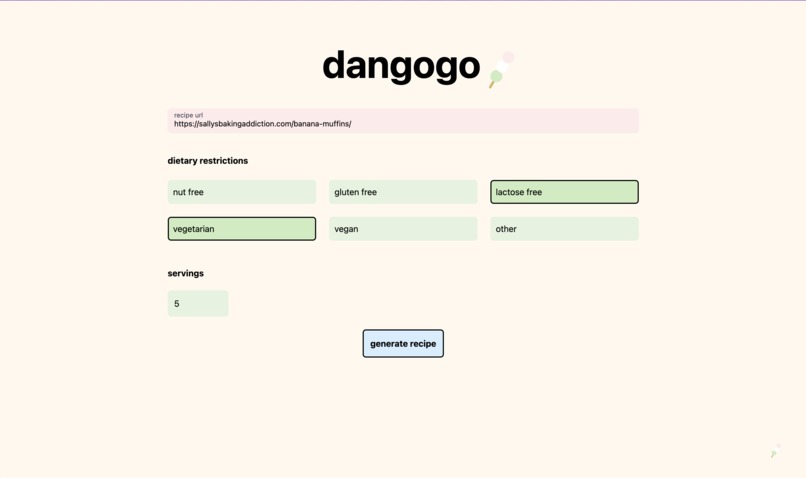
Homepage
-

Loading Screen
-
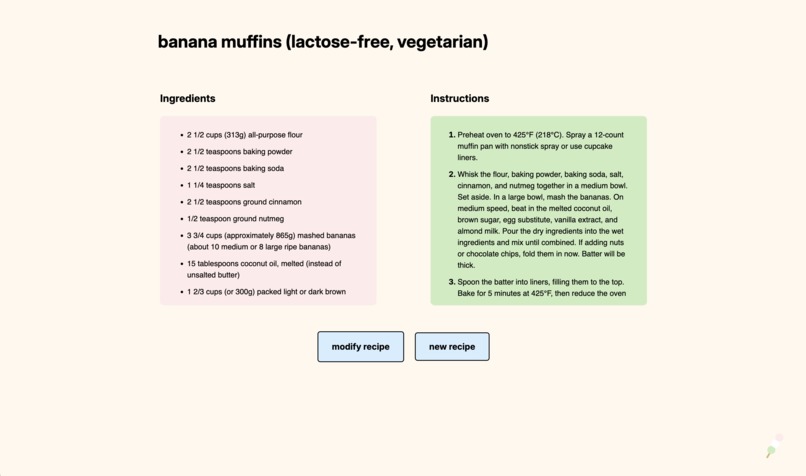
Simplified, Customized Recipe
-
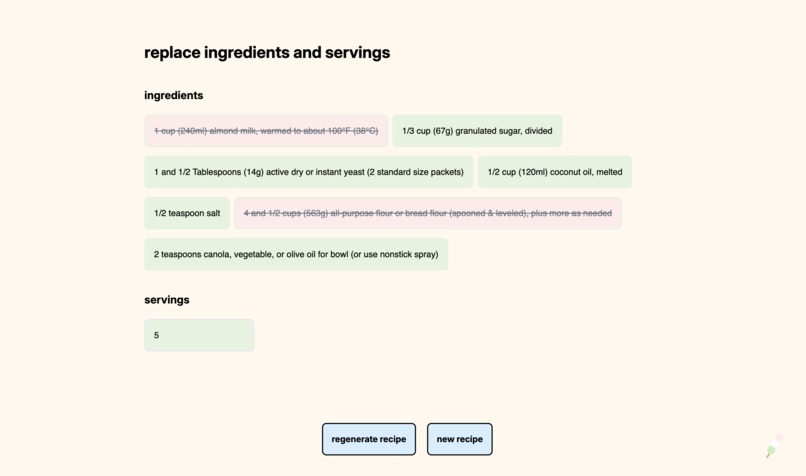
Switch out Ingredients


Inspiration
Our project was inspired by our experiences as people who rely on online recipes to cook. Every time we search for a recipe on Google, we find ourselves scrolling through long blog posts filled with the writer’s personal life stories and numerous ads before finally reaching the recipe. We wanted a solution that offers a straightforward, step-by-step recipe customized to our preferences. Specifically, we wanted to create a tool that allows us to take a recipe, customize ingredients and adjust measurements to fit our desired serving size, creating a recipe that’s as close as possible to what we need.
What it does
Dangogo provides a simple and intuitive user interface where users can input the URL of a recipe blog/webpage, specify the number of servings they need, and indicate any food restrictions. The app parses the recipe webpage to extract the relevant information, then adjusts ingredient measurements and makes substitutions to adhere to the user’s dietary needs. It also generates clear, step-by-step cooking instructions. With our application, users no longer need to read through lengthy blog posts or search for ingredient substitutions, instead, Dangogo allows users to get exactly the recipe they need in a concise, customized format.
How we built it
We built our project with a front-end developed using HTML, CSS, JavaScript, and Tailwind. On the back-end, we used Python's Flask framework. For parsing recipe blogs and web pages, we used python’s Beautiful Soup library to extract and properly format ingredients and instructions. We also used OpenAI’s API to calculate updated ingredient measurements based on the user’s inputted serving size and make appropriate substitutions for users with specified food restrictions.
Challenges we ran into
One of the biggest challenges we faced was coming up with an idea. We wanted to create something unique that was also practical and useful. It took time and effort to think of an idea that we, along with others, could benefit from in everyday life.
Accomplishments that we're proud of
We think our front-end is really pretty! Go pastel colors! We’re also proud of the fact that we were able to complete a full-stack project within the hackathon time constraint.
What we learned
Through this hackathon, we improved our familiarity with full-stack development. Also, for some of our teammates, it was their first time working with Flask for back-end development and Tailwind for styling the front-end. This experience expanded our technical skills and gave us practice in building a complete web application.
What's next for dangogo
The next steps for Dangogo includes a login system connected to a database, allowing users to save and revisit all of their customized recipes. Additionally, we want to improve the accuracy of our recipe adjustments by refining our prompt engineering, ensuring that ingredient substitutions and measurements create a new recipe that stays as true as possible to the original.


Log in or sign up for Devpost to join the conversation.