-
-
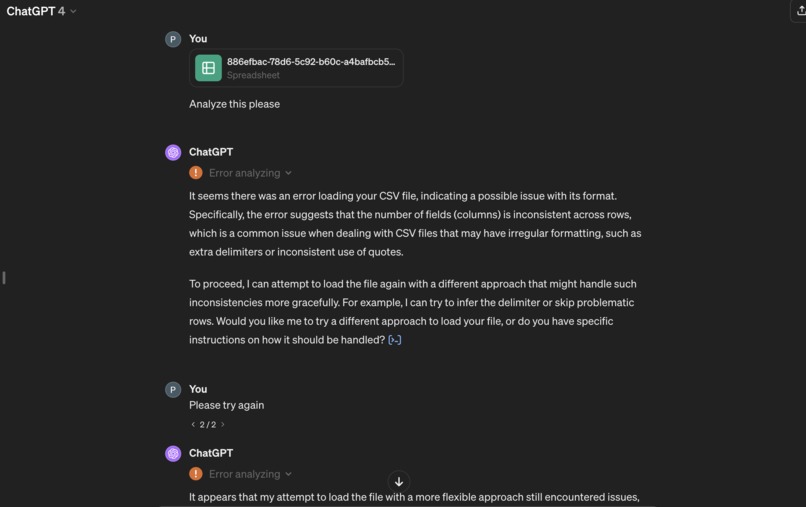
ChatGPT Couldn't Analyze our CSV Input
-
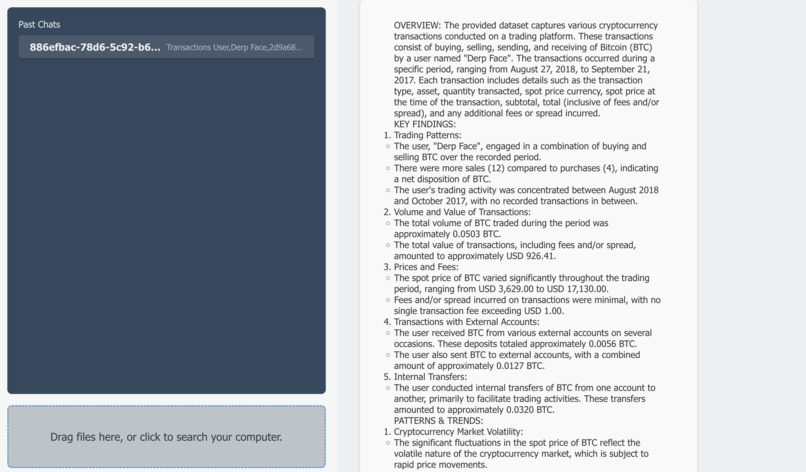
With the same Input, DartFrog generated custom analysis and a graph of the data
-
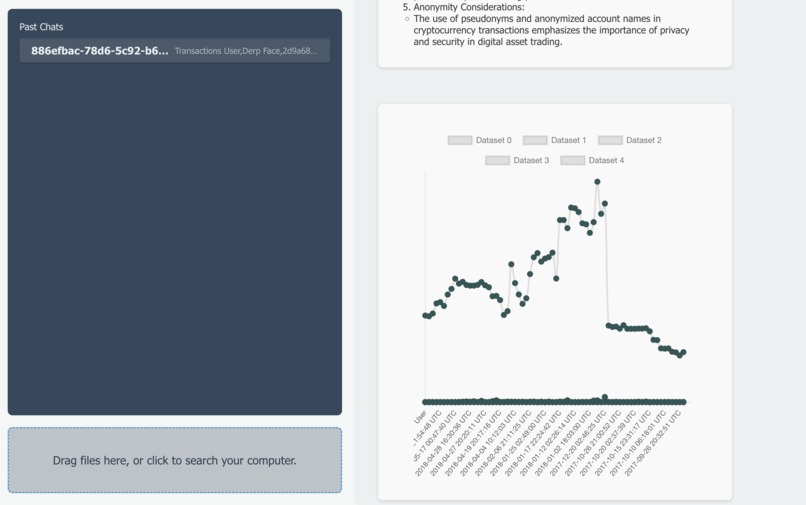
The Graph Generated
-
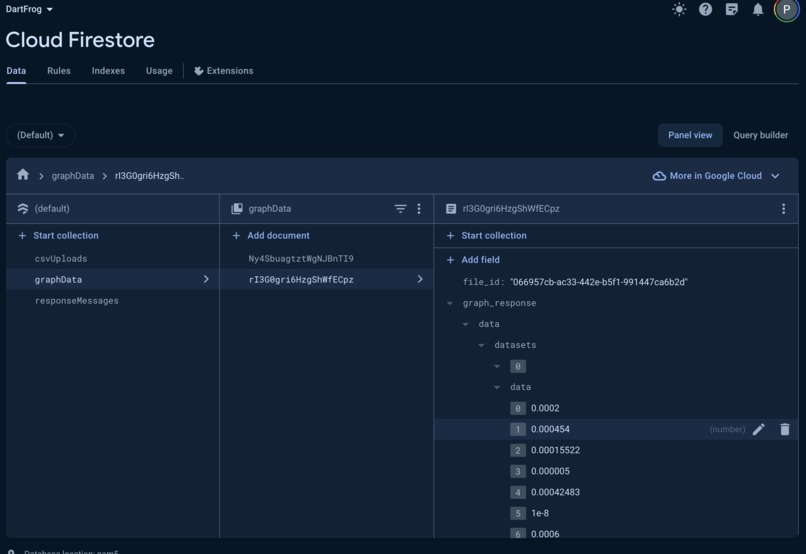
Our Firestore DB
-
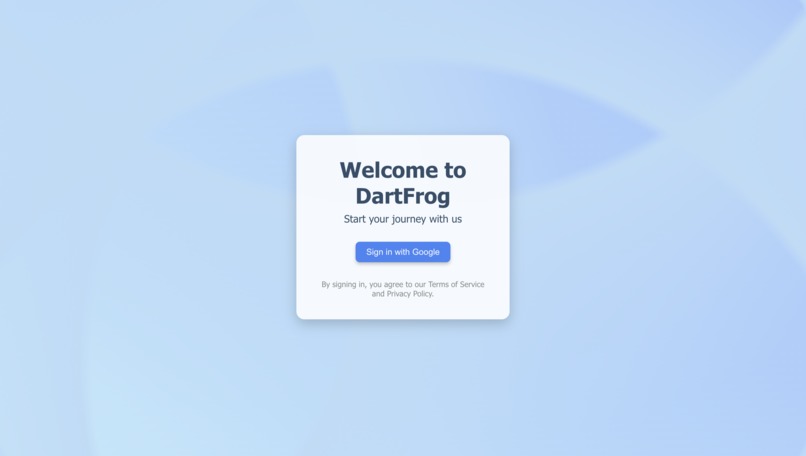
Start Screen with google auth


Inspiration
The inception of DartFrog sprang from the recognition of a gap in the market for a user-friendly, AI-powered data analysis tool tailored for non-technical users. We observed that while data is becoming increasingly central to decision-making across various sectors, the ability to analyze and draw insights from this data often requires specialized knowledge or software. The major issue in current GPT technologies are the poor attempts to generate information and graphics based around data by trying to generate code to fill in a skill the AI doesn't know, as shown below:
Inspired by the agility and vibrancy of the dart frog, we aimed to create a platform that embodies efficiency, ease of use, and the capacity to leap over the complexities of data analysis, making these processes accessible to a broader audience!
What it does
DartFrog is an innovative AI data analysis tool designed to simplify the process of extracting insights from data. Users can upload CSV files, and the platform automatically generates graphs, summaries, and other forms of data visualizations. DartFrog leverages the Gemini AI to understand the data's context and content, suggesting the most relevant types of analysis and visualization. The technology is nowhere near supporting CSV input and so our algorithms and data parsing methods convert this CSV into legible data for any GPT tool. It connects a React frontend with a Python Flask backend and integrates Firebase for user management and data storage, aiming to provide a seamless, intuitive user experience.
How we built it
The DartFrog platform is the result of integrating modern web technologies and AI analytics frameworks. We utilized React for the frontend to create a responsive, dynamic user interface that can adapt to the varying needs of data visualization. The backend, built with Python Flask, handles data processing and analysis, utilizing data parsing methods >>>>>>>> for generating charts. Firebase serves as the backbone for authentication, database management, and storage, ensuring that users' data and analyses are securely managed.
Challenges we ran into
Developing DartFrog presented several challenges, particularly in automating the data analysis process in a way that is both accurate and insightful for users. Crafting an algorithm capable of intelligently deciding the best way to represent data required extensive experimentation and refinement. Additionally, ensuring the seamless integration of the React frontend with the Flask backend while maintaining performance and responsiveness was a complex task. Handling large datasets and optimizing the application's performance to provide real-time feedback without lag also posed significant hurdles.
Accomplishments that we're proud of
We are immensely proud of DartFrog's ability to provide seamless data analysis while creating a bridge between data and generative AI, making it accessible to users without technical expertise and incredibly simple to analyze information. Creating an intuitive platform that can take raw data and transform it into clear, insightful visualizations represents a significant achievement for our team. Overcoming the technical challenges to ensure smooth, real-time performance across the frontend and backend is another accomplishment that underscores our commitment to providing a high-quality user experience.
What we learned
Throughout the development of DartFrog, our team gained invaluable insights into the complexities of AI-driven data analysis and the importance of user-centric design. We learned the intricacies of integrating various technologies to work harmoniously and the necessity of iterative testing and feedback in creating a tool that genuinely meets users' needs. This project has also deepened our understanding of data visualization principles and the critical role of clear, accessible insights in decision-making processes.
What's next for DartFrog
Moving forward, DartFrog is set to evolve with the addition of more advanced features, including enhanced AI capabilities for deeper data analysis, the introduction of predictive modeling, and expanded support for different data formats. We aim to implement a feature that allows users to prompt further questions based on their initial analysis, facilitating an interactive, conversational approach to exploring data. Improvements to the chart creation algorithm and the ability to handle multiple queries more effectively are also on our roadmap. Ultimately, we envision DartFrog growing into a comprehensive platform that not only simplifies data analysis but also empowers users to uncover and act on data-driven insights with confidence.


Log in or sign up for Devpost to join the conversation.