-
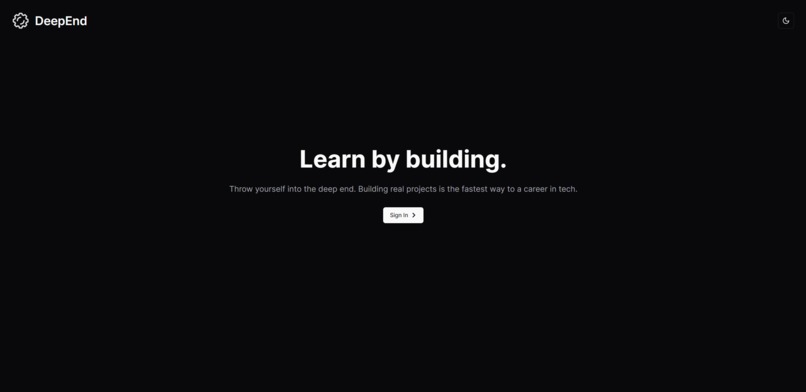
Home page
-
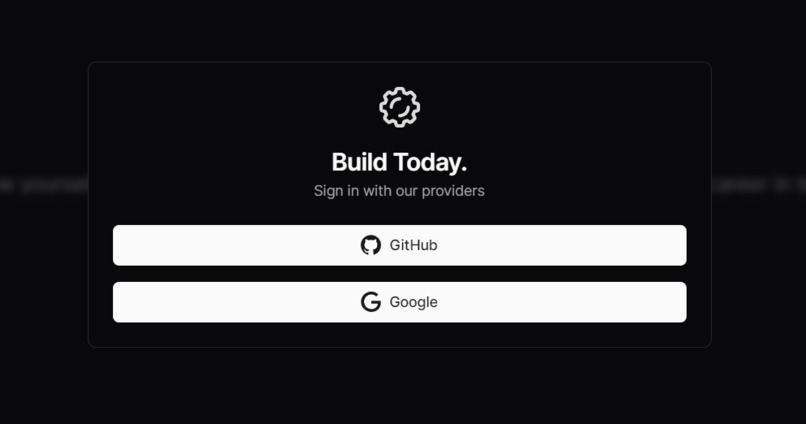
Sign In using Firebase authentication
-
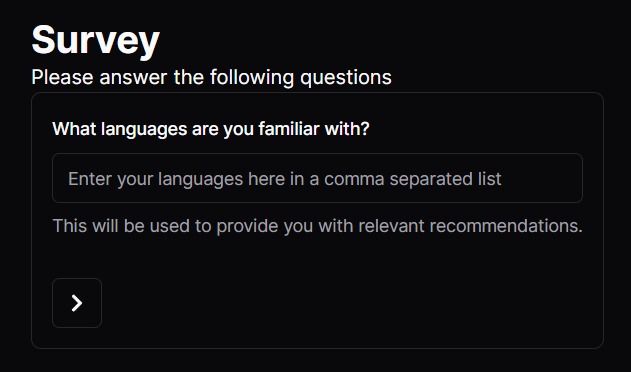
Example survey question to collect insights about the user
-
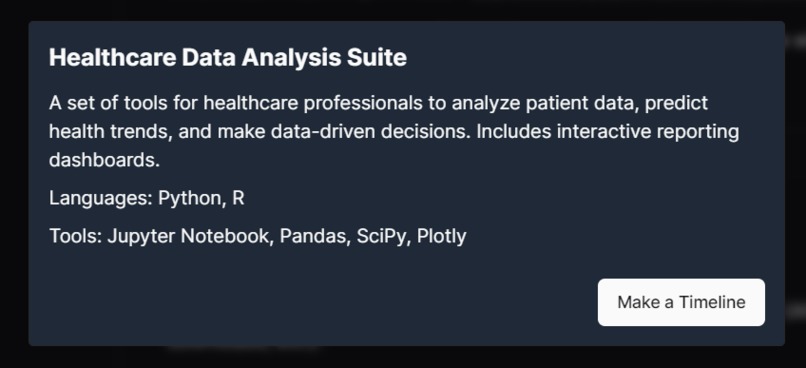
Example recommended project generated using recommendations
-
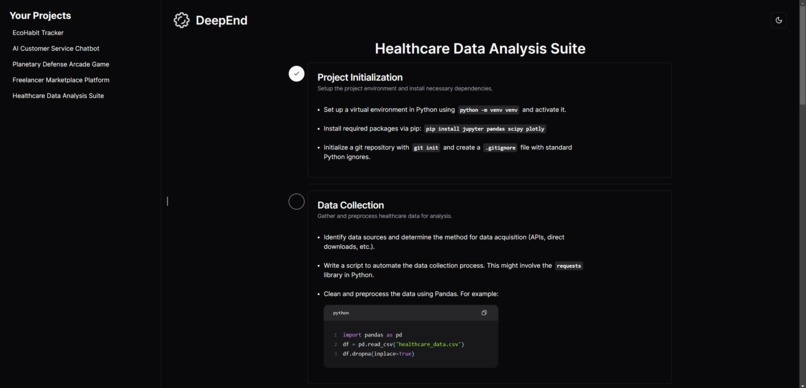
Example timeline view (dark mode)
-
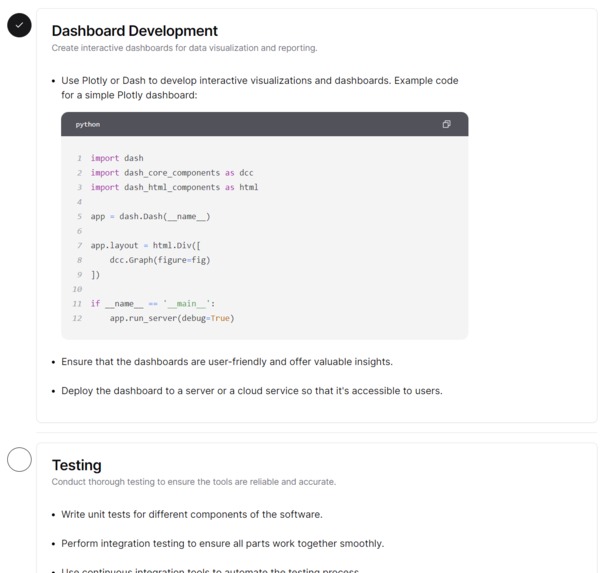
Example timeline view (light mode)


Inspiration
If I asked you to name the most influential companies within the past 30 or so years, almost all of your answers would be related to tech. However, most of these companies are also based in the United States 🌎.
To this day, many parts of the world are still completely untapped into software development and its transformative future. We want to change this - to break down the entry barrier into tech, and get people, no matter were, in a career as fast as possible 💻!
However, this is a complex field with many moving parts. We personally found, through our own journey, that creating projects 🛠 is the single quickest way to learn and progress as a software engineer ⏩. If only we can guide every unique person and their goals upon this road while addressing the daunting technical challenges that they face.
What it does
DeepEnd uses the most advanced LLM’s of today, gpt-4-turbo, and with careful prompt engineering, we generate and recommend you exactly which projects could be beneficial to your learning, with technical details. We use Firebase authentication for easy access to anyone in the world with just one click sign in using relatable providers. Most importantly, we take note of the exact timeline you need to follow in order to complete the recommended projects, full with technical details, code, design, etc. in order to get your resume filled up with the best industry practices.
How we built it
Our tech stack includes: Next.js, Firebase, Tailwind, ShadCN, OpenAI 🔥. We built our project on Next.js to use the integrated components (Image, Label) and route functionality to communicate to Firebase. We choose Firebase as our cloud database because of its easy to use model and supportive docs along with one click sign in for accessibility ✅. Using OpenAI we were able to take user information through the survey to model the users interests, habits, level of knowledge to post projects relate to them.
Challenges we ran into
During the hackathon, our team encountered several challenges, particularly with using Firebase and dealing with build issues on Vercel 💿. Despite having minimal prior knowledge, we tackled the complexities of understanding Firebase's structure, fields, and how to fetch information from its database 📃. Additionally, we faced numerous build issues on Vercel, which posed significant hurdles to our progress. These challenges tested our problem-solving skills and adaptability in a high-pressure environment 💾.
Accomplishments that we're proud of
In creating our GDSC solution we have felt most proud of the road. The journey of learning new technologies was not just about acquiring new skills, but about embracing a mindset of curiosity, experimentation, and collaboration. By creating DeepEnd we feel that we foster this mindset for our solution as well as coming projects. We are proud that we can adapt by doing.
What we learned
During the hackathon we have gained many skills and knowledge. We improved our understanding of project structure, ensuring a more organised development process. Individualy, team members have deepend their knowledge of implementing firebase, gaining the knowledge of storing and retrieving data. This experience has also helped to strengthen cooperation and project management skills.
What's next for DeepEnd
Our next steps are to improve rendering of projects and timeline. The speed could slightly improve, creating a better user experience. More features can be added, such as a chatbot that collects information about the projects and user, then assists the user through the project construction process, and answers any inqueries. Gaining more details of the user's informmation and goals could better improve the project and timeline generation. More options for the change and deletion of projects can be implemented if the user wants to change a certain step of the timeline or change the project reccomended.
Built With
- firebase
- framer-motion
- next.js
- openai
- react
- tailwind
- typescript
- vercel




Log in or sign up for Devpost to join the conversation.