-

Website Logo
-
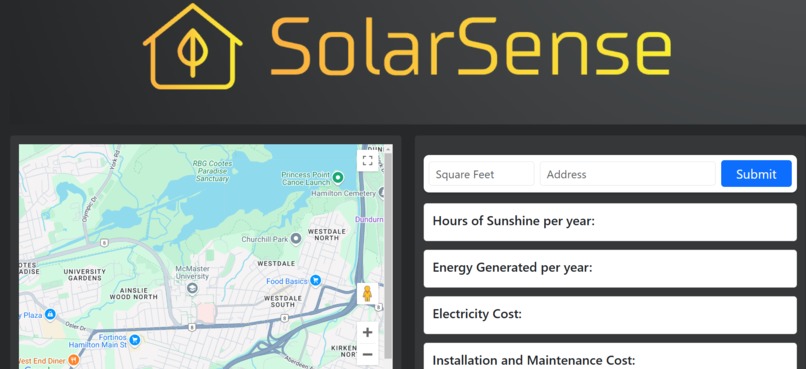
Website Initial Top
-
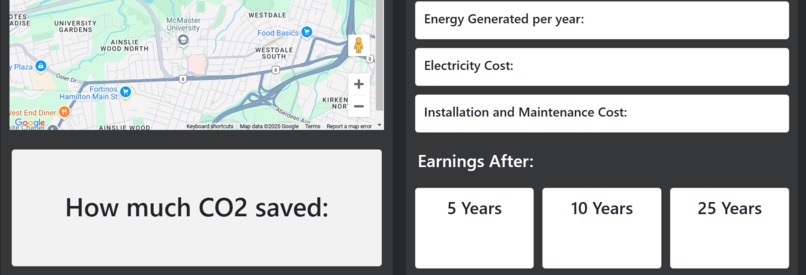
Website Initial Bottom
-
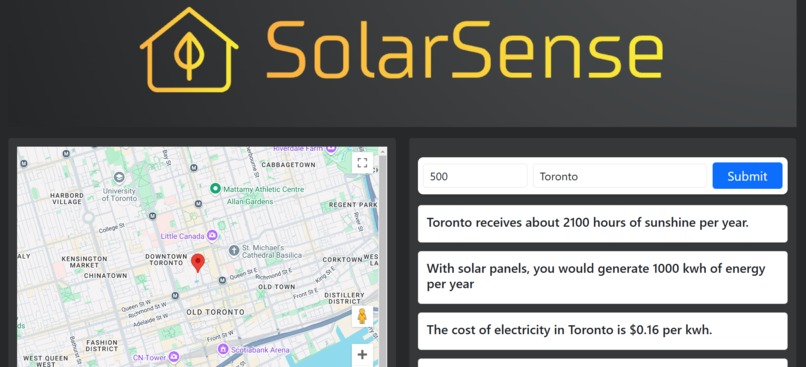
Website 500sqfeet Toronto Top
-
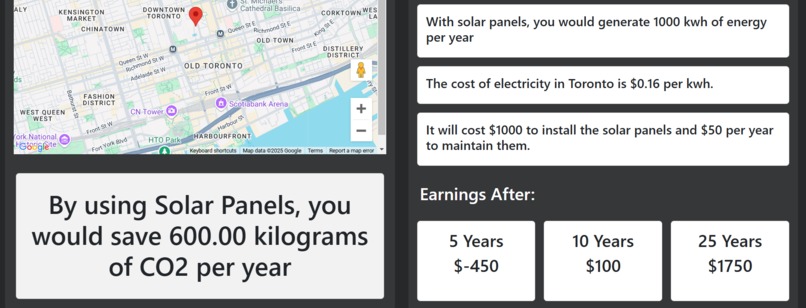
Website 500sqfeet Toronto Bottom
-
Brainstorm
-
Brainstorm
-
Brainstorm
-
Brainstorm
-
Brainstorm
-
Brainstorm


Inspiration
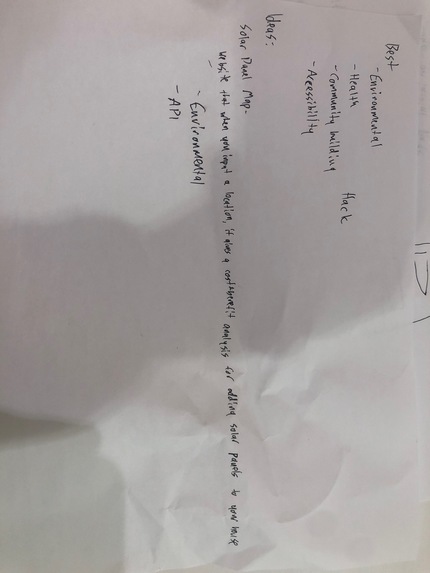
Our inspiration came after the Reserve Power speaker in the opening ceremony spoke briefly on reducing CO2 emissions and fossil fuels. This spark the idea with our group that we should make something that contributes to the reduction of C02 emissions and fossil fuels and ultimately lead to net zero emissions. After some discussion and planning we decided on SolarSense - a web application that shows how switching to solar energy can both benefit both and the world you live in. We decided to choose "SolarSense" as our name. This is because solar makes sense and solar also makes cents, since Solar power is a very logical way to save money and the environment.
What It Does
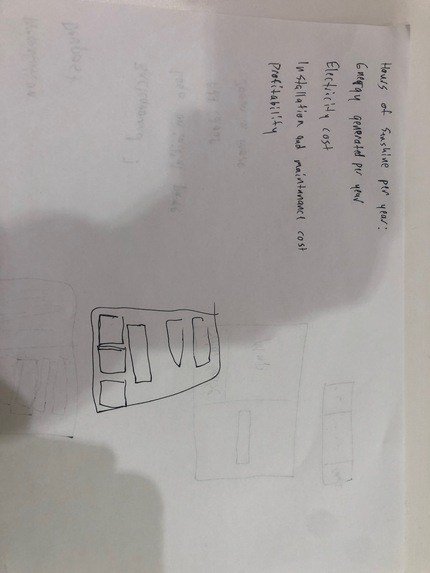
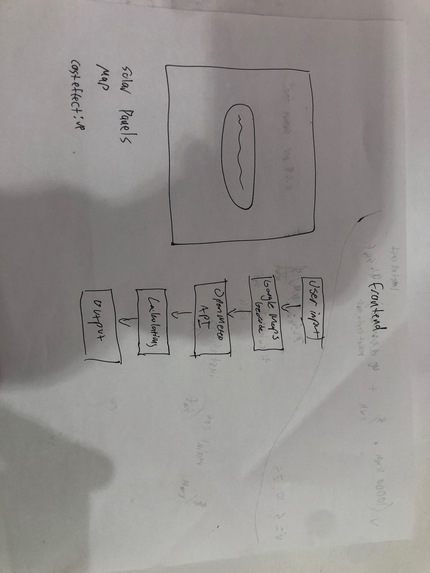
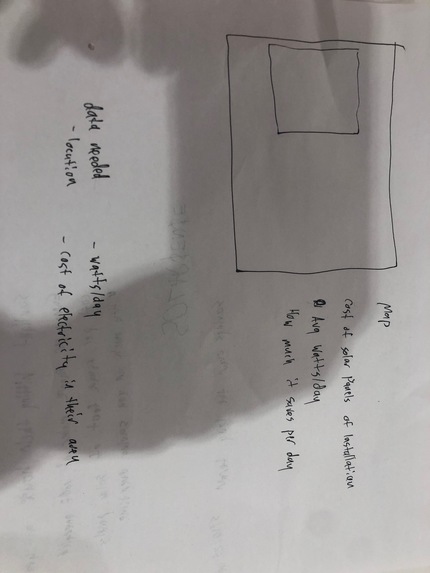
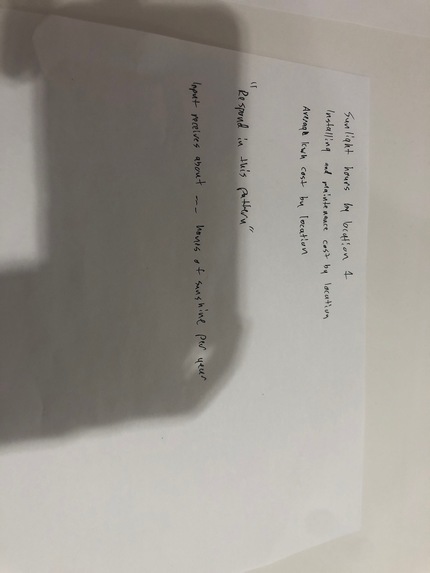
Our website opens with an input box wherein the user can put an address and the size of their roof. Our website then takes that input and using Cohere API, scrapes the internet for data at that Address such as: 1.) Amount of Sunshine per Year; 2.) Cost of Electricity; 3.) Cost of Solar Installation; and 4.) Cost of Solar Maintenance. Our website then takes that data alongside the inputted roof size and calculates: 1.) How many kwh of energy per year you would generate; 2.) Total installation and maintenance cost; and 3.) the total amount of CO2 you would save by switching to solar energy. We then show snippets of the results, and give the user the final rundown for earnings after 5, 10, and 25 years and how many kilograms of CO2 they save per year. Our website also has a Google Maps widget built in so that when a location- whether it be a nation, city, or address- is selected, the map automatically zooms into that location as a QOL feature.
How We Built It
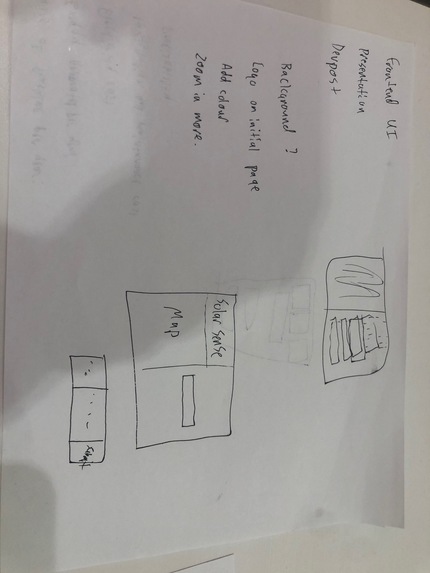
We used React.js, Typescript, and Vite as the base for our project. We then used HTML, and CSS to make the base website. After that we started incorporating different APIs such as Google Maps API for the interactive map, Open Meteo API for weather data, and most importantly Cohere in order to both scrape the internet, and pull everything together. Soon enough we had a proper prototype with most of the functionality that we wanted it to have. We then brainstormed about what we wanted our UI to look and feel like, and other features to really bring home the Net Zero point such as the "CO2 Saved" box. After our brainstorming, we split up and worked on the finer details of our website to ensure the best user experience. Lastly, using GoDaddy we acquired the URL https://solar-sense.co and through GitHub Actions and GitHub Pages, we launched our website. Note, for the entire project, we used GitHub for version control.
Challenges We Ran Into
We experienced a challenge from the very moment we arrived at DeltaHacks, we didn't know each other. One from UofT, one from TMU, one from McMaster, and one from AY Jackson SS. We only first met online the day before the Hackathon, and in person as the Hackathon began. We quickly overcame this challenge though as the Hackathon progressed as we hung out and got to know each other. So, as this hackathon comes to a close, I'd say we're a well-oiled machine by now. One other challenge we faced was simply being tired. Pulling a partial-all-nighter while having to be constantly working in order to make a project we were proud of was really difficult. But, there was no magical cure, so we took half-hours naps and pushed on towards a completed project.
Accomplishments that we're proud of
We are very proud both of our finished project, and how well it turned out within the target challenges. Usually, when a Hackathon gives the hackers a challenge, it's something that is very difficult to achieve and limits our options, but with this Project, we found that the very existence of the challenges inspired us in many ways. We thrive under challenge, which we attribute to the finished result that we are very proud of.
What We Learned
We both learned and grew in many ways over this hackathon. Firstly, we attended the many seminars/workshops, and were able to learn a lot about the very technology we were using in the hackathon, especially the Intro to Cohere Workshop which was very helpful in our project as we decided to use Cohere. Secondly, we also grew as Hackers in general as we learned to navigate different challenges, problems, and dreaded merge conflicts. As I said above, we started without knowing each other at all, yet by the end, we were a well oiled machine.
What's next for DeltaHacks Project
We plan on keeping the website up. With more time, we believe that we can make the website more accurate and include new features. Some of those features include direct links/connection to solar providers in the user's area and additional insight/statistics into the versatility of solar energy and how they can benefit from it.
Built With
- cohere
- css
- github
- godaddy
- google-maps
- html
- javascript
- meteo
- node.js
- react.js
- typescript


Log in or sign up for Devpost to join the conversation.