-
-
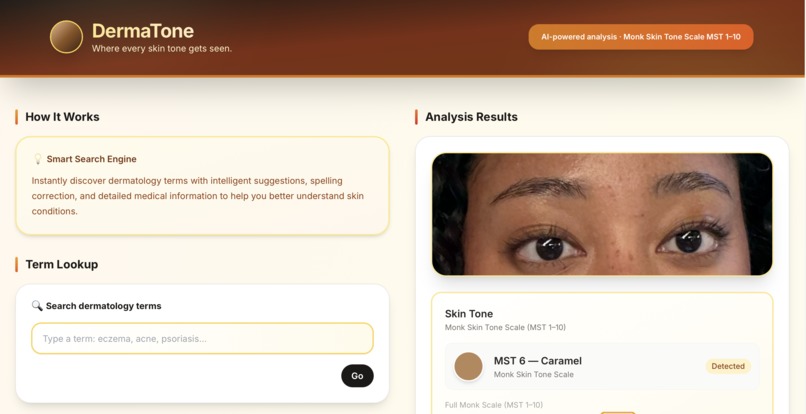
Users upload an image of their skin in its current state
-
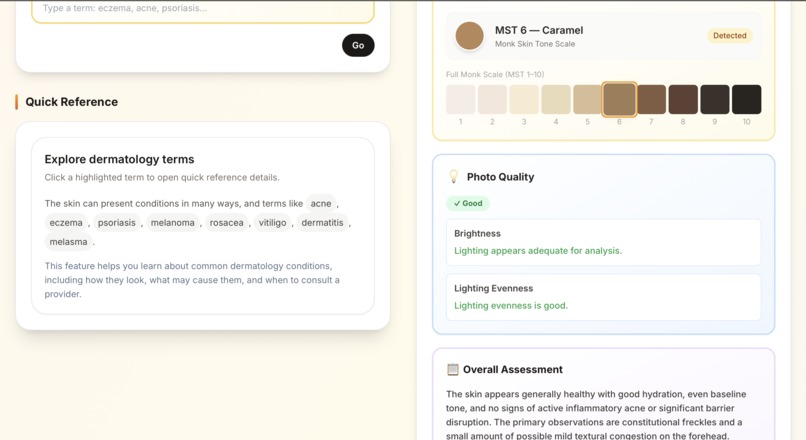
Skin analysis using the Monk Skin Tone
-
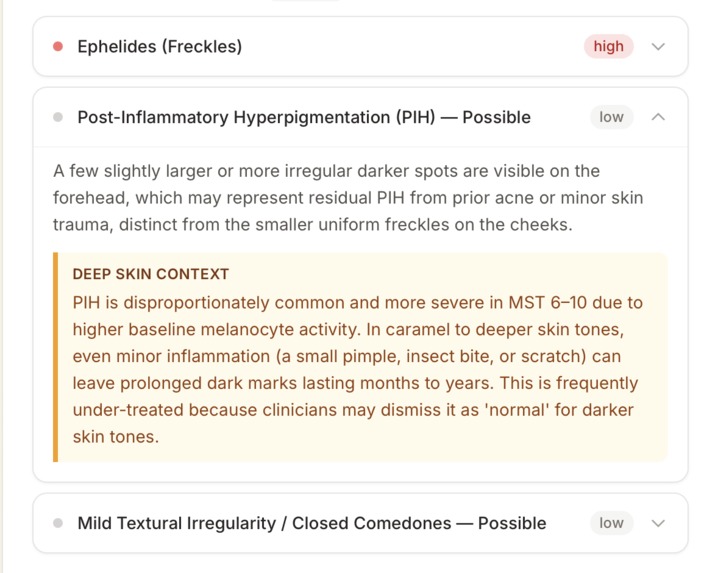
Detailed result of skin issues analyzed from uploaded image
-
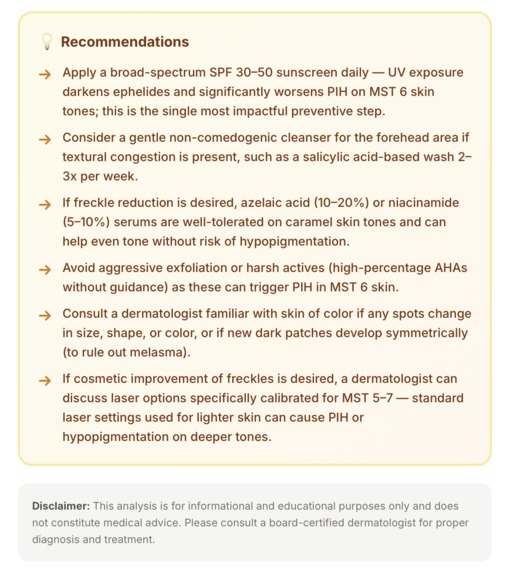
Skin care suggestions specialized to the user (*not a diagnosis)
-
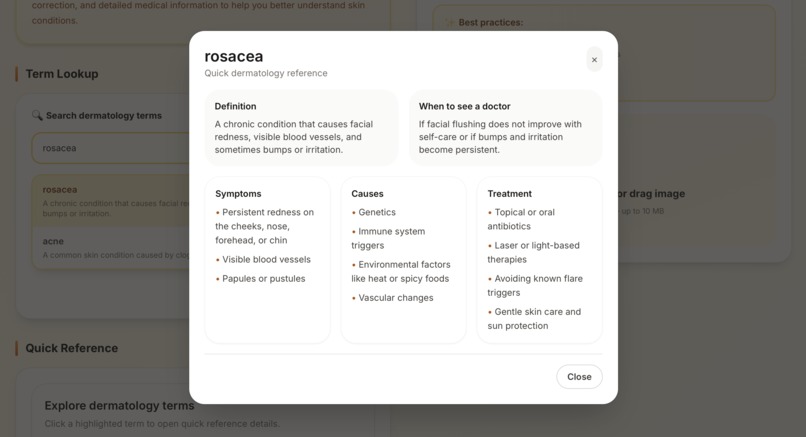
Quick and simple definitions of complex dermatology terms


Inspiration
We were inspired by the clear lack of inclusivity in dermatology and skincare technology, especially for individuals with darker skin tones. Through research, we discovered that most dermatology datasets and AI tools are heavily biased toward lighter skin, leading to inaccurate results and unequal care. As freshman Computer Science students, we wanted to use our skills to address a real-world problem that directly impacts underserved communities. This motivated us to create a solution that prioritizes representation, accessibility, and equity.
What it does
DermaTone is an AI-powered skin assistant designed to provide inclusive and accessible skin health insights for all skin tones. Users can input information or images to receive guidance on potential skin concerns, along with explanations of dermatological terms and alternative care options. Rather than diagnosing conditions, DermaTone focuses on educating and empowering users to better understand their skin. It also emphasizes undertones and diverse skin characteristics that are often overlooked in traditional tools.
How we built it
We built DermaTone by combining front-end design with AI-driven analysis to create a user-friendly and accessible experience. Our team focused on developing an intuitive interface while integrating logic that prioritizes inclusive data representation and diverse skin tone considerations. We collaborated to refine features such as improved UX, clearer explanations of dermatological terms, and broader skin tone categorization beyond traditional scales. Throughout the process, we iterated quickly, continuously improving both functionality and design.
Challenges we ran into
One of our biggest challenges was the lack of diverse, representative datasets, which directly affects AI accuracy. Traditional models rely on the Fitzpatrick Scale, which doesn’t fully capture the range of human skin tones. To address this, we redesigned our model to use a 10-point scale that better reflects real-world diversity. We also had to balance technical complexity with usability, building an interface that’s simple for users while still handling advanced analysis behind the scenes. With limited time, we made strategic decisions on which features to fully implement versus prototype. Finally, we were intentional about ethical responsibility. Since we’re not medical professionals, we focused on positioning DermaTone as an assistive tool rather than a diagnostic authority, ensuring accuracy while maintaining user trust.
Accomplishments that we're proud of
We are proud of creating a project that directly addresses a real and often overlooked issue in healthcare technology. As freshman students, we successfully designed and developed a functional and meaningful solution within a limited timeframe. We are especially proud of our focus on inclusivity, ensuring that our app considers a wider range of skin tones than traditional tools. Most importantly, we created something that has the potential to make a real impact.
What we learned
Through this project, we learned how to collaborate effectively under time constraints and turn an idea into a working solution. We gained experience in integrating technical skills with real-world problem solving, especially in the context of ethical AI. We also developed a deeper understanding of bias in datasets and the importance of inclusive design. This experience showed us how technology can be used as a tool for equity and social impact.
What's next for DermaTone
Moving forward, we plan to improve the accuracy and reliability of our AI by incorporating more diverse and representative datasets. We also aim to expand features such as personalized recommendations, deeper educational resources, and enhanced user interaction. Partnering with dermatology professionals and organizations will be a key step in validating and refining our platform. Ultimately, our goal is to scale DermaTone into a widely accessible tool that helps redefine inclusivity in digital healthcare.
Built With
- ai
- and
- css
- figma-(ui/ux-design)
- git/github
- html
- integration
- javascript
- jsx
- ngrok
- openai-api
- python
- react
- swift-(swift-playgrounds)
- web-based


Log in or sign up for Devpost to join the conversation.