-
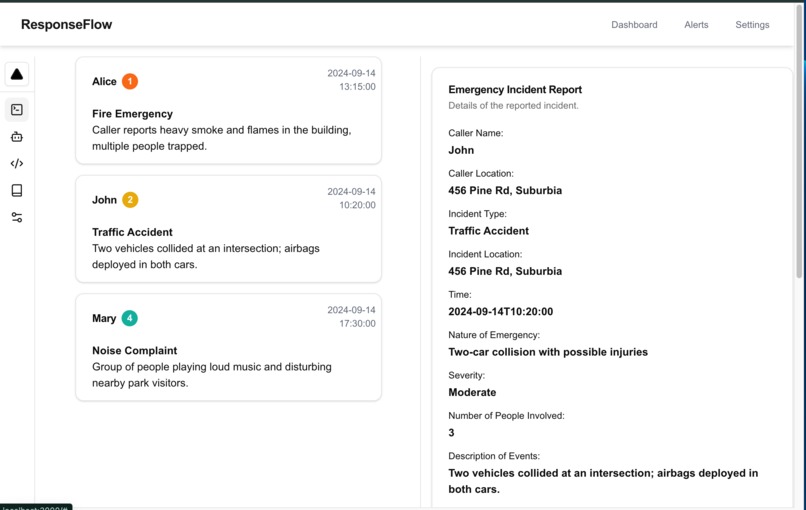
Sample Look at the ResponseFlow Dashboard

Inspiration
The inspiration behind ResponseFlow came from the need for better resource allocation in cities. We noticed that emergency calls often face delays in prioritization due to human error, miscommunication, or lack of resources. We wanted to solve a problem to help ease being a first responder.
What it does
ResponseFlow is an AI-powered 911 operator system that ranks incoming emergency calls based on the type and severity of the crime. The system uses Generative AI to analyze the details of the emergency in real-time, then prioritizes the most critical incidents for immediate attention, ensuring that life-threatening situations are addressed first. It streamlines the dispatch process, improves response time, and minimizes errors in crises.
How we built it
We built ResponseFlow with the Vapi pick-up inbound calls and answers with an AI Operator. We used webhooks from Zapier to create a pipeline that makes a JSON Report with the help of GPT-4. We implemented real-time processing with an integrated priority-ranking algorithm that dynamically assigns resources to the most urgent cases. On the front end, we used Next.js to create a user-friendly dashboard for dispatchers to monitor and interact with live emergency reports.
Challenges we ran into
One of the biggest challenges was designing an AI model that could accurately interpret a wide variety of emergency call scenarios while maintaining high accuracy. There were also challenges with balancing real-time processing speed and ensuring the system could scale to handle large call volumes without lag. Additionally, integrating the AI model with existing emergency dispatch systems presented compatibility issues that required troubleshooting.
Accomplishments that we're proud of
We are proud of the accuracy of the AI model in correctly classifying emergency cases by priority. A major achievement is implementing a real-time system that can handle multiple inputs simultaneously without significant hallucination.
What we learned
We learned a lot about the intricacies of emergency response systems and the importance of rapid, reliable decision-making. On the technical side, we gained deeper insights into real-time processing, scaling AI models for high-traffic applications, and integrating LLMs with existing dispatch protocols.
What's next for ResponseFlow
Moving forward, we plan to refine the model to handle more complex emergency scenarios and expand its multilingual capabilities to serve diverse populations. We also want to incorporate machine learning algorithms that can predict potential outcomes of emergencies based on historical data, which could help preemptively allocate resources before a situation escalates.
Built With
- css
- gpt-4
- html
- next.js
- python
- typescript
- vapi
- zapier


Log in or sign up for Devpost to join the conversation.