-
-
Resources (Homepage)
-
Feedback button (homepage)
-
General Information (Homepage)
-
Braille Resources (Resources section)
-
Educational Support (Resources section)
-
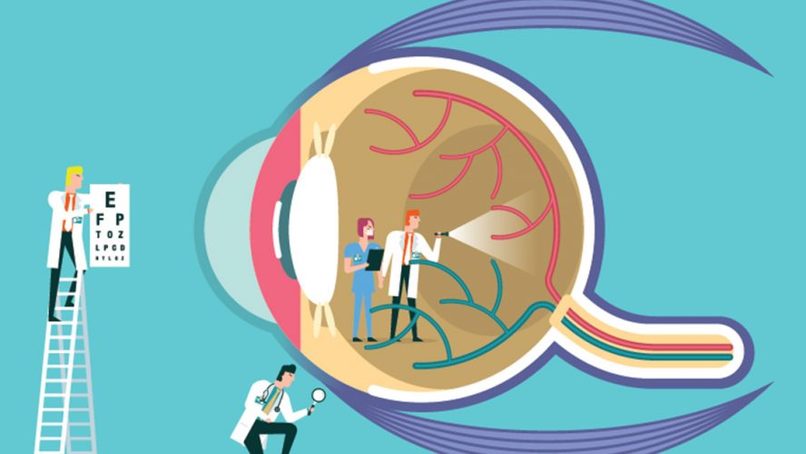
visual disabilities
-
Reading Resources (Resources section)
-
Recreation and sports (Resources section)
-
Adaptive technology (Resources section)
-
Organizations and networking (Resources section)


Inspiration
We were inspired by the fact that several people with disabilities are overlooked every year in terms of their social and educational needs. When the challenge we were presented with asked us to find a solution to a problem faced by a marginalized group, our initial idea was to make a website about period poverty. When we brainstormed some more, we realized that periods are a common issue women face, which means that a lot of teams would focus on doing something about them. We decided to focus on a different minority, such as the LGTBQ community or people with disabilities. We chose to focus on visual impairment specifically because every year, thousands of people are impacted by it, and there isn't much conversation about the struggles they face or the stereotypes they hear.
What it does
Our website, Digital Eyes, informs the public about the struggles of being partially or completely visually impaired and aims to be a one-stop resource for visually impaired people, where they can find websites to help them with almost any aspect of their lives. This site educates society about what the Canadian government is doing to support visually challenged individuals, as well as talks about common stereotypes people may hear about those with vision impairment. It also asks the general public to provide their opinion and input after reading through the website.
How we built it
The website was built using Replit, a platform that allowed all of us to collaborate and write our code together. We used HTML and CSS to code the website, and learned a lot of new things, such as how to make a navigation bar change colour when we hovered over it, how to embed a link in an image to make it work like a button, and how to add a border around our page titles. We attended the HTML and CSS workshop, and the things we learned from that coupled with websites like W3Schools helped us make our website visually appealing and easy to navigate. We also wanted to add interactive elements in it, so we added images with hyperlinks embedded in them that work like a button. We also included a feedback form (completely optional) to make users feel heard and make it a more interactive website.
Challenges we ran into
Our team faced several challenges. Going into the competition, some of us had never coded before, and some of us didn't have any experience with languages like HTML or CSS. Before the competition, none of us knew each other, and at the very beginning, we had to face drop outs from our team. Near the end of the competition, our schedules didn't match up so some of our teammates were not able to make it to the video recording. We solved all of these problems through collaboration and teamwork. We also made sure to delegate tasks to ensure no one had an unfair burden, and shared YouTube videos about coding in HTML with each other so we learned together
Accomplishments that we're proud of
Although the learning curve was steep for most of us, we learnt not only the basics of HTML and CSS, but also more advanced coding such as the survey form or the navigation bar through the help of our mentors. These are most definitely some of our proudest accomplishments as a team and the collaboration we had between team members allowed our website to be coded quickly and efficiently.
What we learned
The majority of our team had never coded before or had basic knowledge of how to code. This hackathon allowed us to apply the knowledge we learned and gave us an incentive to adapt to the short time frame and collaborate together to create a website in a little less than three days.
What's next for Digital Eyes
For this website, the next step into improving the site would be to slowly incorporate resources regarding all of North America about vision impairment and then the rest of the world. Another possibility would be to focus on other disabilities and combat the stereotypes that they face as well. In regards to the actual code of the website, adding JavaScript and some animations to the website would be something we could work together on as our coding skills develop. This would allow users to have a smoother and more satisfying time on the website and could increase interest in the topic as well. Another aspect we need to improve on is the form/survey portion of the website. Currently, it’s only a front end form capable of users submitting information, but the information is not stored at the backend. As a team, we don’t quite have the coding skills to create a code capable of storing information and it’s definitely something we would like to accomplish next.




Log in or sign up for Devpost to join the conversation.